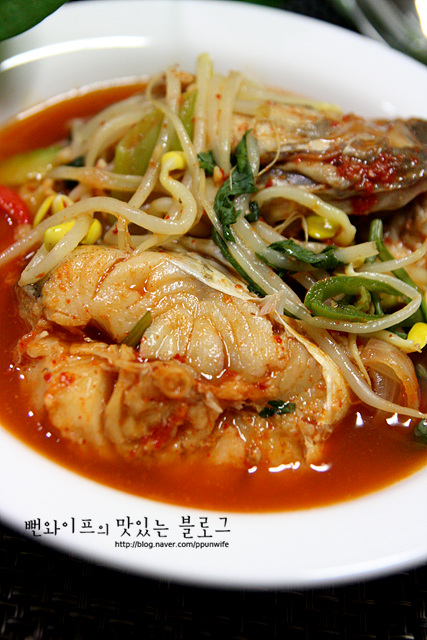
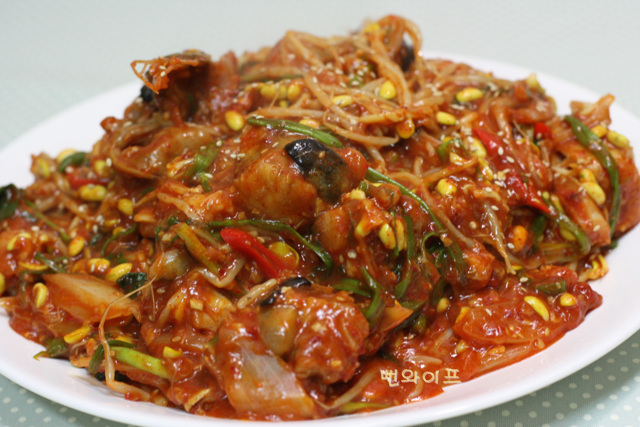
Spicy Agutang (Monkfish Soup) for Hangover Relief
A spicy soup dish made by simmering monkfish and vegetables in anchovy broth without gochujang.
Translated from Korean by AI and not yet checked by a native speaker. Amounts and numbers are taken directly from the original recipe. Read the Korean original →
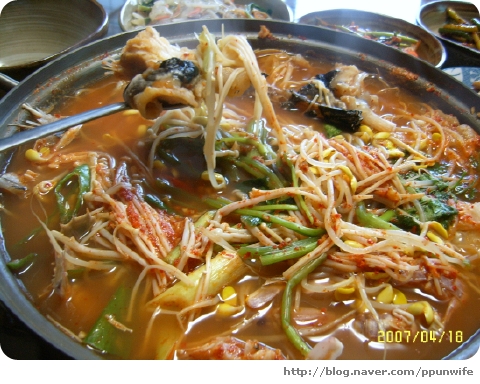
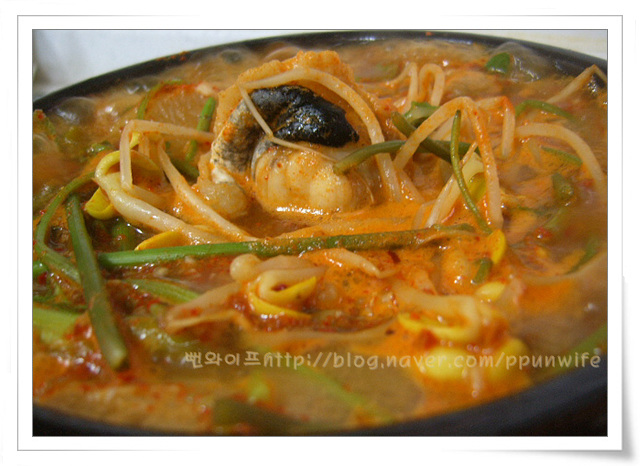
Simmered with monkfish and seafood in a broth made from dried anchovies and Korean radish, this soup offers a superb, refreshing flavor. To keep it light without any heaviness, Cheongyang chili peppers are used instead of gochujang for a spicy kick. Clean and refreshing, it is great for hangover relief or as a drink snack.
- Servings
- about 3–4 servings
- Cook time
- 10 minprep not included
- Difficulty
- Medium
- Spiciness
- Spicy
Ingredients
Ingredients
- Monkfish1 whole
- Manila clams1 cup
- Shrimp1 cup
- Water dropwort (minari)
- Soybean sprouts
- Large green onion (daepa)
- Chili pepper
Seasoning
- Gochugaru (Korean chili flakes)2 tbsp
- Garlic2 tbsp
- Salt1 tbsp
- Mirin (cooking rice wine)1 tbsp
- Ground black pepper
Broth
- Dried anchovies1 handful
- Korean radish (mu)1/4
- Large green onion (daepa)1 stalk
- Cut the monkfish into bite-sized pieces and soak the manila clams in salted water to purge them of grit. Rinse the shrimp clean.
- You can leave out the manila clams and shrimp. Just make sure to brew a delicious broth.
Steps
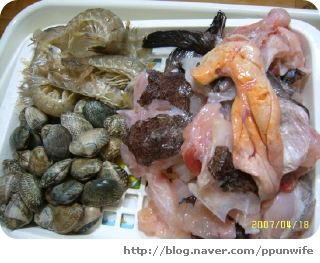
Cut the monkfish into bite-sized pieces and soak the manila clams in
salted water to purge them of grit.
Rinse the shrimp clean.
You can leave out the manila clams and shrimp.
Just make sure to brew a delicious broth.
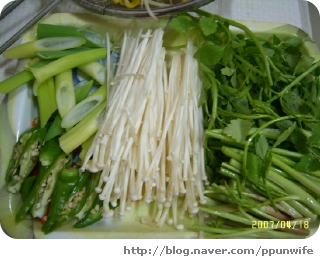
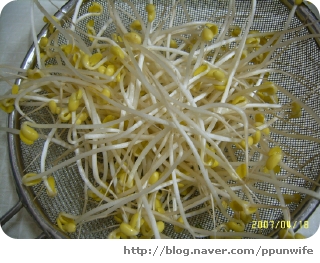
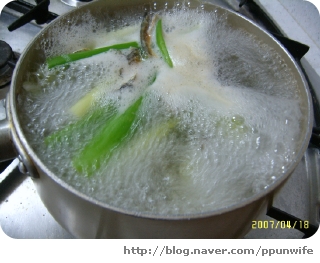
Once the ingredients above are prepared, make the broth. Add dried anchovies, large green onion, and Korean radish to cold water,
and once it begins to boil, simmer over low heat for about 10 minutes.
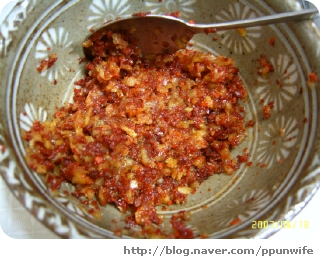
Prepare the seasoning paste according to the amounts above.
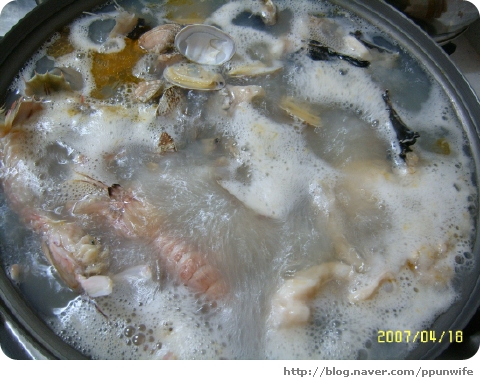
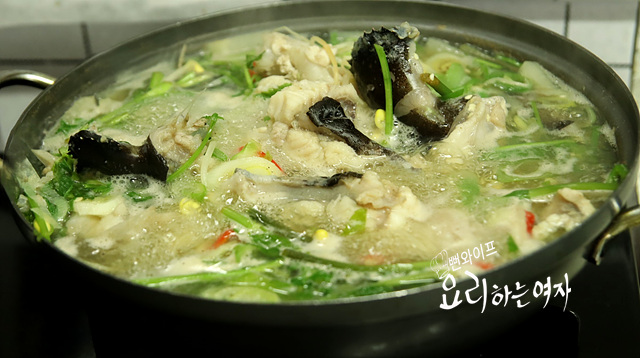
Pour the prepared broth into a hot pot, and when it starts to boil, add the manila clams, monkfish, and shrimp,
then bring to a brief boil. Skim off all the visible foam
so the broth stays clean.
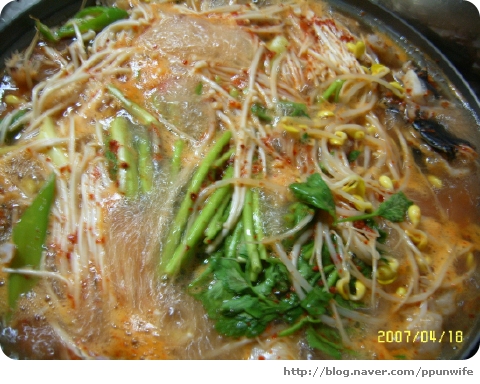
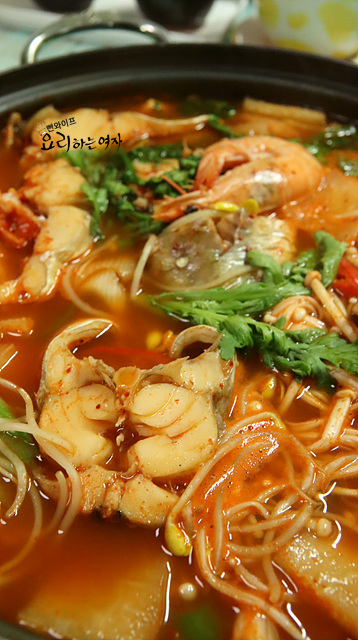
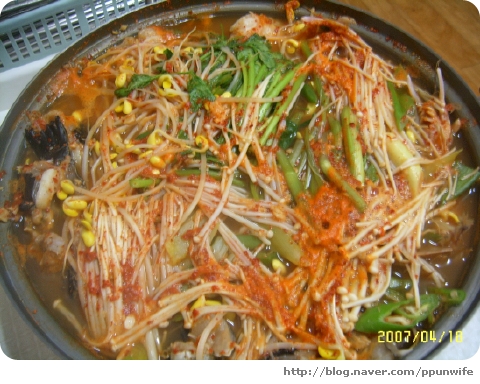
Add the soybean sprouts, mushrooms, water dropwort, large green onion, chili pepper, and seasoning paste, then bring it to a boil again.
I do not add gochujang at this point.
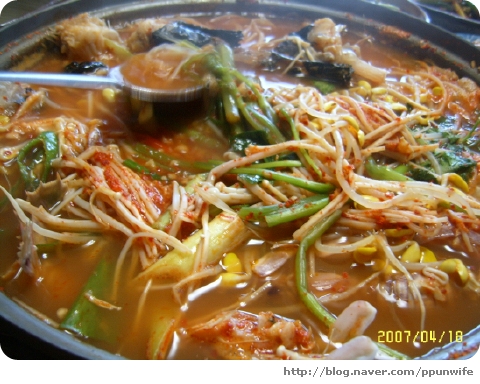
If you want a clean and refreshing taste, do not add gochujang,
and just use spicy Cheongyang chili peppers to give it a sharp, spicy kick.
If you are making it as a maeuntang (spicy fish stew), you can add a little gochujang.
 Ppunwife's tips
- Skim off all the visible foam so the broth stays clean.
- If you want a clean and refreshing taste, do not add gochujang, and just use spicy Cheongyang chili peppers to give it a sharp, spicy kick.
- If you are making it as a spicy fish stew, you can add a little gochujang.
FAQ
Can I make this without manila clams or shrimp?
Manila clams and shrimp are not essential, so it is completely fine to omit them as long as you brew a delicious broth.
What is the secret to getting a clean and refreshing broth?
Skim off the foam when boiling the seafood, and use spicy Cheongyang chili peppers instead of gochujang for a sharp kick to keep the broth refreshing.
Should I avoid adding gochujang to the seasoning?
It is better to leave it out when you want a clean taste, but you can add a little gochujang if you want the feel of a standard maeuntang (spicy fish stew).