Agwi Jiri Tang (Clear Monkfish Soup)
A clear, mild hangover soup made by simmering fresh monkfish with water dropwort and soybean sprouts.
Translated from Korean by AI and not yet checked by a native speaker. Amounts and numbers are taken directly from the original recipe. Read the Korean original →
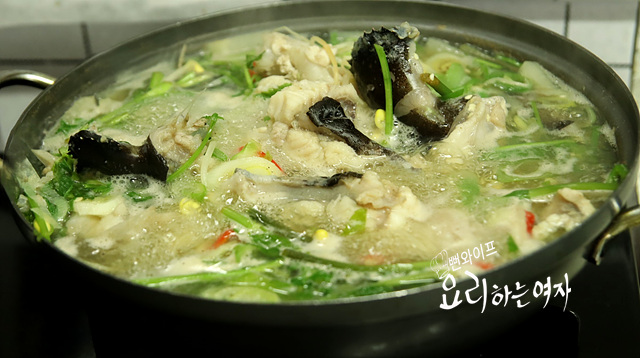
Using in-season monkfish, this soup is simmered clear and refreshing, making it perfect for soothing the stomach after drinking. The secret is using vinegar and soju to firm up the monkfish flesh and reduce any fishy odor. Loaded with plenty of water dropwort and soybean sprouts, it tastes crisp and clean, and the fish pieces are wonderful dipped in sauce like boiled meat slices.
- Servings
- 3–4 servings
- Difficulty
- Medium
- Spiciness
- Mildly spicy
Ingredients
Ingredients
- Cleaned monkfish1 whole, 1 kg
- Korean radish (mu)200 g
- Soybean sprouts100 g
- Water dropwort (minari)150 g
- Large green onion (daepa)1/2 stalk
- Cheongyang chili pepper (hot green chili)2
- Red chili pepper1
- Anchovy broth (or 6 cups water and 2 broth tablets)6 cups
Seasoning
- Soup soy sauce (guk-ganjang)1 tbsp
- Tuna extract sauce (chamchi-aek)2 tbsp
- Minced garlic2 tbsp
- Mirin (cooking rice wine)2 tbsp
- Salt1/2 tsp
- Ground black peppera little
- Perilla leaves, crown daisy, or mushrooms also go very well in monkfish soup.
- If you are using frozen monkfish, it may smell fishy, so add 1/2 tsp of minced ginger.
Steps
Prepare the ingredients
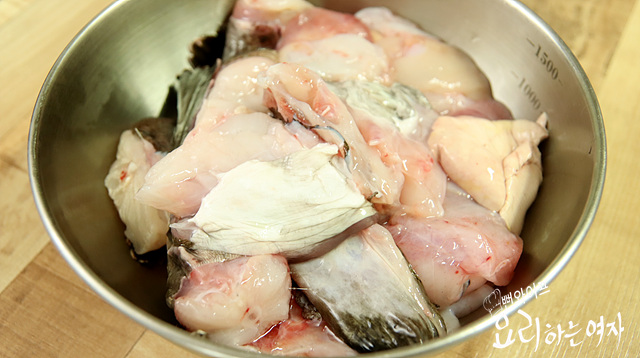
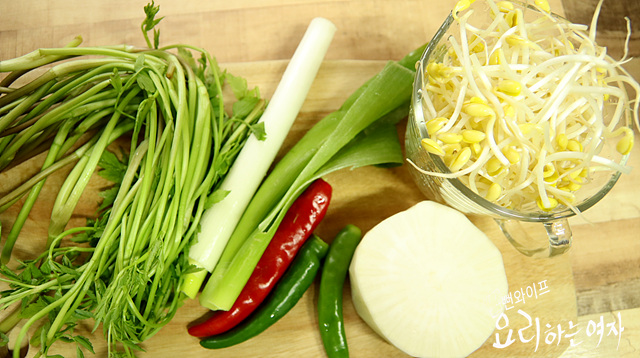
Use 1 whole, large fresh monkfish.
The vegetables responsible for the refreshing, delicious broth flavor of the monkfish soup are Korean radish, 1/2 bag of water dropwort, soybean sprouts, large green onion, and chili peppers.
Perilla leaves, crown daisy, or mushrooms also go very well in monkfish soup.
Clean the monkfish
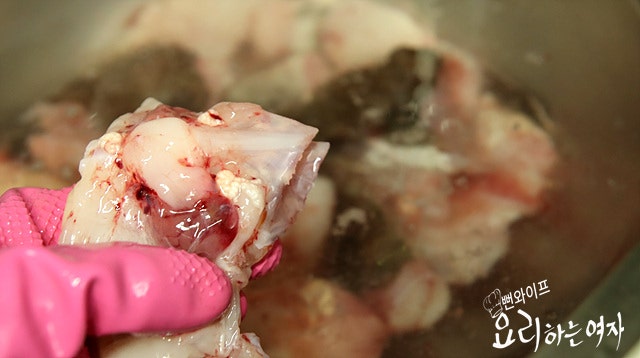
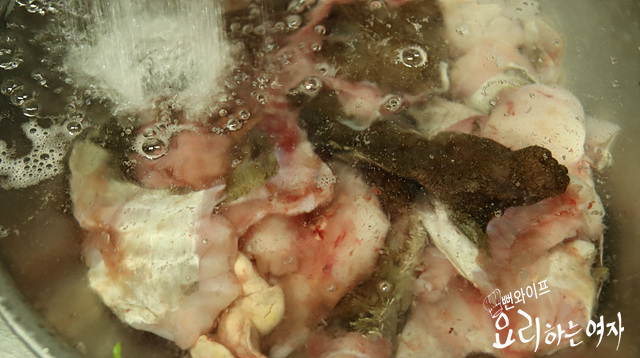
There are blood clots clinging to the monkfish bones, so scrape them away with your fingers.
Rinse it several times under running water until the slimy coating on the surface is completely removed.
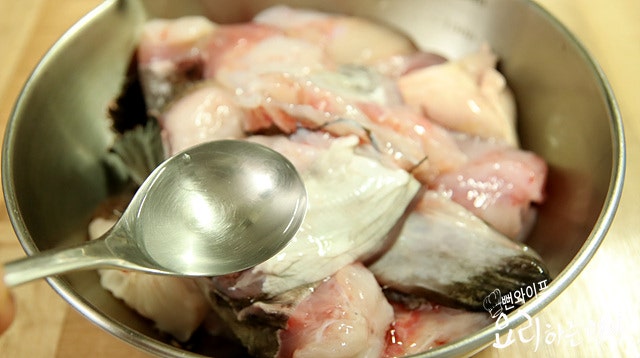
To remove the fishy odor, drizzle 2 tbsp of soju, and to firm up the flesh, evenly drizzle 2 tbsp of vinegar; toss together and let it sit briefly, then rinse just once with water.
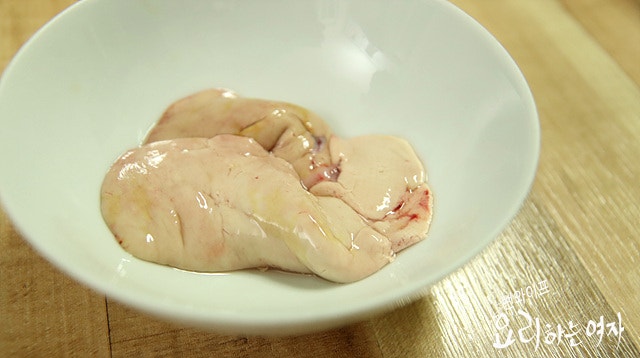
If you put the monkfish liver into the soup right from the start, it will break apart and make the broth cloudy, so either add it at the very end of cooking or ladle out a little broth and simmer it separately to enjoy.
Cut the vegetables
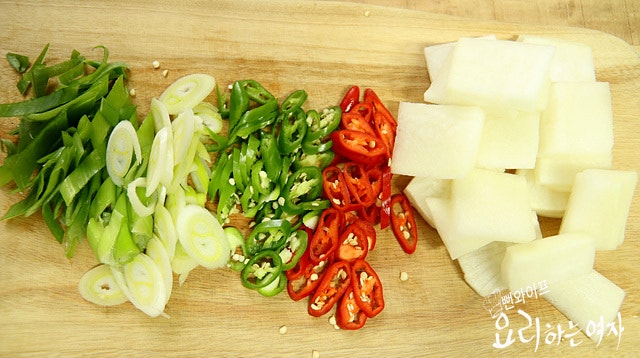
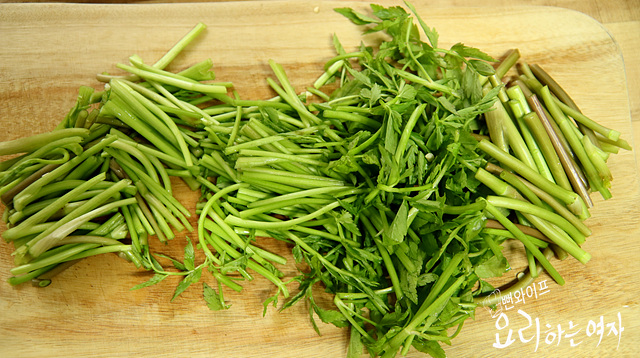
Cut the Korean radish into thick, flat squares, and julienne the rest of the vegetables.
I prepared a generous amount of water dropwort to dip and eat alongside the boiled fish, cutting it into lengths of about 3 to 4 cm.
Boil
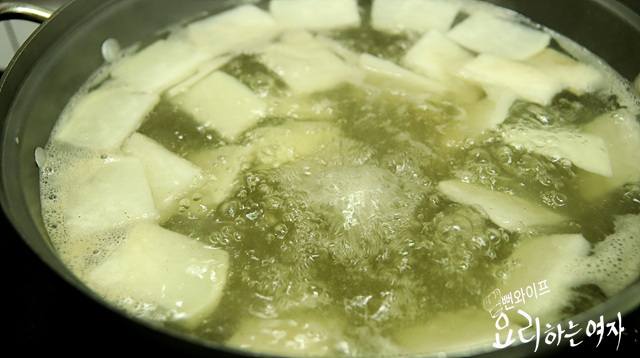
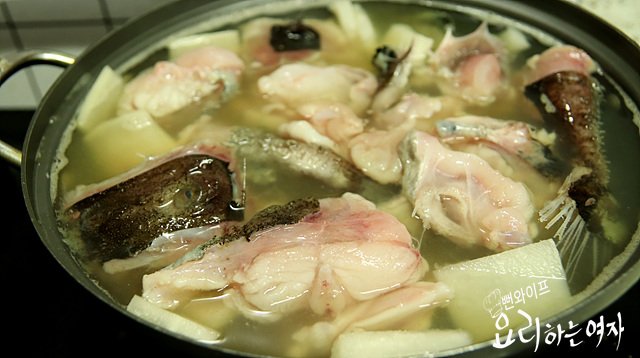
Bring 6 cups of anchovy broth (or 6 cups of water with 2 broth tablets) and the Korean radish to a boil...
Once it boils, add the monkfish and cook.
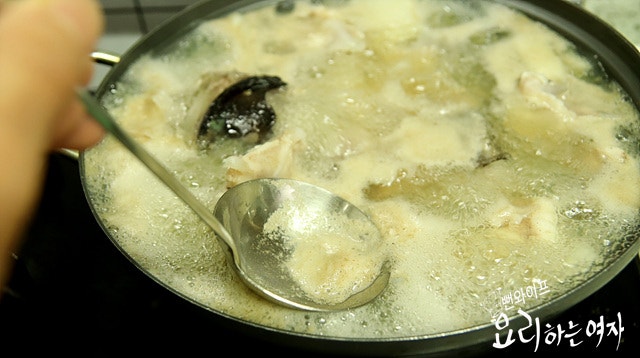
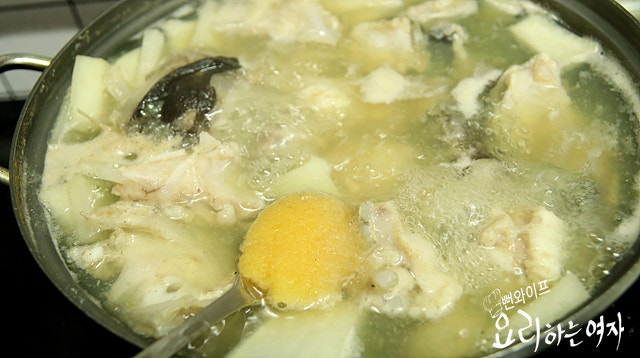
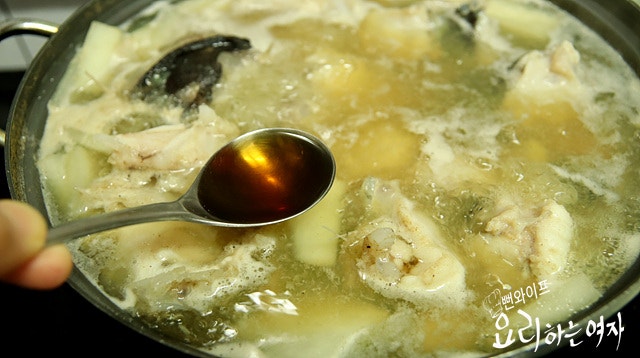
Skim off the foam neatly as it rises, then season the broth with 2 tbsp minced garlic, 1 tbsp soup soy sauce (guk-ganjang), 2 tbsp tuna extract sauce (chamchi-aek), and 2 tbsp mirin (cooking rice wine).
If you are using frozen monkfish, it may smell fishy, so add 1/2 tsp of minced ginger.
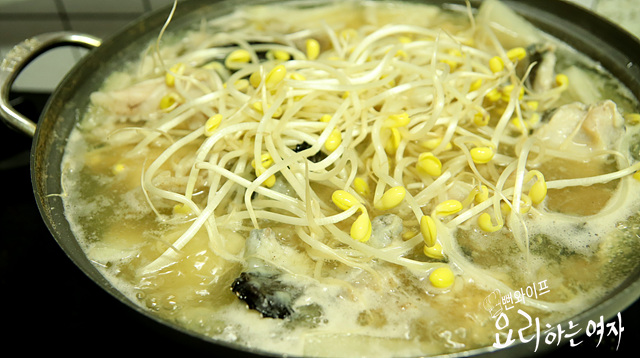
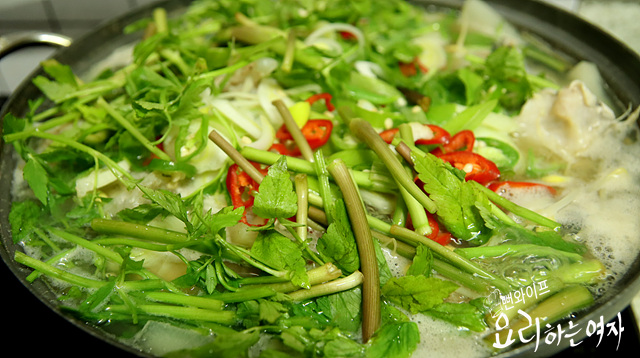
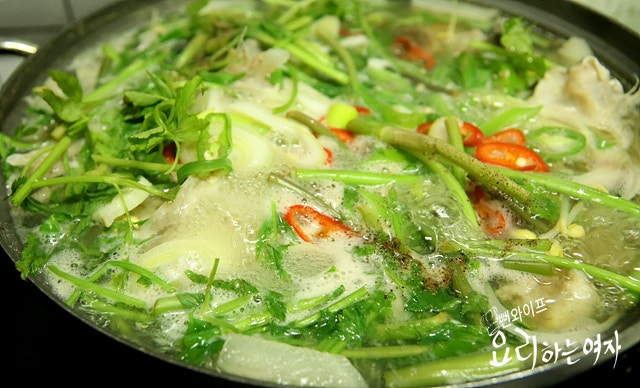
When the monkfish is almost cooked through, taste and adjust the seasoning with 1/2 tsp salt, add the soybean sprouts, and once they are cooked, finish with the remaining vegetables—large green onion, chili peppers, water dropwort—and a little ground black pepper.
For the reserved monkfish liver, ladle out some of this broth and simmer it gently to enjoy.
Finish
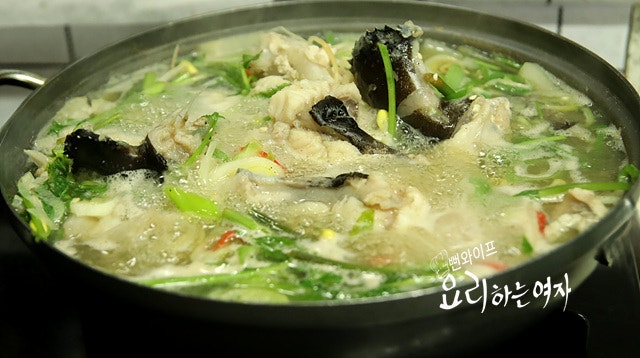
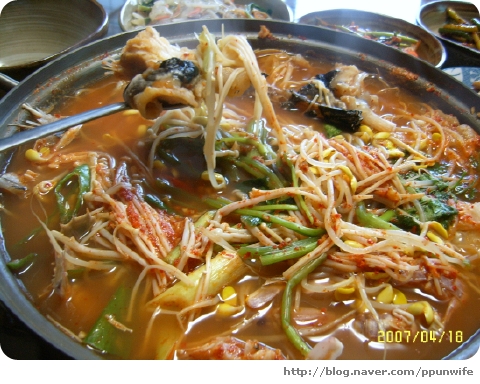
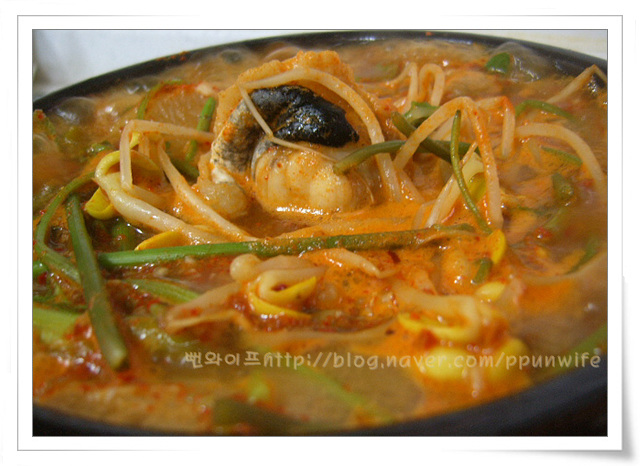
Because the monkfish is fresh, the broth is clean and genuinely refreshing.
Spicy red monkfish soup is delicious, but this mild, clear Agwi jiri tang is wonderful too.
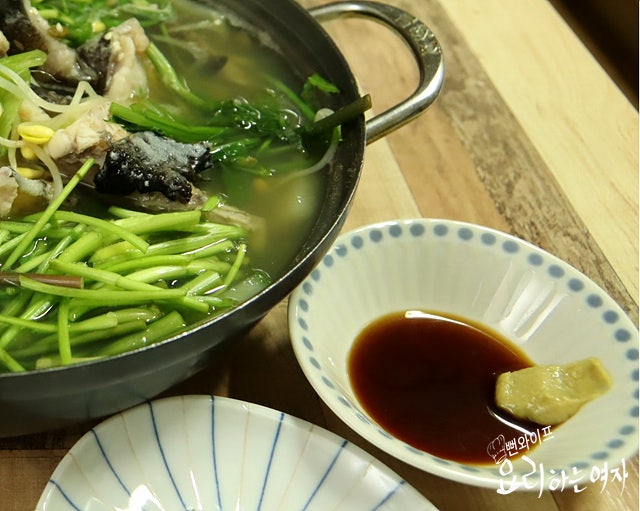
Mix soy sauce, mirin, and vinegar to taste, and add a touch of nose-tingling wasabi or prepared mustard...
Dipping the monkfish meat and vegetables into the sauce keeps every bite light and refreshing.
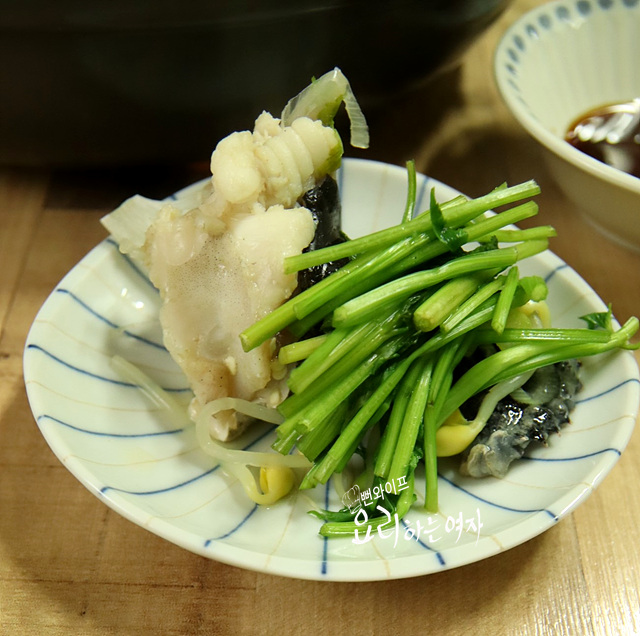
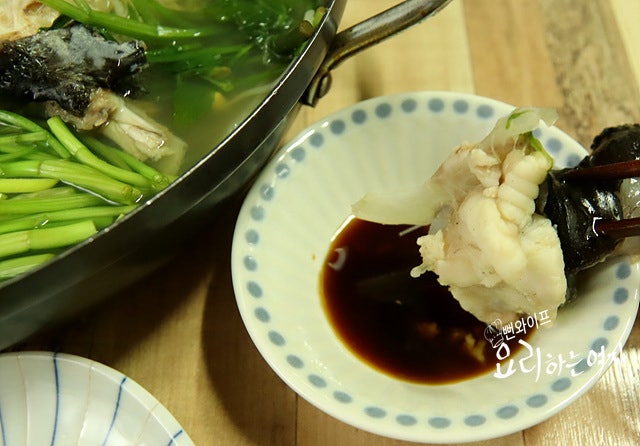
Plump, tender boiled monkfish and fragrant water dropwort are a match made in heaven.
Monkfish is in season, so the meat is as savory and tender as plump snow crab meat.
Try steaming the monkfish in a steamer basket with lightly cooked water dropwort or mushrooms to enjoy it as traditional steamed monkfish slices (agwi-suyuk) too.
Either way, whether as a soup or steamed slices, you will be thoroughly satisfied.
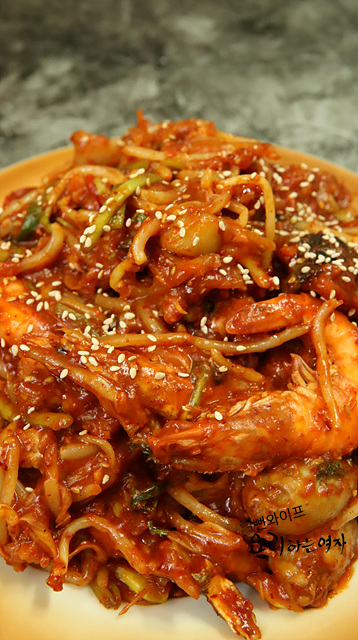
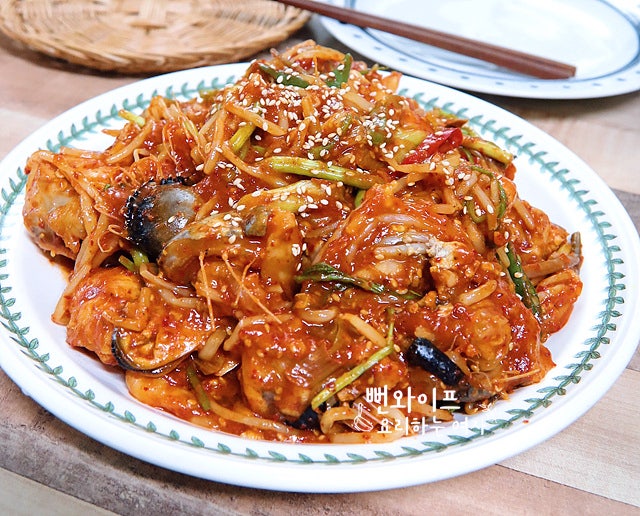
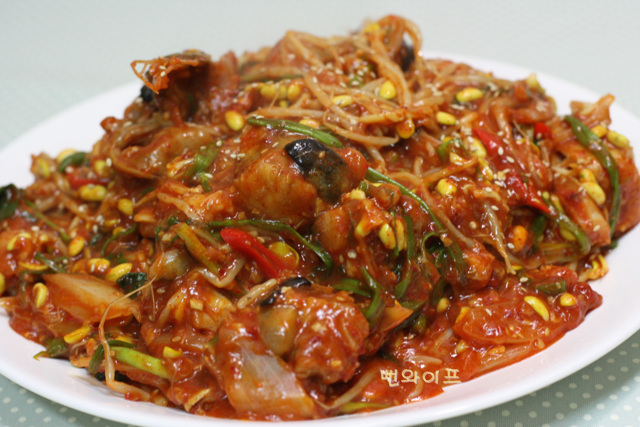
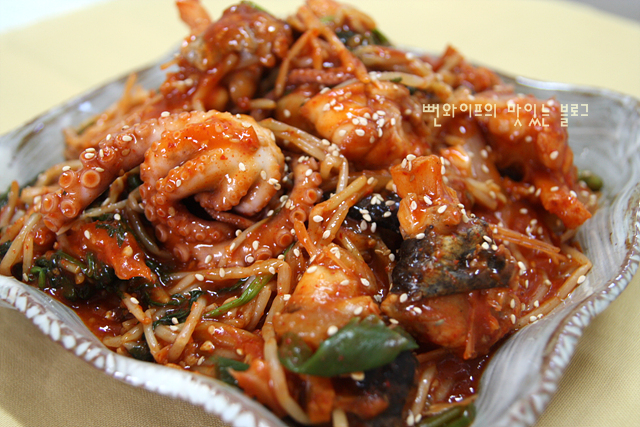
Agwijjim (spicy braised monkfish) is another must-try monkfish dish.
I have linked it here, so please take a look.
Related post on the blog (Korean)blog.naver.com/ppunwife/223334489866
 Ppunwife's tips
- To remove the fishy odor, drizzle 2 tbsp of soju, and to firm up the flesh, evenly drizzle 2 tbsp of vinegar; toss together and let it sit briefly, then rinse just once with water.
- If you put the monkfish liver into the soup right from the start, it will break apart and make the broth cloudy, so either add it at the very end of cooking or ladle out a little broth and simmer it separately to enjoy.
FAQ
Is there a trick to firming up monkfish meat and removing the fishy odor?
After cleaning, evenly drizzle 2 tbsp each of soju and vinegar, mix, and rinse lightly once with water; this firms up the flesh and reduces unwanted odors.
When should the monkfish liver be added?
If added at the beginning, it easily breaks apart and makes the broth cloudy, so it is best to add it at the very last stage of cooking or ladle out some broth and simmer it gently on the side.
What should I do if I am using frozen monkfish?
Frozen monkfish can have a distinct fishy odor, so adding 1/2 tsp of minced ginger to the broth will help eliminate unwanted smells.
Are there other ingredients that go well in this besides the basic vegetables?
In addition to Korean radish, water dropwort, and soybean sprouts, adding perilla leaves, crown daisy, or mushrooms also pairs wonderfully with monkfish soup.