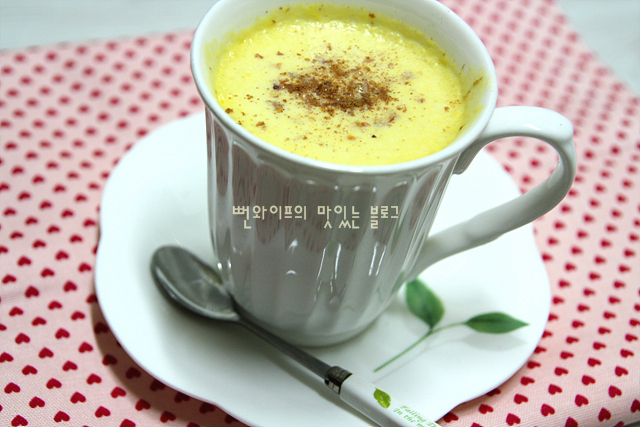
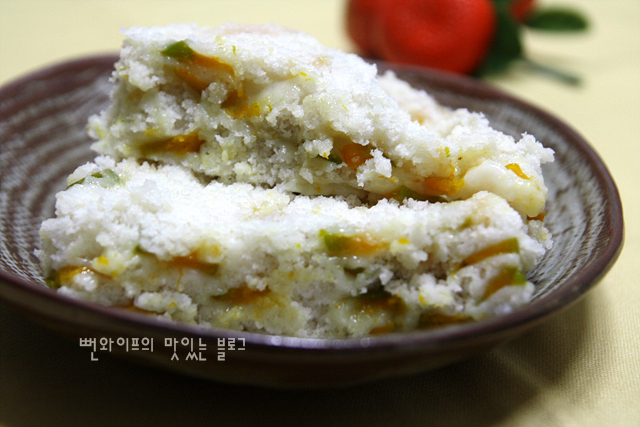
Danhobak Sikhye (Sweet Pumpkin Rice Punch)
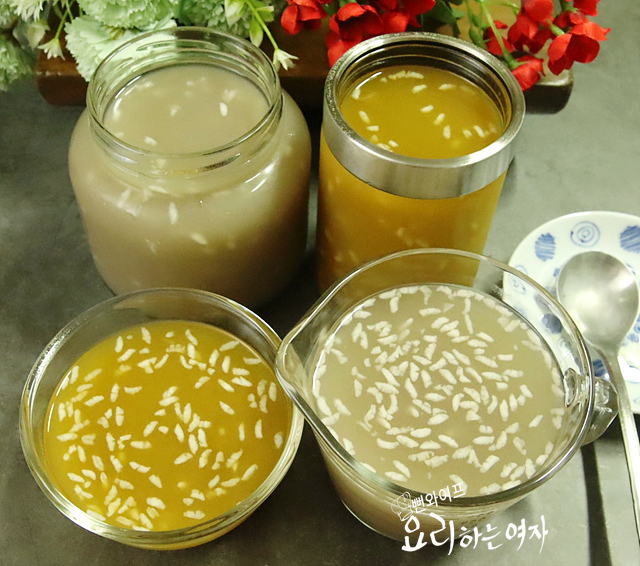
A traditional Korean sweet drink made by boiling steamed kabocha squash puree with malted rice punch for a subtle aroma and lovely color.
Translated from Korean by AI and not yet checked by a native speaker. Amounts and numbers are taken directly from the original recipe. Read the Korean original →
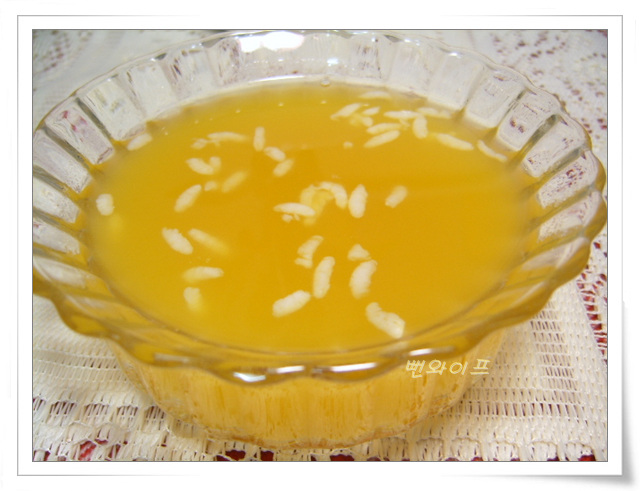
This traditional drink is finished by boiling finely strained steamed kabocha squash puree together with malted rice punch liquid. Characterized by its clear yellow color and subtle kabocha squash aroma, it is well suited for serving as a holiday or dinner guest dessert.
- Servings
- about 10–12 servings
- Difficulty
- Medium
- Spiciness
- Not spicy
Ingredients
- Barley malt powder (yeotgireum)5 cups
- White rice1 3/4 cups
- Sugar2.5 cups
- Salt0.5 tsp
- Bottled water35 cups (7 L)
- Kabocha squash puree1.5 cups (1 1/2 cups)
- You can add about 1 cup of kabocha squash puree per 20 cups of sikhye liquid.
- Since 1 to 2 cups of liquid can be lost with the sediment, this is not the initial water poured when soaking the barley malt powder, but the final liquid (sikhye liquid) after letting the sediment settle. Measure the kabocha squash based on this amount of liquid.
- You can portion the kabocha squash puree into 100 g units, store it in the freezer, and use it for baking such as rice cakes, cookies, and bread.
Steps
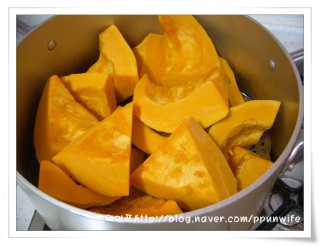
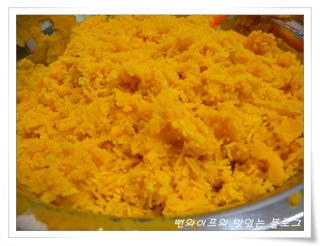
1. Scoop out the inside of the kabocha squash cleanly and peel the skin.
You must also scrape out the inner fibers cleanly so the sikhye turns out neat.
Cut into thick pieces and steam in a steamer with rising steam.
Steam for at least 15 minutes; if a chopstick goes in smoothly when tested, it is fully cooked.
If the kabocha squash skin is hard and difficult to peel, you can peel it after steaming.
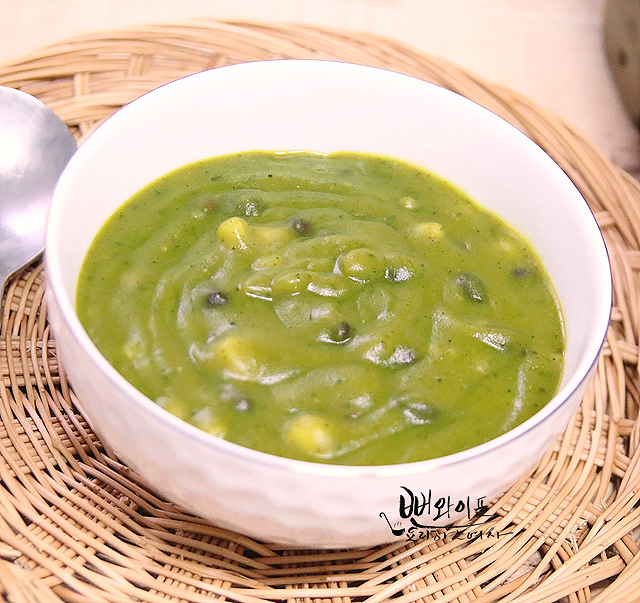
2. Place the steamed kabocha squash in a sieve and press down firmly to pass it through; passing it through like this
makes the clumped particles fine. ⇒ (Kabocha squash puree)
3. You can portion it into 100 g units, store it in the freezer, and use it for baking such as rice cakes, cookies, and bread.
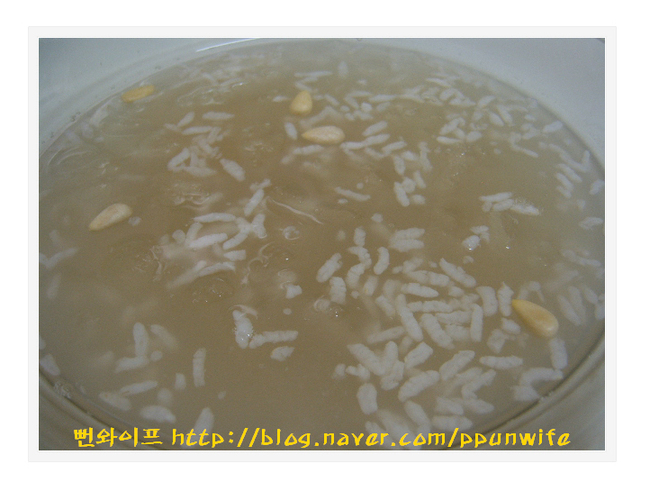
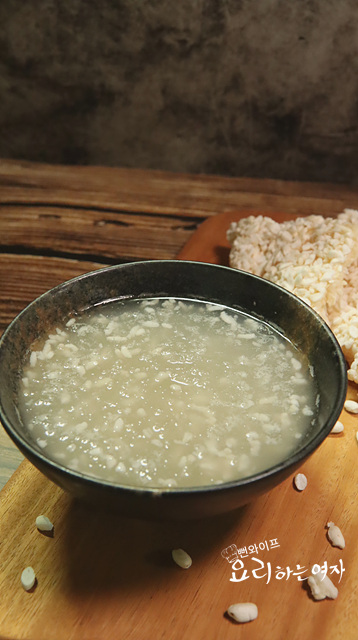
For how to make regular sikhye, look here ⇒ http://blog.naver.com/ppunwife/140047601245
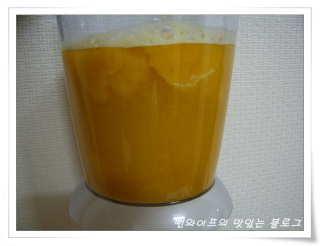
4. Add 1.5 (1 1/2) cups of kabocha squash puree and 1 to 2 cups of sikhye liquid, then blend finely with a blender.
You can add about 1 cup of kabocha squash puree per 20 cups of sikhye liquid.
Since 1 to 2 cups of liquid can be lost with the sediment, this is not the initial water poured when soaking the barley malt powder, but
the final liquid (sikhye liquid) after letting the sediment settle. Measure the kabocha squash based on this amount of liquid.
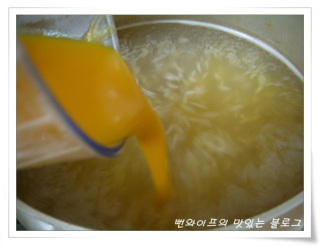
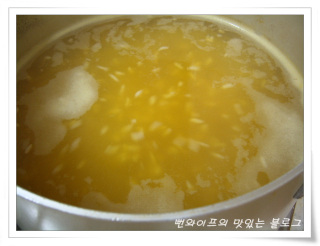
5. Pour in the blended kabocha squash toward the end of boiling the sikhye liquid.
6. Boil for 2-3 minutes more and it is done.
Let it cool and keep it in the refrigerator.
 Ppunwife's tips
- You must also scrape out the inner fibers cleanly so the sikhye turns out neat.
- If the kabocha squash skin is hard and difficult to peel, you can peel it after steaming.
FAQ
When is the best time to peel the kabocha squash?
You can peel it before steaming, but if the skin is too hard and dangerous to cut, it is fine to peel it after steaming first.
What is the ratio of kabocha squash puree to sikhye liquid?
Based on 20 cups of the final sikhye liquid obtained after settling the sediment, adding about 1 cup of kabocha squash puree is just right.
How do I make the kabocha squash puree smooth?
Scrape out the inner fibers completely, press the steamed kabocha squash firmly through a sieve, then pour in a little sikhye liquid and blend with a blender to make it fine.
At what point during cooking the sikhye liquid do I add the kabocha squash puree?
Add the blended kabocha squash at the final stage of boiling the sikhye liquid, boil for 2 to 3 minutes more, and finish.