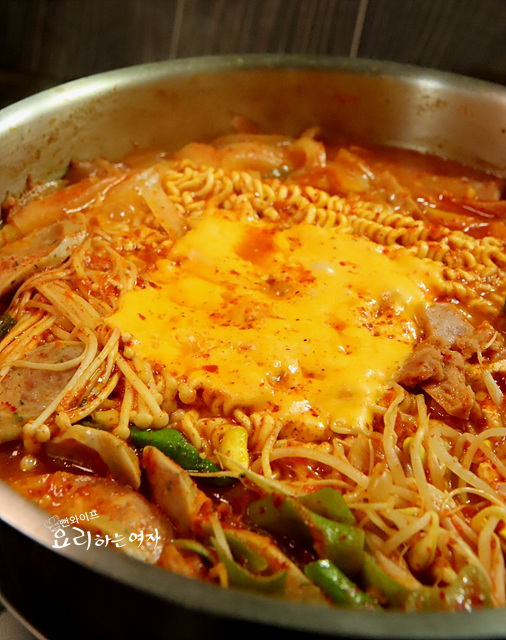
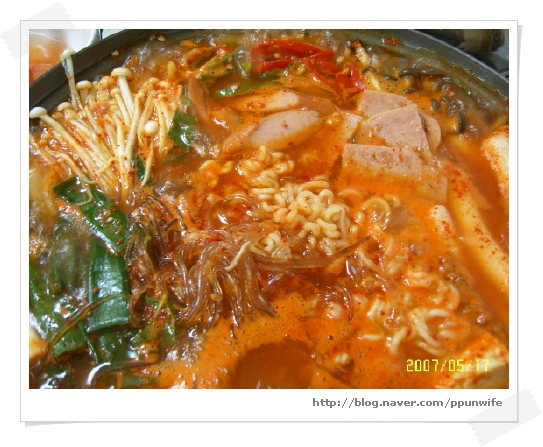
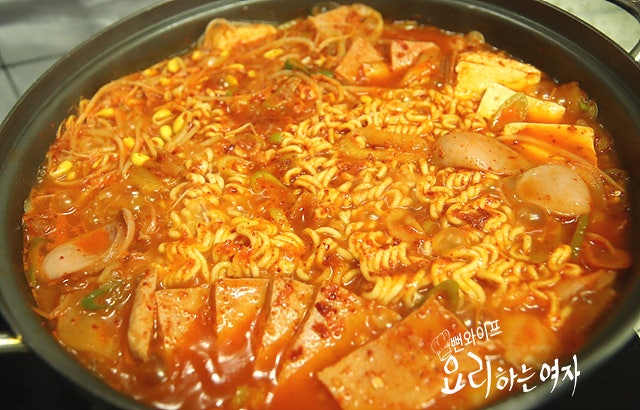
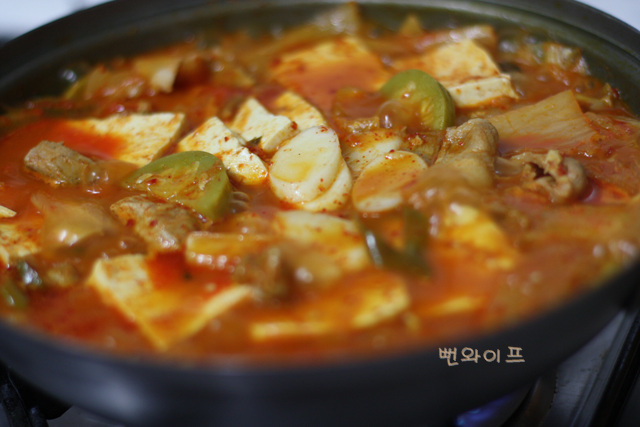
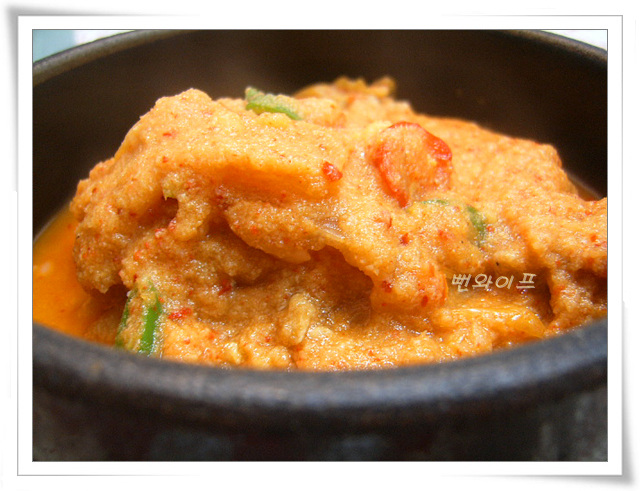
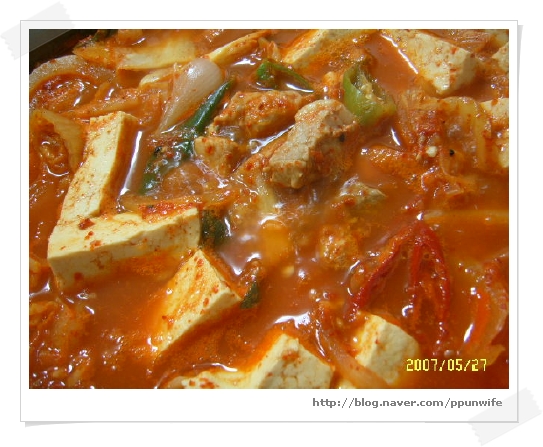
Spicy Budae Jjigae (Army Stew) with Aged Kimchi
A spicy stew simmered in anchovy broth with ham, sausages, aged sour kimchi, and various vegetables.
Translated from Korean by AI and not yet checked by a native speaker. Amounts and numbers are taken directly from the original recipe. Read the Korean original →
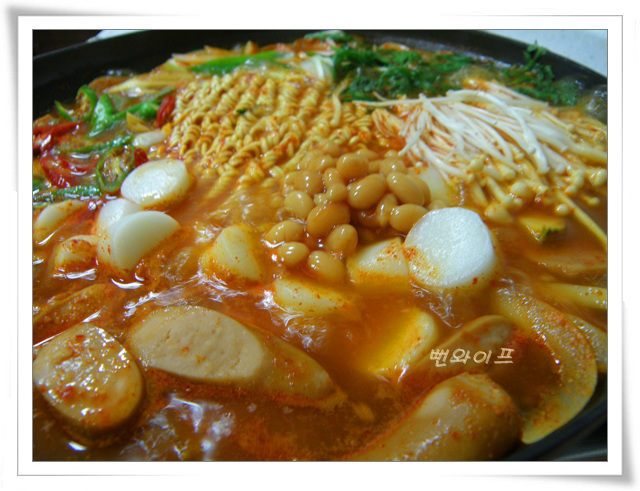
This hearty 4-serving stew brings out deep savory flavors by stir-frying aged kimchi with ham, sausages, and seasoned pork. Anchovy broth is poured in and the seasoning paste is added in two stages for a spicy, rich broth, paired with ramen and rice cakes for a satisfying meal or party dish.
- Servings
- 4 servings
- Difficulty
- Hard
- Spiciness
- Spicy
Ingredients
Ingredients
- Pork100 g (pork shoulder, picnic shoulder, ham, etc.)
- Frankfurter sausage3, 60 g
- Ham1/2 can, 100 g
- Canned beans3 tbsp
- Aged sour kimchi4 stems
- Squash1/4
- Onion1/4
- Enoki mushrooms1 pack
- Red chili pepper1
- Cheongyang chili pepper (hot green chili)2
- Large green onion (daepa)1/2 stalks
- Ssukgat (crown daisy)1 handful
- Anchovy broth5–6 cups
Pork marinade
- Regular soy sauce (jin-ganjang)1/2 tbsp
- Minced garlic1 tsp
- Ground black peppera little
Noodle & rice cake additions
- Ramen noodles1
- Rice cakes1 handful
Seasoning
- Gochugaru (Korean chili flakes)3 tbsp
- Soup soy sauce (guk-ganjang)1 tbsp
- Minced garlic1 tbsp
- Mirin (cooking rice wine)1 tbsp
- Ground black pepper1/2 tsp
- Ginger juice (or ginger powder)a little
- Broth (or water)3 tbsp
- Salt for finishing
- Cut the vegetables into bite-sized pieces; water dropwort, green cabbage, and soybean sprouts also work great.
- Microwave the rice cakes or soak them in water to soften them.
- Boiling the ramen noodles until half-cooked makes cooking easier later; soaked sweet potato glass noodles are also good.
Steps
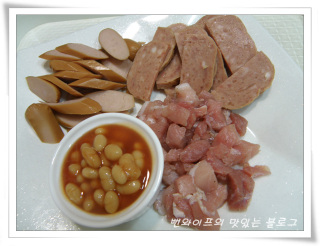
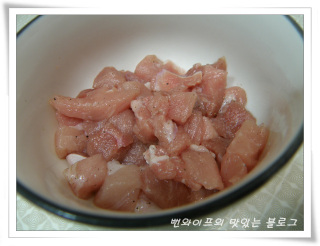
1. Cut the ham, frankfurter sausages, and pork into bite-sized pieces, and prepare a small amount of canned beans.
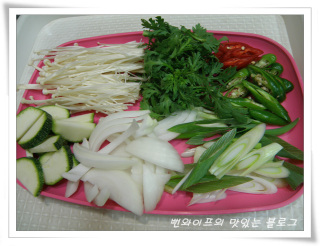
2. Cut the vegetables into bite-sized pieces as well. Water dropwort, green cabbage, and soybean sprouts are also great.
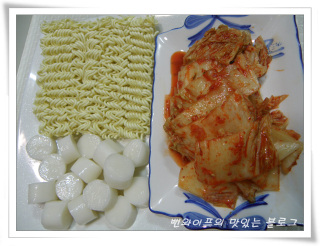
3. Shake off the seasonings inside the well-fermented kimchi, cut 4-5 leaves into bite-sized pieces, and prepare the ramen and rice cakes.
Microwave the rice cakes or soak them in water to soften them.
Boiling the ramen until half-cooked makes cooking easier later.
Soaked sweet potato glass noodles are also great.
4. Season the pork with the marinade ingredients.
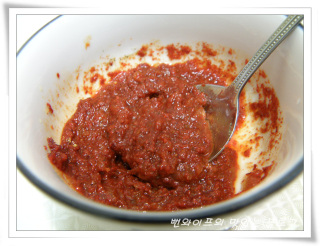
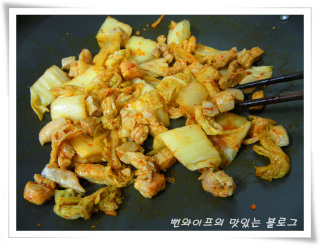
5. Combine all seasoning paste ingredients, adding a little broth or water to mix into a moist paste.
6. Once all ingredients are ready, start cooking for real.
In a hot pot, combine the seasoned pork and kimchi, then stir-fry thoroughly.
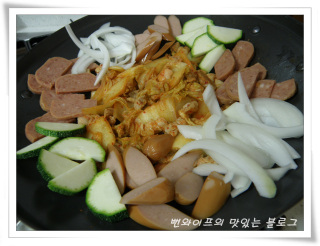
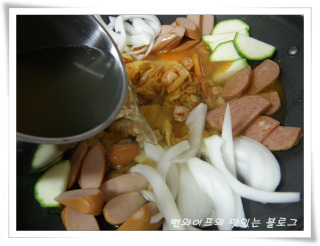
7. Once the meat is fully cooked, arrange the secondary ingredients around the edges.
The ramen noodles, rice cakes, canned beans, and crown daisy will be added after the broth comes to a boil.
8. Pour in the anchovy broth.
Pour enough broth to submerge the ingredients well.
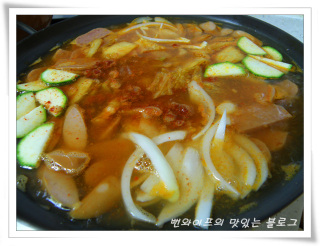
10
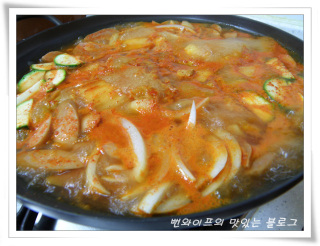
9. Stir in 1/2 of the seasoning paste.
10. Bring to a rolling boil.
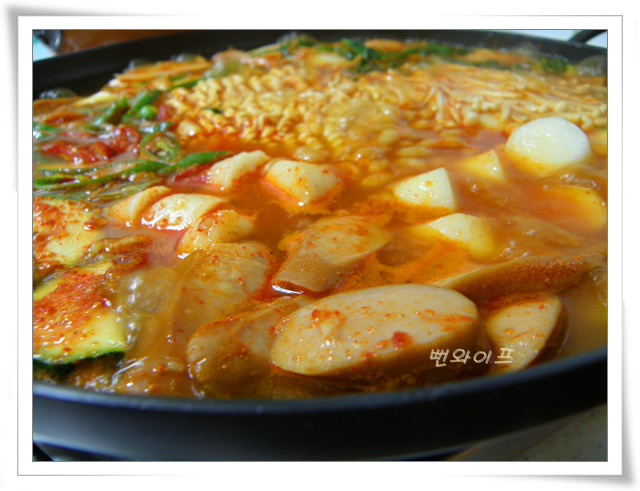
Add the rice cakes, ramen noodles, canned beans, and ssukgat, dissolve the remaining seasoning paste, and boil until the ramen is cooked through to finish. If it needs more salt, season with salt to taste.
A hearty budae jjigae is finished.
 Ppunwife's tips
- The ramen noodles, rice cakes, canned beans, and crown daisy will be added after the broth comes to a boil.
- Pour enough broth to submerge the ingredients well.
- If it needs more salt, season with salt to taste.
FAQ
How should I prep the ramen noodles and rice cakes before cooking?
Soak the rice cakes in water beforehand or warm them in the microwave to soften, and boil the ramen noodles until about half-cooked in boiling water so they are easy to finish in the stew.
Are there other ingredients that go well besides the basic vegetables?
Depending on your preference, water dropwort, green cabbage, soybean sprouts, or soaked sweet potato glass noodles also pair wonderfully.
How should I divide the broth and seasoning paste?
Pour in enough anchovy broth to cover the ingredients, dissolve half of the prepared seasoning paste first to boil, then stir in the remaining seasoning paste when adding the ramen and add-ins to adjust the flavor.
Can I use another broth instead of anchovy broth? AI-generated
Generally, using beef bone broth (sagol broth) or store-bought kelp broth also yields a rich, deep flavor.