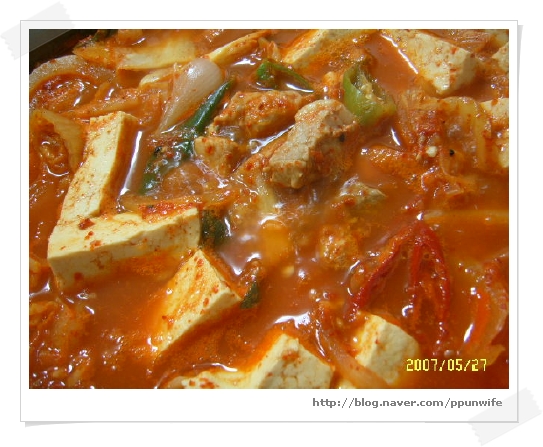
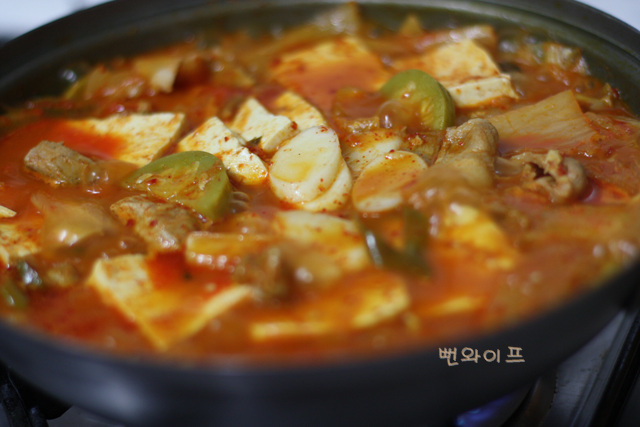
Spicy Budae Jjigae (Army Stew) with Chili and Kimchi
A spicy 4-serving hot pot stew made with ham and sausage simmered with Cheongyang chili peppers and aged sour kimchi.
Translated from Korean by AI and not yet checked by a native speaker. Amounts and numbers are taken directly from the original recipe. Read the Korean original →
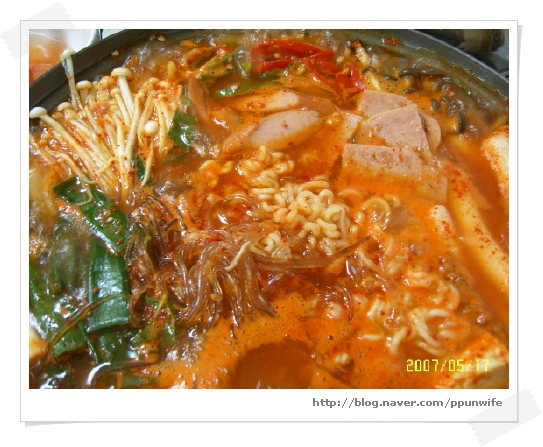
A hearty 4-serving stew packed with ham, sausage, pork, aged sour kimchi, and vegetables. Letting the seasoning paste hydrate beforehand gives the broth a vibrant color, while Cheongyang chili peppers bring a rich, spicy kick. Pre-soaking or parboiling the ramen and glass noodle additions keeps the broth from cooking down too much for a clean finish.
- Servings
- 4 servings
- Difficulty
- Hard
- Spiciness
- Very spicy
Ingredients
Ingredients
- Pork100 g (pork shoulder or picnic shoulder)
- Sausage3, 60 g
- Ham1/3 can, 80 g
- Aged sour kimchi4 leaves
- Tofu1/3 block
- Tteokbokki rice cakes7
Vegetables
- Squash50 g
- Onion1/2
- Baby shiitake mushrooms30 g
- Enoki mushrooms30 g
- Cheongyang chili pepper (hot green chili)4
- Red chili pepper2
- Large green onion (daepa)2 stalks
Seasoning sauce
- Gochugaru (Korean chili flakes)3 tbsp
- Regular soy sauce (jin-ganjang)1 tbsp
- Garlic1 tbsp
- Mirin (cooking rice wine)1 tbsp
- Broth3 tbsp
- Ground black pepper1/2 tsp
- Salt1 tsp
- Ginger powder1/2 tsp
Noodle Add-ins
- Sweet potato glass noodles (dangmyeon)50 g
- Ramen noodles1/2
Stew Broth
- Broth6 cups (kelp and anchovy broth)
- I cut 4 leaves of well-fermented kimchi into bite-size pieces.
- I cut the remaining ingredients into large pieces as well to prepare them.
- Mix all these seasoning paste ingredients together and let it hydrate in advance. It makes the dish's color much more vibrant.
- Soak the sweet potato glass noodles in cold water, briefly dip the ramen in boiling water and rinse in cold water, then drain both.
- If you are cooking for children, I suggest omitting the Cheongyang chili pepper and reducing the amount of gochugaru.
Steps
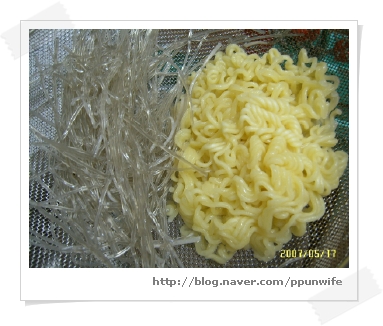
Soak the sweet potato glass noodles in cold water. Briefly dip the ramen into boiling water, rinse in cold water, and drain both.
If you add the glass noodles or ramen noodles raw, they will absorb too much broth and leave you with too little stew, so soak or parboil them ahead of time and add them right before eating to boil.
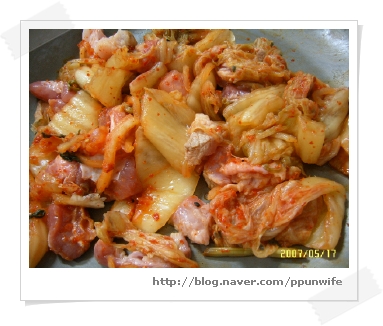
First, add the pork and aged sour kimchi to a hot pot and stir-fry them.
When the pork is almost cooked,
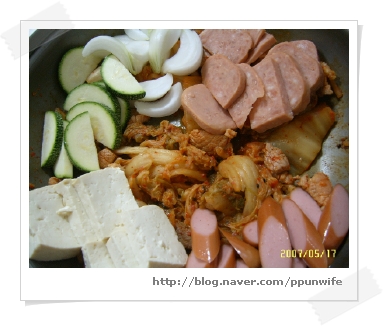
Add the onion, tofu, squash, ham, and sausage,
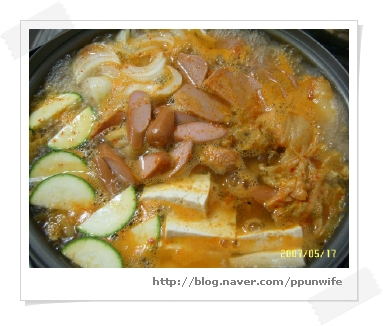
Pour in 6 cups of broth and bring it to a boil.
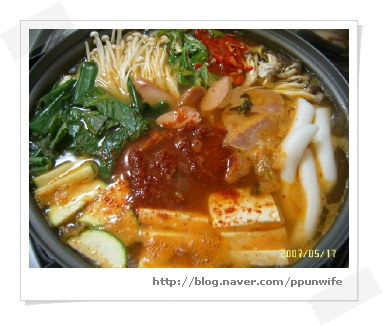
Add the remaining ingredients—mushrooms, perilla leaves, chilies, large green onion, and rice cakes—then dissolve the prepared seasoning paste into the broth.
Boil until the flavors from the ham and sausage infuse well into the broth,
and finally, add the soaked glass noodles and ramen to cook through.
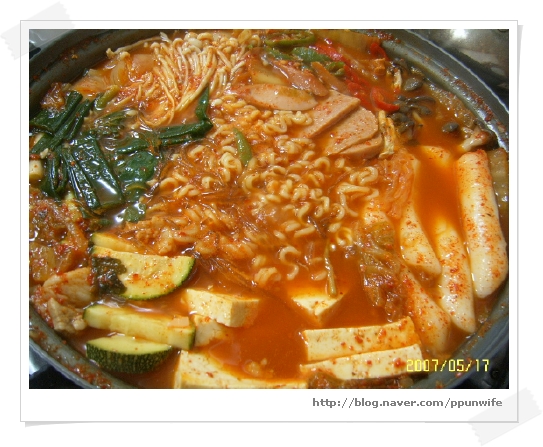
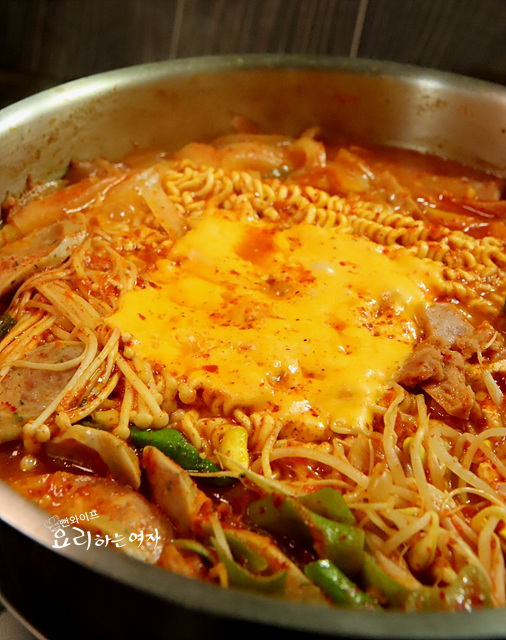
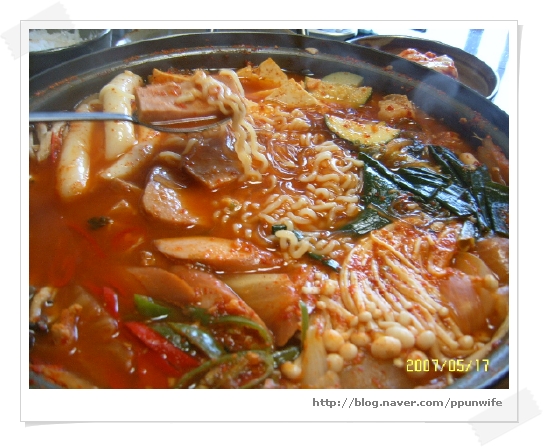
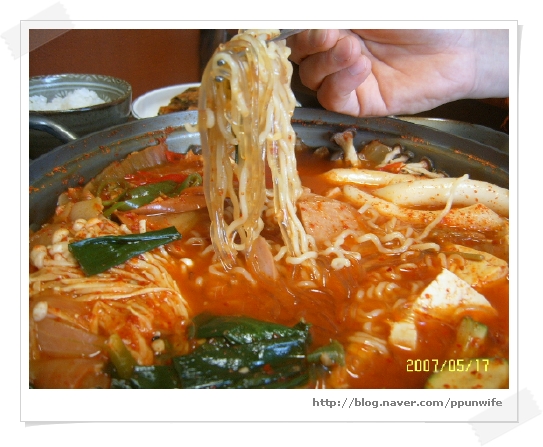
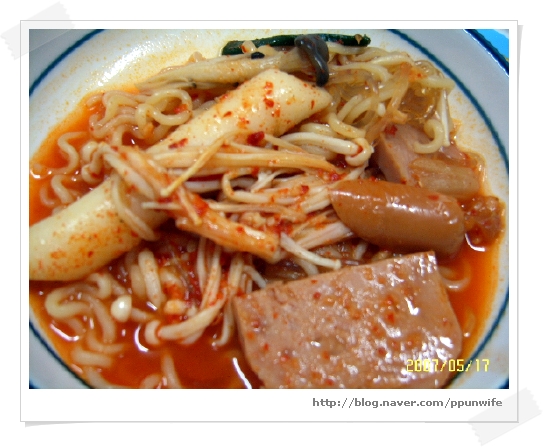
The budae jjigae is finished. The smell is absolutely to die for. Time to go dig in right away.
 Ppunwife's tips
- Mix all of this seasoning paste together and let it hydrate in advance. It makes the color of the dish much more vibrant.
- If you add raw glass noodles or ramen noodles, the stew will not have enough broth, so soak or cook them in advance and add them right before eating to boil.
FAQ
Why do you prepare the noodle add-ins in advance instead of putting them straight into the stew?
If you put glass noodles or ramen into the stew raw, they will absorb the broth and leave the stew with too little liquid.
Why should the seasoning paste be mixed and left to hydrate in advance?
Mixing the seasoning paste ingredients ahead of time to hydrate them makes the color of the finished dish come out much more vibrant.
How can I adjust the recipe to eat it with children who cannot handle spicy food?
Omitting the Cheongyang chili peppers and reducing the amount of gochugaru makes it easy and comfortable for children to enjoy.
Can I use a different broth instead of kelp and anchovy broth? AI-generated
Using beef bone broth (sagol) or store-bought broth also yields a rich, deep flavor.