Summer Kimbap (Seaweed Rice Rolls) with Pickled Green Plums
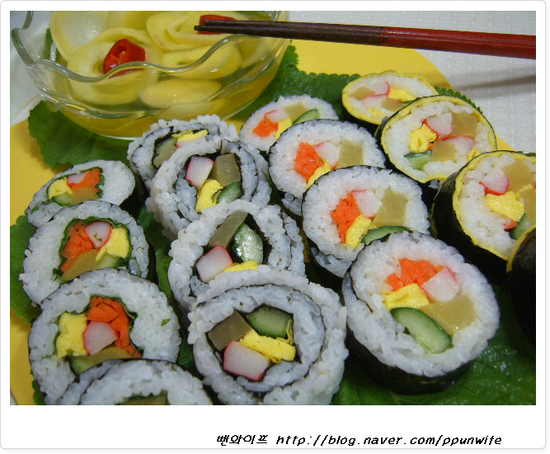
A refreshing summer kimbap that perks up your appetite by using pickled green plums instead of yellow pickled radish.
Translated from Korean by AI and not yet checked by a native speaker. Amounts and numbers are taken directly from the original recipe. Read the Korean original →
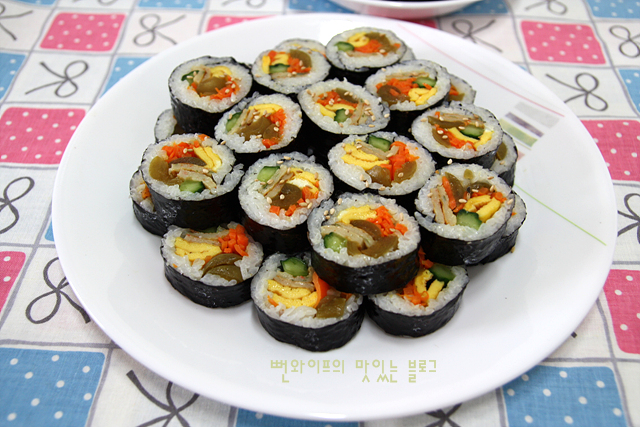
This kimbap perks up your appetite during hot summers by replacing yellow pickled radish with tart pickled green plums, making it safer to enjoy. Adding dried kelp when cooking the rice gives it a lovely sheen, and cooling the rice before rolling helps keep it from spoiling easily.
- Difficulty
- Hard
- Spiciness
- Not spicy
Ingredients
- Cooked rice
- Dried seaweed sheets (gim) for gimbap
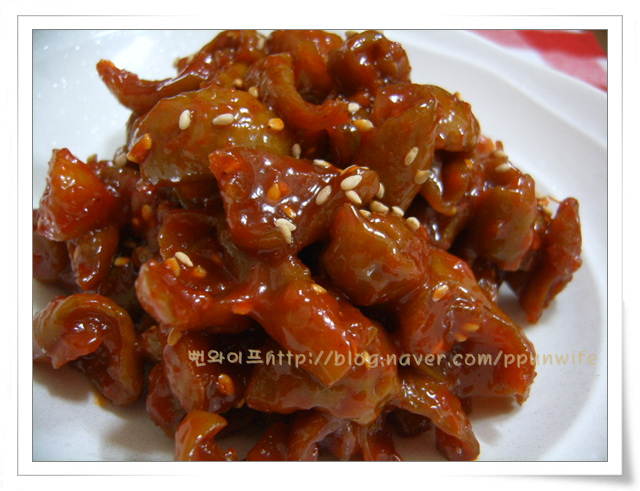
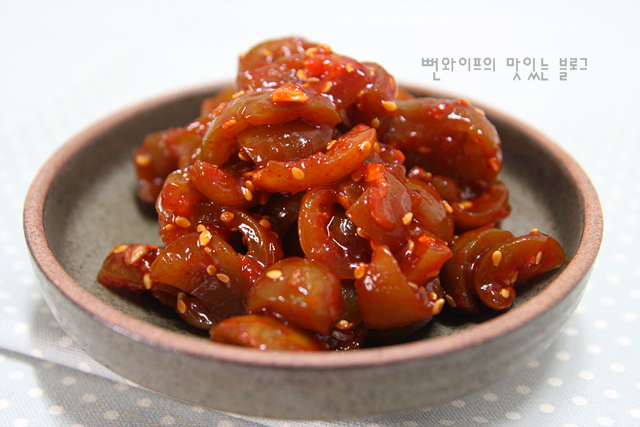
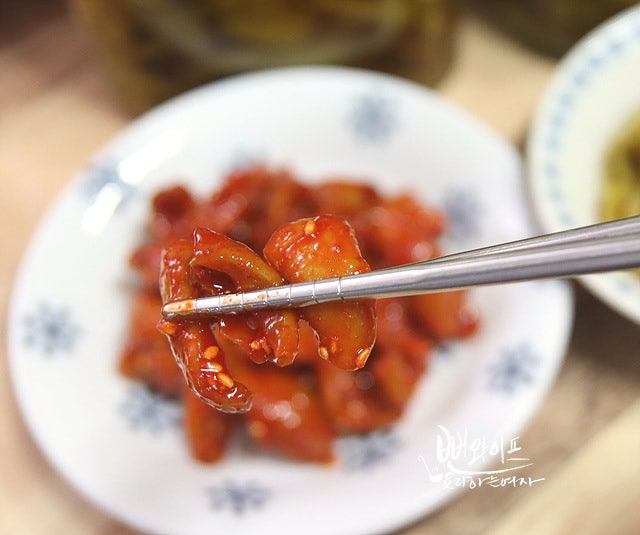
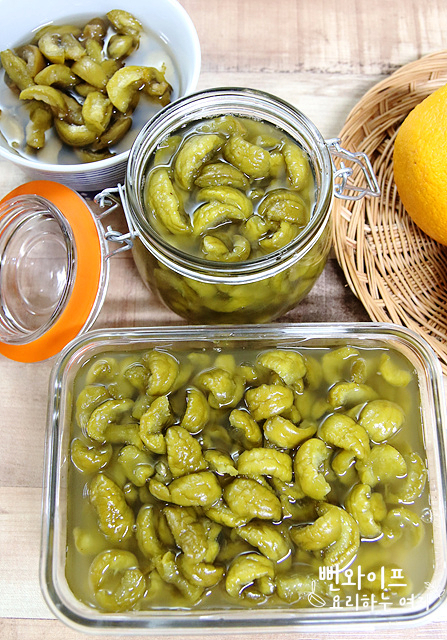
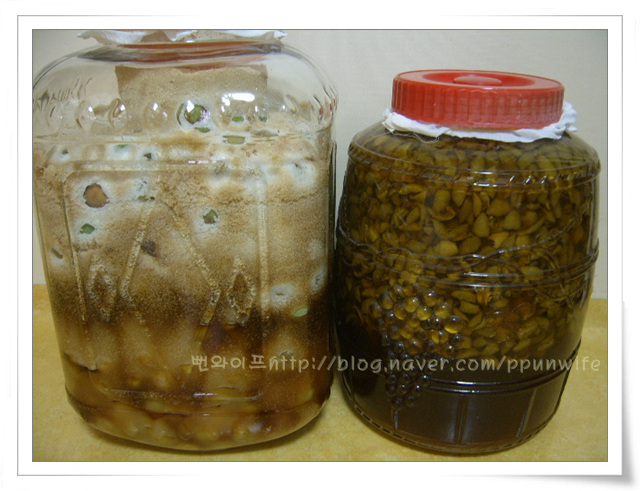
- Pickled green plums (maesil-jangajji)
- Cucumber (or spinach)
- Egg
- Carrot
- Fish cake (eomuk) (or ham, imitation crab stick)
- Toasted sesame oil
- Ground toasted sesame seeds
- Place dried kelp (dasima) in the rice cooker with the rice and water, soak for 30 minutes, then cook.
- If you do not have pickled green plums (maesil-jangajji), you can substitute yellow pickled radish.
- Choosing straight spiny cucumbers makes them much easier to prep.
- You can adjust the fillings to suit your taste or whatever is in your fridge.
Steps
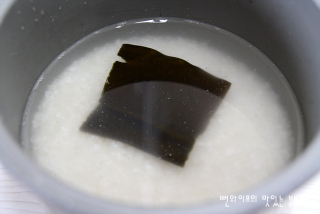
I placed the dried kelp (dasima) into the rice cooker with the rice and water, let it soak for 30 minutes, and cooked the rice without removing the kelp. Cooking rice with kelp water gives it a glossy shine and delicious flavor, which is great for kimbap or sushi. Use a ratio of 1 rice to 1.1 water and soak for about 30 minutes for slightly firm, fluffy rice. You will need to decrease or increase the water slightly depending on whether you are using freshly harvested new crop rice or aged rice.
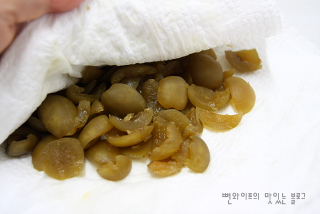
Press out the moisture from the pickled green plums (maesil-jangajji) using a clean dry kitchen towel or paper towels. If you do not have pickled plums, you can prepare yellow pickled radish instead.
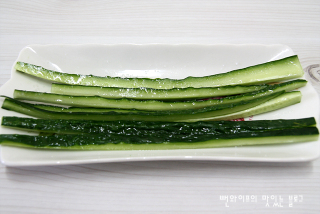
Choosing straight cucumbers makes them easier to handle. Slice them into suitable thickness and length as shown, then sprinkle with a little salt to soften and pickle them.
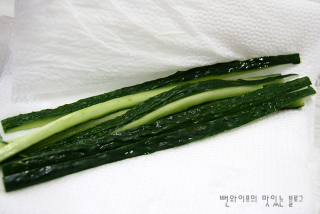
Pat dry with paper towels to remove the moisture.
Season the eggs with a pinch of salt, beat well, cook into an omelet over low heat, and slice into strips matching the width of the seaweed sheets.
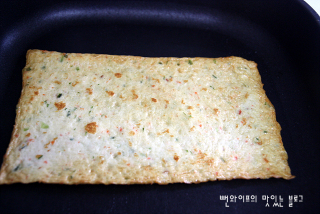
Cook the fish cake (eomuk) on both sides in a heated pan, then cut it into strips the same width as the eggs.
Finely julienne the carrots, and...
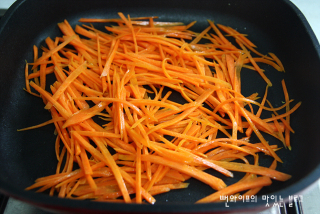
Add a pinch of salt and stir-fry them in a heated pan with a little oil until softened.
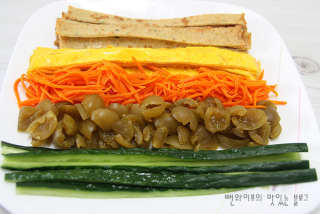
Here are all the prepared ingredients placed together on one plate. You can customize the fillings based on your taste or whatever you have in the fridge.
Once the rice is done, transfer it to a wide bowl and season with salt. Sprinkle 1/2 tsp of salt per 1 cup of uncooked rice (which equals 2 bowls of cooked rice), and cool it down by mixing with a cutting motion so the grains do not get mashed. Rolling the kimbap while the rice is still hot can make it spoil quickly.
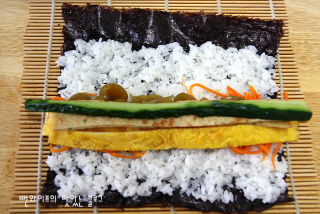
Place a sheet of dried seaweed on a bamboo rolling mat and spread the rice thinly over it, leaving the far edge bare. Place the fillings about 1/3 of the way up from the bottom of the rice. It is best to lay down the plums and carrots first at the bottom since they tend to scatter while rolling. Roll tightly using the mat, and finish by brushing a little water or toasted sesame oil on the edge so it seals securely without unrolling.
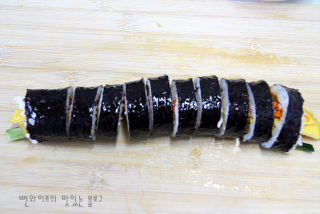
Just before slicing, lightly brush the outside of the rolls with toasted sesame oil and slice gently using the tip of the knife.
 Ppunwife's tips
- Cooking rice with kelp water gives it a glossy shine and delicious flavor, which is great for kimbap or sushi.
- Rolling kimbap while the rice is still hot can make it spoil easily.
- Plums and carrots can scatter during rolling, so it is best to place them at the very bottom of the fillings.
- Using a bamboo mat to roll, and finishing by dabbing a little water or toasted sesame oil on the seam, will seal it nicely so it does not come undone.
- Lightly seasoning unseasoned ingredients not only brings the flavors of the roll together for better taste, but also reduces the chances of spoilage compared to leaving them unseasoned.
FAQ
Is there a trick to prepping the pickled green plums instead of yellow pickled radish?
Press out the moisture with a dry cloth or paper towels before adding them so your kimbap does not get soggy.
Why add dried kelp when cooking rice for kimbap?
Cooking the rice with dried kelp, right from the soaking stage, adds a glossy shine and savory depth to the grains.
How can I prevent summer kimbap from spoiling quickly?
Make sure to let the hot rice cool completely before rolling, and use salted, drained cucumbers instead of spinach, which spoils quickly.
How do you keep the ends of the seaweed from unraveling when rolling kimbap?
Lightly dab water or toasted sesame oil along the edge of the seaweed at the end to seal it securely without coming undone.