Crisp Maesil Jangajji (Pickled Green Plums)
A crisp pickle made by preserving firm, in-season green plums in sugar.
Translated from Korean by AI and not yet checked by a native speaker. Amounts and numbers are taken directly from the original recipe. Read the Korean original →
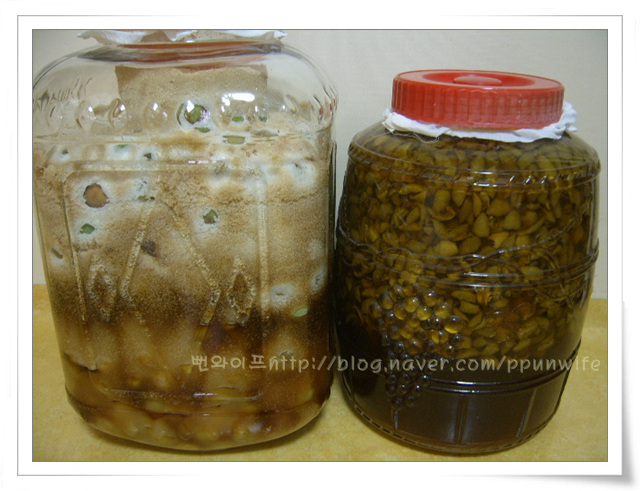
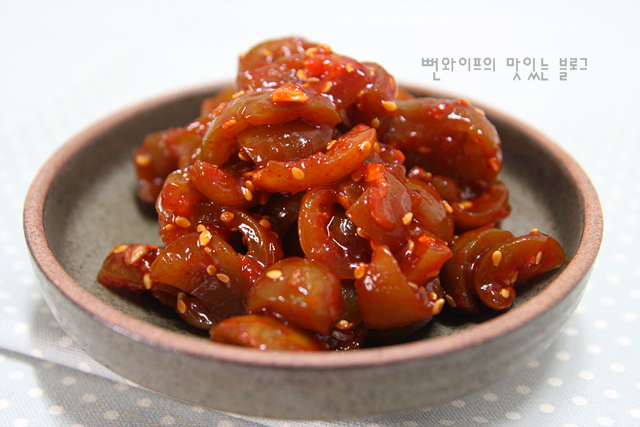
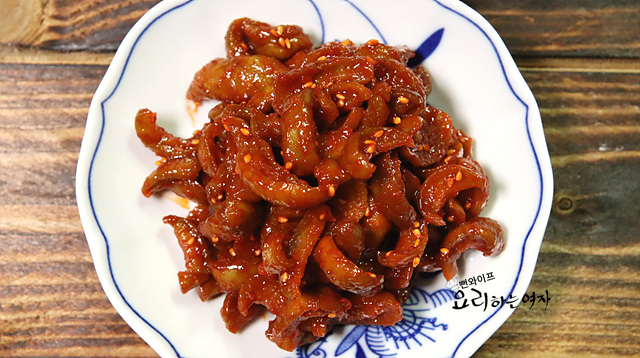
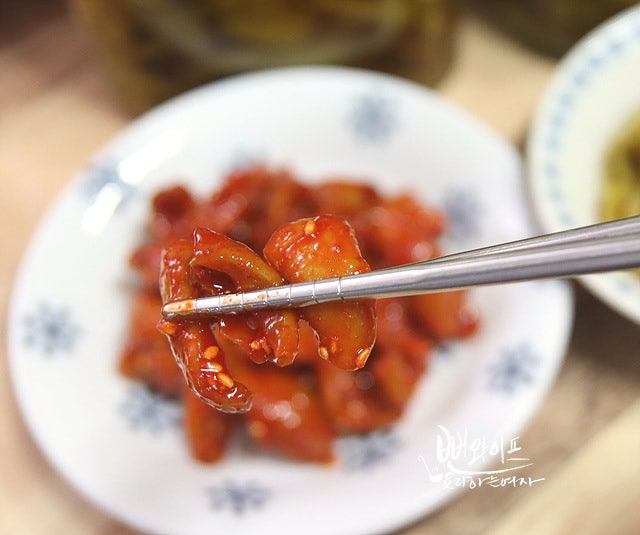
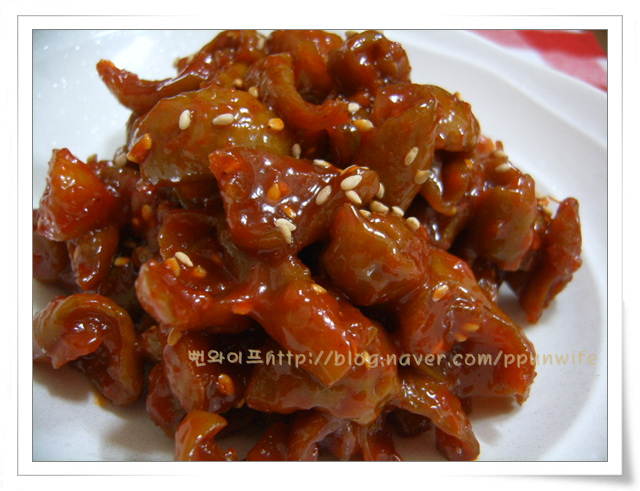
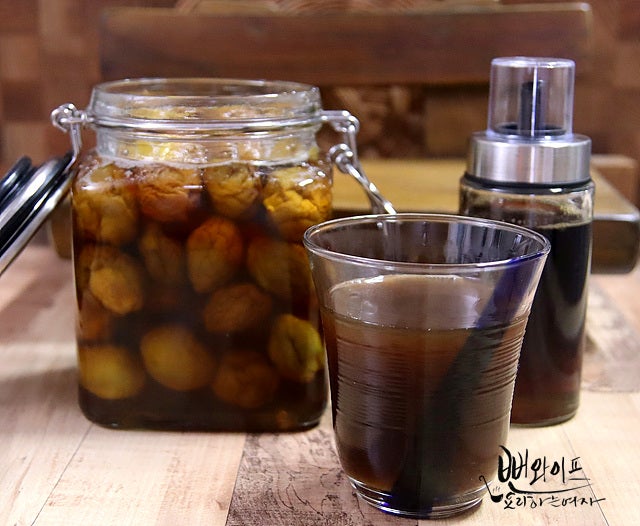
Firm green plums are pitted and preserved with brown sugar at a 1:1 or higher ratio. After fermenting in a cool, shaded spot for 20 to 30 days, they are wonderful tossed with gochujang as a side dish or served as an after-meal palate cleanser.
- Servings
- about 10–12 servings
- Difficulty
- Hard
- Spiciness
- Not spicy
Ingredients
Maesil jangajji
- Green plums (cheongmaesil)10 kg
- Brown sugar10 kg
Making green plum extract
- Green plum (maesil)10 kg
- Brown sugar10 kg
- Firm green plums are best for pickling, while fully ripe yellow plums have a stronger aroma and are great for making green plum extract or plum liqueur.
- Choose firm, blemish-free green plums for pickling; soft, overripe yellow plums are not suitable for pickles.
- After washing, let the plums dry in a cool, well-ventilated spot for about half a day. If you dry them for too long, they will turn yellow and soften.
- The stems cause bitterness, so gently poke and flick them off with a toothpick.
Steps
Choose firm, blemish-free green plums. Fully ripe yellow plums become mushy and are not suitable for pickling.
Swish and wash them several times in clear water, then drain them in a colander.
Spread clean paper in a cool, well-ventilated area and let the remaining moisture dry off. It will dry in about half a day. If you dry them too long, the plums will turn yellow and become soft. Once you buy the plums, it is best to prep them and start pickling right away.
Some stems come off easily with your fingers, but for those that do not, gently flick them away with a toothpick. Leaving them on causes bitterness.
Placing the stem side down keeps the plum from rolling around.
Set a wooden spatula on top of the plum and press down firmly with your hand.
The plum splits open, leaving only the pit. If you try to pit them by slicing into 6 sections with a knife, too much flesh clings to the pit and it takes a very long time. Having my strong husband crack them open made the work much easier.
Cut the flesh into 5 to 6 pieces with a knife.
The plum pits ended up weighing 2 kg. To the prepped 8 kg of plum flesh, add 8 kg of brown sugar and mix well. If there is not enough sugar or if water gets in, it can cause spoilage, so use an equal weight or a slightly more generous amount of sugar.
Transfer everything into a glass jar that has been sterilized with soju and thoroughly dried. Cover the top with a layer of sugar so the plums are completely hidden.
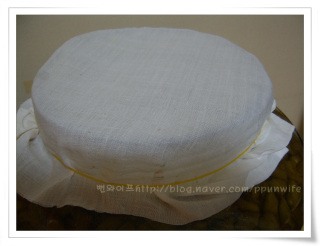
Cover the mouth of the jar with a cloth such as hemp, secure it with a rubber band, and close the lid tightly.
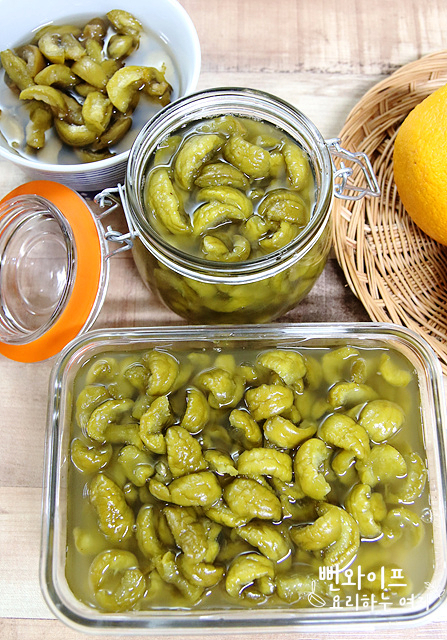
Once the pitted plum flesh meets the sugar, it dissolves very quickly. After ten days, stir the thick layer of sugar at the bottom together with the sugar on top using a wooden spatula, then let it ferment in a cool, shaded spot.
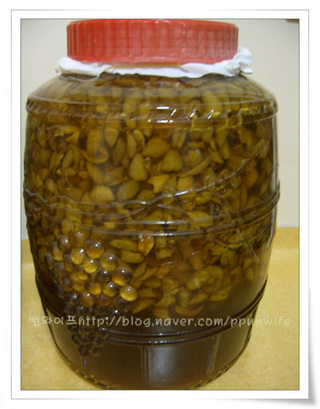
The steps up to step 4 are the same as for the pickles above. For the extract, use whole plums. Add some of the plums to a glass jar.
Sprinkle enough sugar to cover the plums, then continue layering in the jar: plums, then sugar, and so on.
Finish by topping off with sugar all the way to the rim.
Cover with a cloth and close the lid tightly.
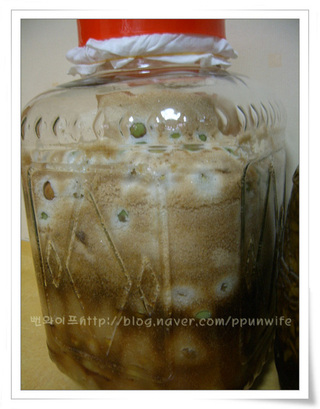
This is after 4 days, and the sugar has started dissolving from the bottom. Even though it was filled with sugar up to the rim, as it dissolved the sugar line dropped down to the shoulders of the jar. After a week or ten days, stir it so the sugar mixes well. Use a wooden spatula or clean hands sterilized with soju and thoroughly dried so no water or impurities get in. When making extract with whole plums, scoring them once with a knife helps the sugar dissolve faster.
 Ppunwife's tips
- Keep the ratio of green plums to sugar at 1:1, but lean toward using slightly more sugar. If there is too little sugar, it can become overly sour or bacteria may grow.
- If there is not enough sugar or if water gets in, it can cause spoilage, so use an equal weight or a more generous amount of sugar.
- When making extract with whole green plums, scoring them once with a knife helps the sugar dissolve faster.
FAQ
What kind of green plums should I choose for pickling?
Firm, blemish-free green plums are best for pickling. Yellow, fully ripened plums that have softened are not suitable.
Why do I need to remove the stems from the green plums?
Leaving the stems on can make the pickles bitter, so it is best to remove them using your fingers or a toothpick.
What happens if I do not use enough sugar?
If you use too little sugar or let moisture get in, the batch can become overly sour or spoil from bacterial growth, so always use at least an equal weight of sugar or slightly more.
How do I eat the matured green plum pickle pieces?
After 20 to 30 days of fermenting, take out the plum pieces and toss them with gochujang to enjoy as a side dish, or serve them plain as an after-meal palate cleanser.