Crunchy Tart Maesil Jangajji (Pickled Green Plums)
A maesil jangajji side dish pickled twice with salt and sugar to tone down excessive sweetness and bring out a crisp, crunchy texture.
Translated from Korean by AI and not yet checked by a native speaker. Amounts and numbers are taken directly from the original recipe. Read the Korean original →
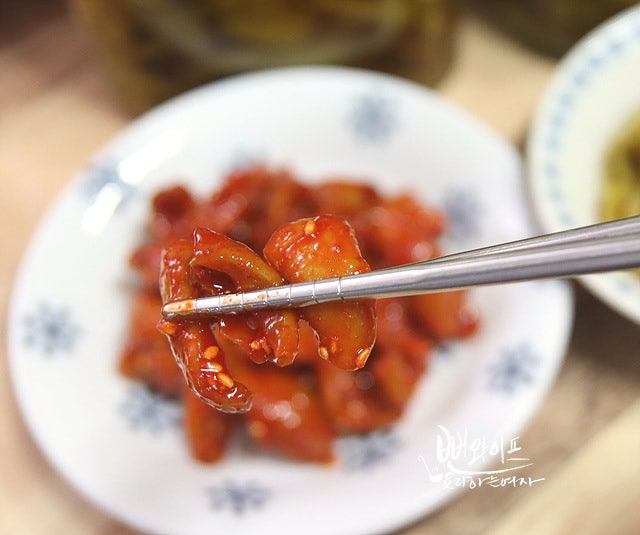
This pickle uses both salt and sugar—salting first to cut through the sweetness and achieve a balanced sweet-and-salty flavor. Firm green plums are selected, pitted, and then steeped in sugar for a second pickling to give the flesh a delightfully chewy, crunchy bite. The finished pickles can be tossed in gochujang as a rice side dish, or used in salad dressings and served alongside meat dishes.
- Servings
- about 10–12 servings
- Difficulty
- Medium
- Spiciness
- Mildly spicy
Ingredients
Ingredients
- Green plums (cheongmaesil)3 kg (after pitting)
- Vinegar1 cup
Pickling ingredients
- Coarse sea salt150 g (1 cup)
- Sugar2 kg
Seasoned pickled green plums
- Pickled green plums (maesil-jangajji)100 g
- Gochujang (Korean red chili paste)2/3 tbsp
- Minced garlic1 tsp
- Toasted sesame seeds
- Toasted sesame oil
- Sort out any plums that are soft or ripened to yellow; choose only firm, green plums so the flesh stays crunchy and won't turn mushy or break down over time.
Steps
Prepare the ingredients
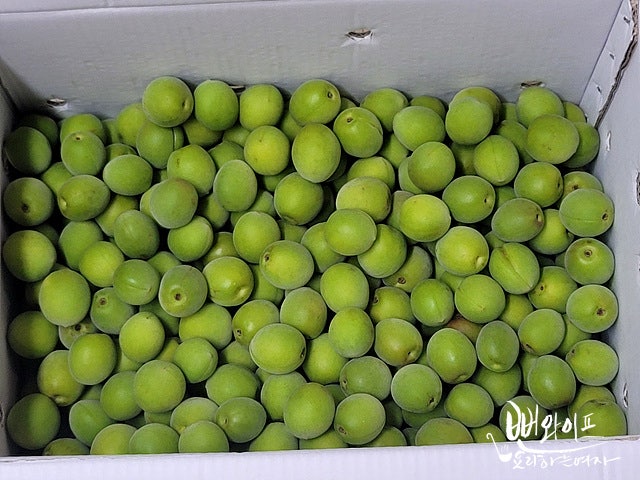
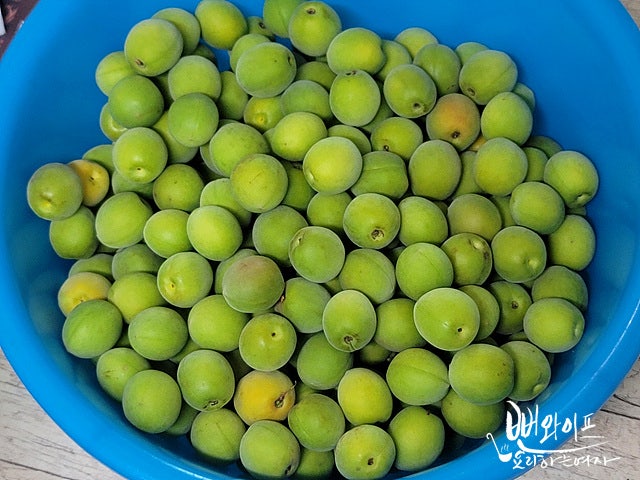
In 1 box of plums (10 kg), there are some inside that have ripened so they aren't firm or have turned yellow.
I sorted those out and made green plum syrup (maesil-cheong) with them.
You need to select 5 kg of only firm green plums to make pickled green plums (maesil-jangajji) so that even after keeping them for a long time, the flesh doesn't turn mushy or fall apart and stays crisp and crunchy.
Wash the plums
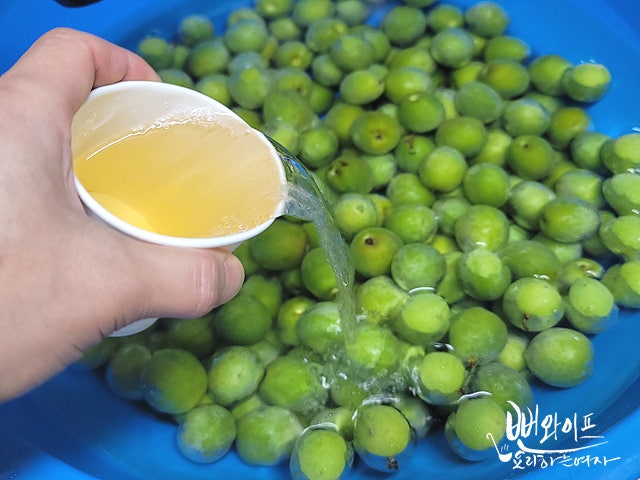
Pour in enough water to fully submerge the plums, add 1 cup of vinegar, and let soak for at least 10 minutes.
This helps loosen any foreign debris and the fine fuzz on the plums.
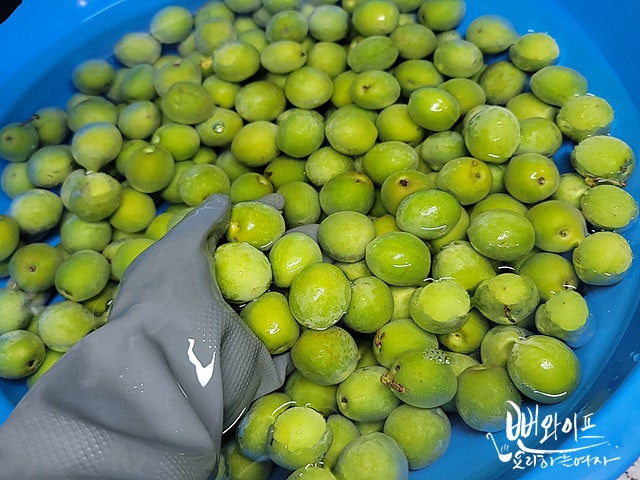
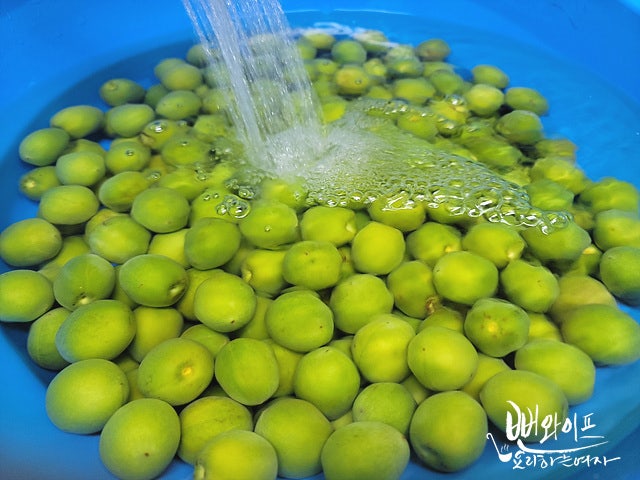
Rub them gently with both hands and wash them several times until you no longer see any debris or fine fuzz.
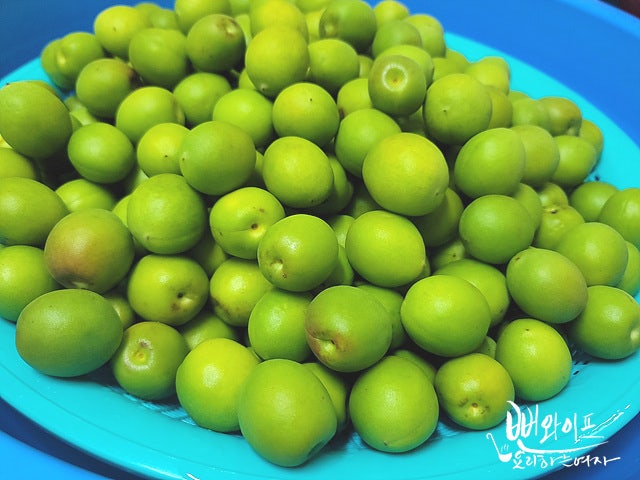
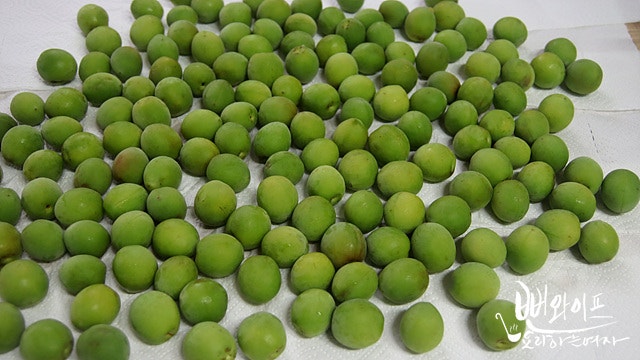
Once most of the water has drained through a colander, spread paper towels or butcher paper on the table, turn on a fan, and let the remaining moisture dry completely.
Cut the plums into wedges
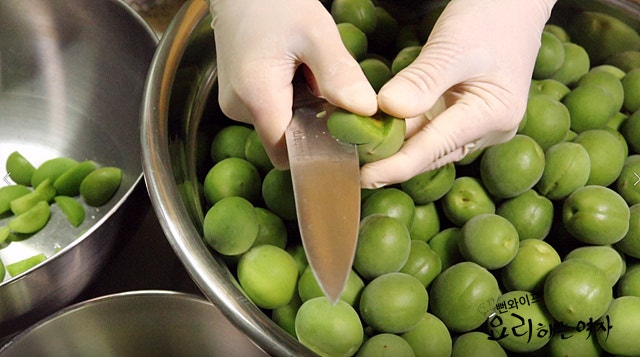
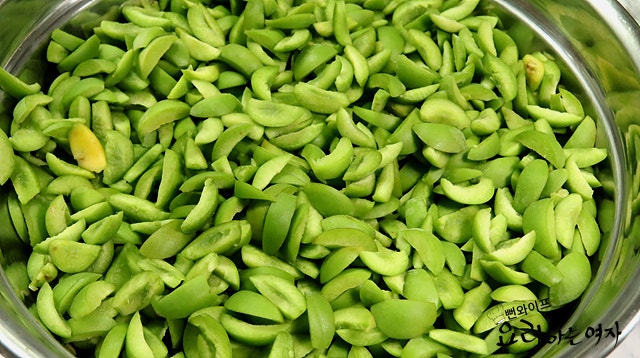
I didn't have photos of splitting them, so I brought some older ones.
You don't have to remove the stems separately for pickling plums, because removing them as you cut saves you an extra step.
Cut larger plums into 6 wedges and smaller ones into 5 wedges to make bite-sized pieces.
Separating the pits leaves behind a lot of waste and the small size makes the volume look modest, but this gave me 3 kg.
Pickle the plums
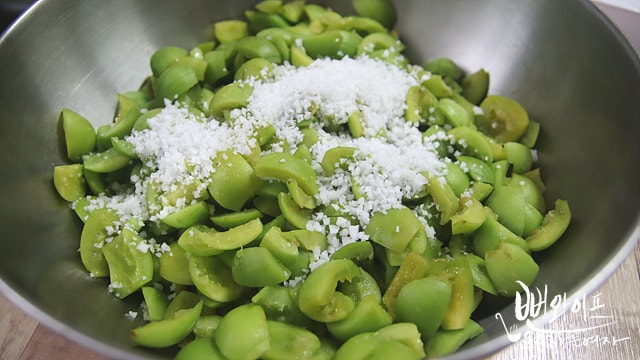
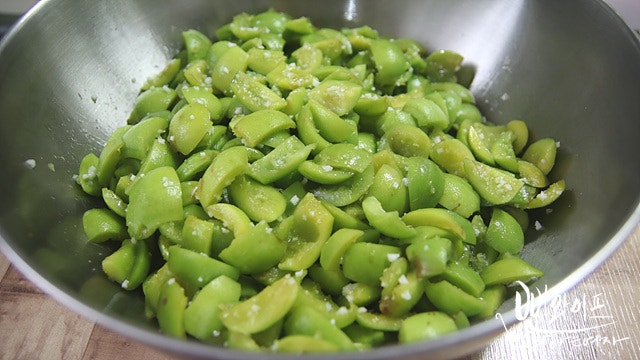
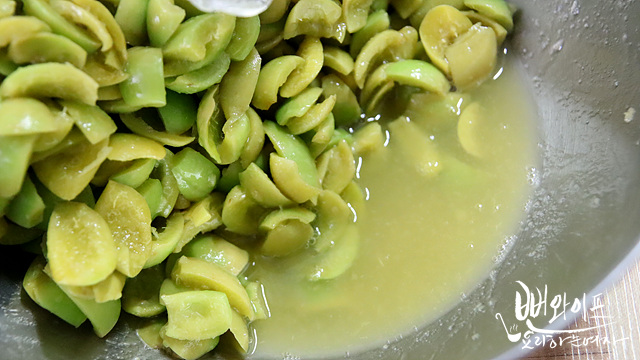
Add 150 g of coarse sea salt, which is 5% of the 3 kg of prepped plums, and let pickle for about 10 hours.
Toss occasionally so the salt dissolves and they pickle evenly.
Quite a lot of liquid is drawn out as they pickle. This liquid is bitter and salty, so discard it.
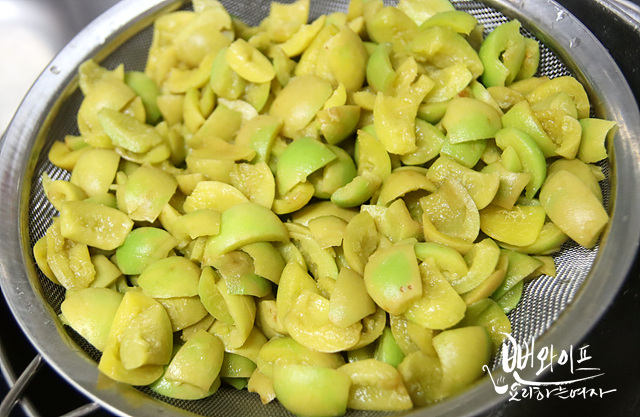
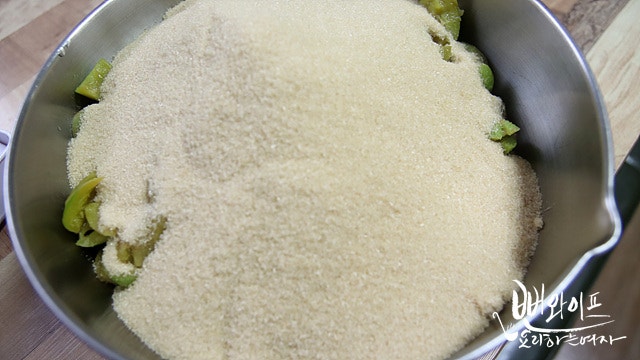
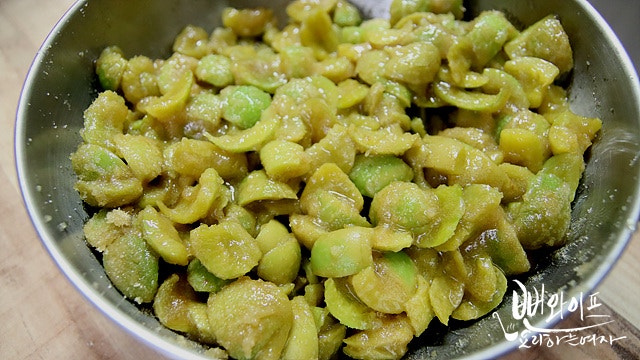
Leave them in a cool spot to drain off the remaining moisture.
Since temperatures are high these days, place them in a strainer and leave them in the refrigerator overnight; the moisture will drain out completely, leaving them firm and chewy.
Now comes the second pickling with sugar. Pour in 2 kg of sugar, which is 70% of the weight of the plums, and toss occasionally to pickle.
Because of the natural moisture in the plums, stirring frequently will dissolve all the sugar overnight.
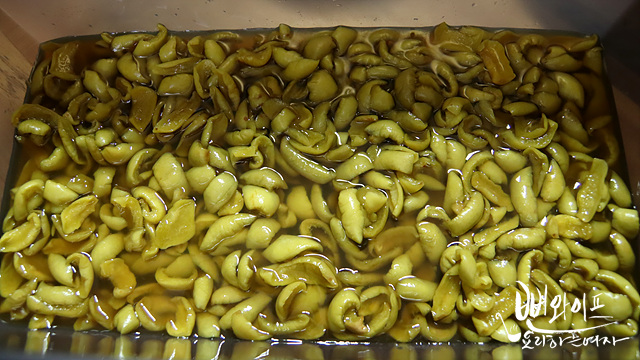
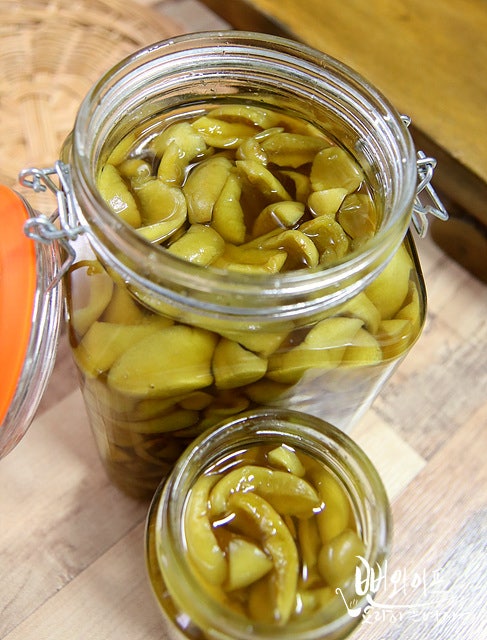
I didn't have a suitable glass container, so I poured them into a kimchi container sterilized with soju.
After 10 hours from adding the sugar, it will dissolve completely and the liquid will turn clear.
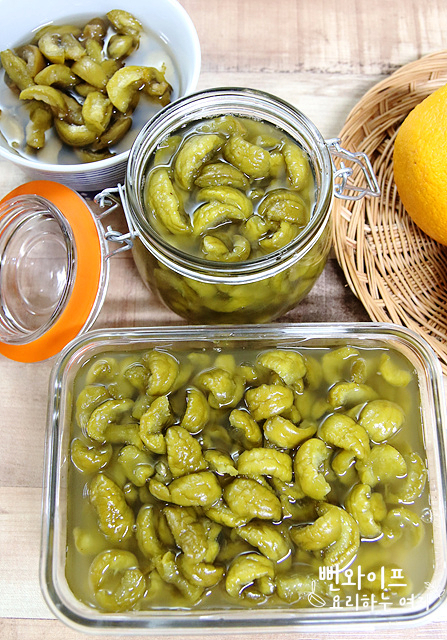
Now leave it at cool room temperature until the flesh turns pleasantly chewy, then transfer to a suitable container, store in the refrigerator, and enjoy after one month.
For the sourness to mellow out completely, it needs more time, so check on it occasionally and bring it to the table once it reaches your preferred flavor.
The ratio of salt and sugar for pickling plums is 5% salt and 70% sugar based on the weight of the pitted plums.
Season the pickled green plums
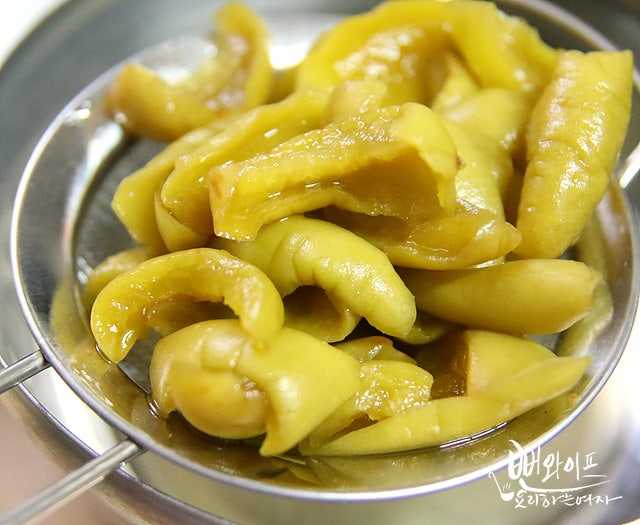
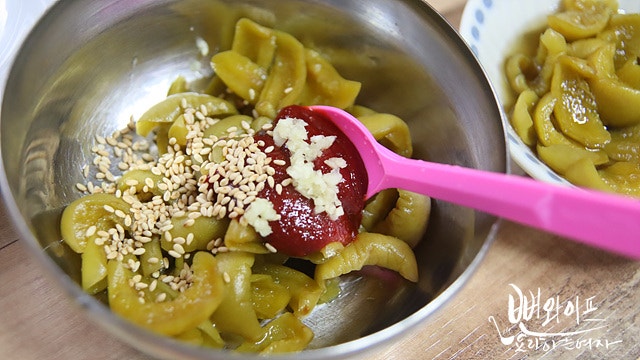
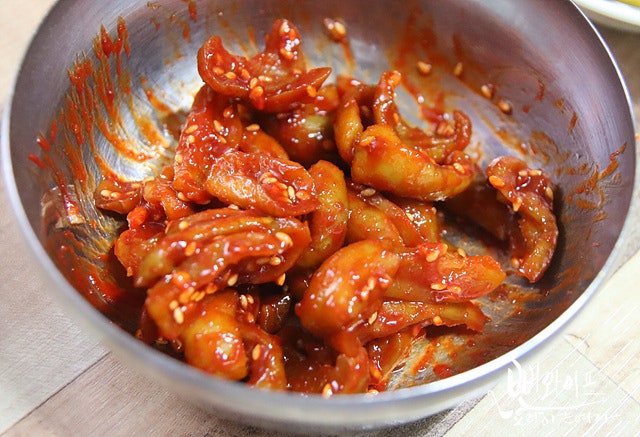
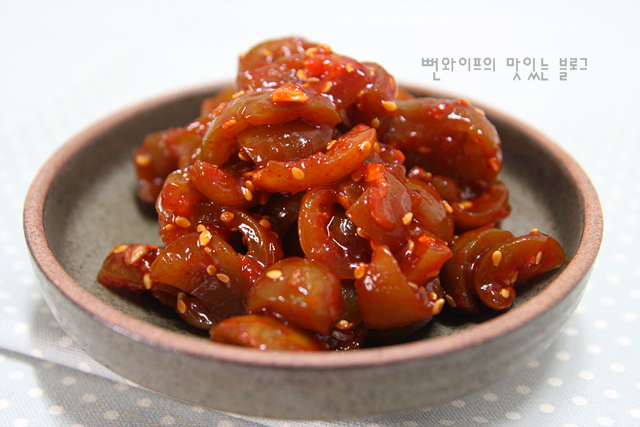
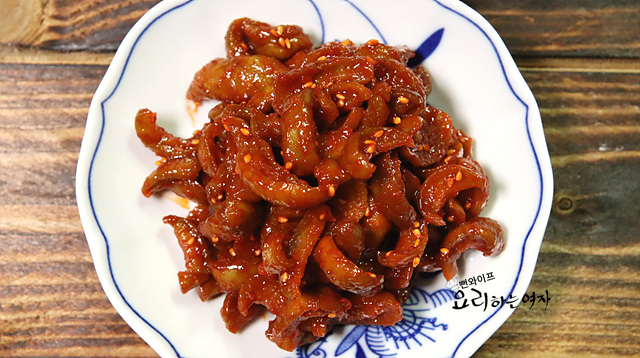
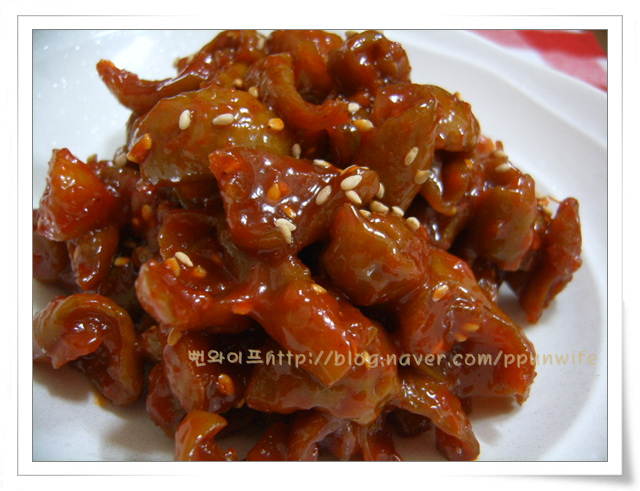
Just toss the pickled green plums with gochujang, garlic, toasted sesame seeds, and a tiny bit of toasted sesame oil, and you are done.
It is delicious as long as you adjust the gochujang properly so it isn't too salty.
I was curious about the taste, so I took some out to season in less than 2 weeks.
It is still quite sour, but on the day I made jeyuk bokkeum (spicy stir-fried pork), I wrapped a piece of this pickle with the meat, and wow—it was crunchy, sweet, tart, and truly delicious.
It still needs more aging time, but I plan to enjoy a little bit from now on.
 Ppunwife's tips
- The liquid drawn out during salting is bitter and salty, so discard it.
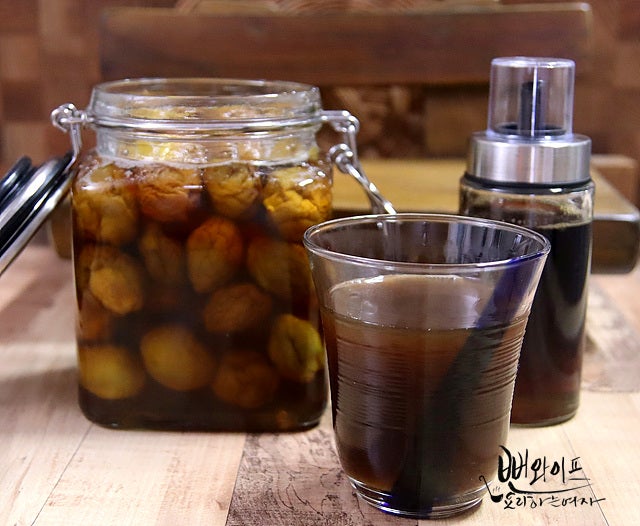
- Keep the leftover syrup in the refrigerator after taking out the plums and use it in meat stir-fries or braised fish dishes.
FAQ
What kind of plums should I choose for pickled green plums?
Avoid fruit that is soft or ripened to yellow, and select firm green plums so the crunchy texture holds up over time without getting mushy.
What is the ratio of salt and sugar when pickling plums?
Pickle them in stages using 5% salt and 70% sugar based on the weight of the pitted plums.
What should I do with the liquid that forms after salting?
The moisture drawn out during salting is very bitter and salty, so discard it and pickle only the drained fruit in sugar.
How can I use the leftover pickling syrup after removing the plums?
Do not throw it away; store it in the refrigerator and use it as a seasoning for dishes like meat stir-fries or braised fish.