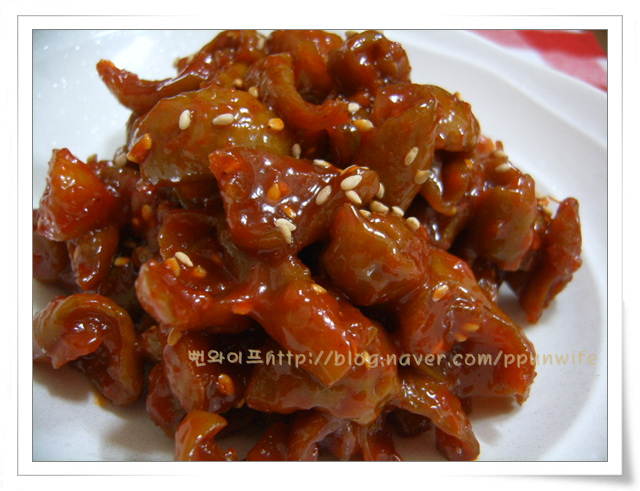
Maesil Jangajji (Pickled Green Plums)
A crunchy pickled green plum banchan made by salting first and then curing in sugar for a chewy texture.
Translated from Korean by AI and not yet checked by a native speaker. Amounts and numbers are taken directly from the original recipe. Read the Korean original →
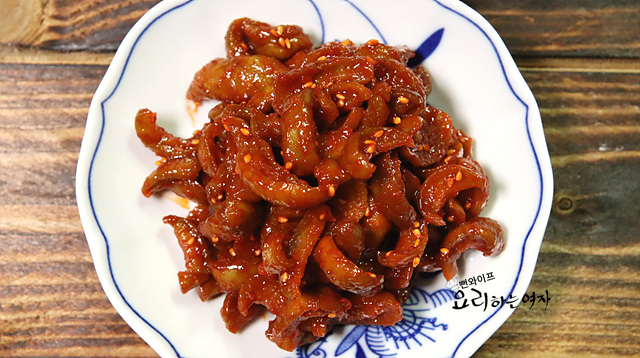
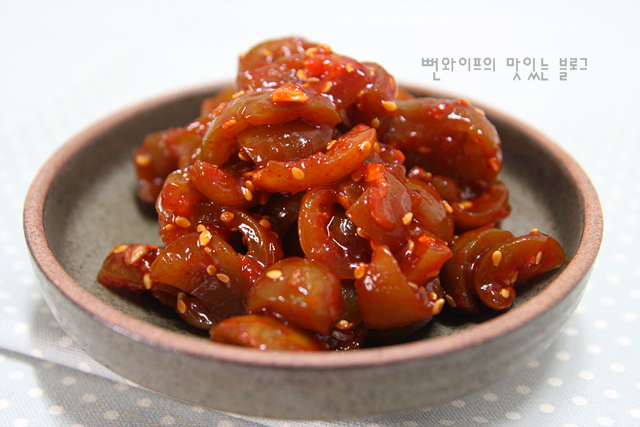
Firm green plums are first salted to remove bitterness and excess moisture, then cured in sugar to bring out their wonderfully crisp, crunchy texture. The key secret is keeping the salt and sugar ratios at 5% and 70% of the prepped plum weight. Enjoy them plain for a clean, refreshing bite, or toss them lightly in gochujang seasoning as a side dish for rice.
- Servings
- about 10–12 servings
- Difficulty
- Medium
- Spiciness
- Mildly spicy
- Keeps
- 730 days
Ingredients
Maesil jangajji
- Green plums (cheongmaesil)3.5 kg (after cleaning)
- Coarse sea salt1 1/2 cups
- Sugar2 kg
Seasoned maesil jangajji
- Pickled green plums (maesil-jangajji)200 g
- Gochujang (Korean red chili paste)1 1/2 tbsp
- Minced garlic1/2 tbsp
- Toasted sesame oil1 tsp
- Toasted sesame seeds1/2 tbsp
- For pickling, you must use firm green plums without blemishes. Ripe yellow plums are not suitable for pickling, where texture is everything.
- When making green plum syrup with whole plums, you must remove the stems, but for pickled plums, you do not need to remove them.
Steps
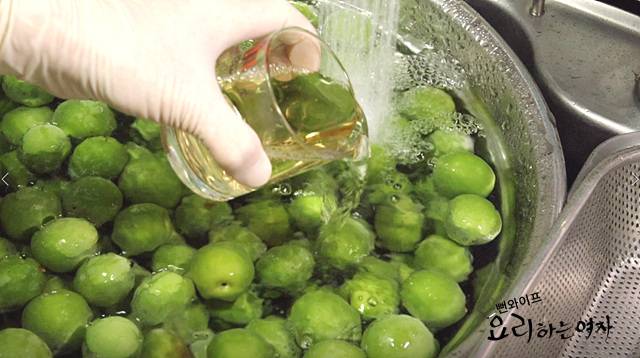
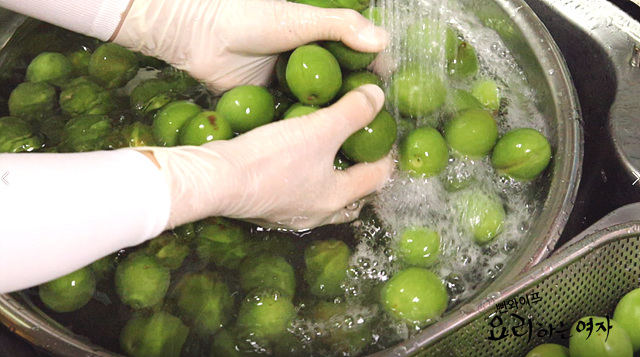
Pour enough water to submerge the plums, add a cup of vinegar, and let sit for about 10 minutes so any pesticide residue or adhering debris loosens easily when washing.
Rub them with your hands under running water to remove the fine fuzz and debris from the surface,
repeating the wash about 3 to 4 times.
Even if they look clean, they can be dirtier than you think.
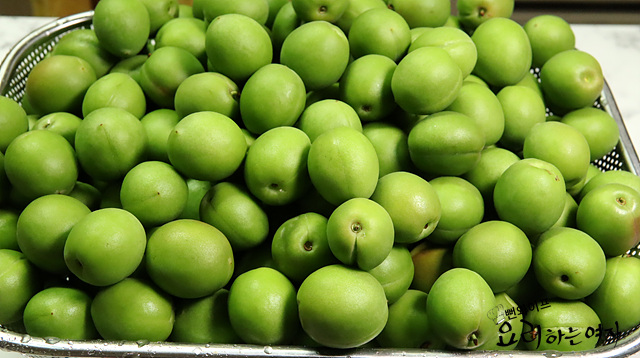
Drain roughly in a colander.
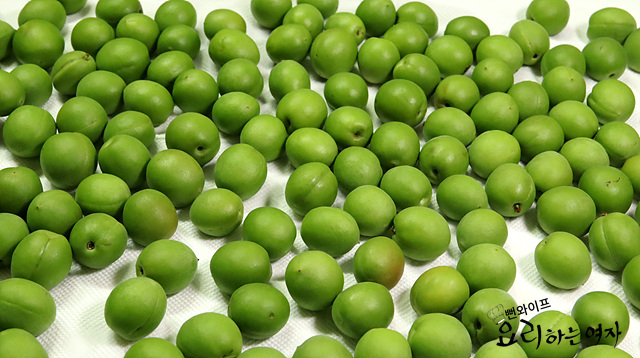
Spread paper towels or clean white paper on a table or clean floor,
spread out the plums, and roll them around to dry until almost no moisture remains.
Placing them in a cool, well-ventilated spot dries them quickly.
You can also run a fan.
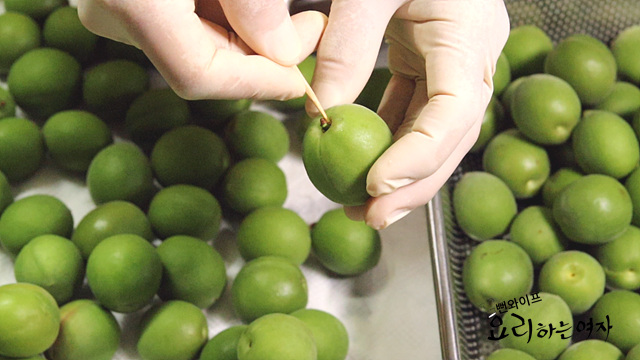
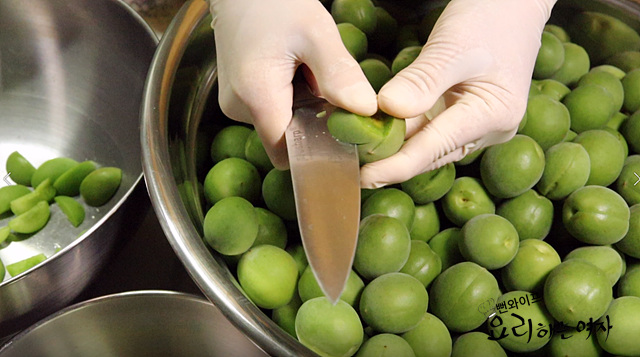
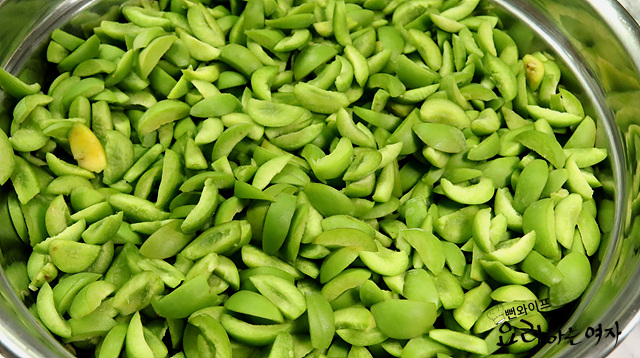
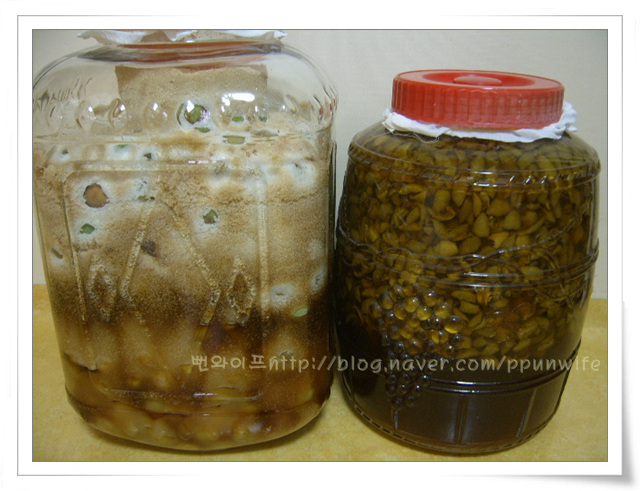
When making green plum syrup with whole plums, you must remove the stems, which cause bitterness.
For pickling, you do not need to remove the stems.
Now comes the painstaking task of separating the plums from their pits.
It looks nice and is easy to eat if you cut them into 6 pieces, but this really makes your hands ache.
This year, even though it was hard, I prepared them this way.
After separating 5 kg of plums, only 3.5 kg remained.
The pits make up over 30% of the total weight.
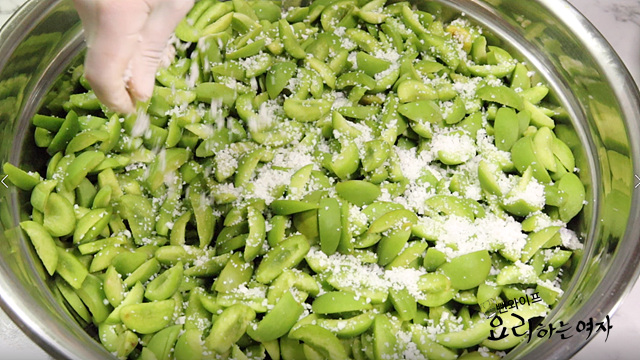
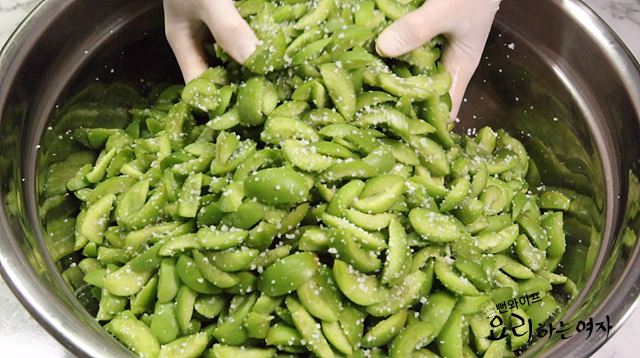
Add 1.5 cups of coarse sea salt to the 3.5 kg of pitted plums and mix evenly.
From my experience making pickled plums for well over a decade, about 5% salt by weight of prepped plums feels just right.
Plums pickled only in sugar end up too sweet to enjoy as a side dish, but salting them first uses far less sugar, yielding delicious pickles with the right balance of salt and sweetness.
Also, drawing out the bitterness and tartness with salt once cuts down the pickling time significantly.
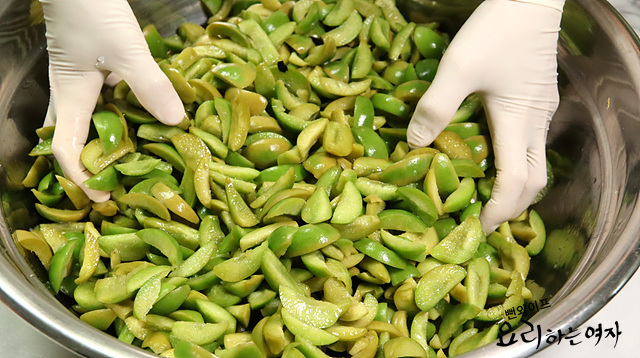
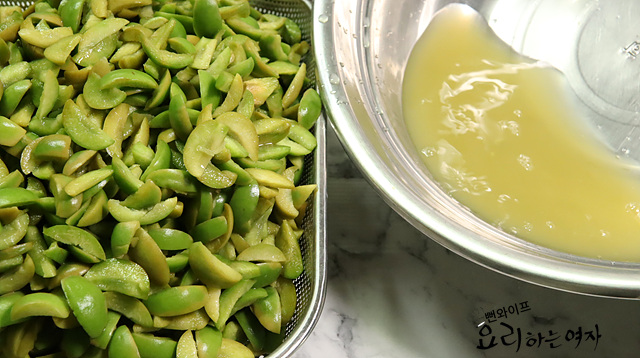
Toss once or twice during the process and let salt for about 10 hours; a fair amount of liquid will form.
Drain in a colander in a cool place overnight to remove the moisture.
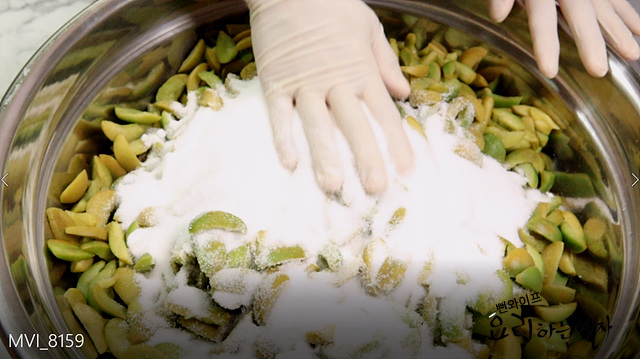
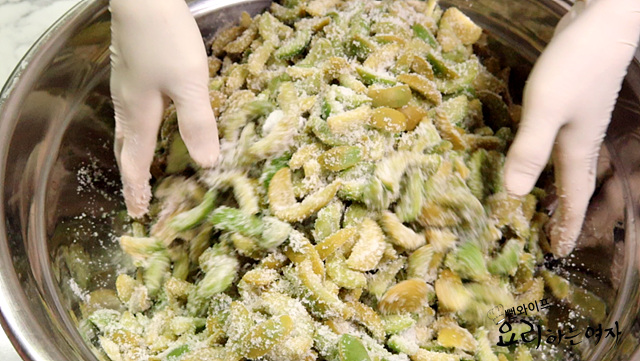
Now comes the second cure with sugar.
At this point, I added 2 kg of sugar, which is about 70% of the prepped plum weight (3.5 kg).
When making pickled plums, remember 5% salt and about 70% sugar by plum weight, and your pickles will never fail.
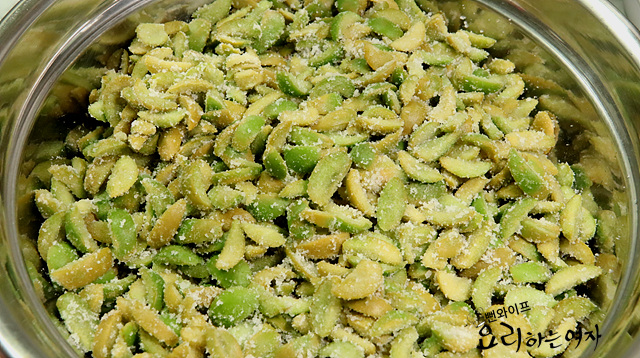
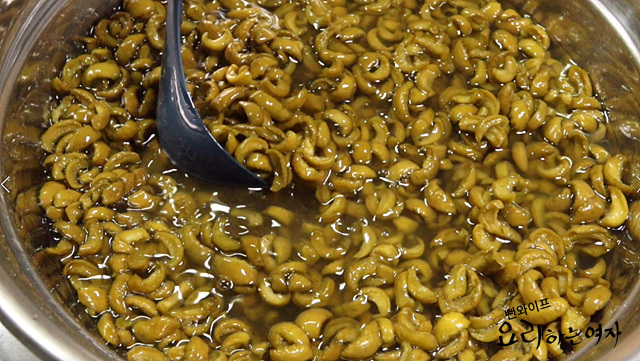
Stir once or twice until the sugar completely dissolves, then leave for about 10 hours.
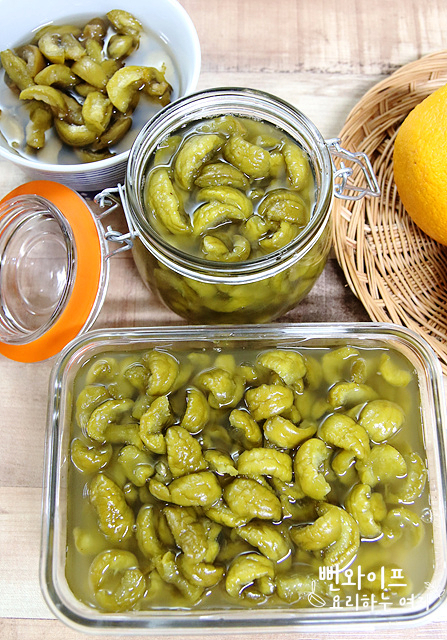
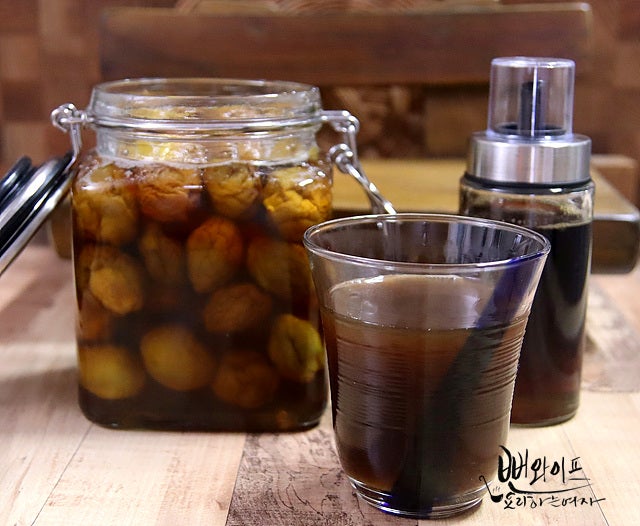
The plums will turn yellowish, plenty of syrup will form, and the flesh will become slightly chewy.
Keep everything at room temperature up to this point.
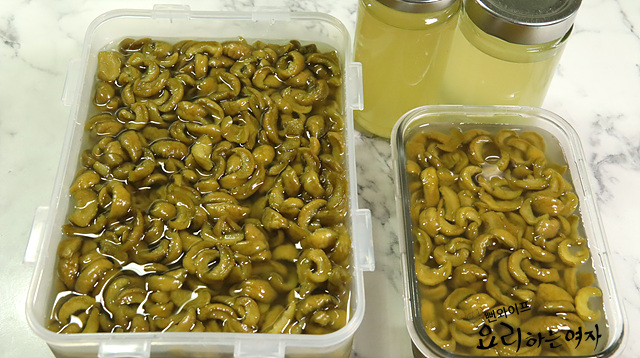
Leave just enough liquid to submerge the plums.
Bottle the rest of the liquid to use in braised meats, fish dishes, or seasoned vegetable sides.
Since it is warm these days, age them in the refrigerator before eating;
they will usually age nicely in 2 weeks to a month or two.
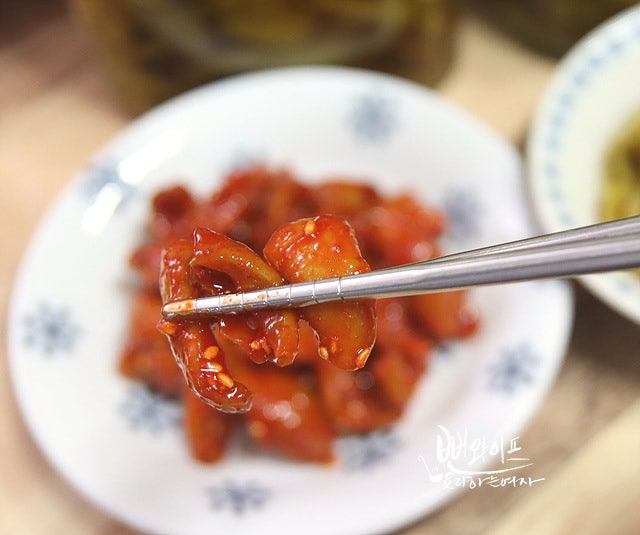
You can eat them as is for a clean, refreshing flavor, or toss them in gochujang seasoning to serve with rice.
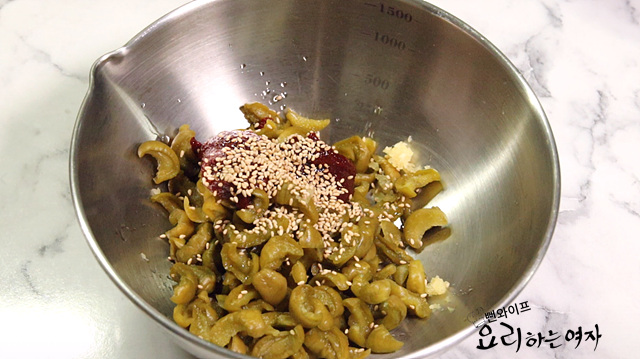
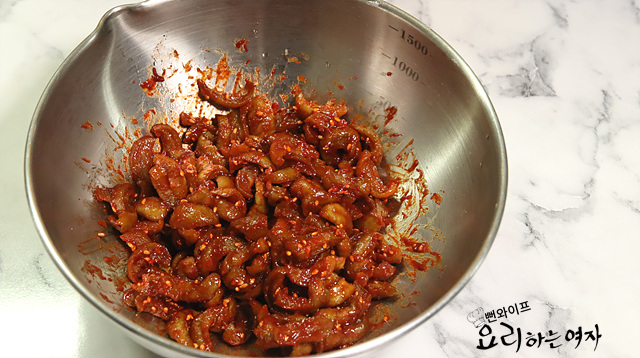
Impatient as I am, I took out the pickled plums after 2 weeks.
Squeeze out the moisture lightly, add gochujang, minced garlic, toasted sesame oil, and toasted sesame seeds, and toss lightly to eat right away.
You must use only a tiny amount of garlic and sesame oil to let the flavor of the pickled plums shine.
 Ppunwife's tips
- Plums pickled only in sugar end up too sweet to serve as a side dish, but salting them first uses far less sugar, creating delicious pickles with the right balance of saltiness and sweetness. Also, drawing out the bitterness and tartness with salt once cuts down the pickling time significantly.
- When making pickled plums, remember 5% salt and about 70% sugar by plum weight, and your pickles will never fail.
- You must use only a tiny amount of garlic and sesame oil to let the flavor of the pickled plums shine.
FAQ
Can I use ripe yellow plums for pickling?
A firm and crisp texture is essential for pickles, so unblemished green plums are much more suitable than yellow ones.
Why salt the plums first before adding sugar?
Salting them first draws out the bitterness and harsh sourness, reducing the amount of sugar needed and achieving the right balance of sweetness and saltiness for a side dish.
What should I keep in mind when making seasoned pickled green plums?
Adding too much garlic and sesame oil can overpower the original flavor of the pickles, so it is best to use only a tiny amount.
Do I have to remove the stems when making pickled plums?
Unlike green plum syrup where plums are used whole, the stems do not need to be removed when slicing the flesh for pickling.