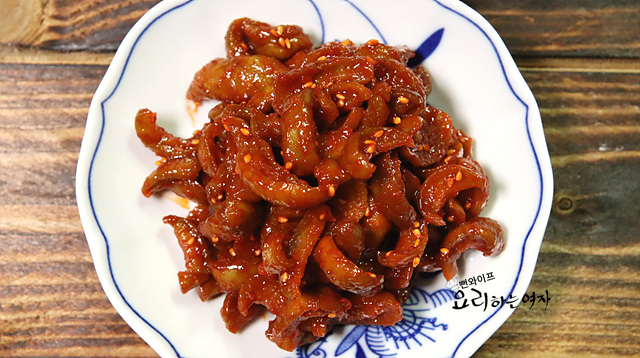
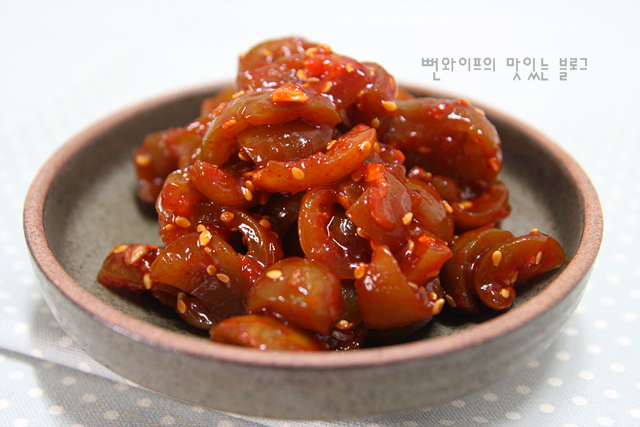
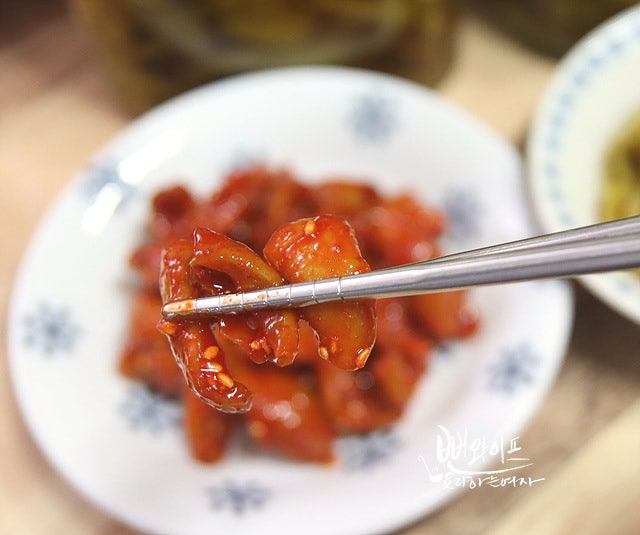
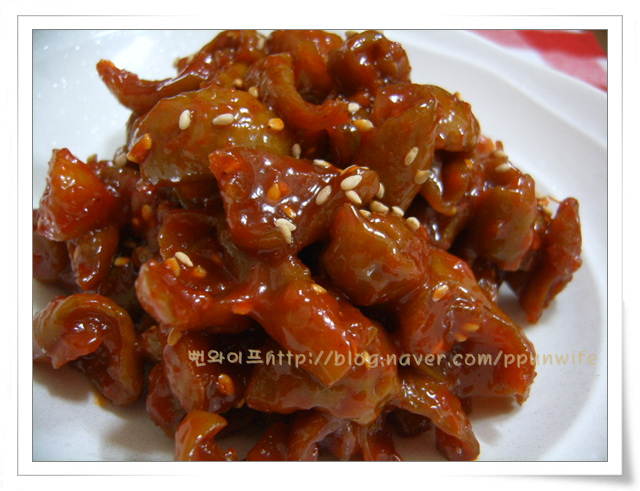
Crisp Maesil Jangajji (Pickled Green Plums)
A long-lasting preserve made by salting green plums first to moderate sweetness and bring out a crisp texture.
Translated from Korean by AI and not yet checked by a native speaker. Amounts and numbers are taken directly from the original recipe. Read the Korean original →
A pickled side dish where green plums are salted first to draw out bitterness, lightly season the fruit, and reduce the amount of sugar needed. Once the sugar dissolves completely and the jar matures in the refrigerator, the plums stay crunchy even after 1 year.
- Servings
- about 10–12 servings
- Difficulty
- Easy
- Spiciness
- Not spicy
- Keeps
- 365 days
Ingredients
- Peeled green plums3 kg
- Coarse sea salt150 g
- Sugar2 kg
- If you bought whole green plums, please refer to the photos above from last year's green plum pickle post for how to trim and cut them.
Steps
Prepare the ingredients
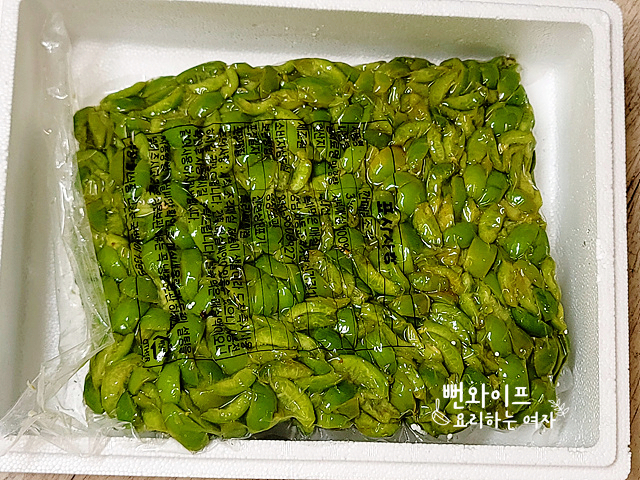
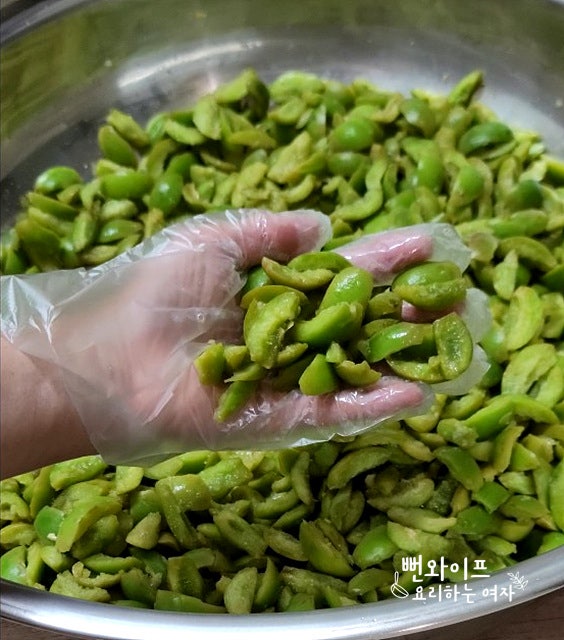
Here is 3 kg of peeled and segmented green plums with the pits removed.
I placed them in a mixing bowl; they arrived fresh, firm, and cleanly trimmed with nothing to pick through.
Related post on the blog (Korean)blog.naver.com/ppunwife/223902099918Related post on the blog (Korean)naver.me/FiPA3LETIf you bought whole green plums, please refer to the photos above from last year's green plum pickle post for how to trim and cut them.
Salt the plums
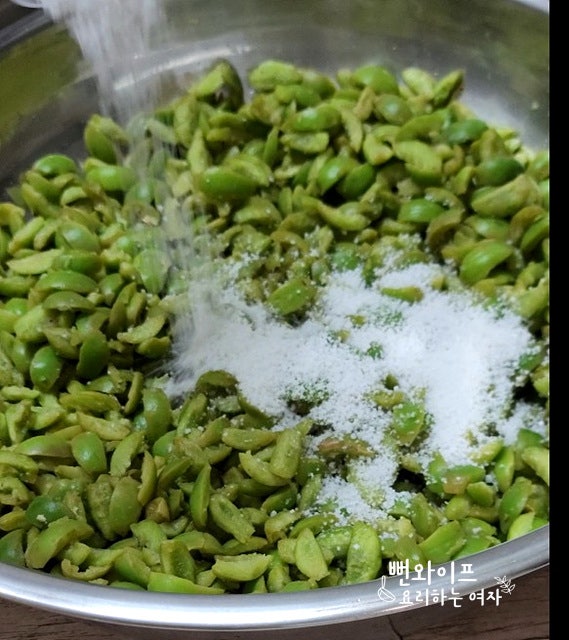
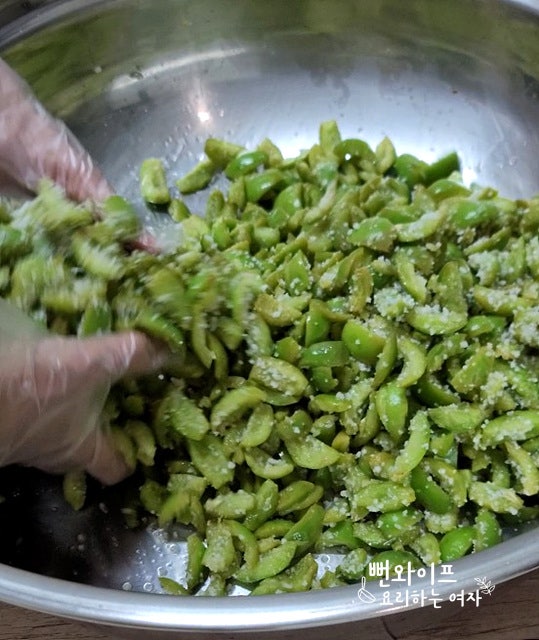
Pour 150 g of coarse sea salt over the green plums and mix evenly to salt them.
The right ratio of salt is about 5% of the pitted plums; this removes some of the bitterness, softens the fruit, and preps them before macerating in sugar.
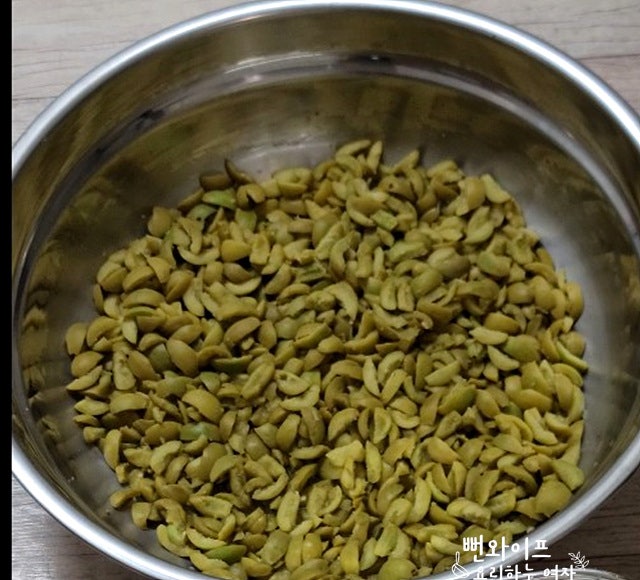
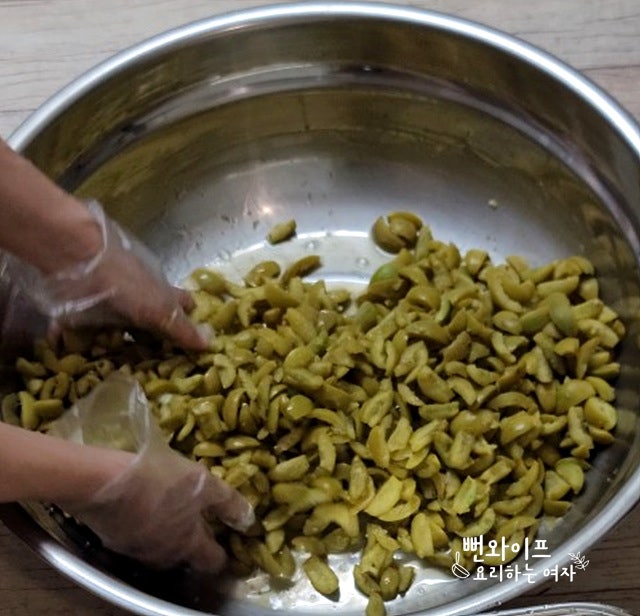
Stir occasionally while they are salting so the salt dissolves well.
Because green plum flesh is firm, it takes longer to salt compared to ordinary vegetables.
Usually you salt them for about 8 hours, but with daytime temperatures high lately, toss them occasionally over 5 to 6 hours; once the texture looks right and no more liquid is being drawn out, they are fully salted.
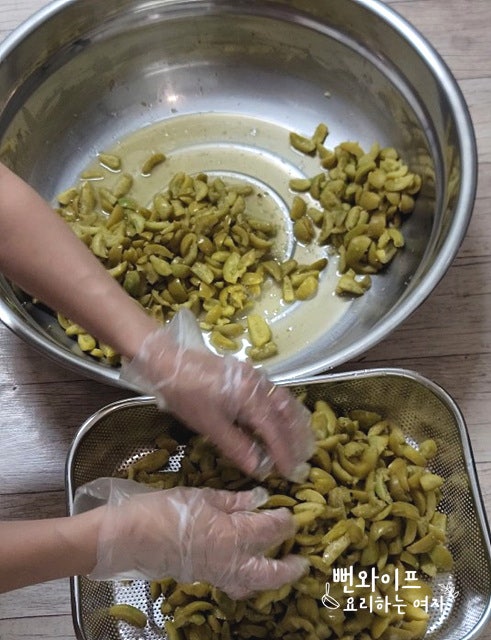
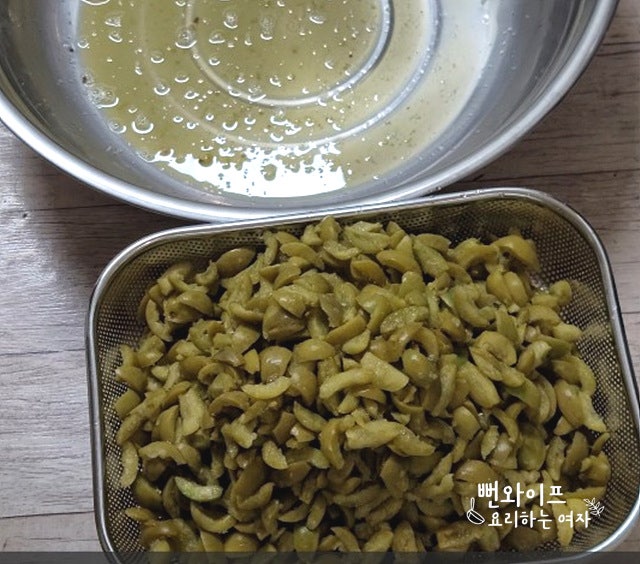
Drain the salted green plums in a colander to remove the remaining salty liquid.
You should discard the extracted liquid because it holds bitterness and saltiness.
Add sugar
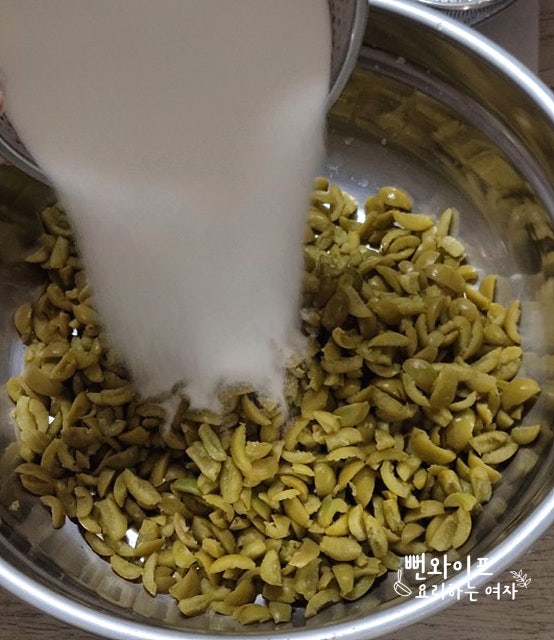
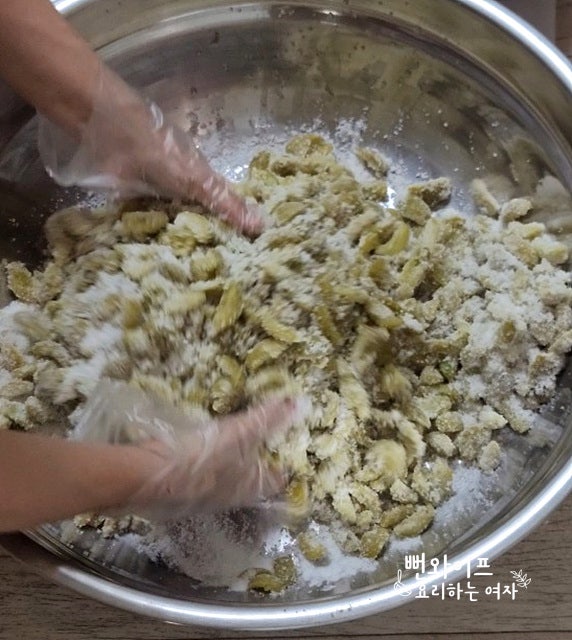
Pour 2 kg of sugar over the drained green plums and mix well.
For 3 kg of green plums, you need about 70% sugar, which comes to 2 kg.
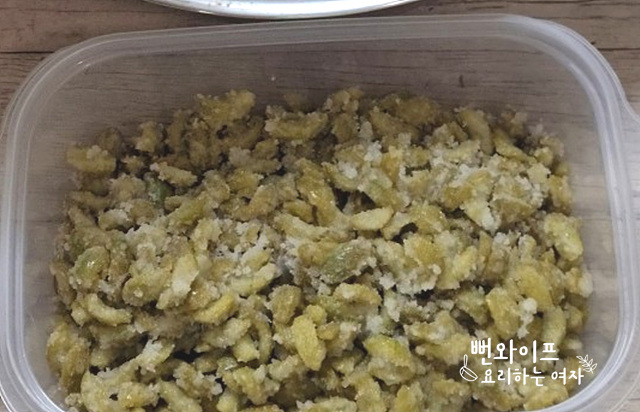
Transfer everything into a container of suitable size with a lid.
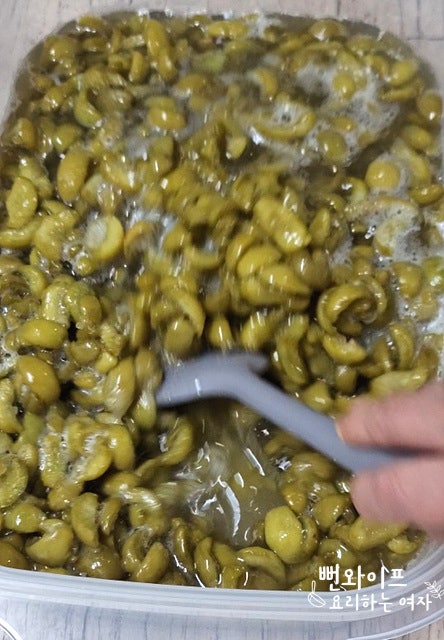
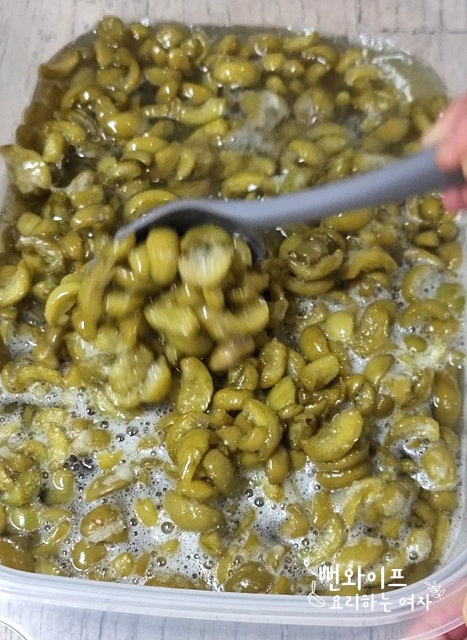
Keep it in a cool place and stir a few times a day so the sugar dissolves evenly.
Scrape the bottom as you stir so the sugar that settled down can dissolve as well.
Age the pickles
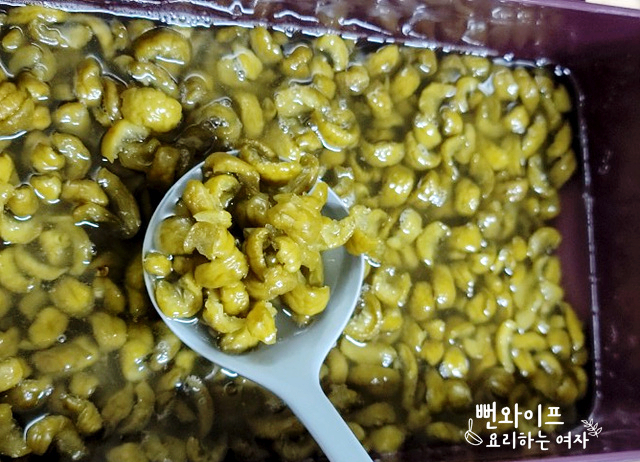
After one or two days from adding the sugar, it will dissolve completely and the plums will begin to wrinkle.
Some of the sourness has mellowed, but as it ages longer, the tartness balances out and makes them even better to eat.
Finish
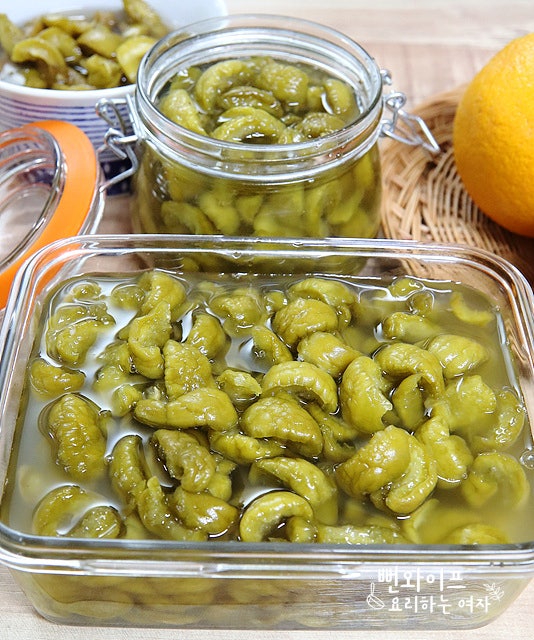
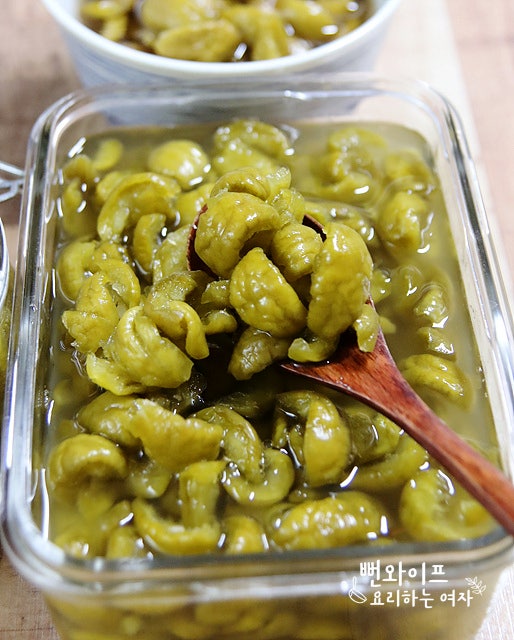
This is how they look after a week; plenty of liquid has been drawn out of the plums, so they are crunchy, and the sourness is not harsh at all to eat.
From this point on, keep the container in the refrigerator and let it mature until it reaches your preferred flavor.
If you leave it for another month or two before eating, it becomes far more delicious.
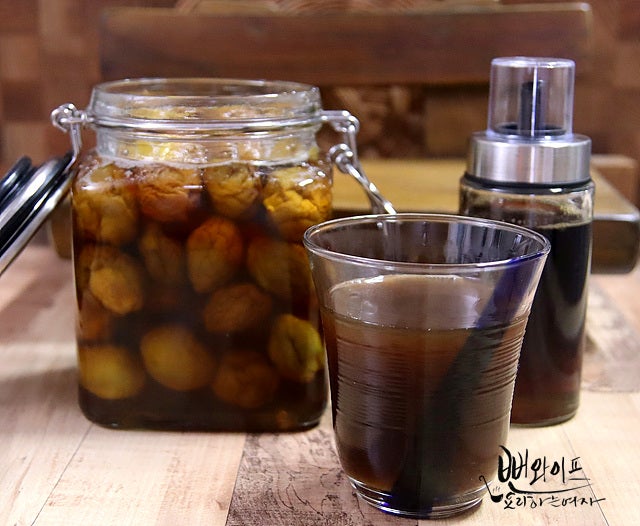
And you can use the Maesil jangajji (pickled green plums) syrup just like green plum syrup (maesil-cheong).
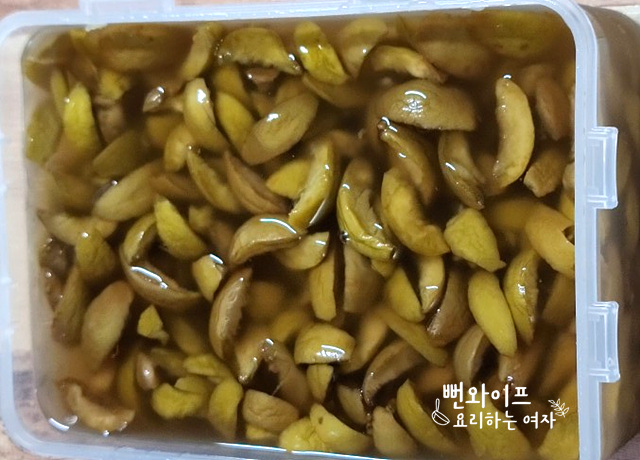
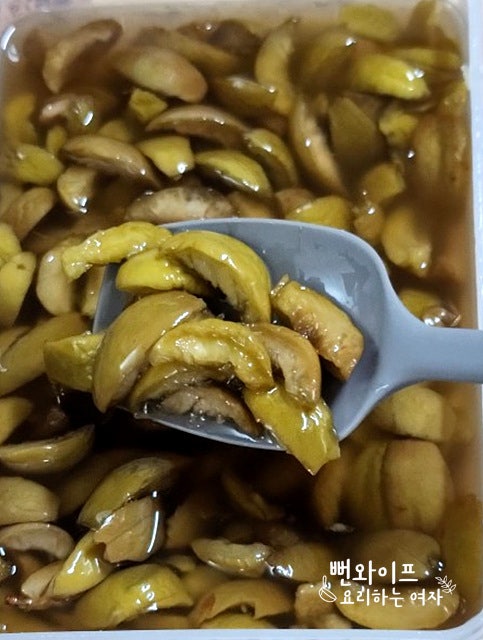
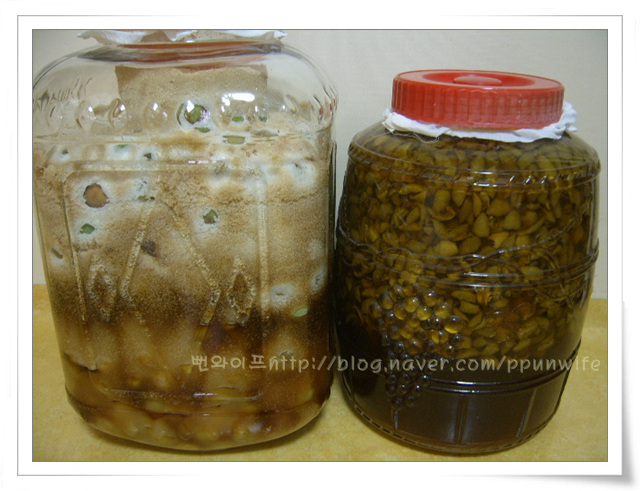
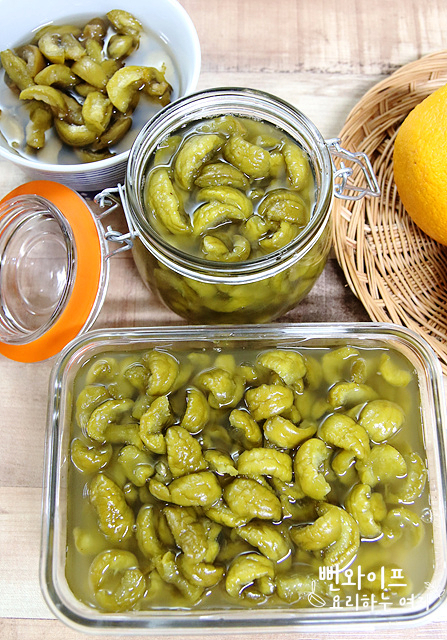
This is the green plum pickle I made last year.
Because 1 year has passed, it turned yellowish, but it has not spoiled at all, looks clean, and keeps its chewy, firm texture.
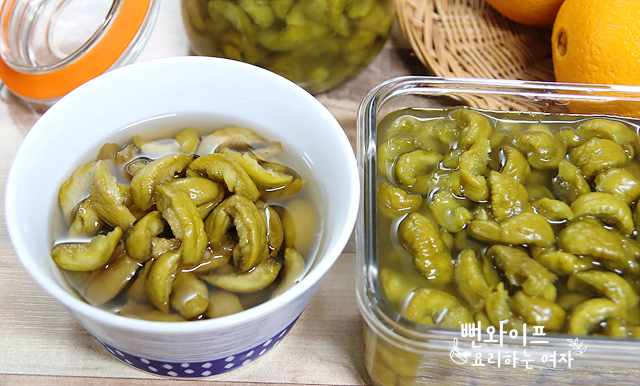
On the left is last year's Maesil jangajji, and on the right is the week-old Maesil jangajji.
Green plum harvest is in full swing right now, so put up a batch of Maesil jangajji and enjoy a reliable side dish for a year, or even several years.
 Ppunwife's tips
- Most people only use sugar when making green plum pickles, but I salt them first and then preserve them in sugar. Doing this cuts down on the amount of sugar and lightly seasons the plums, making them tastier even with less sugar.
- Discard the liquid drawn out after salting, as it carries both bitterness and excess saltiness.
- You can use the leftover syrup from the pickled plums just like green plum syrup (maesil-cheong).
FAQ
Why salt the green plums before adding sugar?
It reduces the bitterness of the green plum flesh, wilts the fruit slightly, and adds a gentle base seasoning so it tastes wonderful even with less sugar.
What should I do with the liquid drawn out after salting?
Drain the plums in a colander and throw the liquid away, since it contains drawn-out bitterness and excess salt.
How can the syrup from the pickles be used?
Do not throw the syrup away; you can use it in cooking just like green plum syrup (maesil-cheong).
When can I move the pickles to the refrigerator and eat them?
Once the sugar dissolves completely in a cool spot after about a week, move the container to the refrigerator. Letting it mature for another month or two makes it even more delicious.