Fluffy and Chewy Home-Baked Milk Bread
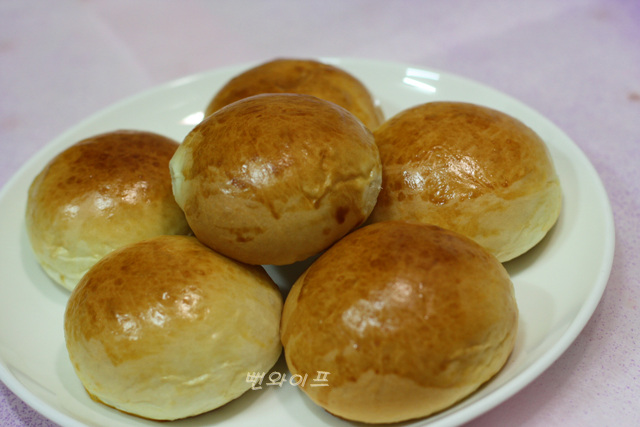
Home-baked milk bread made by fermenting a dough with warm milk and egg, then baking it until golden brown.
Translated from Korean by AI and not yet checked by a native speaker. Amounts and numbers are taken directly from the original recipe. Read the Korean original →
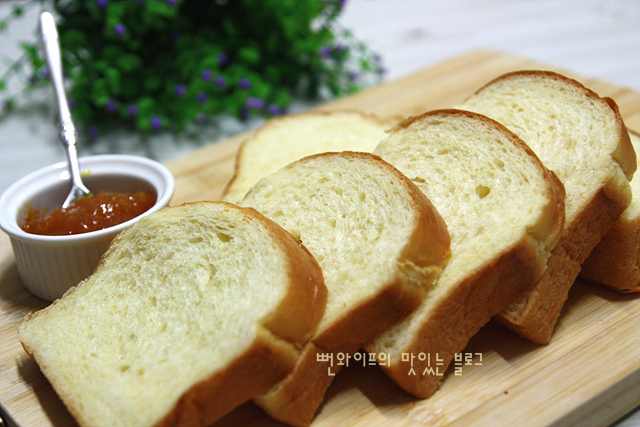
This loaf of bread combines bread flour, milk, and egg, baked in the oven to a golden finish. A stiff dough can make the bread firm, so kneading it on the slightly wetter side is the secret to a soft crumb. It is delicious torn warm right out of the oven, or cooled slightly, sliced, and served with jam.
- Servings
- about 2–3 servings
- Cook time
- 25 minprep not included
- Difficulty
- Hard
- Spiciness
- Not spicy
Ingredients
Ingredients
- Bread flour200 g (2 cups)
- Sugar2 tbsp
- Salt1/2 tsp
- Instant dry yeast1 tsp (3 g)
- Milk100 g (1/2 cup)
- Egg1/2, 20–25 g
- Butter20 g
Egg wash
- Egg yolk1
- Milk (or water 1 tbsp)1 tbsp
- If using oil (grapeseed, canola, olive oil, etc.) instead of butter, you can add 1 tbsp.
- Take the butter out of the refrigerator and let it sit at room temperature for 1 to 2 hours or more.
- Sift the flour (bread flour) once ahead of time.
- Warm the milk slightly in the microwave so it is just lukewarm (be careful, as hot milk will kill the yeast).
Steps
In a bowl, add the sifted flour, measured sugar, and salt, and mix evenly.
Salt inhibits yeast activity, so coating it with the flour first helps protect it.
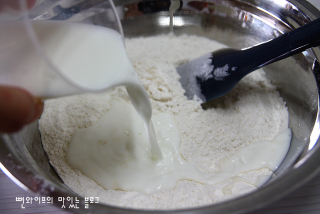
Add the yeast and mix it evenly into the flour.
It is best to use instant dry yeast, which ferments well.
Pour the lukewarm milk (30 to 40°C) into the flour...
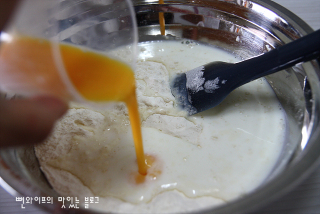
Add the egg as well. Beat one medium egg and add only half of it (20 to 25g).
The ingredients are almost the same as morning rolls, with the only difference being that the milk is reduced by the amount of egg added.
Adding an egg makes the bread softer.
Mix thoroughly with a spatula, then roughly gather it into a single lump with your hands...
Add the butter to the dough and knead by hand. (Do not melt the butter into liquid before adding, or it will become too sticky.)
Once the dough is kneaded so the butter is evenly incorporated, it is convenient to move to a cutting board or a spacious work surface.
When you first add the butter it feels quite wet, but as you keep kneading, it reaches a nice workable texture.
If the dough is stiff, the bread may turn out tough rather than soft, so keeping the dough slightly wet increases your success rate with yeast breads.
After the first rise is complete, deflate the gas from the dough by pressing it with your palms or rolling it with a rolling pin...
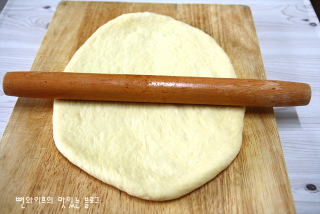
Shape it into a round ball, cover with plastic wrap to keep it from drying out, and let it rest at room temperature for about 10 minutes for an intermediate rise.
After the intermediate rise, gently press out the gas with your hands and roll it out with a rolling pin...
Adjust the width carefully so it will fit into your loaf pan.
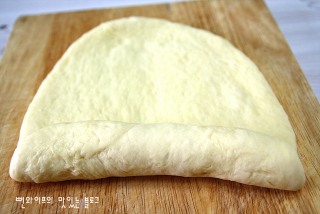
Roll it up tightly into a cylinder.
Pinch the final seam securely with your fingers so it does not unravel.
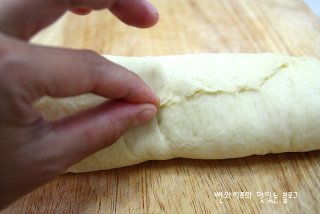
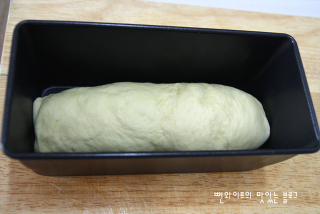
Place the dough into the loaf pan, cover with plastic wrap so it does not dry out, and let it undergo its second rise for 50 minutes.
After the second rise, the dough will have doubled in size.
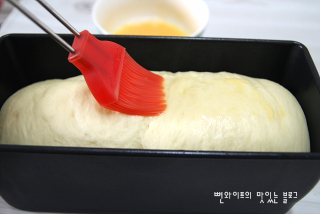
Evenly brush the top of the dough with the remaining egg left over from step 4.
Brushing with this egg wash before baking gives the bread a glossy crust.
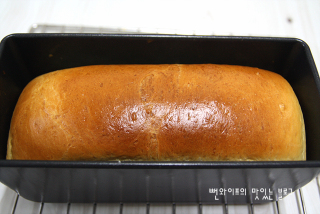
I baked it for 25 minutes in an oven preheated for 15 to 20 minutes at 180°C.
I used a mini convection oven.
Let the baked bread cool slightly to release the steam.
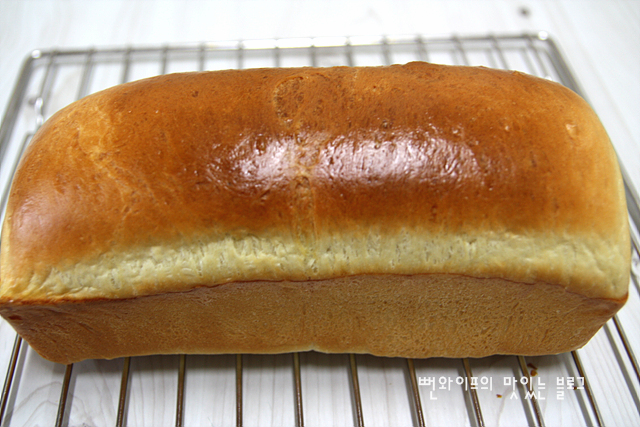
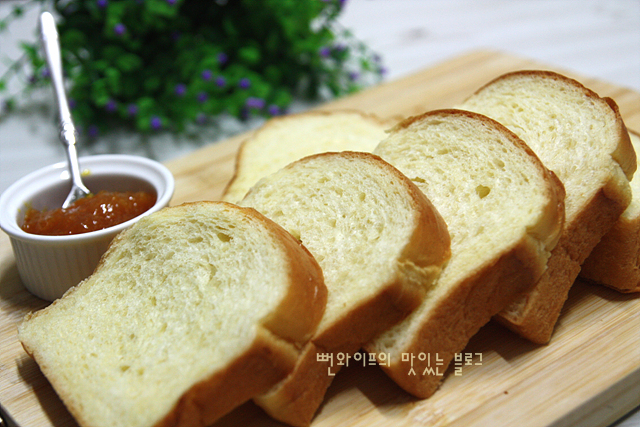
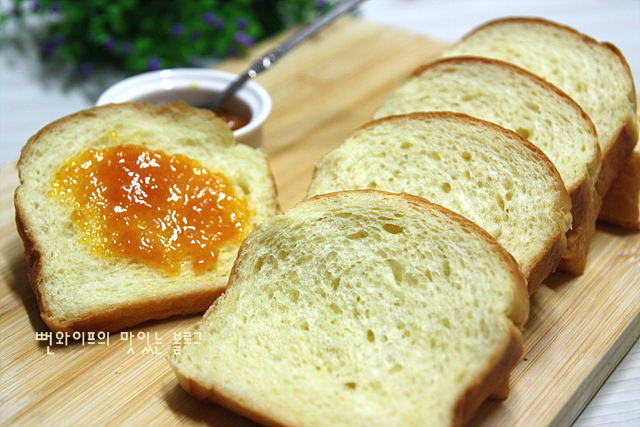
Once cooled, simply slice it to your desired thickness.
It is great spread with jam and works wonderfully for sandwiches.
 Ppunwife's tips
- Salt inhibits yeast activity, so coating it with the flour first helps protect it.
- Be careful with the milk, as yeast will die if it is too hot.
- Do not melt the butter into liquid before adding, or the dough will become too sticky.
- If the dough is stiff, the bread may turn out tough rather than soft, so keeping the dough slightly wet increases your success rate with yeast breads.
- Brushing with an egg wash before baking gives the bread a glossy crust.
FAQ
Can I use cooking oil instead of butter?
You can substitute 1 tbsp of oil, such as grapeseed oil, canola oil, or olive oil, in place of butter.
Is there anything to keep in mind when warming the milk?
If the milk is too hot, the yeast may die, so warm it only slightly until it is lukewarm.
Why should salt and flour be mixed first?
Salt can inhibit yeast activity, so the idea is to coat it beforehand with the dry flour.
How do I give the baked bread a glossy crust?
Evenly brush the top of the dough with the leftover egg wash after the second rise, then bake it in the oven to give it a nice shine.