Songpyeon (Half-Moon Rice Cakes) with Gardenia and Grape
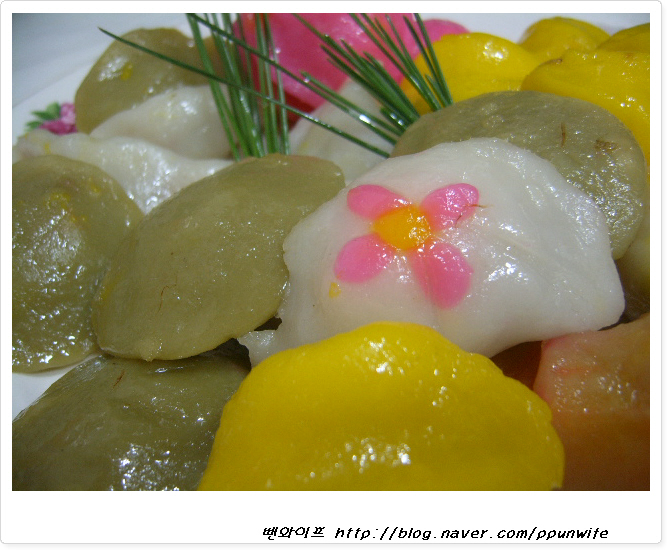
Traditional holiday Songpyeon naturally colored with gardenia seeds and grape skins, filled with sweet sesame and soybean fillings, and steamed to chewy perfection.
Translated from Korean by AI and not yet checked by a native speaker. Amounts and numbers are taken directly from the original recipe. Read the Korean original →
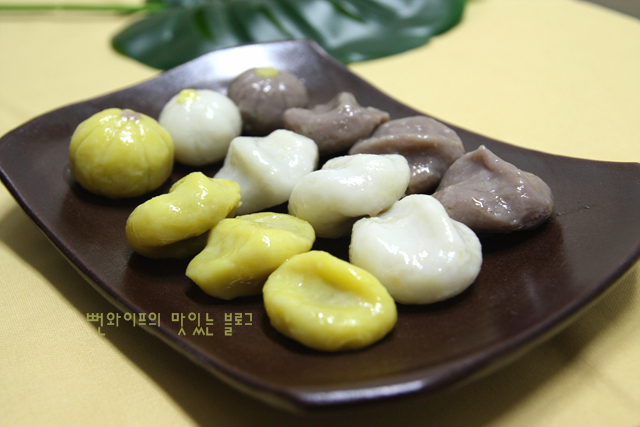
These traditional holiday rice cakes for Chuseok are naturally colored using gardenia seed water and grape skin water. Kneading the dough with boiling water gives it a delightfully chewy texture, generously filled with nutty sesame and savory sweet soybean fillings. After steaming in a hot steamer for about 20 minutes, rinsing them in cold water and coating them with toasted sesame oil gives them a lovely glossy finish.
- Servings
- about 5–6 servings
- Cook time
- 20 minprep not included
- Difficulty
- Hard
- Spiciness
- Not spicy
Ingredients
White Songpyeon
- Non-glutinous rice flour200 g (2 cups)
- Water4 tbsp
- Salt1/2 tsp
Purple Songpyeon
- Non-glutinous rice flour200 g (2 cups)
- Grape skin juice4 tbsp
- Salt1/2 tsp
Yellow Songpyeon
- Non-glutinous rice flour200 g (2 cups)
- Gardenia seed water4 tbsp
- Salt1/2 tsp
Songpyeon Fillings
- Ground toasted sesame seeds1/2 cup
- Brown sugar2 tbsp
- Honey (or corn syrup (mulyeot))1 tbsp
- Ground boiled soybeans1/2 cup
- Brown sugar2 tbsp
- Honey (or corn syrup (mulyeot))1 tbsp
- For the soybean filling, soak yellow soybeans or black soybeans for 5 to 6 hours, then boil them in water for at least 10 minutes.
- The rice was soaked for over 4 hours, drained, and ground at a rice mill.
- Keep leftover flour tightly sealed in the freezer. Because it has high moisture content, leaving it in the refrigerator for long will cause mold to grow.
- Prepare a variety of fillings to suit your taste, such as boiled chestnuts, roasted soybean powder, or chopped nuts.
- You can also use green tea powder, carrot juice, or kabocha squash to add color.
Steps
I used toasted sesame seeds and boiled soybeans for the songpyeon fillings.
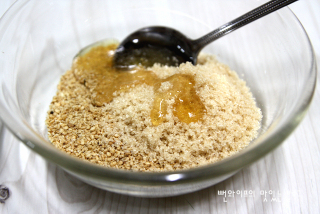
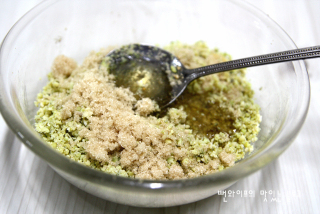
Add 1/2 cup ground toasted sesame seeds, 2 tbsp brown sugar, and 1 tbsp honey (or corn syrup (mulyeot)), then mix everything together.
You can grind the sesame seeds coarsely using a grinder or blender.
For the soybean filling, soak yellow soybeans or black soybeans for 5 to 6 hours, then boil them in water for at least 10 minutes.
Peel the boiled beans, place them in a grinder, and grind them.
Mix 1/2 cup ground boiled soybeans, 2 tbsp brown sugar, and 1 tbsp honey (or corn syrup (mulyeot)).
Prepare a variety of fillings to suit your taste, such as boiled chestnuts, roasted soybean powder, or chopped nuts.
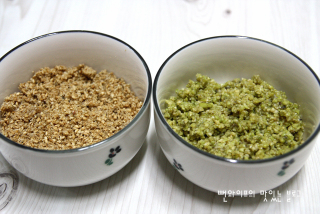
Here are the two prepared songpyeon fillings.
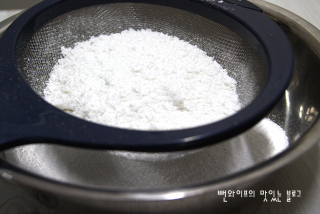
Add the salt, mix well, and sift through a strainer once.
This is rice that was soaked for over 4 hours, drained, and ground at a rice mill.
It was 1000 won for 1 doe (1.6 kg).
You can also grind it in a blender that has a grain-grinding function.
Any leftover flour must be sealed airtight and stored in the freezer.
Because it has a lot of moisture, if you leave it in the refrigerator for long, mold will grow.
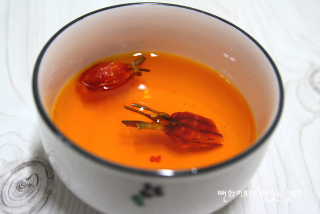
This is gardenia seed, the ingredient that provides yellow color.
Soaking gardenia seeds in water draws out the color.
I bought these gardenia seeds from the traditional market, freshly picked from gardenia trees by local grandmothers.
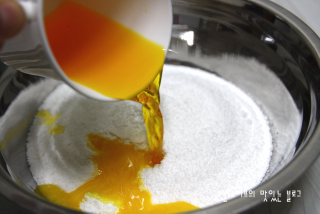
Songpyeon dough must always be kneaded with boiling water (hot-water dough).
If you use cold water, the flour will not bind and will separate.
Bring the gardenia water to a boil and pour it into the sifted rice flour...
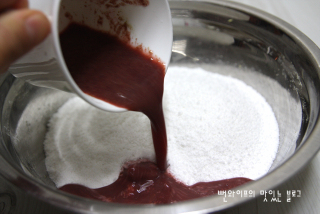
Bring the grape skin water to a boil and pour it in as well...
Bring plain water to a boil and pour it in as well...
Since my rice flour seemed to have a lot of moisture, I used 4 tbsp,
but you need to adjust the amount of water depending on the moisture level of your rice flour.
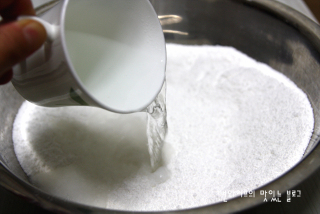
Because the boiling water was just poured in and it is hot, mix it with a spoon at first, then knead firmly with your hands until it forms a tight dough.
Once the dough comes together smoothly, there is no need to knead it for long.
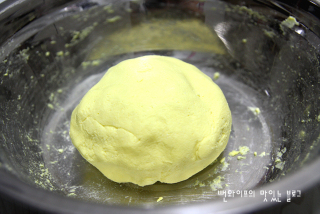
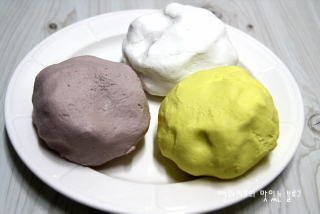
Here are the hot-water kneaded doughs.
You can also use green tea powder, carrot juice, or kabocha squash to add color.
Pinch off about 15 to 20 g of dough, roll it into a ball, make an indentation, and add the filling...
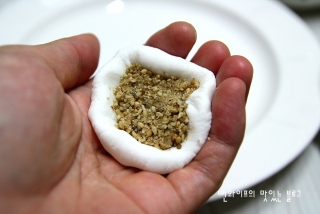
Squeeze firmly with your hand several times to release air and bind it well.
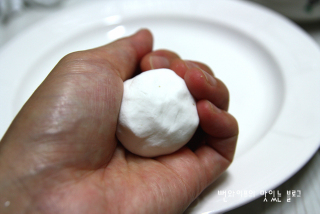
Shape into your desired form.
If you press indentations with a toothpick or spoon to make lines, it looks like a pumpkin.
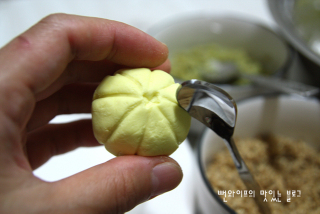
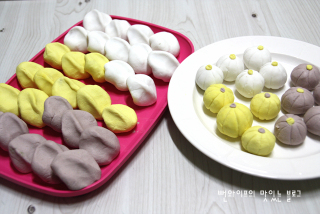
Place the songpyeon into a steamer with rising steam and steam over medium heat for about 20 minutes.
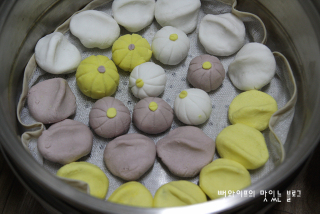
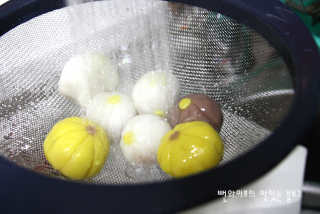
Immediately rinse the steamed songpyeon in cold water, drain, and brush with toasted sesame oil.
 Ppunwife's tips
- Songpyeon dough must always be kneaded with boiling water (hot-water dough). If you use cold water, the flour will not bind and will separate.
- You need to adjust the amount of water depending on the moisture level of your rice flour.
- Immediately rinse the steamed songpyeon in cold water, drain, and brush with toasted sesame oil.
FAQ
Do I have to use boiling water when making the dough?
You must knead with boiling water (hot-water dough) for the flour to bind together; kneading with cold water will prevent the flour from clumping and cause it to separate.
Can I use other ingredients to color the dough?
Besides gardenia seeds and grape skins, you can use green tea powder, carrot juice, kabocha squash, or other natural ingredients to create different colors.
How should I store leftover non-glutinous rice flour?
Rice flour from a mill contains a lot of moisture and can develop mold if kept in the refrigerator, so store it sealed in an airtight container in the freezer.
Why do you rinse songpyeon in cold water after steaming?
Rinsing the steamed songpyeon quickly in cold water washes away excess surface starch and makes the texture much chewier; draining them and coating them with toasted sesame oil prevents them from sticking to each other.