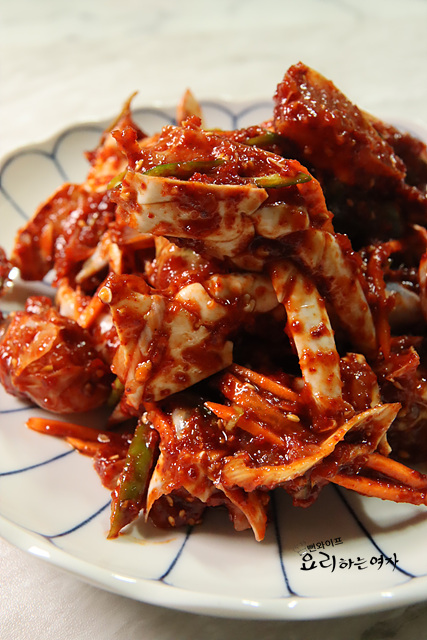
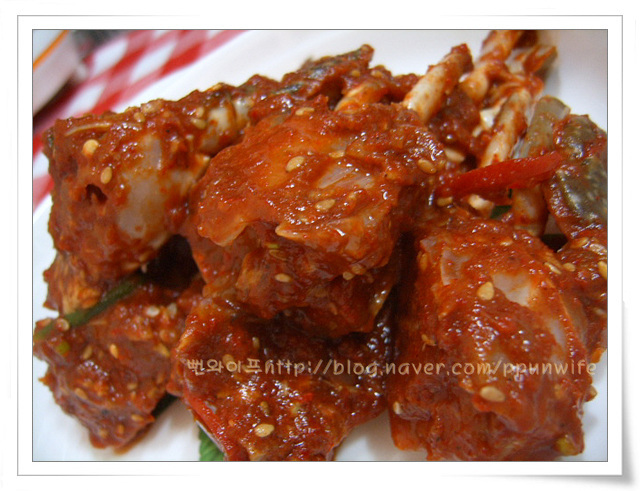
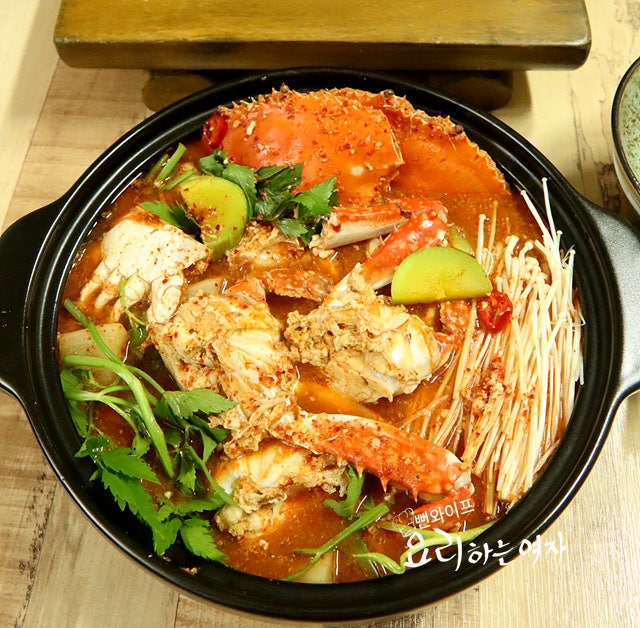
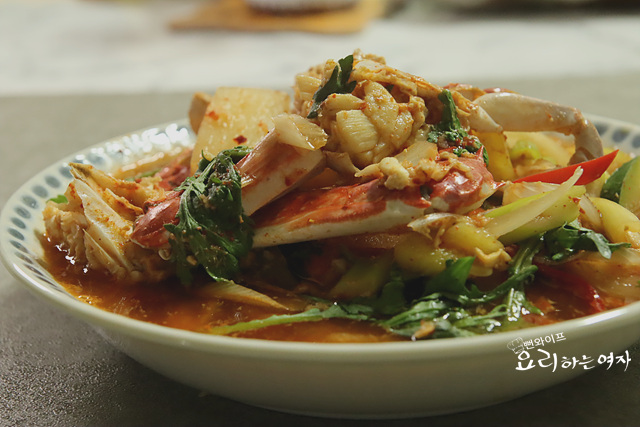
Clean Ganjang Gejang (Soy Sauce Marinated Raw Crab)
An umami-rich crab side dish made by pouring completely cooled boiled soy sauce brine over blue crabs and letting them mature.
Translated from Korean by AI and not yet checked by a native speaker. Amounts and numbers are taken directly from the original recipe. Read the Korean original →
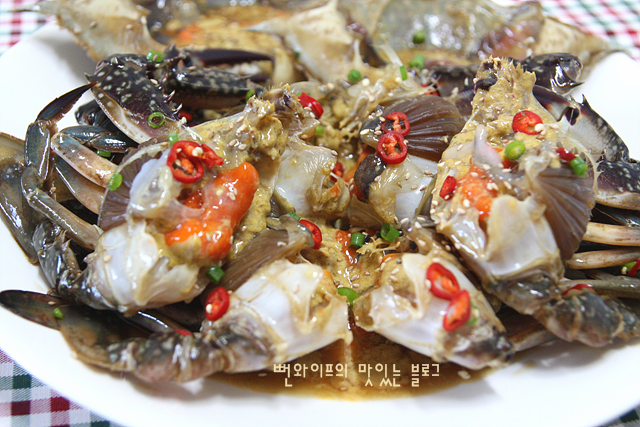
This ganjang gejang uses a soy sauce brine boiled with a dried pollock head, apple, and vegetables to remove fishiness and bring out rich savory umami. The boiled brine must be cooled completely before pouring it over the cleaned blue crabs so they stay fresh. Aged in the refrigerator for 2 to 3 days, it develops a deep, well-balanced flavor that is never overly salty.
- Servings
- about 4 servings
- Cook time
- 40 minprep not included
- Difficulty
- Medium
- Spiciness
- Mildly spicy
Ingredients
Ingredients
- Female blue crab4, 1.7 kg (large)
Soy sauce brine
- Water7 cups
- Regular soy sauce (jin-ganjang)3 cups
- Anchovy fish sauce (or or substitute with soy sauce)1 cup
- Cheongju (Korean rice wine) (or mirin (cooking rice wine))1 cup
- Onion1 (medium)
- Apple1
- Large green onion (daepa)1
- Garlic10 cloves
- Ginger2 knobs (each thumb-nail sized)
- Dried Cheongyang chili pepper (hot green chili)2
- Whole black peppercorns1 tbsp
- Green plum syrup (maesil-cheong) (or corn syrup (mulyeot))3–4 tbsp
- Dried pollock head1
- Dried kelp (dasima)2 pieces (10 cm square)
- For ganjang gejang or yangnyeom gejang, which are eaten without cooking, it is best to buy live blue crabs. Choose crabs that feel heavy when lifted, with an underside that is firm to the touch and clean white.
- You can use fresh Cheongyang chili peppers instead of dried ones, substitute 20 soup anchovies for the dried pollock head, or add about 3 shiitake mushrooms.
- Because boiling and cooling the soy sauce brine takes time, clean the crabs while the brine cools to keep them fresh longer.
Steps
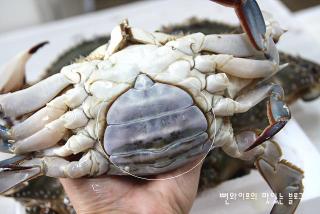
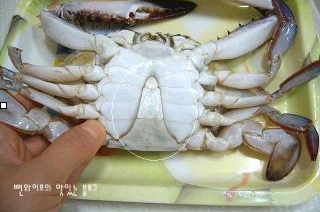
Most of you probably know how to tell male and female crabs apart, but let me show you with pictures just in case.
Crabs with a round belly flap like number 1 are females...
Those with a narrow, pointed shape like number 2 are males.
Because boiling and cooling the soy sauce brine takes a long time, cleaning the crabs while the brine cools keeps the crabs fresh longer.
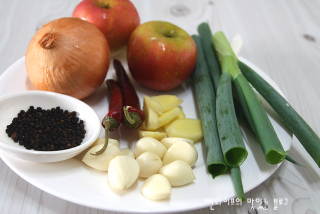
3. Here are the ingredients for the soy sauce brine.
The apples I prepared were very small, so I used 2, but 1 medium apple is enough.
Adding dried Cheongyang chili peppers gives great umami, but fresh Cheongyang chili peppers work fine if you don't have dried.
Cut the onion and apple into 2, and slice the ginger into thin flat pieces.
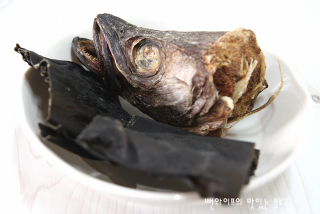
4. For deep umami in the broth, I prepared a dried pollock head and dried kelp.
You can substitute 20 soup anchovies for the dried pollock head, and if you have shiitake mushrooms, you can add about 3.
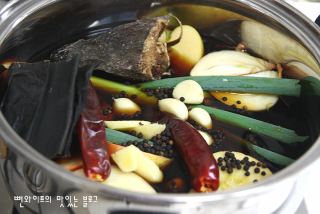
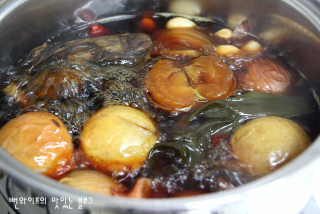
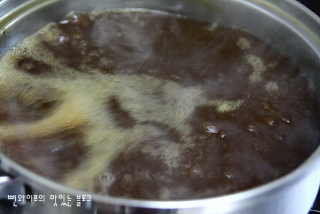
5. Put all the soy sauce brine ingredients into the pot, and once it comes to a rolling boil...
6. Lower the heat, remove the dried kelp after 5 minutes, and simmer over gentle heat for 30 to 40 minutes.
There is something to do before making the soy sauce brine.
The crabs must be completely submerged in the brine so there is no risk of spoiling during aging, giving you fresh ganjang gejang.
So checking the approximate water volume before making the brine prevents ending up with too much or too little brine later.
First, place the crabs in the container you plan to use and measure how much water it takes to submerge them.
While moisture will come out of the fruits and vegetables, liquid will also evaporate as it simmers for over 30 minutes, so measure a slightly more generous total liquid volume to set the ratio for the brine (water + regular soy sauce + fish sauce + cheongju).
They say the most ideal ratio of water to soy sauce (and fish sauce) for ganjang gejang is 6:4, but I added slightly more water so it wouldn't be too salty.
If you prefer it saltier, you can add more salty elements like soy sauce or fish sauce.
Boiling fish sauce together with the soy sauce adds more umami, and the fishy smell of the fish sauce disappears completely during boiling, but if you dislike it, you can use only soy sauce. Got it?
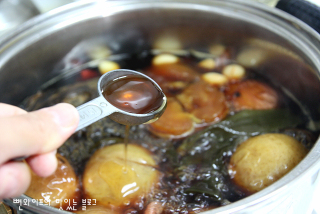
7. Near the end, add green plum syrup or corn syrup and boil for just a brief moment longer.
For ganjang gejang or seasoned raw crab, where the crab is eaten raw after aging in soy sauce brine, adding green plum syrup is great because it aids in sterilization and antimicrobial action to help prevent food poisoning.
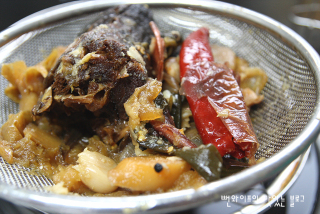
8. Strain the solids through a sieve to collect the clear brine, and let it cool completely.
Adding about 2 tbsp of lemon juice here also helps remove any fishiness and adds a fresh touch.
10
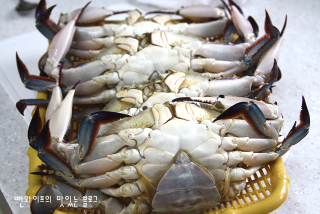
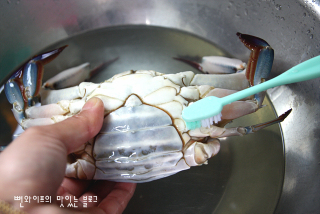
9. While the soy sauce brine is cooling, clean the crabs; preparing crabs for ganjang gejang is quite simple.
Thoroughly scrub every corner with a toothbrush to remove debris, rinse under running water, and drain well.
10. Wipe them with paper towels or a dry kitchen towel to leave as little moisture as possible.
11
12
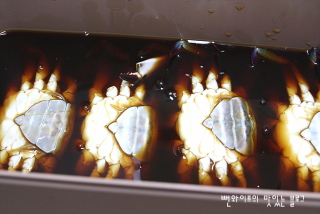
11. Once the soy sauce brine has completely cooled and the crabs are dried of water,
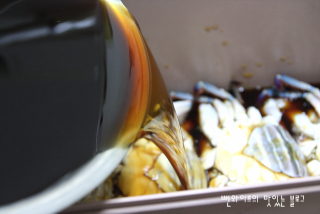
place the crabs belly-side up in a container and pour the soy sauce brine over them.
12. Age in the refrigerator for 2 to 3 days (at least 24 hours) for the seasonings to soak in properly.
When you open the container after aging, it should have a savory, appetizing aroma if the ganjang gejang turned out well.
If it smells fishy, the crabs may need more time to age, or if it smells fishy or off even well past the aging period, the crabs themselves were not fresh.
13
14
13. If you leave the aged crabs submerged in the soy sauce brine continuously, the roe and flesh will dissolve and lose their texture.
Store the brine and crabs separately, and serve them together just before eating.
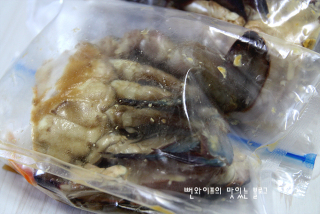
It is best to eat ganjang gejang within 2 to 3 days after aging, but if you have a lot and want to keep it longer, store the crabs in single-serving ziplock bags in the freezer...
14. Because juices and moisture from the crabs remain in the brine, there is a risk of spoilage even if kept in the refrigerator.
Filter only the clear brine through a fine cotton cloth, boil it vigorously for over 10 minutes, let it cool, and store it in the refrigerator.
Move the frozen crab to the refrigerator to thaw, then serve it with the brine.
Leftover brine after finishing the crabs can be reused to make gejang or saeujang (soy sauce raw shrimp), and it is delicious used in braised fish or stir-fries.
You can also use it when making yangnyeom gejang.
When making the yangnyeom gejang from my blog, you can use this soy sauce brine in place of the seasoning soy sauce.
The recipe for yangnyeom gejang is here ⇒ http://blog.naver.com/ppunwife/140056185040
 Ppunwife's tips
- The crabs must be fully submerged in the brine during aging to keep them fresh without spoiling, so it is a good idea to put the crabs in the container beforehand and check how much water is needed to cover them.
- Adding green plum syrup helps prevent food poisoning through its sterilizing and antimicrobial properties.
- When placing the crabs in the container, arrange them belly-side up so the delicious juices do not leak out.
- If you keep the crabs submerged in the brine continuously, the roe and flesh will dissolve, so store the brine and crabs separately and combine them right before serving.
FAQ
How can I substitute for the dried pollock head in the brine?
You can substitute 20 soup anchovies for the dried pollock head, and boiling it with about 3 shiitake mushrooms is also great.
Can I keep storing the crabs submerged in the soy sauce brine?
Leaving the crabs in the brine will cause the flesh and roe to dissolve. After aging, it is best to remove the crabs, freeze them in 1-serving portions, and boil and cool the brine separately before storing.
What should I keep in mind when cleaning the crabs?
Thoroughly scrub every corner with a brush to wash off debris, then remove as much surface moisture as possible using paper towels or a dry kitchen towel.
Which way should the crabs face when placed in the container?
Place the crabs neatly in the container with their belly side facing up, then pour the prepared soy sauce brine over them.