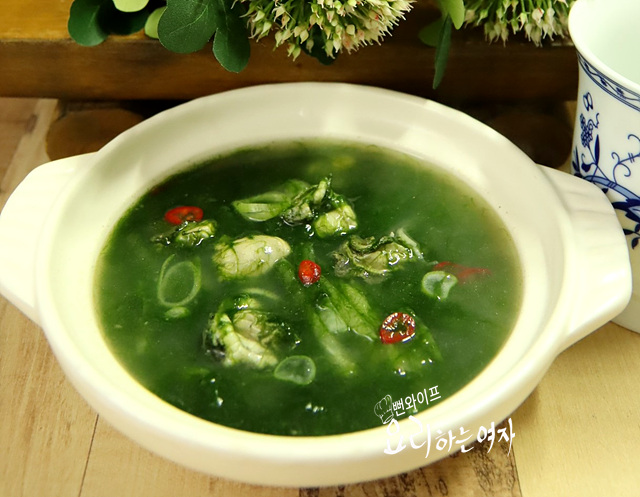
Refreshing Mu Gul Guk (Radish and Oyster Soup) in 10 Minutes
A clear, refreshing soup made by dissolving doenjang in water from washing rice and simmering seasonal oysters and Korean radish for 10 minutes.
Translated from Korean by AI and not yet checked by a native speaker. Amounts and numbers are taken directly from the original recipe. Read the Korean original →
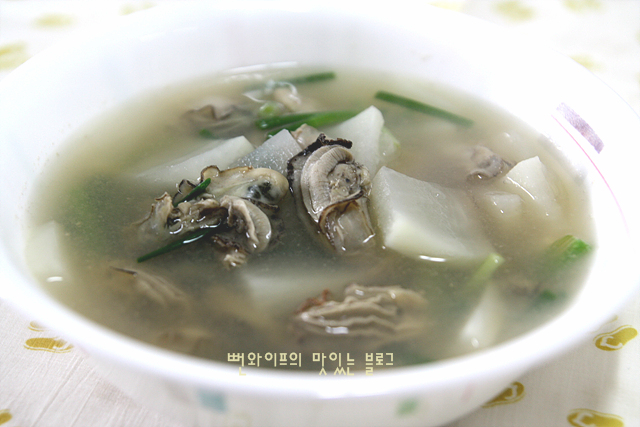
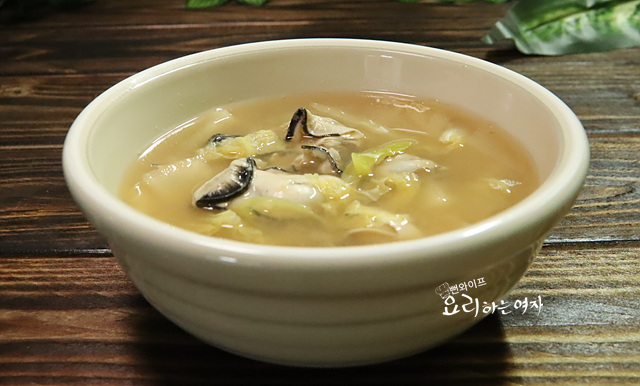
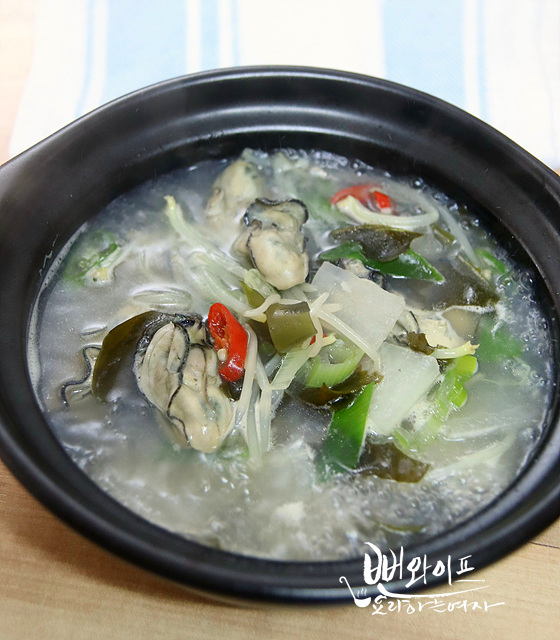
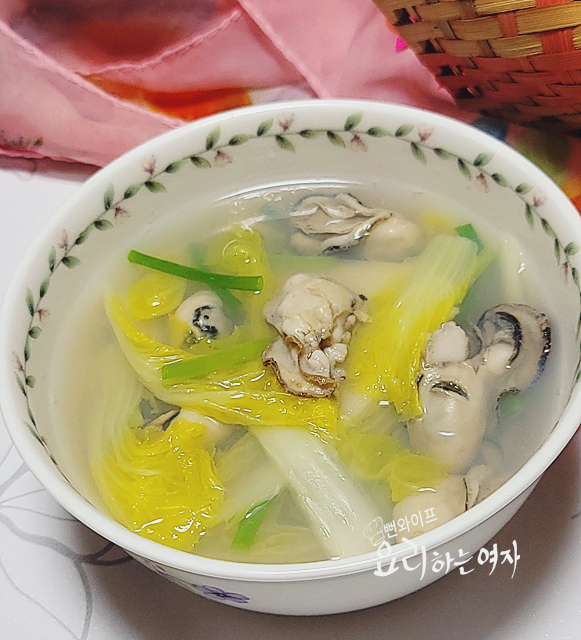
A refreshing, savory clear soup made with seasonal Korean radish and oysters in just 10 minutes. To highlight the oysters' natural aroma, water from washing rice and a small amount of doenjang are used instead of a heavy broth. The key is adding the oysters at the very end to cook briefly, keeping them from turning tough.
- Servings
- 2 servings
- Cook time
- 10 minprep not included
- Difficulty
- Medium
- Spiciness
- Not spicy
Ingredients
- Oysters100 g (1/2 cup)
- Korean radish (mu)1 handful, 100 g
- Scallions (jjokpa)3 stalks
- Water from washing rice3 cups
- Doenjang (Korean soybean paste)1 tbsp
- Salt1/2 tsp
- You can prepare large green onion (daepa) instead of scallions and slice it diagonally.
- Swirl lightly in mild salt water so bits of oyster shell or debris sink to the bottom, rinse about twice, and drain. (2 to 3 tbsp coarse sea salt in 5 cups water)
Steps
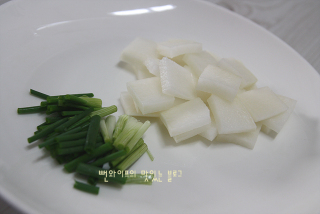
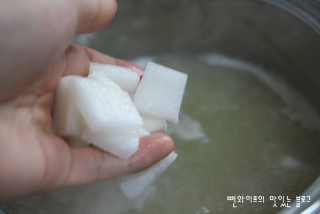
1. Slice the Korean radish into squares about 2 mm thick.
Cut the scallions into lengths of about 2 cm.
You can prepare large green onion instead of scallions and slice it diagonally.
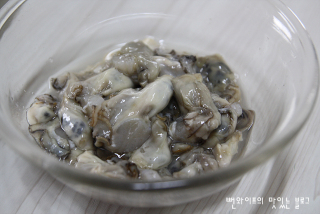
2. Rinse the oysters in mild salt water, drain, and set aside.
Washing oysters in plain water makes them lose their flavor and aroma.
To clean oysters, swirl them lightly in mild salt water so bits of oyster shell or debris sink to the bottom.
Rinsing them about twice like this finishes the cleaning nicely.
The salt water is made by dissolving about 2 to 3 tbsp of coarse sea salt into 5 cups of water.
You can also use this same salt water concentration when purging clams such as Manila clams or blood clams.
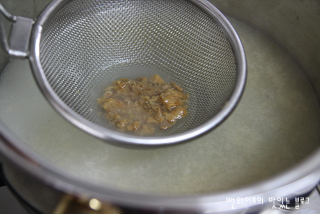
3. Dissolve the doenjang through a strainer into the water from washing rice.
To bring out the oyster aroma as much as possible, I used water from washing rice instead of deeply savory anchovy broth,
and used only a little doenjang as well.
4. When the water boils, add the Korean radish and...
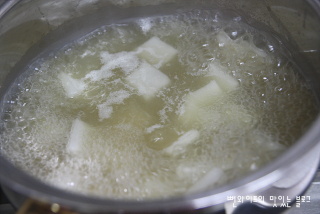
5. Boil until the Korean radish turns translucent.
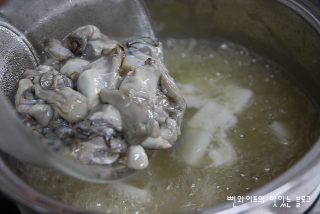
6. Add the oysters and...
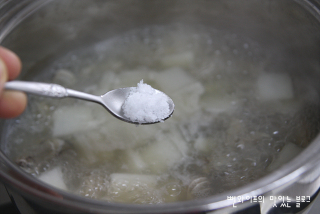
7. Season with salt.
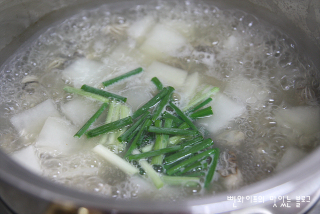
8. Add the scallions, boil for just 30 seconds, and finish.
 Ppunwife's tips
- Use only a little doenjang to bring out both a hint of savory depth and the aroma of the oysters, and because oysters lose flavor and aroma if boiled too long, add them at the end and cook only briefly.
- Washing oysters in plain water makes them lose their flavor and aroma.
FAQ
How should oysters be washed to preserve their aroma and flavor?
Swirling them lightly in mild salt water instead of plain tap water separates shells and debris while preserving their flavor and aroma.
Why use water from washing rice as the base broth instead of anchovy broth?
Water from washing rice is used and only a small amount of doenjang is dissolved so that the strong savory depth of anchovy broth does not overpower the natural flavor of the oysters.
Can I substitute large green onion if I don't have scallions?
Yes, you can slice large green onion diagonally and add it instead of scallions.
How long should oysters be boiled in the soup?
Overcooking oysters ruins their texture and aroma, so add them at the very end after the radish is tender, and finish by boiling for just about 30 seconds along with the scallions.