Gul Muchim (Seasoned Fresh Oysters) with Radish
A winter delicacy side dish of salted radish and fresh raw oysters lightly tossed in a spicy seasoning.
Translated from Korean by AI and not yet checked by a native speaker. Amounts and numbers are taken directly from the original recipe. Read the Korean original →

This special tossed dish pairs in-season raw oysters with salted, crisp radish to bring out a refreshing crunch and rich savory depth. Mixing in fine chili flakes helps the seasoning cling evenly to the slippery oysters instead of sliding off. It is also wonderful enjoyed as a wrap with tender inner napa cabbage leaves.
- Servings
- 4–5 servings
- Difficulty
- Easy
- Spiciness
- Mildly spicy
Ingredients
Ingredients
- Raw oysters2 packs
- Korean radish (mu)300 g
- Salt1 tsp
- Scallions (jjokpa)10 stalks
Seasoning
- Gochugaru (Korean chili flakes)2 tbsp (1 fine + 1 coarse)
- Minced garlic1 tbsp
- Minced ginger1/2 tsp
- Sugar1/2 tbsp
- Sand lance fish sauce (or dried anchovies)1 tbsp
- Toasted sesame seeds1 tbsp
- You can cut the radish amount in half and replace the other half with Korean pear. Instead of scallions, water dropwort (minari) or the white parts of large green onions work well.
- Add 1 tsp of salt to the radish, toss well, and let it salt for 30 minutes.
Steps
Prepare the ingredients
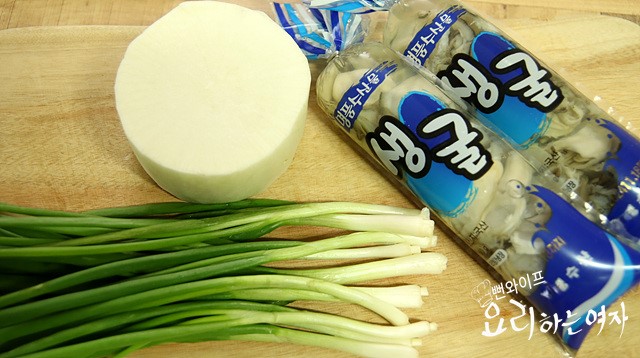
Prepare two 300g bags of oysters, 300g of Korean radish, and 10 scallions.
You can cut the radish amount in half and replace the other half with Korean pear. Instead of scallions, water dropwort (minari) or the white parts of large green onions work well.
Clean the oysters
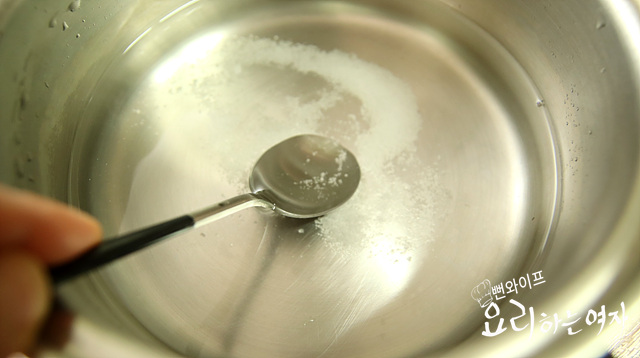
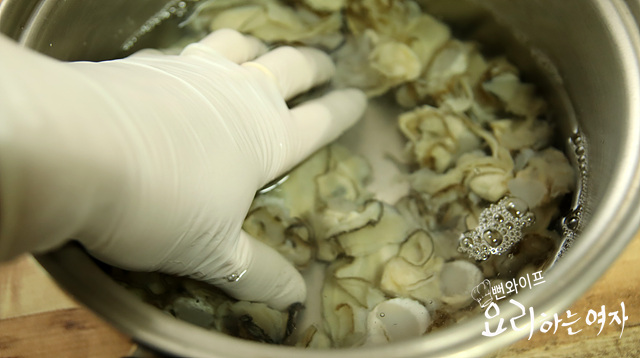
Add 2 tbsp of salt to about 10 cups of water to make a mild brine.
Gently swish the oysters with your hands to help any debris fall away from the surface.
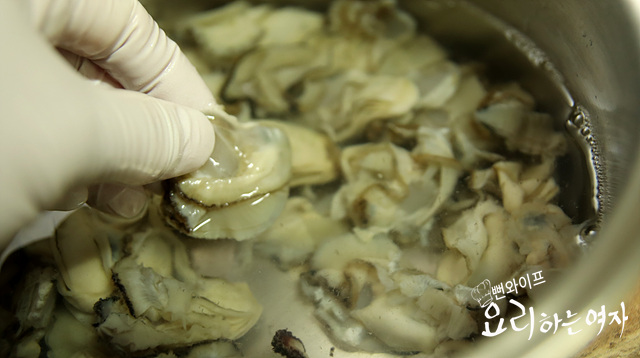
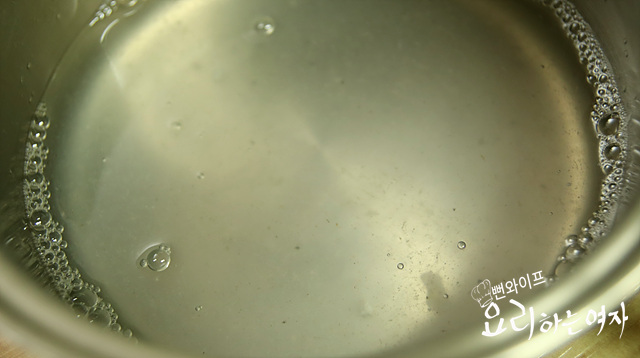
Remove any bits of shell stuck to the oysters, picking up a few at a time and swishing them through the salt water to rinse them.
A lot of shell fragments and debris will settle to the bottom.
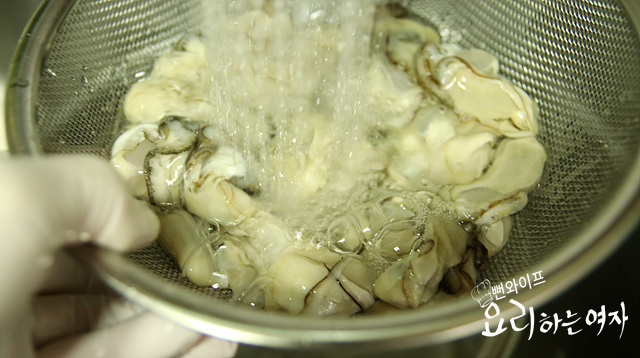
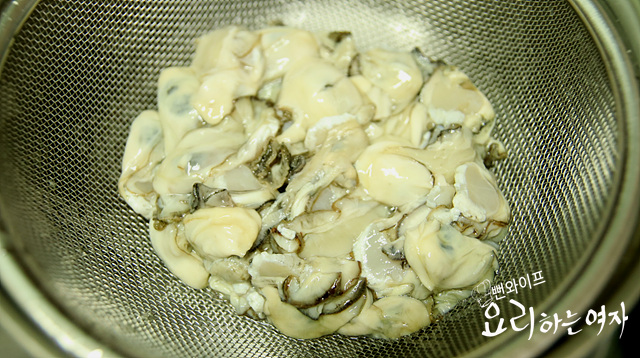
Rinse lightly under running water, then shake vigorously in a strainer to drain thoroughly.
Slice the vegetables
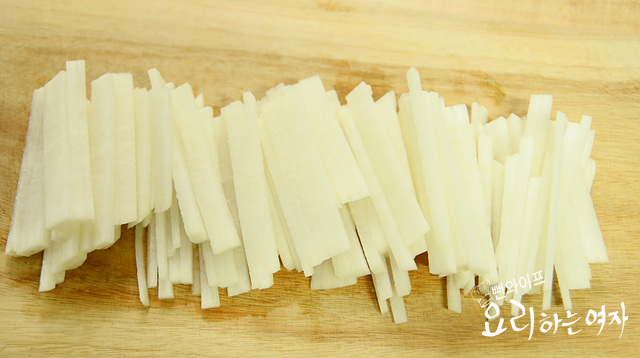
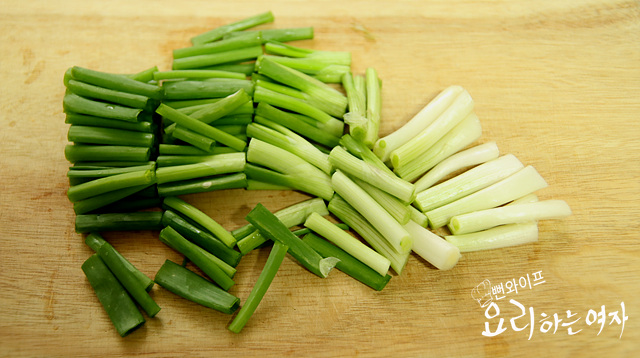
Julienne the radish not too thinly, and cut the scallions into similar lengths as the radish.
Salt the radish
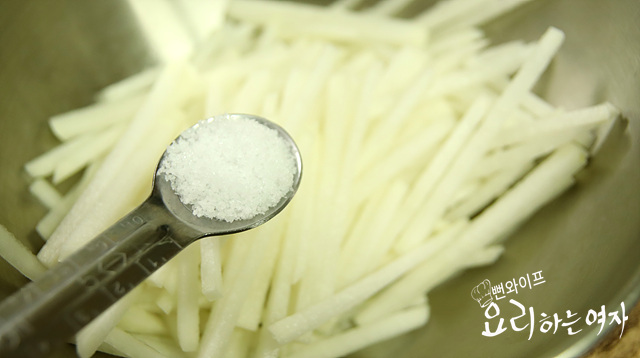
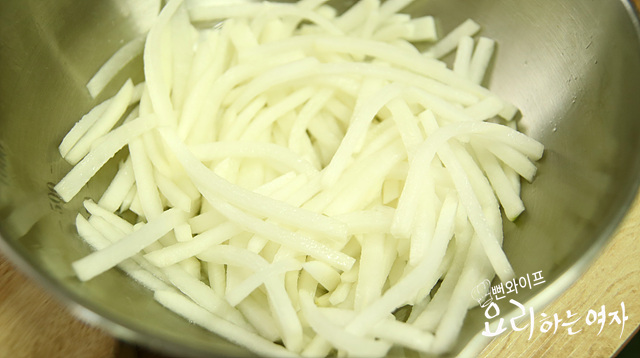
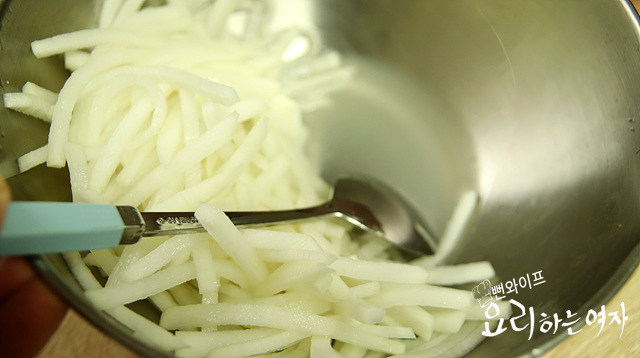
Add 1 tsp of salt to the radish, mix well, and let it salt for 30 minutes.
Do not rinse; simply drain the liquid through a strainer.
Season the dish
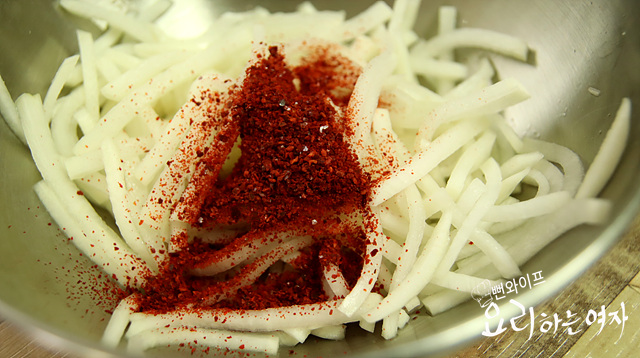
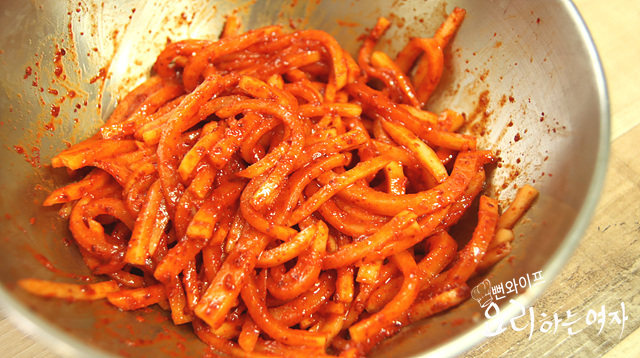
Add 2 tbsp of gochugaru to the radish to coat it with color...
Oysters are slippery, so chili flakes do not stick easily, but mixing in fine chili flakes gives a prettier color and helps it cling nicely.
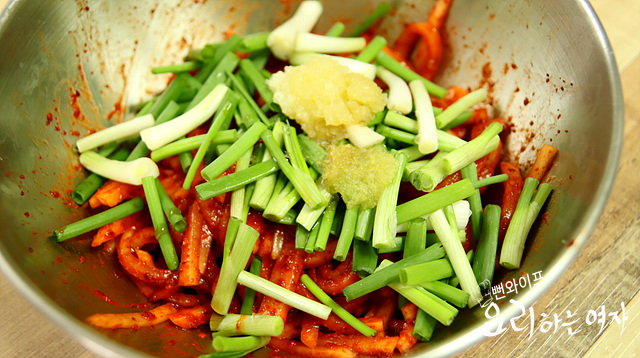
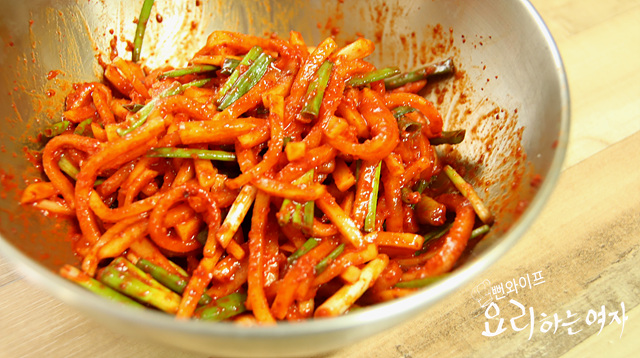
Add the scallions, 1 tbsp of minced garlic, 1/2 tsp of minced ginger, 1/2 tbsp of sugar, and 1 tbsp of sand lance fish sauce, then mix gently by hand.
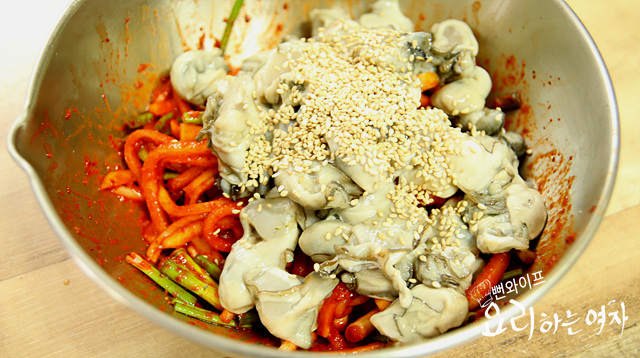
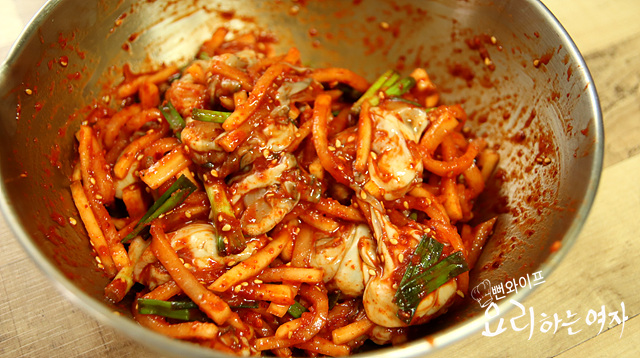
Add the drained oysters and 1 tbsp of toasted sesame seeds, toss gently, and taste; if it is bland, adjust with more fish sauce or salt.
I did not add toasted sesame oil, but you can add just a tiny touch if you like.
Complete
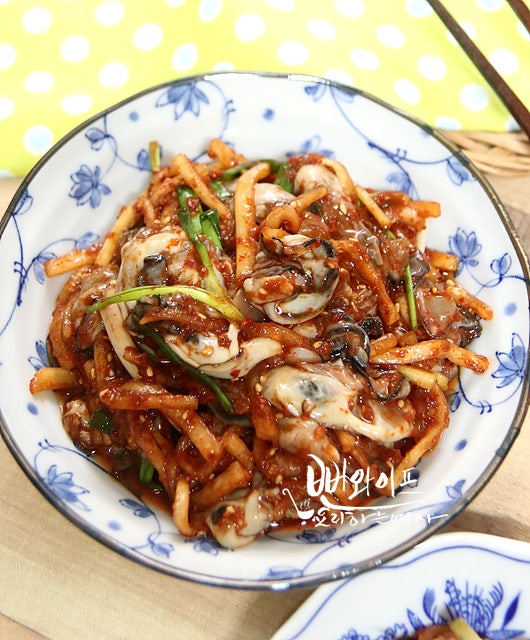
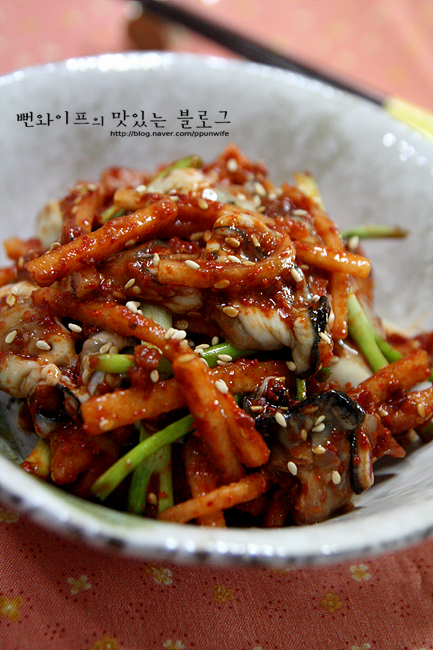
Doesn't the oyster salad look delicious?
The plump, fragrant flavor fills your mouth, making it truly wonderful.


Oysters that you can only enjoy in winter are delicious raw, and they are also great in soups or pan-fried into jeon, but I started this year's first oysters with oyster salad.
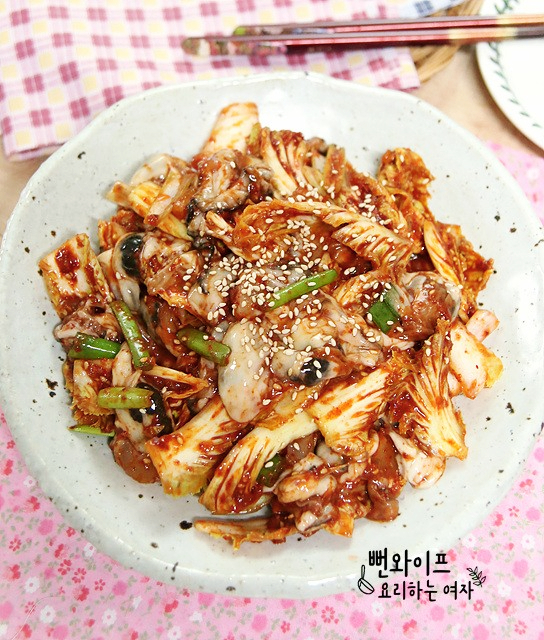
Wrapping it in cabbage leaves like this turns it into gul bossam.
 Ppunwife's tips
- Oysters are slippery, so chili flakes do not stick easily, but mixing in fine chili flakes gives a prettier color and helps it cling nicely.
- I did not add toasted sesame oil, but you can add just a tiny touch to toss if you prefer.
- It is also delicious wrapped in tender, sweet yellow inner leaves of napa cabbage.
FAQ
How do you clean and prepare raw oysters?
Dissolve 2 tbsp of salt in 10 cups of water to make a mild brine, swish the oysters around to wash them, and pick out any stray shell fragments or debris. Then rinse lightly under cold running water and drain the water off completely.
How can I prevent the seasoning from sliding off the oysters?
Combining fine gochugaru with coarse gochugaru not only gives a vibrant red color but also helps the seasoning adhere properly to the slippery surface of the oysters.
Can I substitute other vegetables for the radish or scallions?
You can replace half of the radish with Korean pear for extra sweetness, and if you do not have scallions, you can use water dropwort (minari) or the white parts of large green onions.
Is it okay to add toasted sesame oil to the seasoned oysters?
It is left out of the base seasoning, but you may toss in a very small amount at the end according to your personal taste.