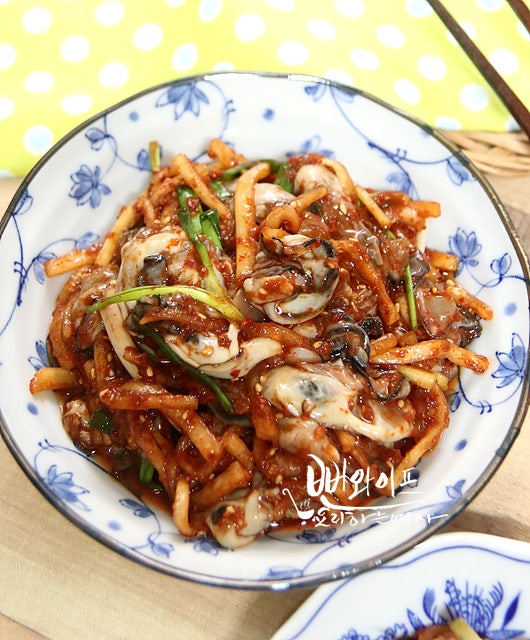
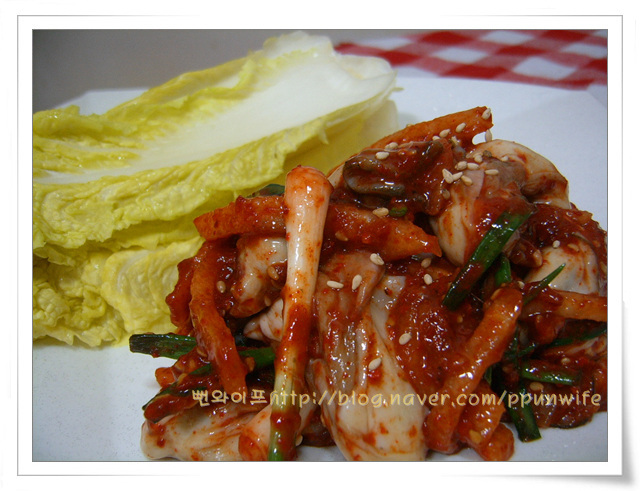
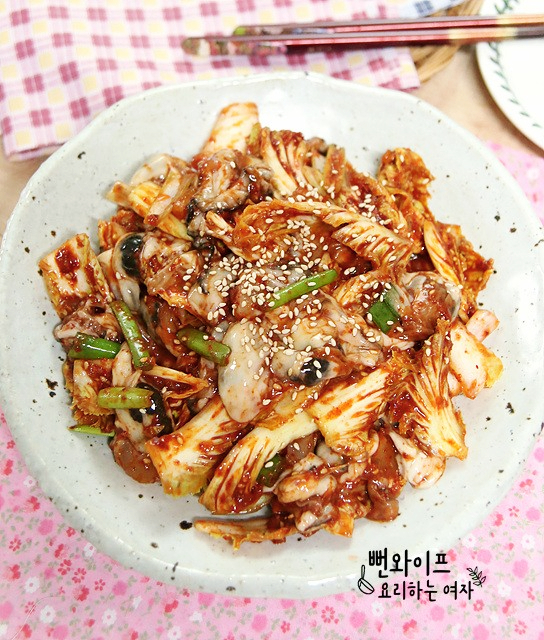
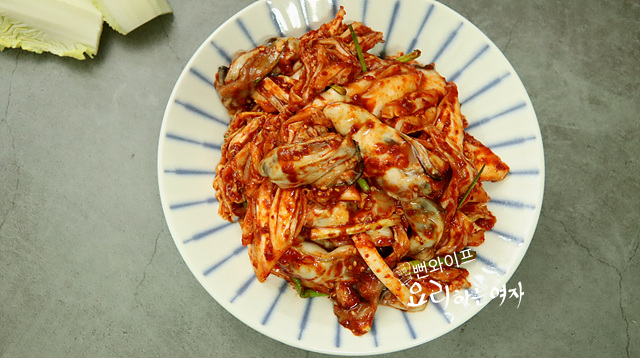
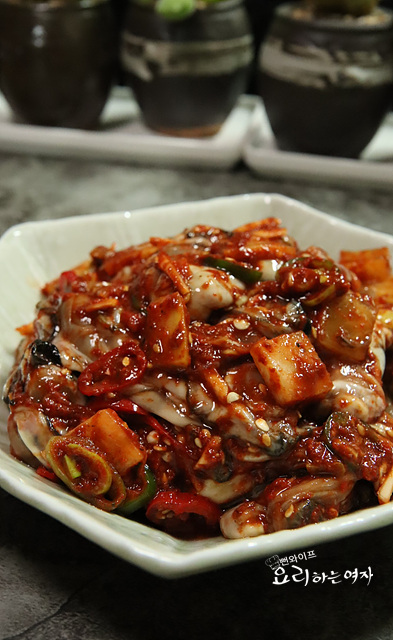
Crisp, Sweet Gul Muchim (Seasoned Fresh Oysters)
Fresh oysters tossed on the spot with sweet pear and crisp Korean radish.
Translated from Korean by AI and not yet checked by a native speaker. Amounts and numbers are taken directly from the original recipe. Read the Korean original →
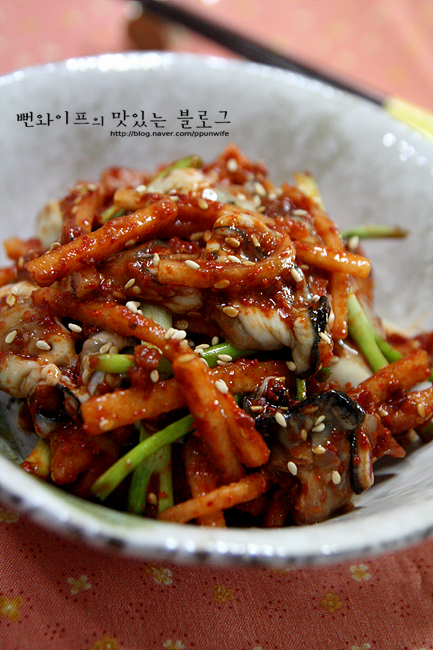
Crisp julienned Korean radish and sweet pear are tossed first with the seasoning, then raw fresh oysters are gently mixed in to finish. As it sits, moisture from the oysters creates a juicy sauce that makes it even more delicious. It makes an excellent, quick-to-prepare side dish for entertaining guests.
- Servings
- 2–3 servings
- Difficulty
- Easy
- Spiciness
- Mildly spicy
Ingredients
Ingredients
- Oysters200 g
- Julienned Korean radish (mu) and julienned pear150 g
- Scallions (jjokpa)5
Seasoning
- Gochugaru (Korean chili flakes)1 tbsp
- Regular gochugaru (Korean chili flakes)1 tbsp
- Minced garlic1/2 tbsp
- Anchovy fish sauce (or sand lance fish sauce)1/2 tbsp
- Sugar1/2 tsp
- Ginger juice1/2 tsp
- Salt1/2 tsp
- Toasted sesame seeds
- Washing oysters in plain fresh water dulls their taste and aroma, so clean them by gently swishing them in light salt water (about 2-3 tbsp coarse sea salt to 5 cups water) so bits of shell or debris sink to the bottom, then rinse about twice.
Steps
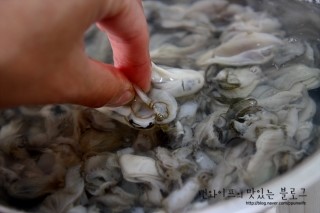
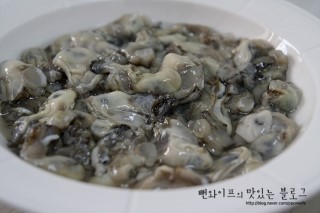
1. Washing oysters in plain fresh water dulls their taste and aroma.
To clean oysters, gently swish them in light salt water so bits of oyster shell or debris sink to the bottom.
Rinsing them about twice like this finishes the cleaning neatly.
A good salinity for washing oysters is about 2-3 tbsp coarse sea salt dissolved in 5 cups water.
You can also use this same salt water salinity when purging clams like manila clams or cockles.
2. Drain roughly in a strainer and set aside in a bowl.
Leaving some moisture helps the gochugaru hydrate well and coat with a beautiful color, so it is fine if some moisture remains.
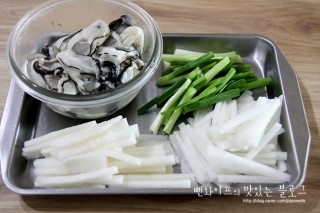
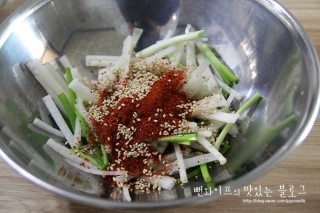
3. Prepare 200 g cleaned oysters as described above, julienne enough Korean radish and pear to make one generous handful (approx. 150 g),
and cut 5 scallions to the same length as the radish.
4. Add the julienned Korean radish, julienned pear, scallions, and all the seasoning ingredients, mix evenly, and once the gochugaru develops a vibrant color...
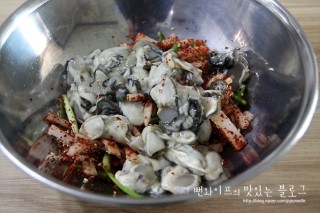
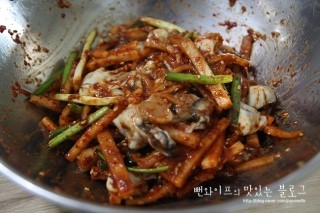
5. Add the oysters at the very end...
6. Toss gently so the oysters do not burst, and it is done.
 Ppunwife's tips
- Leaving some moisture helps the gochugaru hydrate well and coat with a beautiful color, so having some moisture is completely fine.
- Rather than eating it right after tossing, it becomes more delicious as it sits because the moisture released from the oysters lets the seasoning soak in juicy and moist.
- Because this oyster salad is seasoned mildly, it is best enjoyed fresh within one or two meals.
FAQ
How should I wash fresh oysters to preserve their flavor and aroma?
Instead of plain fresh water, gently swish them in light salt water to remove any debris and rinse about twice.
Should I drain all the water completely after washing the oysters?
A little bit of moisture helps the gochugaru bloom nicely and gives the seasoning a vibrant color, so draining them roughly is just fine.
Can I use a different fish sauce instead of anchovy fish sauce?
You can use sand lance fish sauce instead of anchovy fish sauce.
How many days can I keep the finished oyster salad?
Because it is seasoned on the milder side, it is best to finish it fresh within one or two meals.