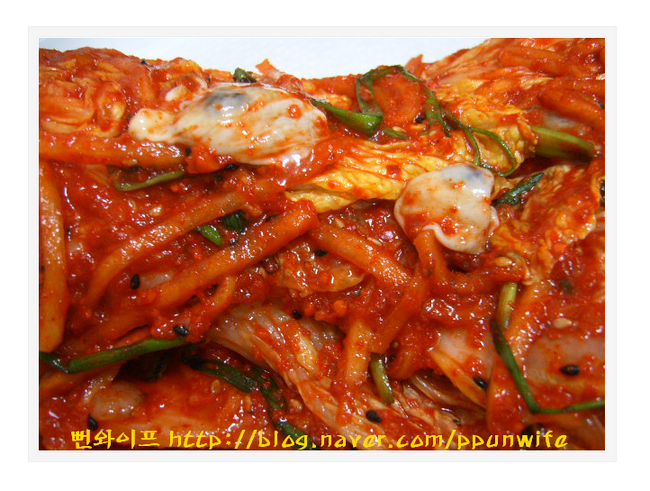
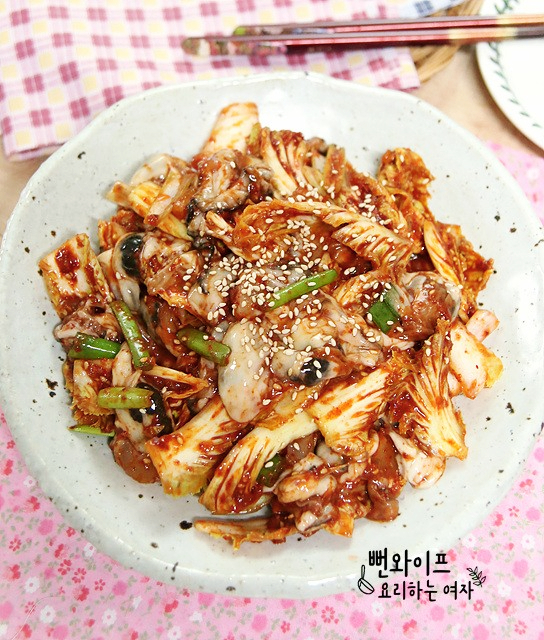
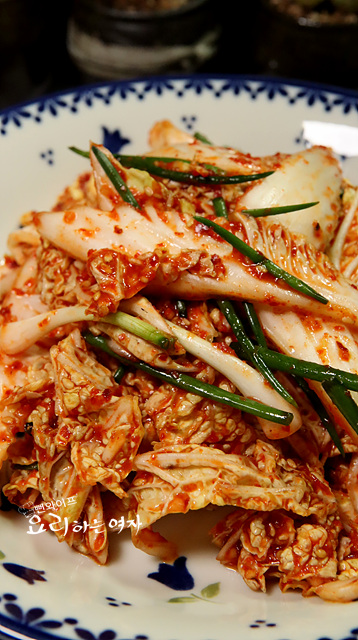
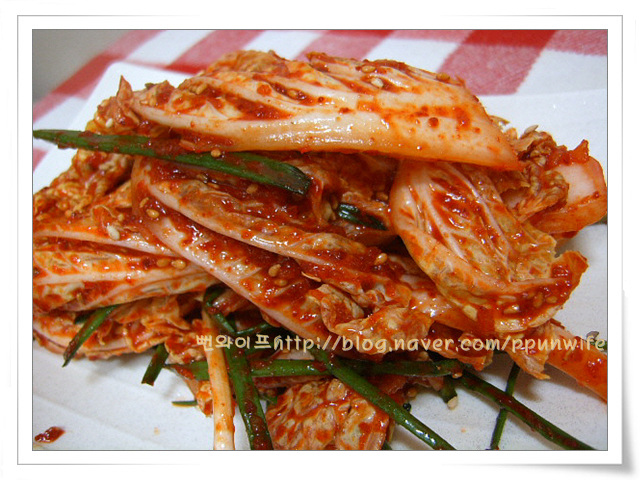
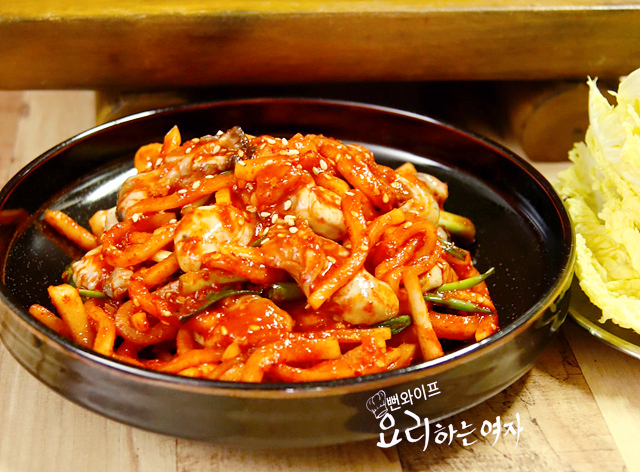
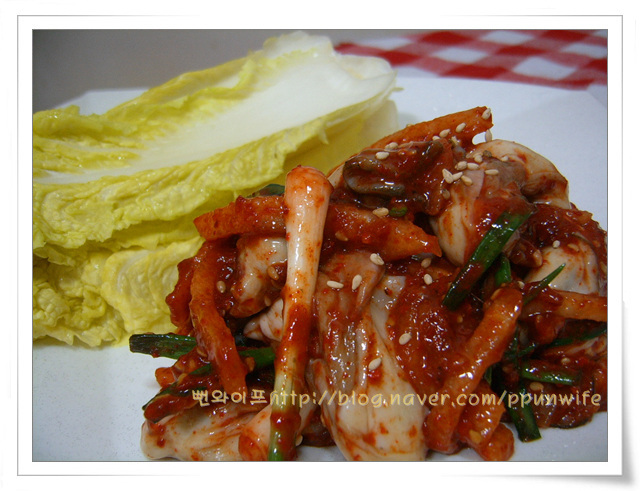
Baechu Geotjeori (Fresh Cabbage Kimchi) with Fresh Oysters
An instant fresh kimchi tossed with salted baby napa cabbage and fresh oysters for a rich, savory flavor.
Translated from Korean by AI and not yet checked by a native speaker. Amounts and numbers are taken directly from the original recipe. Read the Korean original →
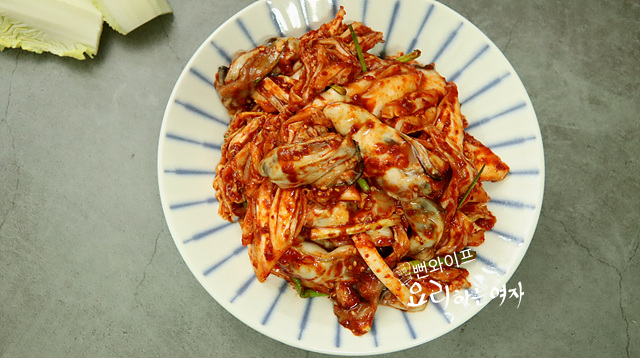
This fresh kimchi tosses naturally sweet baby napa cabbage with fresh oysters to bring out rich, savory flavor. Even without complicated extra ingredients, it tastes crisp and refreshing, pairing wonderfully with holiday tables or as a bite with makgeolli. The trick is to toss the oysters gently at the very end so they do not get crushed.
- Servings
- about 6–8 servings
- Difficulty
- Easy
- Spiciness
- Spicy
Ingredients
Ingredients
- Baby napa cabbage1 kg
- Oysters1 pack (300 g)
- Scallions (jjokpa)30 stalks
- Coarse sea salt5 tbsp (for salting)
- Glutinous rice flour3 tbsp
- Water2 cups
Seasoning
- Sand lance fish sauce (or dried anchovies)2 tbsp
- Salted fermented shrimp (saeujeot)2 tbsp
- Gochugaru (Korean chili flakes)1 cup
- Minced garlic2 tbsp
- Minced ginger1/2 tbsp
- Sugar2 tbsp
- Toasted sesame seeds2 tbsp
- For fresh geotjeori made instantly without fermenting, the nutty, sweet yellow inner leaves work best.
- Garlic chives or large green onion also work fine instead of scallions.
- This uses one 300 g bag of oysters. Swirl gently in lightly salted water to rinse, then drain thoroughly.
- You can also easily use cooked rice instead of glutinous rice paste. Just blend 1/2 bowl of cooked white rice with 2 cups of water until smooth.
- Rinse the cabbage about twice under running water, sprinkle coarse sea salt between the leaves, and let salt for about 1 hour 30 minutes.
Steps
Prepare the ingredients
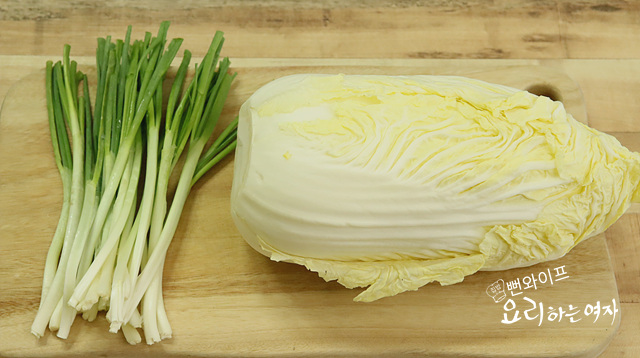
Use 1 kg of baby napa cabbage. For fresh geotjeori made instantly without fermenting, the nutty, sweet yellow inner leaves work best.
Trim the ends off 30 stalks of scallions.
Garlic chives or large green onion also work fine instead of scallions.
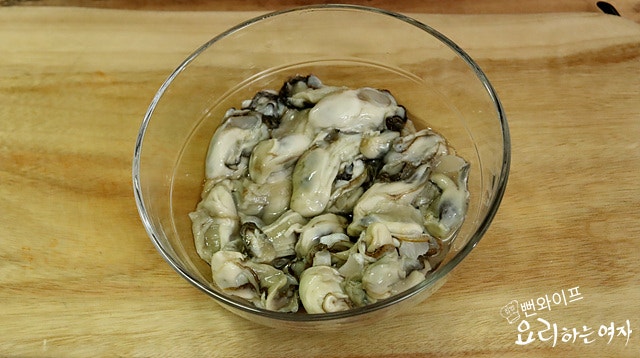
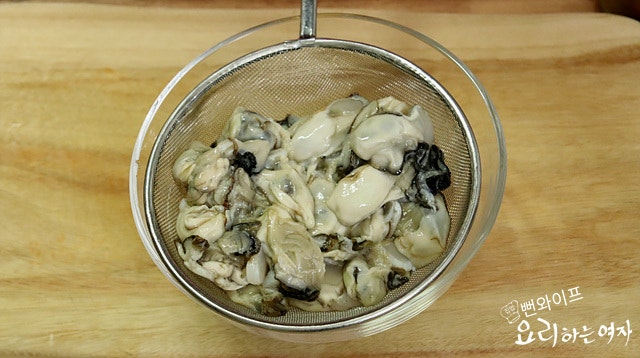
This uses one 300 g bag of oysters. Swirl gently in lightly salted water to rinse, then drain thoroughly.
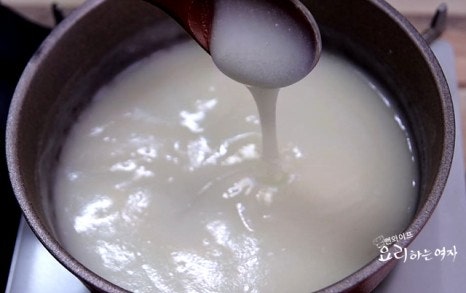
Mix 3 tbsp glutinous rice flour with 2 cups water and cook into a thick paste over heat without burning, then let cool.
You can also easily use cooked rice instead of glutinous rice paste. Just blend 1/2 bowl of cooked white rice with 2 cups of water until smooth.
Cut the ingredients
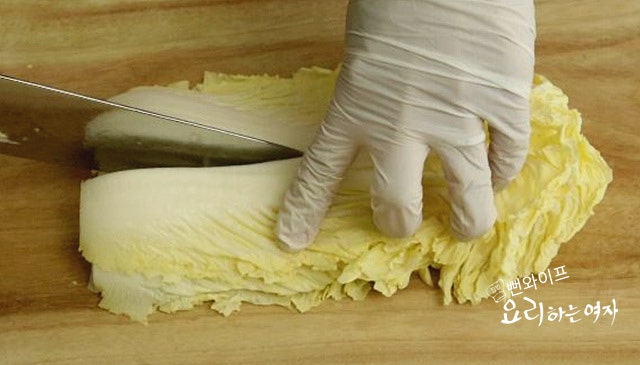
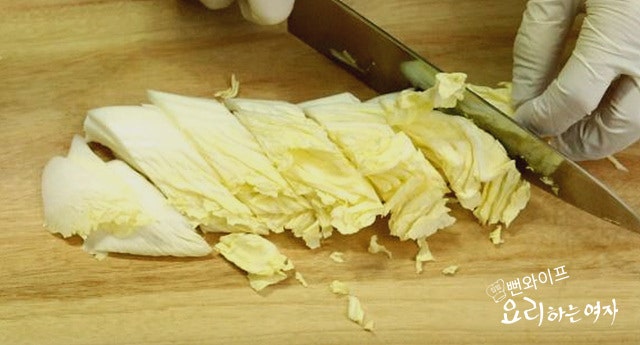
Separate the cabbage leaves, split each in half lengthwise, and cut diagonally into large bite-size pieces.
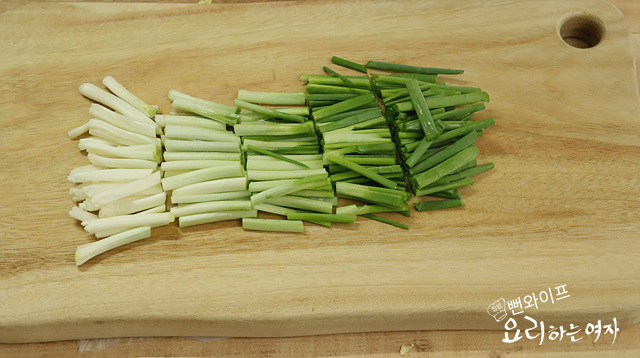
Cut the scallions into 3 to 4 cm lengths.
Salt the cabbage
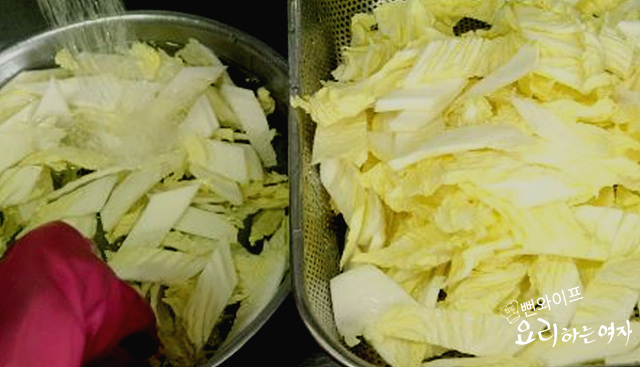
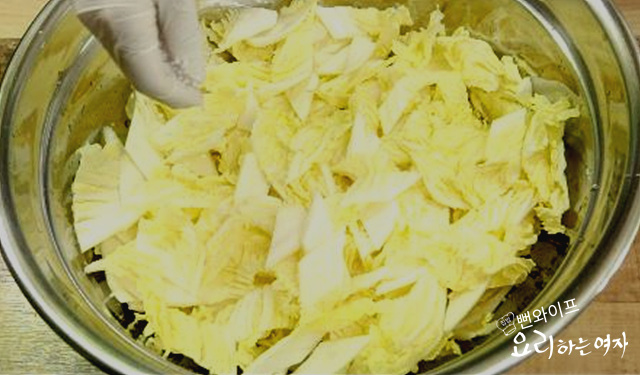
Rinse the cabbage about twice under running water, sprinkle coarse sea salt between the leaves, and let salt for about 1 hour 30 minutes.
While the cabbage is salting, make the glutinous rice paste and the seasoning paste.
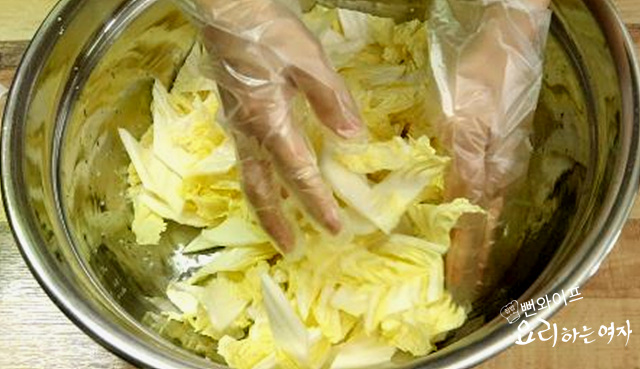
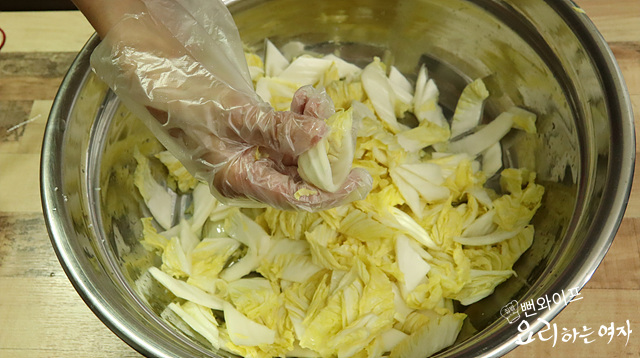
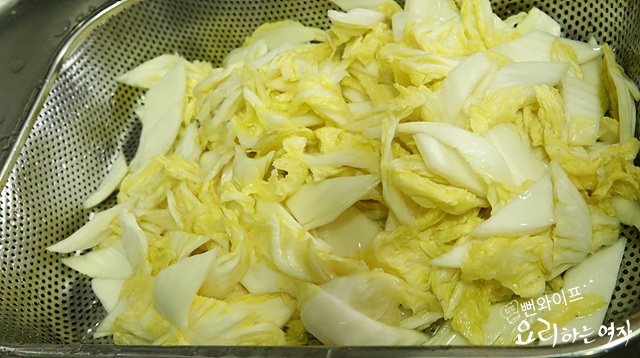
Halfway through the salting time, flip the top and bottom cabbage layers. The cabbage is fully salted when the thick stem bends flexibly without snapping.
If the cabbage tastes too salty, rinse it several times under running water, or soak the rinsed cabbage in water until it reaches the right saltiness, then drain.
Drain the rinsed cabbage thoroughly.
You need to remove almost all the moisture so the seasoning clings nicely to the cabbage and oysters.
Make the seasoning
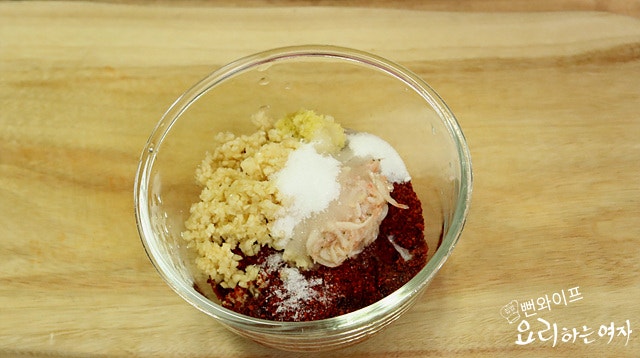
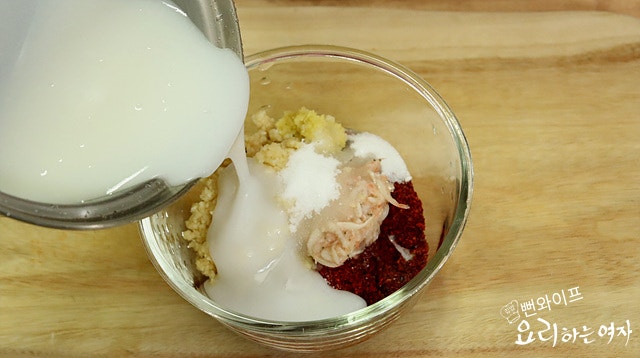
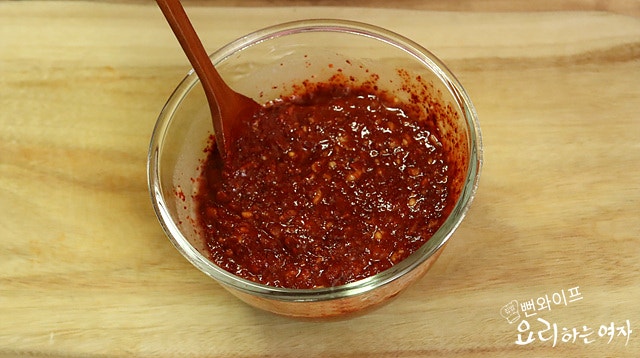
Add all seasoning ingredients except the toasted sesame seeds, pour in the glutinous rice paste, and mix evenly so the seasoning turns a rich color and blends well.
Toss and finish
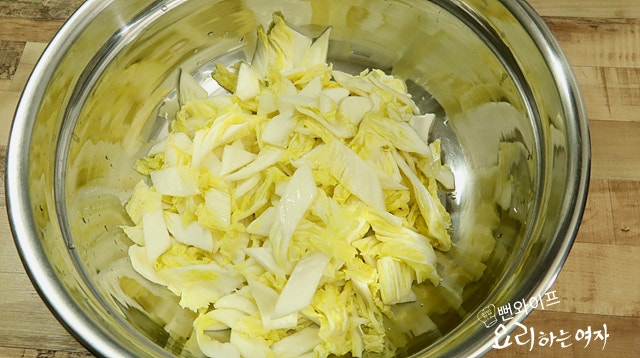
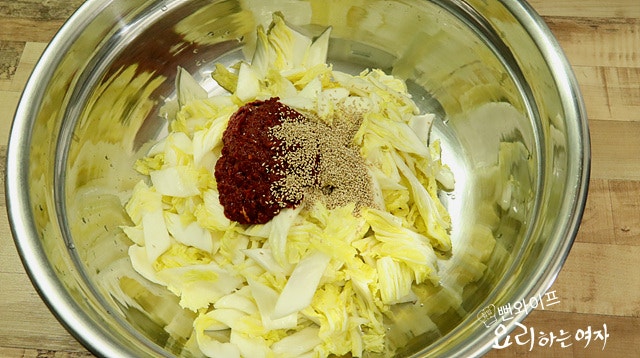
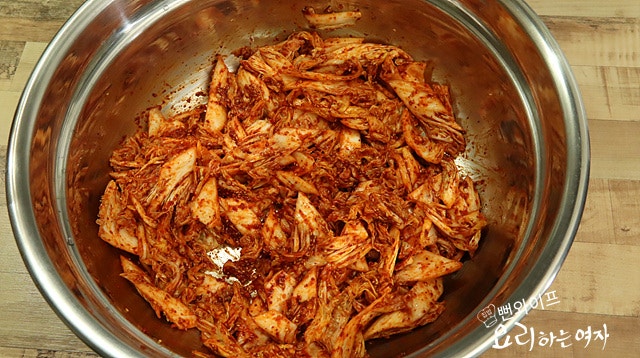
Add the seasoning and toasted sesame seeds to the well-drained cabbage, and toss thoroughly until evenly coated.
The amount of seasoning may seem generous, but once the oysters and scallions go in, it will be just right.
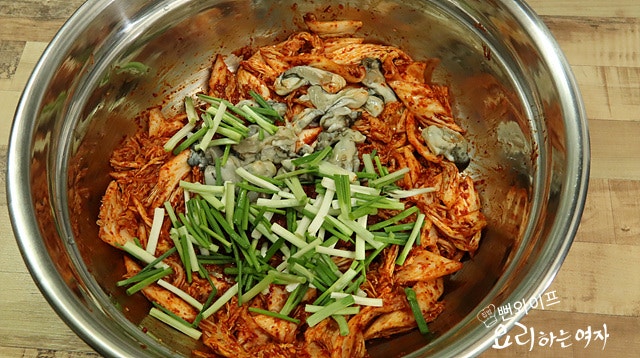
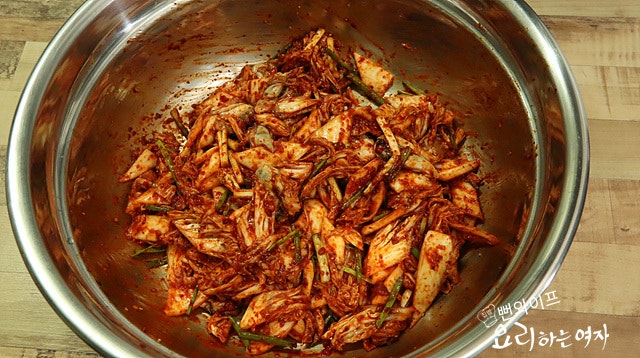
Add the scallions and oysters, and toss gently so the oysters do not get crushed, then it is ready. If you add the oysters from the start and toss, they will break apart and lose their shape.
Taste and check the color; if you want a deeper red, toss with a little more gochugaru.
 Ppunwife's tips
- Halfway through the salting time, flip the top and bottom cabbage layers. The cabbage is fully salted when the thick stem bends flexibly without snapping.
- You need to remove almost all the moisture so the seasoning clings nicely to the cabbage and oysters.
- If you add the oysters from the start and toss, they will break apart and lose their shape.
FAQ
What can I use if I do not have glutinous rice flour?
You can pour 2 cups of water over half a bowl of cooked white rice, blend until smooth, and use that in place of glutinous rice paste.
Can I use other vegetables instead of scallions?
If you do not have scallions, sliced garlic chives or large green onion work fine as well.
How do I know when the cabbage is properly salted?
The cabbage is properly salted when you bend the thick stem portion and it curves flexibly without snapping.
What should I do if the salted cabbage tastes too salty?
Rinse it several times under running water, or soak the cabbage briefly in a bowl of fresh water to draw out the excess salt, then lift it out and drain.