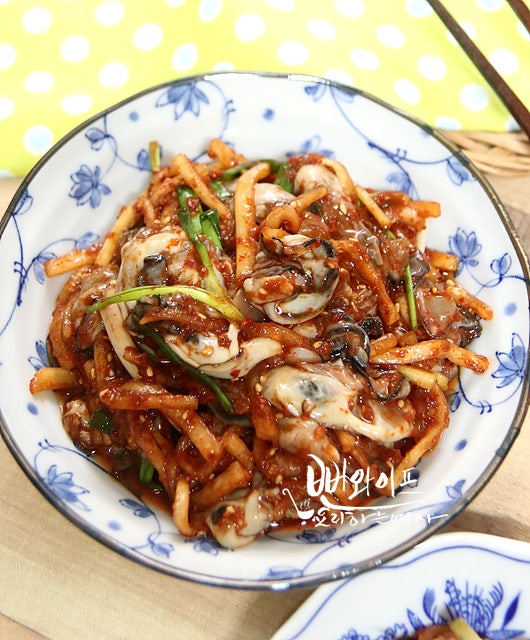
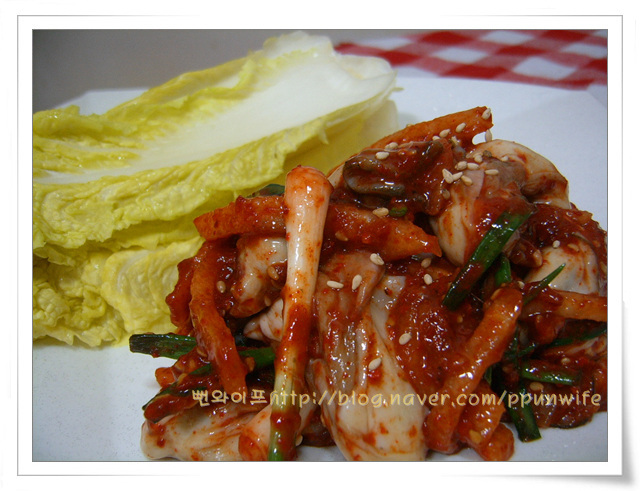
Spicy Gul Muchim (Seasoned Fresh Oysters) with Baby Napa Cabbage
A winter delicacy of fresh raw oysters tossed in a spicy seasoning with lightly salted baby napa cabbage and Korean radish.
Translated from Korean by AI and not yet checked by a native speaker. Amounts and numbers are taken directly from the original recipe. Read the Korean original →
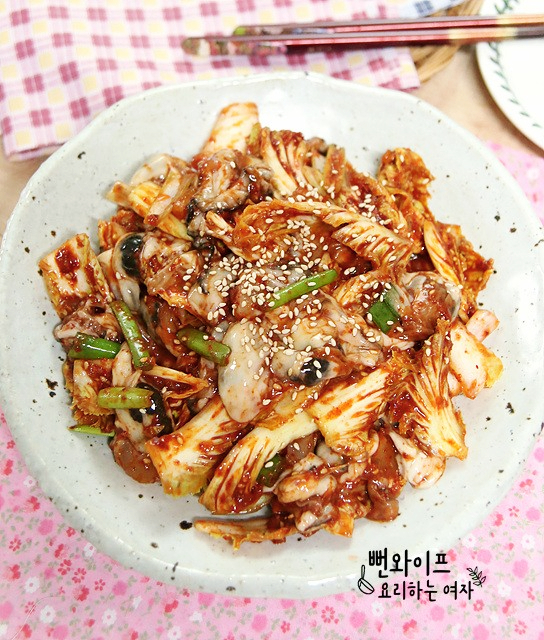
Sweet seasonal baby napa cabbage and refreshing radish are lightly salted and tossed with fresh raw oysters. Blending fine chili flakes ensures the seasoning clings evenly, making it an ideal side dish for boiled pork belly or drinks.
- Servings
- about 3–4 servings
- Difficulty
- Medium
- Spiciness
- Mildly spicy
Ingredients
Ingredients
- Raw oysters300 g
- Baby napa cabbage200 g
- Korean radish (mu)200 g
- Large green onion (daepa) (or 10 scallions (jjokpa))2 stalks (thin ones)
For Pickling
- Salt1/2 tbsp
- Water1/2 cup
For Cleaning
- Coarse sea salt4 tbsp
- Water15 cups
Seasoning
- Gochugaru (Korean chili flakes)4 tbsp (2 fine + 2 coarse)
- Salted fermented shrimp (saeujeot)1 tbsp
- Sand lance fish sauce1 tbsp
- Minced garlic1 tbsp
- Minced ginger1 tsp
- Green plum syrup (maesil-cheong)1 tbsp
- Sugar1/2 tbsp
- Salta little
- Toasted sesame seedsa little
- Place the cabbage and radish in a bowl, mix with salt and water, and salt for about 30 minutes to 1 hour.
- Instead of pricey scallions, you can use 2 thin stalks of large green onion (or 1/2 a thick stalk).
Steps
Prepare the ingredients
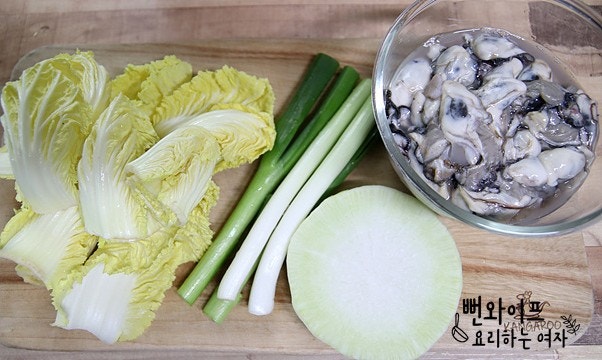
Use 1 pack of raw oysters, 300 g after draining.
Usually radish is mainly used for gul muchim, but today I also prepared the nutty, crisp inner core of baby napa cabbage.
The refreshing taste of radish is wonderful too, so prepare 200 g.
Seasonal large green onion (daepa) is also delicious, so instead of pricey scallions, use 2 thin stalks. (If using a thick large green onion, 1/2 stalk should be enough.)
How to wash oysters
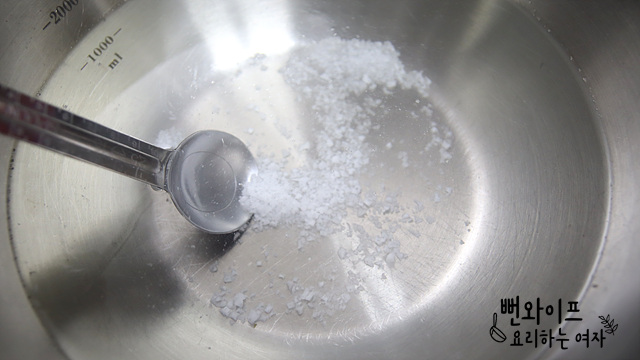
Draw about 15 cups of water and dissolve 4 tbsp of coarse sea salt to make saltwater.
To keep the plump texture and flavor of the oysters, wash them in saltwater with a salinity similar to seawater.
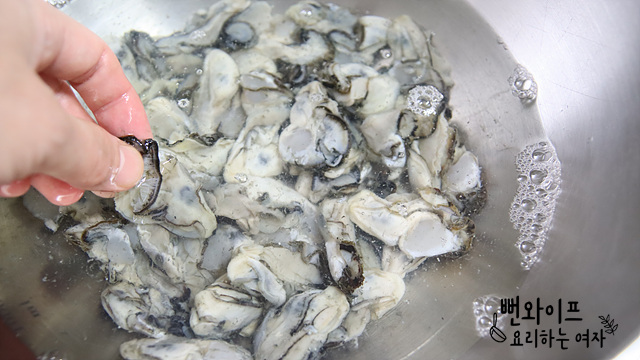
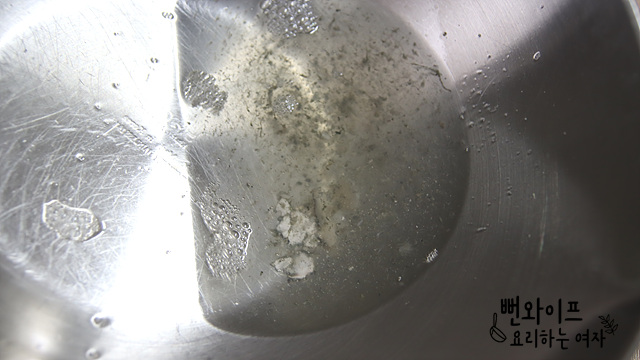
Divide the prepared saltwater into portions and gently swirl the oysters 2 to 3 times to wash them, removing any bits of shell clinging to them.
Look how many shell fragments come out on the bottom. Drain them in a strainer.
Slice the vegetables
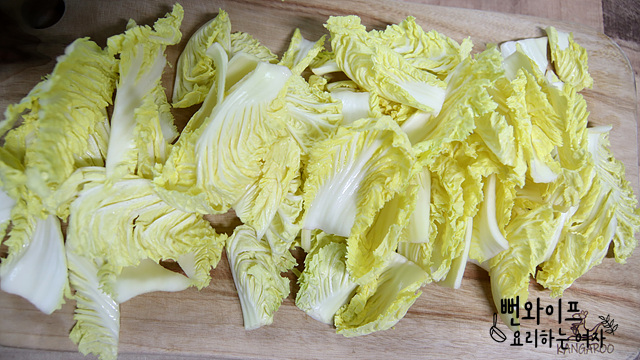
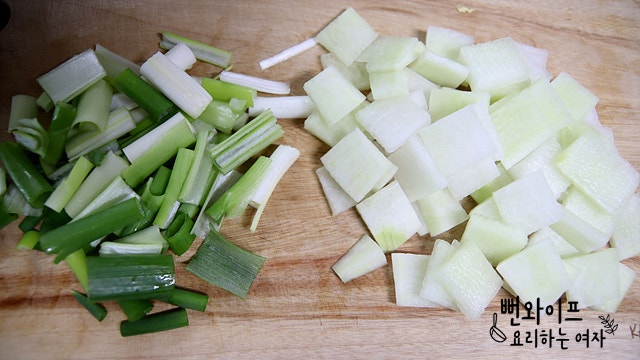
Cut the baby napa cabbage as you would for fresh geotjeori kimchi, thinly slice the radish into bite-sized squares, and split the green onion in half lengthwise before slicing to a length similar to the cabbage.
Salt the cabbage and radish
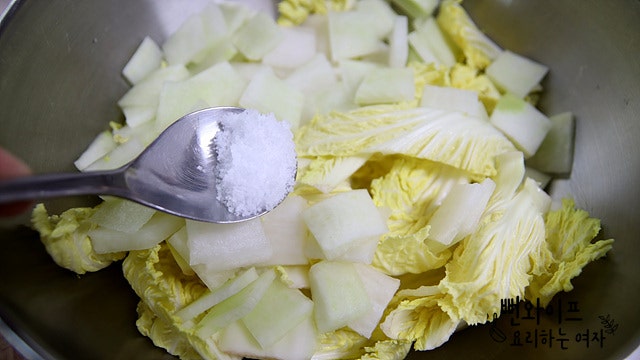
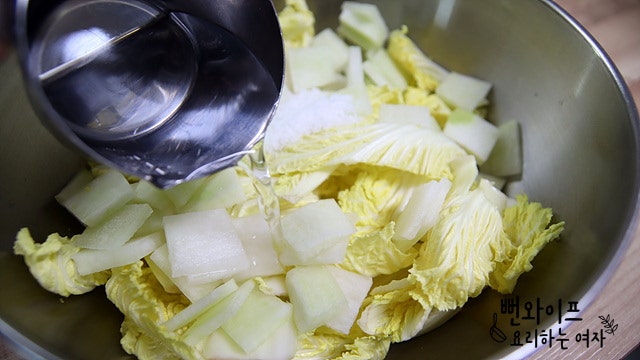
Place the cabbage and radish in a bowl, pour in 1/2 tbsp of salt and 1/2 cup of water, and mix well to salt them.
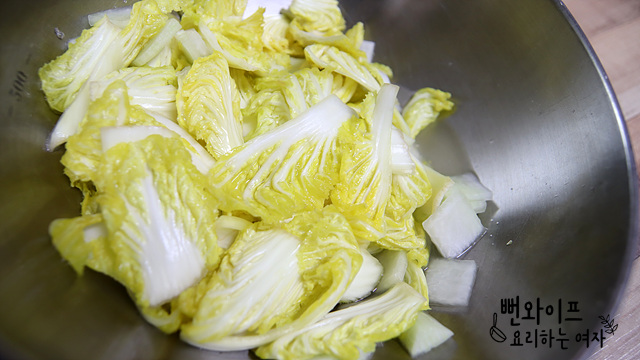
After 30 minutes to 1 hour, once the cabbage becomes tender, simply discard the drained liquid without rinsing.
Do not squeeze out the moisture too tightly so the finished oyster dish stays juicy.
Toss together
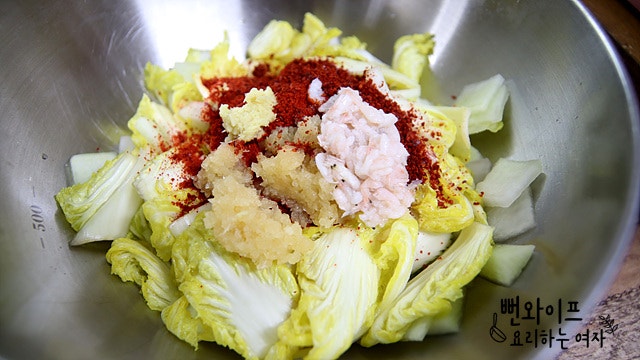
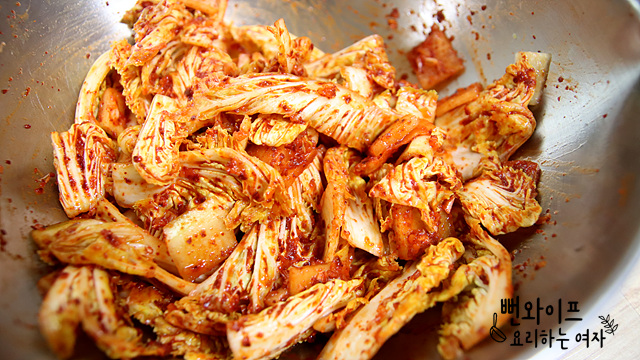
Add all seasoning ingredients except the salt and toasted sesame seeds, and mix them together.
Mixing equal parts fine and coarse gochugaru gives a much prettier color and helps the seasoning adhere well to the slick oysters.
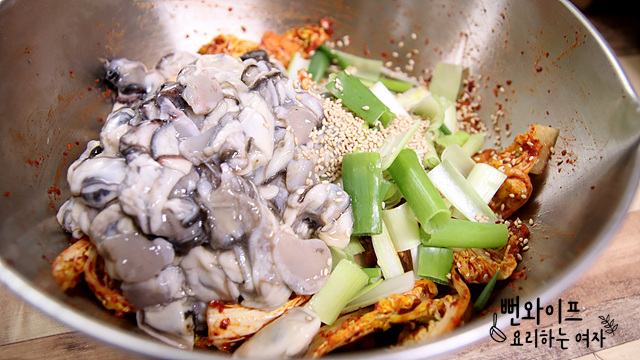
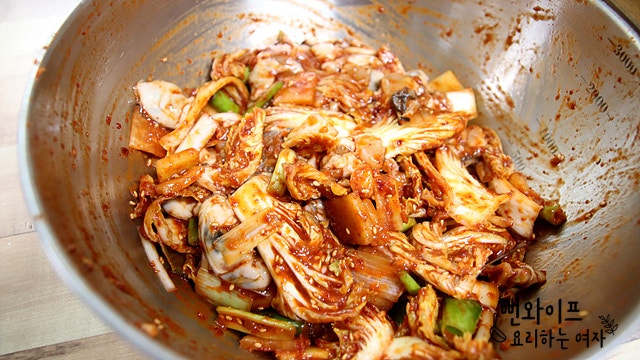
Add the oysters, green onion, and toasted sesame seeds, toss gently, then taste and adjust the seasoning with salt if it tastes flat.
Depending on your preference, you can season with fish sauce or salted shrimp instead of salt, and adjust the sweetness before finishing.
Finish
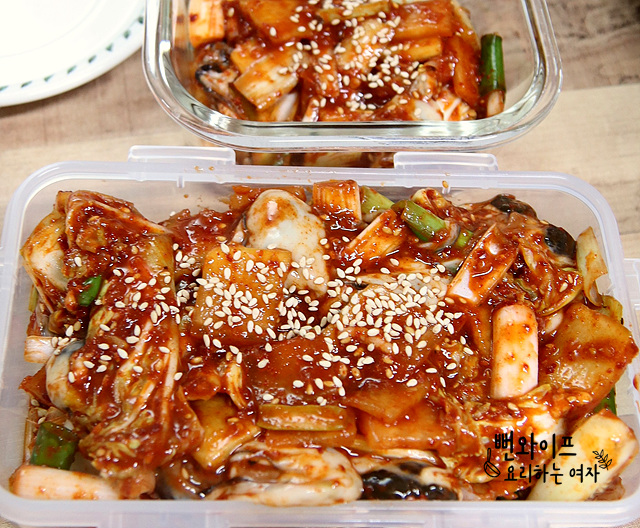
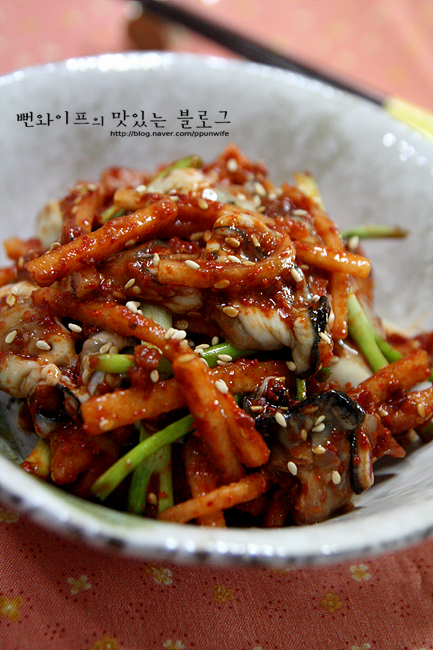
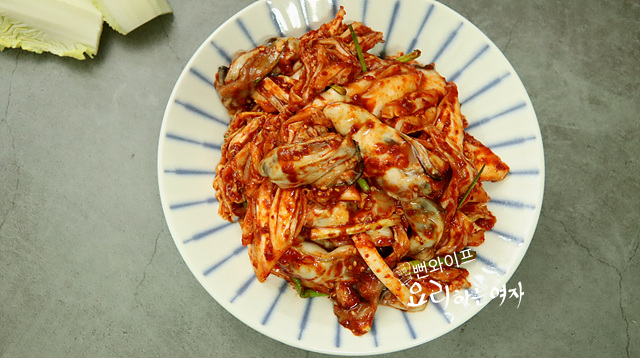
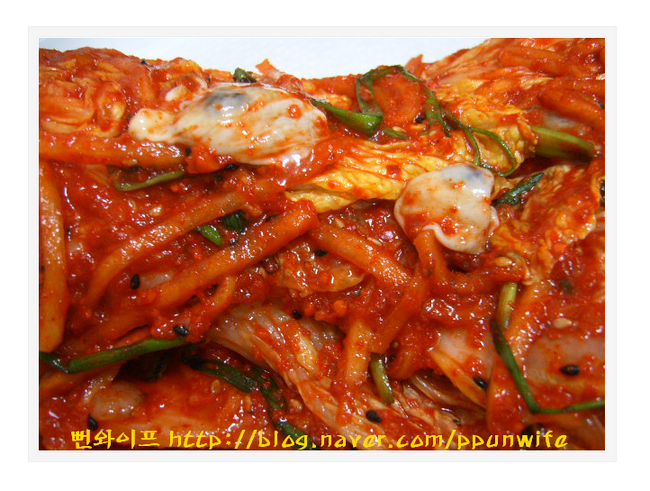
The gul muchim tossed with baby napa cabbage is complete.
It tastes even better if you let it sit for an hour or two, or until the next day, so the seasoning can soak in thoroughly.
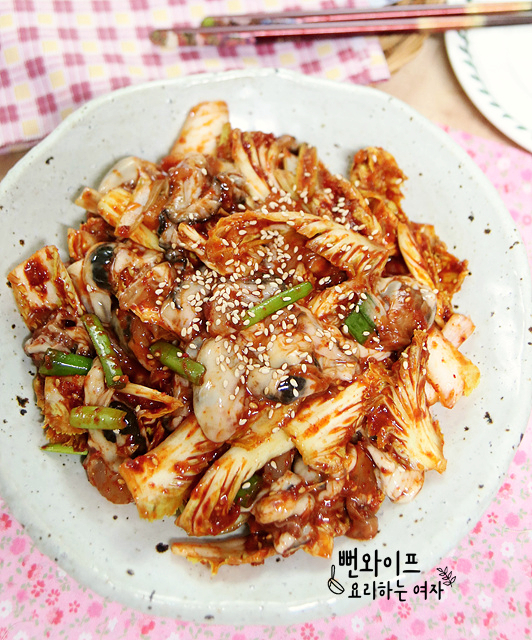
The savory yellow baby napa cabbage leaves and the crisp, sweet radish bring out the flavor of the oysters even more.
Once you make a generous batch like this at home, store-bought oyster salad will never satisfy you.
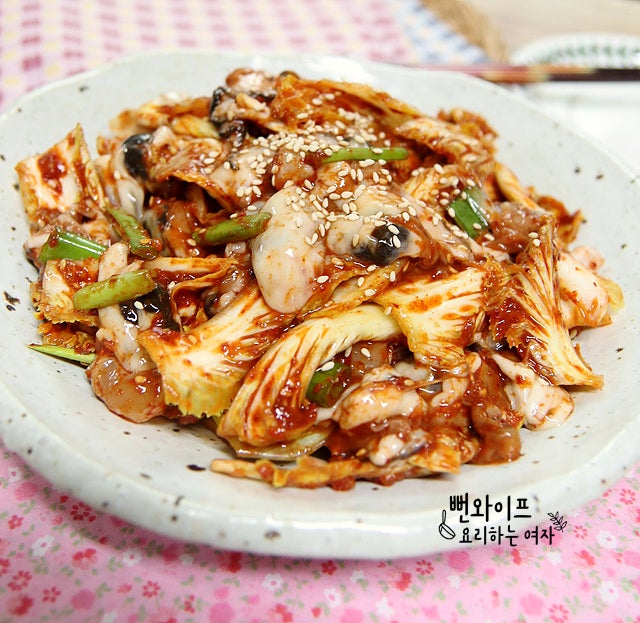
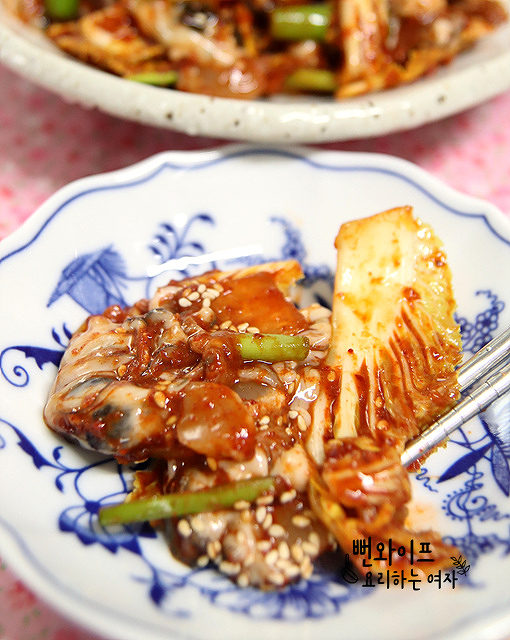
Boiling some pork to enjoy alongside as suyuk is absolute perfection.
It is delicious as a side dish with rice, but just as it is, it makes an ideal drinking snack.
 Ppunwife's tips
- Wash oysters in saltwater with a salinity similar to seawater to preserve their plump texture and flavor.
- Just pour off the liquid from the salted cabbage and radish without rinsing them, and do not squeeze out the moisture too firmly so the dish stays juicy.
- Tossing with equal parts fine and coarse gochugaru results in a much prettier color and helps the seasoning stick to the slippery oysters.
- Letting the dish rest for an hour or two, or until the next day, allows the seasoning to penetrate deeply and makes it taste even better.
FAQ
How should raw oysters be cleaned to retain their texture and flavor?
Dissolve 4 tbsp of coarse sea salt in 15 cups of water, gently swirl the oysters in 2 to 3 changes of this saltwater, and pick out shell fragments to keep them plump.
Should salted cabbage and radish be rinsed and squeezed dry?
Once tender, simply drain away the released liquid without rinsing in water, and do not squeeze out the moisture too hard so the finished dish remains juicy.
Why mix in fine gochugaru when making the seasoning?
Combining equal parts fine and coarse gochugaru creates a much prettier red color and helps the seasoning cling securely to the slippery oysters.
Can large green onions replace scallions if I do not have any?
Yes, use 2 thin stalks of large green onion or half a thick stalk, split lengthwise and sliced into lengths similar to the cabbage.