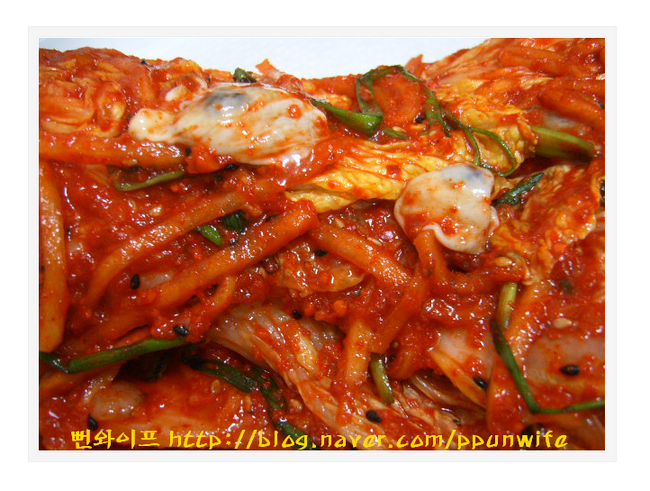
Fragrant Gul Bossam (Boiled Pork Wraps with Fresh Oysters) with Pear
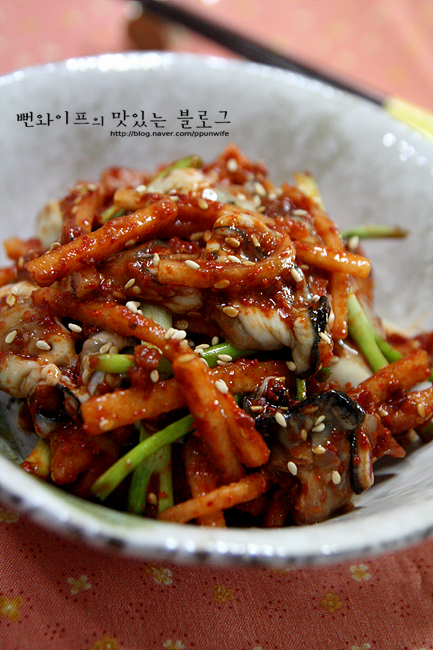
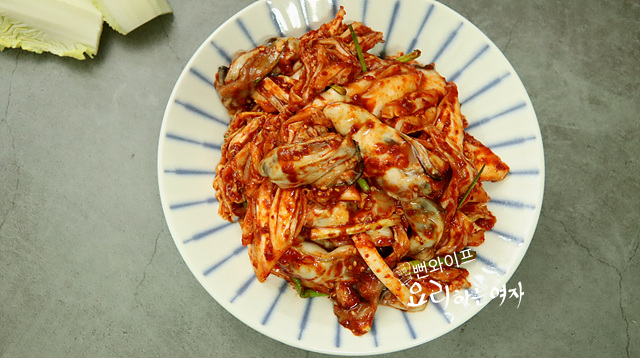
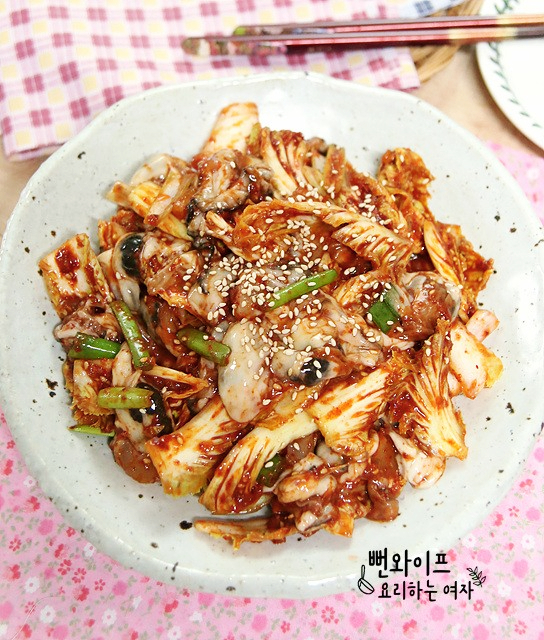
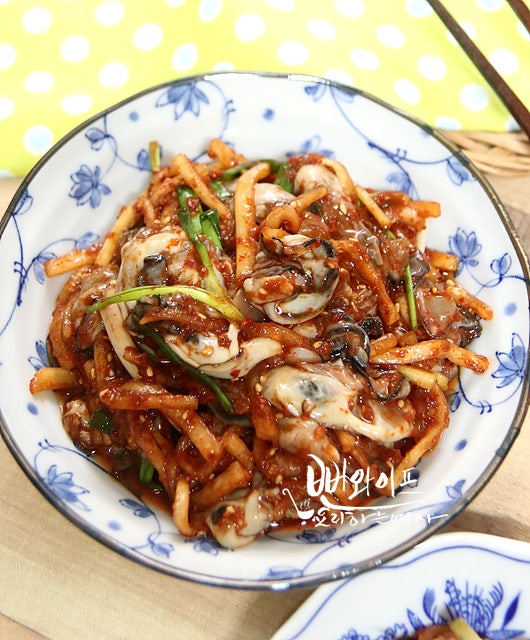
A bossam dish featuring fresh raw oysters gently tossed with sweet julienned Korean pear, served with salted napa cabbage leaves.
Translated from Korean by AI and not yet checked by a native speaker. Amounts and numbers are taken directly from the original recipe. Read the Korean original →
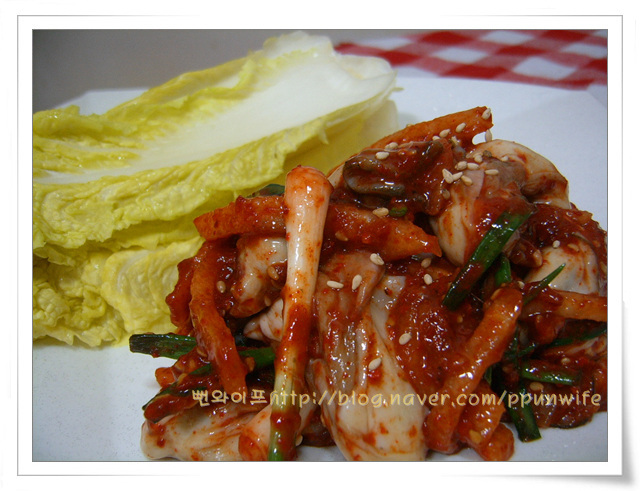
This seasonal delicacy brings together fresh raw oysters, crisp julienned Korean pear, and scallions tossed in a gentle seasoning. Rinsed in light salt water and thoroughly patted dry, the oysters stay fresh and fragrant without any fishiness. Serve with salted napa cabbage leaves as an appetizer with drinks or as a standalone main dish.
- Servings
- 4–5 servings
- Difficulty
- Medium
- Spiciness
- Mildly spicy
Ingredients
Ingredients
- Oysters400 g
- Korean pear1/2
- Scallions (jjokpa)6
Seasoning
- Coarse gochugaru (Korean chili flakes)2 tbsp
- Fine gochugaru (Korean chili flakes)2 tbsp
- Anchovy fish sauce (or sand lance fish sauce) (or sand lance fish sauce)1 tbsp
- Minced garlic1 tbsp
- Sugar0.5 tsp
- Ginger powdera little
- Salt0.5 tsp (a little)
- Toasted sesame seeds
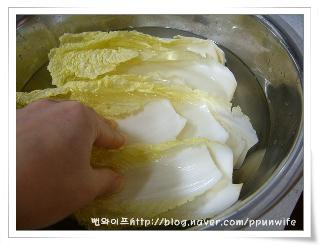
- For the bossam cabbage, dissolve 1 cup coarse sea salt in 5 cups water, weigh down the inner napa cabbage leaves so they are fully submerged, and salt them for about 1 hour just until wilted.
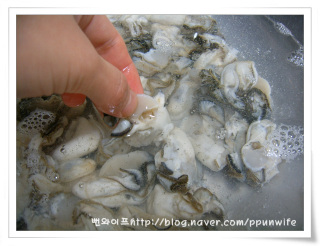
- Rinse the oysters by gently swirling them in light salt water made by dissolving 2-3 tbsp coarse sea salt in 5 cups water.
- You can also add julienned chestnuts or lightly salted, squeezed Korean radish shreds, and slice in some Cheongyang chili peppers if you like it spicy.
Steps
1. Inner napa cabbage leaves are easier to eat if you salt them for bossam.
Dissolve 1 cup coarse sea salt in 5 cups water, add the cabbage, and press down with something heavy so it stays fully submerged.
Salt for about 1 hour just until wilted.
2. Bagged oysters sold at the market are about 150g per 1 bag. 400g is a little less than three bags.
Gently swirl and rinse the oysters in light salt water.
* Light salt water is made by dissolving 2-3 tbsp coarse sea salt in 5 cups water.
* Keep this brine concentration in mind when purging shellfish like cockles or Manila clams.
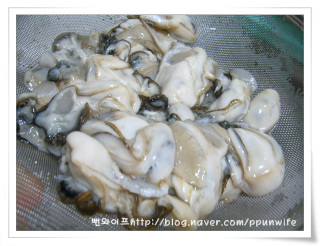
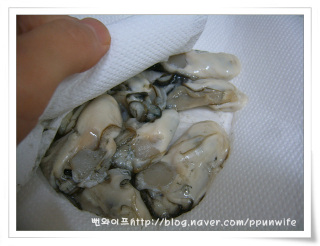
3. Drain in a colander, and then...
4. Pat gently with a dry kitchen towel or paper towel to remove moisture.
I did not add any preliminary seasoning since they retain a hint of saltiness.
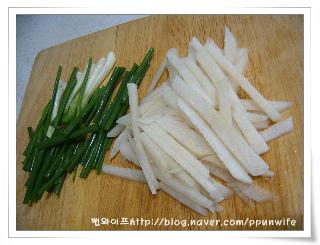
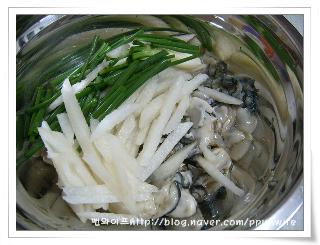
5. Cut the scallions into 3-4cm lengths, and peel and julienne the Korean pear to a similar length.
You can also add julienned chestnuts or lightly salted, squeezed Korean radish shreds.
If you like heat, try adding sliced Cheongyang chili peppers as well.
6. In a bowl, add the oysters, Korean pear, and scallions...
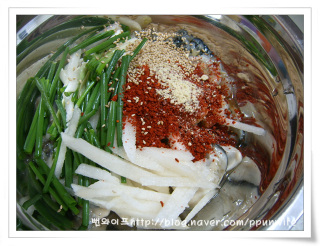
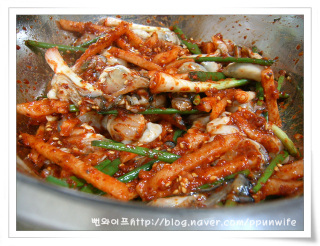
7. Add all of the specified seasoning ingredients and toss gently.
For fine gochugaru, just grind coarse gochugaru in a blender.
8. I seasoned this lightly enough to eat on its own, but taste it and adjust with salt to your preference if it tastes bland to you.
 Ppunwife's tips
- To make fine gochugaru, grind coarse gochugaru in a blender.
- Adding crisp, refreshing julienned Korean pear to oyster salad makes it truly delicious, so be sure to include it.
FAQ
How should I wash fresh raw oysters?
Dissolve 2-3 tbsp coarse sea salt in 5 cups water to make a light brine, gently swirl and rinse the oysters in it, then drain them in a colander.
What should I do if I do not have fine gochugaru?
You can grind coarse gochugaru finely in a blender and use that.
Are there other ingredients that go well besides Korean pear?
Julienned chestnuts or Korean radish shreds that have been lightly salted and squeezed dry work very well, and if you want extra heat, sliced Cheongyang chili peppers are a great addition.
How do I salt the inner napa cabbage leaves for bossam?
Dissolve 1 cup coarse sea salt in 5 cups water, press the cabbage down with a heavy object so it is fully submerged, and salt it for about 1 hour until wilted.