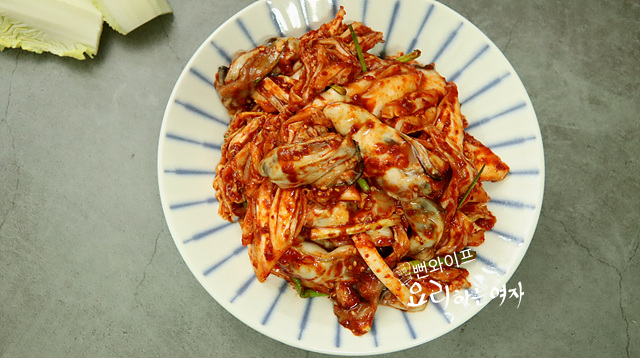
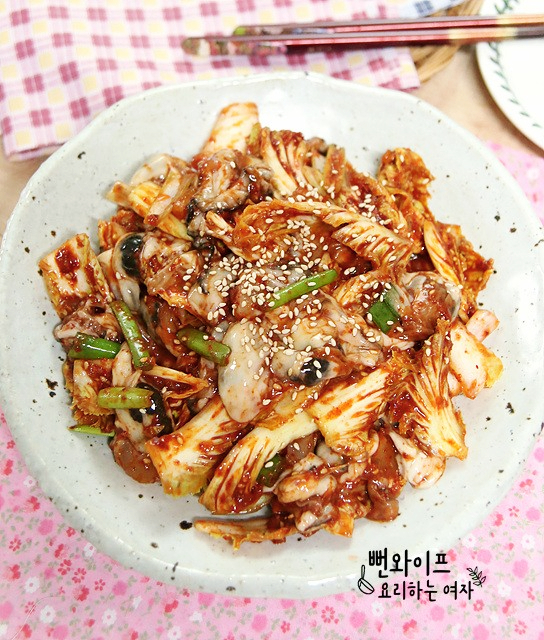
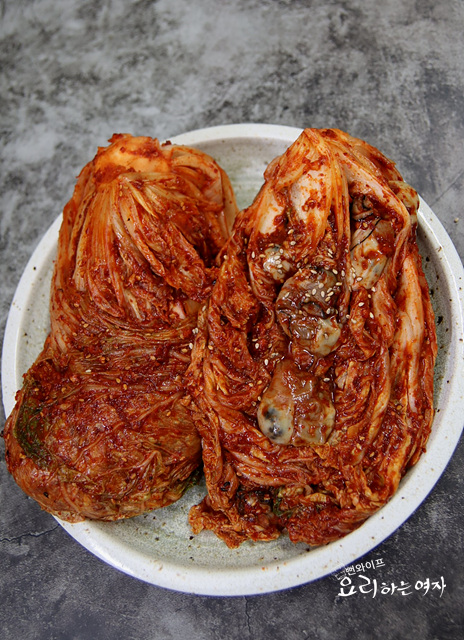
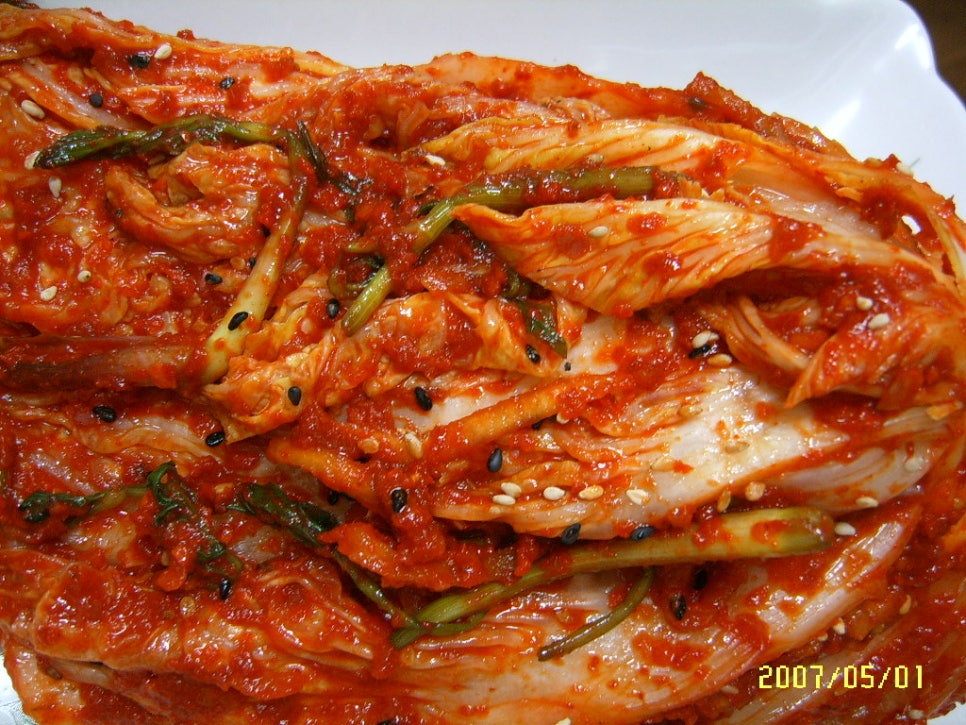
Crisp Baechu Kimchi (Napa Cabbage Kimchi) with Fresh Oysters
Winter napa cabbage kimchi made by salting cabbages and stuffing them with julienned radish and seasoned aromatics.
Translated from Korean by AI and not yet checked by a native speaker. Amounts and numbers are taken directly from the original recipe. Read the Korean original →
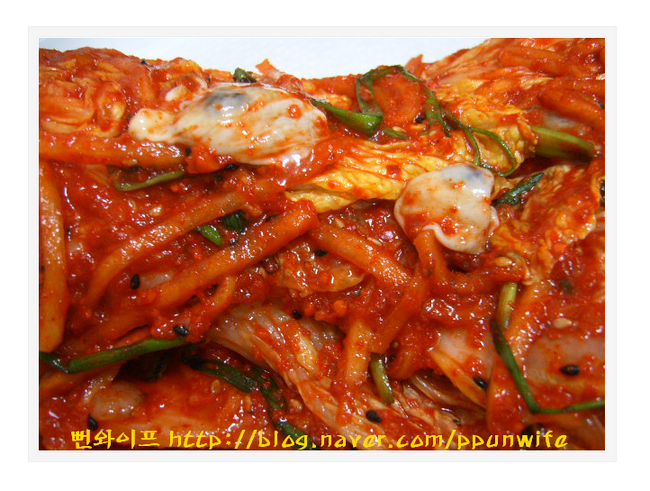
The secret to great flavor is salting firm cabbages thoroughly with both brine and coarse sea salt, then draining them well. Color the julienned radish with gochugaru first, then toss it with water dropwort, scallions, and glutinous rice paste for a clean, spicy finish. Enjoy it freshly made alongside oysters or boiled pork slices, or let it ferment and mature.
- Servings
- about 10–12 servings
- Difficulty
- Hard
- Spiciness
- Spicy
Ingredients
Ingredients
- Napa cabbage2 heads (3.5 kg)
- Korean radish (mu)1, 2 kg
- Coarse sea salt4 cups
Filling
- Water dropwort (minari)1/2 bunch, 150 g
- Thin scallions (or scallions (jjokpa))15 roots, 100 g
- Sea staghorn seaweed (cheonggak)100 g
- Oysters500 g (add to taste)
Seasoning
- Gochugaru (Korean chili flakes)4 cups
- Salted fermented shrimp (saeujeot)1/2 cup
- Anchovy fish sauce1/2 cup
- Minced garlic1.5 cups (200 g)
- Minced ginger2 tbsp (40 g)
- Sugar2 tbsp
- Toasted sesame seeds1/2 cup
Glutinous rice paste
- Glutinous rice flour2/3 cup
- Water4 cups
Adjusting Seasoning
- Salt
- Choose napa cabbages that feel firm to the touch, do not have overly thick stems, and have undamaged leaves. Weighing your cabbages before making kimchi helps you measure accurately.
- Korean radish should also feel firm and heavy in your hand.
- Sea staghorn seaweed is a marine plant used to give kimchi a refreshing flavor; you may omit it if you do not have it.
- Do not add oysters to winter kimchi intended for long-term storage.
Steps
The cabbages should feel firm, and the stems should not be too thick. Pick ones with undamaged leaves. Napa cabbages usually weigh over 2kg, but the ones I bought yesterday weighed up to 3.5kg. Although it is two heads, it is equal to the amount of about 3-4 regular cabbages. If you check the weight of the cabbages before making kimchi, you will get accurate measurements. Even with the same two heads of cabbage, if the weight is different, you have to adjust the seasoning and the amount of salting salt. That way, you can reduce the chance of your kimchi failing, right? Keep this point in mind.
Neatly trim away the bottom root of the cabbage with a knife.
Cut about 10 cm in from the cabbage root with a knife, then pull the cabbage apart with both hands so the leaves separate nicely without tearing. Slicing all the way through with a knife creates a lot of small bits. Cut once more the same way to make 4 quarters. If the cabbages are small, you can just cut them in half, score the root end, and salt them.
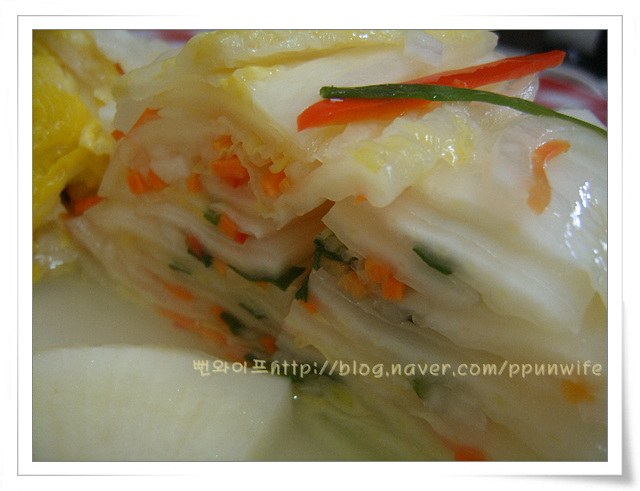
Look at the inner leaves. The yellow color looks so appetizing. The stems are just the right thickness. Taking a bite of a leaf, it tastes truly sweet and nutty.
First, you need to make the brine. Dissolve 2 cups, which is half of the 4 cups of salt listed above, into about 15 cups of water. Stir with your hand until the salt dissolves completely. The remaining 2 cups of salt will be sprinkled between the stem layers when doing the main salting later.
Dip the cabbages into the brine. After soaking all the cabbages in the brine, place them in a large tub and let them salt for about 30 minutes. Giving them this initial soak softens the stiff cabbages, so they will not break when you rub salt between the leaves.
Here are the cabbages salted for about 30 minutes. They have wilted down considerably. The leafy parts are well salted.
Using 2 cups of salt, rub a little bit at a time only onto the stem sections between the cabbage leaves. If you sprinkle salt on the leafy parts at this stage, the stems and leaves will not be salted evenly later.
Cover the top of the cabbage tub with clean plastic wrap, and weigh it down by placing a container of the same size filled with water on top. Let it salt this way for about 6 hours. During that time, rotate the top and bottom cabbages 2 to 3 times as they salt.
When the cabbage stems bend easily without snapping, they are fully salted. If they are under-salted, let them sit longer. This is the most crucial part of making kimchi. If you make kimchi with under-salted cabbage, a lot of water will pool. The seasoning will wash away and turn into water kimchi, so you must pay close attention to the salting. If you get the salting right, 80% of making kimchi is done.
Rinse the fully salted cabbage about 3 times under running water, turn it upside down in a colander, and drain thoroughly. Draining the water for a long time lets you enjoy delicious kimchi with the seasoning flavor intact.
While the cabbage drains, prepare the stuffing ingredients. Korean radish should also feel firm and heavy in your hand. Peel the skin and wash it clean.
Water dropwort is half a bunch (100 g). Cut it into lengths around 10 cm, and cut the thin scallions or regular scallions the same way.
This is sea staghorn seaweed (cheonggak). It is a seaweed used to give kimchi a refreshing flavor. Where I live here in Gyeongnam, people add cheonggak to kimchi. You can leave this out if you like.
Swirl and wash the oysters in light salt water. There might be leftover bits of shell or impurities. Scoop them out and drain to prepare.
Once the stuffing ingredients are ready, we will color the radish with chili. Julienne the radish into lengths of around 10 cm, just like the water dropwort.
Add 4 cups of gochugaru (Korean chili flakes) to the julienned radish to color it red. As the radish softens, the color turns vibrant. Coloring it in advance like this also lets you use much less chili powder overall.
Add 2/3 cup of glutinous rice flour to 4 cups of water, cook it until thick, and let it cool completely. If the paste is cooked too thin, the stuffing seasoning will turn watery.
To the chili-dyed julienned radish, add all the secondary ingredients and seasoning ingredients, except for the oysters. The oysters are added when stuffing the cabbage. Every household makes kimchi stuffing slightly differently. Some grind and add pear juice or onion juice, while others make the seasoning with broth brewed from dried pollack. You can choose according to your taste. My household eats it with just the most basic seasonings. I feel that makes it cleaner and tastier.
Pour in the glutinous rice paste and gently mix everything together.
Taste the mixed stuffing seasoning, and if it is under-salted, adjust it with coarse sea salt.
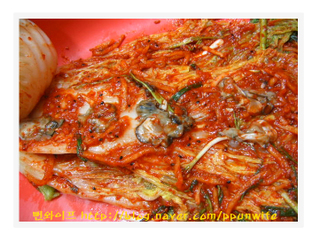
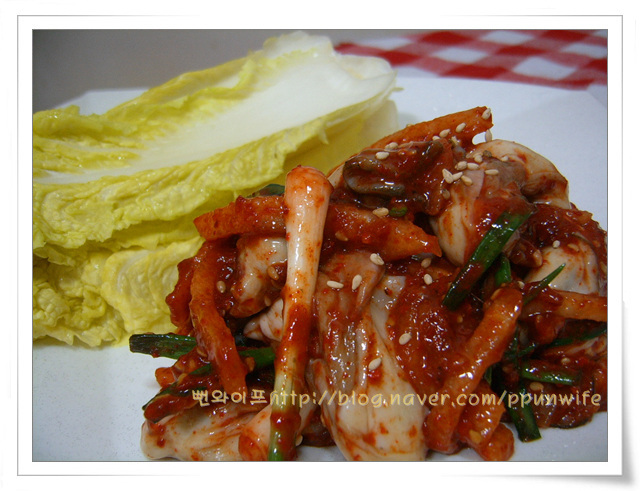
Starting from the outer leaves, spread the stuffing evenly leaf by leaf. Add a few of the prepared oysters at this time. Do not add oysters to winter kimchi meant for long-term storage. Fold the cabbage in half, wrap it securely with the outermost leaf, and pack it into a kimchi container.
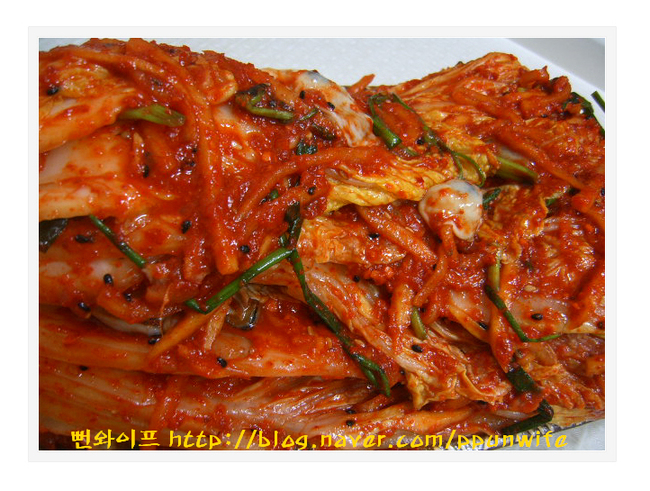
 Ppunwife's tips
- Cut about 10 cm in from the cabbage root with a knife, then pull the cabbage apart with both hands so the leaves separate nicely without tearing. Slicing all the way through with a knife creates a lot of small bits.
- Giving them an initial soak softens the stiff cabbages, so they will not break when you rub salt between the leaves.
- Rub a little bit at a time only onto the stem sections between the cabbage leaves. If you sprinkle salt on the leafy parts at this stage, the stems and leaves will not be salted evenly later.
- If you make kimchi with under-salted cabbage, a lot of water will pool. The seasoning will wash away and turn into water kimchi, so you must pay close attention to the salting.
- Draining the water for a long time lets you enjoy delicious kimchi with the seasoning flavor intact.
- Add 4 cups of gochugaru to the julienned radish to color it red. As the radish softens, the color turns vibrant. Coloring it in advance like this also lets you use much less chili powder overall.
- If the paste is cooked too thin, the stuffing seasoning will turn watery.
FAQ
How can I split the cabbage leaves with fewer scraps?
Cut only about 10 cm in from the bottom root end with a knife, then pull it apart with both hands; this separates the leaves cleanly without tearing them.
Is there anything to keep in mind when adding fresh oysters to kimchi?
It is best not to add oysters to kimchi meant for long-term storage; it is recommended to add them only to the portion you will consume quickly within ten days.
Why is gochugaru mixed into the julienned radish first?
It stains the radish with a beautiful red color, softens its texture, and reduces the overall amount of gochugaru needed.
Do I have to use the sea staghorn seaweed listed in the stuffing ingredients?
Sea staghorn seaweed is added for its uniquely cool, refreshing flavor, so you can safely omit it if it is difficult to find.