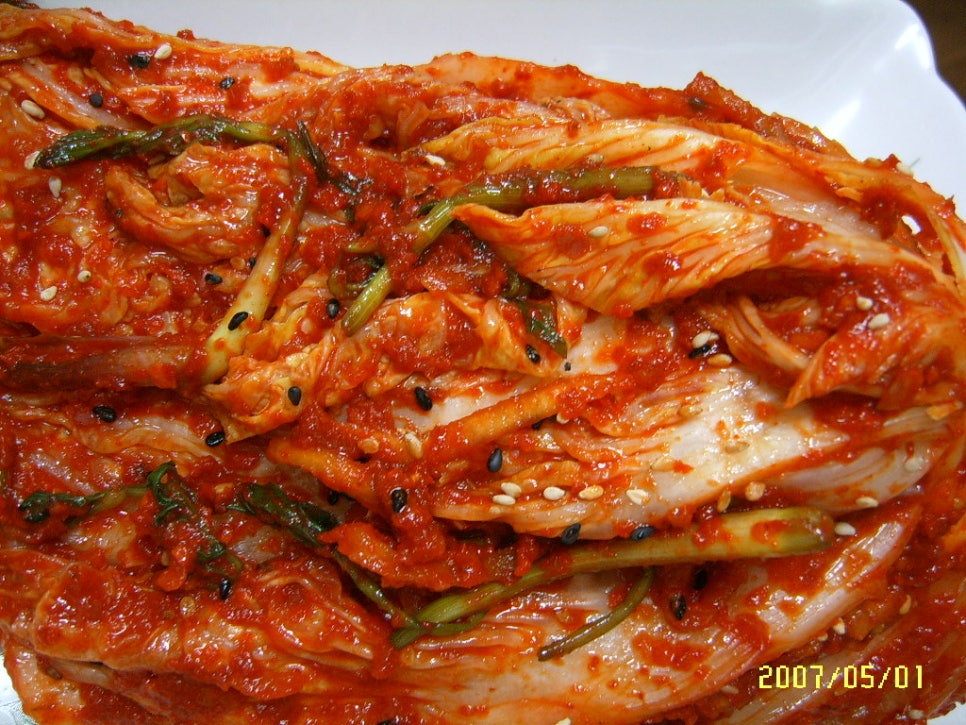
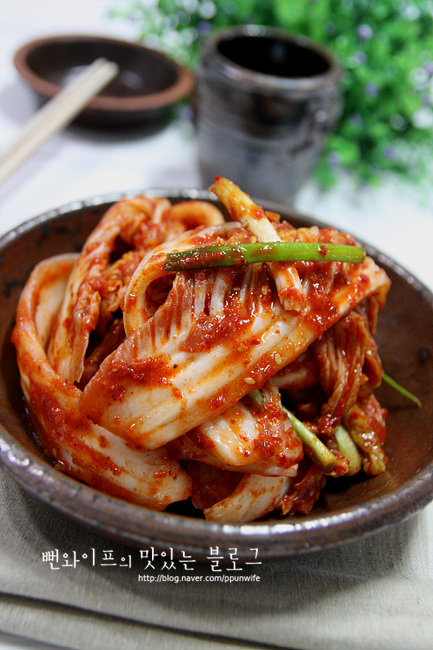
Crisp and Refreshing Baek Kimchi (White Kimchi)
A white kimchi featuring a clean, tangy flavor made from strained aromatics and clear salted brine.
Translated from Korean by AI and not yet checked by a native speaker. Amounts and numbers are taken directly from the original recipe. Read the Korean original →
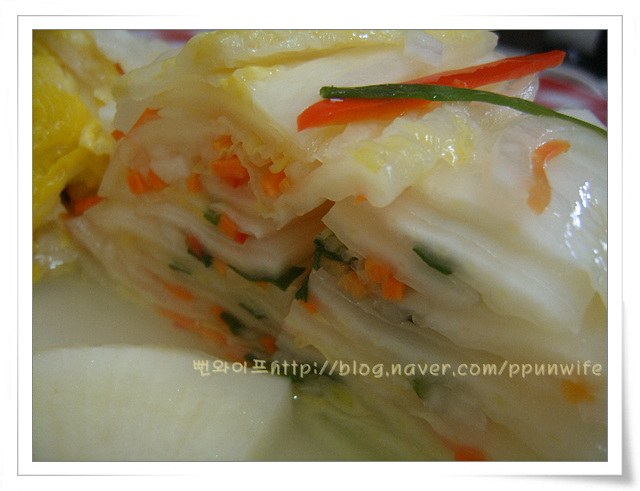
This baek kimchi combines the crisp textures of napa cabbage and Korean radish with a tangy, refreshing broth. Pureeing the aromatics and straining them through cheesecloth creates a clean, clear broth that pairs wonderfully with grilled meats or boiled pork belly.
- Servings
- about 10–12 servings
- Difficulty
- Hard
- Spiciness
- Not spicy
Ingredients
Ingredients
- Napa cabbage2 heads (2 kg × 2 heads)
- Korean radish (mu)1/2 (1, large.. if small)
Filling
- Korean radish (mu)1/2 (half of a large one)
- Carrot1, 200 g
- Scallions (jjokpa)20 stalks (approx.)
- Red chili pepper3
Seasoning
- Garlic15 cloves
- Ginger1/2 knob
- Onion1
- Korean pear1
Kimchi Brine
- Water15 cups
- Coarse sea salt (or coarse sea salt)3 tbsp
- Sugar2 tbsp
- The cabbage was cut into 4 parts and salted for about 6 hours.
- Dissolve 1 cup of coarse sea salt in 5 cups of water, brine for about 1 hour and 30 minutes, then drain.
- If using large green onion instead of scallions, use only the white root part cut into thin strips.
- I kept the filling simple because I prefer not to add too many ingredients, but you can also add pine nuts, chestnuts, jujubes, water dropwort, or pear.
Steps
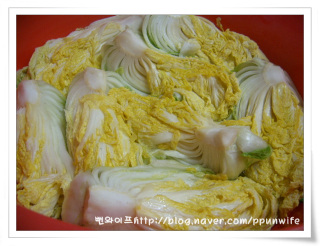
1. Cut the napa cabbage into 4 parts and salt for about 6 hours. Reposition after about 2-3 hours so it salts evenly.
White kimchi tastes best when salted a bit less than winter gimjang kimchi, so the stems remain crisp.
The cabbage salting process is here ⇒ http://blog.naver.com/ppunwife/140044943725
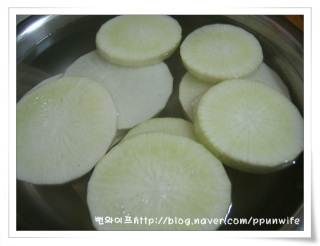
2. I like eating radish together with white kimchi, so I cut it thick and flat.
Take one small radish or about half of a large one, cut into thick, flat slices about 3 cm thick,
dissolve 1 cup of coarse sea salt in 5 cups of water, salt for about 1 hour and 30 minutes, and drain.
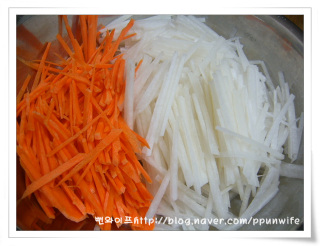
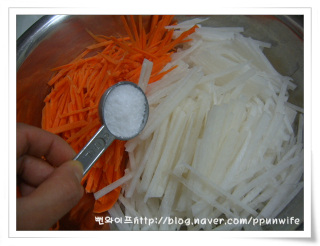
3. Finely julienne 1 kg of Korean radish (half of a large one) and 1 carrot for the cabbage filling.
4. Add 2 tbsp of salt and 1 tbsp of sugar to salt them.
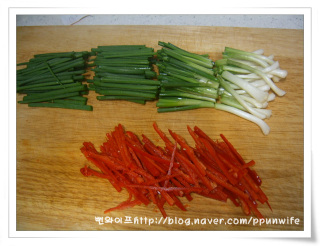
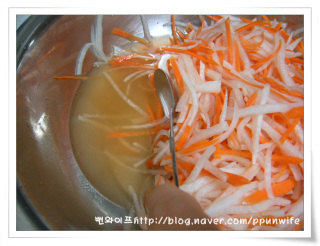
5. Cut the scallions into 3–4 cm lengths. Keep them similar in length to the julienned radish and carrot.
Shake out the seeds from the red chili peppers and slice them into thin strips.
If you use large green onion instead of scallions, use only the white root section.
The green parts of large green onions release sap, which can cause the broth to turn slimy.
If using water dropwort, use only the stems as well.
I kept the stuffing simple because I do not like overloading white kimchi, but you can add variety with pine nuts, chestnuts, jujubes, water dropwort, or pear.
6. After salting for about 30 minutes, they will season and release liquid. Discard this liquid.
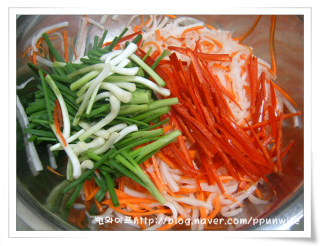
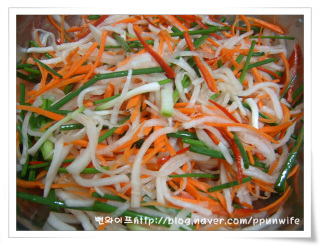
7. Add the scallions and chili peppers to the bowl with the salted radish and carrot strips, then toss to combine.
8. Let it sit so the residual salt slightly seasons them.
10
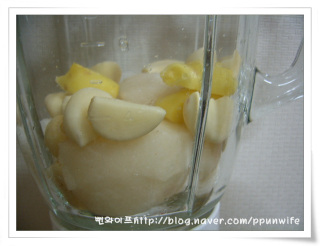
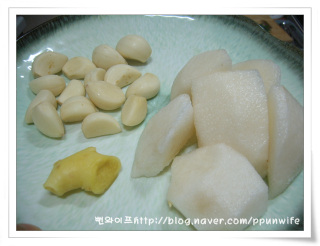
9. For the seasoning puree, prepare 15 cloves of garlic, 1/2 knob of ginger (about half the size of a thumb), 1 Korean pear, and 1 onion.
I used pre-pureed onion juice, which is why it is not shown in the picture.
Julienning garlic, ginger, and onion thinly and adding them directly into the filling will produce a much clearer broth.
I dislike biting into bits of garlic and ginger, and since it ferments within 1 or 2 days at relatively warm room temperatures like these days, I pureed them to extract the flavors quickly.
For winter brothy kimchis like dongchimi that age over a long period, you can wrap the garlic and ginger in cheesecloth and place it at the bottom.
10. Add the garlic, ginger, onion, and pear to a blender and blend thoroughly.
11
12
11. Making the kimchi brine: combine 15 cups of water, 3 tbsp of coarse sea salt, and 2 tbsp of sugar, stirring until dissolved.
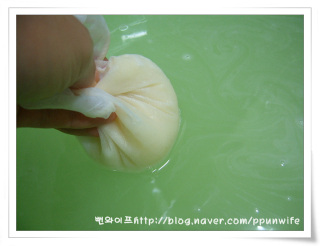
Put the pureed aromatics from step 10 into a fine sieve or cheesecloth, squeeze the juice out firmly,
then swish it in the prepared kimchi brine and squeeze again, repeating several times so the seasoning infuses thoroughly.
If you mix the puree straight into the water without this step, the broth will turn cloudy. Adjust salt or sugar to your taste.
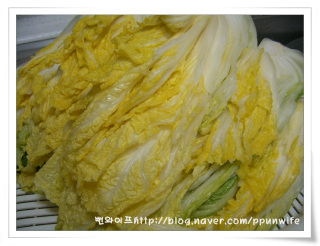
12. Rinse the salted cabbage in clean water 2 to 3 times, then drain well.
13
14
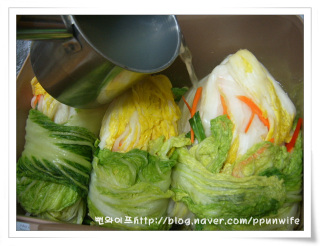
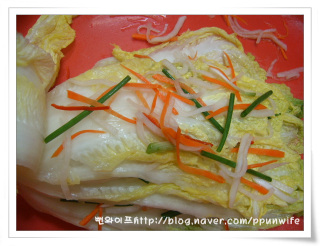
13. Evenly distribute the prepared filling from step 8 between the cabbage leaves.
14. Once stuffed, wrap the outer leaves tightly around each piece to secure it, then arrange them in a container.
Wrapping and tying them with leftover water dropwort or scallions works even better.
Gently pour the salted brine from step 11 down along the side.
15
16
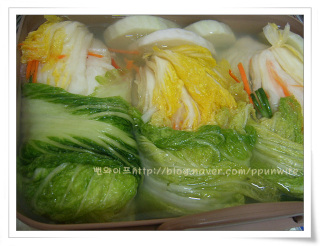
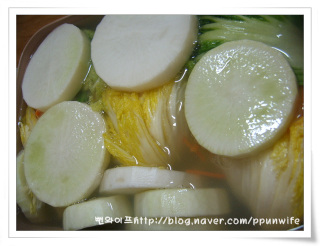
15. Place the salted radish on the bottom or on top.
Press down with a heavy object so the ingredients stay submerged.
16. Ferment for two days until the broth tastes pleasantly tangy, then store in the refrigerator and enjoy.
There is quite a generous amount of broth for white kimchi. I made plenty because drinking the tangy broth is so delightful;
if you prefer less broth, reduce the amount of broth and seasoning by half or to 1/3.
Also, unlike dongchimi, white kimchi made with cabbage will lose its crispness if kept for too long.
It is better made in advance for company or special days and eaten quickly.
After posting the dongchimi recipe last winter, some people who had trouble mentioned that their broth became thick and viscous.
The first reason is adding more sugar than necessary.
It is the same reason why kkakdugi seasoning can become sticky.
The second reason is using the green parts when adding large green onion, which release sap, so use only the white root part.
The third reason is that excessive juice from sugary fruits like apples or pears can keep the broth from being clean, so simply do not add much more than the suggested amount.
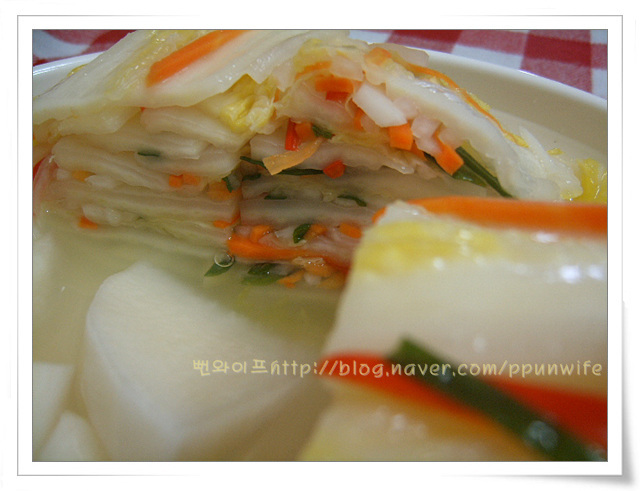
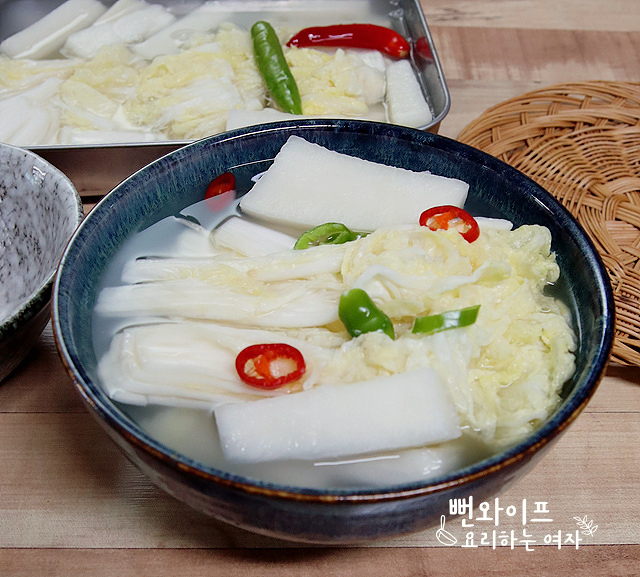
The cabbage is crisp, the radish is crisp, and the tangy broth is simply incredible.
 Ppunwife's tips
- White kimchi turns out best when the cabbage is salted slightly less than winter kimchi, keeping the stems crisp.
- The green parts of large green onions release sap, which can cause the broth to turn slimy.
- Strain the blended aromatic puree through a fine sieve or cheesecloth and squeeze out only the liquid so the broth stays clean and clear.
- Unlike dongchimi, white kimchi made from napa cabbage loses its crispness if kept for too long. It is best prepared ahead for dinner guests or special occasions and eaten promptly.
FAQ
Why does white kimchi broth turn thick and slimy?
The main causes are usually adding more sugar than called for, using the green parts of large green onions which release slimy sap, or adding too much fruit juice.
Can I use large green onion instead of scallions?
If using large green onion, julienne only the white root part, as the green leaves release sap that makes the broth slimy.
What is the secret to making a clean, clear broth?
You can finely julienne the garlic, ginger, onion, and pear into the filling, or blend them in a mixer and squeeze out only the juice using a fine sieve or cheesecloth.
How can I make this with less broth?
You can reduce the broth water and seasoning amounts by half or to 1/3.