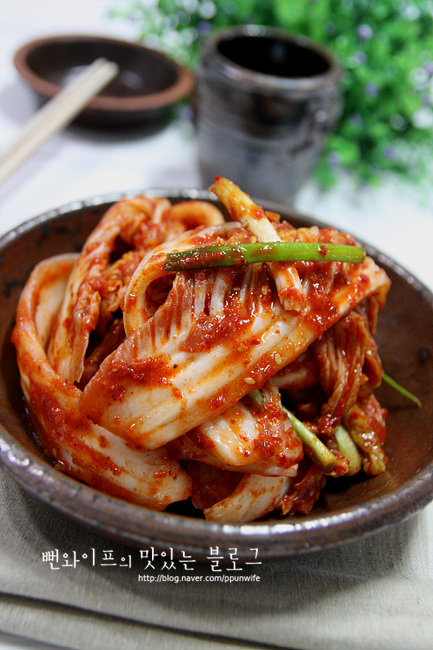
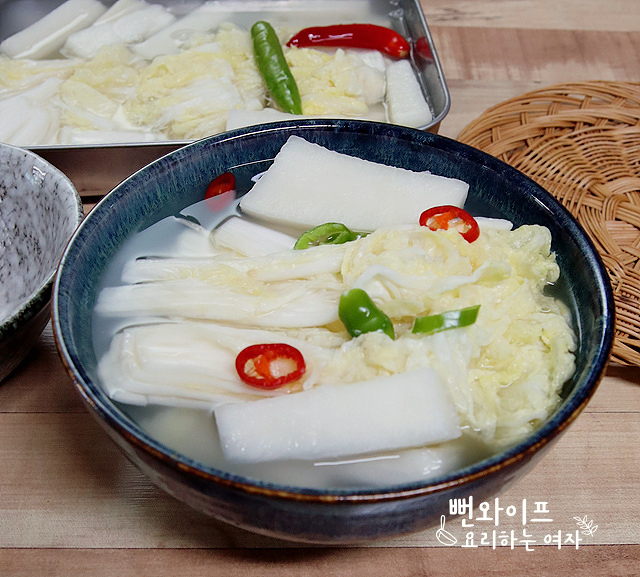
Carefully Made Baechu Kimchi (Napa Cabbage Kimchi)
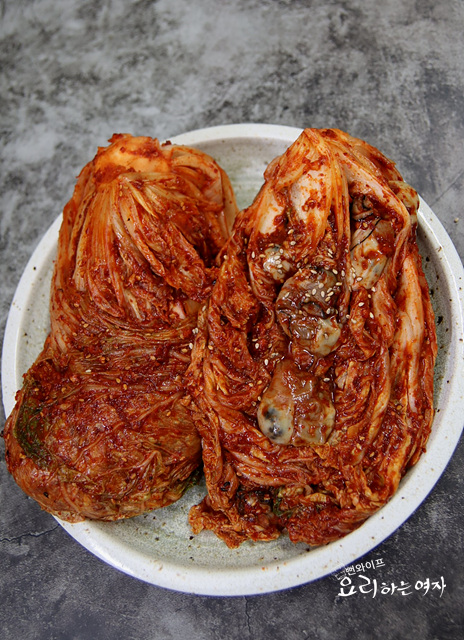
A clean, well-salted baechu kimchi (napa cabbage kimchi) stuffed with flavorful seasoned radish filling.
Translated from Korean by AI and not yet checked by a native speaker. Amounts and numbers are taken directly from the original recipe. Read the Korean original →
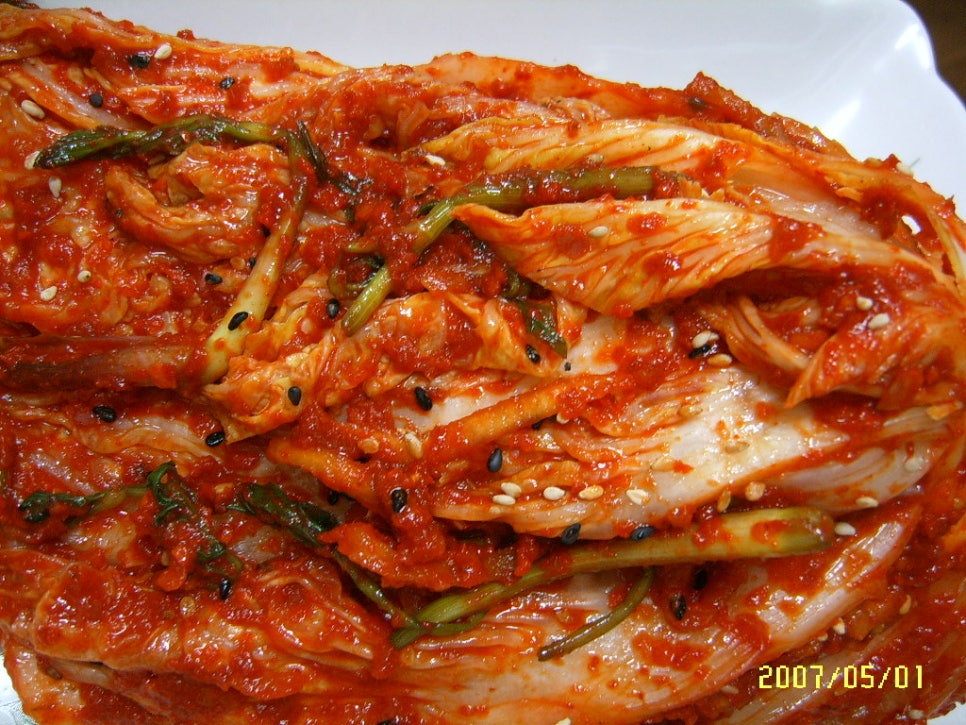
Napa cabbage is salted primarily along the thick stems and left to brine evenly for about 6 hours, then stuffed with a seasoned filling made of water dropwort and julienned Korean radish. Coating the julienned radish in gochugaru first gives the kimchi a vibrant color and softens the radish.
- Difficulty
- Hard
- Spiciness
- Spicy
Steps
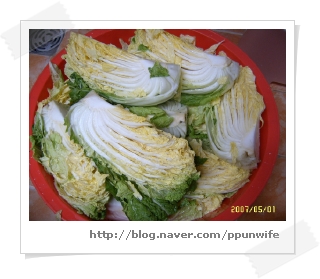
Dissolve 2 cups of coarse sea salt in 15 cups of water to make a brine. Dip the napa cabbages cut into 4 into the saltwater, lift them out, and leave them in a large tub for a moment.
If you salt them lightly for about 30 minutes, they will not break when you sprinkle salt between the cabbage leaves.
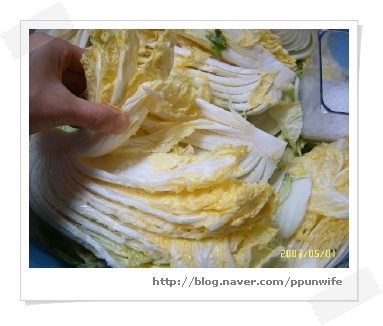
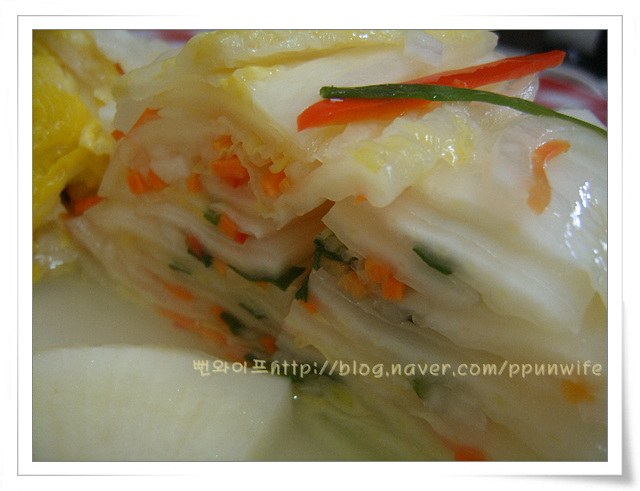
After 30 minutes, the stiff cabbage leaves soften slightly.
At this point, sprinkle a little salt between the cabbage leaves, focusing only on the thick stem parts.
Be careful, because if you sprinkle it onto the leafy ends too, the stems and leaves will not season evenly.
Gently pour the remaining brine from earlier over the cabbage.
You need 4 cups of salt in total to salt the cabbage: 2 cups are used earlier for the brine, and the remaining 2 cups are sprinkled on now.
Salting for about 6 hours from this point is ideal.
Turn the top and bottom cabbages every 2 to 3 hours so they salt evenly.
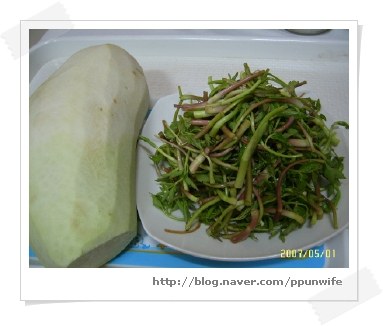
While the cabbage is salting, prepare the ingredients for the filling.
Use firm Korean radishes weighing around 2 kg.
Cut 1 bunch of water dropwort (minari) into 3 to 4 cm lengths.
I did not add onions or scallions, but you can add scallions, large green onion (daepa), or sea staghorn seaweed (cheonggak) to taste.
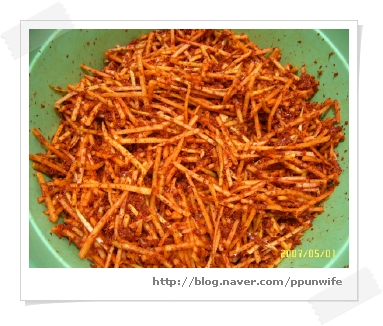
Julienne the radish to the same length as the water dropwort, add 4 cups gochugaru (Korean chili flakes), and mix beforehand to color it.
This gives the kimchi a lovely vibrant color and softens the radish.
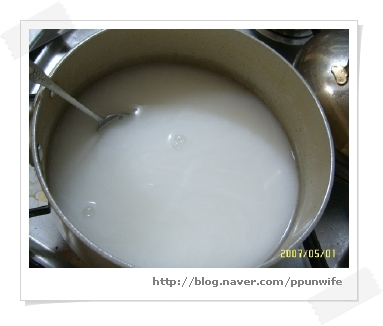
To make the glutinous rice paste, boil 1 cup glutinous rice flour with 4 cups water until thick.
Let it cool completely until cold.
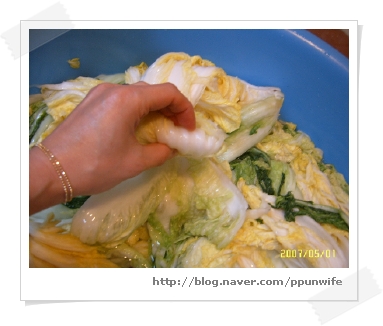
After 6 hours, check the cabbage stems: if they bend without snapping, they are properly salted.
If the stems still feel too stiff, you can let them salt a bit longer.
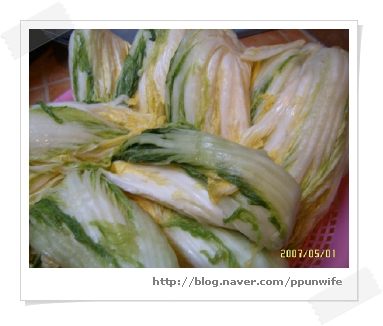
Rinse the salted cabbage under clean running water, opening up each leaf to wash thoroughly. Rinsing 2 to 3 times is enough.
If you rinse too much, the cabbage loses its saltiness and can turn stiff again.
Place the rinsed cabbage in a colander and drain for at least 1 hour.
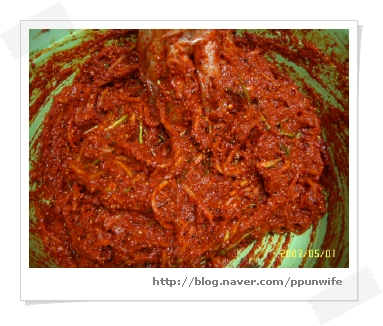
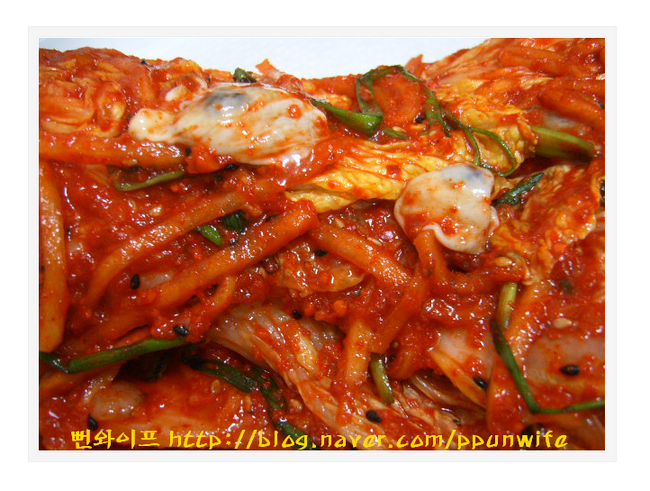
Now it is time to make the filling seasoning. To the radish julienne dyed with gochugaru, add the glutinous rice paste, anchovy fish sauce, salted fermented shrimp (saeujeot), garlic, ginger, sugar, and toasted sesame seeds, then gently mix everything together.
Taste the seasoning, and if it tastes bland, adjust the saltiness with salt. Tear off a salted cabbage leaf, dip it into the seasoning, and taste it to check the seasoning.
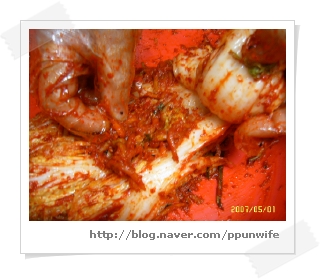
Now the real kimchi making begins.
Filling all 16 pieces of cabbage with seasoning can make your back and legs ache, can't it?
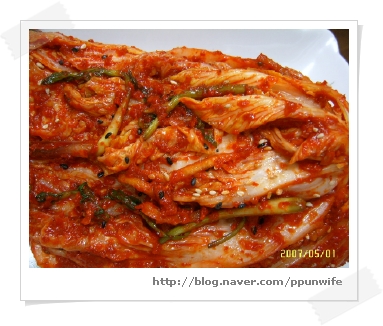
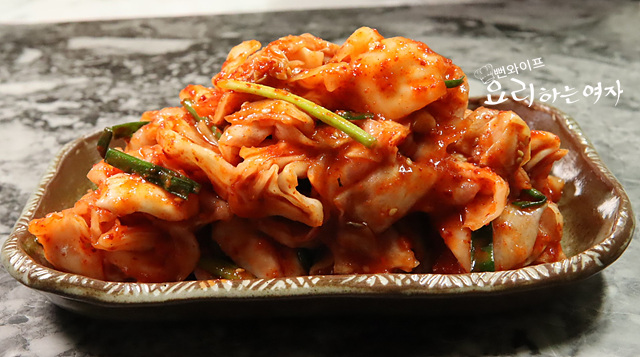
Doesn't it look quite delicious?
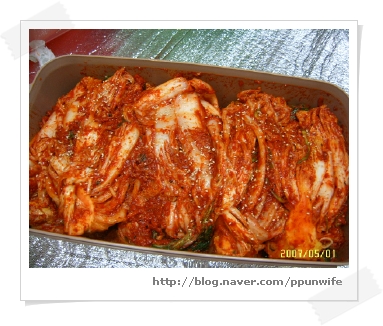
A whole large tub is full of kimchi.
Now all that is left is to let it ferment and enjoy it.
 Ppunwife's tips
- Salting lightly for about 30 minutes makes the leaves pliable so they do not snap when you sprinkle salt between them.
- Sprinkle a little salt between the cabbage leaves, focusing only on the thick stem parts. Be careful, because if you sprinkle it onto the leafy ends too, the stems and leaves will not season evenly.
- Julienne the radish to the same length as the water dropwort, add 4 cups gochugaru, and mix beforehand to color it. This gives the kimchi a lovely vibrant color and softens the radish.
- If you rinse too much, the cabbage loses its saltiness and can turn stiff again.
- Tear off a salted cabbage leaf, dip it into this seasoning, and taste it to check the seasoning.
FAQ
Where should the salt be sprinkled when brining the cabbage?
When sprinkling salt between the cabbage leaves, sprinkle a small amount only on the thick stem parts so that the stems and leaves salt evenly.
Why toss the julienned radish with gochugaru ahead of time?
Tossing the julienned radish with gochugaru first to coat it in color gives the finished kimchi a vibrant shade and softens the radish.
What should I keep in mind when washing salted cabbage in water?
Spread the leaves under running water and rinse 2 to 3 times; rinsing too much washes away the salt, which can make the cabbage stiff again.