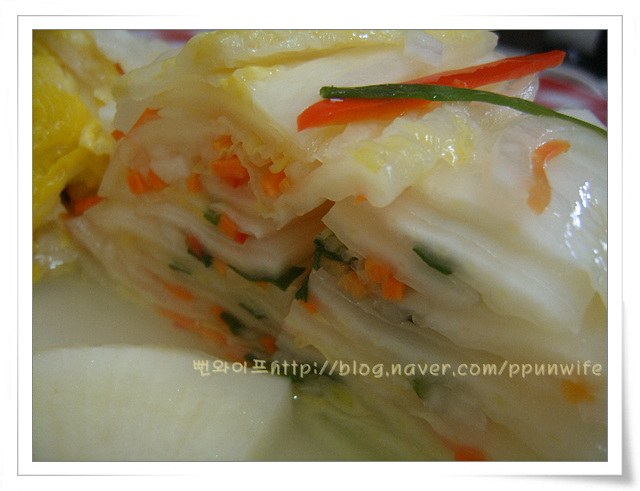
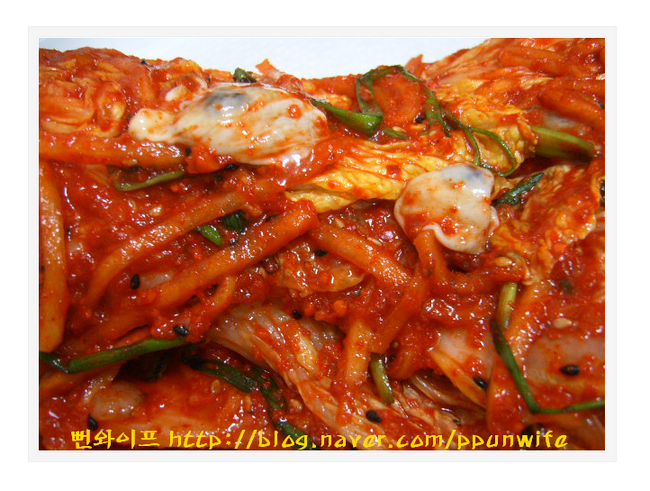
Clean Gimjang Kimchi (Winter Cabbage Kimchi)
A 2-cabbage Gimjang kimchi cleanly seasoned with pureed radish and onion instead of shredded radish stuffing.
Translated from Korean by AI and not yet checked by a native speaker. Amounts and numbers are taken directly from the original recipe. Read the Korean original →
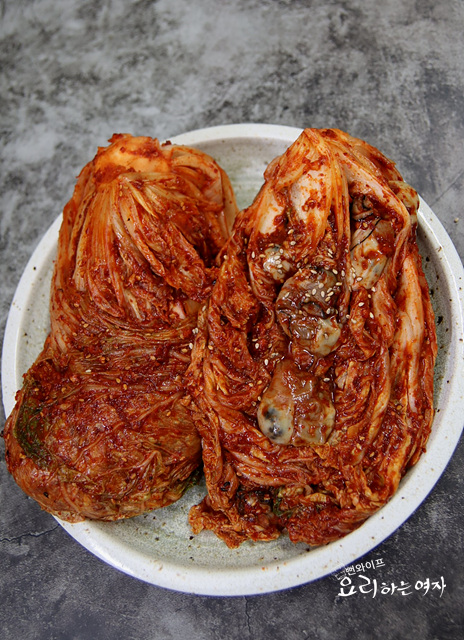
This kimchi is made cleanly by skipping stuffed fillings like shredded radish and scallions, and instead drawing out refreshing savoriness with pureed radish and onion juice. Making glutinous rice paste with a rich broth brewed from dried pollock head and anchovies makes spreading the seasoning onto the cabbage quick and convenient. It is wonderful to enjoy casually from freshly made geotjeori to fully aged kimchi.
- Servings
- about 10–12 servingsOriginal: 2 cabbages = 5 kg
- Difficulty
- Medium
- Spiciness
- Spicy
Ingredients
Ingredients
- Napa cabbage2 heads, 5 kg
- Coarse sea salt2 cups
- Water10 cups
Broth ingredients
- Dried pollock head1
- Dried kelp (dasima)4 sheets, 10 cm
- Dried soup anchovies30
- White part of large green onion (daepa)2 stalks
- Water10 cups
Glutinous rice paste ingredients
- Broth3 cups
- Glutinous rice flour4 tbsp
Seasoning
- Gochugaru (Korean chili flakes)4 cups
- Salted fermented shrimp (saeujeot)1/2 cup
- Sand lance (or dried anchovies)1/2 cup
- Minced garlic1 1/2 cups
- Minced ginger3 tbsp
- Sugar (or green plum syrup (maesil-cheong) 5 tbsp)3 tbsp
- Onion1 (pureed)
- Korean radish (mu)1/3, 500 g (pureed)
- Toasted sesame seeds1/2 cup
- Black sesame seeds2 tbsp
- For cabbage, one that feels firm and densely packed when touched, without overly thick stems, absorbs the seasoning well and tastes delicious. Also, it is ideal if it is not too long and weighs around 2 to 2.5 kg.
- Still, if you want to add mustard greens or scallions, you can add about 200 g of each to the seasoning.
Steps
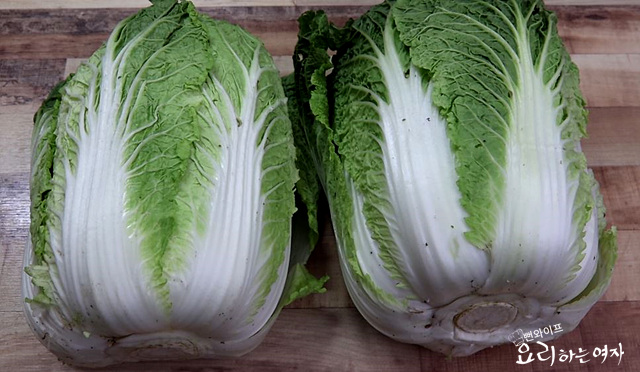
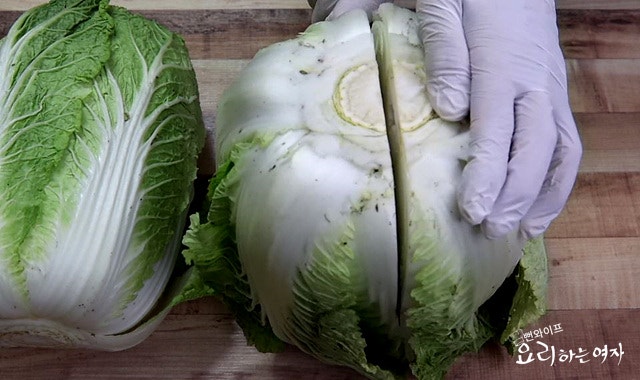
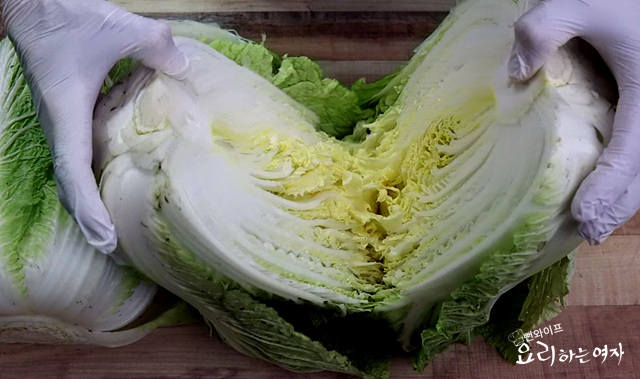
For cabbage, one that feels firm and densely packed when touched, without overly thick stems, absorbs the seasoning well and tastes delicious. Also, it is ideal if it is not too long and weighs around 2 to 2.5 kg.
Cut the cabbage down to the 2/3 mark, then gently pull it apart with your hands so it does not produce many loose scraps.
Also, instead of cutting it into 4 quarters beforehand, splitting it only in half to salt it and then dividing it when rinsing is the secret to producing almost no crumbs.
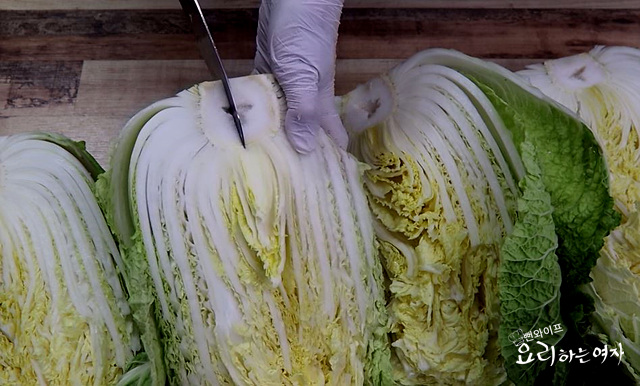
Making a slit in the stem core of the halved cabbage helps the salt penetrate well.
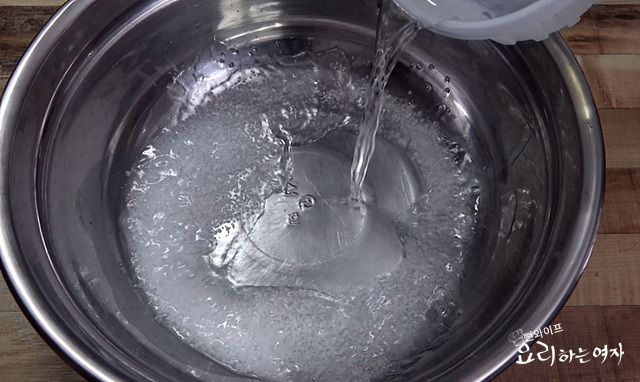
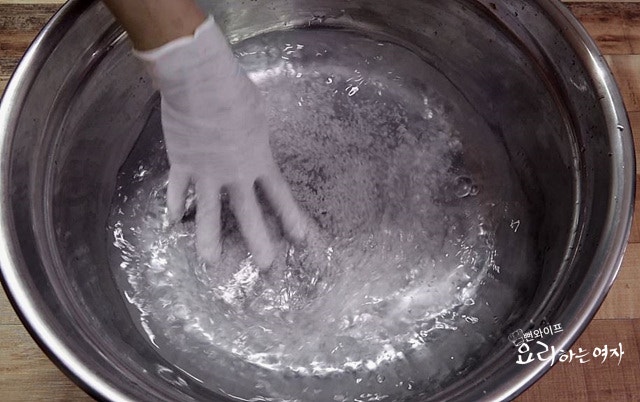
Pour 10 cups of water into 1 cup of coarse sea salt and stir by hand to dissolve. Using lukewarm water for the salt water can shorten the salting time.
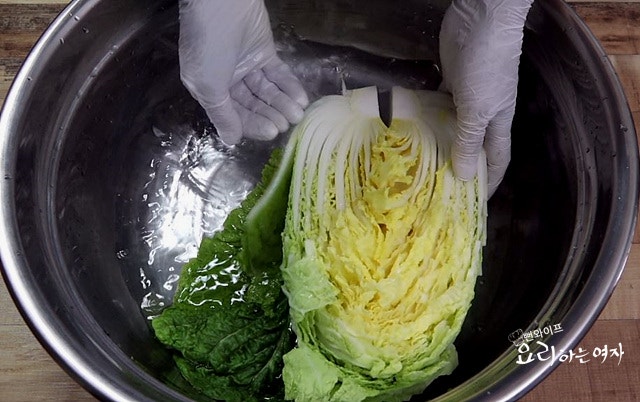
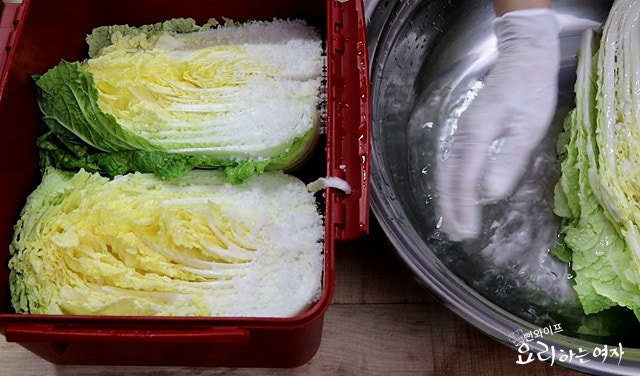
Moisten the cabbage evenly with the salt water, then sprinkle salt only on the stiff stem parts.
Sprinkle the remaining 1 cup of salt evenly over the two cabbages.
In other words, when salting cabbage, you can calculate 1 cup of coarse sea salt per cabbage (1/2 cup when making salt water, 1/2 cup when sprinkling on the stems).
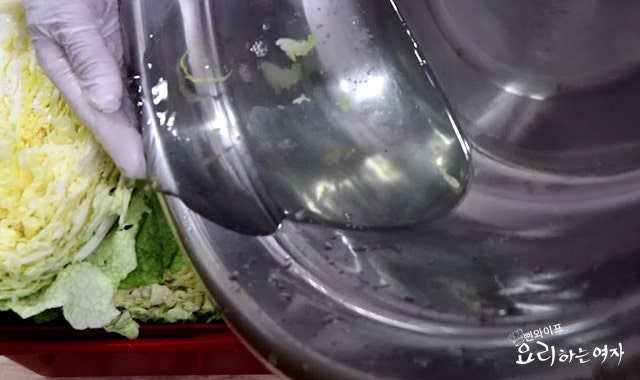
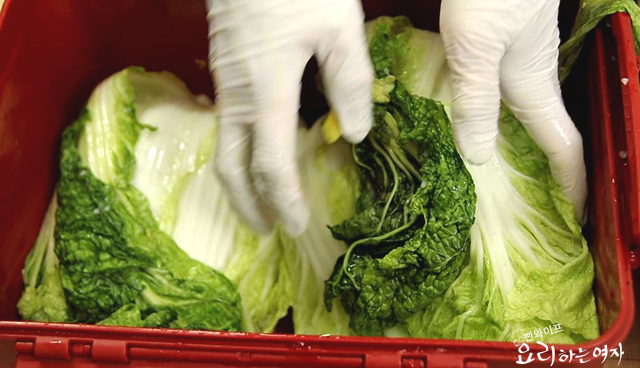
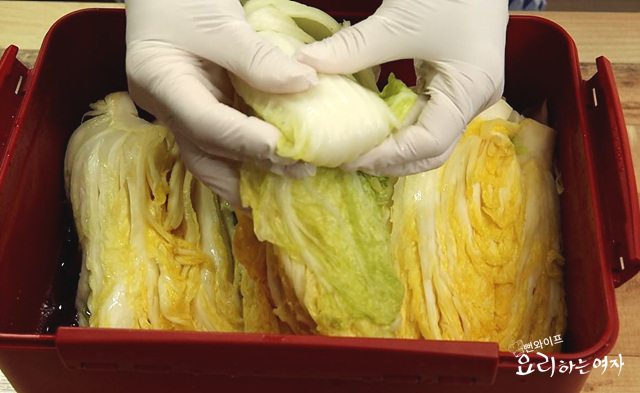
Pour all the remaining salt water over the very top and let salt for about 8 hours. Placing a heavy object on top helps it salt down more evenly.
After 3 to 4 hours, swap the top and bottom positions and turn the cabbage upside down, then salt for another 3 to 4 hours; it is fully salted when the stems bend pliably.
Shorten or lengthen the salting time depending on the thickness of the cabbage stems, rinse one inner leaf in clean water several times to taste it, and adjust the time so it does not become too salty.
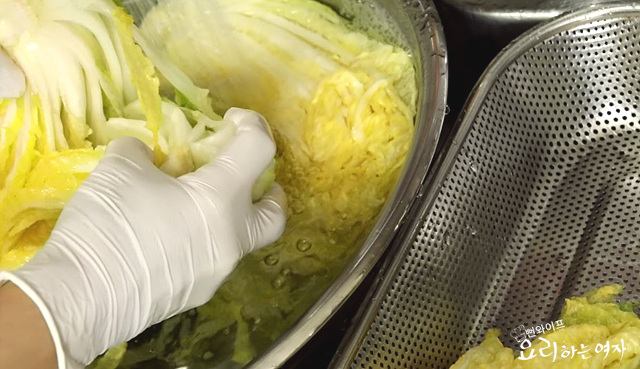
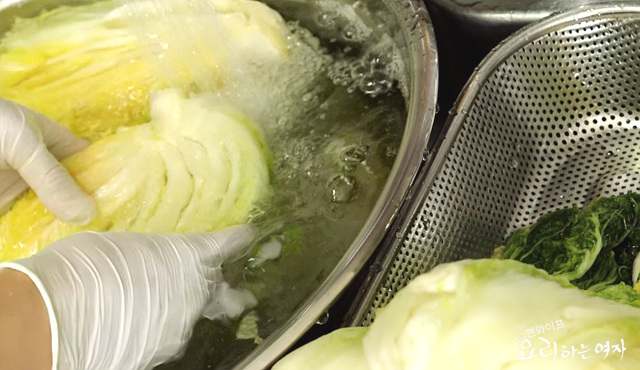
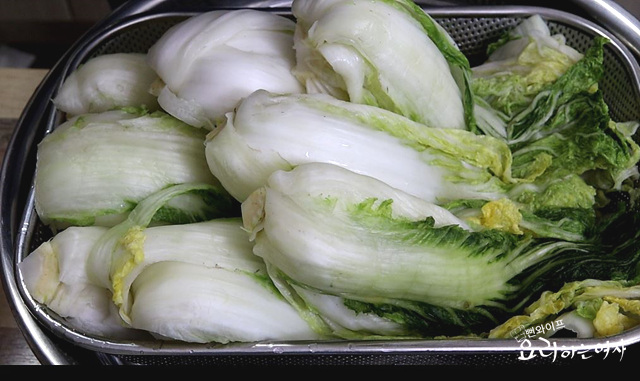
Rinse about 3 times under running water while gently spreading the leaves apart so foreign matter is washed away; if they are large, you can split them in half once more at this point.
If you do not drain the water well, the seasoning will become watery and liquid can pool later on, so draining the moisture thoroughly is also important.
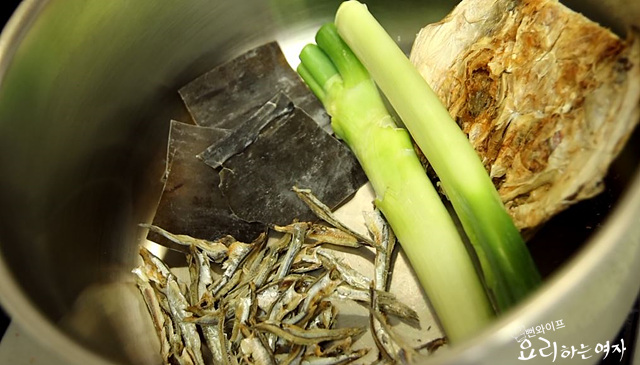
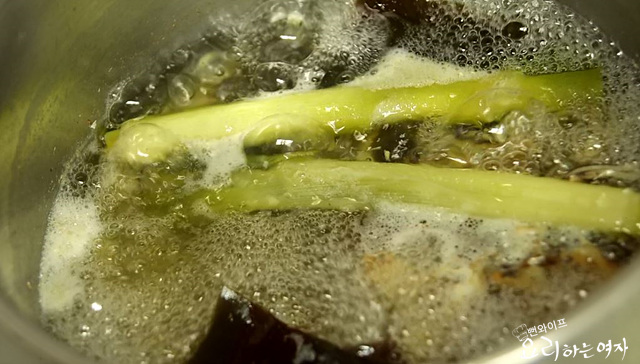
Add all of the dried kelp, dried pollock head, dried anchovies, and the white part of the large green onion, simmer gently for about 30 minutes to make the broth, and let it cool.
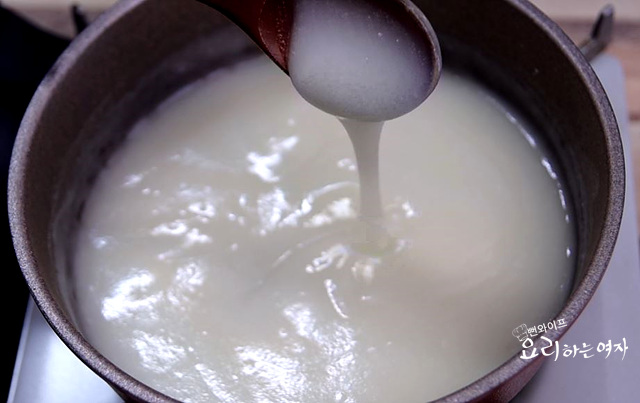
Add 4 tbsp of glutinous rice flour to 3 cups of this broth, dissolve well, cook into a thick paste, and let it cool.
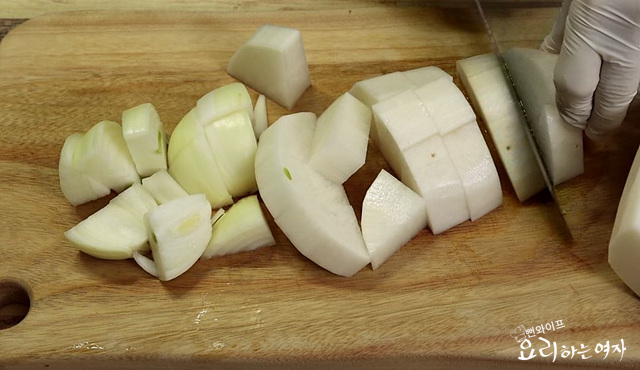
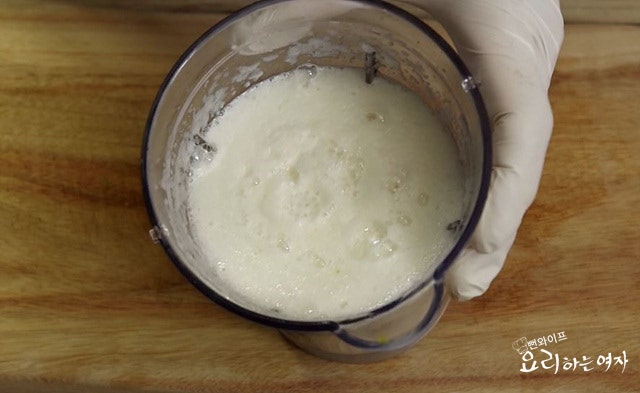
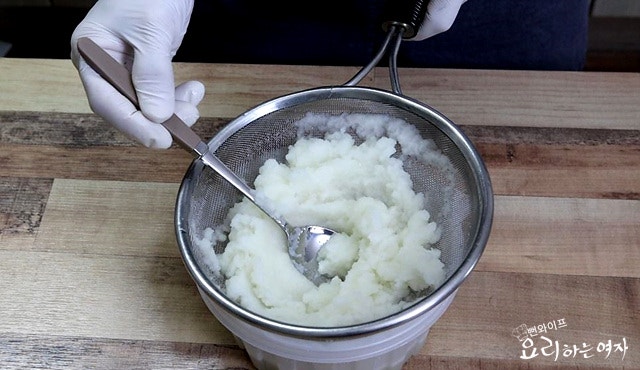
Since we are not adding stuffed filling like shredded radish or scallions, the radish and onion will create a refreshing and rich seasoning flavor.
I finely pureed the onion and radish in a blender and strained them through a sieve to collect only the juice, but you can also just include the pulp as is.
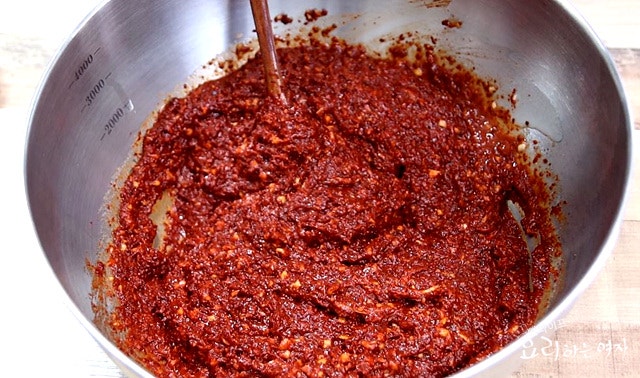
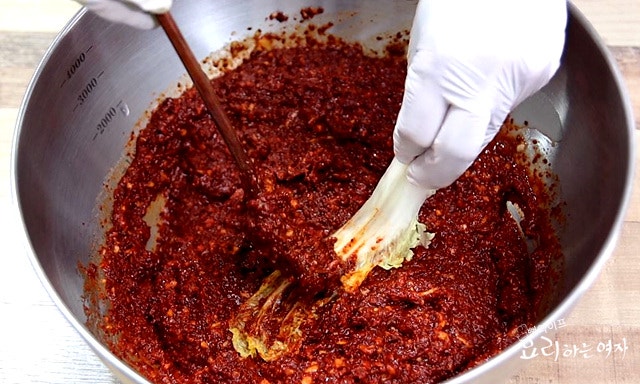
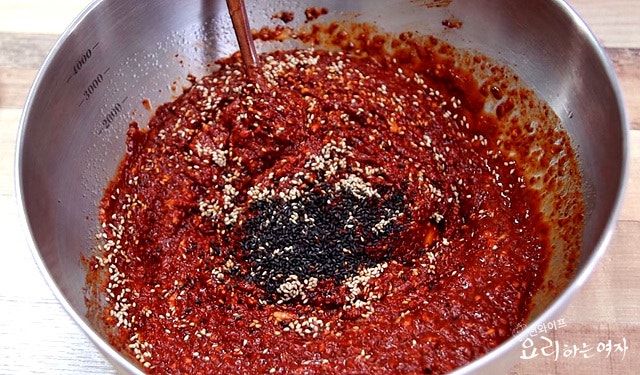
Add all the seasoning ingredients and the glutinous rice paste, mix thoroughly, then tear off an inner cabbage leaf and coat it in the seasoning to check the taste. Because Gimjang kimchi needs to be stored and eaten over a long period, taste it so that it is not too bland; if it is bland, adjust with salt, and add sugar or green plum syrup to taste.
Add toasted sesame seeds and black sesame seeds and mix to finish the kimchi seasoning.
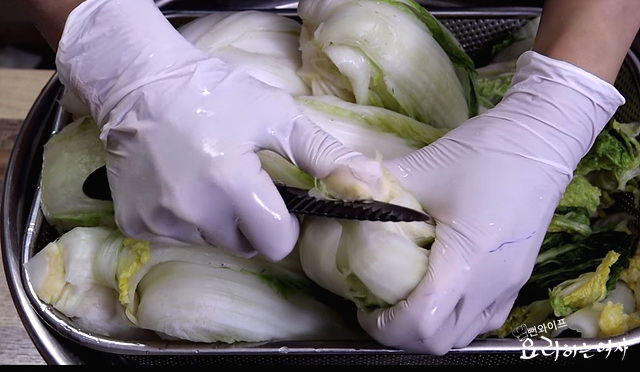
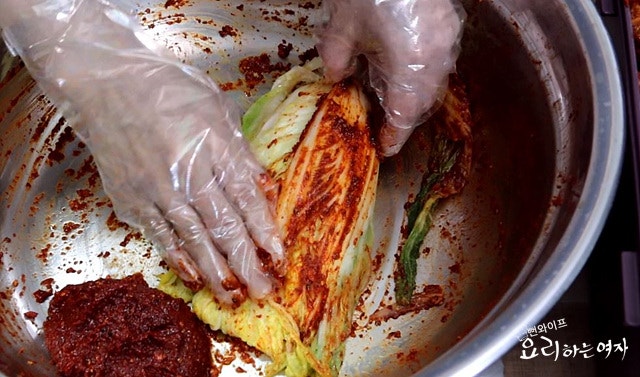
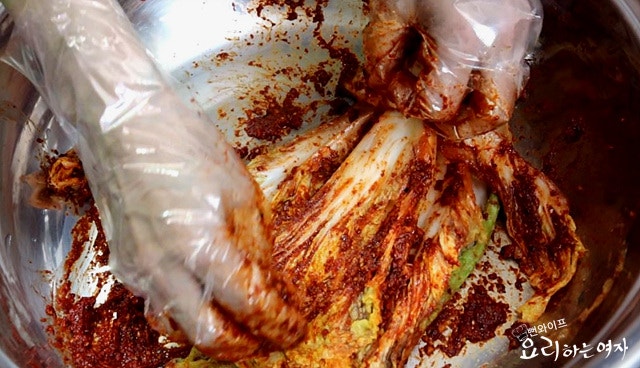
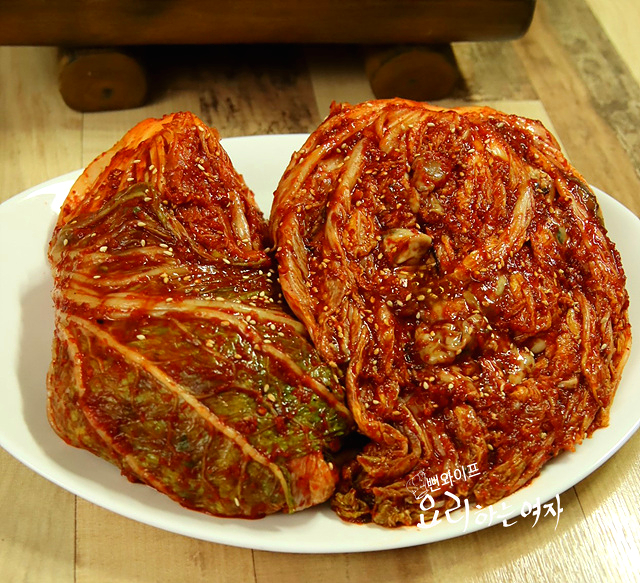
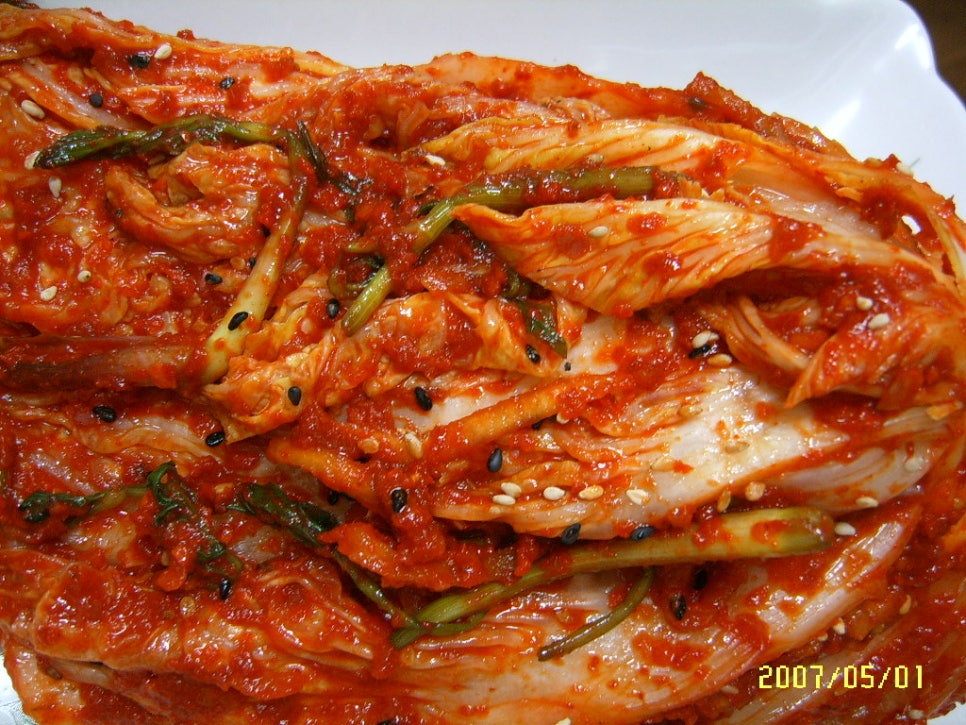
Trim the untidy core ends from the drained cabbage and apply the seasoning evenly, spreading it between the cabbage stems and leaves. Coat all the back parts first, then turn it over and spread so the color turns out pretty.
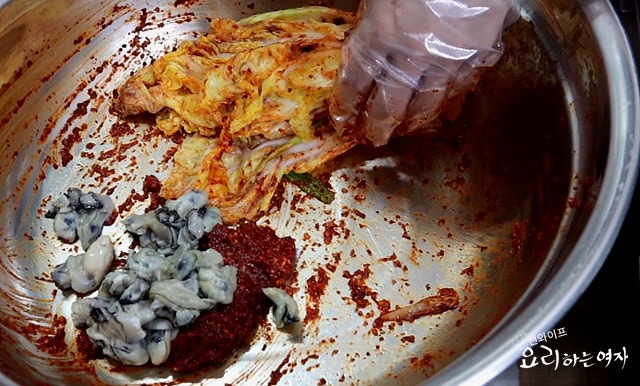
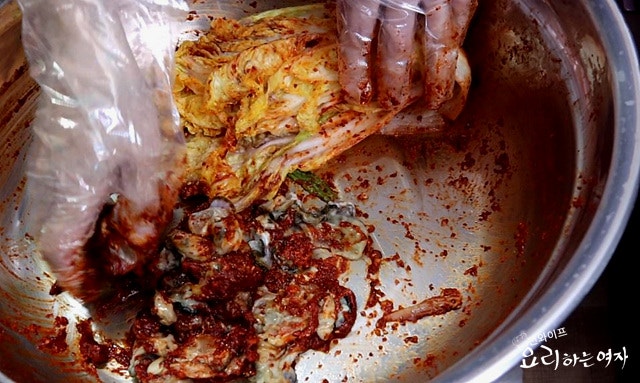
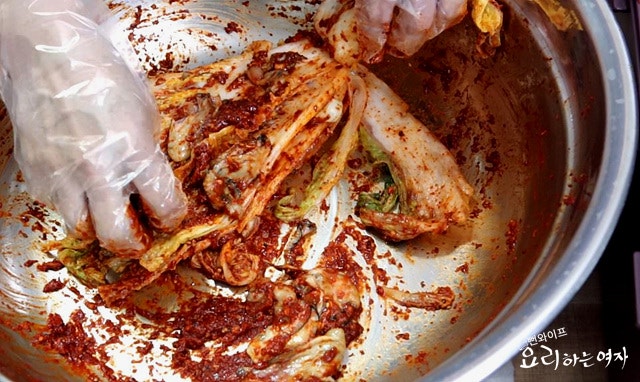
I tried seasoning one piece of cabbage with oysters added. After coating the back side with seasoning first, thoroughly coat the oysters in seasoning, turn the cabbage over, and tuck the oysters between the cabbage leaves as you go to complete delicious, fragrant oyster kimchi.
Kimchi with oysters develops an off-flavor if kept for a long time, so it is best to add them only to kimchi you will eat right away.
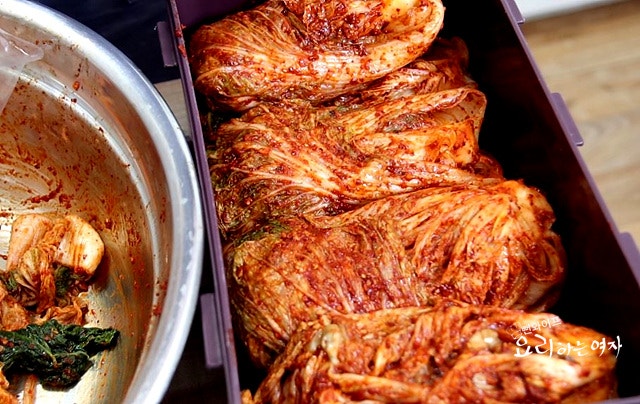
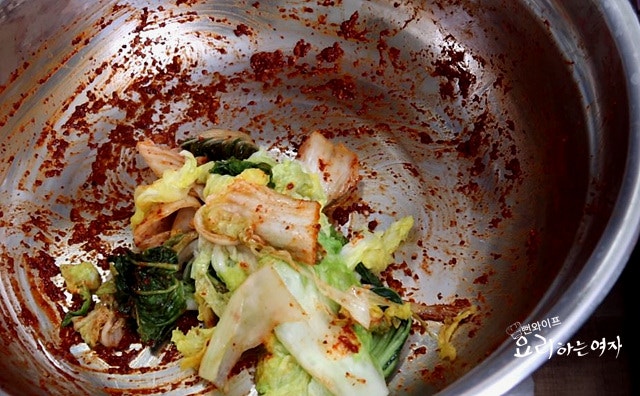
Toss all the cabbage scraps into the bowl and wipe off the leftover seasoning with them. That is the entire amount of scraps.
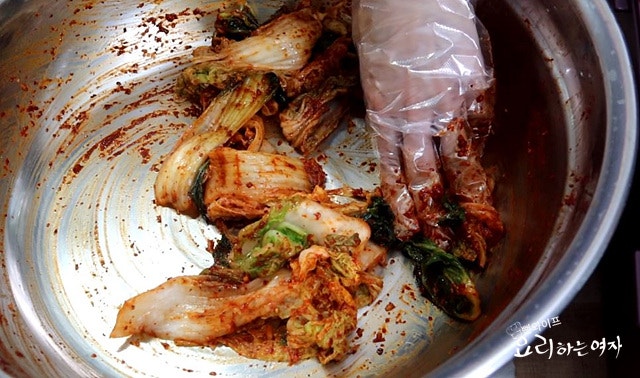
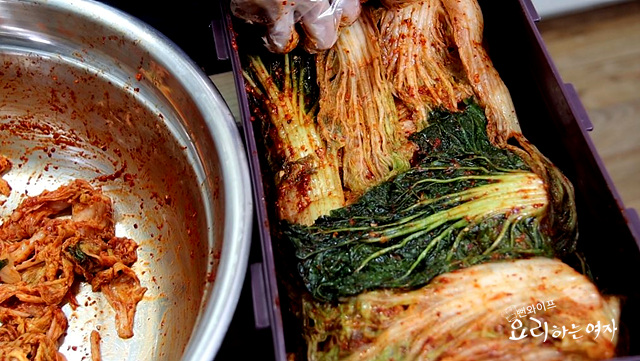
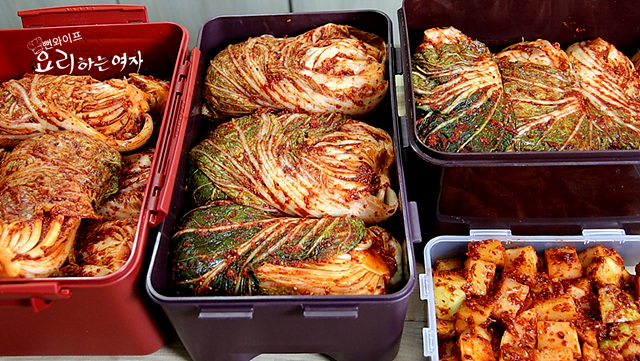
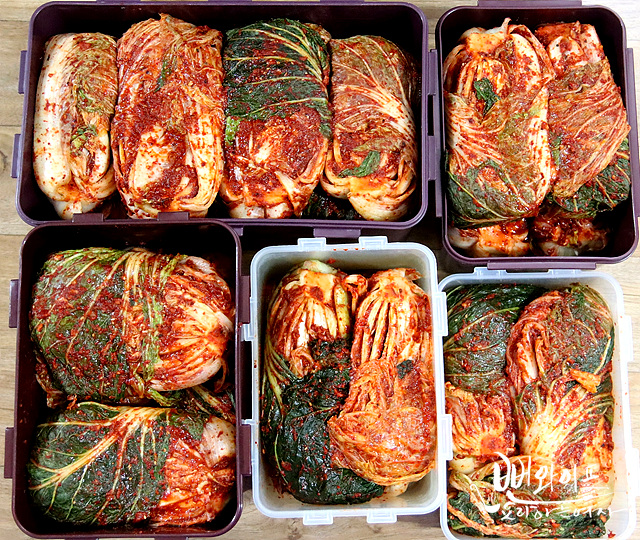
Just eating these fresh scraps tossed in the residual seasoning as geotjeori is delicious. Pick out the green outer leaves separately, spread them nicely over the very top so the moisture does not dry out, and store.
After making it like this, you can ferment it to your liking and store it in the kimchi refrigerator; in my case, I leave it at room temperature for about 5 hours until the strong seasoning mellows, then transfer it to the kimchi refrigerator.
 Ppunwife's tips
- Using lukewarm water for the salt water can shorten the salting time.
- If you do not drain the water well, the seasoning will become watery and liquid can pool later on, so draining the moisture thoroughly is also important.
- Kimchi with oysters develops an off-flavor if kept for a long time, so it is best to add them only to kimchi you will eat right away.
- Pick out the green outer leaves separately, spread them nicely over the very top so the moisture does not dry out, and store.
FAQ
Does the seasoning lack flavor if no stuffed filling is added at all?
Finely blending radish and onion in a blender and mixing them into the seasoning brings out plenty of rich, refreshing savoriness even without separately adding shredded radish or filling ingredients.
How should I cut the cabbage so that fewer loose scraps are produced when salting?
Instead of cutting it into 4 quarters from the start, slit it only 2/3 of the way from the stem and pull it in half by hand, then divide it again when rinsing after salting to greatly reduce crumbs.
How can I check if the cabbage is properly salted?
When the once-stiff stem parts of the cabbage bend pliably and smoothly, it is properly and fully salted.
Is there anything to keep in mind when mixing oysters into the kimchi?
Kimchi containing oysters easily develops an off-flavor if stored for a long time, so it is best to add them only to the portion you will eat right away rather than for long-term storage.
How can I use leftover kimchi seasoning?
Because it contains no chunky filling, you can store it in the freezer and use it to make other kimchi like seokbakji or scallion kimchi, or use it as a versatile seasoning for spicy fish stews and jjigae.