Easy Gimjang Kimchi (Winter Cabbage Kimchi) Without Stuffing
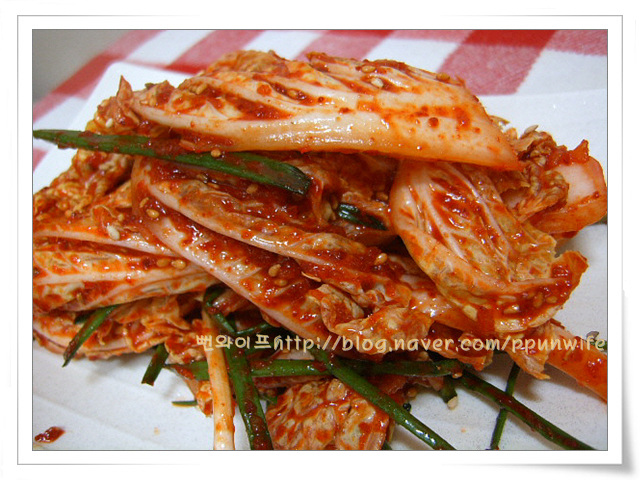
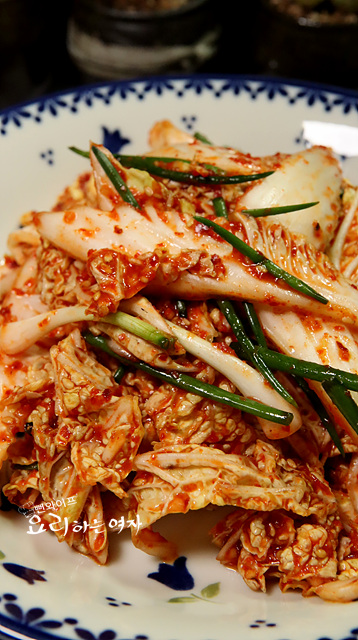
An easy gimjang kimchi seasoned with pureed radish and onion instead of shredded stuffing in a rich yellow pollack broth.
Translated from Korean by AI and not yet checked by a native speaker. Amounts and numbers are taken directly from the original recipe. Read the Korean original →
This gimjang method uses 20 kg of salted napa cabbage and skips shredding radish or mustard greens by pureeing the aromatics instead, cutting prep time significantly. A rich broth brewed from dried yellow pollack and anchovies adds deep savory flavor. Spreading the paste is so much easier, making it approachable even for beginners.
- Servings
- about 10–12 servingsOriginal: 20 kg (8 heads)
- Difficulty
- Medium
- Spiciness
- Spicy
Ingredients
Ingredients
- Salted napa cabbage20 kg
Broth ingredients
- Dried yellow pollack (hwangtae)1
- Dried soup anchovies50
- Dried kelp (dasima)8 pieces (10 cm square)
- White part of large green onion (daepa)6 stalks
- Water30 cups
Glutinous rice paste
- Broth12 cups
- Glutinous rice flour1 1/2 cups
Seasoning
- Gochugaru (Korean chili flakes)16 cups
- Salted fermented shrimp (saeujeot)2 cups
- Sand lance fish sauce (or dried anchovies)2 cups
- Minced garlic6 cups
- Minced ginger2/3 cup
- Onion3 (pureed)
- Korean radish (mu)1 1/2, 2 kg (pureed)
- Sugar (or green plum syrup (maesil-cheong) 1+1/2 cups)1 cup
- Toasted sesame seeds2 cups
- Black sesame seeds1/2 cup
- Draining the salted napa cabbage for 3 to 5 hours is ideal; dividing it into smaller batches speeds up the draining.
- If you make kimchi the day after receiving the cabbage, it is safer to rinse it; cut larger heads in half again and trim off any messy parts with a knife.
- If yellow pollack heads are hard to find, you can cut and use whole dried yellow pollack or shredded pollack fillets instead.
Steps
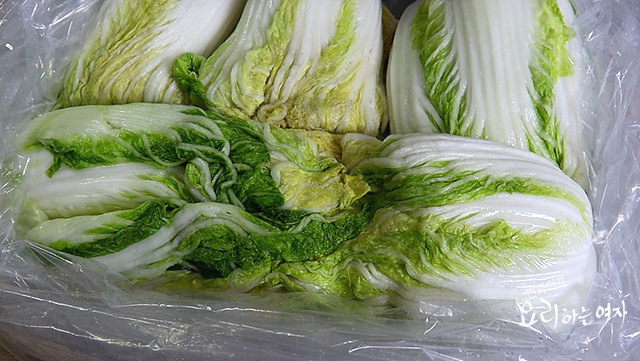
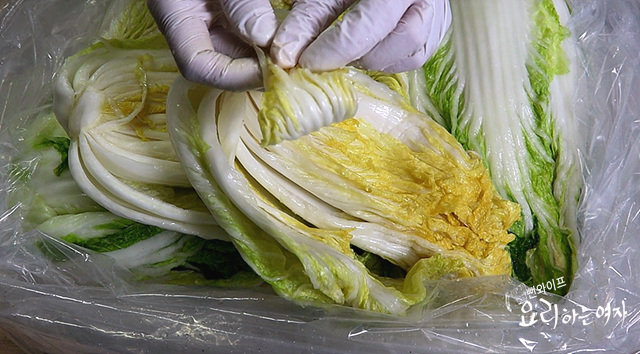
I planned to make kimchi the day the salted cabbage arrived, so I made the broth early in the morning, prepped the seasoning paste, and cleaned up—and just then, the delivery text arrived right on time.
The 20 kg of salted napa cabbage I ordered arrived earlier than expected, so I checked its condition and taste, then set it out to drain.
It was salted just right all around, sweet and nutty, which made me want to dance with joy.
Usually when you order salted cabbage, you make kimchi two days later, but recent news reports say that salted cabbage left at room temperature for over a day can breed E. coli and other bacteria, causing the kimchi to turn mushy. Rinsing it 2 to 3 times is said to reduce them by over 90%, so if you make kimchi the day after receiving the cabbage, rinsing it seems safer.
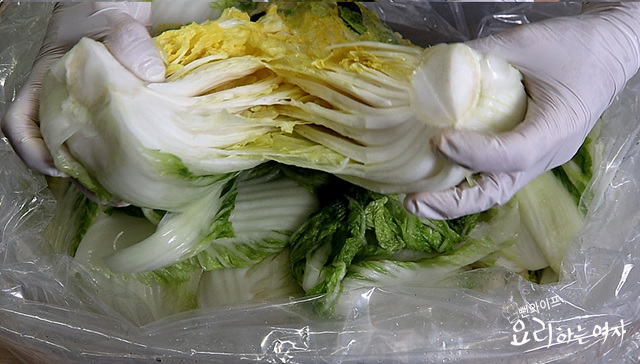
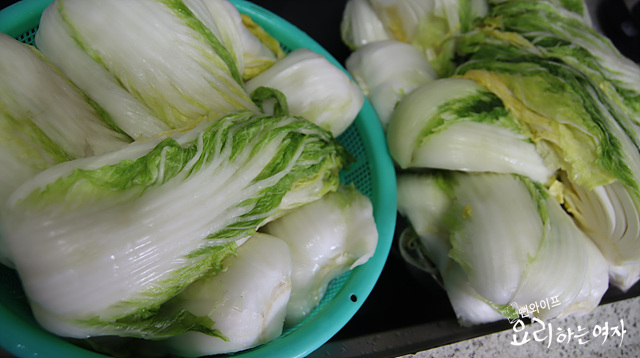
They usually arrive cut into halves; pick out the larger ones and cut them in half once more into quarters so they are the right size for spreading seasoning. Trim off any messy spots with a knife.
Leaving them to drain for 3 to 5 hours is ideal, but stacking too many cabbage pieces together makes it take a long time for the ones at the bottom to drain, so doing it in batches cuts down the time significantly.
Unlike in the old days, today's salted cabbage is not heavily salted, so if you leave it too long trying to drain it completely, the salt level drops again and the cabbage turns stiff.
A state where it retains its moisture without water dripping from the leaves is just right.
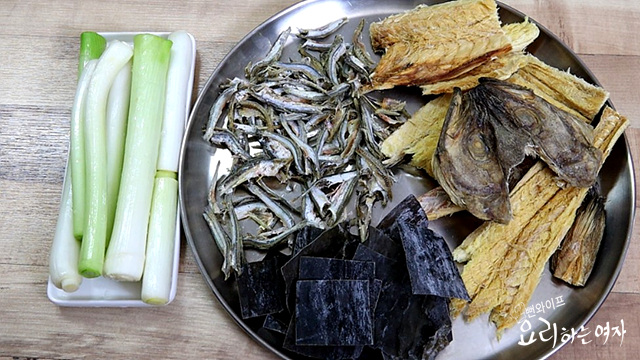
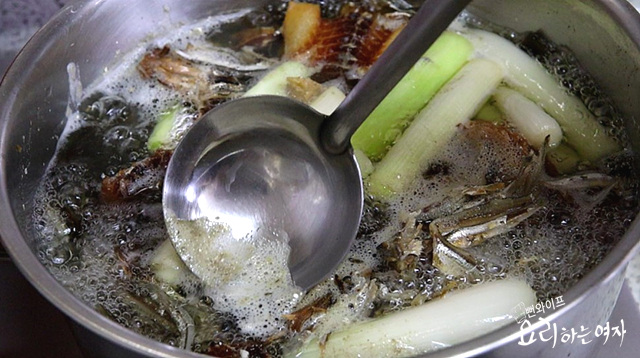
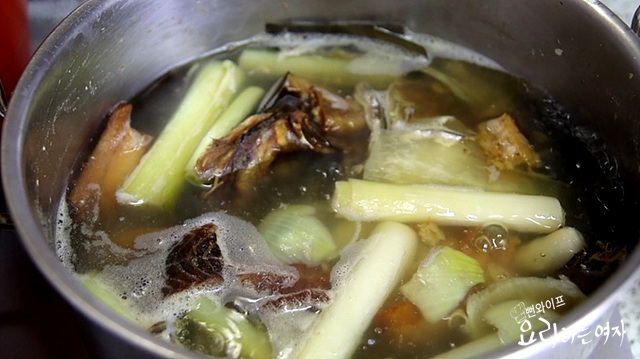
Adding dried yellow pollack heads to gimjang broth gives it an exceptional deep, savory flavor. Dried yellow pollack is a bit pricey, but I do not skimp on ingredients for kimchi that will be eaten for a whole year.
When shopping for gimjang ingredients around this time of year, many places (dried seafood shops) sell just the yellow pollack heads, so they should be easy to find.
If finding only the heads is difficult, you can cut up whole dried yellow pollack or dried pollack fillets instead.
The anchovies, kelp, and large green onions simmered alongside will also be wonderful ingredients responsible for umami.
Other than these, onion, apple, or pear are also great. I omitted the fruit because I will add pureed onion and balance the sweetness with sugar.
Try lightly toasting the anchovies and dried yellow pollack in an air fryer or stir-frying them in a dry pan until nutty.
It removes any stale or fishy odor that dried seafood might have.
Pour in cold water, and once it comes to a rolling boil, simmer gently for 30 minutes, skimming off the foam as you go to make a rich broth.
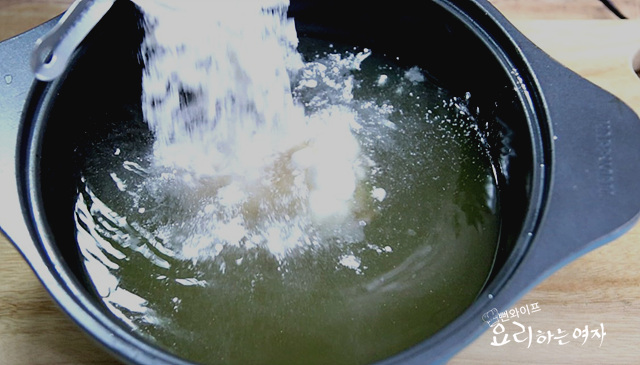
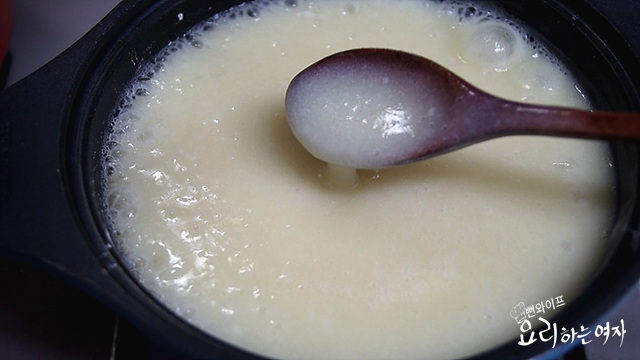
Add 1 1/2 cups of glutinous rice flour to 12 cups of cooled broth, stir well so there are no lumps, and cook over low heat into a thick paste, stirring so it does not scorch.
Once it begins bubbling all over, remove it from the heat and let it cool.
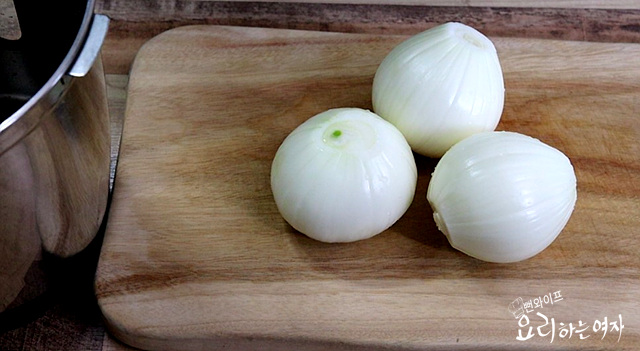
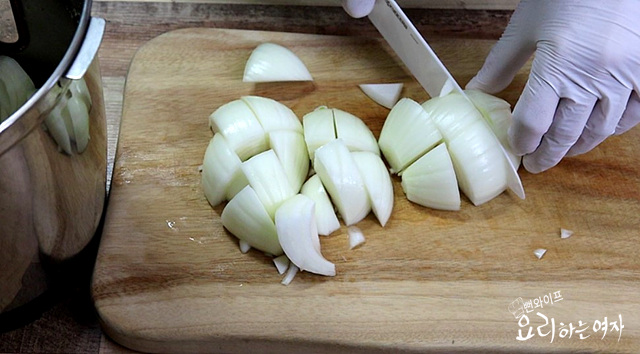
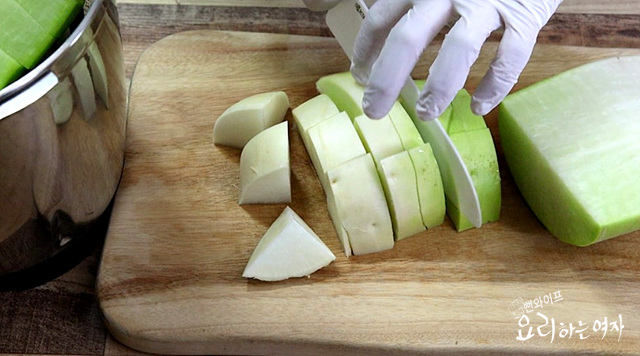
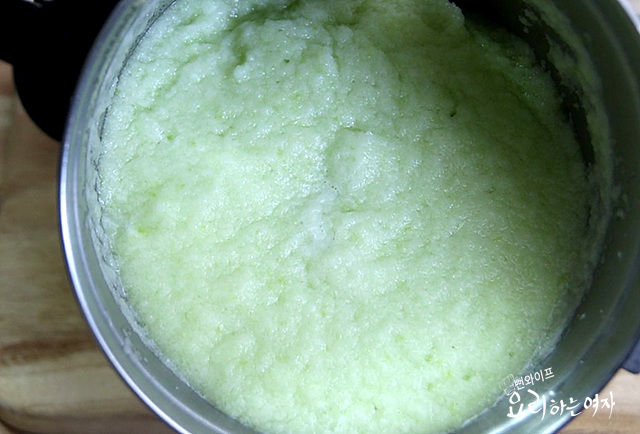
Roughly chop 3 small onions and 1 1/2 regular-sized radishes so they blend easily in a blender, and puree them finely.
Blending them together with the fish sauce, salted fermented shrimp, or broth will make them puree easily. The green part of the radish stands out, giving the puree a lovely color.
Last time I strained the pulp through a sieve, but today I used it as is without straining to make the seasoning.
Instead of adding stuffing like scallions, mustard greens, or shredded radish, the onion and radish will provide the rich seasoned flavor of the gimjang kimchi.
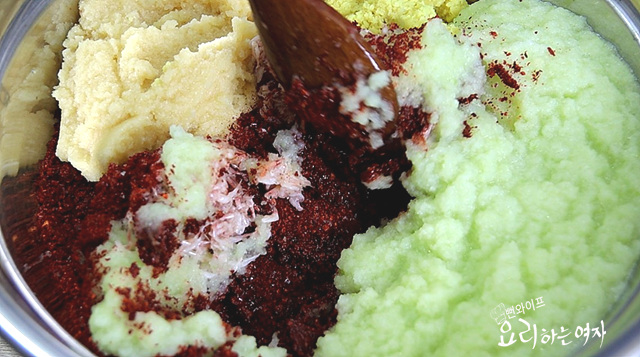
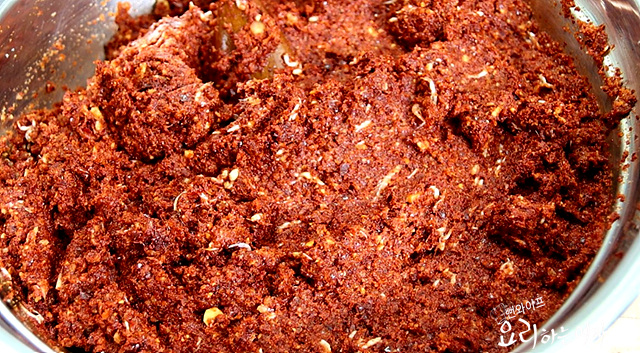
In a bowl, mix the prepared seasoning ingredients—gochugaru, minced garlic, minced ginger, fish sauce, salted fermented shrimp, and the pureed onion and radish—and let it sit for about 30 minutes so the gochugaru blooms with rich color.
For large-batch kimchi, adding the glutinous rice paste to the chili flakes right from the start seems to slow down the color development, so I add it in a second stage.
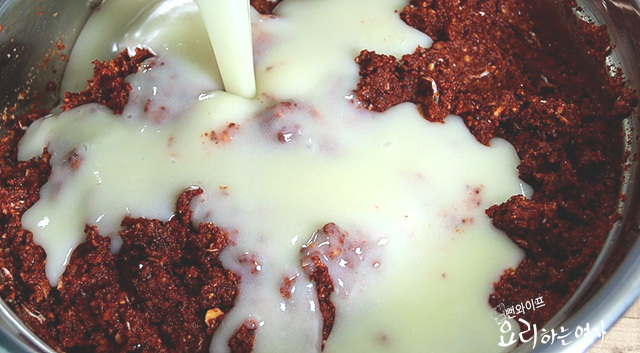
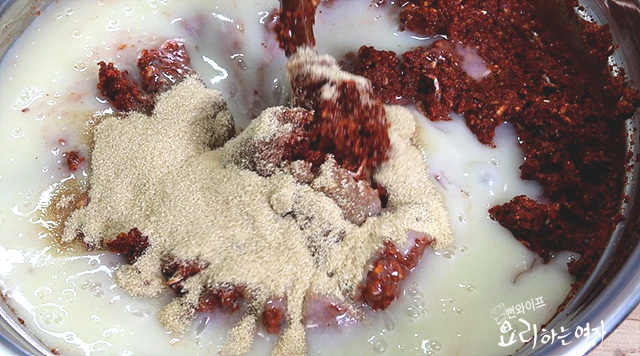
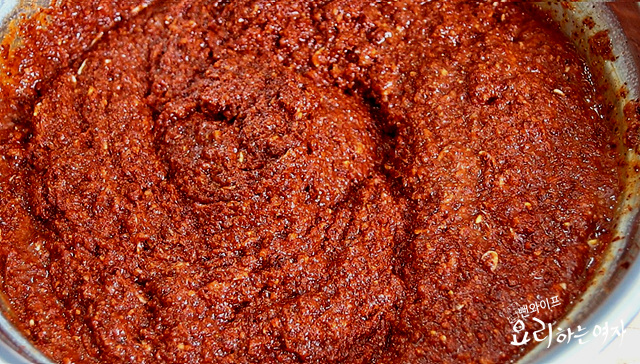
Once the gochugaru absorbs the moisture and turns a vibrant red, add the glutinous rice paste and sugar (or green plum syrup) and mix thoroughly.
At this point, tear off a piece of the salted cabbage stem, rub some seasoning on it, and taste. A level of seasoning that is not overly salty but pleasantly savory is just right.
If it tastes bland, adjust with salt, tailoring it to how salty your cabbage is.
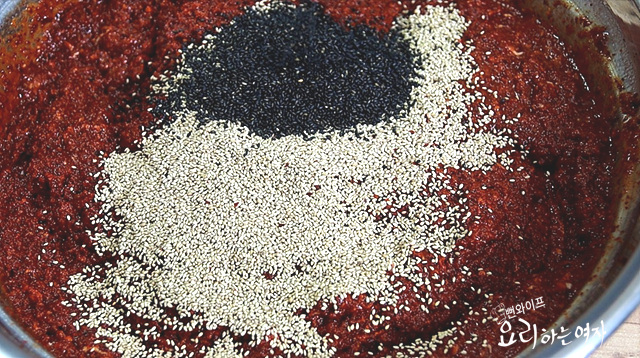
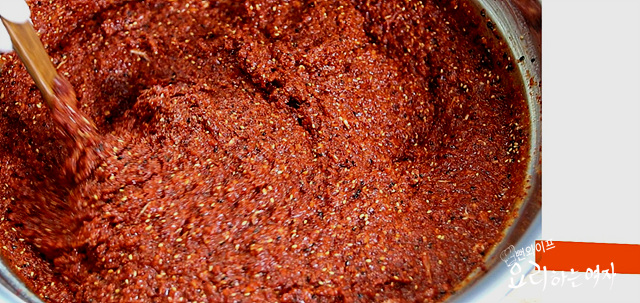
Finally, add toasted sesame seeds and black sesame seeds and mix well, and your gimjang kimchi seasoning paste is ready.
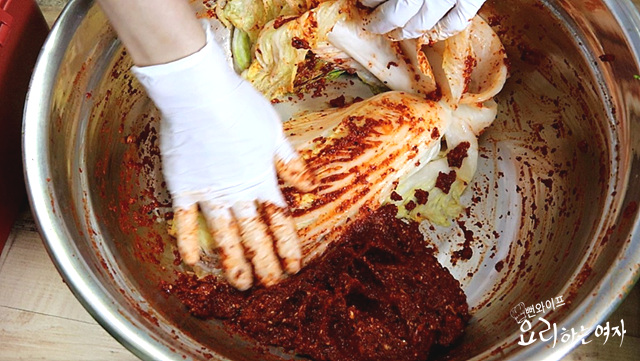
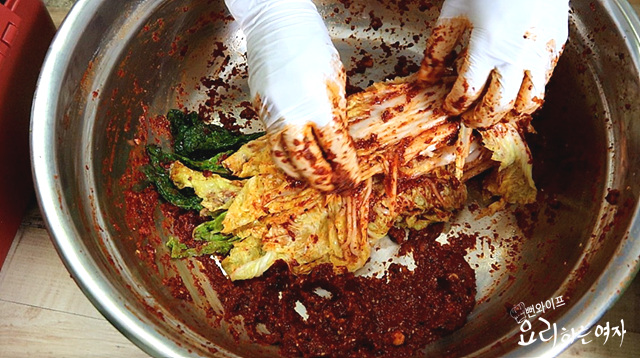
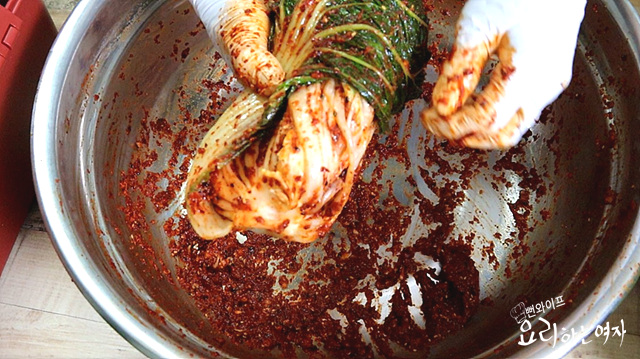
I like to spread the seasoning on both the outside and inside; I coat the outer leaves lightly just to give them color,
and on the inner leaves, I spread it thoroughly with more paste concentrated near the thick stem end.
Without shredded stuffing, spreading the seasoning is much easier, but doing this same motion in an endless loop makes this part feel the longest and most tiring.
My shoulders and back ache, and doing it all alone feels like spiritual discipline.
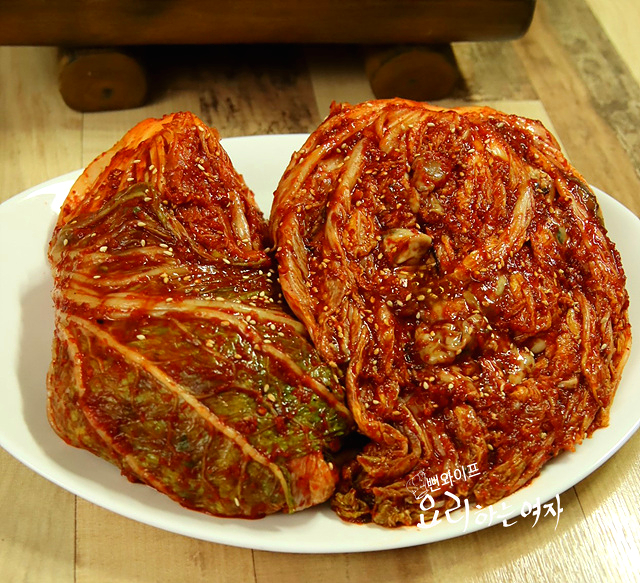
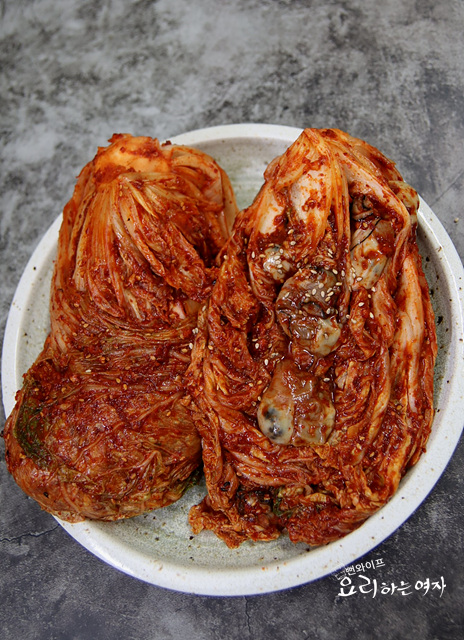
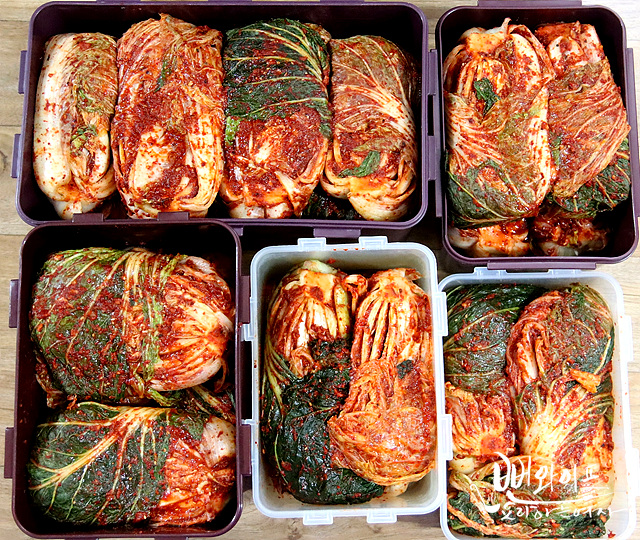
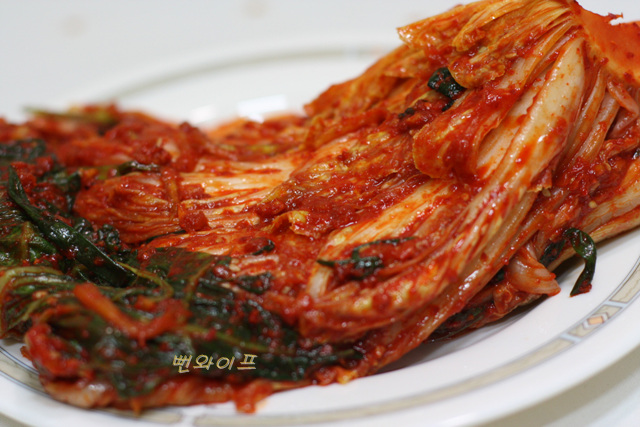
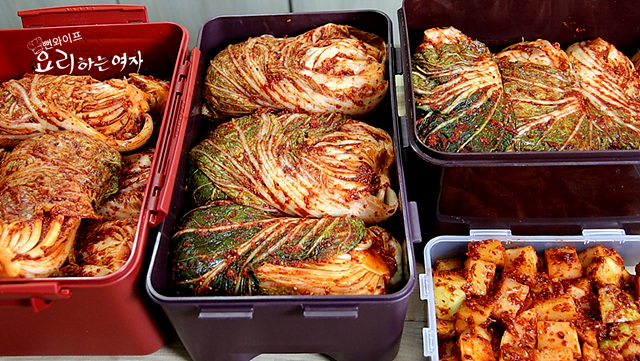
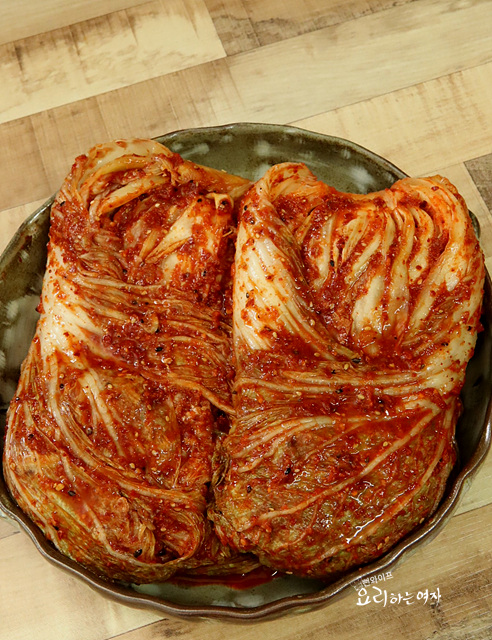
This is the gimjang kimchi made with 20 kg of salted cabbage.
The result of a hard day's work is about 3 small kimchi tubs.
With the leftover seasoning, I also whipped up a quick batch of kkakdugi using radishes I had salted in advance.
 Ppunwife's tips
- If you make kimchi the day after receiving the cabbage, rinsing it 2 to 3 times reduces E. coli and bacteria by over 90%, making it safer.
- Leaving salted napa cabbage too long to drain completely will lower its saltiness and make it stiff, so aim for a state where moisture is retained without water dripping off.
- Lightly toasting anchovies or dried yellow pollack in an air fryer or pan-frying them in a dry skillet removes any stale or fishy odor from the dried seafood.
- For large-batch kimchi, adding glutinous rice paste to the chili flakes right away slows down color blooming, so mix the other seasonings first to let the color bloom before stirring in the rice paste as a second step.
FAQ
How long should salted napa cabbage be drained?
About 3 to 5 hours is generally ideal, leaving it pleasantly moist without water actively dripping off. Leaving it too long can leach out the salt and cause the cabbage to turn stiff.
Why is the glutinous rice paste not mixed into the seasoning right away?
For large amounts of seasoning, adding the glutinous rice paste from the start can prevent the gochugaru from developing a vibrant red color, so the other seasonings are mixed first to bloom for 30 minutes before adding the paste in a second step.
Can I use different parts of the dried yellow pollack instead of a whole one for the broth?
You can use dried yellow pollack heads or cut-up dried yellow pollack fillets instead to brew a rich, savory broth.
How can leftover gimjang seasoning be used?
It can easily be used to make kkakdugi by tossing it with pre-salted cubed radish.