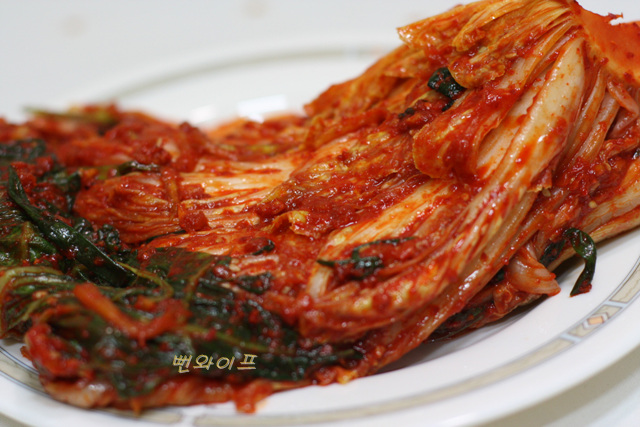
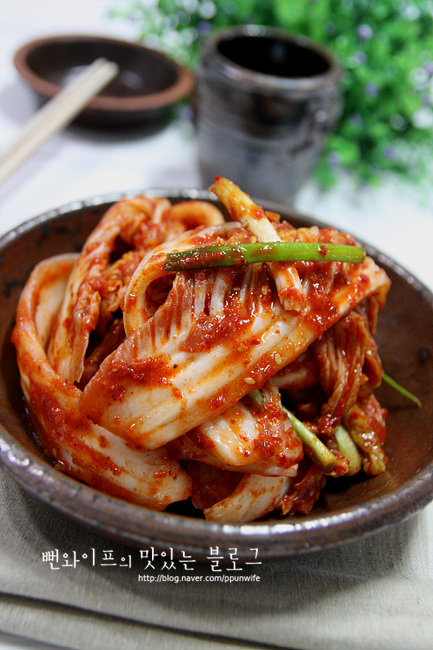
Clean Gimjang Kimchi (Winter Cabbage Kimchi)
A winter cabbage kimchi made with blended radish and onion instead of julienned stuffing, making it versatile for stews and stir-fries.
Translated from Korean by AI and not yet checked by a native speaker. Amounts and numbers are taken directly from the original recipe. Read the Korean original →
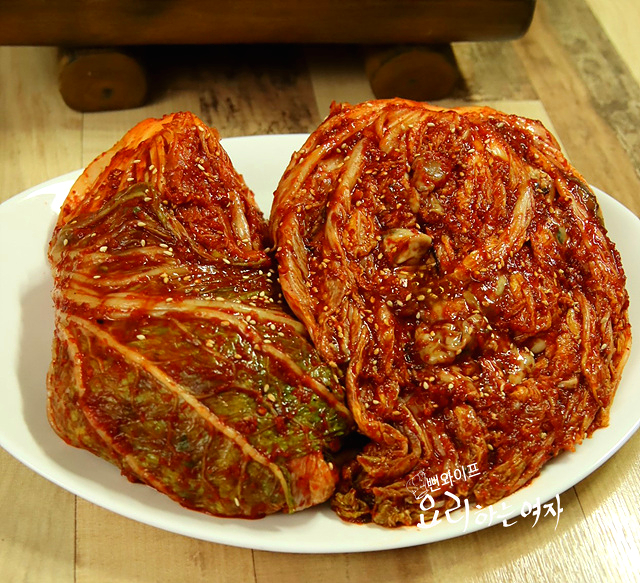
This gimjang kimchi skips julienned radish stuffing and blends radish and onion into the seasoning instead for a clean, refreshing flavor. A rich dried yellow pollack broth adds savory umami, making this kimchi wonderful for stews, stir-fries, and many other dishes.
- Servings
- about 10–12 servingsOriginal: 8 heads
- Difficulty
- Medium
- Spiciness
- Spicy
Ingredients
Ingredients
- Salted napa cabbage8 heads, 20 kg
Broth
- Dried yellow pollack (hwangtae)1 whole
- Dried soup anchovies40
- Dried kelp (dasima)5 pieces (10 cm square)
- White part of large green onion (daepa)4 stalks
- Water20 cups
Glutinous rice paste
- Broth10 cups
- Glutinous rice flour1 cup
Seasoning
- Gochugaru (Korean chili flakes)12 cups
- Salted fermented shrimp (saeujeot)2 cups
- Sand lance fish sauce (or dried anchovies)2 cups
- Minced garlic4 cups
- Minced ginger2/3 cup
- Grated onion3
- Grated Korean radish (mu)2 kg
- Green plum syrup (maesil-cheong)1/2 cup
- Sugar1/2 cup
- Toasted sesame seeds2 cups
- Black sesame seeds1/2 cup
- Rinse the salted napa cabbage under running water, drain for about 2 hours, and gently press the leaves with your hands to squeeze out excess moisture.
- Roast dried seafood like dried yellow pollack and dried soup anchovies in an air fryer or oven, or toast them in a dry pan, to remove rancid and fishy odors.
- You can use dried pollack (bugeo) instead of dried yellow pollack (hwangtae), and adding dried shrimp to the broth ingredients is also great.
Steps
Rinse and drain the salted napa cabbage
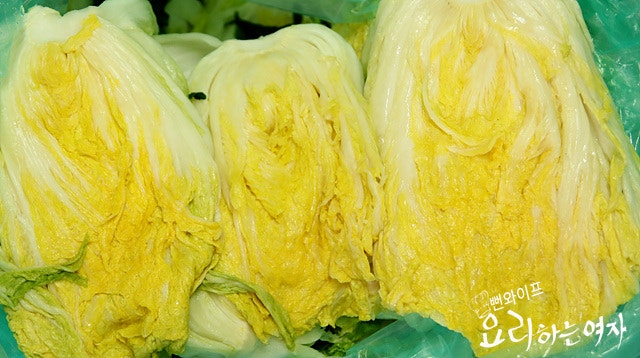
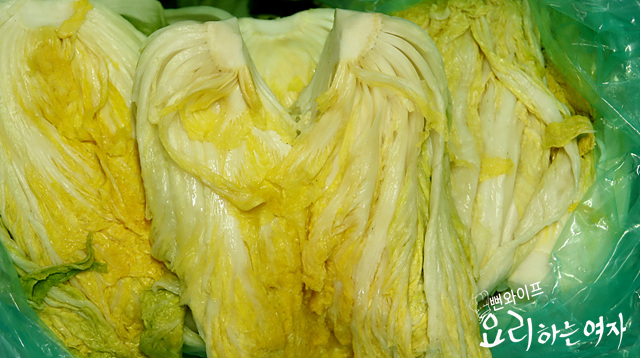
I have 20 kg of salted napa cabbage; it is salted just right and tastes sweet and savory, which I love.
Split any overly large heads in half so they are easier to coat with seasoning.
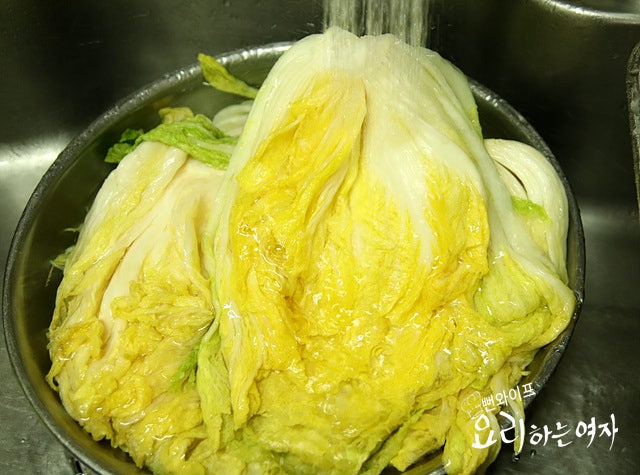
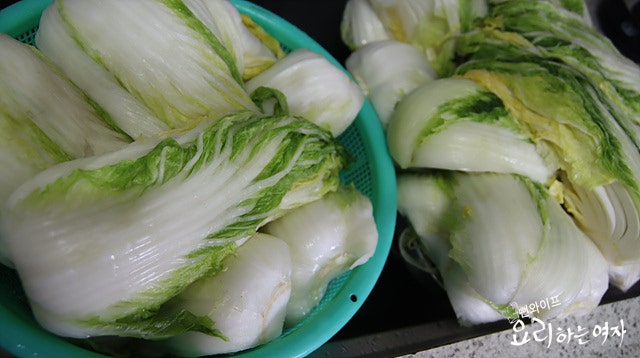
Because salted napa cabbage is delivered at room temperature over a couple of days, bacteria or E. coli can multiply by gimjang day.
Especially when the weather is as mild as autumn, bacteria can multiply and cause kimchi to turn soft, but washing it two or three times can reduce bacteria by more than 90%.
I washed each leaf thoroughly under running water, but only washed it once before draining.
Washing it too many times can wash away too much salt and make the cabbage stiff again.
I let it drain for about 2 hours and gently pressed the leaves with my hands to squeeze out the remaining moisture.
Make the kimchi broth
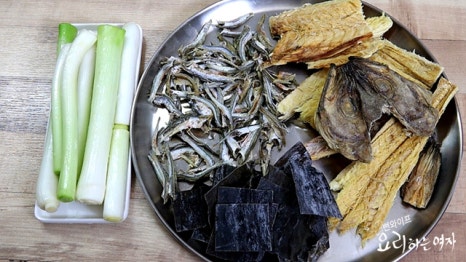
First, make the broth that is essential for gimjang. It needs to cool down so you can make glutinous rice paste with it.
I used the same broth ingredients as last year, just scaled down the amount.
Prepare 1 whole dried yellow pollack or bugeo, 40 dried soup anchovies with the guts removed, about 5 pieces of dried kelp (dasima) measuring 10 cm square, and 4 white stalks of large green onion (daepa).
Dried shrimp is also great for broth, so feel free to add some.
For dried seafood like dried yellow pollack and dried soup anchovies, roasting them crisp in an air fryer or oven removes rancid and fishy odors so you get a deep, savory broth. Toasting them in a dry pan works too.
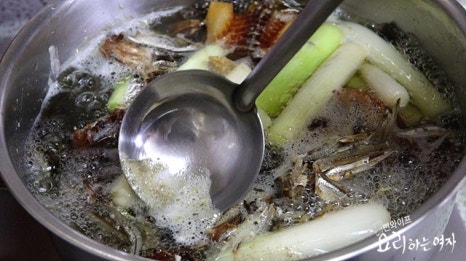
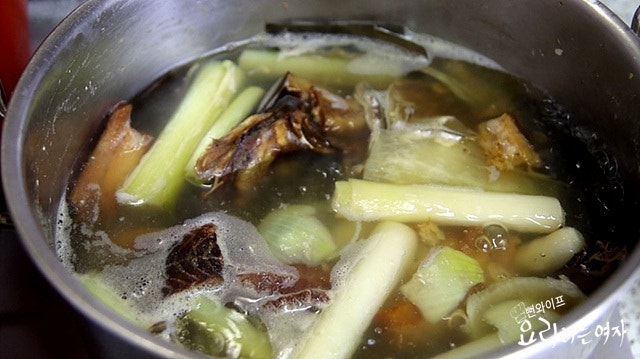
Pour in 20 cups of cold water, bring to a rolling boil, skim off the foam cleanly, and simmer gently for at least 30 minutes.
Once done, strain through a sieve, discard the solids, and collect the clear broth. You will get about 15 cups of broth.
Let it cool completely because you will use this broth to cook the glutinous rice flour.
Cook the glutinous rice paste
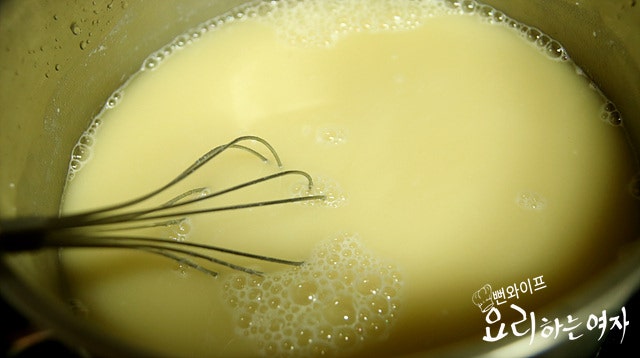
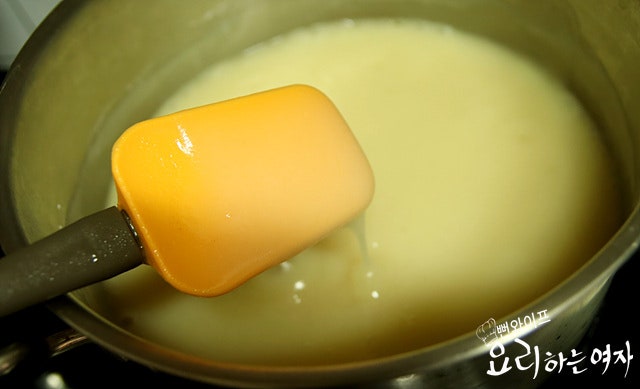
Once the broth you made above cools completely, pour 10 cups into a pot, add 1 cup of glutinous rice flour, and stir well so there are no lumps.
Cook over low heat until thick, stirring frequently all the way to the bottom so it does not scorch.
When it starts bubbling at the end, turn off the heat and let it cool.
Blend the radish and onion
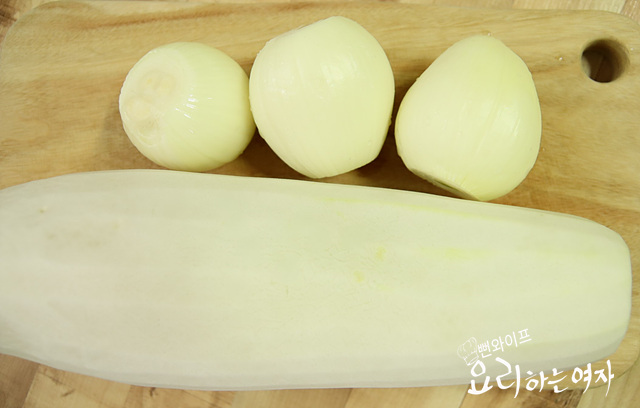
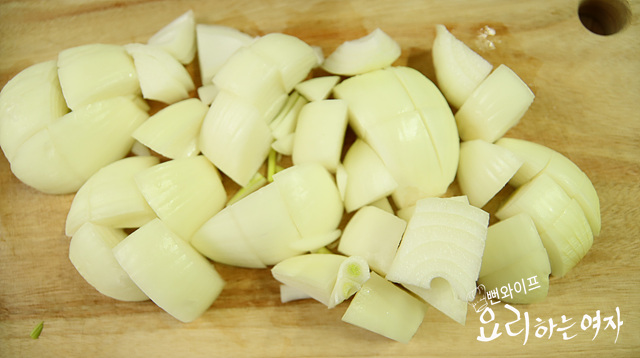
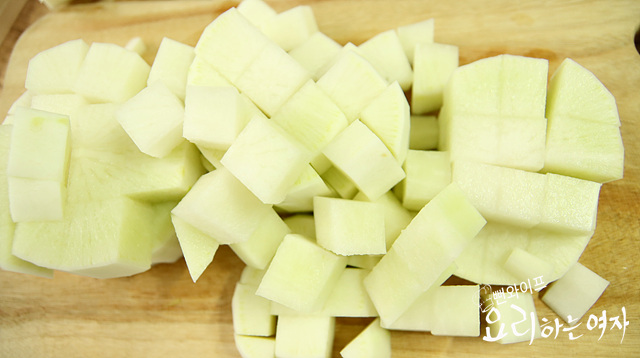
Since we are not adding julienned stuffing, we will blend the Korean radish (mu) and onion to add to the seasoning.
Chop the onion and radish into small pieces so they blend easily.
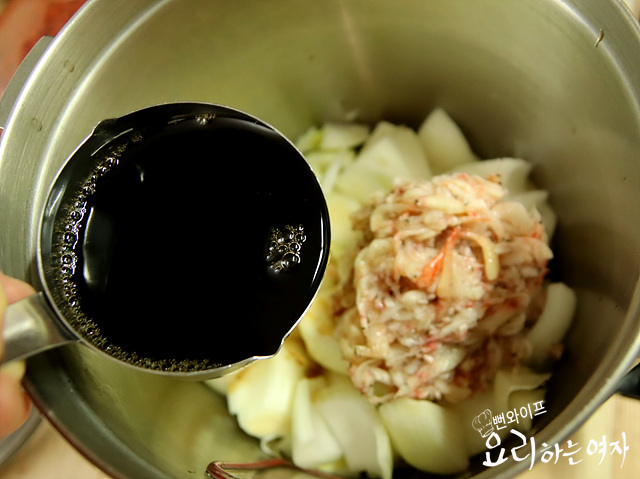
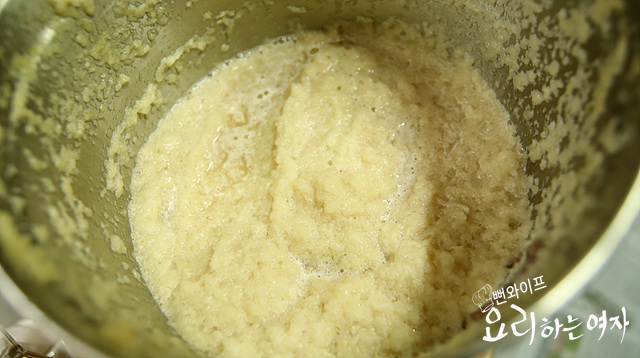
To help them blend smoothly, I blended them together with the 2 cups of sand lance fish sauce and 2 cups of salted fermented shrimp (saeujeot) that go into the kimchi seasoning.
Make the gimjang kimchi seasoning
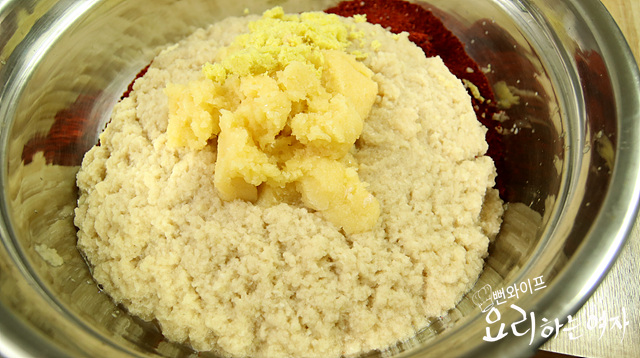
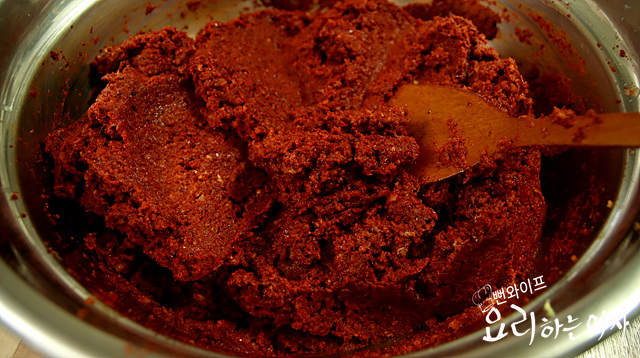
Now let's make the seasoning.
Pour the blended radish and onion over 12 cups of gochugaru (Korean chili flakes), add 4 cups of minced garlic and 2/3 cup of minced ginger, mix evenly, and let sit for about 30 minutes so the gochugaru blooms.
If you add the glutinous rice paste directly to dry gochugaru, it turns pale and thick and the red color takes too long to develop, so we will mix it in as a second step.
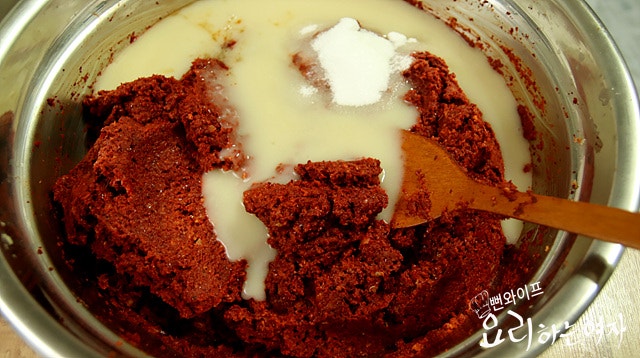
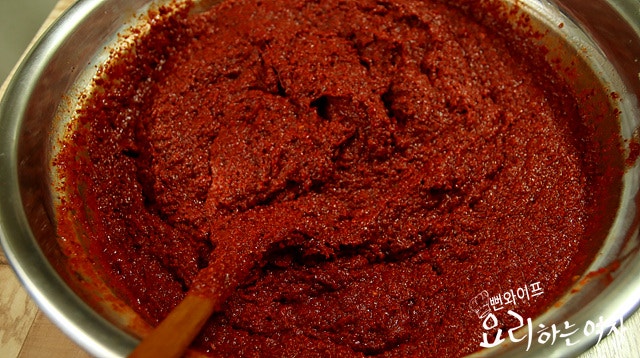
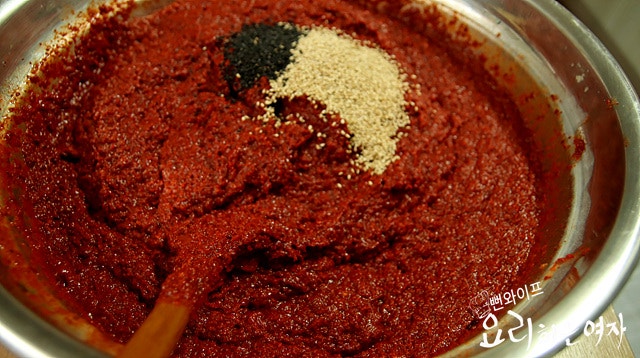
Add the glutinous rice paste, 1/2 cup of sugar, and 1/2 cup of green plum syrup (maesil-cheong), and mix everything well.
If the consistency feels too thick, adjust it by adding a little bit of the cooled broth you prepared earlier.
If you want to add traditional stuffing to your kimchi, you can mix in prepared scallions (jjokpa), julienned radish, and mustard greens now; however, since they release moisture, you should reduce the broth when making the glutinous rice paste so it stays thick. You can also omit the blended radish and onion juice.
Finish by mixing in toasted sesame seeds and black sesame seeds, and the kimchi seasoning is complete.
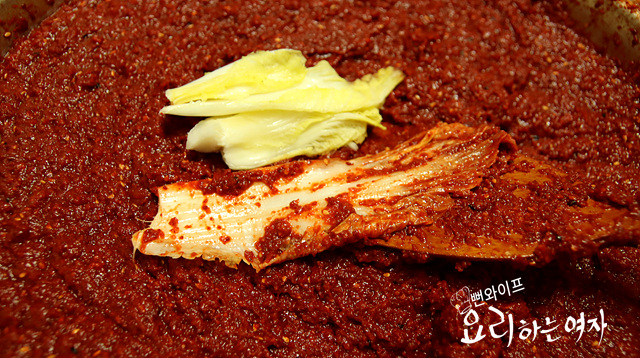
Tear off a piece of the drained inner cabbage leaf to taste the seasoning; if it is too bland, adjust with salt or salted fermented shrimp. Since gimjang kimchi must keep for a long time, make sure it is seasoned salty enough so it stays delicious until the very last bite.
Spread the kimchi seasoning
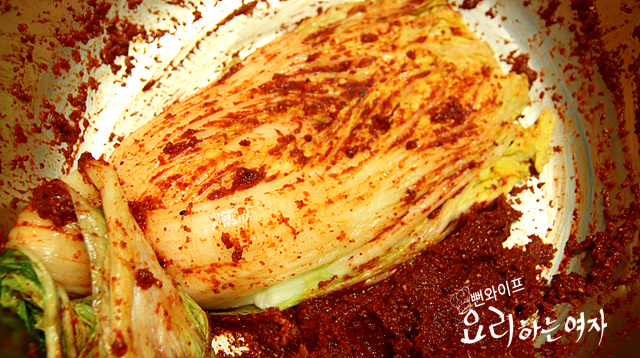
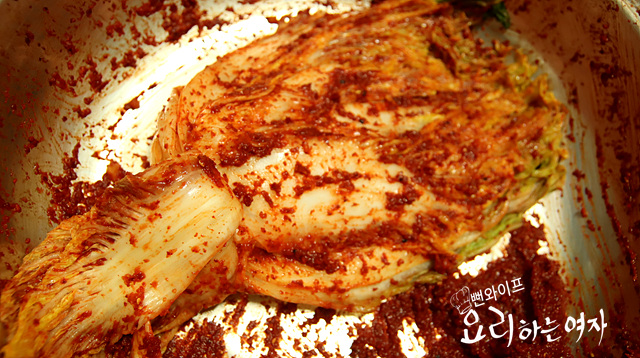
When applying the seasoning, lightly coat the outer surface, then flip it over and spread the seasoning evenly and generously on the inner leaves, putting more toward the thick stems.
If you get greedy and apply too much seasoning, the kimchi may turn too salty or you may run out of seasoning at the end, so portion it out and spread a moderate amount.
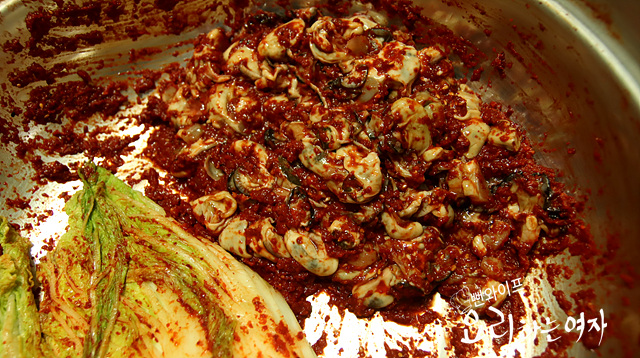
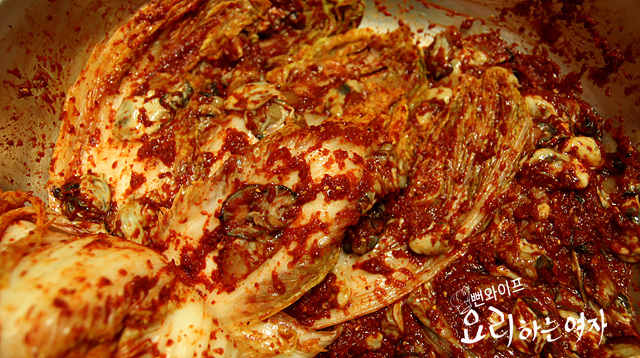
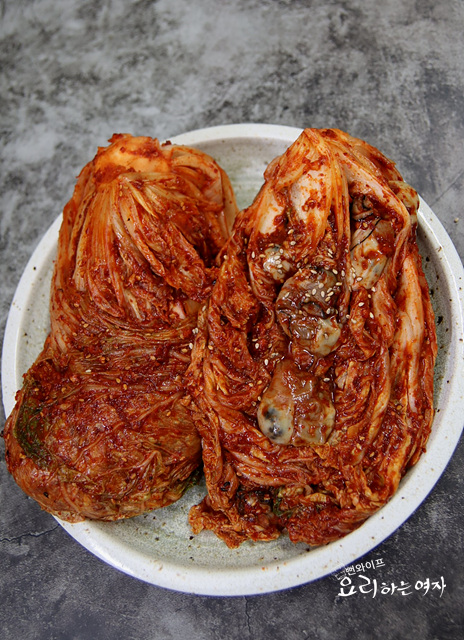
If you are adding raw oysters, toss bite-sized oysters in the seasoning and tuck them between the cabbage leaves.
It is best to apply oyster kimchi only to as much cabbage as you will eat fresh before it ferments.
After fermenting, it develops a strong, funky smell, so it is not suitable for long-term storage.
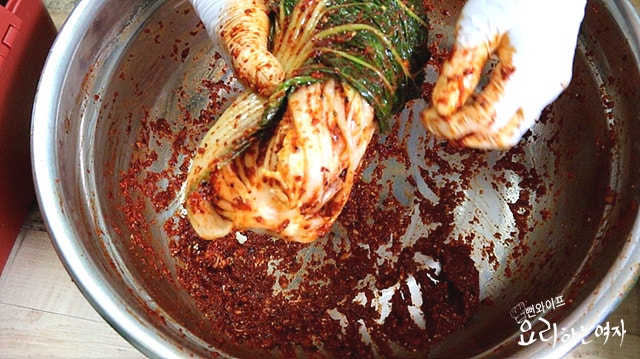
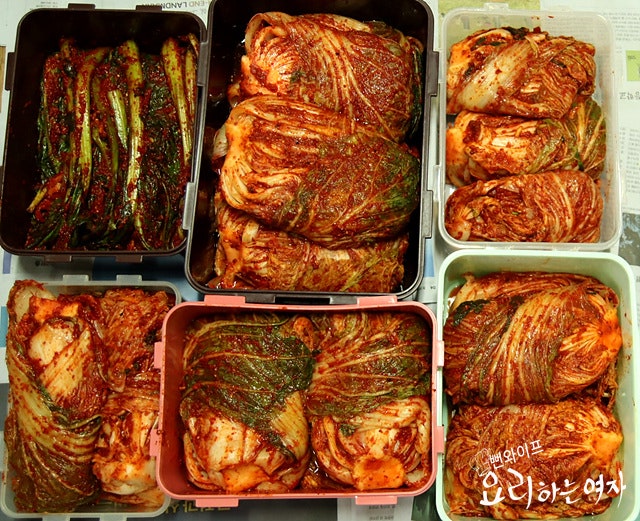
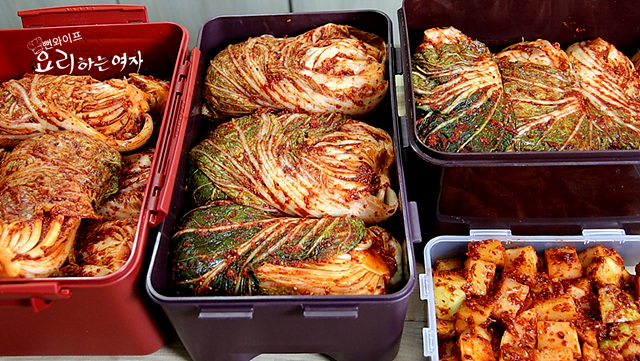
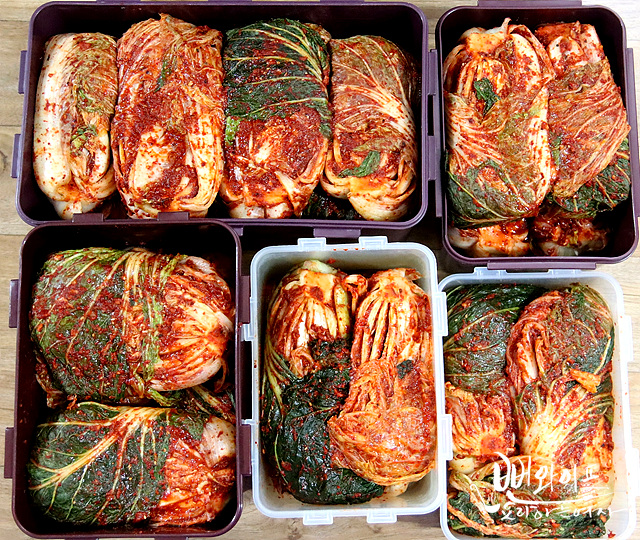
Wrap the cabbage neatly with the outer leaves and place it in a container.
If you save the outer green leaves of the salted napa cabbage, wipe down any leftover seasoning in the basin with them, and spread them over the kimchi, you can keep the surface moist during storage.
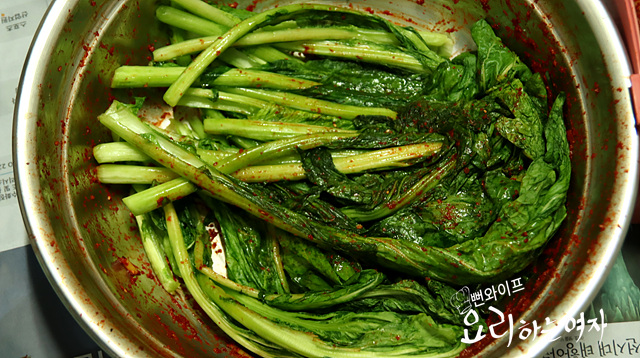
After making kimchi with 8 heads (20 kg) of salted napa cabbage, I had about 2 kg worth of seasoning left, so I tossed it with some salted mustard greens, using up every bit of the seasoning perfectly.
Finish
This year, I started with a mini gimjang using 20 kg of salted napa cabbage.
I measured the seasoning just right for this blog post, but if you make extra, you can easily use it to make scallion kimchi, mustard green kimchi, kkakdugi, or altari mu kimchi without having to do double the work.
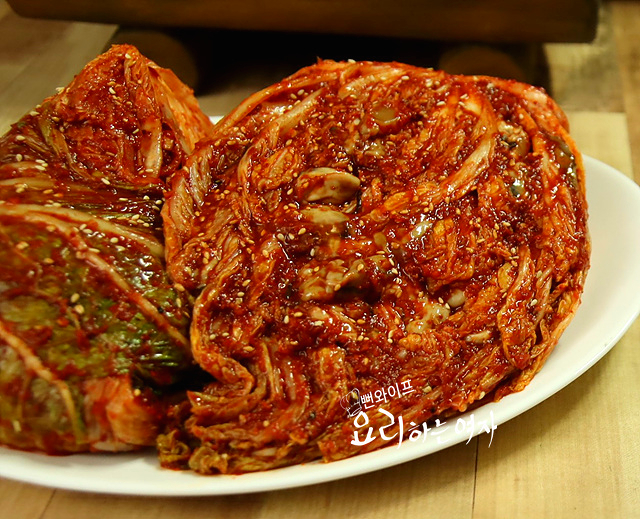
Instead of adding julienned stuffing, blending onion and radish and making a deep kimchi broth results in delicious napa cabbage kimchi that rivals any traditional gimjang.
Seasoned only with fish sauce and salted fermented shrimp, this is a clean Gyeongbuk-style kimchi.
It has been a while, and I really enjoyed eating proper kimchi.
I tried my best to make this easy for anyone who finds gimjang intimidating, and now that you have seen it, it is not so hard, right?
Try making it without stuffing first, and once you gain confidence, branch out and make your own delicious kimchi.
 Ppunwife's tips
- Rinsing salted napa cabbage two or three times is enough to reduce bacteria, but washing it too much washes away salt and makes the cabbage stiff again, so a light rinse under running water is best.
- If you mix glutinous rice paste directly into dry gochugaru from the start, the mixture turns pale and thick and the red color takes longer to bloom; mix the seasoning first to let the flakes hydrate, then fold in the glutinous rice paste in a second step.
- Because gimjang kimchi is stored and eaten over a long period, make sure it is seasoned salty enough so it stays delicious all the way through.
- Save the outer green leaves of the salted napa cabbage, wipe up the remaining seasoning in the bowl with them, and drape them over the kimchi in the container to keep it moist.
FAQ
Why do you rinse the salted napa cabbage only once?
Rinsing is necessary to reduce bacteria that may have grown during room-temperature delivery, but washing it too many times washes away the salt and can make the cabbage stiff again.
Why don't you mix the glutinous rice paste directly into the gochugaru right away?
Adding glutinous rice paste to dry gochugaru right away makes the paste pale and coats the flakes unevenly, preventing the rich red color from developing; soaking the gochugaru first in the blended radish and onion juice allows the color to bloom properly.
What should I keep in mind when adding raw oysters to gimjang kimchi?
Kimchi with oysters develops a strong, funky smell as it ferments and cannot be kept long-term, so it is best to mix oysters only into the portion you plan to eat fresh before it ripens.
Can I add traditional stuffing like julienned radish or mustard greens?
Yes, you can add stuffing, but because fresh vegetables release moisture, you should reduce the amount of broth when making the glutinous rice paste to keep the seasoning thick, and you may omit the blended radish and onion juice.