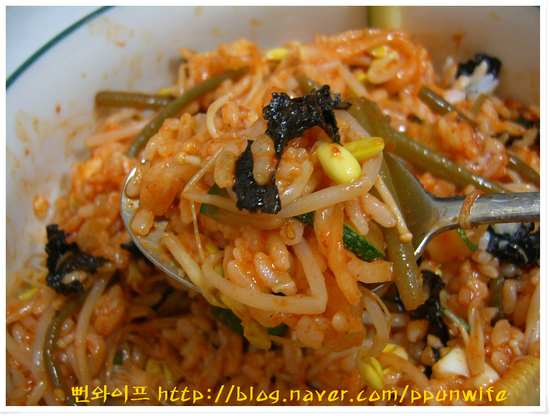
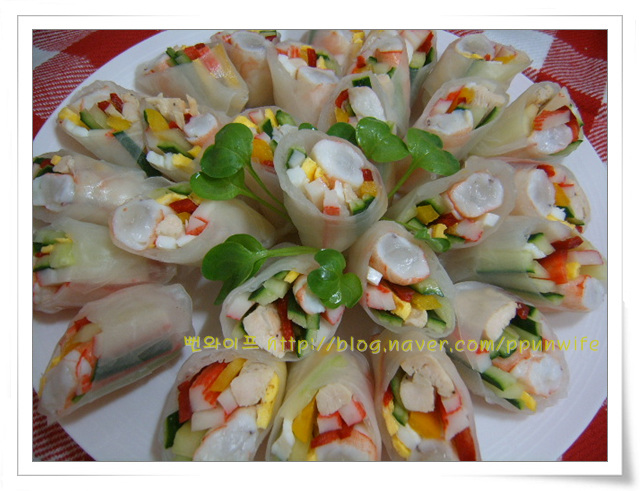
Buckwheat Crepes and Spring Rolls with Leftover Holiday Food
A special one-dish meal made by stir-frying leftover Chuseok japchae and seasoned namul until spicy, then rolling them up in buckwheat crepes and rice paper.
Translated from Korean by AI and not yet checked by a native speaker. Amounts and numbers are taken directly from the original recipe. Read the Korean original →
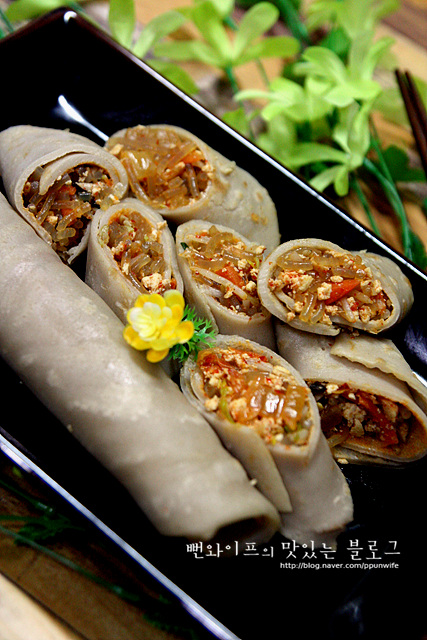
This special one-dish meal uses up leftover holiday japchae, seasoned namul, and tofu by stir-frying them with kimchi to make a flavorful filling. Using two different wrappers—a thin buckwheat batter and rice paper—you can enjoy contrasting tender and crispy textures. It is a wonderful way to repurpose already well-seasoned leftovers without letting anything go to waste.
- Servings
- about 2–3 servings
- Difficulty
- Hard
- Spiciness
- Mildly spicy
Ingredients
Ingredients
- Japchae (stir-fried glass noodles and vegetables)1 cup
- Seasoned mung bean sprouts1 cup
- Kimchi3 leaves
- Tofu1/3 block
- Rice paper7–8 sheets
Buckwheat batter (makes 4 to 5 crepes)
- Buckwheat flour1 cup (120 g)
- Water (or 1+1/3 cups)1.3 cups
- Soup soy sauce (guk-ganjang)1/2 tbsp
- You can adjust the filling ingredients to your liking. If you don't have leftover japchae, just boil sweet potato glass noodles (dangmyeon) and cook a little onion, meat, or other ingredients, then chop them finely.
Steps
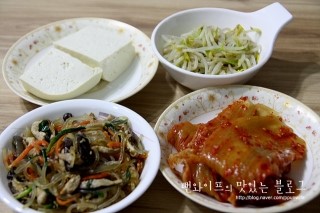
1. I used leftover japchae, seasoned mung bean sprouts, and tofu from the Chuseok holiday, so I didn't have to buy separate ingredients.
The japchae was lightly packed into a cup to make 1 cup. The mung bean sprouts were already seasoned, so I didn't add extra seasoning and simply squeezed out all the moisture; it went down from 1 cup to half a cup. Finely chop the japchae and mung bean sprouts.
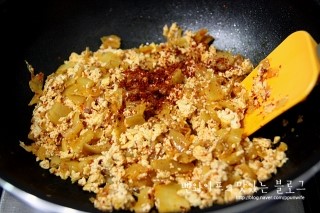
Put the tofu into a cheesecloth and twist it; the moisture will drain out and it will crumble nicely. Shake the stuffing out of the kimchi and chop it finely.
2. Stir-fry the crumbled tofu and finely chopped kimchi. If you are using aged sour kimchi, adding a little sugar will help balance out the sourness.
To give it a spicy kick, I added 1 tbsp of gochugaru (Korean chili flakes) and stir-fried it.
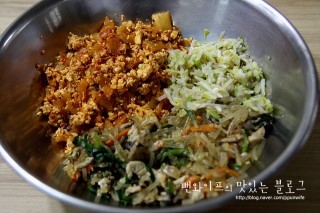
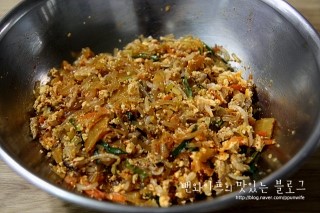
3. Add the stir-fried tofu, kimchi, japchae, and mung bean sprouts into a bowl.
You can adjust the filling ingredients to your liking. If you don't have japchae, just boil sweet potato glass noodles, cook a little onion, meat, or other ingredients, and chop them finely.
4. Mix the ingredients evenly. Except for the tofu, all the ingredients are already seasoned, so it will taste great without any extra seasoning.
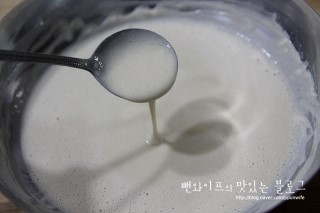
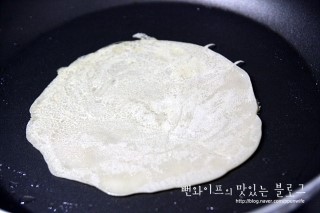
5. I used store-bought buckwheat flour made for pan-frying.
Buckwheat flour 1 cup (120 g), water 1.3 cups (= 1 1/3 cups), soup soy sauce (guk-ganjang) 1/2 tbsp
The batter needs to feel on the thinner, runnier side so it can be pan-fried thinly, making it easier to roll up with the filling inside.
6. Drizzle a little oil into a heated pan, ladle the batter in, and spread it out evenly into a thin, round crepe.
Pan-fry until lightly golden on both sides.
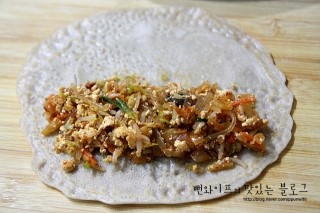
7. Place an appropriate amount of filling on top of the cooked buckwheat crepe and roll it up tightly while pressing gently.
Try to keep the filling away from the edges so it doesn't spill out the sides.
Spring rolls (makes 7 to 8)
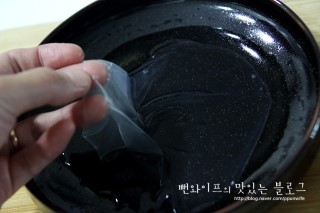
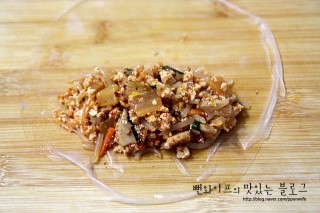
1. Now, we'll use the same filling above to make spring rolls.
Soak the rice paper in cold or lukewarm water to soften its stiffness.
If you dip it in hot water, it becomes way too limp, making it awkward to handle with your hands and troublesome to roll up with the filling inside.
2. Place an appropriate amount of filling onto the softened rice paper, then fold the front edge of the paper up over the filling...
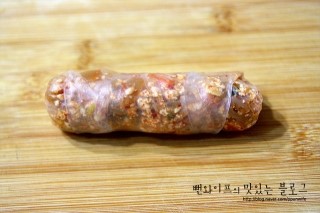
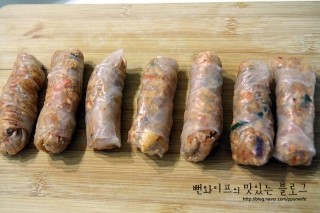
3. Pull both side edges inward and roll it forward tightly; it rolls up easily.
4. With the filling I prepared, I made 5 buckwheat crepes, and though it will vary depending on how much filling you use, you will get about 7 to 8 spring rolls.
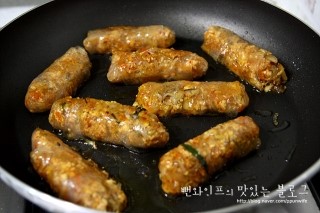
5. Drizzle a generous amount of oil in a heated pan, leave space between the rolls, and pan-fry until golden and crispy on both sides.
Because of the nature of rice paper, it is very sticky and adheres easily to other rolls. If they stick together before they are cooked, they won't separate, and trying to pull them apart will tear the skin and burst the filling.
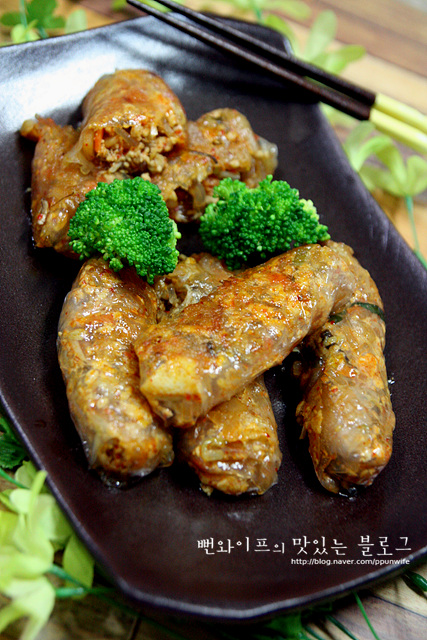
Leftover holiday food has been reborn into delicious spring rolls.
 Ppunwife's tips
- If you are using aged sour kimchi, adding a little sugar will help neutralize the sourness.
- The batter needs to feel on the thinner, runnier side so it can be pan-fried thinly, making it easier to roll up with the filling inside.
- Try to keep the filling away from the edges so it doesn't spill out the sides.
- Rice paper should be dipped in cold or lukewarm water. If you dip it in hot water, it becomes way too limp, making it hard to handle and difficult to roll up with the filling.
- Because rice paper is naturally very sticky, the rolls easily cling to one another. If they touch before they are cooked, they won't separate easily, and pulling them apart will tear the skin and cause the filling to burst out.
FAQ
How can I prepare the filling if I don't have leftover japchae?
Boil some sweet potato glass noodles, cook a small amount of onion, meat, or other ingredients, and chop them finely before mixing them in.
Why should I use cold or lukewarm water instead of hot water to soak the rice paper?
If you use hot water, the rice paper becomes overly limp and fragile, making it difficult to hold with your hands and awkward to roll up with the filling.
What should I keep in mind when pan-frying the rolled spring rolls?
Rice paper is very sticky, so if the rolls touch before they cook through, they will stick together and tear open when separated. Be sure to leave plenty of space between them in the pan.
What consistency should the buckwheat crepe batter be?
Keep the batter on the thinner, runnier side so that it spreads easily into a thin crepe in the pan, which also makes it much easier to roll up with the filling.