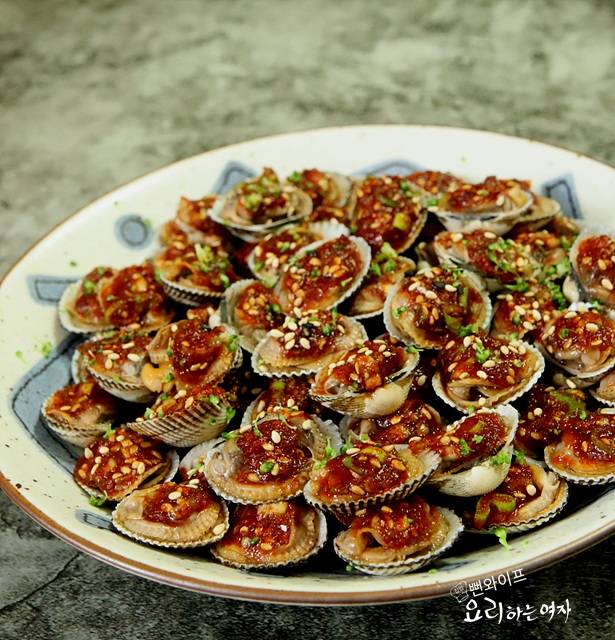
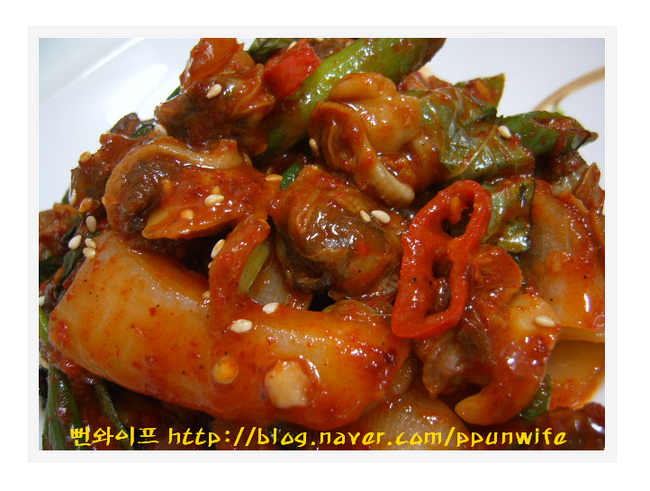
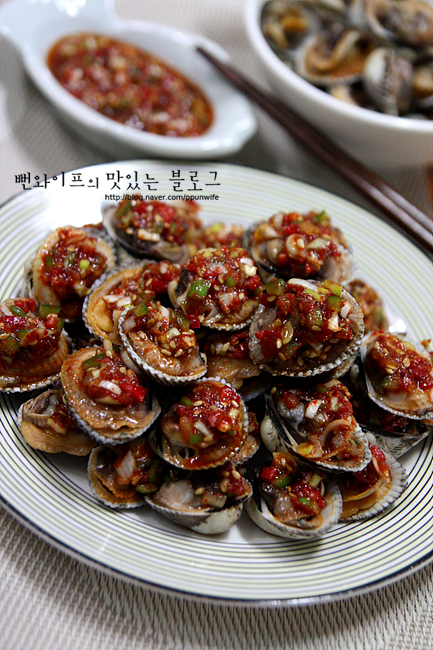
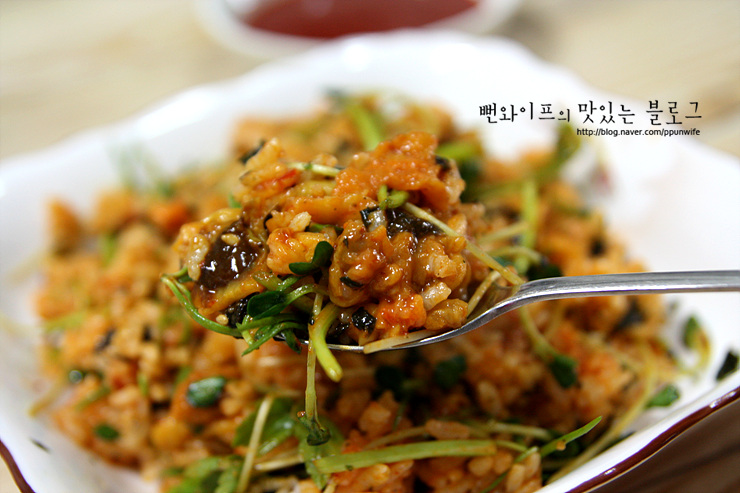
Chewy and Nutty Kkomak Bibimbap (Cockle Bibimbap)
A special one-bowl dish of boiled blood cockles tossed in soy sauce seasoning and mixed with cooked rice and seaweed flakes.
Translated from Korean by AI and not yet checked by a native speaker. Amounts and numbers are taken directly from the original recipe. Read the Korean original →
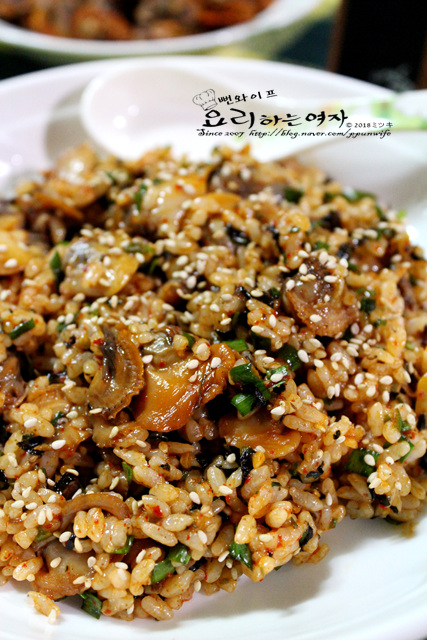
This is a special dish where seasonal blood cockles are boiled just right, tossed in a special soy seasoning, and mixed with cooked rice. Adding a bit of the clear cockle boiling liquid to the seasoning sauce brings out even deeper umami. Depending on your preference, adding garlic chives or vegetables provides rich aroma and crunchy texture.
- Servings
- 4 servings
- Difficulty
- Hard
- Spiciness
- Mildly spicy
Ingredients
Ingredients
- Blood cockles1 kg
- Cooked rice2 bowls
- Seaweed flakesas needed
Seasoning
- Regular soy sauce (jin-ganjang)2 tbsp
- Soup soy sauce (guk-ganjang) (or soup soy sauce (guk-ganjang))1 tbsp
- Gochugaru (Korean chili flakes)1 tbsp
- Minced garlic1/2 tbsp
- Minced green onion2 tbsp
- Minced chili pepper (or cheongyang chili pepper (hot green chili))2 tbsp
- Mirin (cooking rice wine)1 tbsp
- Corn syrup (mulyeot)1 tbsp
- Cockle broth (or or water)2 tbsp
- Toasted sesame oil1 tbsp
- Perilla oil1 tbsp
- Toasted sesame seeds
Purging
- Water5 cups
- Coarse sea salt3 tbsp
- The amount of saltwater just needs to be enough to submerge the blood cockles or clams, and leave them covered or in a dark, cool place for about 3 to 4 hours. In hot summer weather, place them in the refrigerator.
- Be sure to discard blood cockles with broken shells. They are dead and can transfer bacteria that cause food poisoning to the other cockles.
- If you do not like spicy food, leave out the chili peppers or reduce the amount of gochugaru (Korean chili flakes).
Steps
Be sure to discard blood cockles with broken shells. They are dead and can transfer bacteria that cause food poisoning to the other cockles. Give them a light rinse in water once, then purge them. Blood cockles and clams dug from mudflats must be purged to remove grit and foreign matter when chewing. The way to purge them is to create an environment similar to the seashore where the shellfish live, which makes them breathe and spit out the grit. For 5 cups of water, add 3 tbsp coarse sea salt, stir until dissolved, then add the clams. The amount of saltwater just needs to be enough to submerge the cockles or clams, and leave them covered or in a dark, cool place for about 3 to 4 hours. In hot summer weather, place them in the refrigerator. Drain the saltwater from the purged cockles; since a lot of mud and foreign matter released during purging clings to the surface, you need to clean them thoroughly. Hold a handful of cockles in each hand and rub them together vigorously to scrub away the debris stuck to the shells.
Pour in water, rinse the cockles, discard the water, scrub again, and rinse; repeat 6 to 7 times until the water runs clear. Drain roughly in a colander, and then...
Place the cockles in a pot and pour in just enough water so they are barely submerged.
Start boiling over high heat, skimming off any foam that rises first.
When the water boils and the cockles begin to open their shells, stir them around with a spoon and boil for only about 1 minute. Even if not all the cockles have opened, the meat inside is fully cooked. If you boil them too long, the meat becomes tough and tasteless, and all the juices drain into the broth.
Strain through a colander to catch the broth; let it settle briefly and use just 2 to 3 tbsp of the clear upper broth in the seasoning sauce for much better flavor and umami.
For cockles that haven't opened, place a spoon against the indentation on the back hinge and twist clockwise, and they will pop right open.
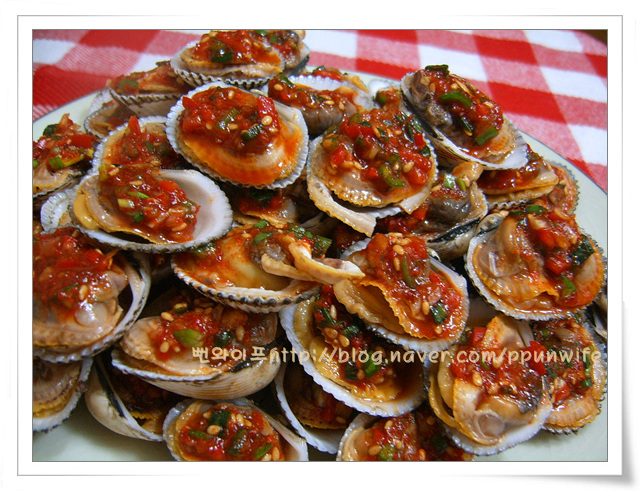
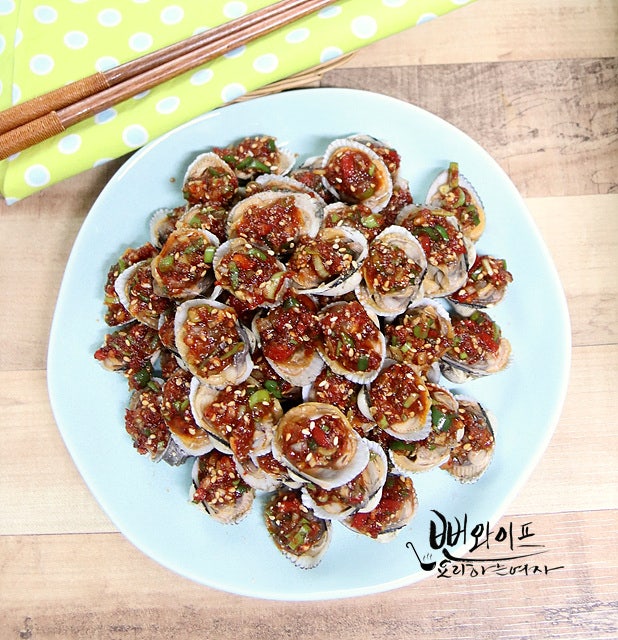
For steamed cockles usually eaten as a side dish drizzled with seasoning sauce, remove only one side of the shell. There may be mud or sand inside the cockle meat or shell, so ladle out only the clear upper broth from step 6 and rinse away any messy bits by gently wiping with your hands in this broth.
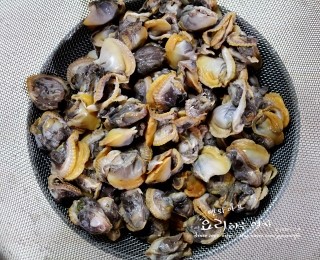
We are going to shuck only the cockle meat, toss it in the seasoning, and mix it with rice. Drain in a colander to remove moisture.
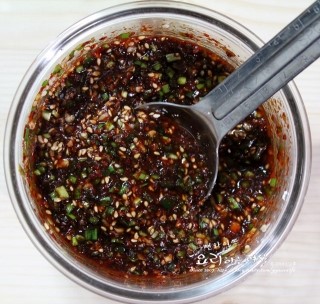
Add all seasoning sauce ingredients and mix together. If you do not like spicy food, leave out the chili peppers or reduce the amount of gochugaru (Korean chili flakes).
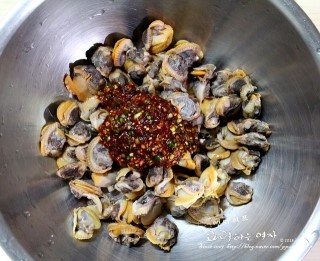
Add the cockle meat and the seasoning sauce...
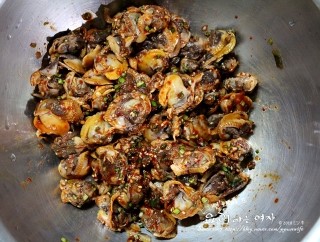
Mix evenly, and it is finished.
 Ppunwife's tips
- When the water boils and the cockles begin to open their shells, stir them around with a spoon and boil for only about 1 minute. Even if not all the cockles have opened, the meat inside is fully cooked. If you boil them too long, the meat becomes tough and tasteless, and all the juices drain into the broth.
- Strain through a colander to catch the broth; let it settle briefly and use just 2 to 3 tbsp of the clear upper broth in the seasoning sauce for much better flavor and umami.
- For cockles that haven't opened, place a spoon against the indentation on the back hinge and twist clockwise, and they will pop right open.
FAQ
Not all of the cockles have opened their shells. Should I keep boiling them?
Once the water boils and they begin opening, just stir and boil for about 1 minute. Even if all the cockle shells haven't opened, the insides are cooked; boiling too long will make the meat tough and drain out the savory juices, spoiling the flavor.
How do I open cockles that stayed closed after boiling?
Place a spoon against the indentation at the back hinge of the cockle and gently twist clockwise to pry it open easily.
How do I adjust the seasoning if I cannot eat spicy food well?
If the spice is too much for you, simply leave out the chili peppers from the seasoning sauce or reduce the amount of gochugaru (Korean chili flakes).