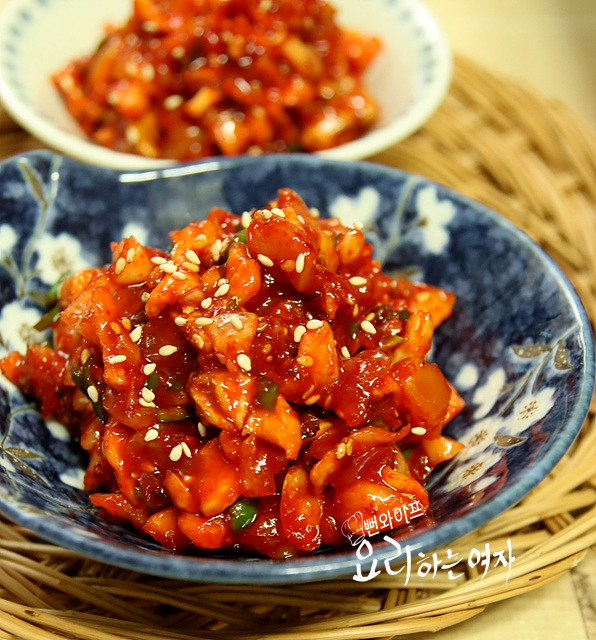
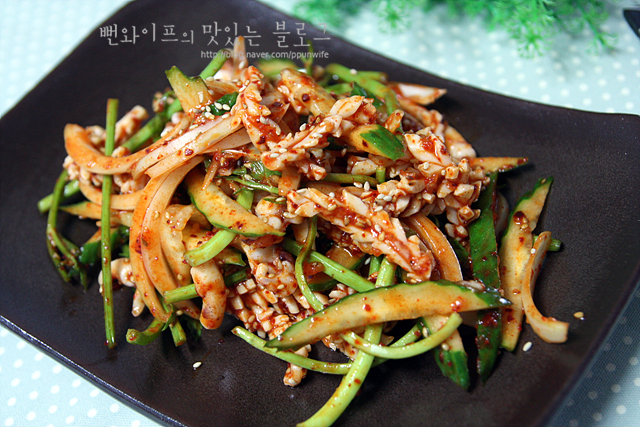
Chungmu Kimbap (Plain Mini Seaweed Rice Rolls)
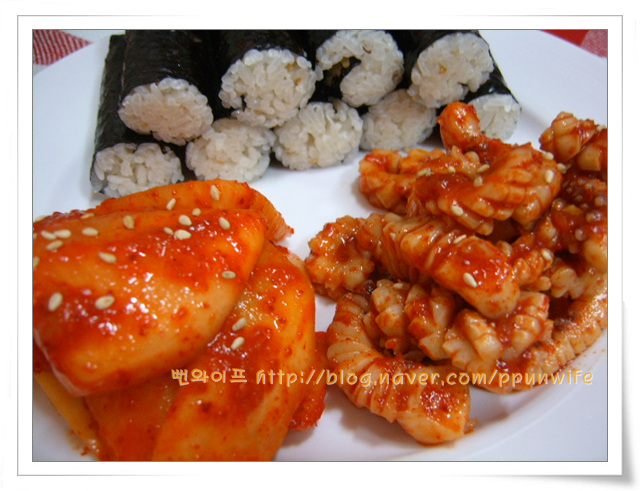
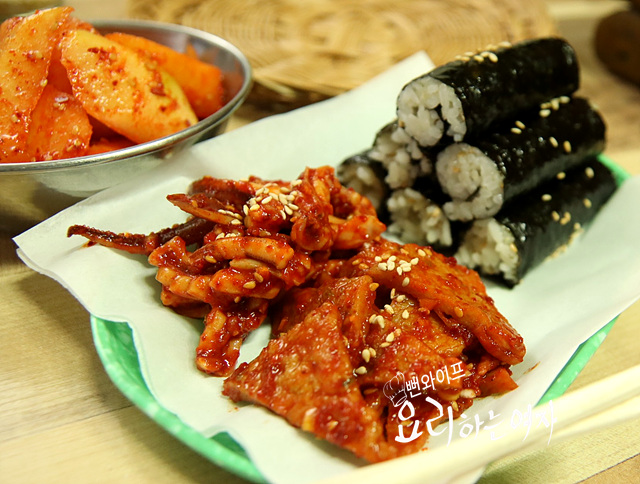
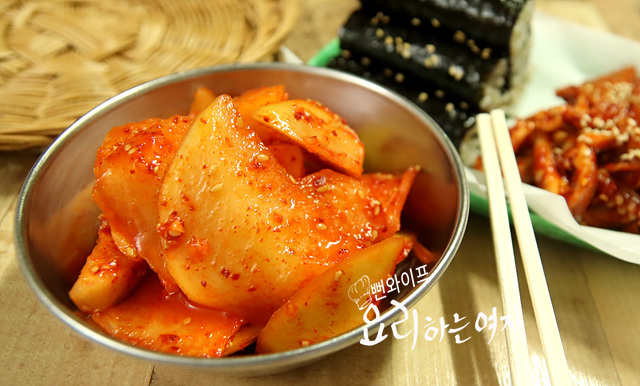
Chungmu kimbap served alongside sweet-and-sour radish kimchi and spicy seasoned squid tossed with dried radish strips.
Translated from Korean by AI and not yet checked by a native speaker. Amounts and numbers are taken directly from the original recipe. Read the Korean original →
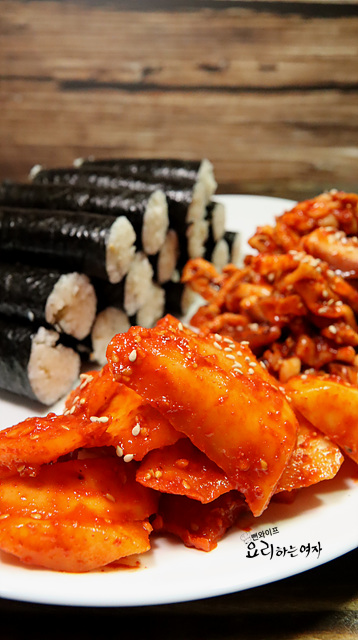
This Chungmu kimbap recipe serves 2 to 3 people and is served alongside radish kimchi and seasoned squid. Instead of fish cake, soaked dried radish strips are added to the seasoned squid to give it a delightfully chewy crunch. The seasoned freshly cooked rice wrapped in seaweed pairs harmoniously with the spicy side dishes.
- Servings
- 2–3 servings
- Difficulty
- Hard
- Spiciness
- Spicy
Ingredients
Ingredients
- Korean radish (mu)1/2, 800 g (large)
- Squid1 whole (large)
- Dried radish strips (mumallaengi)1 cup
- Gimbap dried seaweed sheets (gim)5 sheets
Rice
- White rice3 cups
- Water3 cups
- Dried kelp (dasima)1 piece (5 cm square)
Rice seasoning
- Salt1 tsp
- Toasted sesame oil1 tbsp
- Toasted sesame seeds1 tbsp
Radish pickling
- Coarse sea salt1 1/2 tbsp
- Vinegar4 tbsp
- Sugar4 tbsp
Radish seasoning
- Gochugaru (Korean chili flakes)4 tbsp
- Sand lance (or anchovy fish sauce)1 tbsp
- Minced garlic1 tbsp
- Minced ginger1/2 tsp
- Toasted sesame seeds1 tbsp
Squid seasoning
- Gochugaru (Korean chili flakes)3 tbsp
- Regular soy sauce (jin-ganjang)1 tbsp
- Corn syrup (mulyeot)2 tbsp
- Sand lance (or dried anchovies)2 tbsp
- Vinegar2 tbsp
- Sugar1/2 tbsp
- Minced garlic1 tbsp
- Toasted sesame oil1/2 tbsp
- Toasted sesame seeds1 tbsp
- Toss the radish with coarse sea salt, vinegar, and sugar, and pickle it for about 2 hours.
- Combine the rice with water and dried kelp, let it soak for 30 minutes, and then cook the rice.
- Soak the dried radish strips in cold water for 30 minutes, then squeeze out the moisture.
- Prepare the squid seasoning 30 minutes ahead so the flavors meld and the gochugaru blooms into a vibrant color.
- The radish kimchi tastes much better if you eat it after letting it mature at room temperature for a day or two.
Steps
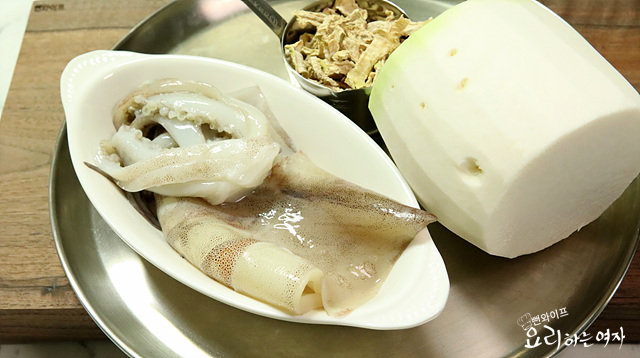
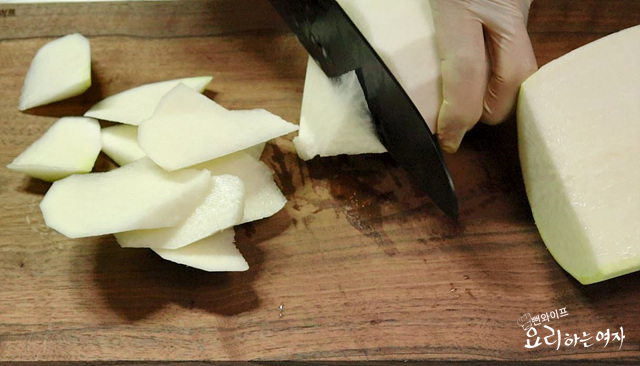
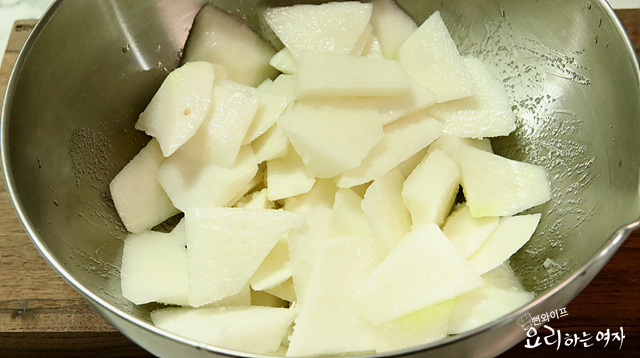
I cut the radish by whittling it as if sharpening a pencil.
You can also slice it into slightly thick flat squares.
Add 1 1/2 tbsp coarse sea salt, 4 tbsp vinegar, and 4 tbsp sugar, mix thoroughly, and pickle for about 2 hours.
Toss it around occasionally while it pickles.
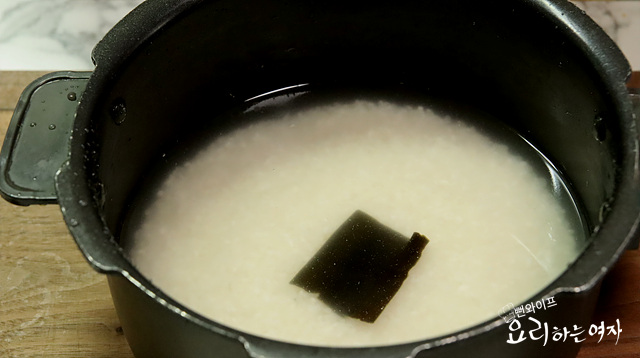
Wash 3 cups of uncooked white rice, pour it into the rice cooker, add 3 cups of water and 1 piece of dried kelp, let it soak for 30 minutes, and then cook the rice.
A 1:1 ratio of rice to water will give you slightly firm rice that is perfect for making kimbap.
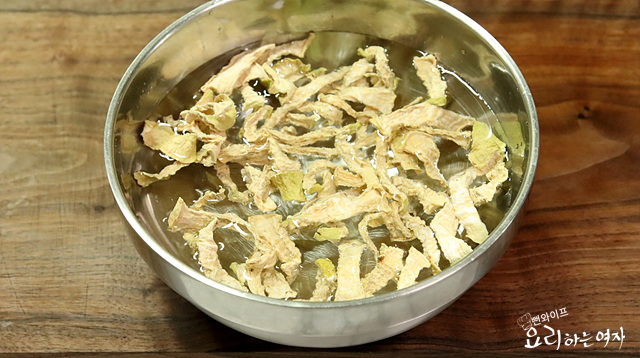
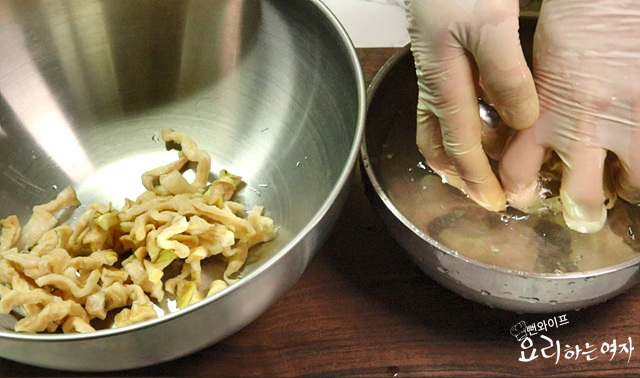
For the dried radish strips that will go into the squid salad, soak them in cold water for 30 minutes, then squeeze out the excess moisture.
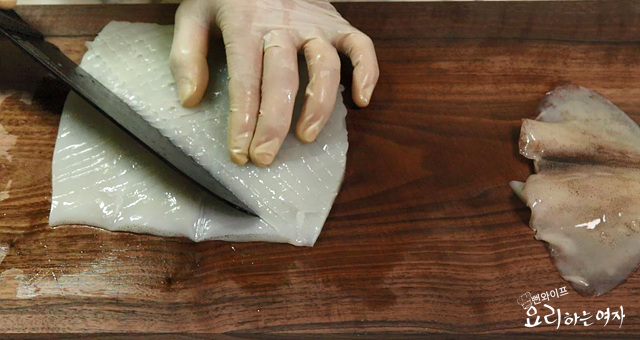
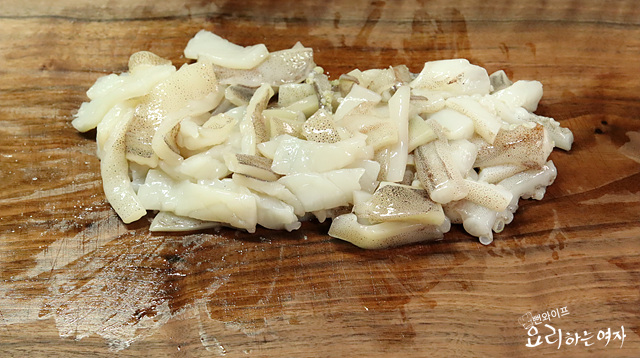
Score a diamond pattern on the inside of the squid body only, and cut the tentacles and fins into bite-sized pieces.
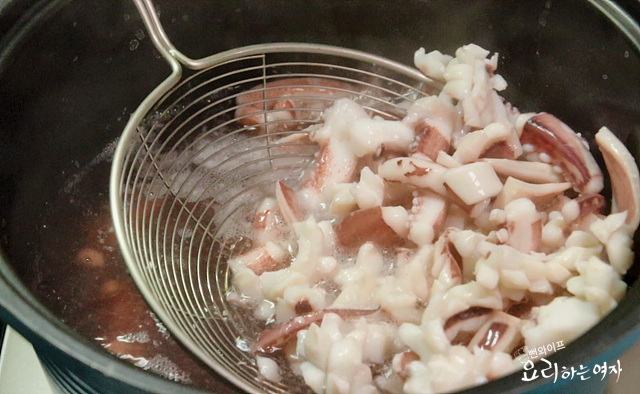
Add the squid to rolling boiling water, blanch for about 30 seconds, then rinse in cold water and drain well.
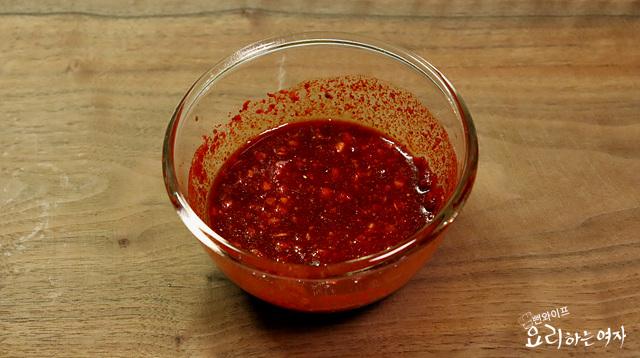
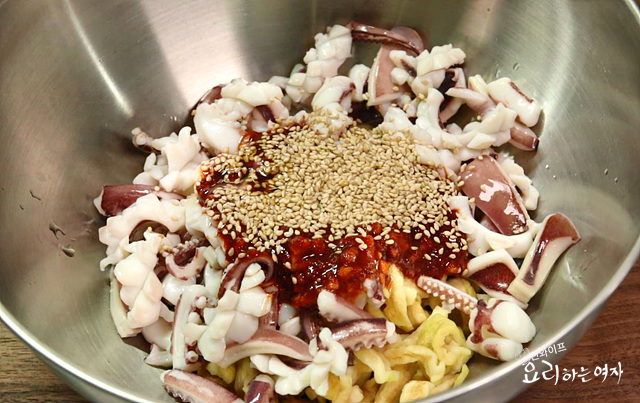
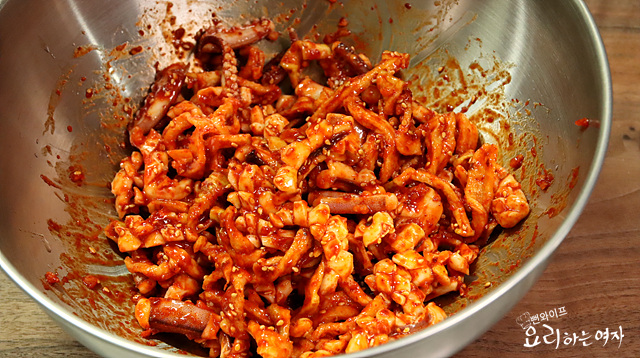
Mix all the squid seasoning ingredients: 3 tbsp gochugaru, 1 tbsp regular soy sauce, 2 tbsp corn syrup, 2 tbsp sand lance fish sauce (or anchovy fish sauce), 2 tbsp vinegar, 1/2 tbsp sugar, and 1 tbsp minced garlic. Make this 30 minutes in advance so the flavors meld and the color of the gochugaru blooms nicely.
In a bowl, add the soaked dried radish strips, blanched squid, and the prepared sauce, then sprinkle with 1/2 tbsp toasted sesame oil and 1 tbsp toasted sesame seeds, and toss gently with your hands.
Taste it, and if it is too bland, add more soy sauce or fish sauce.
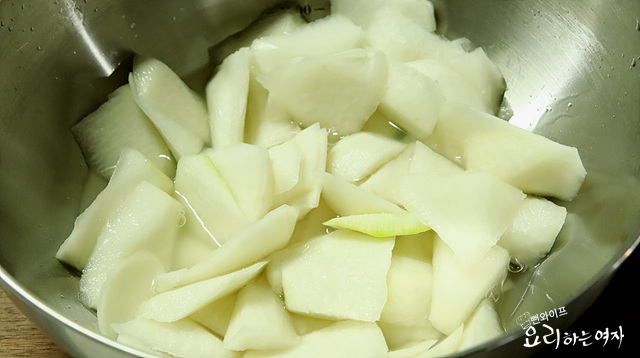
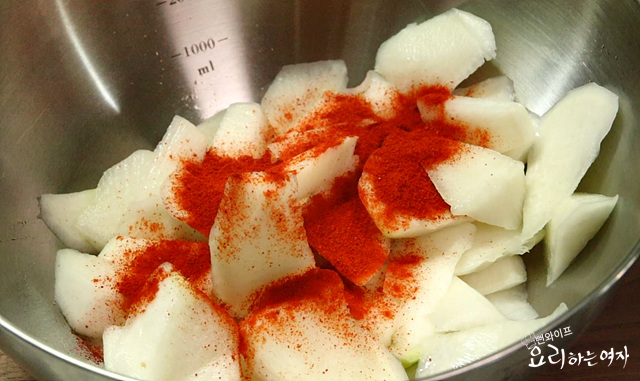
Once the radish has become tender and pickled, drain it in a colander to remove the liquid.
Add the gochugaru, mix well, and let it sit for about 30 minutes so the color stains the radish nicely.
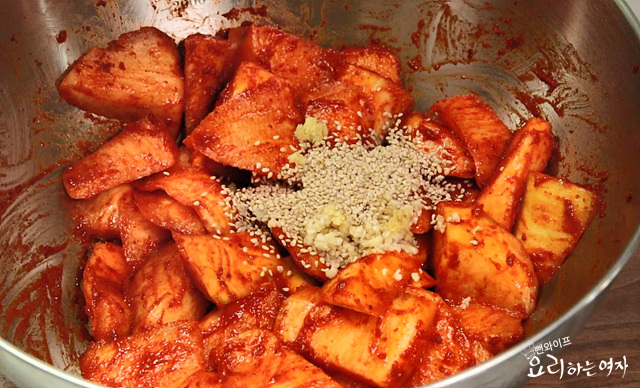
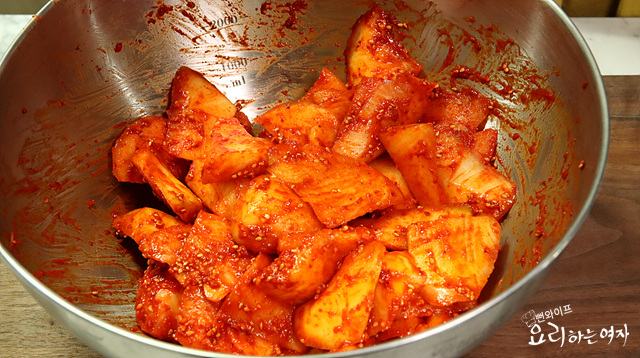
Add all the radish kimchi seasoning ingredients: 1 tbsp sand lance fish sauce (or anchovy fish sauce), 1 tbsp minced garlic, 1/2 tsp minced ginger, and 1 tbsp toasted sesame seeds. Toss thoroughly, and the radish kimchi is complete.
If it is bland, add more salt, and adjust the vinegar or sugar to your taste.
To give the radish kimchi a lovely color, use half coarse gochugaru and half fine gochugaru.
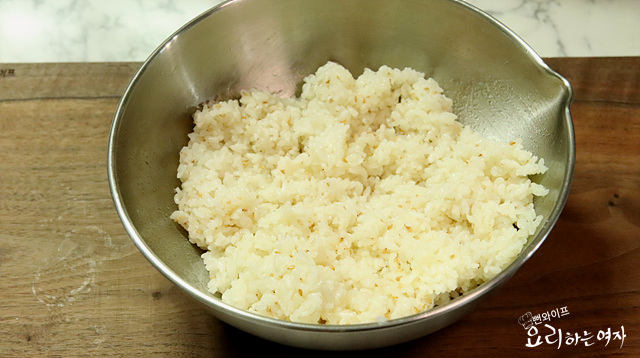
When the rice is done, mix it evenly with salt, toasted sesame oil, and toasted sesame seeds while it is still warm.
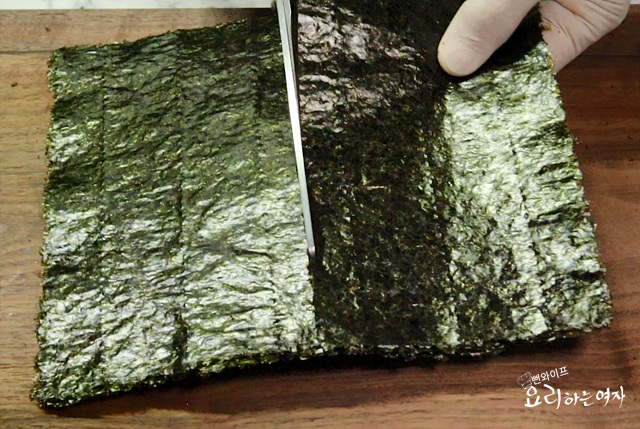
Cut the dried seaweed sheets in half, and then...
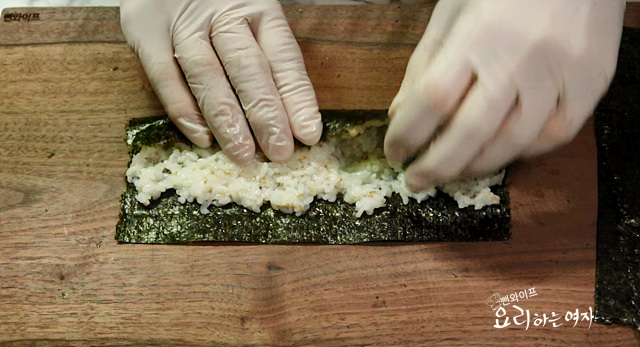
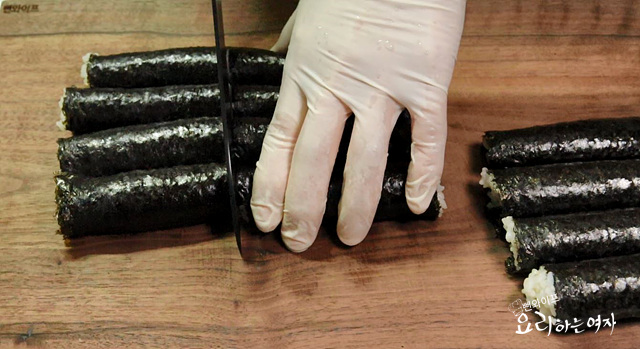
Spread the rice thinly and evenly over the seaweed, roll it up tightly, and cut it into 2 or 3 pieces according to your desired size.
 Ppunwife's tips
- To give the radish kimchi a lovely color, use half coarse gochugaru and half fine gochugaru.
- The radish kimchi tastes much better if you eat it after letting it mature at room temperature for a day or two.
FAQ
Why do you add dried radish strips to the seasoned squid?
Using soaked dried radish strips instead of fish cakes gives it a wonderfully chewy texture and great crunch.
Can I eat the radish kimchi right away?
You can enjoy a much deeper flavor if you eat it after letting it mature at room temperature for about a day or two.
What is the water ratio for cooking rice for kimbap?
Maintain a 1:1 ratio of washed rice to water, soak for 30 minutes, and cook; this yields slightly firm rice that is ideal for rolling kimbap.