Crisp and Tangy Mu Kimchi (Radish Kimchi)
Chungmu gimbap-style mu kimchi made by pickling radish in sweet and tangy seasonings, tossing it in a fish sauce dressing, and letting it ferment for a day.
Translated from Korean by AI and not yet checked by a native speaker. Amounts and numbers are taken directly from the original recipe. Read the Korean original →
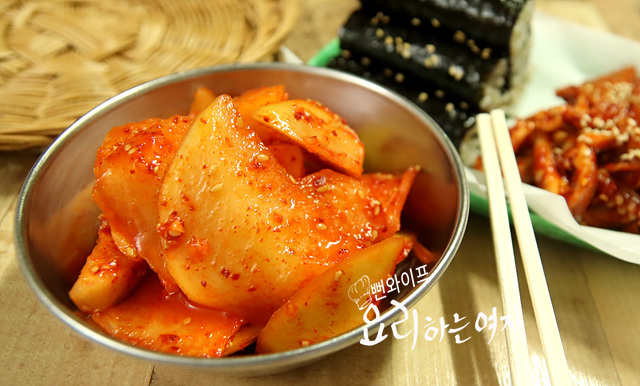
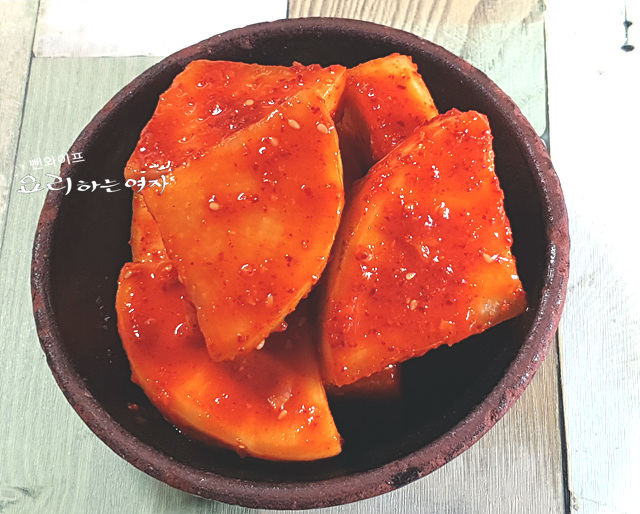
Radish is pared into jagged chunks like sharpening a pencil, pickled in salt, sugar, and vinegar, and tossed with essential seasonings. After fermenting at room temperature for about a day, it develops a refreshingly tangy and fizzy kick like cider. It goes wonderfully with gimbap or as seokbakji alongside hot soups and rice.
- Servings
- about 6–8 servings
- Difficulty
- Easy
- Spiciness
- Mildly spicy
Ingredients
Ingredients
- Korean radish (mu)900 g
- Sugar4 tbsp
- Vinegar4 tbsp
- Salt1 1/2 tbsp
Seasoning
- Gochugaru (Korean chili flakes)2 tbsp
- Minced garlic1 tbsp
- Sand lance fish sauce (or dried anchovies)2 tbsp
- Sugar1 tbsp
- Toasted sesame seeds
- Pickle the radish for at least 1 hour.
Steps
Prepare the ingredients
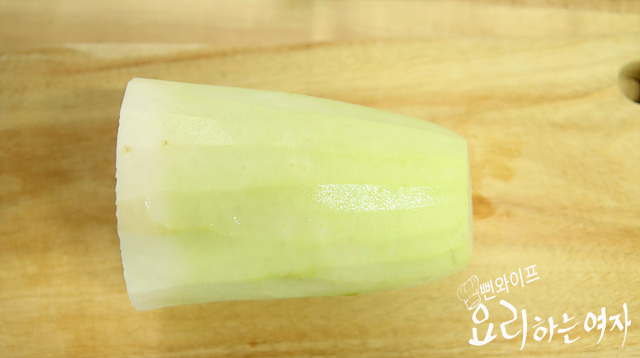
Use half of a medium Korean radish (900g).
Cut the radish
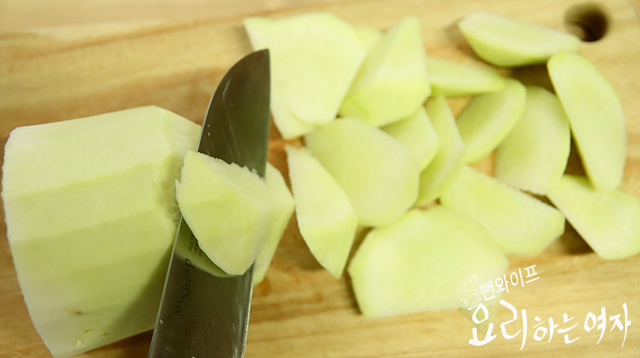
Rotate the radish as you cut it into irregular chunks like sharpening a pencil, giving it the shape of seokbakji.
Pickle the radish
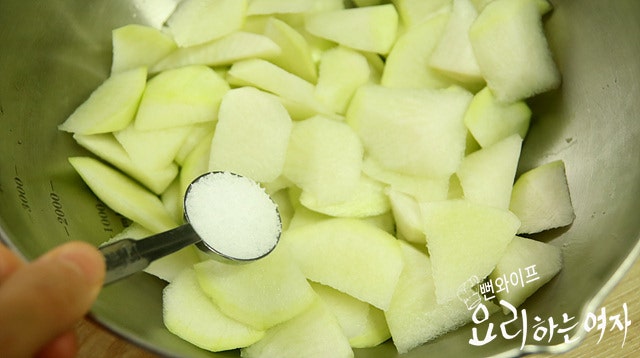
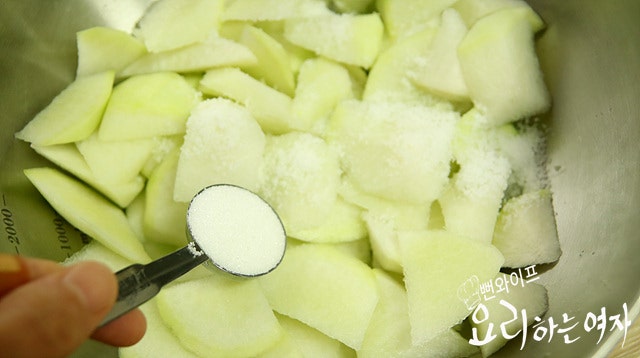
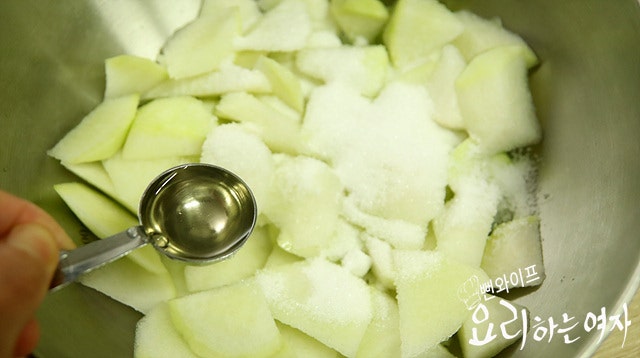
Place the radish in a bowl and mix thoroughly with 1 1/2 tbsp salt, 4 tbsp sugar, and 4 tbsp vinegar.
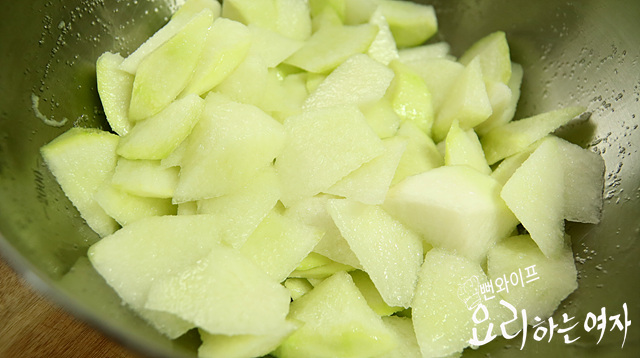
Pickle for at least 1 hour, tossing once halfway through.
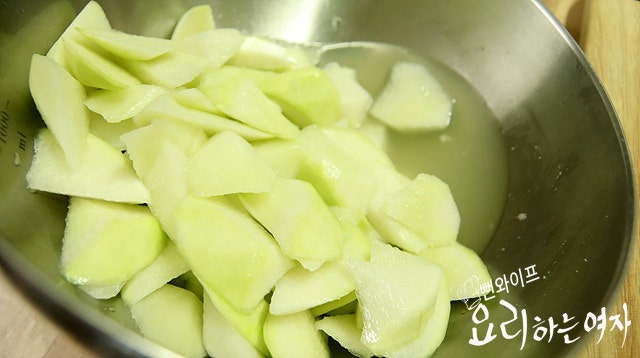
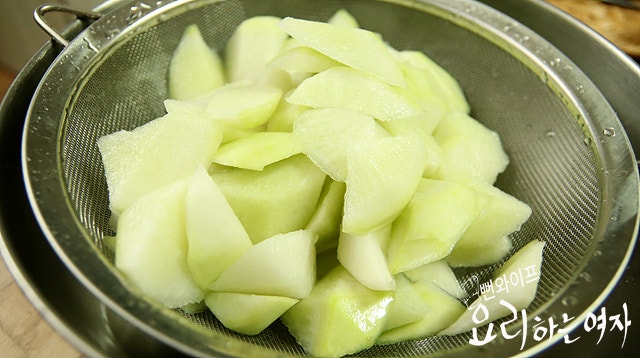
Pour off the liquid released from the radish and place the radish in a strainer to drain roughly without rinsing.
You do not need to drain every drop of moisture.
Since you still need to season it, the radish should not be overly salty; if it tastes too salty, simply rinse it once or twice in water.
Toss with the seasonings
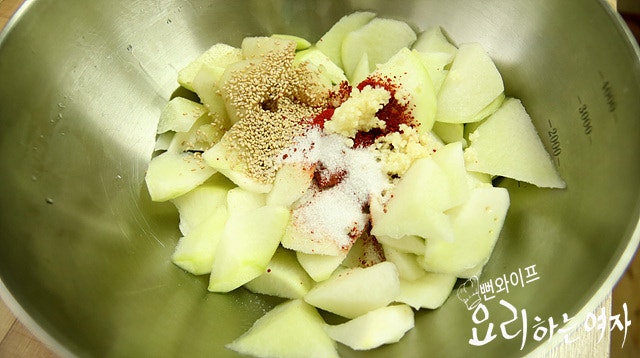
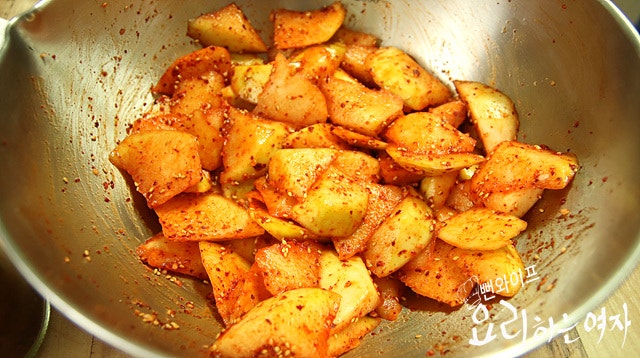
In a bowl, combine the radish and the seasoning ingredients (2 tbsp gochugaru, 1 tbsp minced garlic, 2 tbsp sand lance fish sauce, 1 tbsp sugar, and toasted sesame seeds), then toss well.
I tossed everything together right away, but if you coat the radish with gochugaru first to build color and then add the remaining seasonings, the color turns out prettier.
Taste and adjust with salt if it is bland, add more sugar to taste if you like, and finish.
Finish
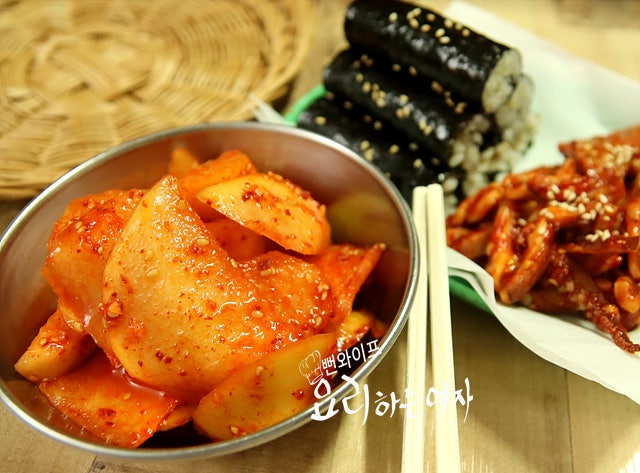
You can eat it after a few hours once the flavors blend, but if you let it ferment for a day and keep it in the refrigerator, you will enjoy an eye-opening crisp and refreshing tang.
 Ppunwife's tips
- Since you still need to season it, the radish should not be overly salty; if it tastes too salty, simply rinse it once or twice in water.
- If you coat the radish with gochugaru first to build color and then add the remaining seasonings, the color turns out much prettier.
- The brine released from the mu kimchi is refreshing and delicious, so do not discard it; use it in kimchi jjigae or as seasoning for bibim guksu (spicy cold noodles).
FAQ
Should I rinse the pickled radish in water before draining?
Just pour off the liquid released during pickling and let the radish drain in a strainer without rinsing. However, if you taste it and find it too salty, you can rinse it once or twice in water.
Can I use another fish sauce instead of sand lance fish sauce?
Anchovy fish sauce is listed as a substitute for sand lance fish sauce in the ingredient guide, so you can use anchovy fish sauce instead.
Is there a trick to giving the kimchi a prettier color?
Rather than mixing all the seasonings at once, tossing the radish with gochugaru first to dye it red before adding the rest makes the color much prettier.
How can I use leftover kimchi juice?
The juice has a refreshing flavor, so instead of throwing it away, it is great to add to kimchi jjigae or to use as seasoning for bibim guksu (spicy cold noodles).