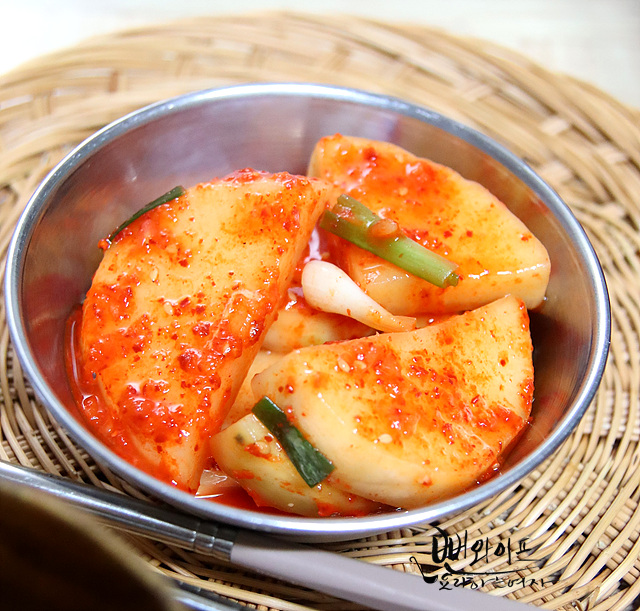
Crisp Seokbakji (Radish Kimchi)
A radish kimchi salted with boiling brine so it stays crisp without turning soft.
Translated from Korean by AI and not yet checked by a native speaker. Amounts and numbers are taken directly from the original recipe. Read the Korean original →
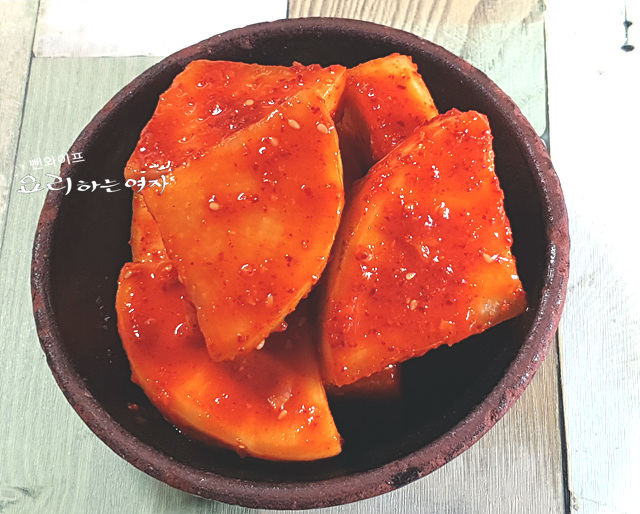
This seokbakji is made by salting Korean radish with boiling brine, which keeps excess moisture from leaking out and preserves a crisp texture to the end. Tossed in a seasoning with glutinous rice paste and drinking yogurt, it makes a great side dish for summer meals or noodle bowls.
- Servings
- about 10–12 servings
- Difficulty
- Medium
- Spiciness
- Spicy
Ingredients
Ingredients
- Korean radish (mu)2, 2.5 kg
Salting
- Water15 cups
- Coarse sea salt1 1/2 cups
Glutinous rice paste
- Glutinous rice flour4 tbsp
- Water3 cups
Seasoning
- Glutinous rice paste
- Gochugaru (Korean chili flakes)1 1/2 cups
- Anchovy fish sauce3 tbsp
- Salted fermented shrimp (saeujeot)3 tbsp
- Minced garlic4 tbsp
- Sugar4 tbsp
- Minced ginger1/2 tbsp
- Drinking yogurt2 bottles
- Toasted sesame seeds3 tbsp
- If using summer radish, peel off thick skin with a vegetable peeler so the kimchi will not turn out tough.
Steps
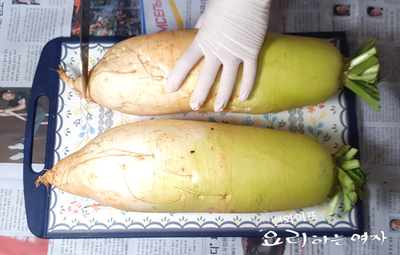
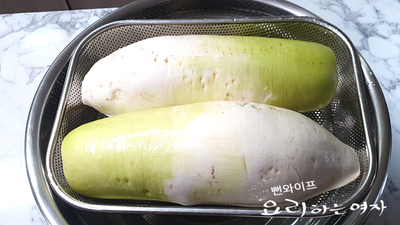
Trim off both ends, scrape away rootlets with a knife, and cut out any blemishes.
If using summer radish, peel off thick skin with a vegetable peeler so the kimchi will not turn out tough.
Scrub clean with a scouring pad and wash thoroughly.
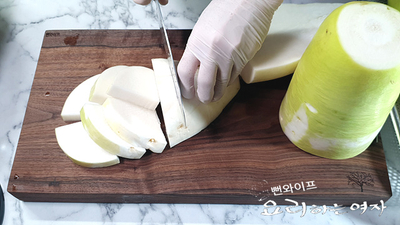
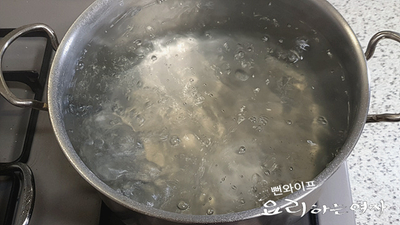
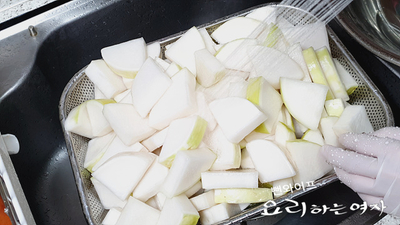
Cut in half lengthwise, then halve each piece again lengthwise, and slice into 2 to 2.5 cm thick pieces.
Add the salt and water, and bring to a rolling boil...
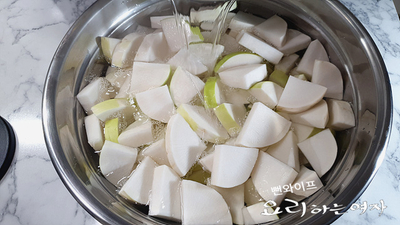
Pour it over the radish.
As it cools and pickles, toss top to bottom occasionally.
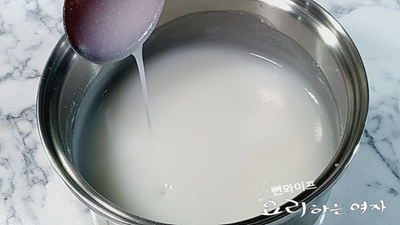
While the radish is pickling, make the glutinous rice paste: whisk glutinous rice flour into cold water to dissolve any lumps, then cook over low heat while stirring continuously.
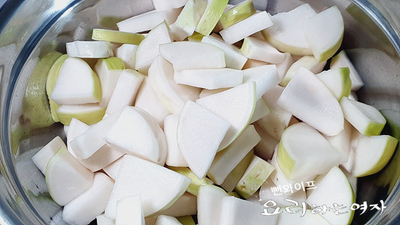
Check on the radish starting from 30 minutes.
Once the flesh feels tender and bends slightly, rinse a piece in water and taste it.
If it tastes mild rather than salty, it is properly pickled.
Rinse under running water in a colander, and drain for about 30 minutes.
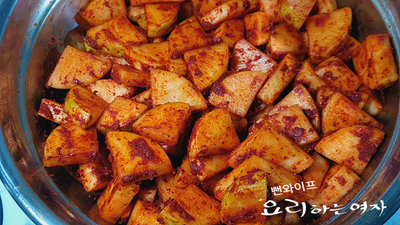
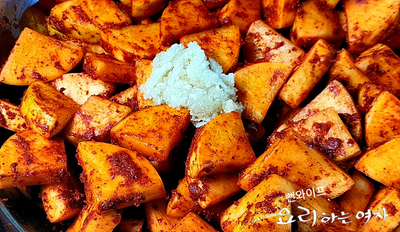
Add gochugaru and let sit for about 30 minutes to dye the radish red.
Add all the seasoning ingredients...
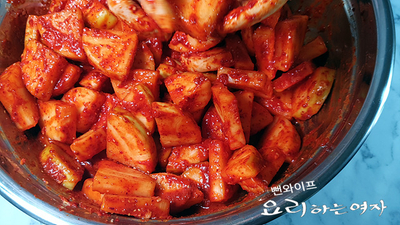

Mix thoroughly, and adjust any final seasoning with salted fermented shrimp or salt.
Because summer radish lacks sweetness, this uses more sugar than usual.
Even so, it will not taste sweet.
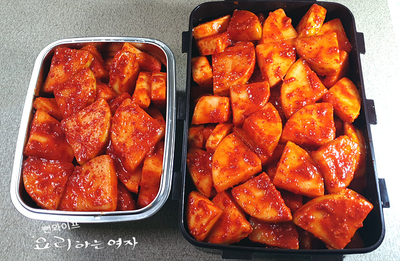
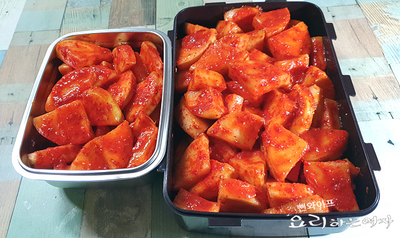
The one on the left is freshly made; the one on the right has fermented at room temperature for 24 hours.
In hot weather it ripens quickly, so keep a close eye on it.
While it ferments, rotate the top and bottom so the seasoning liquid coats everything evenly.
If you have a kimchi fermentation bag, packing it inside and turning the bag occasionally makes this very easy.
 Ppunwife's tips
- While fermenting, rotate top and bottom so the seasoning liquid coats everything evenly.
- If you have a kimchi fermentation bag, packing it inside and flipping the bag occasionally makes things easy.
- Pouring boiling brine over the radish produces just the right amount of liquid, and the hot water slightly crinkles the surface to prevent excess moisture loss.
FAQ
Why pickle the radish with boiling brine?
Pouring hot salt water slightly contracts the radish surface, keeping excessive moisture from escaping so it does not turn mushy.
How can you tell when the radish is properly pickled?
When the flesh bends slightly with gentle pressure, rinse a piece and taste: it should taste mildly seasoned rather than salty.
How should it be aged after making?
Let it ferment at room temperature for about a day, then move it to the refrigerator and enjoy after about two days.
Is there anything to keep in mind when prepping summer radish?
Summer radish sometimes has thick skin that can be tough, so it is best to peel the skin with a vegetable peeler.