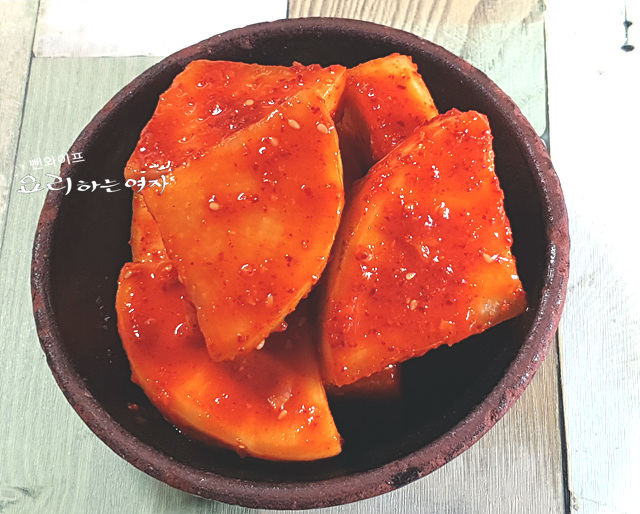
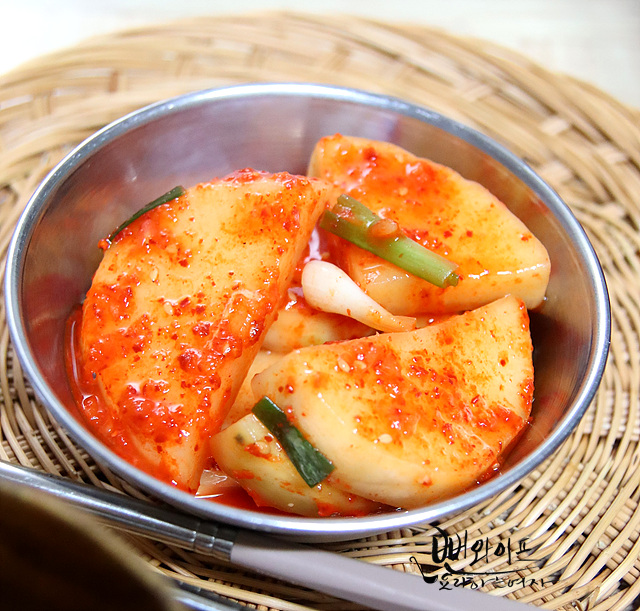
Crispy Seokbakji (Radish Kimchi) Side Dish
Crunchy seokbakji that tames the sharp taste of summer radish and uses plain yogurt to aid fermentation.
Translated from Korean by AI and not yet checked by a native speaker. Amounts and numbers are taken directly from the original recipe. Read the Korean original →

This radish kimchi tames the sharp, bitter taste typical of summer radish by pickling it with saccharin, and thick slices give it a delightfully crispy texture. Coating the radish with gochugaru first builds vibrant color, while adding plain yogurt to the seasoning naturally aids fermentation. After aging at room temperature and in the refrigerator, it becomes a dependable side dish that revives your appetite on hot days.
- Servings
- about 10–12 servings
- Difficulty
- Medium
- Spiciness
- Spicy
Ingredients
Ingredients
- Korean radish (mu)2 (5 kg)
- White part of large green onion (daepa) (or about 20 scallions)2 stalks
- Coarse sea salt2/3 cup
- Saccharin1/2 tbsp
- Water1 cup
Seasoning
- Gochugaru (Korean chili flakes)1 cup
- Salted fermented shrimp (saeujeot)2 tbsp
- Sand lance fish sauce (or dried anchovies)2 tbsp
- Plain yogurt1 tub
- Minced garlic4 tbsp
- Minced ginger1/2 tbsp
- Toasted sesame seeds2 tbsp
- Use the large green onion from the white stem down to the middle, avoiding the slimy green parts.
- To aid fermentation, instead of sweetened plain yogurt you can use ground cooked rice, Yakult, or lemon-lime soda; if using unsweetened yogurt, add sugar or another sweetener.
Steps
Prepare the ingredients
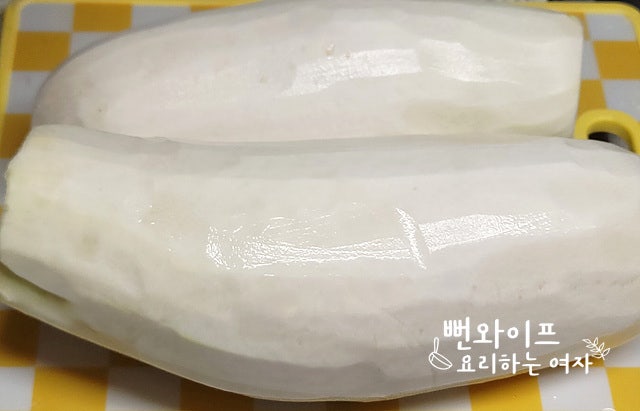
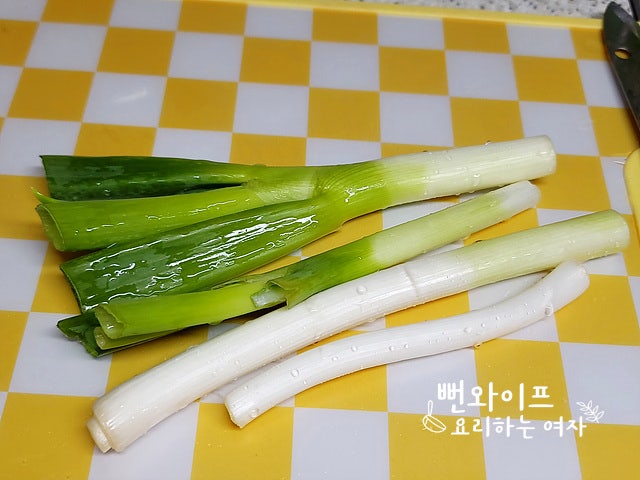
Peel the Korean radish (mu) and wash it.
Scallions would be great, but since I didn't have any, I used the large green onion (daepa) from the white stem up to the middle where there is no sticky sap.
Cut the ingredients
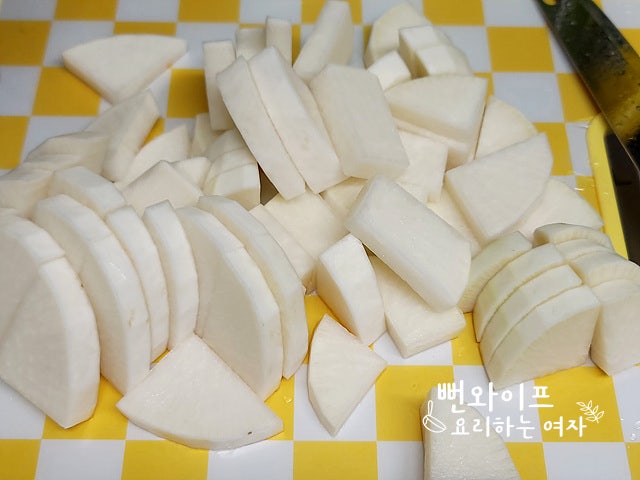
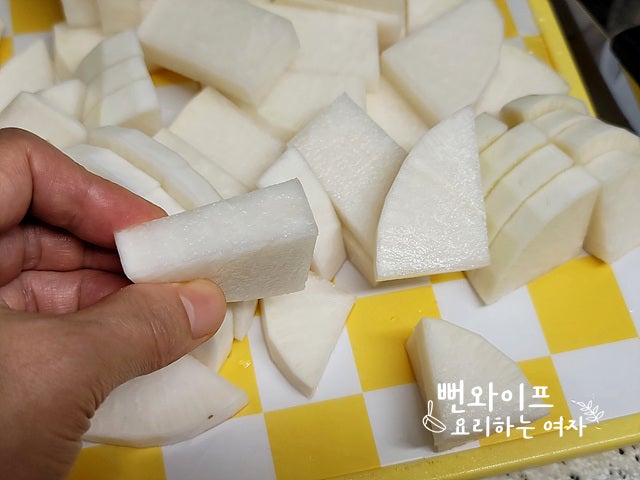
I cut the radish into large gingko leaf shapes about 1 cm thick.
Cutting it into large cubes is also fine.
Rather than cutting it too thin, having some thickness like this gives it a nice, crunchy texture.
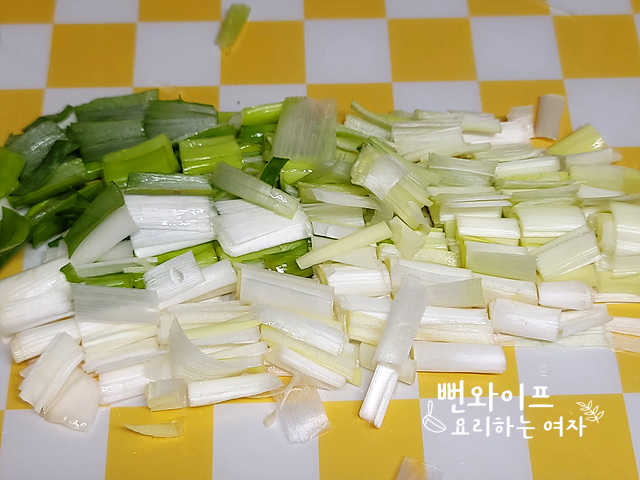
Split the large green onion in half lengthwise, then cut it into lengths similar to the radish.
Salt the radish
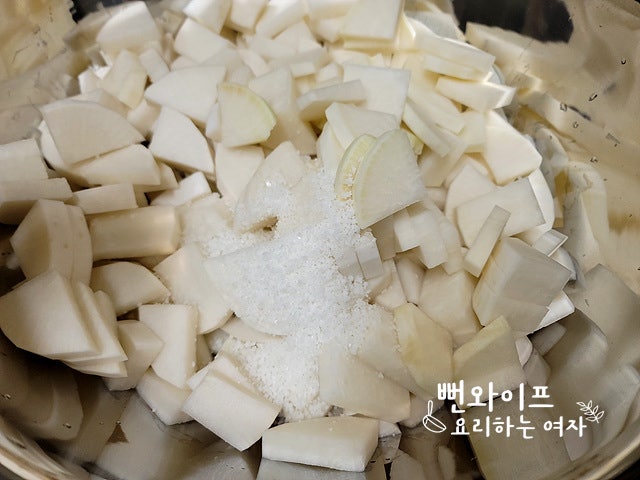
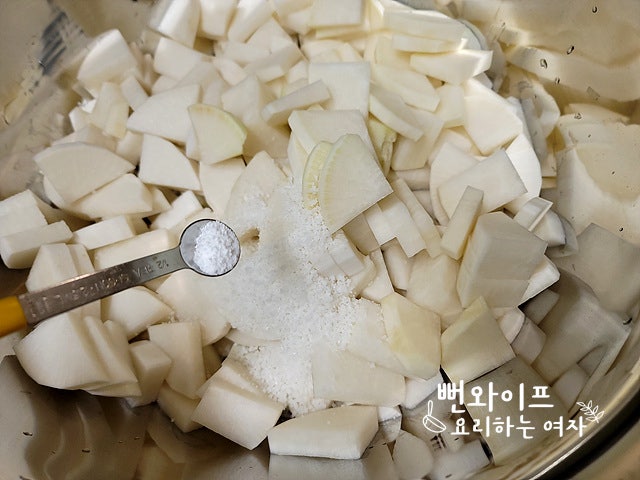
Add 2/3 cup coarse sea salt, 1/2 tbsp saccharin, and 1 cup water to the sliced radish.
I added a little saccharin when salting to remove the bitter and pungent taste of the radish.
You can also balance the pungency with sugar in the seasoning, but in the heat of summer, the brine can become thick and slimy instead of clean.
Adding saccharin during salting gently infuses sweetness into the radish, so you can reduce or completely skip the sugar in the seasoning.
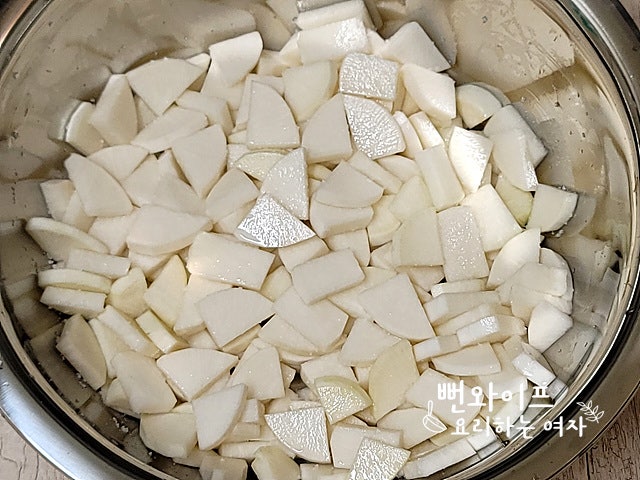
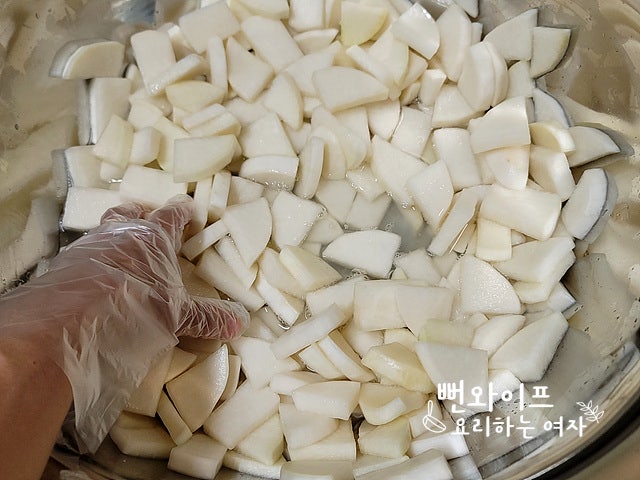
Toss occasionally and let it salt evenly for about 1 hour to 1 hour 30 minutes.
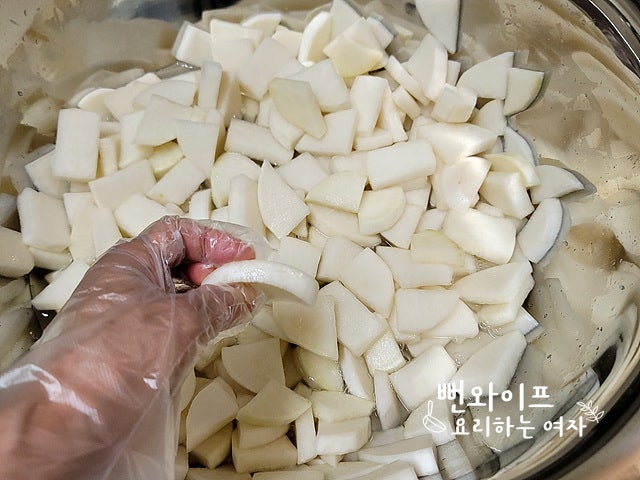
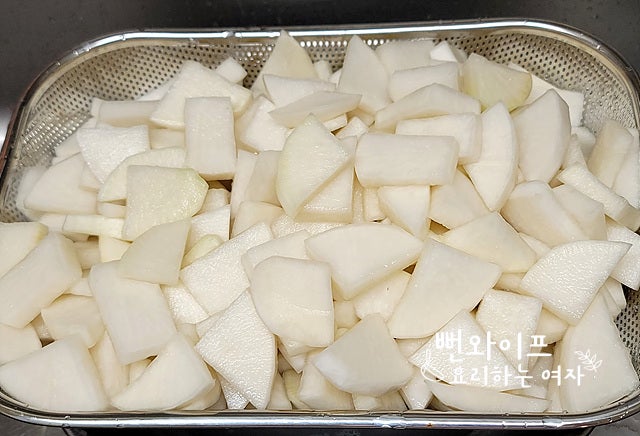
Once it softens enough to bend slightly and is salted without tasting overly salty when chewed, drain it in a colander to remove the moisture.
If it loses too much moisture, the seasoning will be stiff rather than moist, so once a good amount drains off, you can mix it with gochugaru.
Also, if the radish feels too salty, just rinse it once or twice in water.
Color with chili flakes
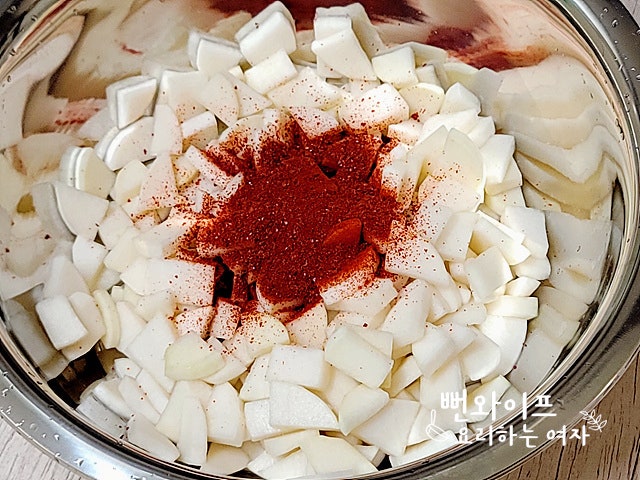
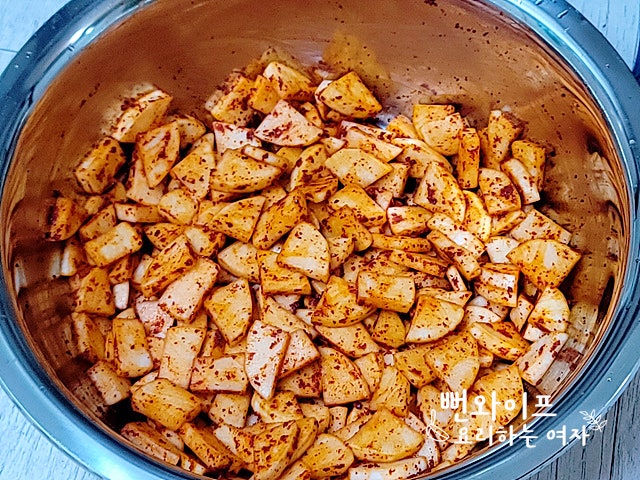
Pour 1 cup gochugaru (Korean chili flakes) over the radish, mix well, and let it sit for about 30 minutes.
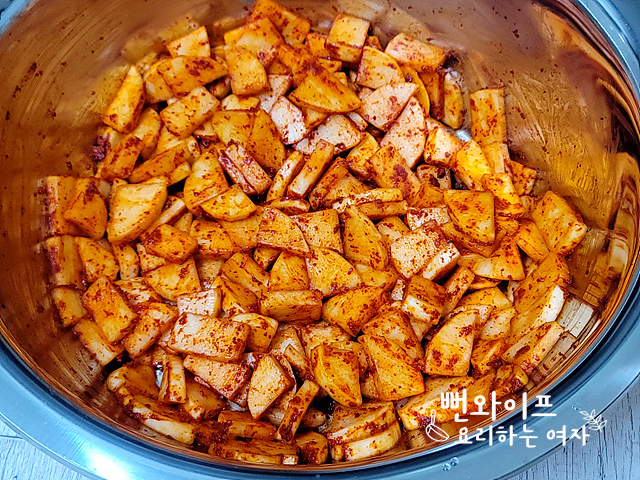
As the chili flakes absorb moisture released from the radish, they swell up, the flakes become finer, and the radish takes on a gorgeous red color.
Add seasoning and mix
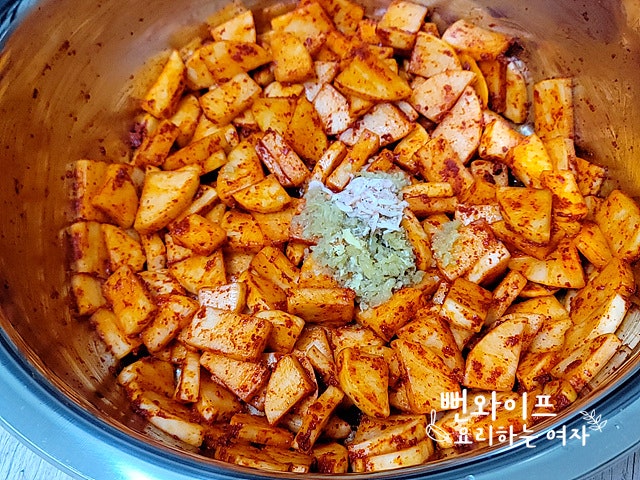

Now add the seasonings and toss.
Add 2 tbsp salted fermented shrimp (saeujeot), 2 tbsp sand lance fish sauce, 4 tbsp minced garlic, 1/2 tbsp minced ginger, and 1 tub plain yogurt.
Usually, I might grind cooked rice or add Yakult or lemon-lime soda, but today I chose sweetened plain yogurt as the ingredient to aid fermentation.
Since it contains sugar, I did not add any extra sugar.
If you use unsweetened yogurt, just adjust the taste by adding sugar or another sweetener.
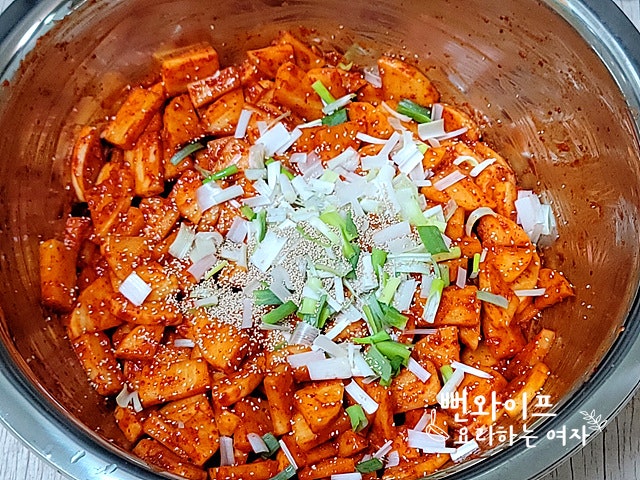
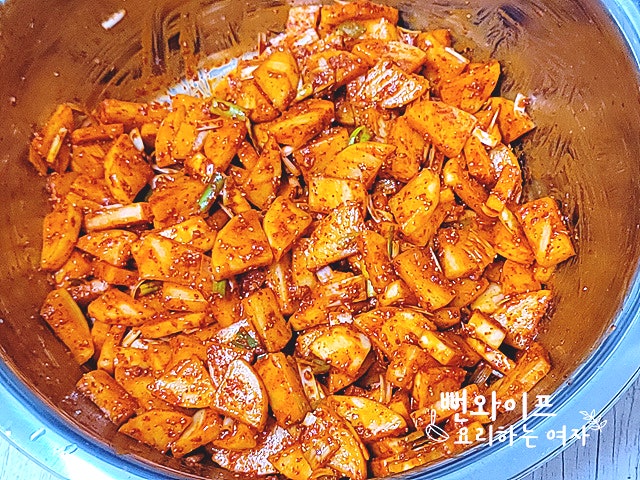
Once the seasoning tastes right, finish by adding the large green onion or scallions along with 2 tbsp toasted sesame seeds.
Finish
Let it ferment at room temperature overnight, then keep it in the refrigerator for a day or two before serving, and this delicious seokbakji is complete.


Thanks to the saccharin added during salting, the spiciness and bitterness are gone, leaving it sweet, tangy, and wonderfully crisp.
With the heat wave, it's easy to hesitate about making kimchi, but how about an easy radish kimchi like kkakdugi or seokbakji?
Making a batch of this takes care of your side dishes for a week.
 Ppunwife's tips
- Rather than slicing it too thin, keeping some thickness like this gives it a satisfying, crunchy bite.
- In high summer temperatures, trying to tame the sharpness with sugar can make the liquid thick and sticky, so salting with saccharin works best.
- If too much liquid drains out, the seasoning will turn stiff instead of moist, so toss it with gochugaru once a moderate amount of moisture has drained. Also, if the radish tastes too salty, simply rinse it once or twice in water.
FAQ
Why do you use saccharin instead of sugar when salting summer radish?
In hot weather, using sugar to balance the radish's sharpness can easily make the brine sticky and thick. Salting with saccharin infuses a subtle sweetness into the radish, allowing you to reduce or completely omit sugar from the seasoning.
What should I do if the radish turns out too salty after pickling?
If you taste the salted radish and find it too salty, simply rinse it once or twice in water to wash away excess salt, then drain it in a colander.
Can I use unsweetened plain yogurt?
If you use an unsweetened product, it lacks the sugar included in this recipe, so you can adjust the taste by adding sugar or another sweetener to your liking.
How should I age and eat the finished seokbakji?
Let it ferment at room temperature for about one night, then store it in the refrigerator for another 1 to 2 days to ripen before enjoying.