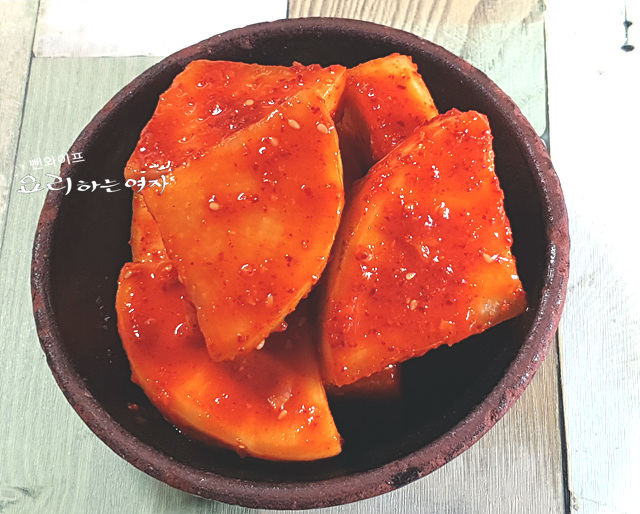
Seokbakji (Radish Kimchi) with Lemon-Lime Soda
A crunchy radish kimchi side dish made by salting summer radish with saccharin and seasoning it with lemon-lime soda to bring out sweet flavors.
Translated from Korean by AI and not yet checked by a native speaker. Amounts and numbers are taken directly from the original recipe. Read the Korean original →
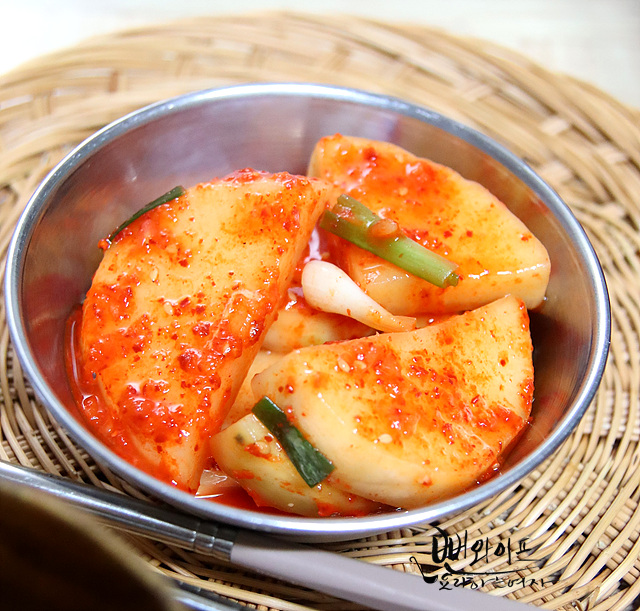
This seokbakji brings out a crisp, crunchy texture by salting less naturally sweet radishes with saccharin and coarse sea salt. Adding lemon-lime soda to the seasoning gives it a deeply refreshing and clean savory flavor. It makes the perfect side dish to serve with meat soups or warm bowls of gukbap.
- Servings
- about 8–10 servings
- Difficulty
- Medium
- Spiciness
- Mildly spicy
Ingredients
Ingredients
- Korean radish (mu)5, 1 kg
- Scallions (jjokpa)about 20
- Saccharin1/2 tsp
- Coarse sea salt2/3 cup
- Water1 cup
Seasoning
- Gochugaru (Korean chili flakes)1 cup
- Salted fermented shrimp (saeujeot)2 tbsp
- Sand lance fish sauce (or dried anchovies)2 tbsp
- Lemon-lime soda (chilsung cider)1 cup
- Minced garlic4 tbsp
- Minced ginger1/2 tbsp
- Sugar2 tbsp
- Instead of scallions, you can use the white parts of large green onions.
- You can salt the radish with sugar instead of saccharin; use approx. 1/2 cup.
- Salt for around 1 hour 30 minutes, until the seasoning penetrates deep inside and the slices bend gently without snapping.
Steps
Prepare the ingredients
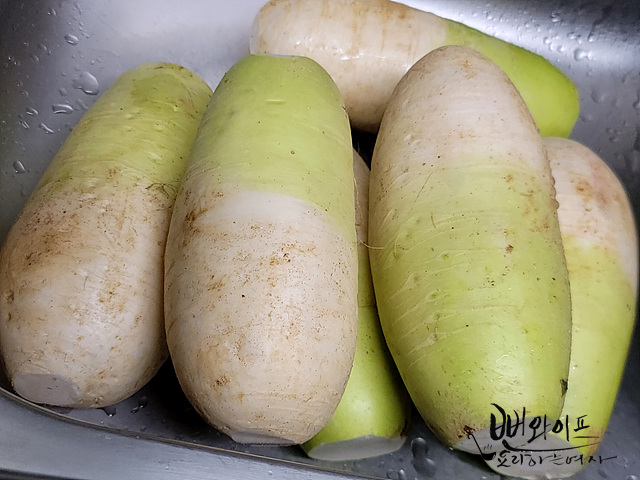
Here are 5 medium Korean radishes (mu).
It is early autumn, so the radishes are firm and solid, but because they grew over the summer, they lack sweetness and the skin is slightly spicy.
Wash them and peel the skin.
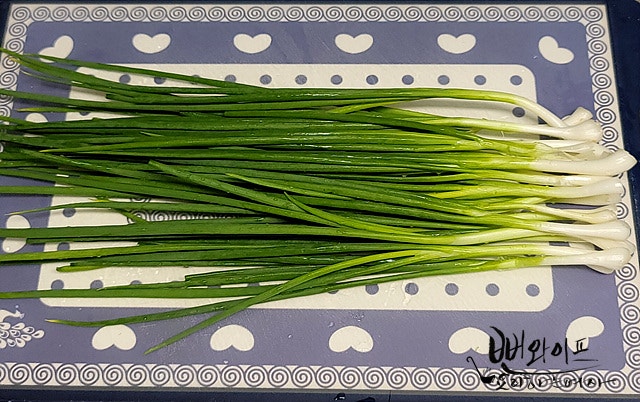
Adding a little scallions (jjokpa) to kkakdugi or seokbakji gives it a much deeper flavor and makes it delicious.
It is around 20 stalks. Instead of scallions, you can use the white parts of large green onions (daepa).
Cut the ingredients
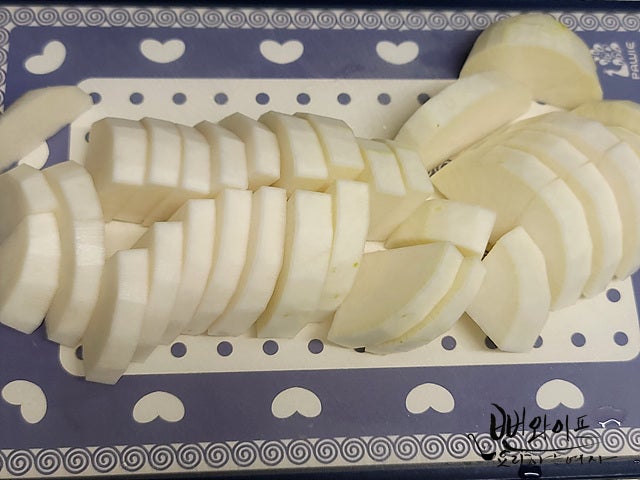
Cut the radish into thick, large slices around 1 cm thick, typical for seokbakji.
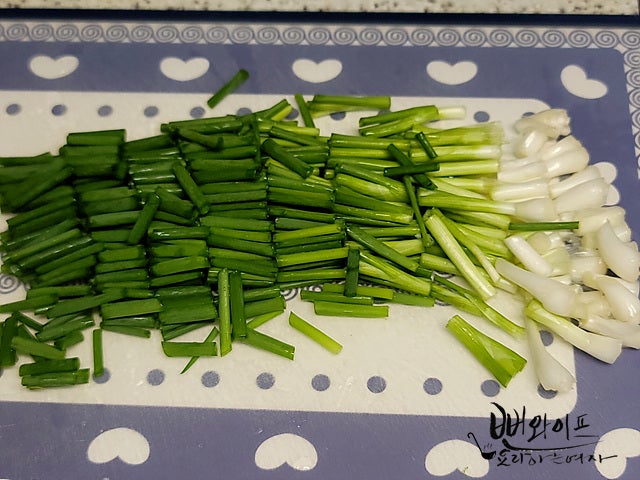
Cut the scallions short, into 2 cm pieces, because if they are too long, the dish looks messy.
Salt the radish
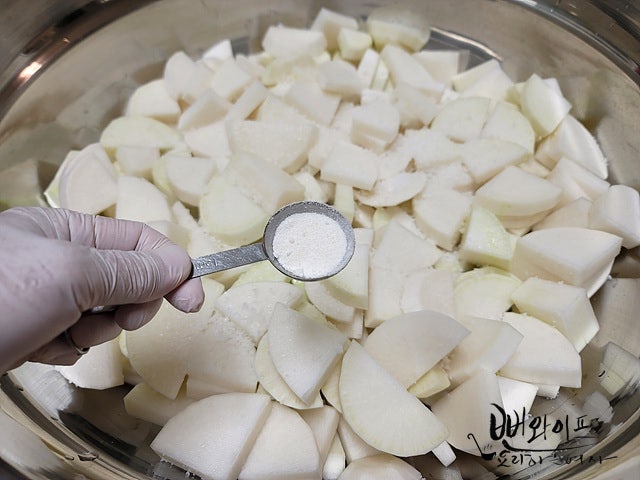
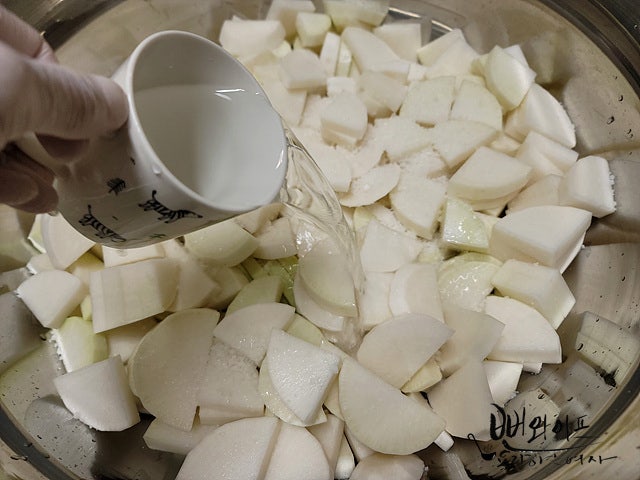
Add 1/2 tsp of saccharin, 2/3 cup of coarse sea salt, and 1 cup of water, then mix evenly.
You can salt it with sugar instead of saccharin; use approx. 1/2 cup.
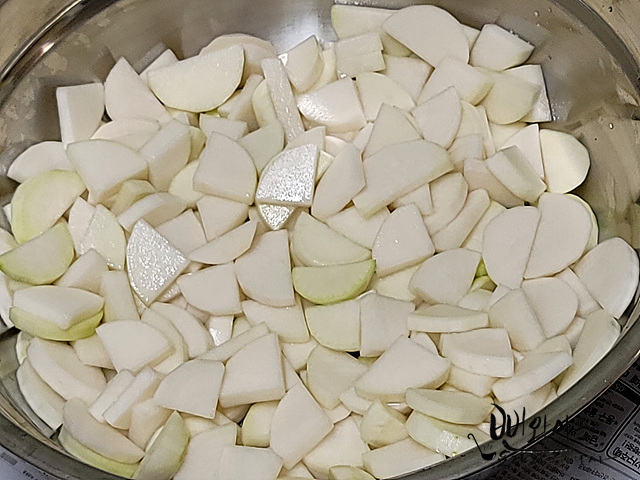
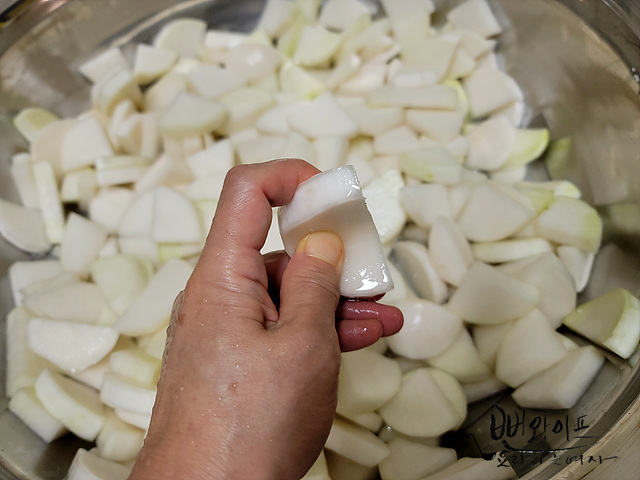
Salt for around 1 hour 30 minutes, until the seasoning penetrates deep inside and the slices bend gently without snapping.
When you taste a piece, it should taste slightly sweet and gently salted. Adjust and extend the salting time depending on the condition of your radishes.
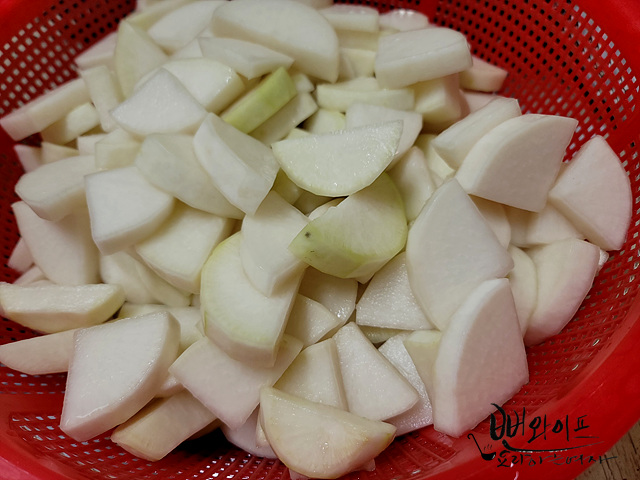
Washing the radish will make it bland and wash away the sweetness, so do not rinse it; simply drain it directly in a colander.
Coat with gochugaru
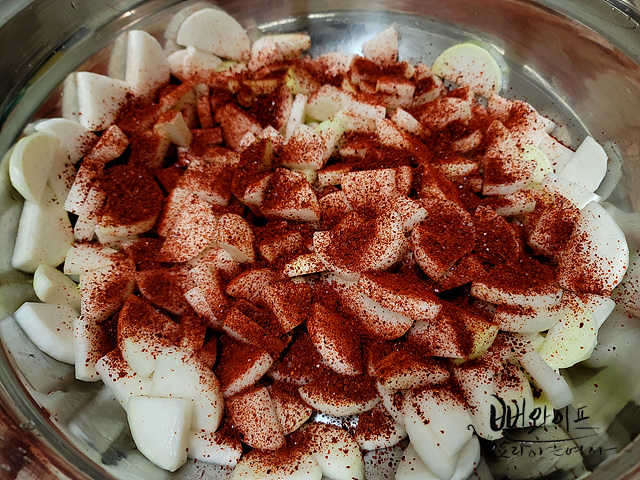
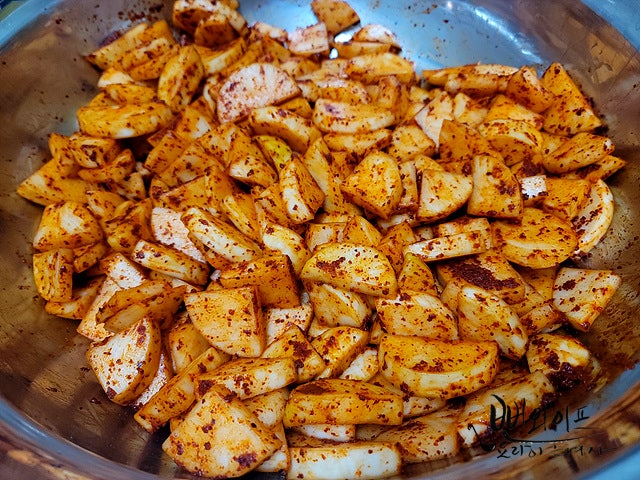
Pour gochugaru (Korean chili flakes) over the radish and toss everything together, then let it sit for approx. 30 minutes so the color stains evenly.
Season the radish
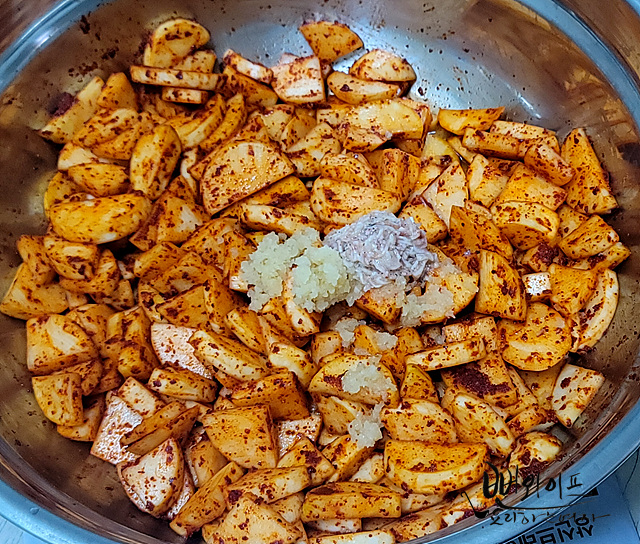
After 30 minutes, add only the seasonings first—2 tbsp of salted fermented shrimp (saeujeot), 2 tbsp of sand lance fish sauce, 1 cup of lemon-lime soda (chilsung cider), 4 tbsp of minced garlic, 1/2 tbsp of minced ginger, and 2 tbsp of sugar—and mix well.
Once the seasoning coats the radish nicely, taste it and adjust to your preference.
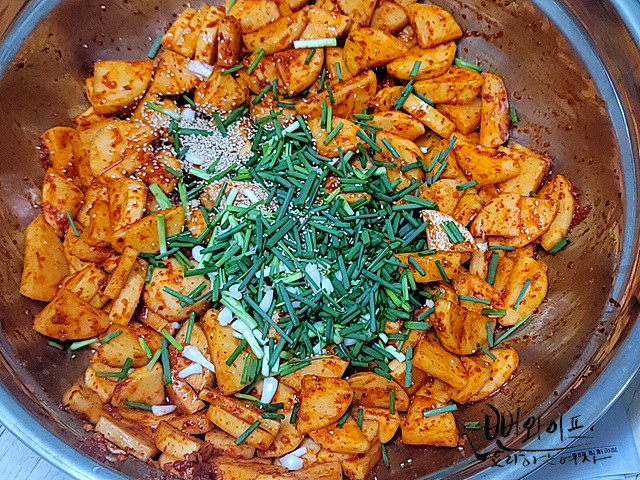
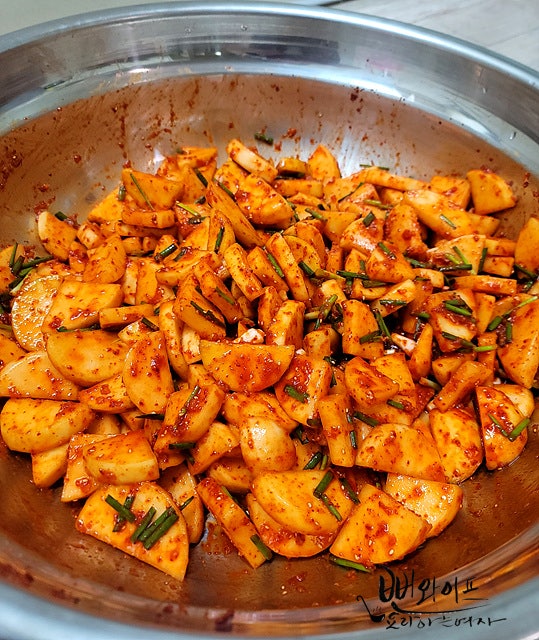
Finally, add the scallions and gently toss to finish.
Complete the dish
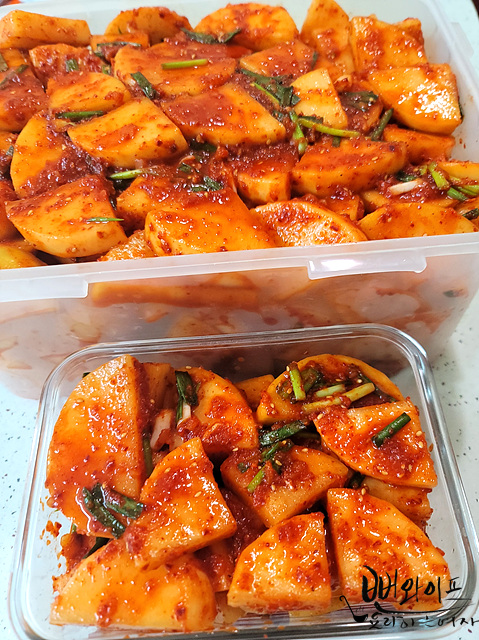
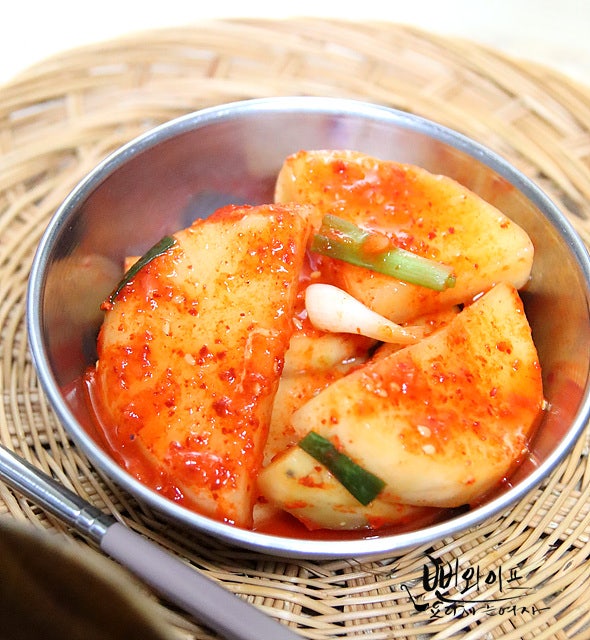
Let it ferment for overnight or about a day until tasty, then store it in the refrigerator.
If you let it sit in the refrigerator for a day or two before eating, the seasonings will meld nicely into the radish and make it even more delicious.
Over time, the clear liquid released from the radish will thin out the thick paste slightly, making it refreshingly light.
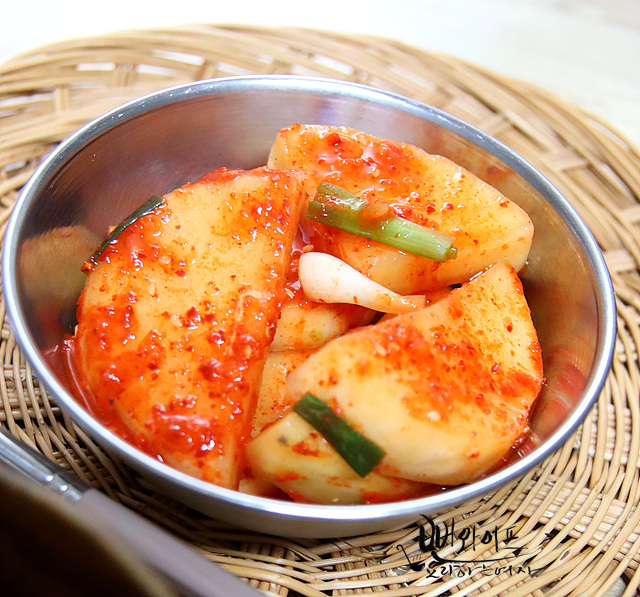
While radishes salted with sugar or corn syrup turn somewhat chewy, using saccharin keeps the texture wonderfully crisp and crunchy.
I bought plenty of radishes and made seokbakji, and my family loved it so much the container was empty in just one week.
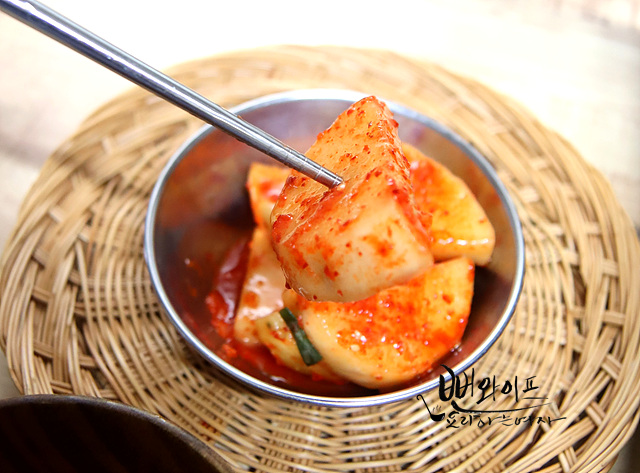
Spear a piece with your chopsticks—it pairs so well as a side dish with meat soups or gukbap.
It is not salty, so you will find yourself eating one or two pieces all on their own.
 Ppunwife's tips
- Washing the radish will make it bland and wash away the sweetness, so do not rinse it; simply drain it directly in a colander.
- While radishes salted with sugar or corn syrup turn somewhat chewy, using saccharin keeps the texture wonderfully crisp and crunchy.
- If you let it sit in the refrigerator for a day or two before eating, the seasonings will meld nicely into the radish and make it even more delicious.
FAQ
Should I rinse the salted radish in water before draining?
Rinsing in water washes away the sweetness and makes it bland, so do not wash it; simply drain off the liquid directly in a colander.
Is it okay to use sugar instead of saccharin when salting?
You can use sugar instead of saccharin; adding around 1/2 cup of sugar is recommended.
Is there a substitute if I do not have scallions?
Instead of scallions, you can slice and use the white part of large green onions.
When is the best time to eat it after mixing?
Ferment it at room temperature for half a day or about a day, then keep it in the refrigerator for 1~2 more days; the seasoning will soak into the radish, making it even more refreshing and delicious.