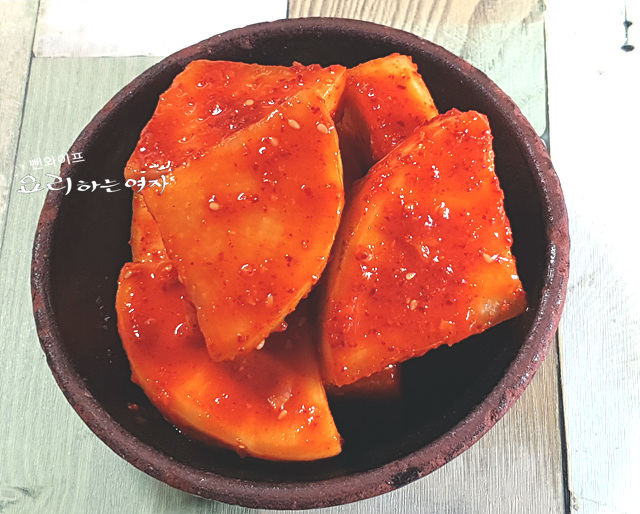
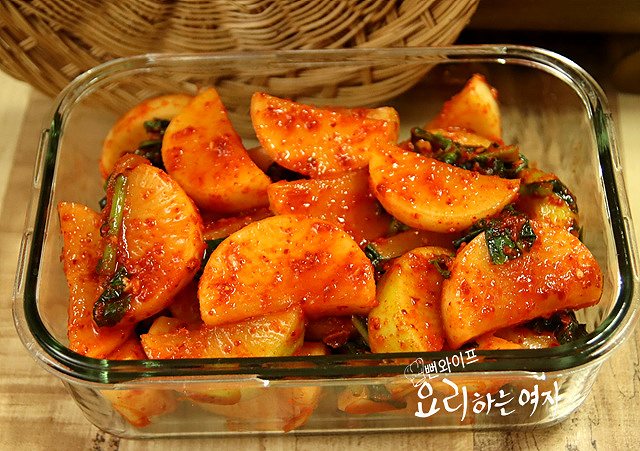
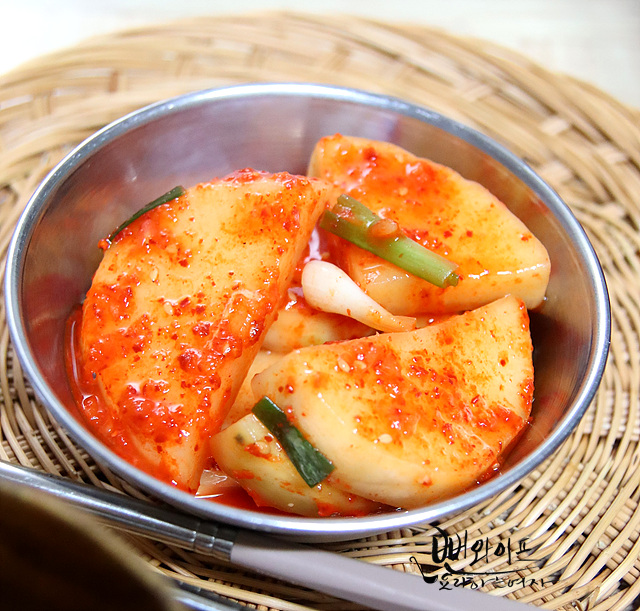
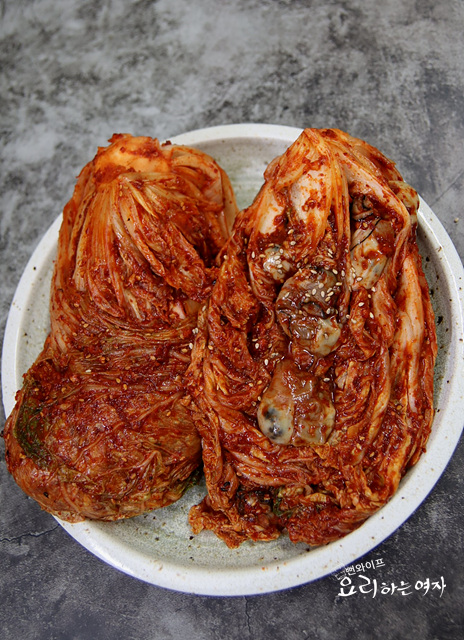
Thick-Cut Seokbakji (Radish Kimchi)
A winter kimchi made by cutting sweet in-season radish into thick pieces, tossing them in basic seasonings, and letting them ferment.
Translated from Korean by AI and not yet checked by a native speaker. Amounts and numbers are taken directly from the original recipe. Read the Korean original →
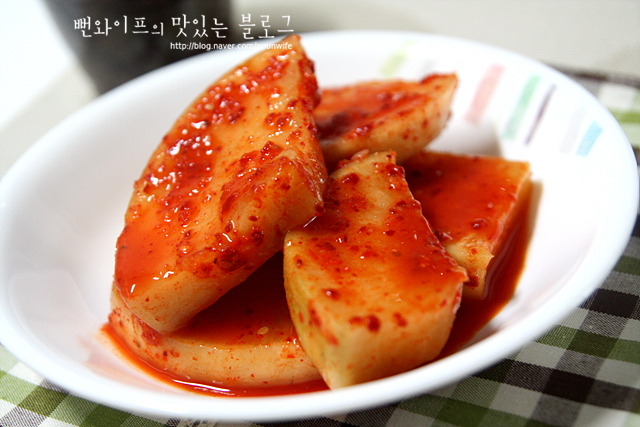
This winter side dish is made by cutting sweet, flavorful in-season radish into thick chunks and mixing them with basic seasonings. It uses a moderate amount of gochugaru so it is not overwhelming, and adding glutinous rice paste helps it ferment with rich umami even in cold weather. Ferment it at room temperature to enjoy its tangy, crisp crunch.
- Servings
- about 10–12 servings
- Difficulty
- Hard
- Spiciness
- Mildly spicy
Ingredients
Ingredients
- Korean radish (mu)3 (1.5 kg, each)
- Water15 cups
- Salt1 1/2 cups
Seasoning
- Glutinous rice paste
- Gochugaru (Korean chili flakes)1 cup
- Anchovy fish sauce2 tbsp
- Salted fermented shrimp (saeujeot)2 tbsp
- Minced garlic4 tbsp
- Ginger1/2 tbsp
- Sugar2 tbsp
- Toasted sesame seedsa little
Glutinous rice paste
- Glutinous rice flour3 tbsp
- Water2 cups
- Scrub the radishes clean with a scouring pad and cut away only any blemished spots; there is no need to peel the skin. Fall radishes have thin skin, so you can use them as they are. For summer radishes, the skin is thick and tough, so it is better to peel them.
Steps
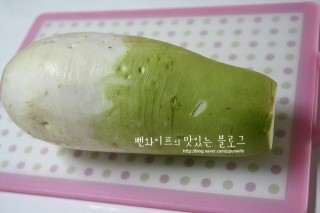
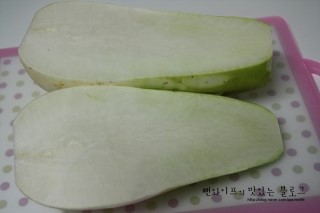
1. These radishes are quite large, weighing about 1.5kg each.
I prepared 3 radishes of the same size.
Scrub them clean with a scouring pad and cut away only any blemished spots; there is no need to peel the skin.
Fall radishes have thin skin, so you can use them as they are,
while summer radishes have thick, tough skin, so it is better to peel them.
2. After cutting the radishes in half...
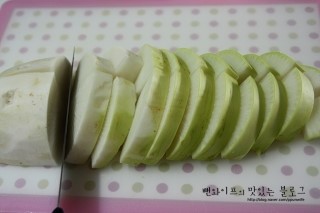
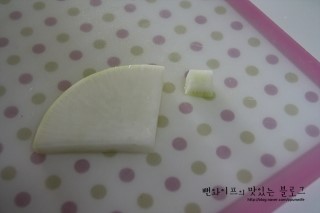
3. Cut each piece in half lengthwise again, then slice into thick pieces about 2cm to 2.5cm thick.
4. Compared to regular kkakdugi, these pieces are much thicker and considerably larger.
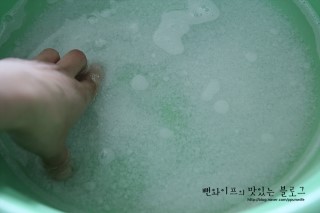
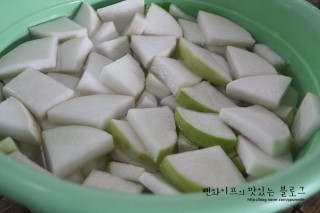
5. Make the brine to salt the radish. Pour water over coarse sea salt and dissolve it.
6. Keep the salting time to around 30 minutes to 1 hour, tossing them halfway through to shift their positions.
If they turn out too salty, soak them in water and change the water several times until the excess salt is properly removed.
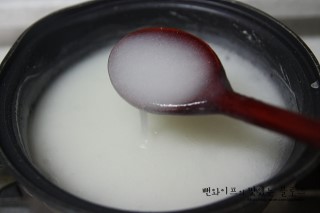
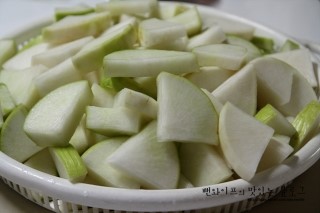
7. Combine the water and glutinous rice flour, simmer over gentle heat until thickened, and let it cool.
8. Rinse the salted radish once and drain the water for 30 minutes.
10
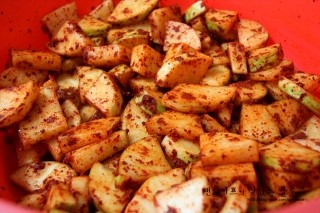
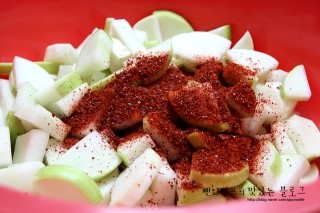
9. Pour the gochugaru over the radish, and...
10. Mix evenly and let it sit for at least 30 minutes; the radish will take on the red color of the chili flakes and release moist moisture.
11
12
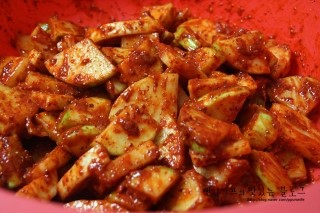
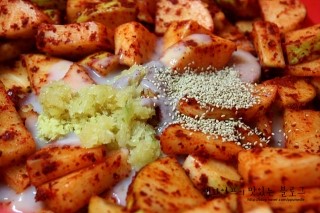
11. Add all the seasoning ingredients...
In hot summer weather it ferments well even without glutinous rice paste, but in cold winter weather, adding glutinous rice paste
helps it ferment deliciously.
12. Toss everything evenly to finish.
 Ppunwife's tips
- Keep the salting time to around 30 minutes to 1 hour, tossing them halfway through to shift their positions. If they turn out too salty, soak them in water and change the water several times until the excess salt is properly removed.
- In hot summer weather it ferments well even without glutinous rice paste, but in cold winter weather, adding glutinous rice paste helps it ferment deliciously.
- Pack it into a container and let it ferment at room temperature for 1 week to 10 days, and it will become delicious Seokbakji.
FAQ
Do I have to peel the radish skin?
Fall radishes have thin skin, so you can just trim off blemishes and use them unpeeled. However, summer radishes have thick and tough skin, so it is better to peel them.
What should I do if the radish turns out too salty from the brine?
If it has become too salty, soak it in cold water and change the water several times until the saltiness is properly reduced.
Why do you add glutinous rice paste to the kimchi seasoning?
In summer it ferments well without paste, but in cold winter weather, adding glutinous rice paste helps it ferment deliciously.
Why do you coat the radish with gochugaru before mixing in the other seasonings?
Tossing the radish with gochugaru first and letting it sit for at least 30 minutes stains the radish a lovely red color and draws out moisture, helping the seasonings blend smoothly.