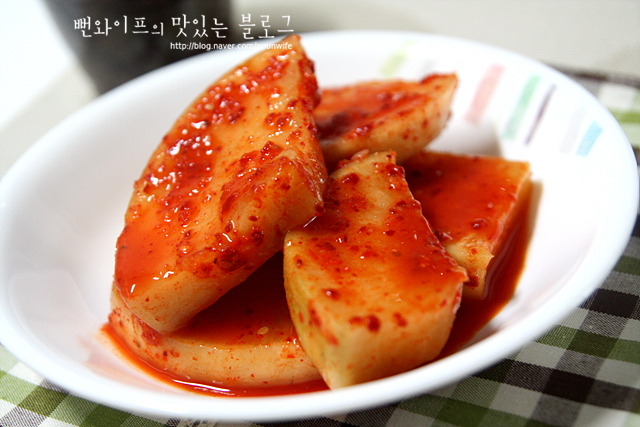
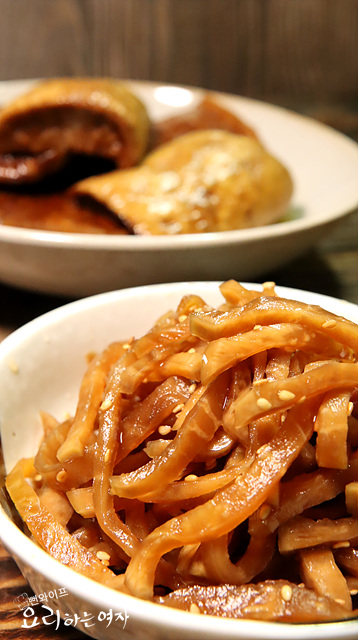
Crisp and Chewy Bossam Mu Kimchi (Radish Kimchi for Bossam)
A winter radish side dish salted and cured with corn syrup to create a delightfully chewy texture like dried radish.
Translated from Korean by AI and not yet checked by a native speaker. Amounts and numbers are taken directly from the original recipe. Read the Korean original →
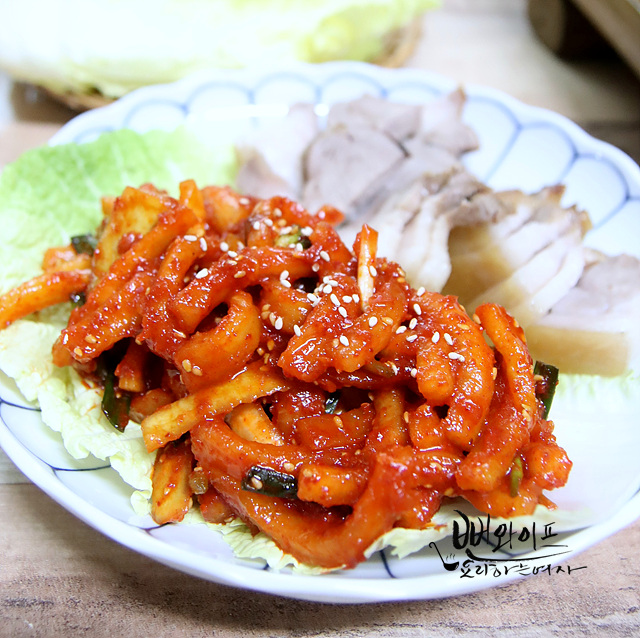
Thickly sliced winter radish is cured thoroughly in salt and corn syrup to draw out moisture before tossing with seasoning. It retains a crunchy, chewy bite reminiscent of dried radish strips, pairing wonderfully with boiled pork wraps (bossam) or as an everyday side dish.
- Servings
- about 8–10 servings
- Difficulty
- Easy
- Spiciness
- Mildly spicy
Ingredients
Ingredients
- Korean radish (mu)1, 2 kg
- Scallions (jjokpa)10
- Coarse sea salt2 tbsp
- Corn syrup (mulyeot)1 cup
Seasoning
- Gochugaru (Korean chili flakes)4 tbsp (2 fine + 2 regular)
- Minced garlic2 tbsp
- Minced ginger1 tsp
- Sand lance fish sauce (or dried anchovies)2 tbsp
- Corn syrup (mulyeot) (or green plum syrup (maesil-cheong), sugar)2 tbsp
- Salta little
- Toasted sesame seeds
- If the peel is thin and not peppery, simply wash it thoroughly without peeling to enhance the crunchy texture.
- If you do not have scallions, you can use just the white part of a large green onion.
- Mix coarse sea salt and corn syrup evenly into the radish, flipping occasionally, and let it cure overnight (about 8 hours) to draw out the moisture.
Steps
Prepare the ingredients
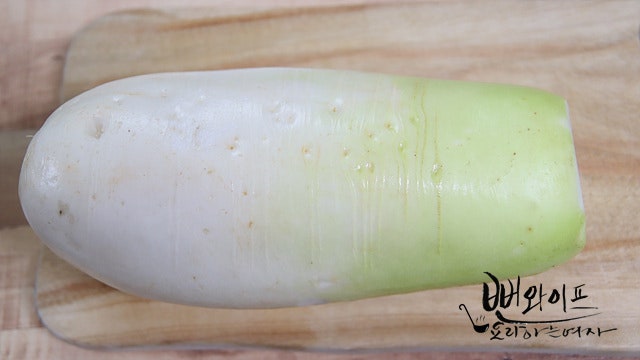
Prepare 1 sweet, firm Korean radish (mu) weighing 2kg.
The peel is thin and not peppery, so you just need to wash it cleanly without peeling.
The radish peel plays a big role in creating that crunchy bite.
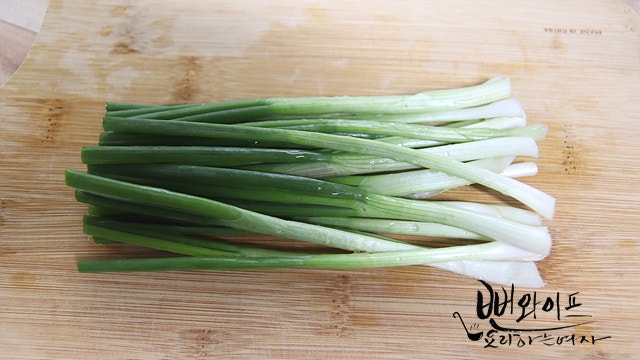
Prepare around 10 scallions (jjokpa); if you don't have any, you can use just the white part of a large green onion (daepa).
Cut the ingredients
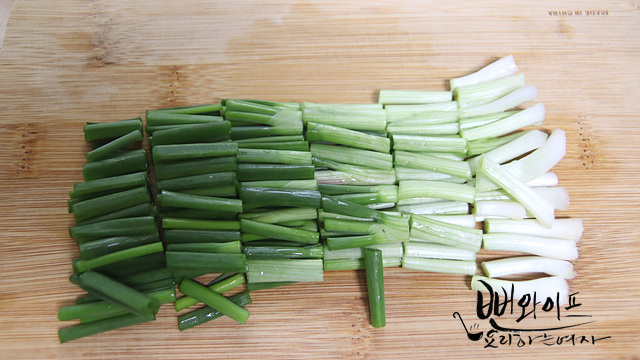
Cut the scallions into lengths of 2 to 3cm.
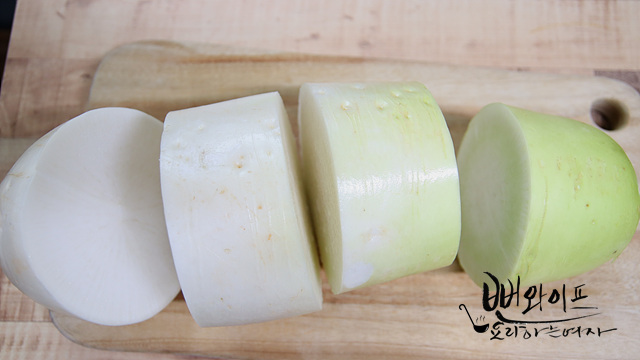
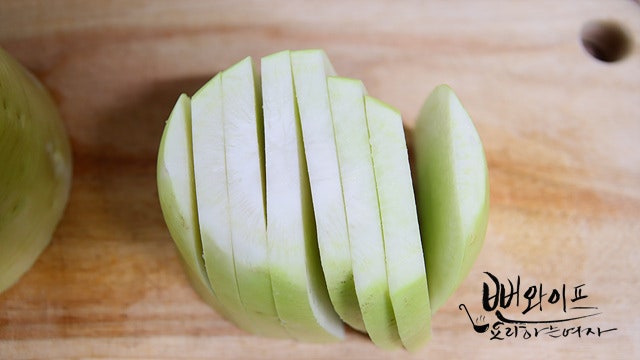
Radish for bossam should be sliced thickly like dried radish so it stays neat, chews well, and tastes delicious once salted.
First cut it into segments about 6cm long, then slice lengthwise to a thickness of about 1cm...
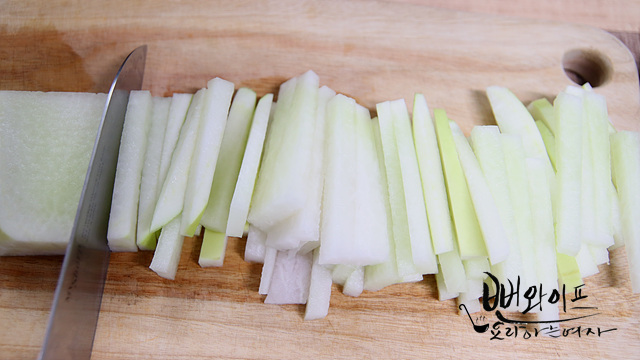
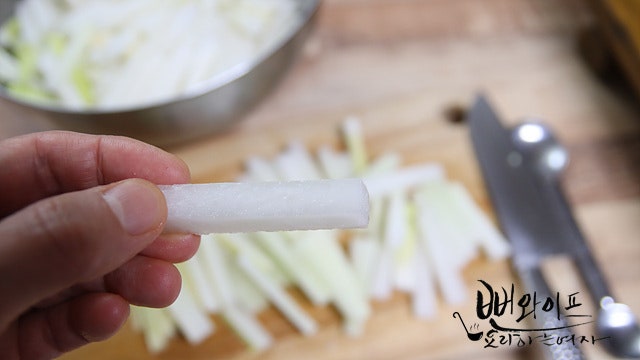
Lay the slices flat and cut them into 1cm thick sticks.
Salt and cure the radish
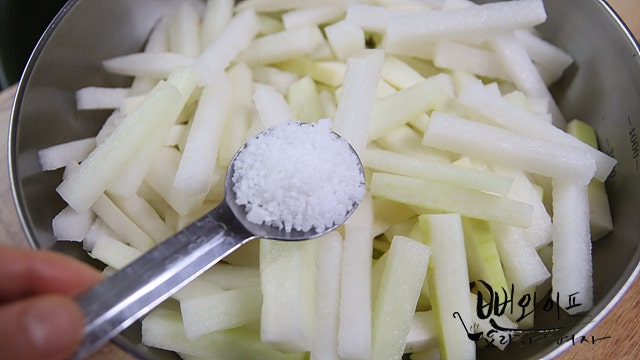
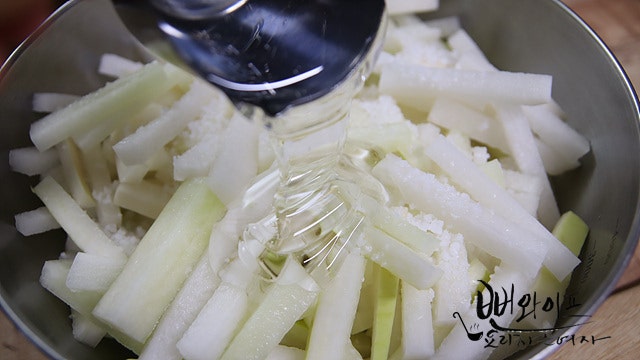
Add 2 tbsp coarse sea salt and 1 cup corn syrup (mulyeot) to the radish...
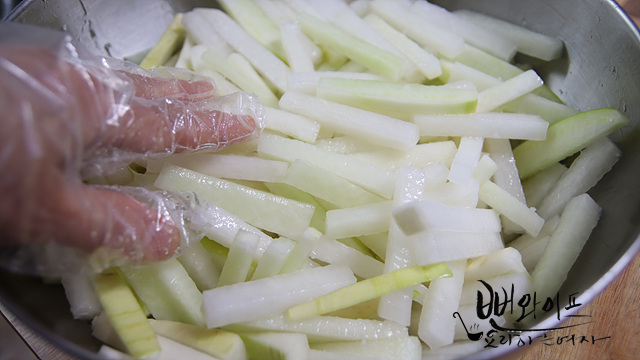
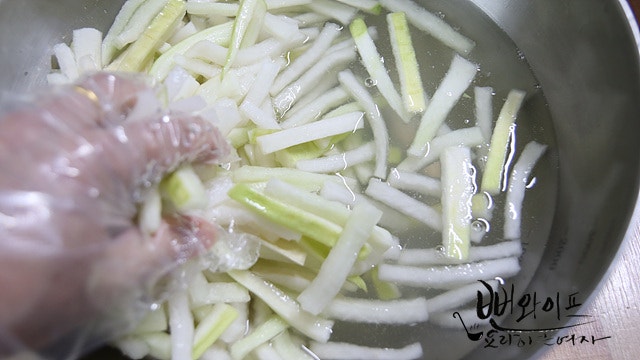
Mix evenly and let it cure.
I let it cure overnight (about 8 hours), tossing it occasionally along the way.
Besides being cut thickly, drawing out all the radish's moisture is what gives it that delightfully crunchy, chewy texture just like dried radish.
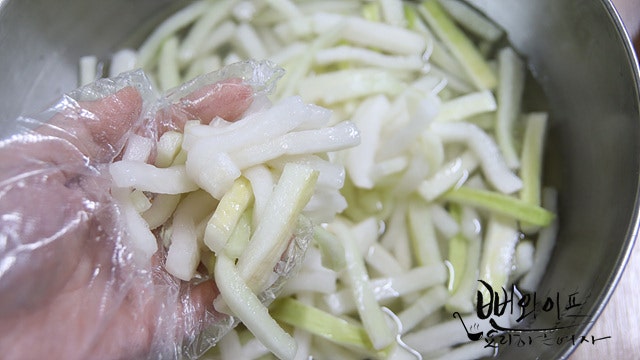
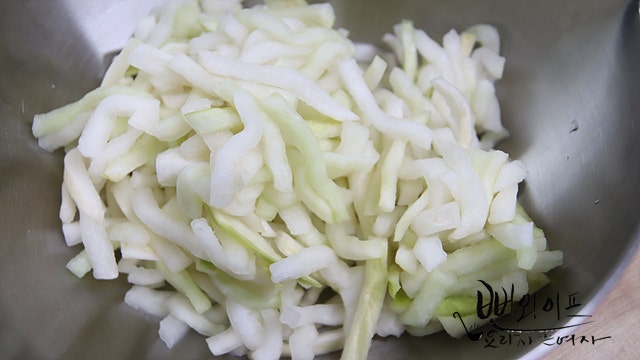
Toss it occasionally while curing...
This draws out a lot of liquid, and squeezing out as much moisture as possible gives it the look and texture of rehydrated dried radish strips.
Reserve about 1/2 cup of the curing liquid to keep things moist when tossing.
Do not discard the remaining liquid either; store it in a container in the refrigerator and use it in braised fish or braised short ribs (galbi jjim) for a clean, delicious flavor.
Season the radish
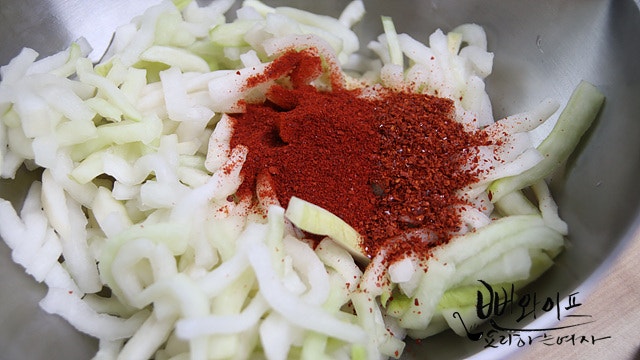
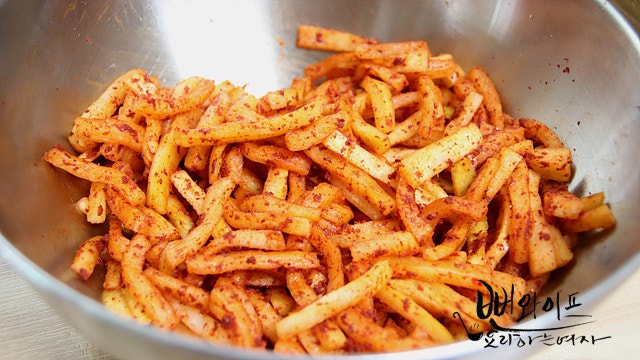
Add 4 tbsp gochugaru (Korean chili flakes) to the radish and toss to coat it with red color.
Gradually stir in the reserved 1/2 cup of radish curing liquid as you mix evenly.
Mixing fine gochugaru with your regular gochugaru produces a much prettier color and a smoother texture.
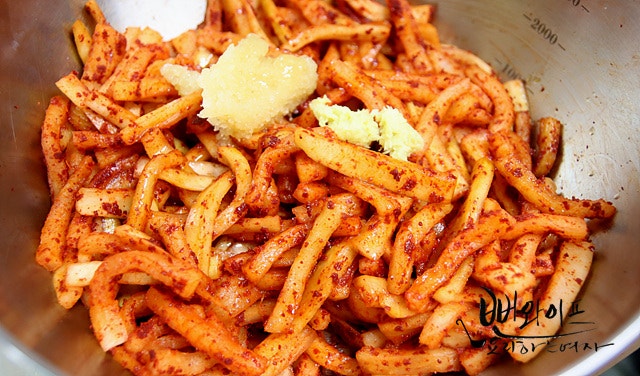
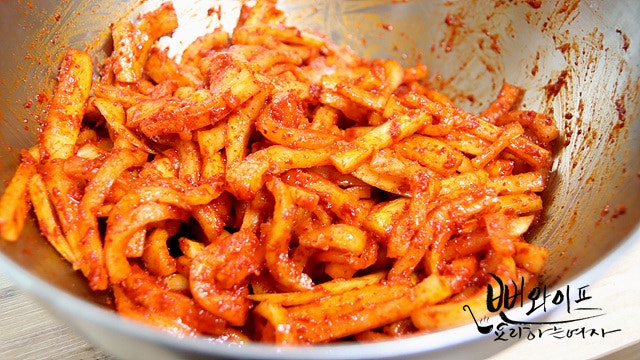
Now add the rest of the seasonings: 2 tbsp minced garlic, 1 tsp minced ginger, 2 tbsp sand lance fish sauce, and 2 tbsp corn syrup (mulyeot), then mix thoroughly.
If you dislike the scent of fish sauce, you can season with salted fermented shrimp (saeujeot) or soy sauce instead.
Taste and adjust the sweetness and seasoning to your liking with corn syrup (or sugar, green plum syrup) or salt...
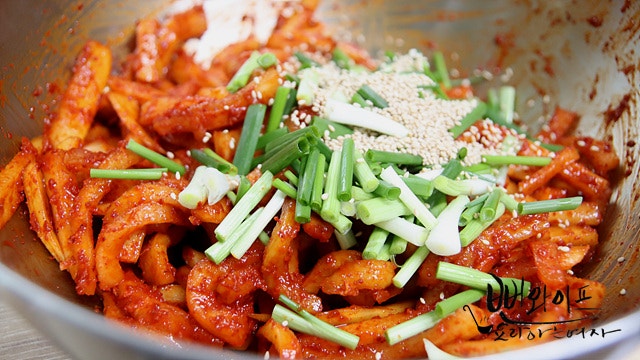
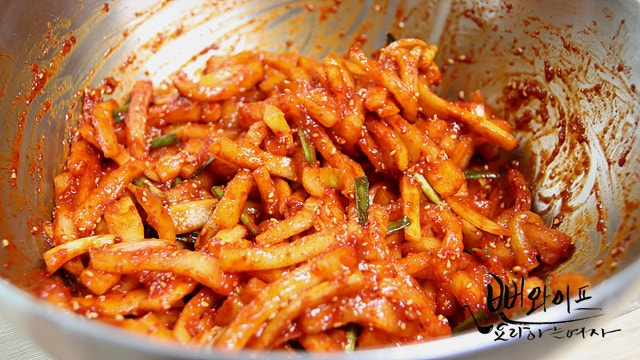
Finish by tossing in the scallions and toasted sesame seeds at the end.
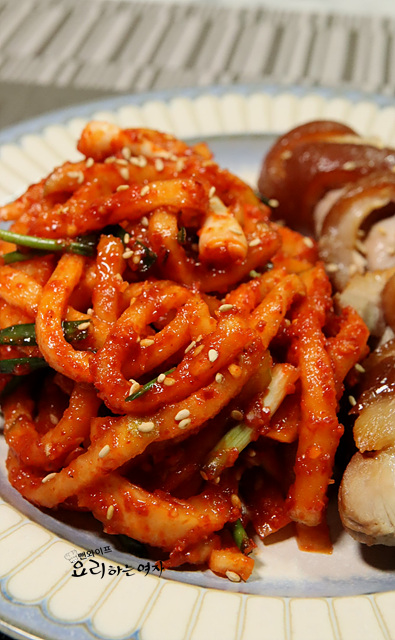
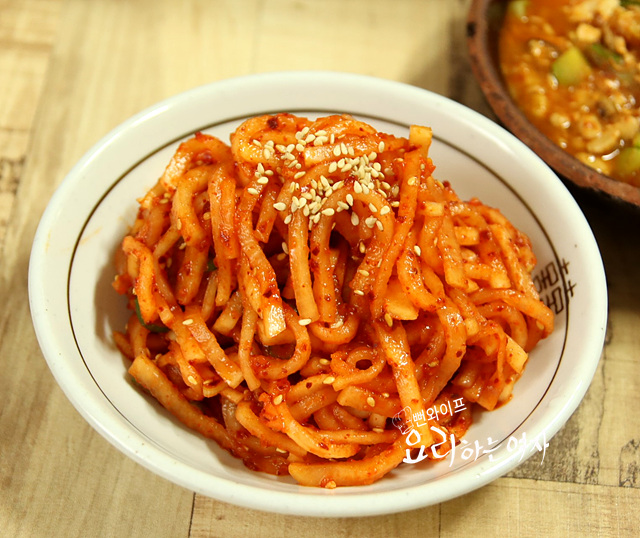
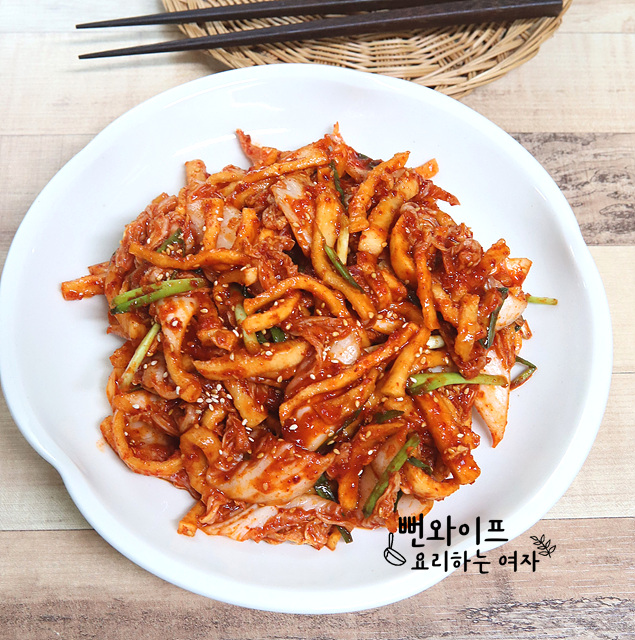
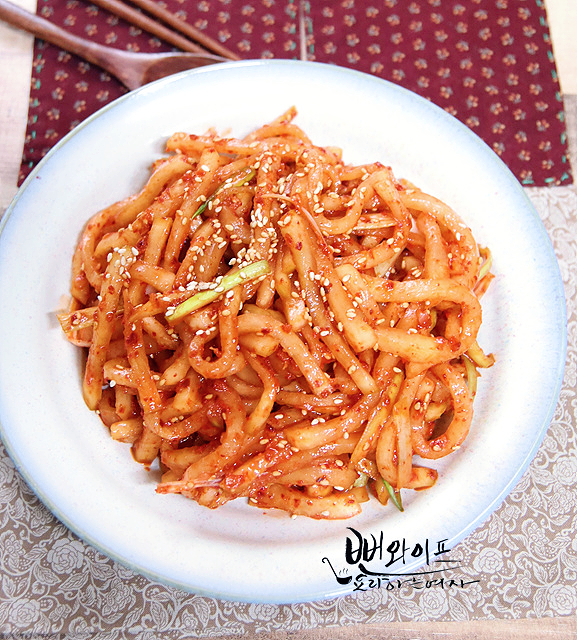
Complete
Tasting it right after tossing, that crunchy bite feels just like dried radish strips.
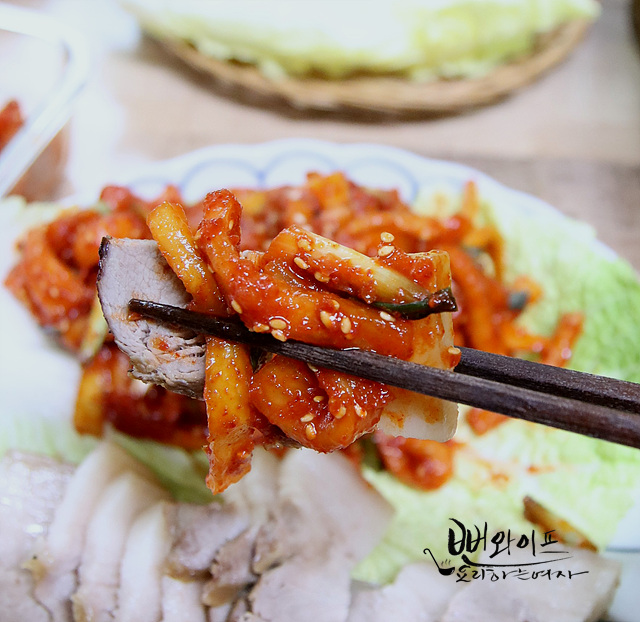
I made this bossam mu kimchi as a side dish, then boiled up some pork bossam to enjoy alongside it.
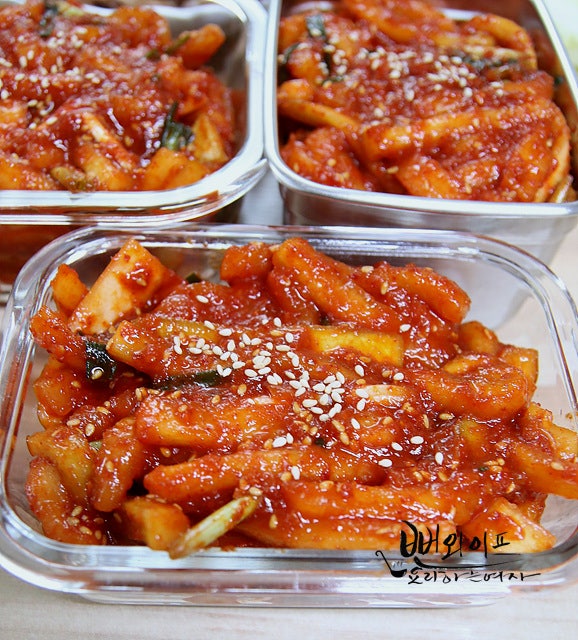
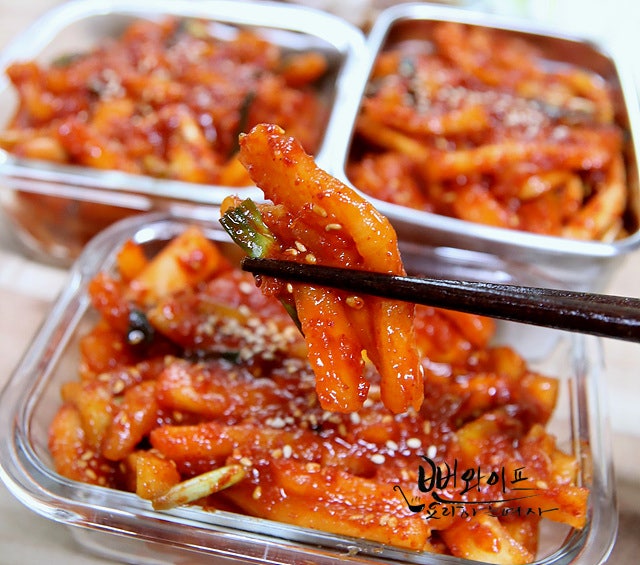
I made a generous batch, divided it into portions, and have been eating it for a week now.
It stays pleasantly moist without releasing any more liquid, so it keeps well for a long time.
It is delicious as is, and even when it ferments slightly and turns pleasantly sour, it tastes wonderful.
 Ppunwife's tips
- Radish for bossam should be sliced thickly like dried radish so it stays neat, chews well, and tastes delicious once salted.
- Do not throw away the leftover radish curing liquid; store it in a container in the refrigerator to use in braised fish or braised short ribs.
- Blending fine gochugaru with your everyday gochugaru yields a much prettier color and a smoother texture.
- If you dislike the smell of fish sauce, you can season with salted fermented shrimp or soy sauce instead.
FAQ
Can I leave the radish unpeeled?
If the skin is thin and not pungent, washing it clean and keeping it on is best, as it helps create that characteristic crunchy bite.
What can I substitute if I don't care for fish sauce?
You can season and toss with salted fermented shrimp (saeujeot) or soy sauce instead of fish sauce.
How can I use the leftover radish curing liquid?
Do not discard it; keep it in the refrigerator and use it in various dishes such as braised fish or braised short ribs.
What can I use if I don't have scallions?
If scallions are unavailable, you can slice and use just the white stem part of a large green onion.