Crunchy Mu Jangajji (Pickled Radish in Soy Sauce)
A simple pickled radish made by drawing out moisture with sugar, then fermenting it in soy sauce and soju.
Translated from Korean by AI and not yet checked by a native speaker. Amounts and numbers are taken directly from the original recipe. Read the Korean original →
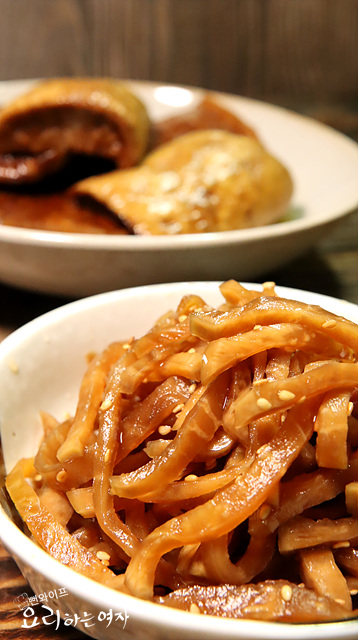
This mu jangajji requires no boiling of the soy brine, drawing out moisture with sugar first to create a pleasantly crunchy, chewy texture. Adding soju prevents white surface mold and off-odors, and after fermenting at room temperature, it keeps in the refrigerator as a dependable banchan all year round.
- Servings
- about 10–12 servings
- Difficulty
- Medium
- Spiciness
- Not spicy
- Keeps
- 365 days
Ingredients
Ingredients
- Korean radish (mu)5, 1.3 kg (medium size)
- Sugar15 cups
Soy sauce brine
- Brewed soy sauce (yangjo-ganjang) (or gin)10 cups
- Soju2 cups
Seasoned pickled radish
- Pickled radish4 cloves
- Corn syrup (mulyeot)2 tbsp
- Vinegar2 tbsp
- Toasted sesame seeds1 tsp
- Prepare medium-sized Korean radishes and use them with the skin on; simply trim away any fine roots and scrub them clean under running water with a brush or a clean scouring pad.
Steps
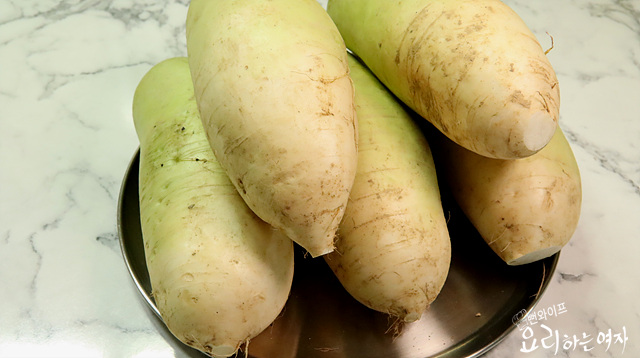
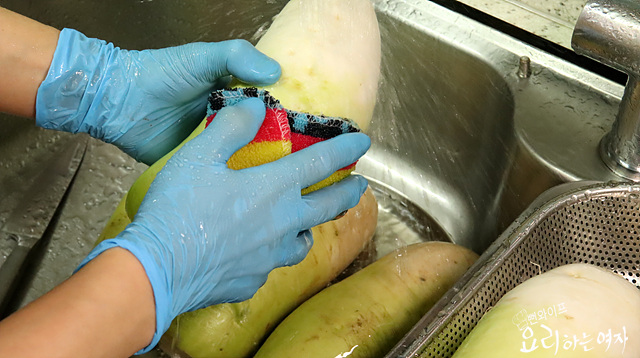
Prepare medium-sized Korean radishes and use them with the skin on.
Simply trim away any fine roots and scrub them clean under running water with a brush or a clean scouring pad.
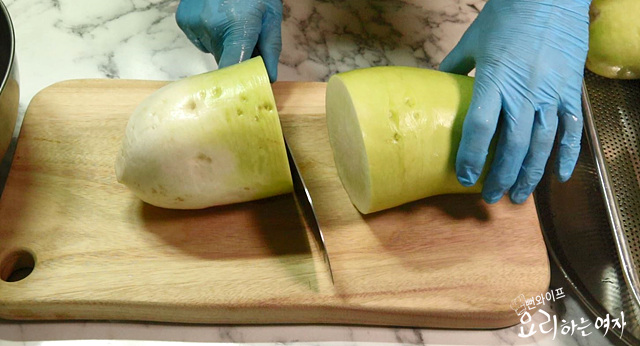
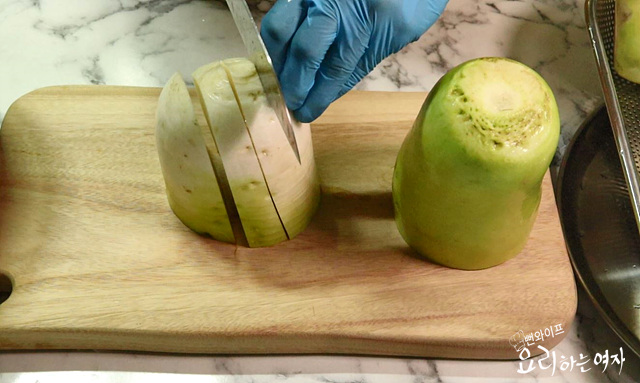
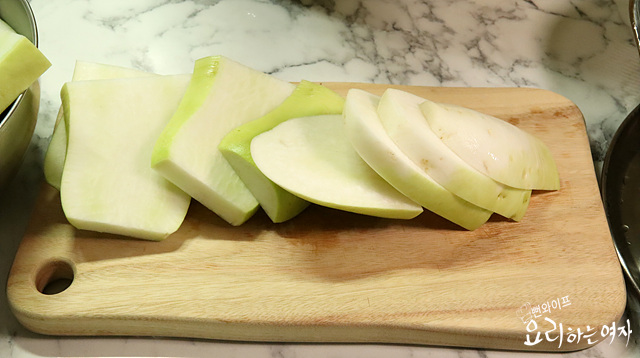
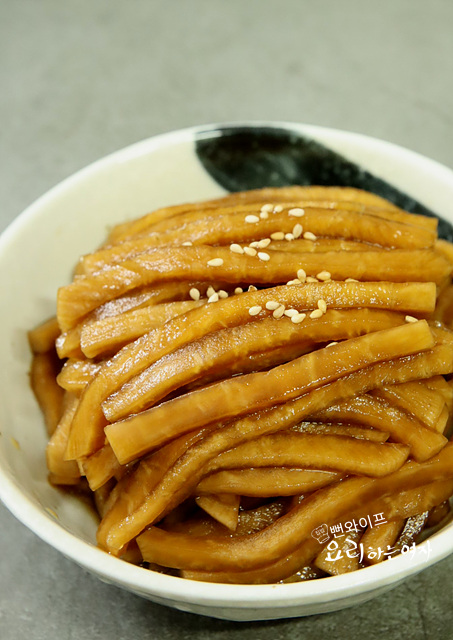
Cut the radish in half lengthwise, then slice into pieces about 3 cm thick.
You can adjust the size or thickness to your liking.
Just make sure not to slice them too thin.
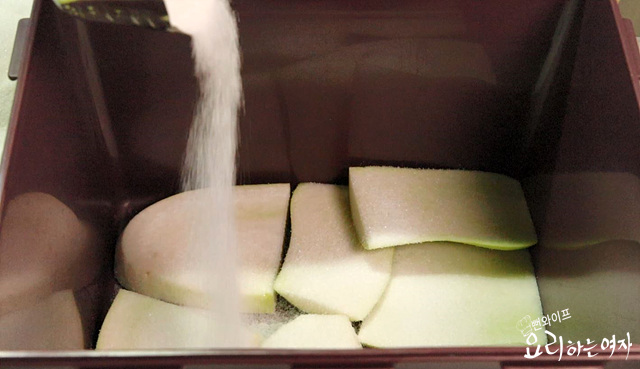
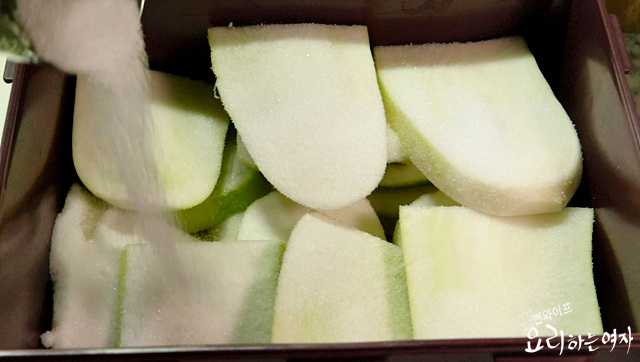
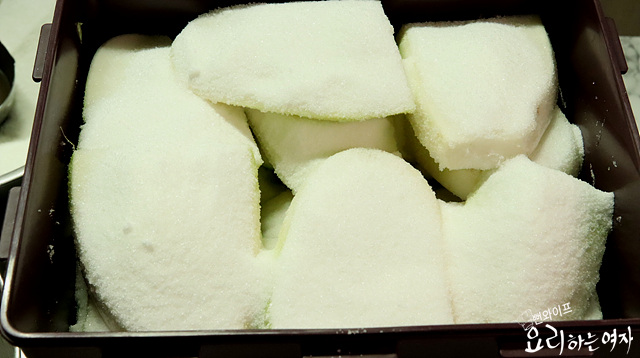
Lay a layer of radish in an airtight container and sprinkle sugar evenly over it.
Repeat by adding another layer of radish and sprinkling sugar over it.
It works out to about 3 cups of sugar per 1 radish.
Cover with the lid and leave at cool, shaded room temperature.
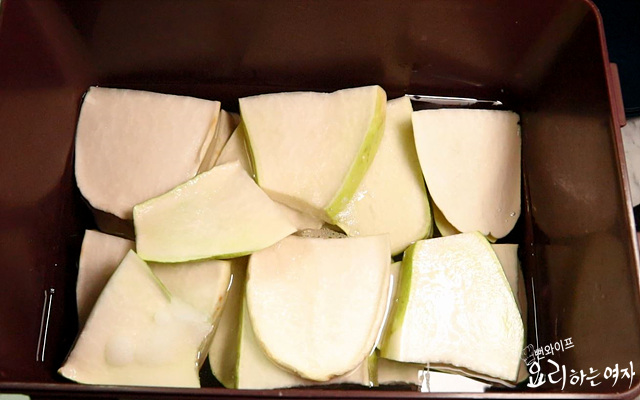
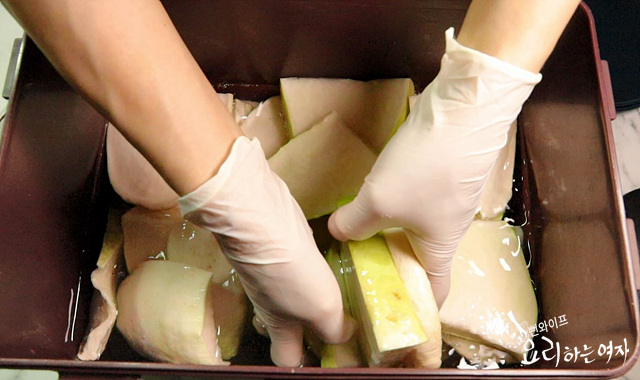
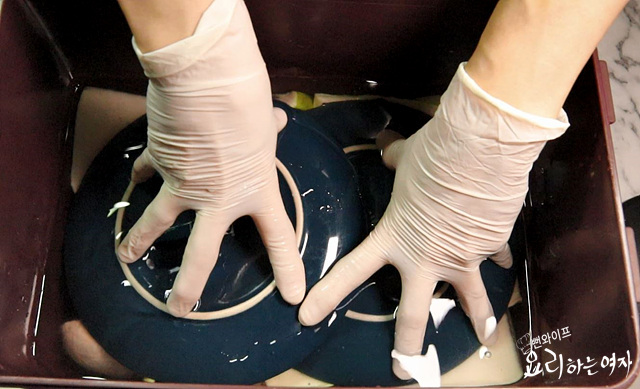
Even though only a day has passed, almost all the sugar has dissolved and a lot of moisture has been drawn out of the radish.
Swap the positions of the radishes on the bottom and top,
then press them down with a plate or a fermenting weight so they are fully submerged in the sugar syrup, and leave at room temperature again.
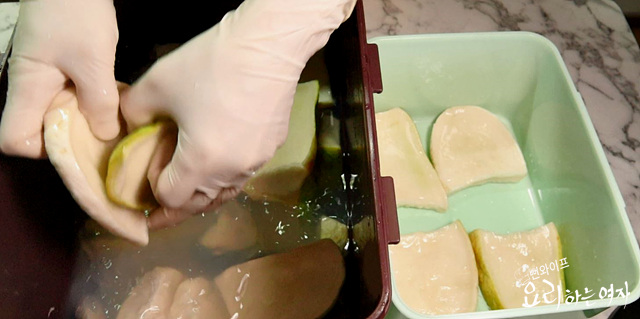
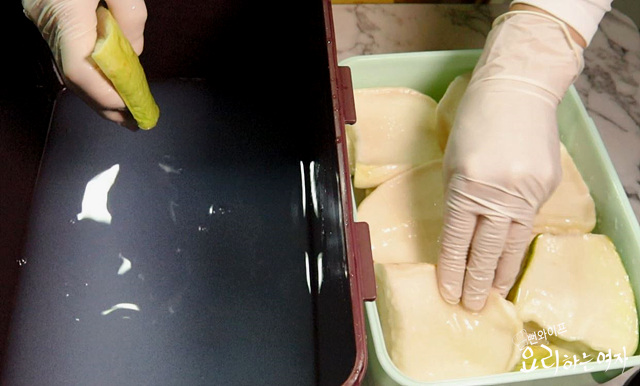
After 3 days, the radish has released all its moisture, shrunk significantly in volume, and turned chewy.
Pickling in sugar does not make the radish sweet.
Without rinsing, transfer the radishes to another smaller container and pack them in neatly.
Some say you can reuse the sugar syrup as a pickling liquid,
but because it was diluted by the liquid drawn from the radish, I simply discarded it.
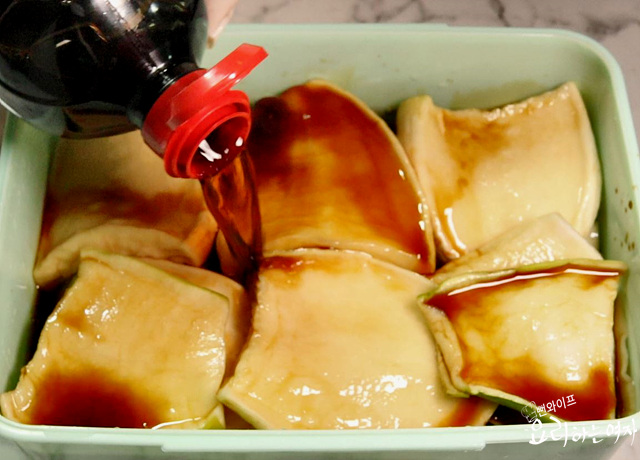
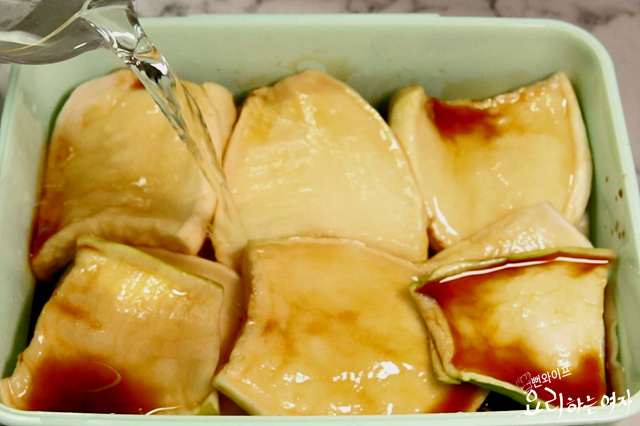
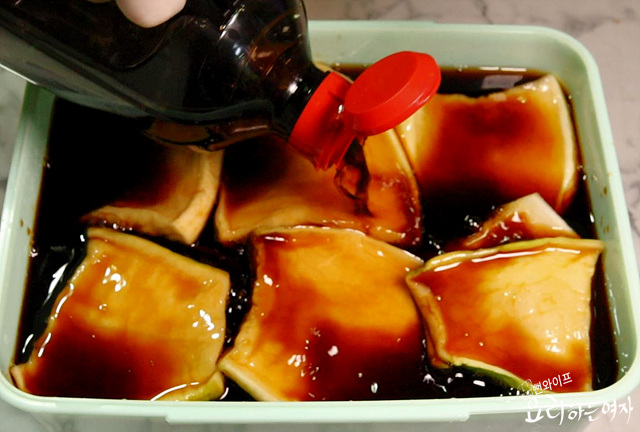
Pour brewed soy sauce into the container until it is about halfway full (5 cups), then pour in 2 cups of soju,
and add more brewed soy sauce (5 cups) until the radishes are submerged.
When you press down with a fermenting weight or a plate, the radishes will sink right in, so you do not need to pour in more soy sauce than necessary.
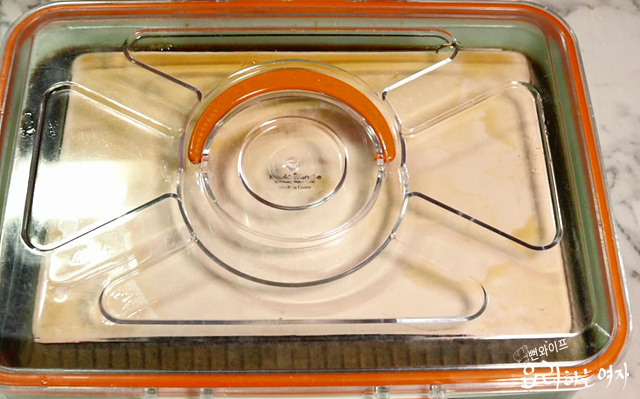
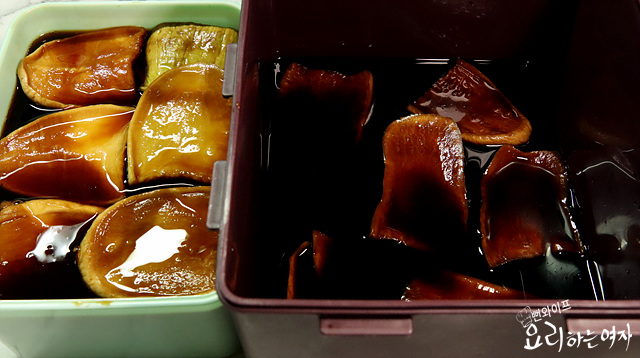
Press down so the radishes are fully submerged in the soy sauce brine, then leave at cool room temperature.
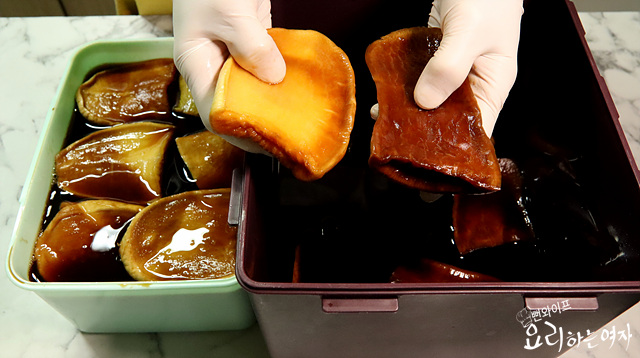
The radishes in the left container were aged for 3 days, and the ones on the right are after 7 days.
You can see a big difference in color and wrinkling.
By day 3, they are mildly seasoned and pleasant to eat as is, but the texture is not quite satisfying yet;
by day 7, the seasoning has soaked deep into the radish, making it savory and nicely chewy with just the right texture.
From this point on, keep them in the refrigerator submerged in the soy sauce brine to enjoy all year round.
You can bring the leftover soy sauce brine to a rolling boil, let it cool, and reuse it for other pickles.
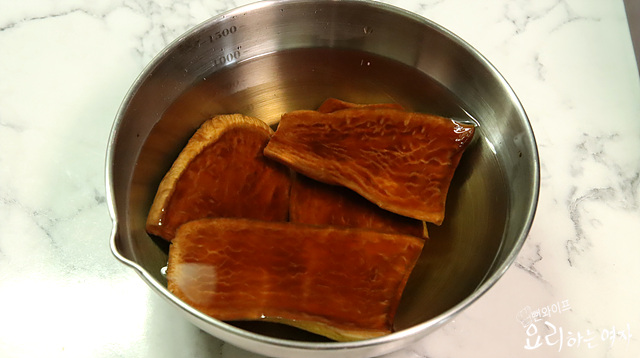
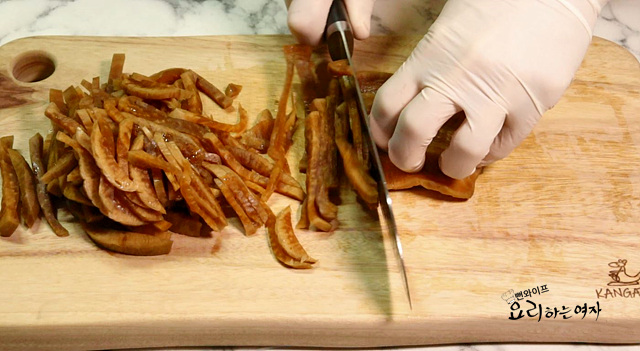
If it tastes too salty to eat as is, soak it in water, changing the water occasionally until the excess salt is drawn out, before using.
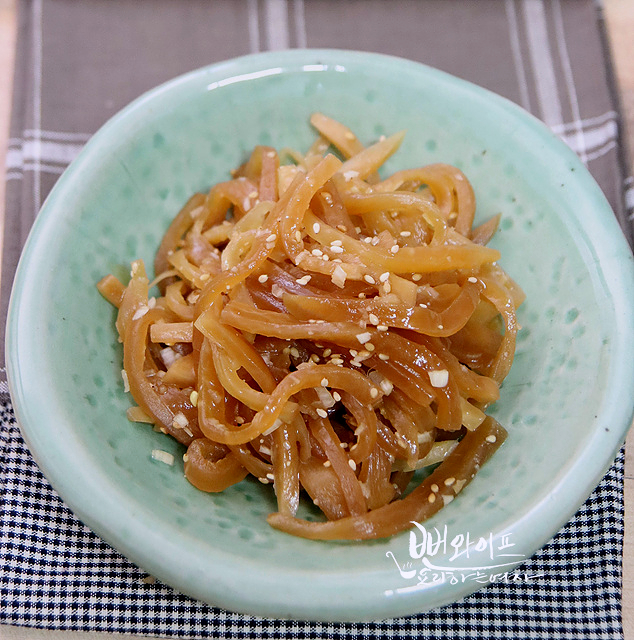
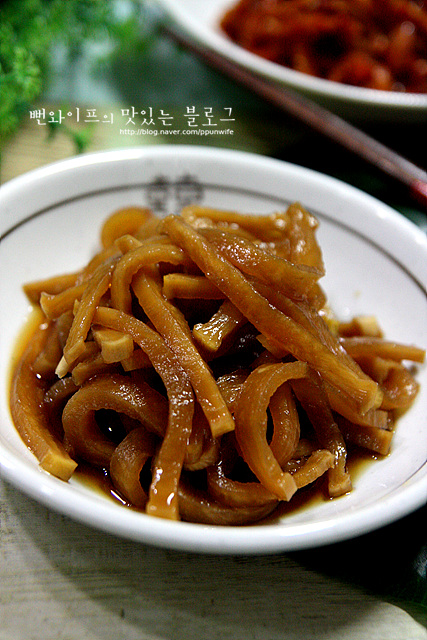
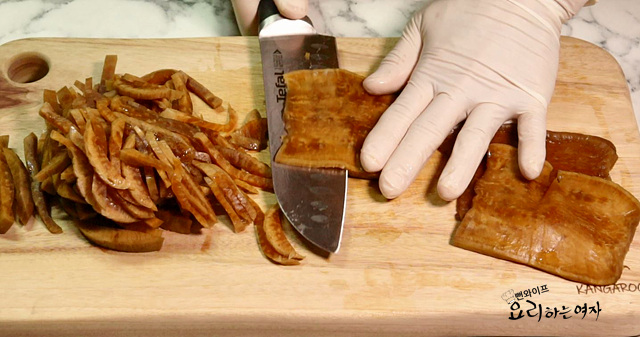
Drain the water thoroughly; slice any thicker pieces, then cut them into thin strips.
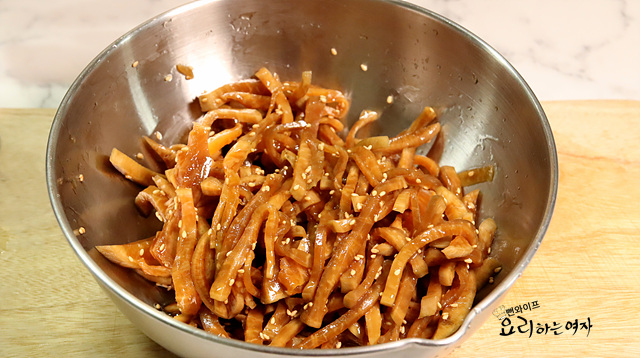
For a clean taste, I tossed it with just corn syrup, vinegar, and toasted sesame seeds,
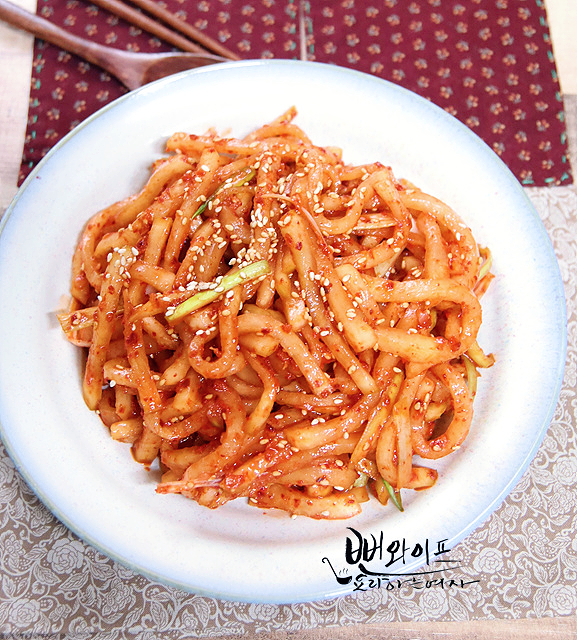
but it is also delicious if you add thinly sliced Cheongyang chili peppers for heat,
or season it with garlic, gochugaru, and toasted sesame oil.
However, it is best to add only a tiny bit of toasted sesame oil.
 Ppunwife's tips
- When you press down with a fermenting weight or a plate, the radishes will sink right in, so you do not need to pour in more soy sauce than necessary.
- You can bring the leftover soy sauce brine to a rolling boil, let it cool, and reuse it for other pickles.
- If it tastes too salty to eat as is, soak it in water, changing the water occasionally until the excess salt is drawn out, before using.
- When seasoning, it is best to add only a tiny bit of toasted sesame oil.
- When using it in gimbap, season it generously with sugar and vinegar for a sweet and tangy flavor.
FAQ
Is it really okay not to boil the soy sauce brine before pouring it in?
Drawing out enough moisture with sugar first and adding soju prevents white surface mold and off-odors, so it cures well even without boiling.
What should I do if the finished mu jangajji is too salty?
If the saltiness is too strong, soak it in cold water, changing the water occasionally to draw out the excess salt, then squeeze out the moisture firmly before using it in your dish.
What do I do with the sugar liquid left after pickling the radish?
You can reuse it as pickling liquid, but since it becomes quite diluted with the liquid released from the radish, it is fine to discard it.
Can I reuse the soy sauce brine after finishing the mu jangajji?
You can bring the leftover soy sauce brine to a rolling boil in a pot, let it cool completely, and reuse it when making other jangajji.