Crunchy No-Boil Mu Jangajji (Pickled Radish in Soy Sauce)
A pickled radish dish aged in an unboiled soy sauce brine after drawing out moisture with sugar.
Translated from Korean by AI and not yet checked by a native speaker. Amounts and numbers are taken directly from the original recipe. Read the Korean original →
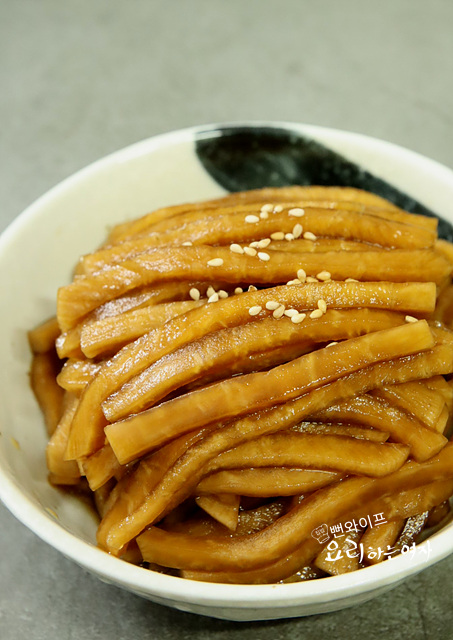
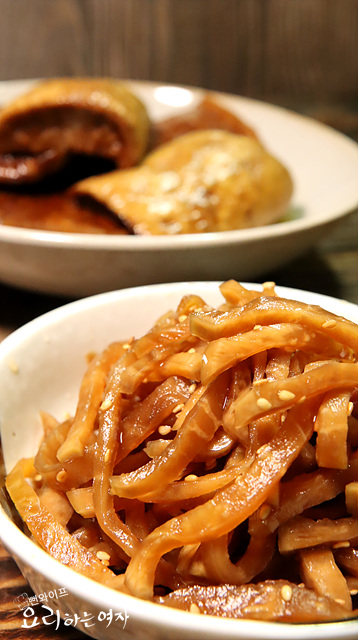
This pickled side dish skips boiling the soy sauce brine and adds soju instead, keeping it fresh for a long time without white yeast film forming. Salting shredded radish in sugar first removes excess moisture, bringing out its signature crunchy texture. It goes wonderfully as a filling for gimbap or as a side dish for grilled meats.
- Servings
- about 8–10 servings
- Difficulty
- Easy
- Spiciness
- Not spicy
- Keeps
- 365 days
Ingredients
Ingredients
- Korean radish (mu)2, 1.2 kg (small pickling size for dongchimi, approx.)
- Sugar1 cup
Soy sauce brine
- Water1 cup
- Soy sauce2 cups
- Vinegar1 cup
- Soju1/2 cup
- If the peel is clean, slice it without peeling; it will be much crunchier and tastier.
- Pour in the sugar and mix evenly to pickle and draw out the moisture.
Steps
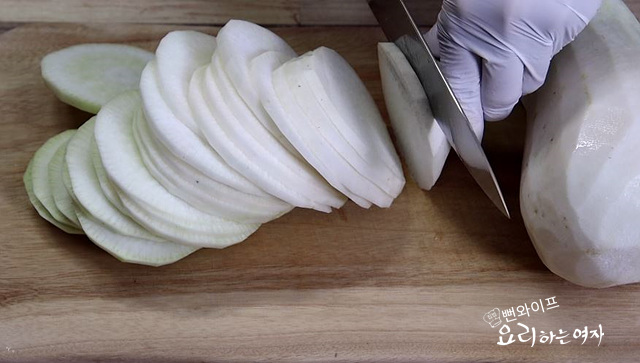
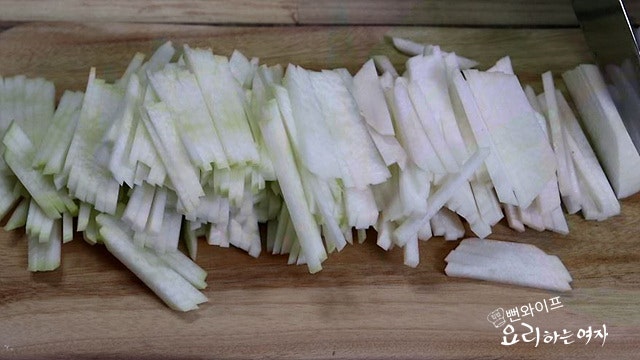
Since these are for pickles, slicing them too thin makes them look messy and ruins the texture.
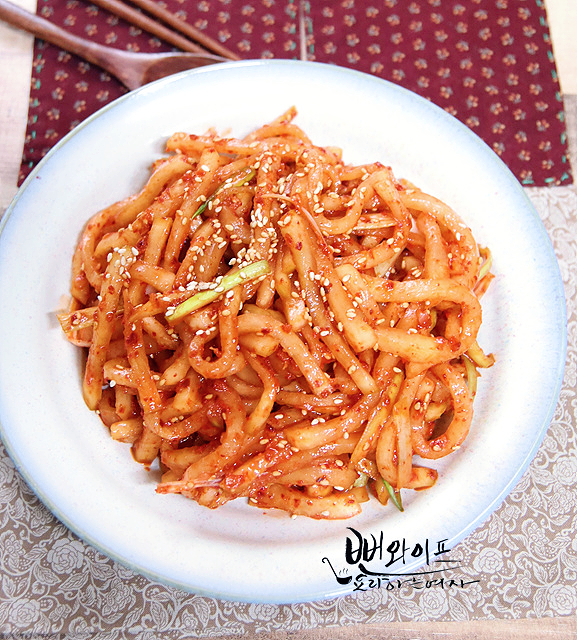
Julienne them to about 0.7 cm thick, just like when making radish kimchi for bossam.
My radish was a bit scruffy, so I peeled it all off, but if the peel is clean, leave it unpeeled before slicing; it will have a much crunchier, better texture.
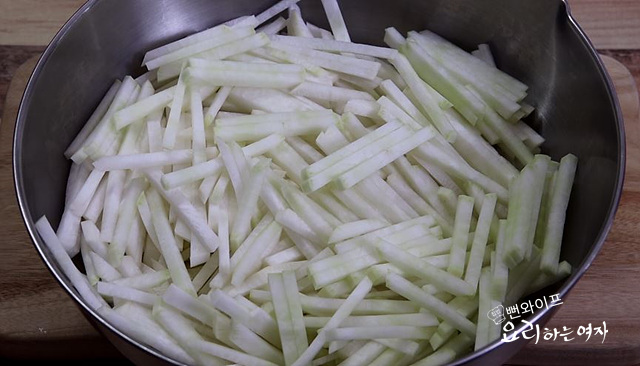
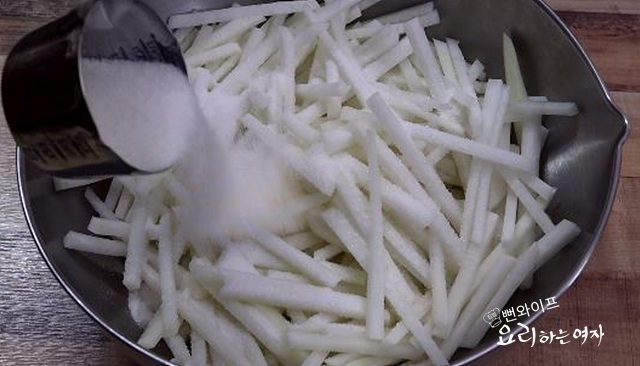
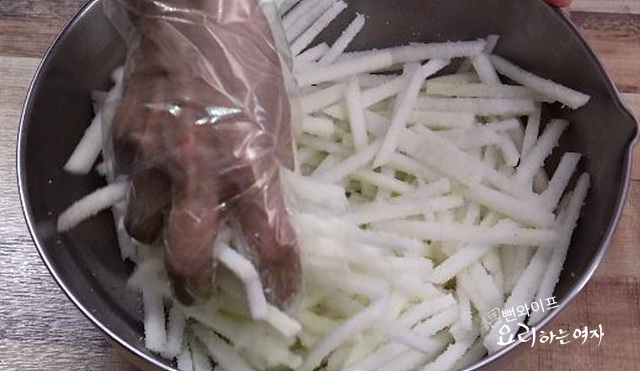
Pour in 1 cup of sugar, mix well, and let it pickle for about 2 hours. Toss it occasionally in between so it pickles evenly.
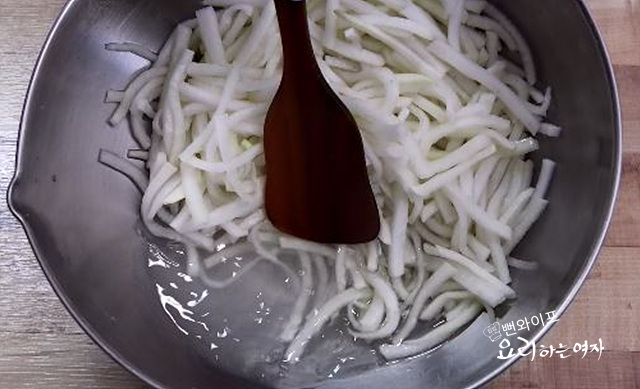
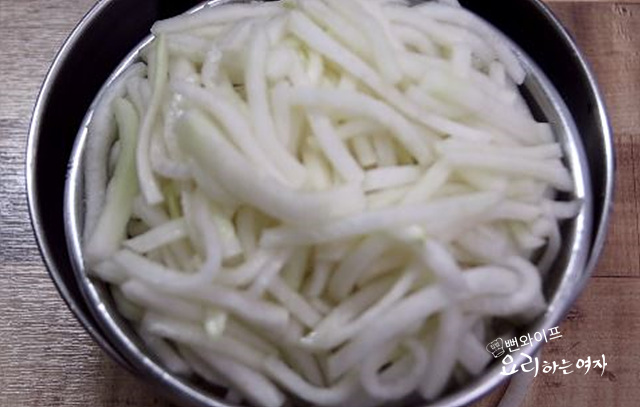
A lot of water has drawn out as the radish pickled. Drain it through a sieve.
Pickling it with sugar first like this allows it to retain a wonderful crunchy texture even after soaking in the soy sauce brine.
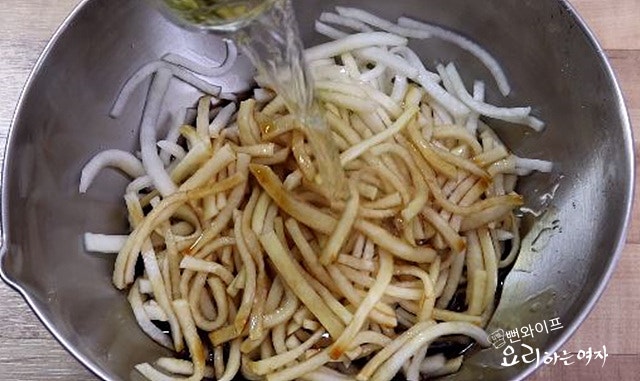
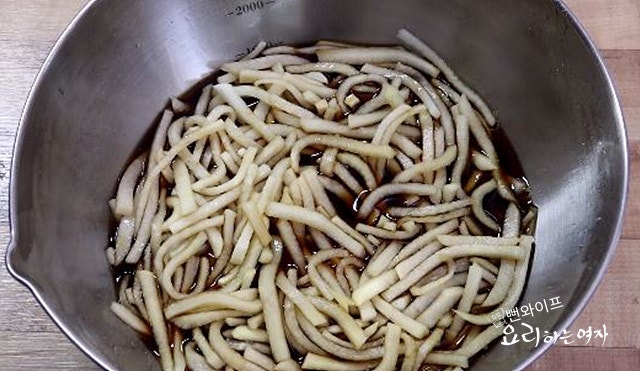
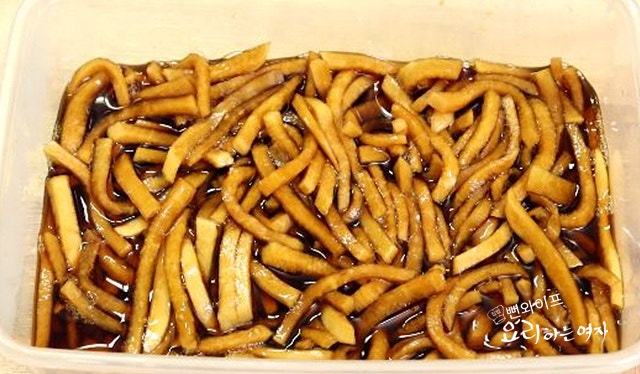
Pour in 1 cup of water, 2 cups of soy sauce, 1 cup of vinegar, and 1/2 cup of soju, mix well, and transfer to a container. Weigh the radish down with a plate so it stays submerged in the soy sauce brine, then let it mature in a cool place.
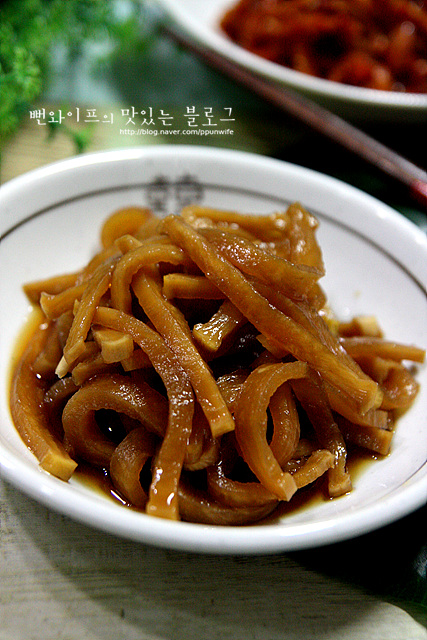
After about 3 days, the color will change and the flavor will have soaked in nicely.
Taste the radish, and if it feels too bland or lacks acidity, add a bit more soy sauce or vinegar, mix, and store it in the refrigerator to eat.
 Ppunwife's tips
- Even without repeatedly boiling the soy sauce brine, the addition of soju sterilizes it, keeping it clean and free of white surface film.
- Weigh down the radish with a plate so it stays submerged in the soy sauce brine, then age it in a cool place.
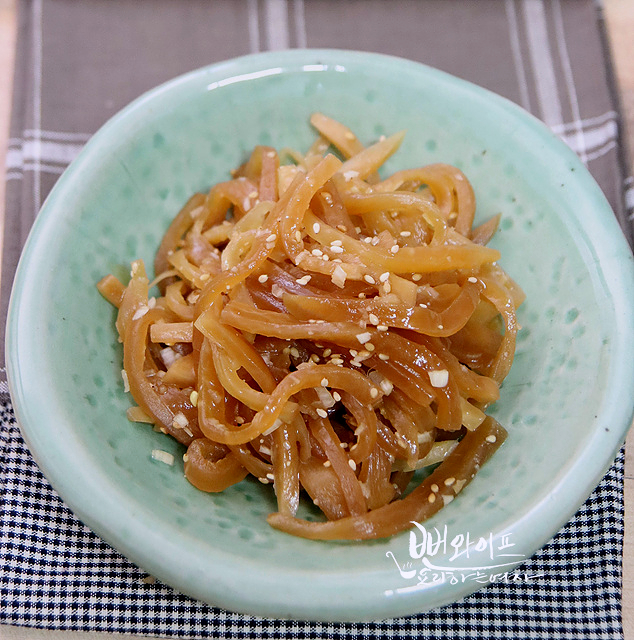
- Beyond using it as a gimbap filling, it pairs nicely with grilled meats, or you can squeeze out the moisture and toss it with just toasted sesame oil and ground toasted sesame seeds for a quick side dish.
FAQ
Do I have to peel the radish?
If the skin is clean, slicing and pickling it with the peel on makes the texture much crunchier and tastier.
Will it spoil if I don't boil the soy sauce brine?
Adding soju to the soy sauce brine provides a sterilizing effect, so it can be stored cleanly without forming a white surface film.
How many days after making it can I eat it?
After aging in a cool place for about 3 days, the color and flavor will soak in nicely, and it will be ready to eat.
How can I serve the finished pickles?
They work well as a gimbap filling or paired with grilled meats, and you can also squeeze out the liquid and toss them with toasted sesame oil and ground toasted sesame seeds as a side dish.