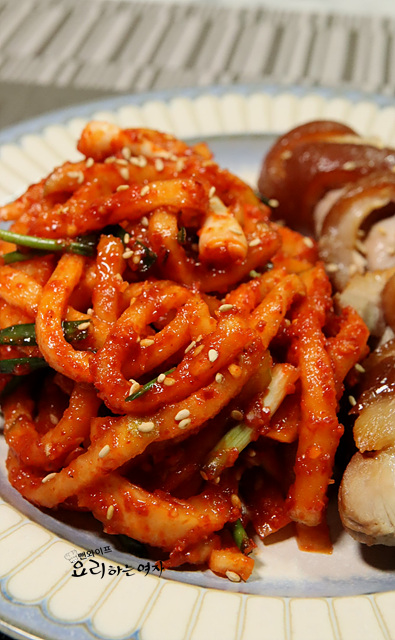
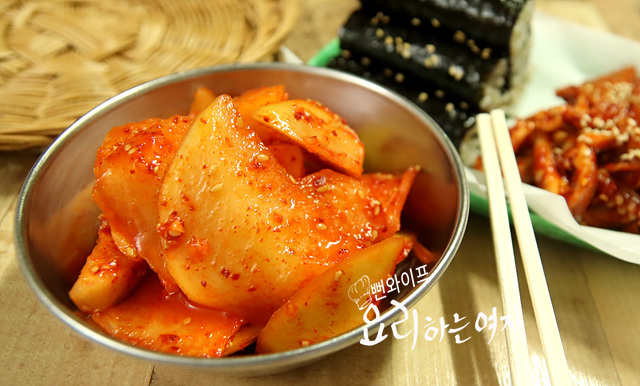
Soup-Restaurant Seokbakji (Radish Kimchi) with Soda
A crunchy radish kimchi side dish made without glutinous rice paste, using lemon-lime soda for a refreshing, sweet depth of flavor.
Translated from Korean by AI and not yet checked by a native speaker. Amounts and numbers are taken directly from the original recipe. Read the Korean original →
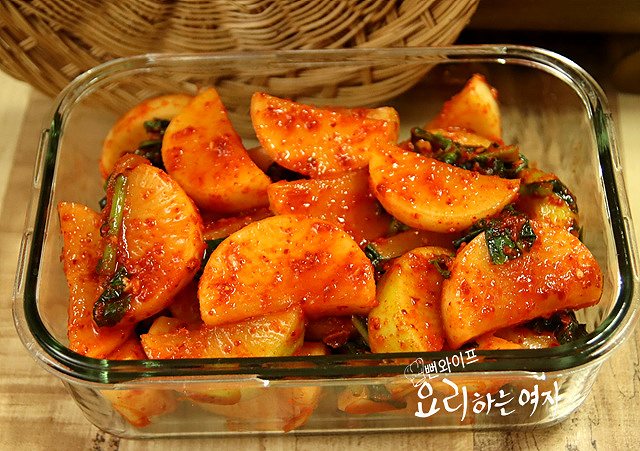
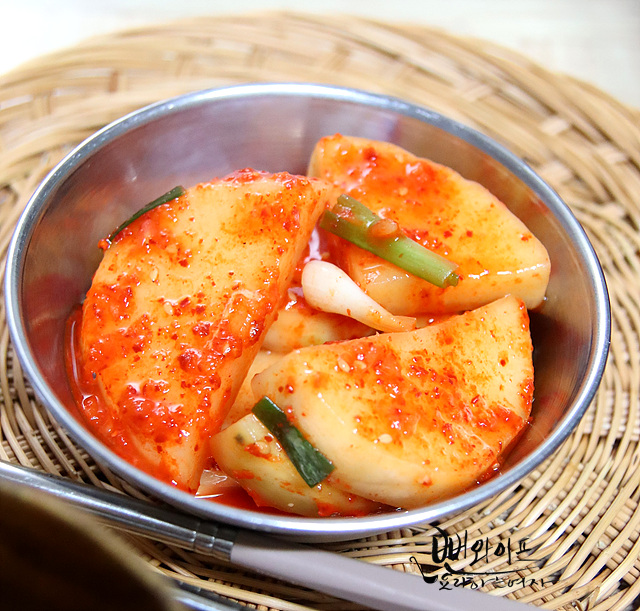
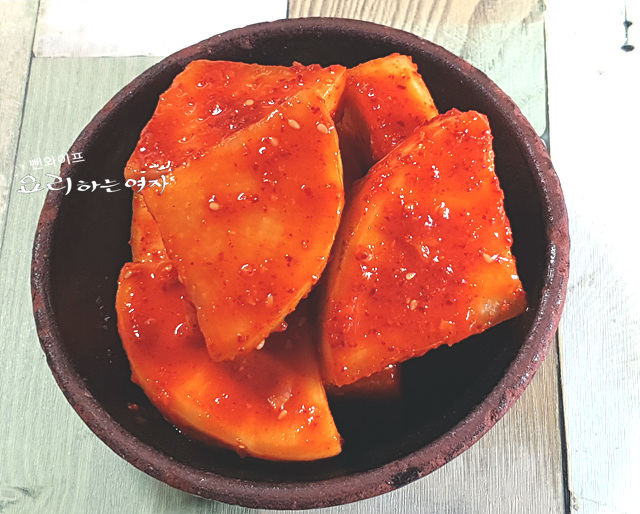
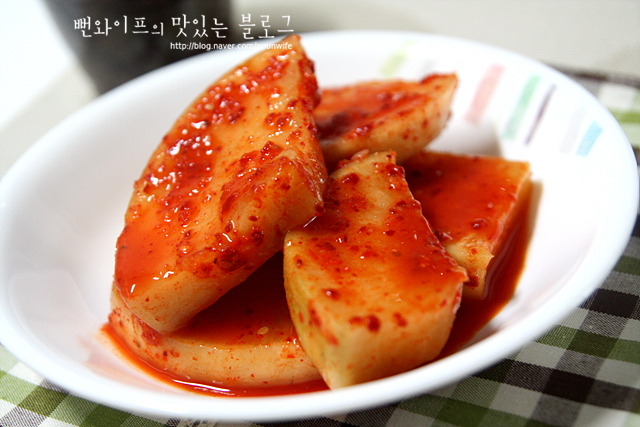
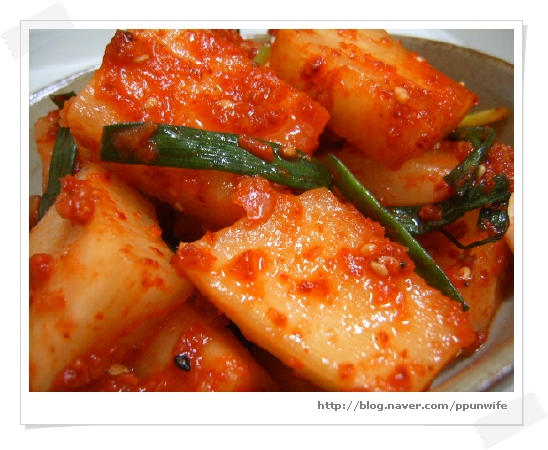
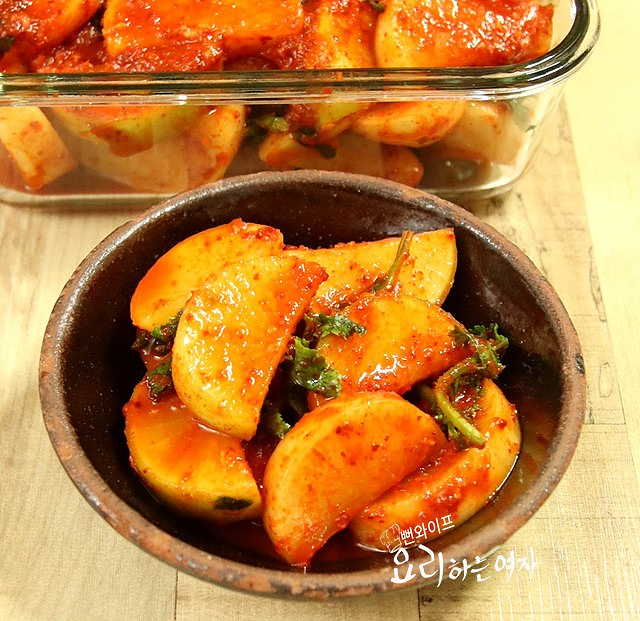
This Seokbakji is made without making glutinous rice paste, using lemon-lime soda instead to capture the crisp, clean flavor of Korean soup restaurants. Thickly sliced radishes with the peel left on give it a wonderfully crunchy texture, making it a great winter side dish once fermented until pleasantly tangy.
- Servings
- about 10–12 servings
- Difficulty
- Easy
- Spiciness
- Mildly spicy
- Keeps
- 30 days
Ingredients
Ingredients
- Korean radish (mu)2 kg
- Coarse sea salt4 tbsp
- Water4 tbsp
Seasoning
- Gochugaru (Korean chili flakes)5 tbsp
- Minced garlic2 tbsp
- Minced ginger1/2 tbsp
- Salted fermented shrimp (saeujeot)2 tbsp
- Lemon-lime soda (chilsung cider)1/2 cup
- Green plum syrup (maesil-cheong) (or sugar 1 tbsp)2 tbsp
- Salt the radishes for about 1 hour to 1 hour 30 minutes, adjusting the time as you check how they are pickling.
- You can use 5 small radishes of dongchimi size (2 kg) or 1 large 2 kg radish.
- Leaving the peel on keeps the radish kimchi crunchy, and only tender radish greens are selected and added in.
Steps
Prepare the ingredients
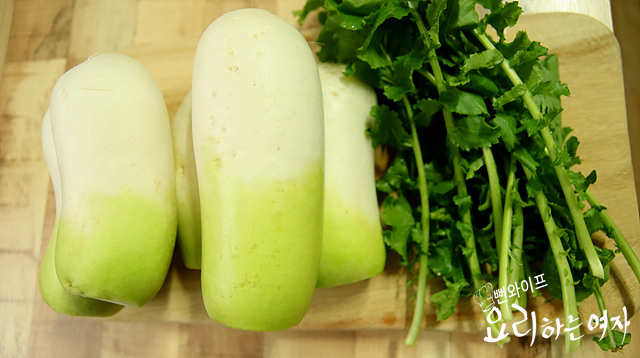
5 small radishes of dongchimi size weigh 2 kg.
You can also use 1 large 2 kg radish.
Leaving the peel on gives the radish kimchi a great texture.
Also, pick only tender radish greens to make the kimchi together.
Slice
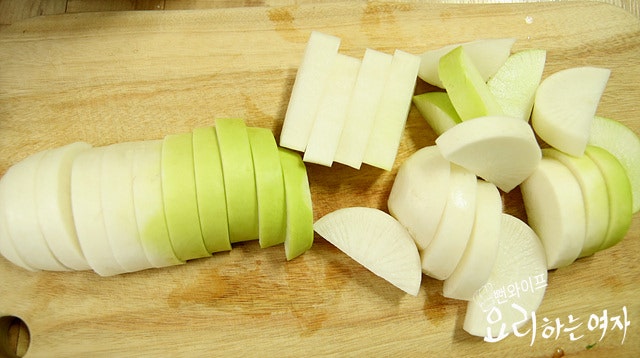
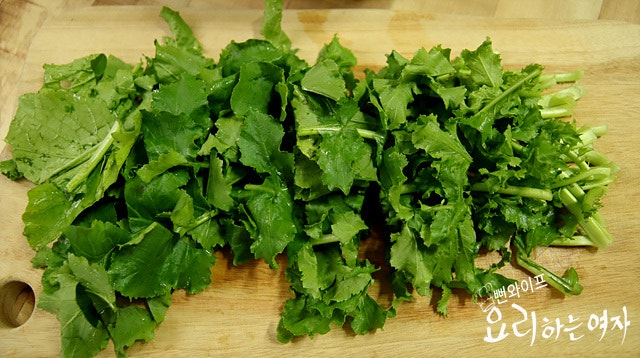
I cut them in half lengthwise and sliced them into thick 1 cm half-moons; for a large radish, you can quarter it lengthwise and slice it into fan shapes. Cut the radish greens into lengths of about 3 cm.
Salt the radish
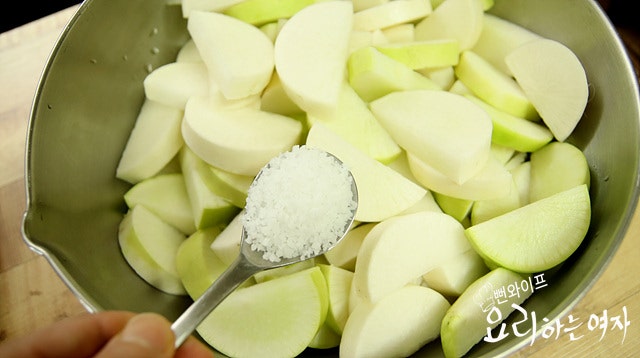
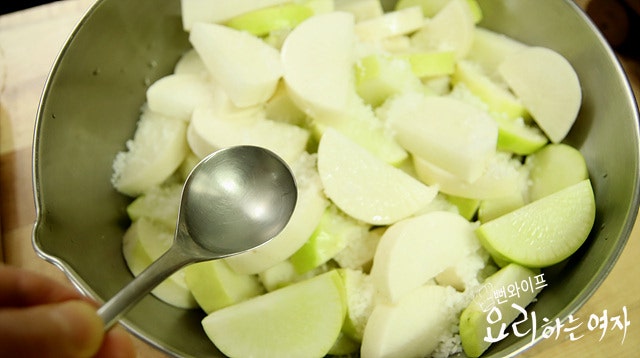
Place the radishes in a large bowl, add 4 tbsp coarse sea salt and 4 tbsp water, mix thoroughly, and let them pickle.
Adjust the time between 1 hour and 1 hour 30 minutes while checking how the radishes are pickling.
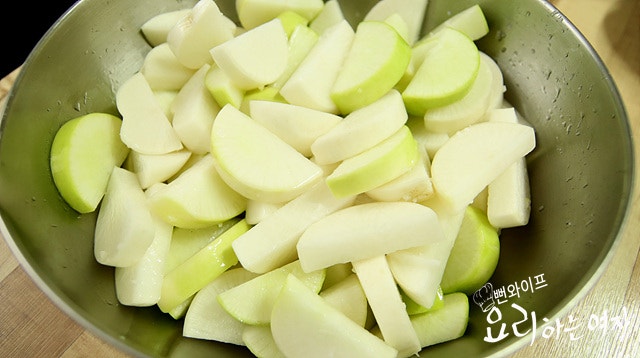
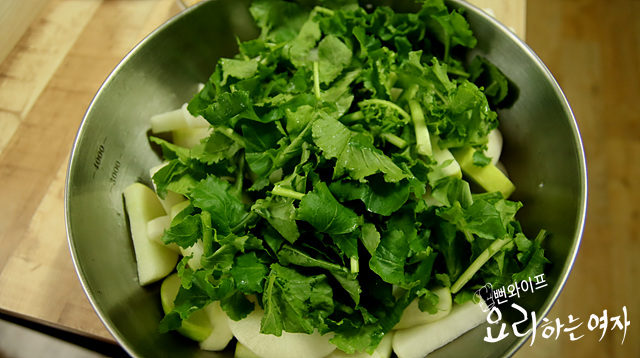
Turn the radishes halfway through pickling, and after 30 minutes to 1 hour, add the radish greens, mix well, and pickle for 30 minutes more.
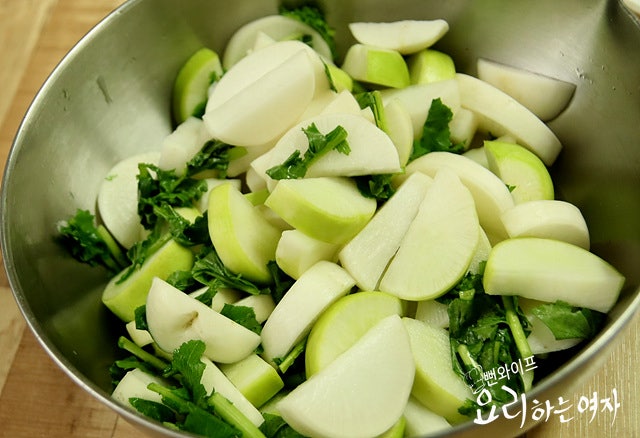
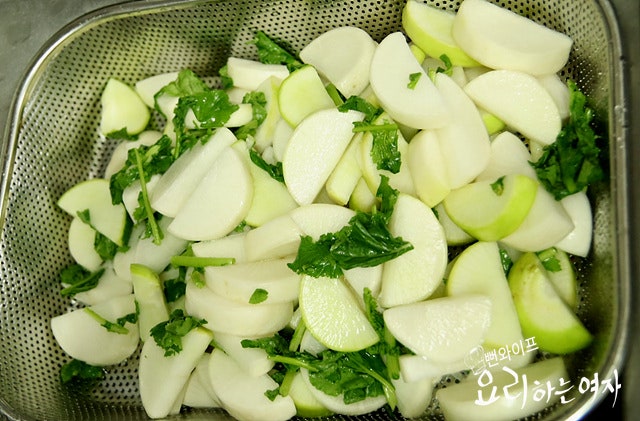
When pickled properly, the surface of the radish becomes pliable and it will taste pleasantly mild rather than salty when chewed.
Chew a piece of radish to check the seasoning; if it tastes salty, rinse it until it reaches your desired saltiness.
Mine was salted just right, so I did not rinse it and simply drained it in a colander.
Season
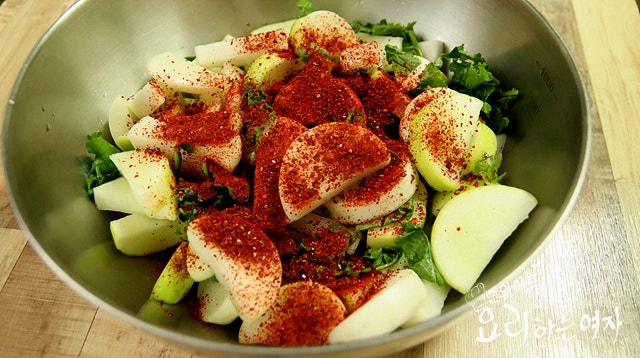
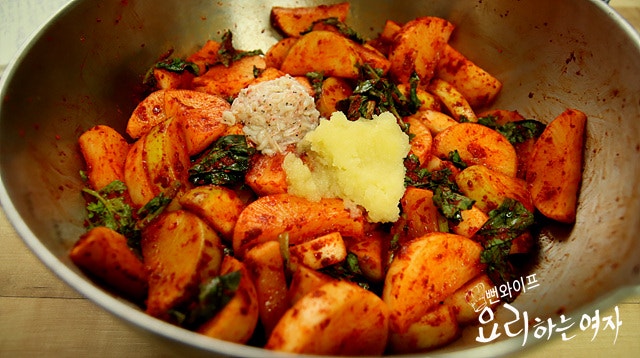
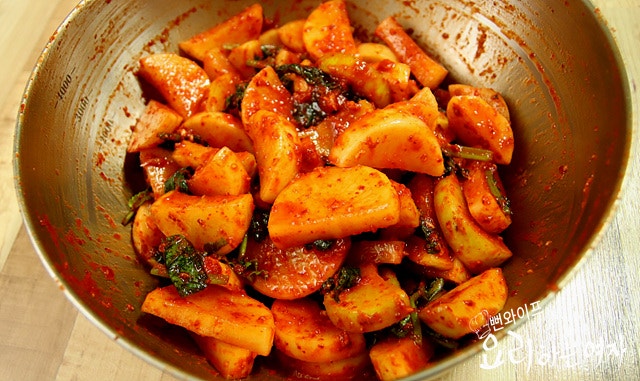
Put the radish in a bowl, add 5 tbsp gochugaru, and toss well to coat it with color.
For a prettier and faster color, it is good to mix fine gochugaru half and half with regular flakes.
After 30 minutes, add 2 tbsp minced garlic, 1/2 tbsp minced ginger, 2 tbsp salted fermented shrimp, 1/2 cup lemon-lime soda, and 2 tbsp green plum syrup (= 1 tbsp sugar), then mix thoroughly.
Taste and adjust with salt or salted fermented shrimp if it is bland, and add sugar or green plum syrup if you prefer it sweeter.
Finish
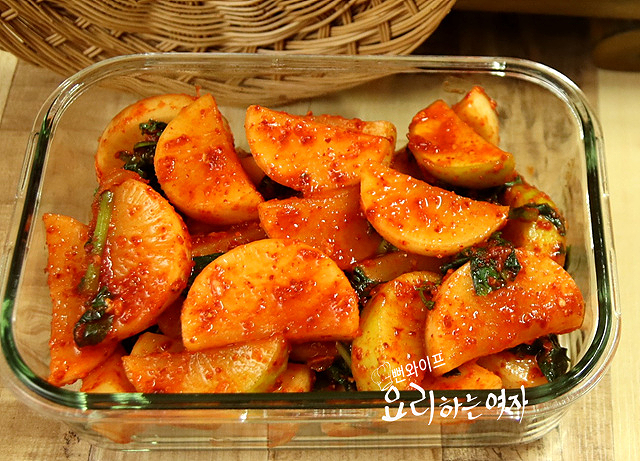
The radishes are firm, so the crunch is truly wonderful.
Once fermented tangy and stored in the kimchi fridge, it might even rival your treasured winter gimjang kimchi.
 Ppunwife's tips
- For a prettier and faster color, it is good to mix fine gochugaru half and half with regular flakes.
- Taste and adjust with salt or salted fermented shrimp if it is bland, and add sugar or green plum syrup if you prefer it sweeter.
FAQ
Is there a reason for keeping the radish peel on?
Leaving the peel on gives the radish kimchi a much crunchier texture.
Do the salted radishes have to be rinsed in water?
If you chew a piece and it tastes mild without being too salty, you do not need to wash it; simply drain it in a colander. However, if it tastes salty, rinse it in water until it suits your taste.
Can I substitute another ingredient for green plum syrup in the seasoning?
You can substitute 1 tbsp of sugar for 2 tbsp of green plum syrup to adjust the sweetness.