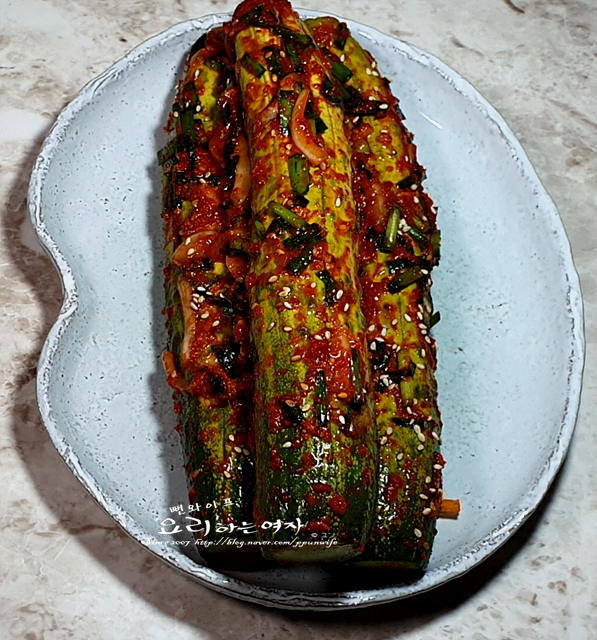
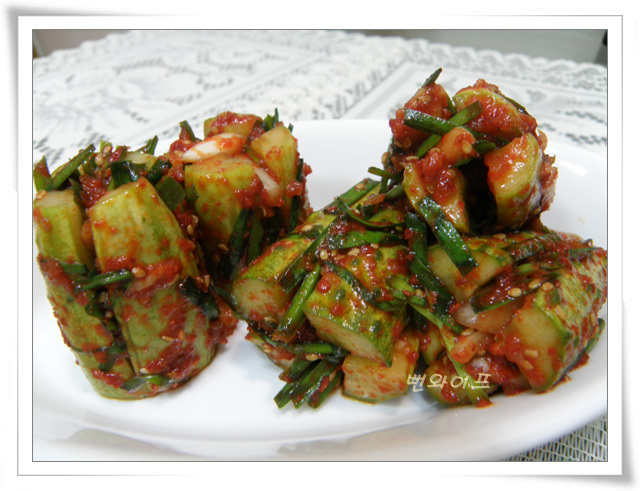
Crisp Oi Sobagi (Stuffed Cucumber Kimchi) without Porridge
A fresh white cucumber kimchi tossed cleanly without glutinous rice porridge to highlight its vibrant flavor.
Translated from Korean by AI and not yet checked by a native speaker. Amounts and numbers are taken directly from the original recipe. Read the Korean original →
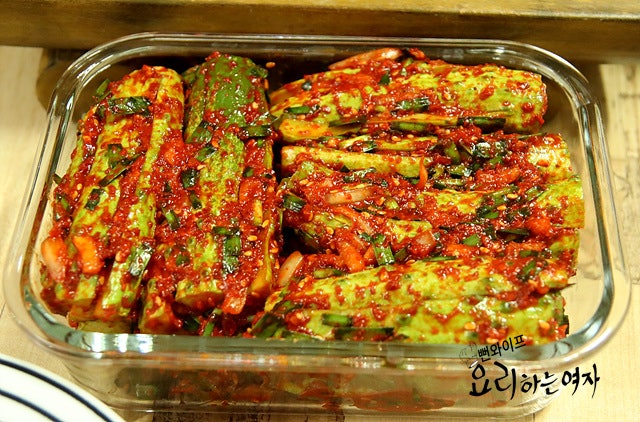
Because it uses no porridge or cooked rice, the seasoning does not slip off and clings cleanly like a fresh geotjeori. Pickling in boiling salt water keeps the crunch all the way through to the end. Made with simple, accessible ingredients, it is a clean side dish perfect for everyday meals.
- Servings
- about 8–10 servings
- Cook time
- 60 minprep not included
- Difficulty
- Medium
- Spiciness
- Mildly spicy
Ingredients
Ingredients
- White cucumber10
- Garlic chives (buchu)150 g
- Korean radish (mu)150 g
- Onion1/4
- Water8 cups
- Coarse sea salt2/3 cup
Seasoning
- Gochugaru (Korean chili flakes)1 cup
- Minced garlic3 tbsp
- Minced ginger1/2 tbsp
- Salted fermented shrimp (saeujeot)2 tbsp
- Sand lance fish sauce (or dried anchovies)2 tbsp
- Sugar (or green plum syrup (maesil-cheong))2 tbsp
- Anchovy broth (or water)1/2 cup
- Toasted sesame seeds1 tbsp
- You only need a small amount of garlic chives, Korean radish, and onion for the filling.
Steps
Prepare the ingredients
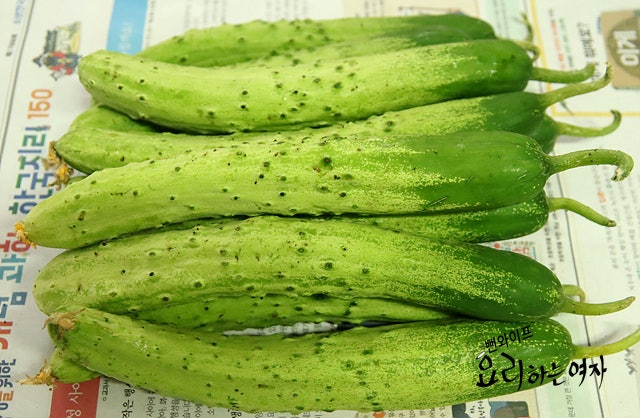
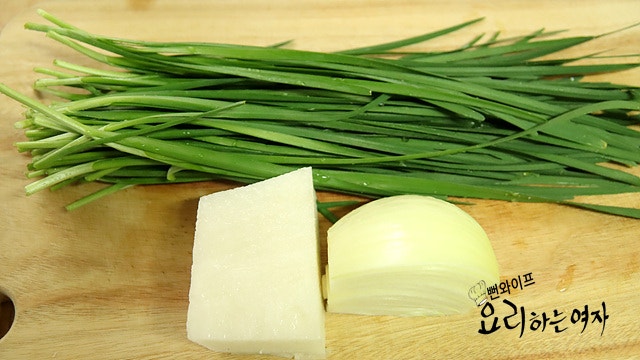
Here are 10 white cucumbers.
You only need a small amount of garlic chives, Korean radish, and onion for the filling.
Prepare the cucumbers
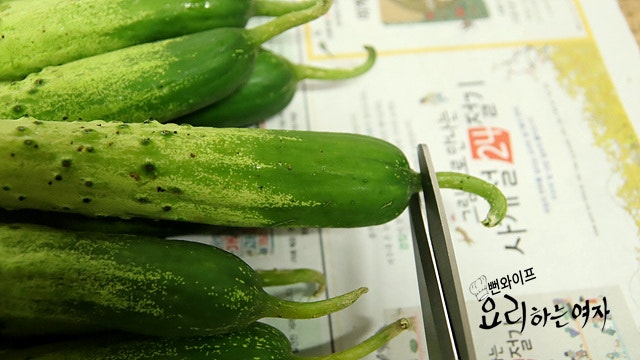
Snip off the stem ends of the cucumbers with kitchen shears.
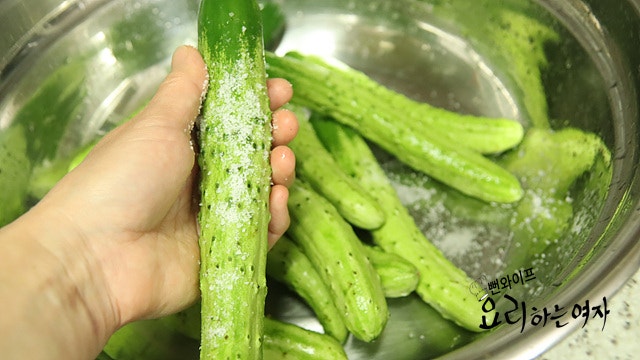
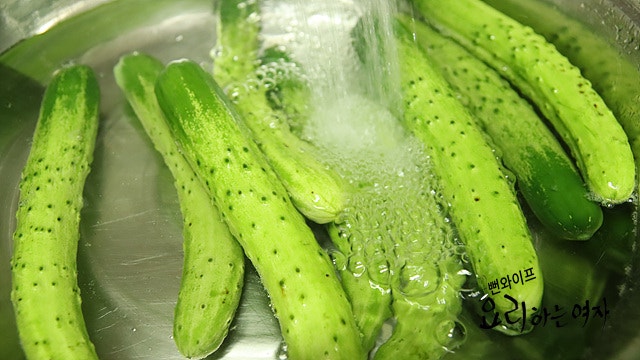
Rubbing them with salt removes the prickles on the cucumber skin, provides a sanitizing effect, and brightens the color.
If you rub too hard, scratches can form and make them soft, so control your pressure as you work.
Rinse them in running water.
Cut the ingredients
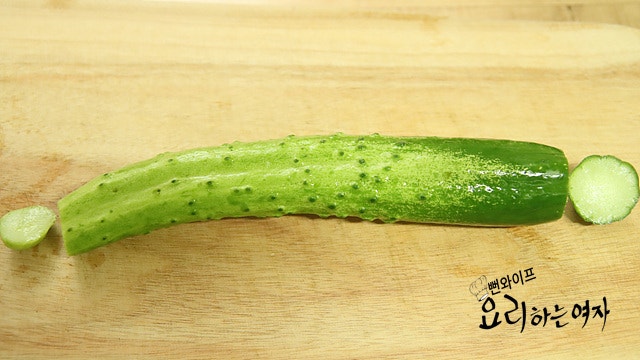
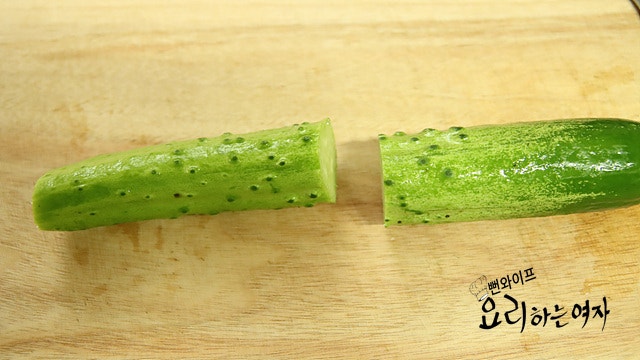
Trim off both ends and cut each in half.
Oi sobagi is usually cut into 3 or 4 pieces before slitting, but because these cucumbers are on the smaller side, I cut them into 2 pieces.
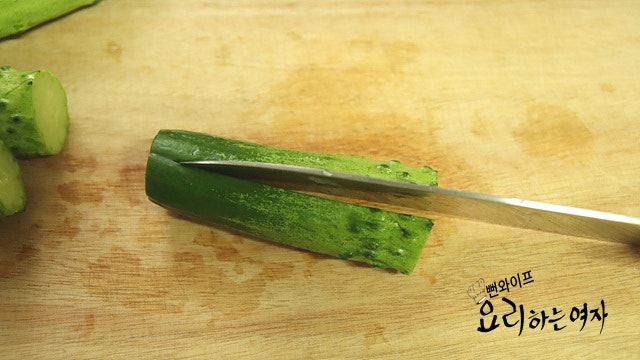
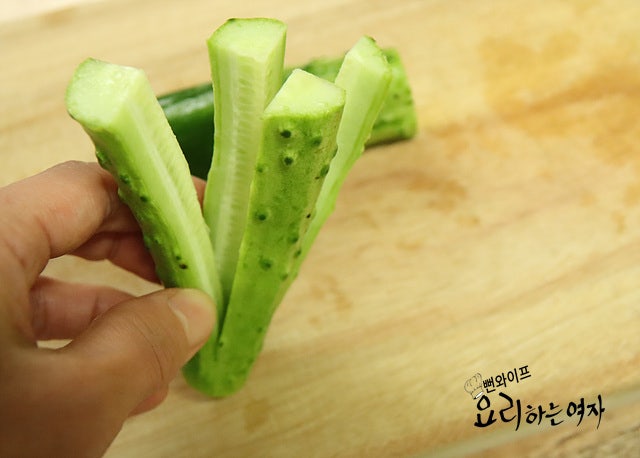
Cut a lengthwise cross into each piece, leaving the bottom intact.
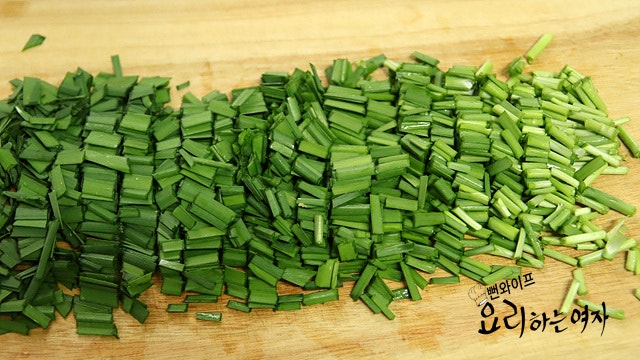
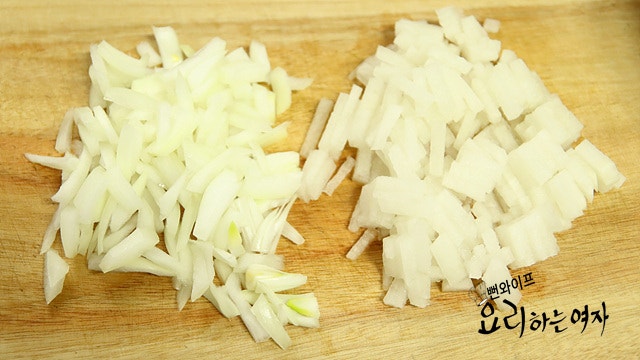
If the garlic chives are too long, the stuffing looks messy, so cut them short into 1 cm to 1.5 cm lengths; set the tougher end tips aside to use in soups or stews.
Cut the onion and Korean radish to the same length.
Pickle the cucumbers
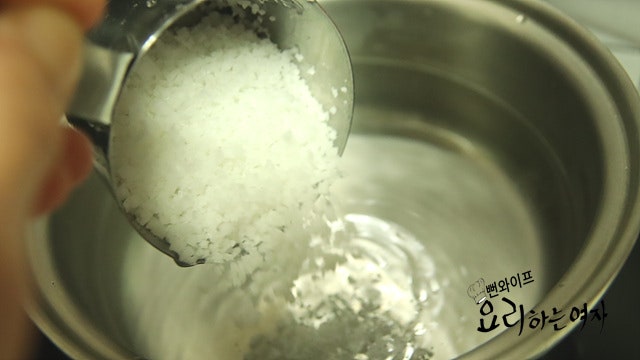
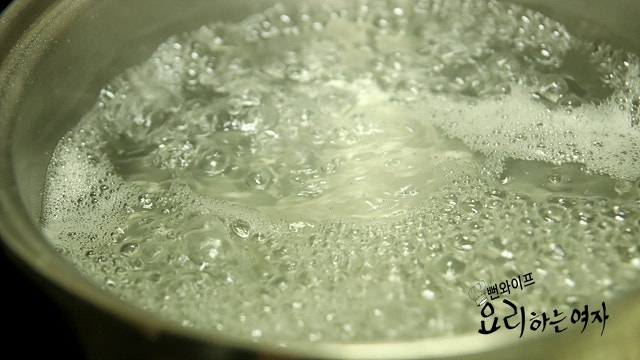
Pour 2/3 cup coarse sea salt into 8 cups water and bring it to a rolling boil to dissolve the salt.
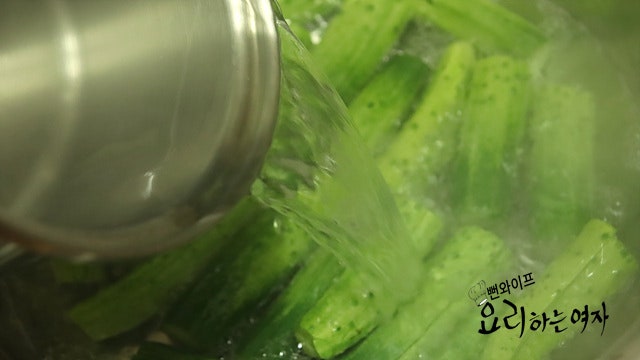
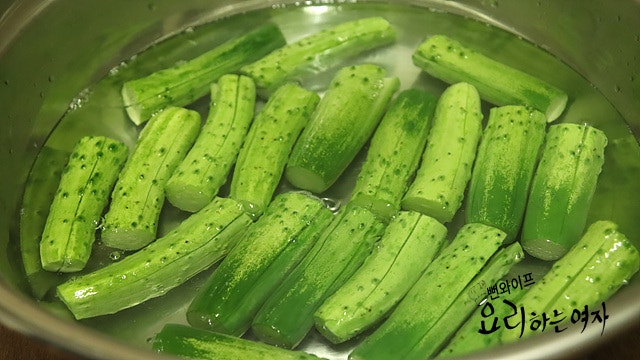
Pour the boiling salt water directly into the container holding the cucumbers.
Pickle for about 30 minutes to 1 hour depending on the thickness of the cucumbers; if the cucumbers are not fully submerged, turn them over once halfway through.
Because you pour boiling water and the salt concentration is strong, they will pickle faster than you might think.
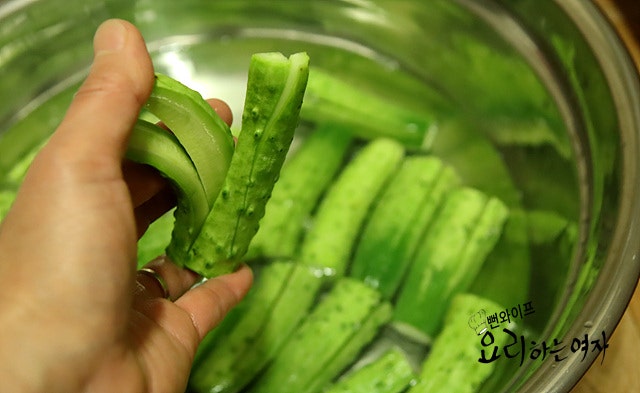
This time, the cucumbers were slender, so they were fully pickled in 30 minutes.
When the cucumber bends gently, it is fully pickled, so check on them frequently.
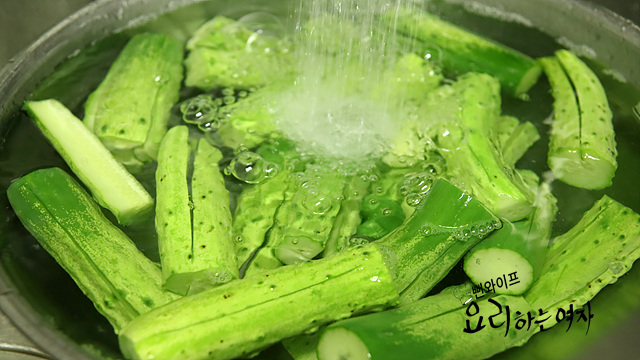
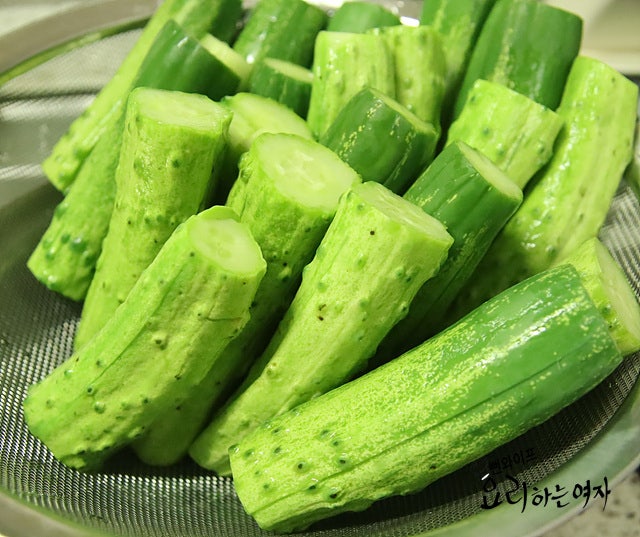
Rinse once in water and stand them upright to drain the moisture.
If the cucumbers taste salty, rinse them several times or soak them in water to draw out the excess salt.
Make the seasoning
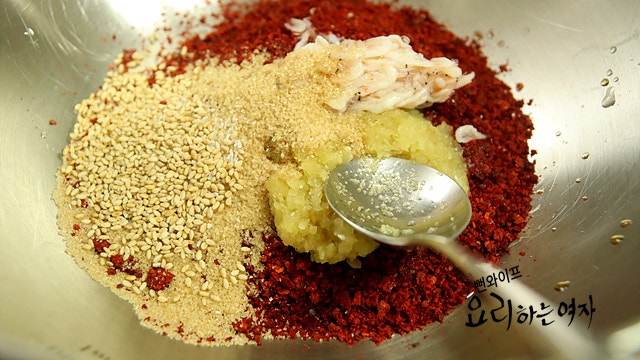
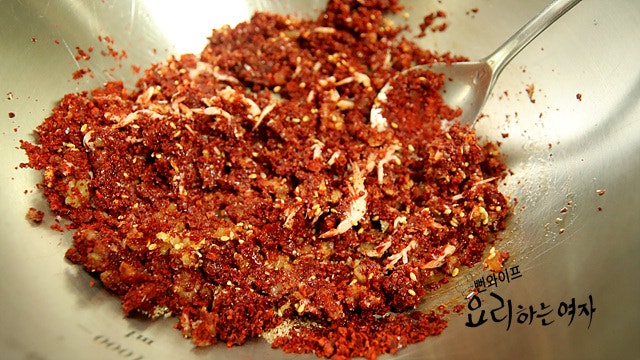
Add all seasoning ingredients except the anchovy broth and mix them together.
You will add the water or anchovy broth at the very end of making the seasoning to adjust the consistency.
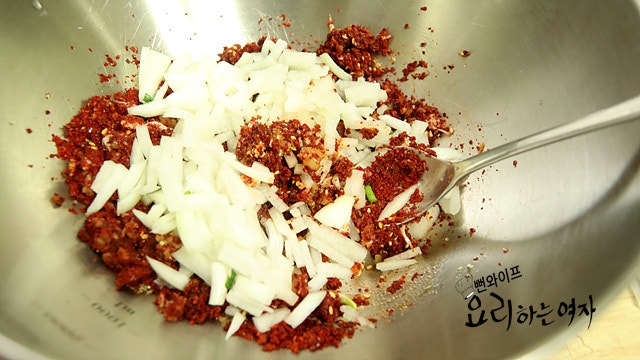
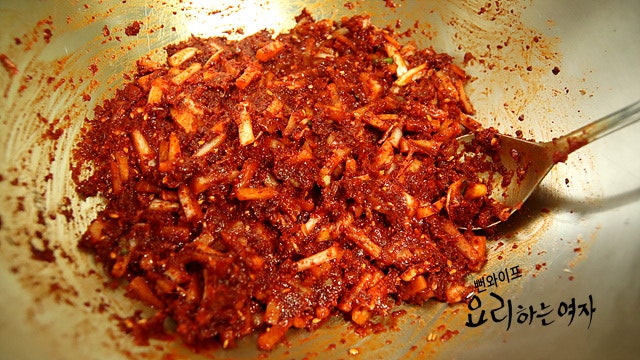
First, add the Korean radish and onion and mix; the moisture released from the radish and onion will soften the seasoning and make it moist.
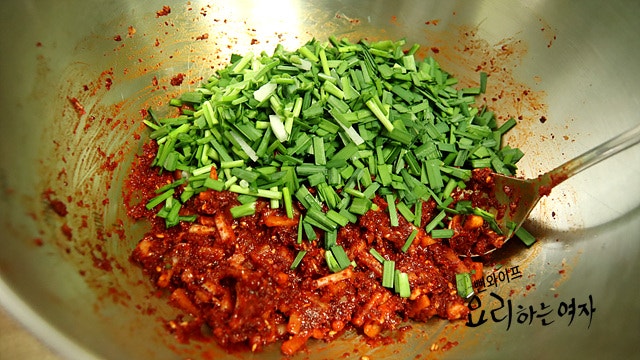
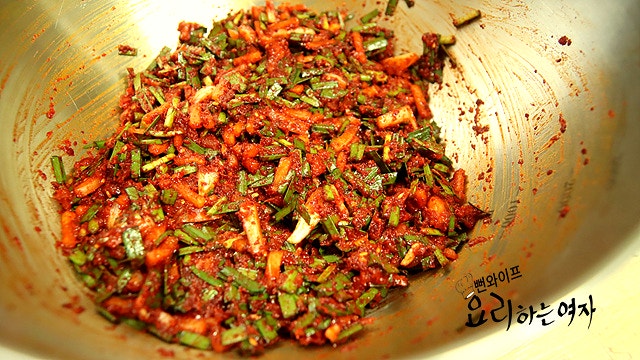
Add the garlic chives and toss gently by hand.
Kneading them for too long or too hard can produce a raw, grassy smell, which is why they are added separately at the end and mixed lightly.
Let it sit for a bit so all the vegetables wilt from the seasoning and release moisture, then add water or anchovy broth and mix until it reaches a suitable consistency to stuff into the cucumbers.
I added about half a cup of anchovy broth to adjust it so it was thick and stiff rather than loose.
Because the cucumbers will also release some moisture, you want to make the stuffing so it is not too watery.
Now take one cucumber piece, coat it with a little seasoning, and taste; if it is bland, adjust with salt, and adjust the amount of sugar to your liking.
If you season it just slightly on the salty side, the seasoning will balance out perfectly over time.
Stuff the cucumbers
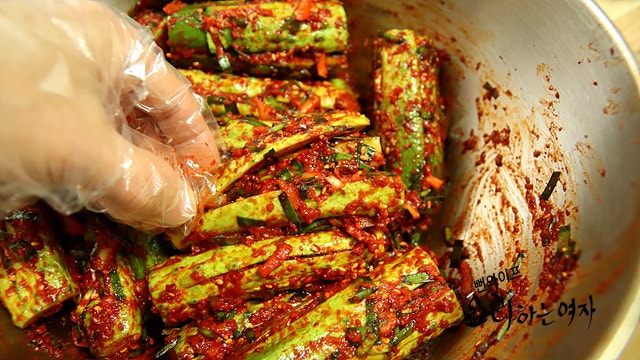
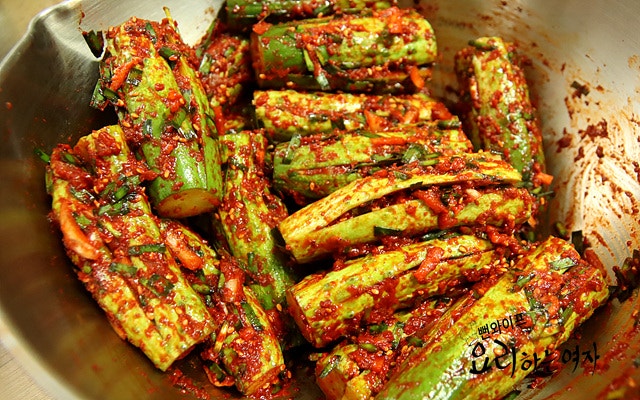
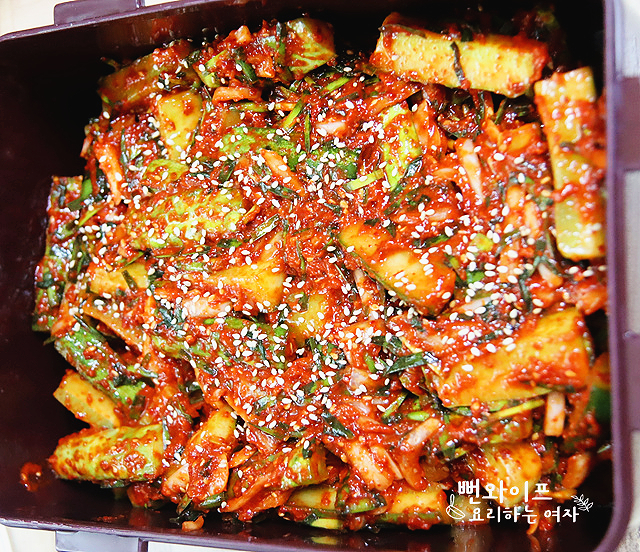
Insert an appropriate amount of filling into each cucumber pocket, and rub the remaining seasoning nicely over the outsides.
Cutting them into 2 pieces makes stuffing them go in a flash. The seasoned filling was just the right amount, with none left over and none lacking.
Finished dish
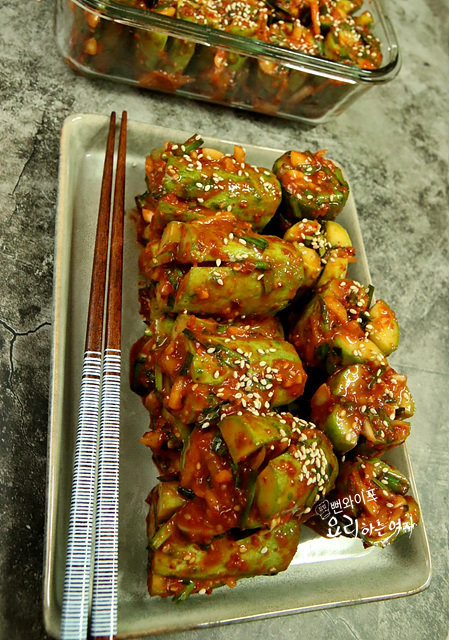
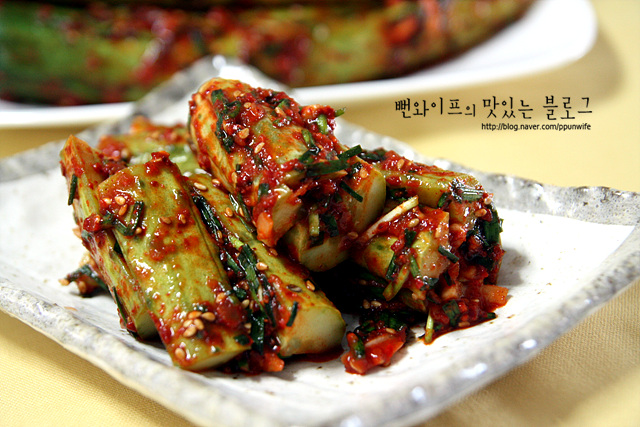
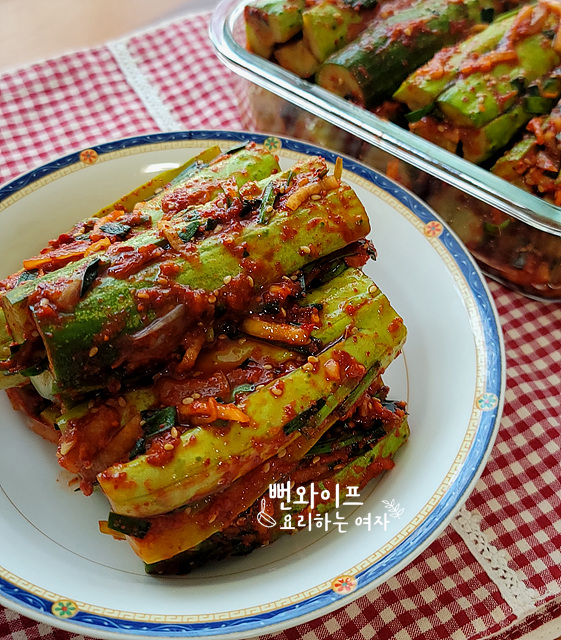
The cucumber color is bright, and the bite is crunchy and refreshing.
Making oi sobagi really is easy.
There is no porridge to make and no rice added, so there is no blender work either.
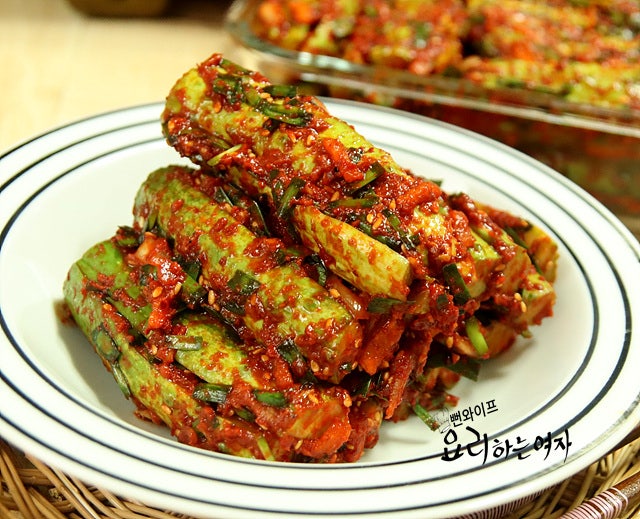
When you put up oi sobagi like this, does it not make you crave rice?
After an hour or two, it blends nicely with the seasoning and becomes even better to eat.
Crunchy, refreshing oi sobagi pushes every other side dish aside. It is truly a rice thief.
When I checked the next day, there was just a hint of clear moisture from the cucumbers at the bottom, and they kept their shape perfectly.
 Ppunwife's tips
- If you rub too hard, scratches can form and make them soft, so control your pressure as you work.
- If the garlic chives are too long, the stuffing looks messy, so cut them short into 1 cm to 1.5 cm lengths; set the tougher end tips aside to use in soups or stews.
- If the cucumbers are not fully submerged in the salt water, turn them over once halfway through.
- When the cucumber bends gently, it is fully pickled, so check on them frequently.
- If the cucumbers taste salty, rinse them several times or soak them in water to draw out the excess salt.
- Kneading the garlic chives for too long or too hard can produce a raw, grassy smell, which is why they are added separately at the end and mixed lightly.
- If you season it just slightly on the salty side, the seasoning will balance out perfectly over time.
FAQ
Why do you not add glutinous rice porridge or cooked rice?
Without porridge, the seasoning does not become watery and clings tightly like fresh geotjeori, and it slows down fermentation so the kimchi stays fresh and crunchy until finished.
Why are garlic chives added last and mixed gently into the seasoning?
Rough or prolonged mixing of garlic chives can release a raw, grassy smell, so they are folded in lightly at the end after the other vegetables have been mixed.
What should I do if the pickled cucumbers taste too salty?
Rinse them several times in cold water, or soak them briefly in clean water to draw out the excess salt.
Can I use a different fish sauce instead of sand lance fish sauce?
Yes, anchovy fish sauce is noted as a substitute in the ingredients, so you can use anchovy fish sauce instead.