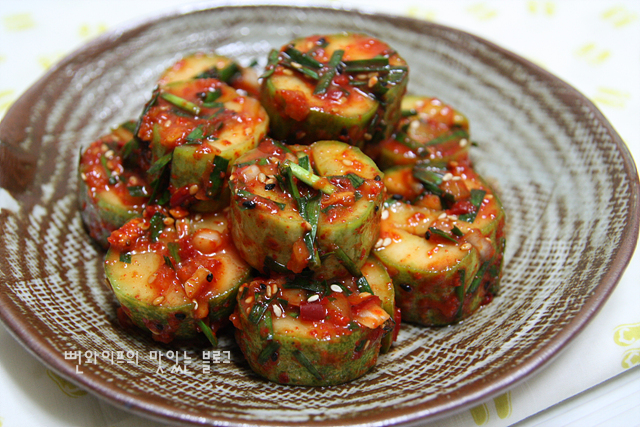
Crisp Oi Sobagi (Stuffed Cucumber Kimchi) Banchan
A quick, simple oi sobagi (stuffed cucumber kimchi) soaked in boiling salt water to preserve a crisp, snappy crunch.
Translated from Korean by AI and not yet checked by a native speaker. Amounts and numbers are taken directly from the original recipe. Read the Korean original →
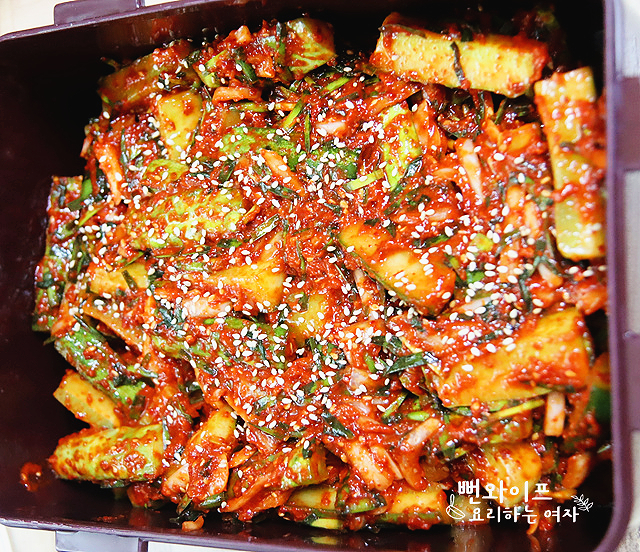
This special kimchi skips the hassle of stuffing each cucumber, tossing together lightly like a seasoned fresh cucumber side dish instead. Pouring boiling salt water over the cucumbers locks in a wonderfully crisp, snappy texture. A flavorful paste blended with cold cooked rice ties everything together beautifully.
- Servings
- about 5–6 servings
- Cook time
- 30 minprep not included
- Difficulty
- Medium
- Spiciness
- Mildly spicy
- Keeps
- 7 days
Ingredients
Ingredients
- Cucumber5
- Garlic chives (buchu)100 g
- Onion1 (small)
- Water5 cups
- Coarse sea salt5 tbsp
Seasoning
- Bottled water1/2 cup
- Cold cooked rice3 tbsp
- Salted fermented shrimp (saeujeot)1 tbsp
- Ginger10 g
- Gochugaru (Korean chili flakes)5 tbsp
- Sand lance fish sauce (or dried anchovies)2 tbsp
- Minced garlic2 tbsp
- Green plum syrup (maesil-cheong) (or sugar 1 tbsp)2 tbsp
- Toasted sesame seeds
- Use firm Korean white cucumbers (baek-oi).
Steps
Prepare the ingredients
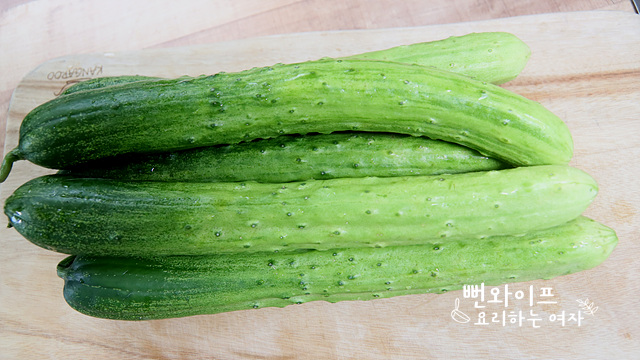
Prepare 5 firm Korean white cucumbers.
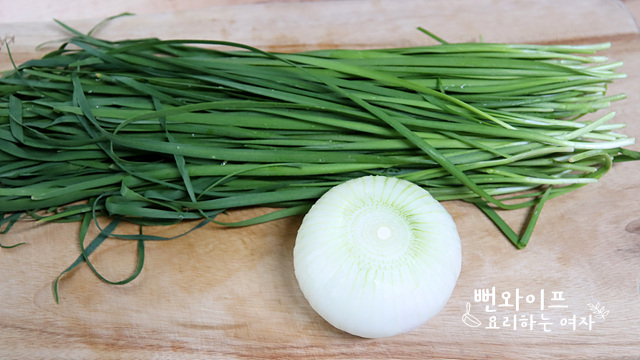
Take a light handful of garlic chives (buchu) and 1 small onion.
Cut the ingredients
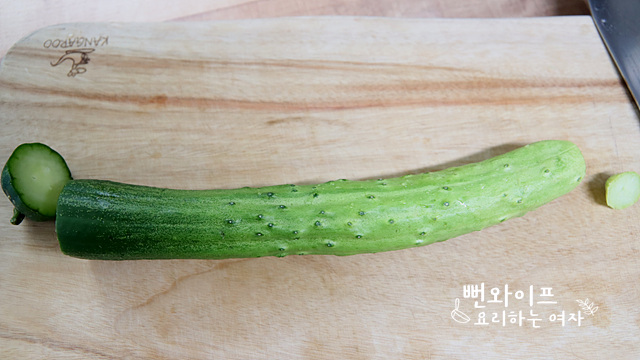
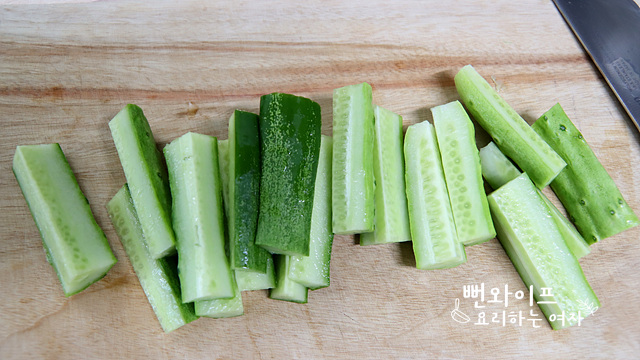
Trim off both ends of the cucumbers, cut them in half lengthwise, and then cut each piece into 4.
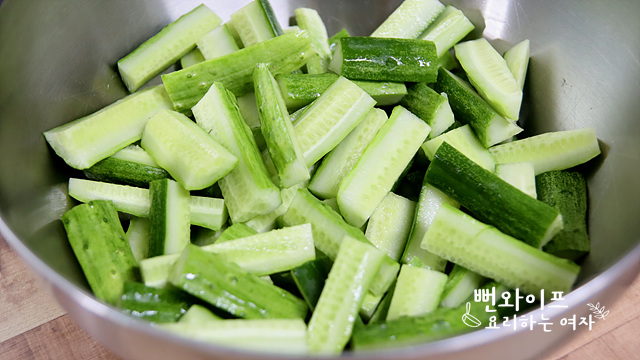
Place them in a stainless steel bowl since you will be pouring boiling salt water over them.
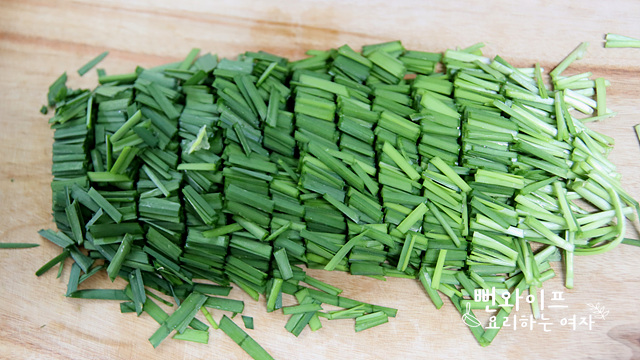
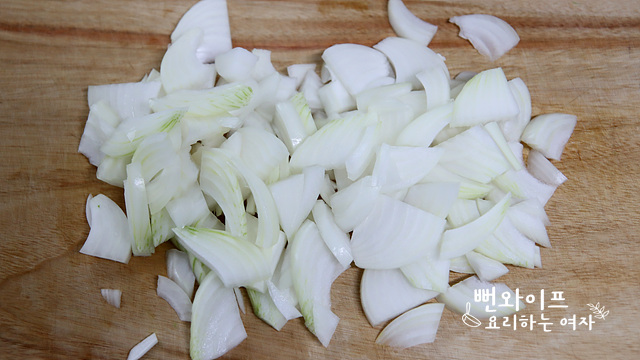
Cut the garlic chives into lengths of about 1.5 cm, thinly slice the onion, and then cut the onion to the same length as the chives.
Salt the cucumbers
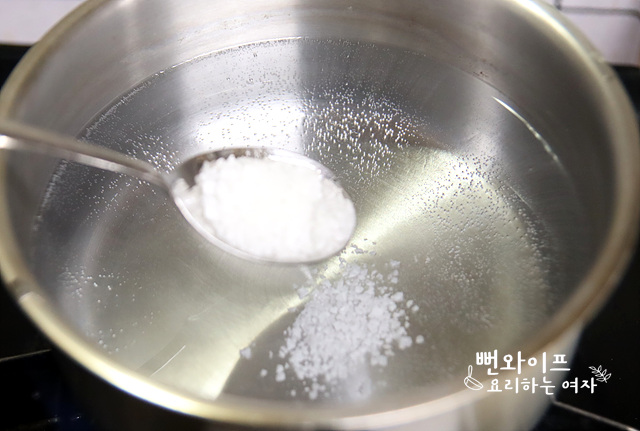
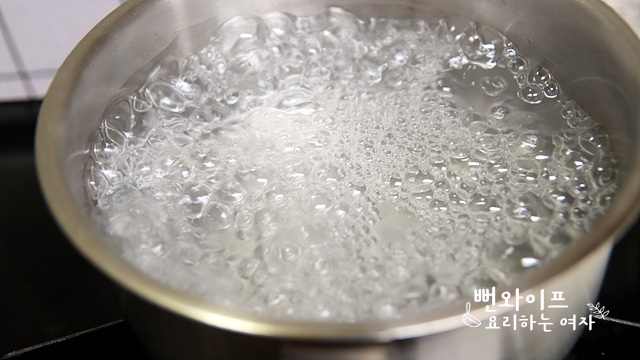
Add 5 tbsp of coarse sea salt to 5 cups of water and bring it to a boil until the salt dissolves.
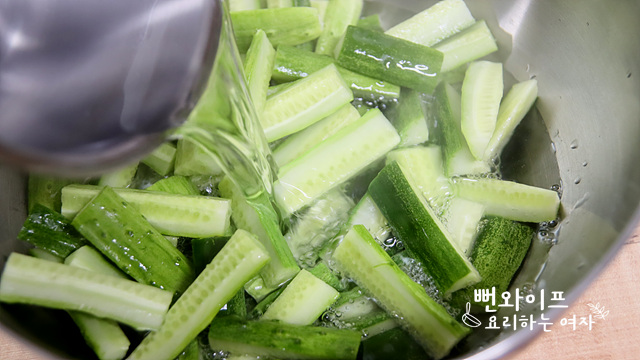
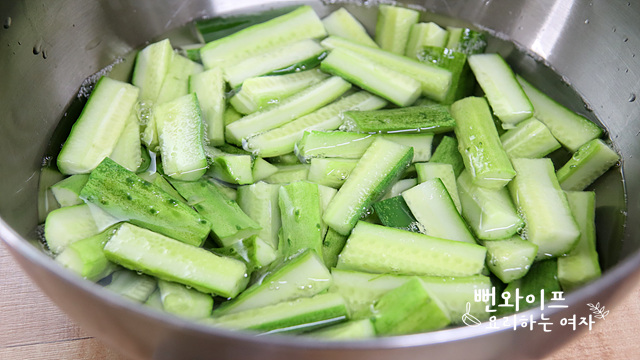
Pour the boiling water directly over the cucumbers right away. Shake the bowl so they are completely submerged; the amount of salt water is just right.
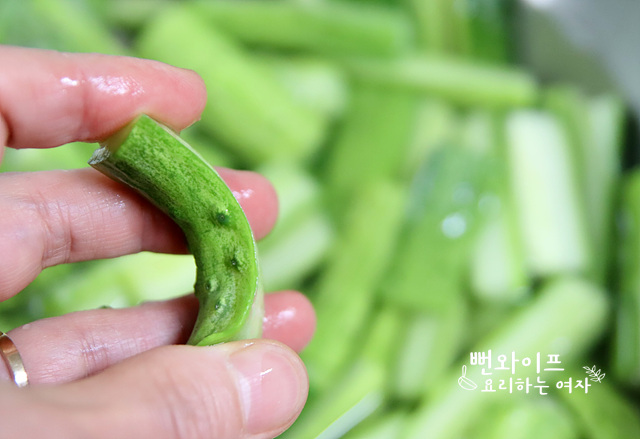
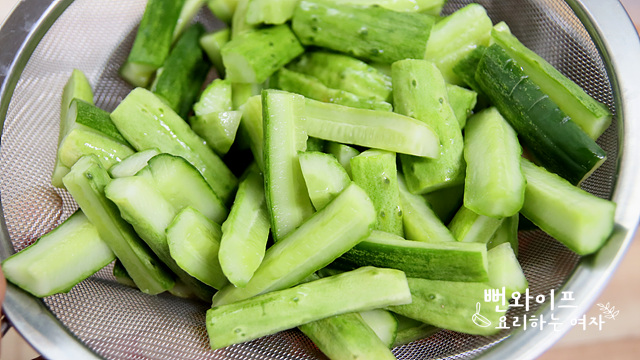
Turn them over once halfway through and let them salt for about 30 minutes. They are ready when they bend slightly like this without snapping.
Transfer them to a sieve, rinse once under running water, and drain the moisture thoroughly.
If you only drain the cucumber moisture carelessly, liquid will pool later and wash away the seasoning paste.
Make the seasoning paste
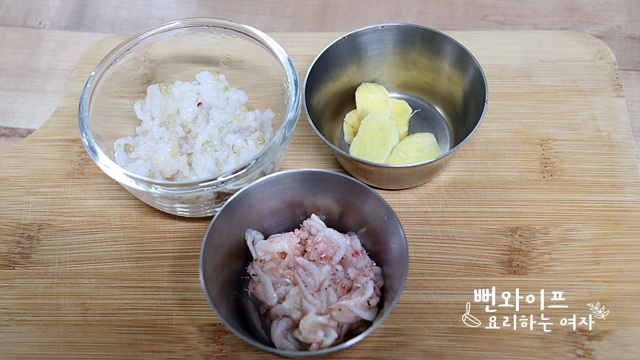
These are the seasoning ingredients to be blended: 3 tbsp of cold cooked rice, 1 tbsp of salted fermented shrimp (saeujeot), and the ginger.
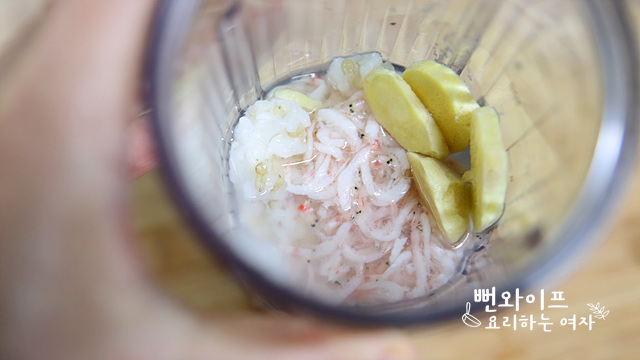
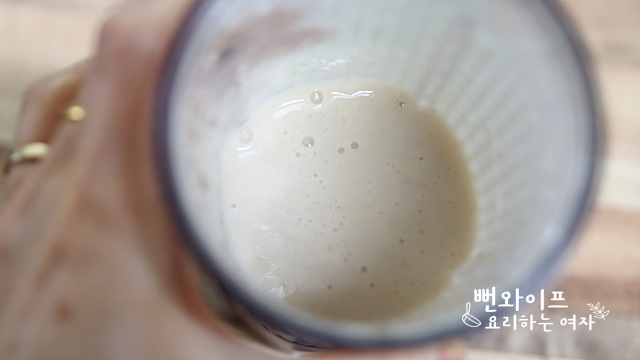
Pour in 1/2 cup of bottled water and blend finely.
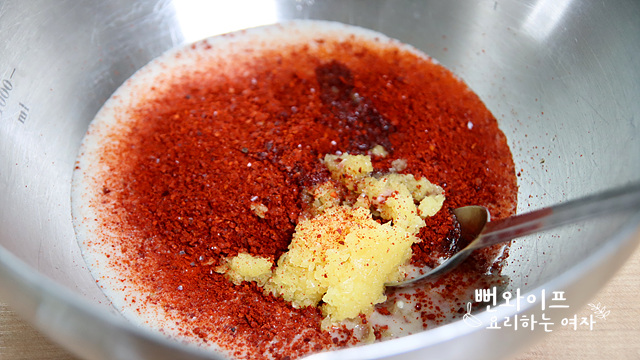
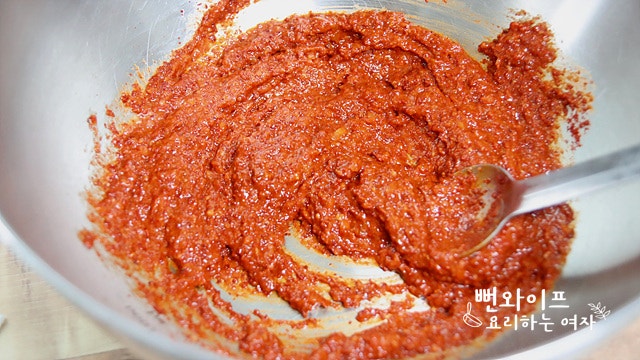
Pour out the blended mixture, add 5 tbsp of gochugaru (Korean chili flakes), 2 tbsp of fish sauce, 2 tbsp of minced garlic, and 2 tbsp of green plum syrup (maesil-cheong) or 1 tbsp of sugar, then mix thoroughly.
Once the seasoning melds together, the chili flakes swell, and the color turns vivid...
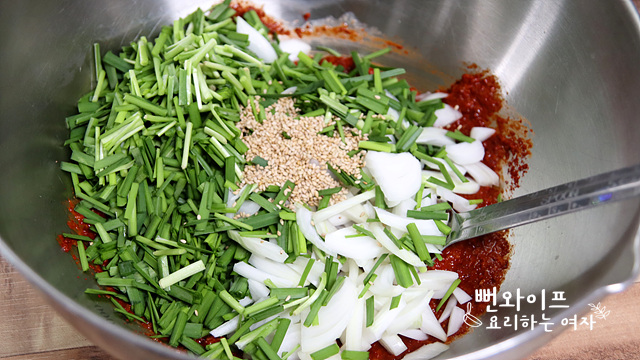
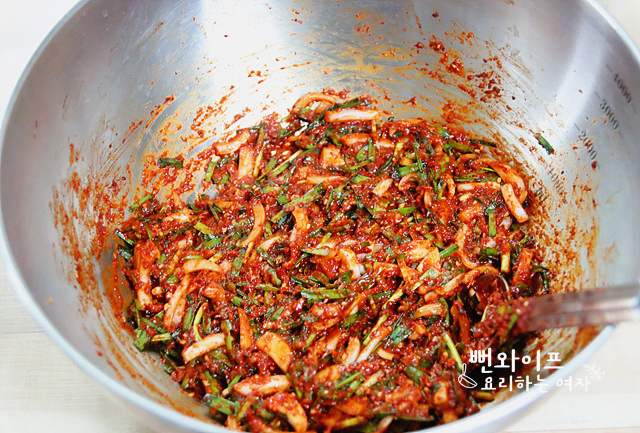
Add the garlic chives, onion, and toasted sesame seeds, then mix evenly.
Toss in the seasoning
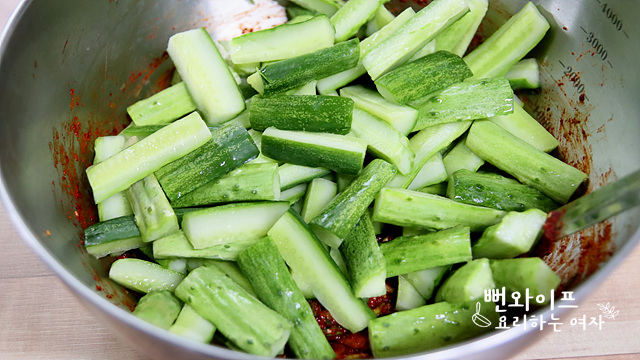
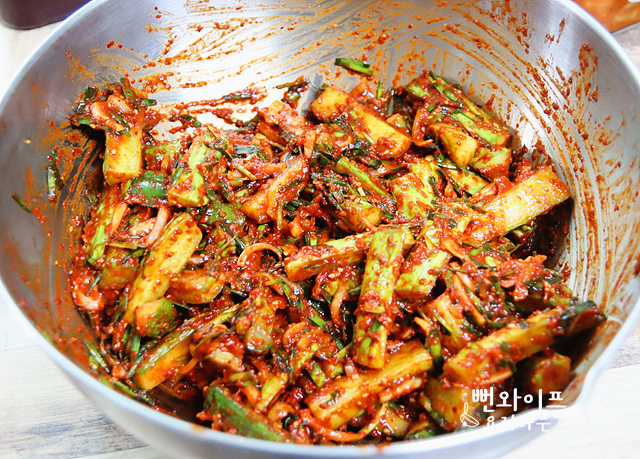
Add the well-drained cucumbers and toss gently.
Taste a cucumber; if it tastes mild, adjust with salt or fish sauce, and add more sweetness to suit your preference.
Done
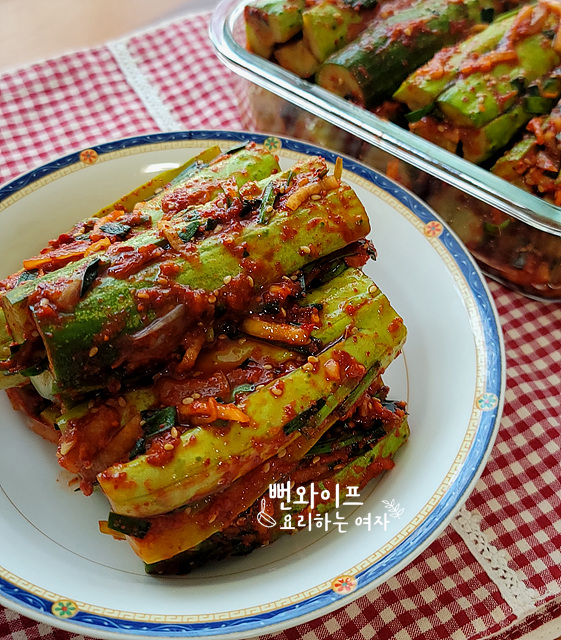
Making it tossed like cucumber salad without stuffing pockets takes less effort and comes together quickly.
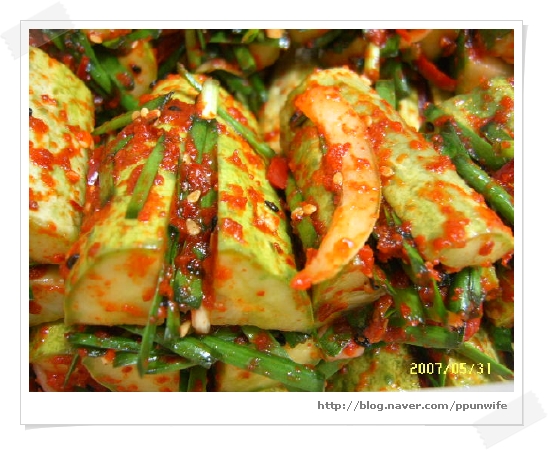
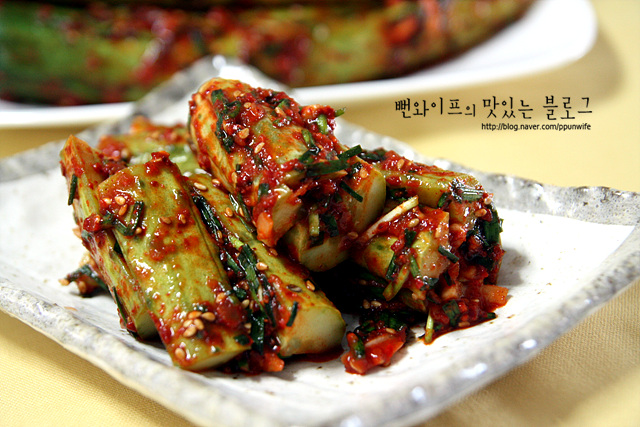
This photo was taken right after tossing.
You can enjoy it right away with the fresh, crisp feel of seasoned fresh cucumber salad.
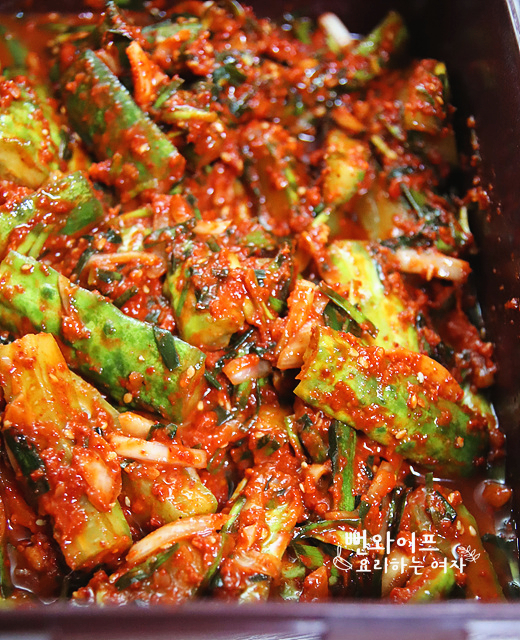
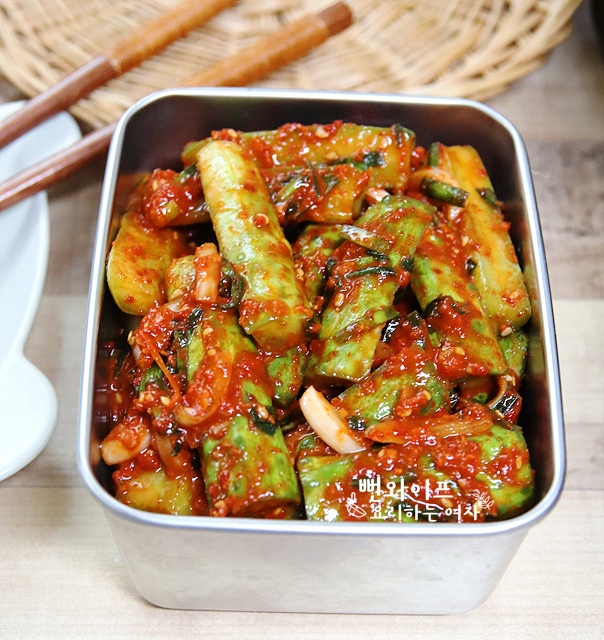
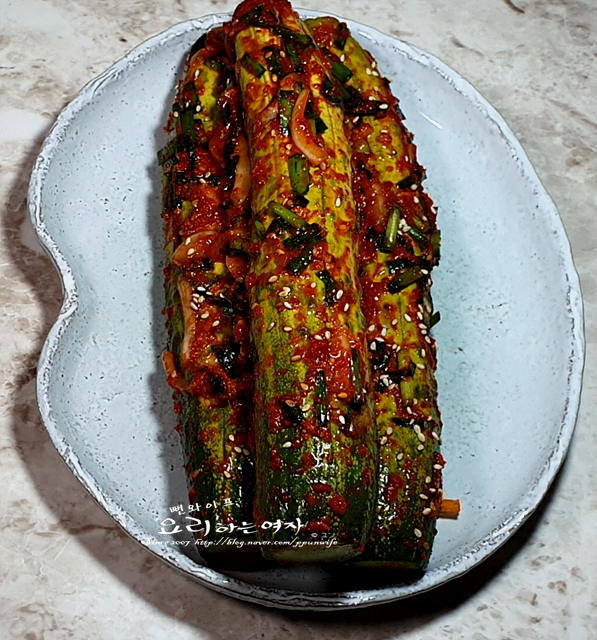
This is after one night in the refrigerator; the ingredients and seasoning have come together, turning tender with a more mellow flavor.
Hardly any excess liquid pools, leaving it pleasantly moist so you can enjoy it deliciously to the very last bite.
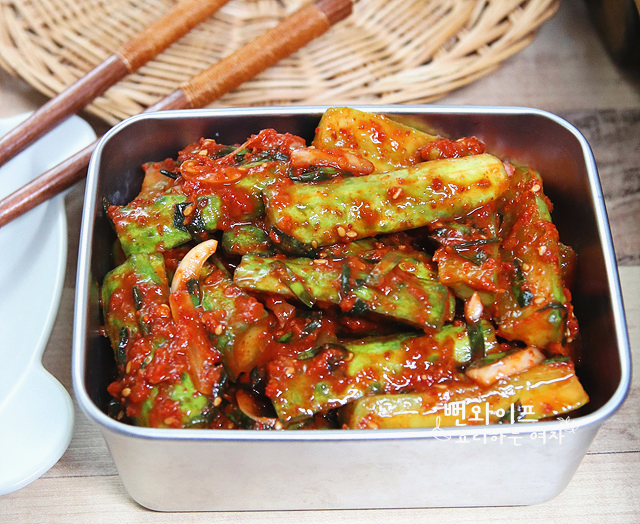
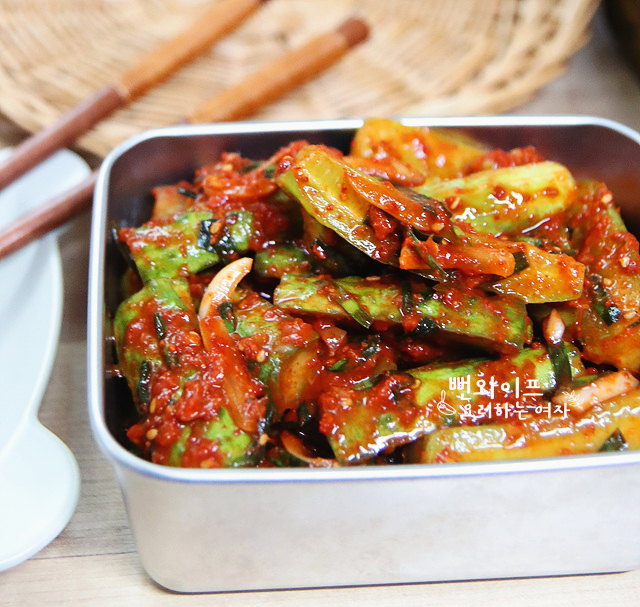
Because they were soaked in boiling salt water, the cucumbers keep a vivid color, a snappy exterior, and a crisp bite inside...
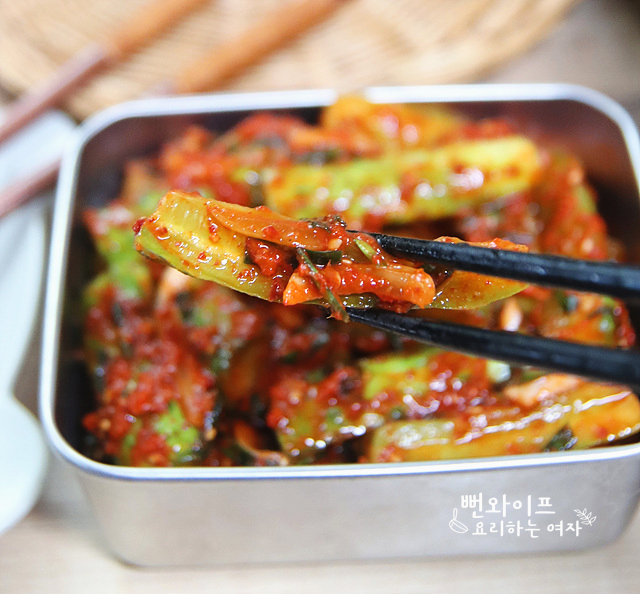
More than just a side dish, it is a true rice thief.
It is not salty, so it disappears fast—maybe it is a cucumber thief instead?
 Ppunwife's tips
- Place the cucumbers in a stainless steel bowl because boiling salt water will be poured over them right away.
- If you drain the cucumbers carelessly, moisture will weep later and rinse away the seasoning paste, so be sure to drain them thoroughly in a sieve.
FAQ
Why soak the cucumbers in boiling salt water?
Pouring boiling salt water directly over them brightens their green color and gives them a snappy bite on the outside with a crisp crunch inside.
Do I need to drain the salted cucumbers thoroughly?
If you do not remove the excess moisture properly, liquid will seep from the cucumbers later and wash away the tossed seasoning paste.
Can I use sugar instead of green plum syrup?
Yes, you can substitute 1 tbsp of sugar for 2 tbsp of green plum syrup (maesil-cheong) to add sweetness.
Why blend cold cooked rice instead of making a starch porridge? AI-generated
Blending cold cooked rice skips the step of making glutinous rice or flour porridge from scratch, easily adding body and savory depth to the seasoning paste.