Crisp Oi Sobagi (Stuffed Cucumber Kimchi)
A spring cucumber kimchi salted in boiling brine to stay crisp and stuffed with seasoned vegetables.
Translated from Korean by AI and not yet checked by a native speaker. Amounts and numbers are taken directly from the original recipe. Read the Korean original →
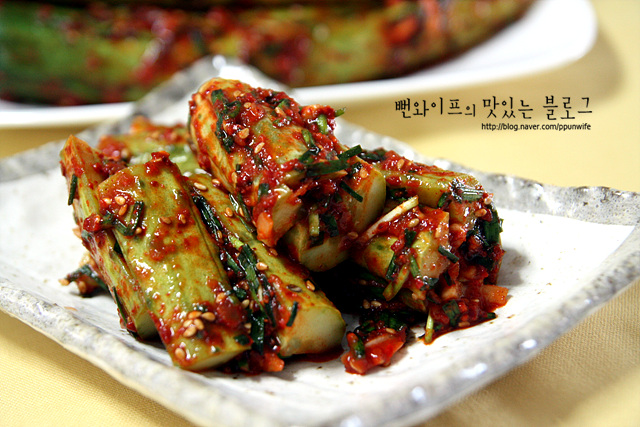
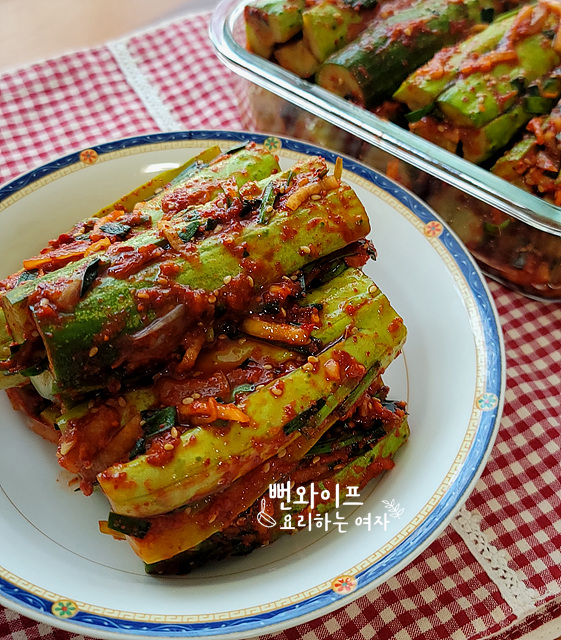
This oi sobagi is salted with boiling brine, which keeps it crisp for a long time without turning soft. Filled with a spicy stuffing of garlic chives, onion, and Korean radish, it is great for reviving your appetite and makes a satisfying everyday banchan with accessible ingredients.
- Servings
- about 8–10 servings
- Difficulty
- Medium
- Spiciness
- Spicy
Ingredients
Ingredients
- Korean cucumber (joseon-oi) (or white cucumber)10
- Garlic chives (buchu)200 g
- Korean radish (mu)100 g
- Onion1/2 (large)
Brine
- Water15 cups
- Salt1.5 cups (1 1/2 cups)
Glutinous rice paste
- Water (or or anchovy broth)1 cup
- Glutinous rice flour1.5 tbsp (1 1/2 tbsp)
Seasoning
- Glutinous rice paste
- Gochugaru (Korean chili flakes)1 cup
- Minced garlic3 tbsp
- Sugar2 tbsp
- Salted fermented shrimp (saeujeot)2 tbsp
- Anchovy fish sauce1 tbsp
- Minced ginger2/3 tbsp
- Toasted sesame seeds
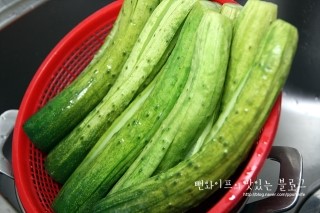
- For stuffed cucumbers, it is best to use Korean cucumbers (joseon-oi), which have firm flesh. The weight of 1 cucumber is around 200 g, making 10 cucumbers about 2 kg in total.
- Holding coarse salt in your hand and rubbing it over the cucumbers as you rotate them brightens their color, but be careful because rubbing too hard can bruise them and cause the oi sobagi to turn mushy.
- Pour the boiled brine over the cucumbers and salt them for about 1 hour.
- Making the paste with anchovy broth adds deep savory flavor; if making glutinous rice paste is bothersome, you can blend 3 to 4 tbsp of cold cooked rice per 1 cup of water in a blender instead.
Steps
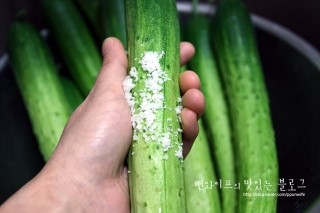
1. For stuffed cucumbers, it is best to use Korean cucumbers (joseon-oi), which have firm flesh.
The weight of 1 cucumber is around 200 g. 10 of them came out to about 2 kg.
Hold coarse salt in your hand and rub it over the cucumbers as you rotate them.
Doing this makes the color of the cucumbers much more vibrant.
Be careful not to rub too hard, as bruising the cucumbers can make the oi sobagi turn mushy.
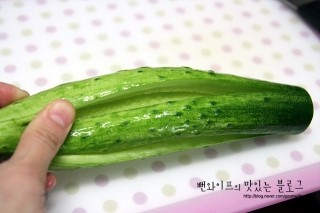
2. Trim off a little bit from both ends of the cucumbers.
To make it easy to stuff the seasoning, today I left the cucumbers whole and cut a long crosswise slit down the length.
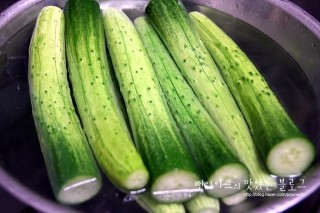
3. Add 1.5 cups of salt to 15 cups of water, bring it to a rolling boil, and pour it directly into the bowl with the cucumbers.
Press down with a heavy plate or a clean stone so the cucumbers do not float, and salt for about 1 hour.
A 10:1 ratio of water to salt is ideal for brining the cucumbers.
Do not worry at all that pouring boiling brine will cook the cucumbers or make them mushy;
on the contrary, it prevents them from softening and keeps them crisp for a long time.
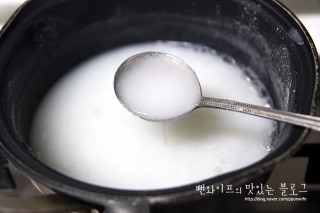
4. While the cucumbers are salting, make the paste.
Add 1.5 tbsp of glutinous rice flour to 1 cup of water, stir well over low heat until it thickens, then submerge the whole pot in cold water to cool it completely.
If you have anchovy broth, making the paste with broth adds great savory depth.
Also, if making glutinous rice paste is bothersome, you can blend about 3 to 4 tbsp of cold cooked rice per 1 cup of water in a blender instead.
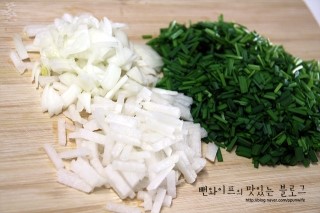
5. Before chopping, the garlic chives measure about two handfuls; slice them finely into lengths of around 1 cm,
and julienne the onion and Korean radish to the same length and thickness.
6. Rinse the salted cucumbers in water about twice, then stand them upright to drain thoroughly.
If you inadvertently left the cucumbers in the brine too long and they turned out too salty, soaking them while changing the water until the excess salt is drawn out before draining is also a good solution.
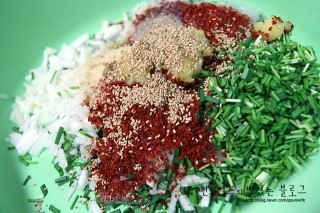
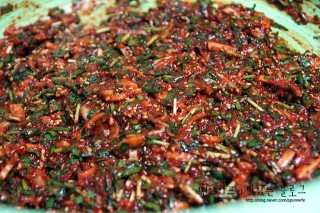
7. While the cucumbers drain, prepare the stuffing seasoning.
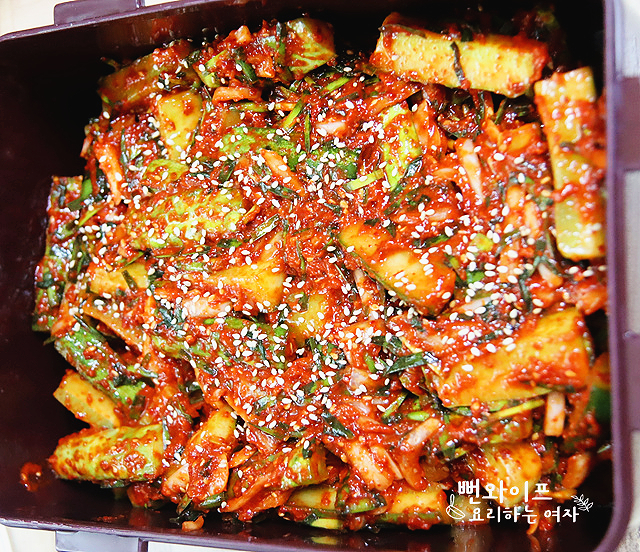
Add the garlic chives, onion, Korean radish, glutinous rice paste, and all seasoning ingredients, and mix evenly.
Bite off a small piece of salted cucumber, top it with this seasoning to taste, and if it is bland, adjust by adding a bit more salt or salted fermented shrimp from the seasoning.
Rather than adding all the fish sauce or salted fermented shrimp at once when making the seasoning, adjusting it as you check how the cucumber and seasoning balance each other is a great way to avoid ending up with kimchi that is too bland or too salty.
This method works well for other kimchis too.
8. Let it sit until the gochugaru blooms with color and the seasoning turns moist.

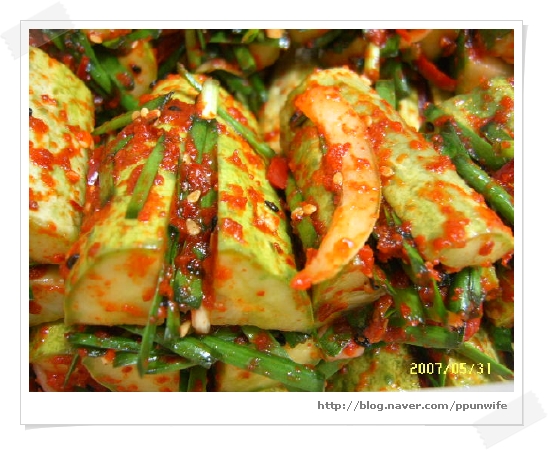
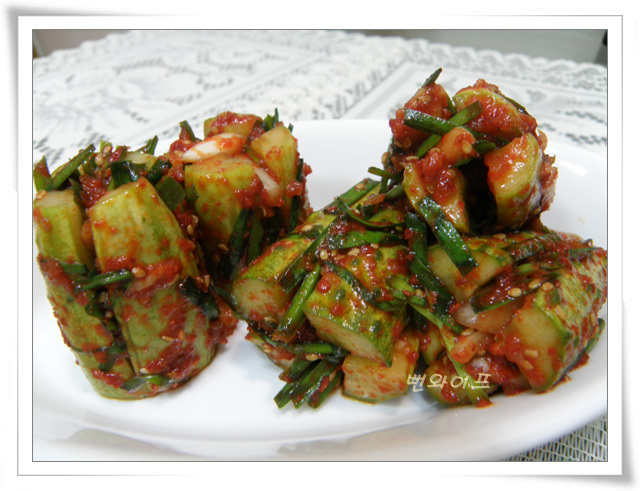
Pack the stuffing neatly into the cucumber slits.
Gauge the amount carefully as you stuff so you do not run short or end up with leftover filling.

Packing them neatly into a container makes me feel so proud, as if I accomplished something grand.

I personally like freshly made oi sobagi eaten right away,
but depending on your preference, you can also let it ferment at room temperature until pleasantly tangy and then store it in the refrigerator.
 Ppunwife's tips
- A 10:1 ratio of water to salt is ideal for brining the cucumbers.
- Do not worry at all that pouring boiling brine will cook the cucumbers or make them mushy; on the contrary, it prevents them from softening and keeps them crisp for a long time.
- If you inadvertently left the cucumbers in the brine too long and they turned out too salty, soaking them while changing the water until the excess salt is drawn out before draining is also a good solution.
- Rather than adding all the fish sauce or salted fermented shrimp at once when making the seasoning, adjusting it as you check how the cucumber and seasoning balance each other is a great way to avoid ending up with kimchi that is too bland or too salty.
FAQ
Does pouring boiling brine directly over the cucumbers make them mushy?
On the contrary, it is the secret to preventing the cucumbers from softening easily and keeping their crisp texture for a long time.
Can I use cold cooked rice instead of glutinous rice paste?
If making glutinous rice paste is bothersome, you can substitute it by blending 1 cup of water with 3 to 4 tbsp of cold cooked rice in a blender.
What should I do if the cucumbers are salted too heavily?
Soak them in water while changing it several times to draw out the excess salt, then drain them.