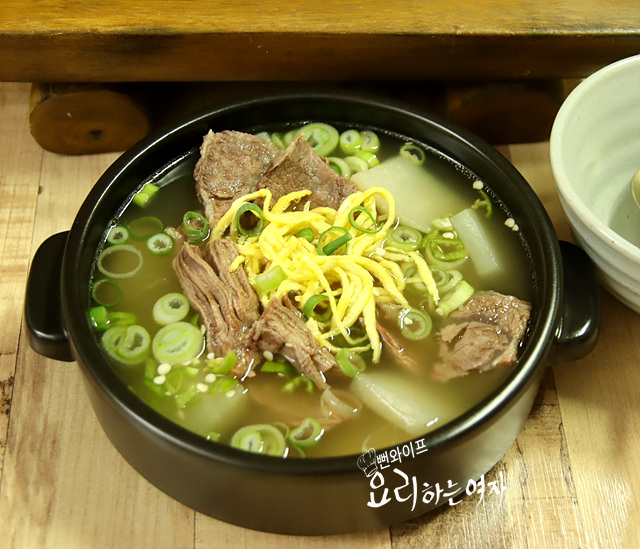
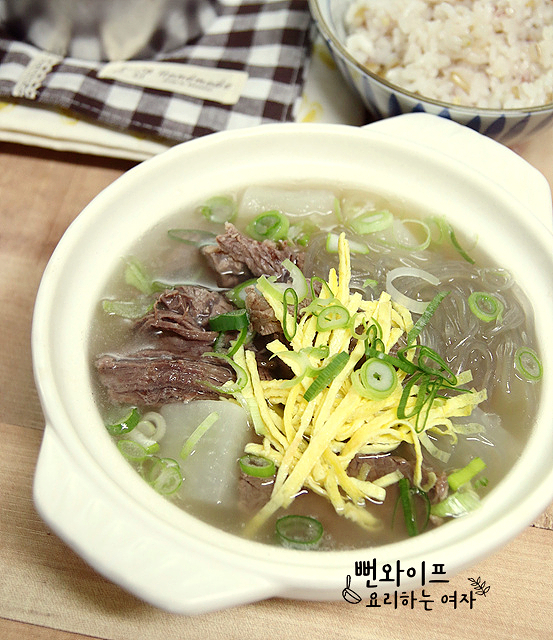
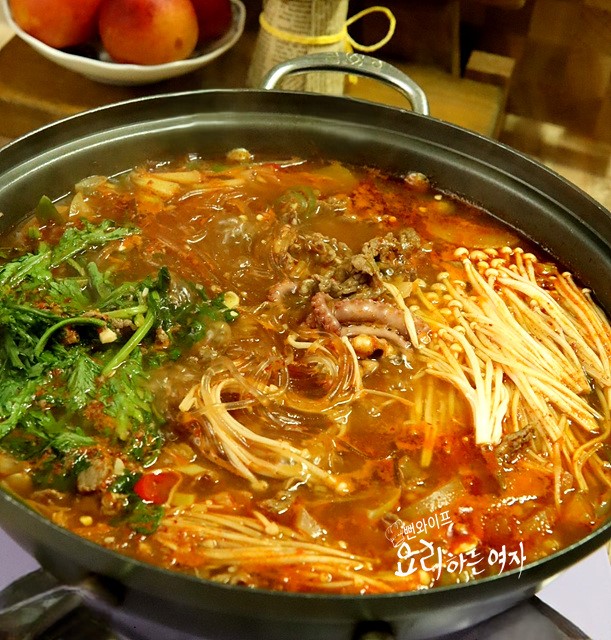
Satae Jeongol (Beef Shank Hot Pot) with Garlic Chives
A nourishing hot pot of tender simmered beef heel muscle, thinly sliced and boiled with garlic chives and ginseng in a rich broth.
Translated from Korean by AI and not yet checked by a native speaker. Amounts and numbers are taken directly from the original recipe. Read the Korean original →
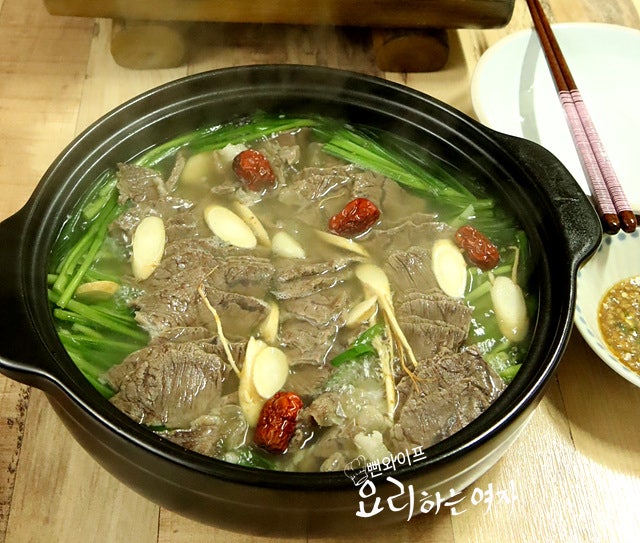
This hot pot features beef heel muscle simmered with aromatics for about 1 hour to create a clear, rich broth, then boiled together with thinly sliced meat, garlic chives, and ginseng. Serving it in an earthenware pot keeps it warm throughout the meal, and pairing it with a tangy mustard soy sauce makes it a wonderful stamina food for hot summer days or a great accompaniment for drinks.
- Servings
- 5–6 servings
- Cook time
- 60 minprep not included
- Difficulty
- Medium
- Spiciness
- Mildly spicy
Ingredients
Ingredients
- Beef heel muscle (arong-satae)1.2 kg
- Garlic chives (buchu)200 g
- Ginseng1 root
- Water15 cups
- Coarse sea salt1 tbsp
Simmering ingredients
- Onion1
- Large green onion (daepa)1 stalk
- Garlic15 cloves
- Ginger2 knobs
- Whole black peppercorns1 tbsp
- Bay leaves3 leaves
- Dried jujubes8
Sauce ingredients
- Garlic4 cloves (1 tbsp)
- Cheongyang chili pepper (hot green chili)1
- Oniona little
- Regular soy sauce (jin-ganjang) (or brewed soy sauce (yangjo-ganjang))4 tbsp
- Vinegar4 tbsp
- Sugar2 tbsp
- Mirin (cooking rice wine)2 tbsp
- Prepared yellow mustard1 tbsp
- Ground toasted sesame seeds1 tbsp
- Submerge the beef heel muscle completely in water for about 1 hour to draw out the blood, changing the water occasionally.
- If the white membrane on the surface is thick, simply trim it away.
- You do not need every single ingredient I prepared, but you should at least include large green onion, ginger, garlic, and onion to make the broth taste good.
Steps
Prepare the ingredients
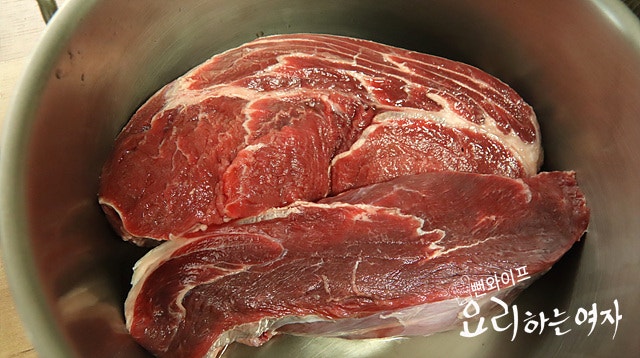
Here is 1.2 kg of Korean beef heel muscle.
If the white membrane on the surface is thick, simply trim it away.
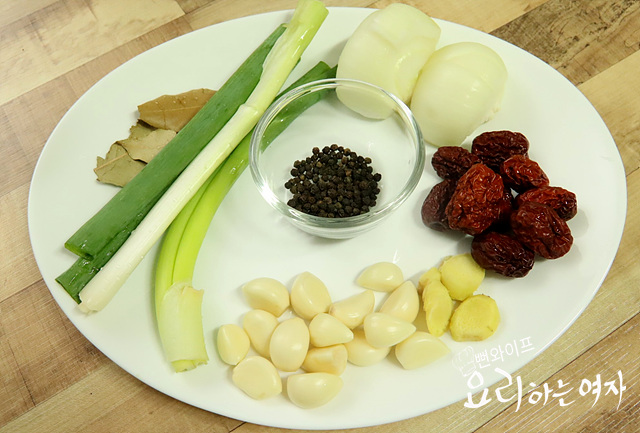
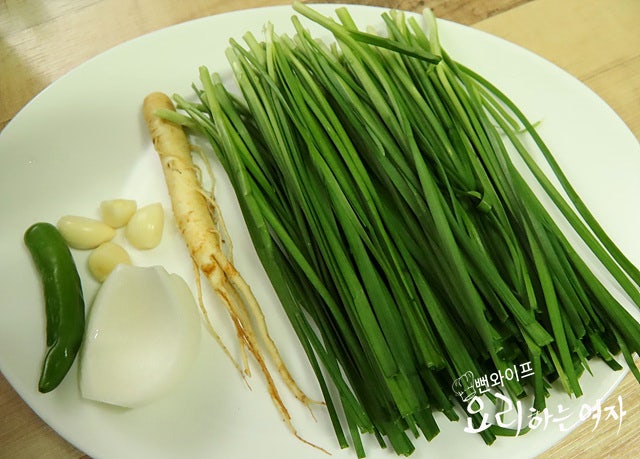
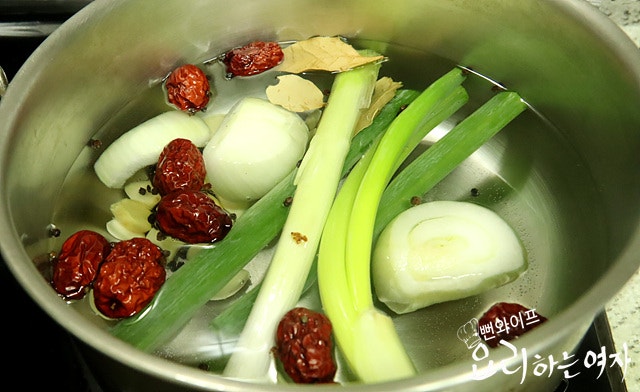
First, these are the ingredients used to simmer the shank.
Since we need to extract a flavorful broth, I prepared a variety of items.
Onion, dried jujubes, ginger, garlic, large green onion, bay leaves, and whole black peppercorns.
You do not need every single ingredient I prepared, but you should at least include large green onion, ginger, garlic, and onion to make the broth taste good.
Prepare a small amount of onion, garlic, and Cheongyang chili pepper for the sauce.
For simmering together in the hot pot at the end, prepare 1 small root of ginseng and 200 g of garlic chives.
Simmer the beef heel muscle
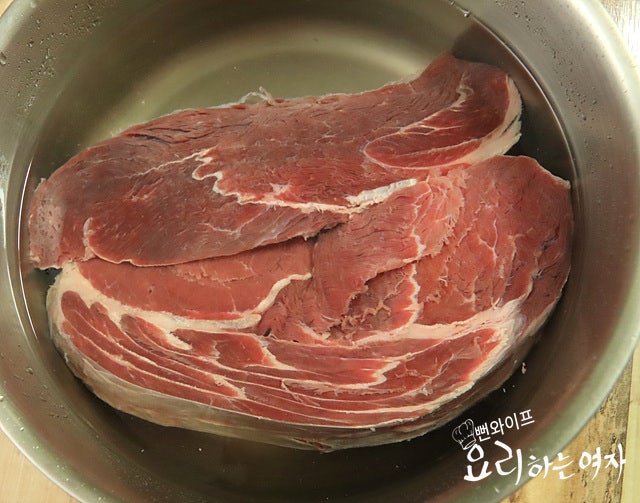
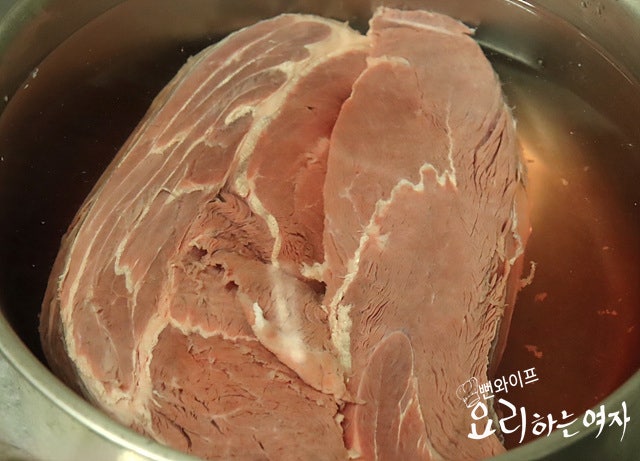
Submerge the beef heel muscle completely in water for about 1 hour to draw out the blood, changing the water occasionally.
Once the blood is drawn out, add all the simmering ingredients to a pot and pour in 15 cups of water.
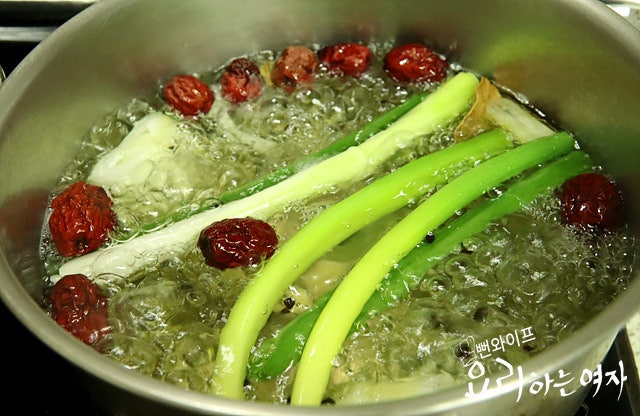
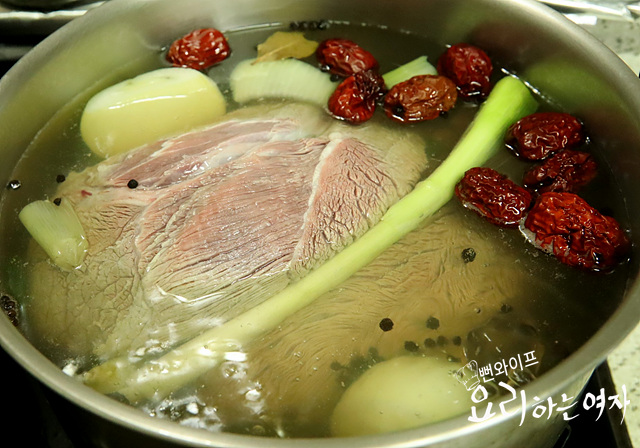
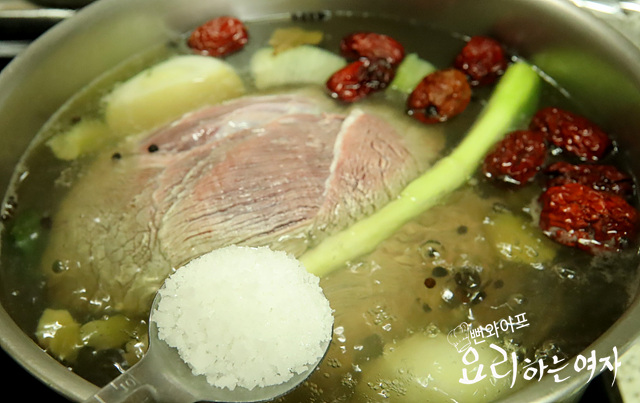
Once the water comes to a rolling boil, add the beef heel muscle along with 1 tbsp of coarse sea salt.
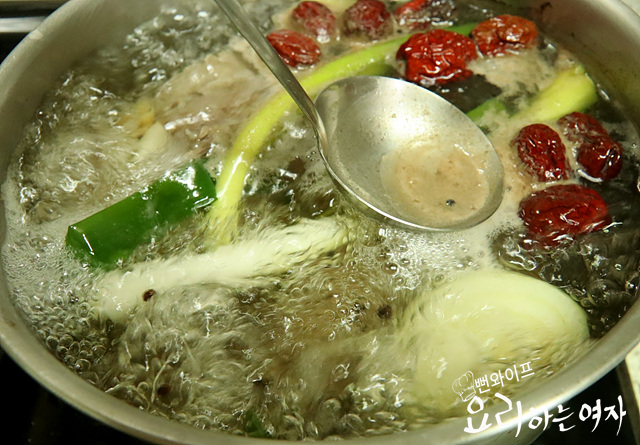
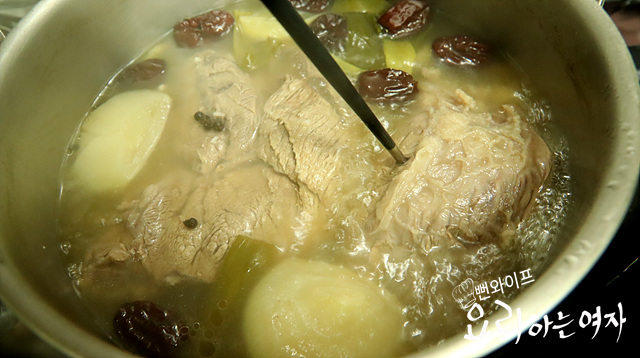
As it begins to boil, neatly skim off all the foam that rises to the surface.
Cover with a lid, adjust the heat so it does not boil over, and simmer for about 1 hour.
If you pierce it with a chopstick and no blood comes out, it is properly cooked.
If you cut it into chunks instead of simmering one large piece, the cooking time will be shorter.
If the water reduces too much while simmering, add more water and flip the meat over once to cook through.
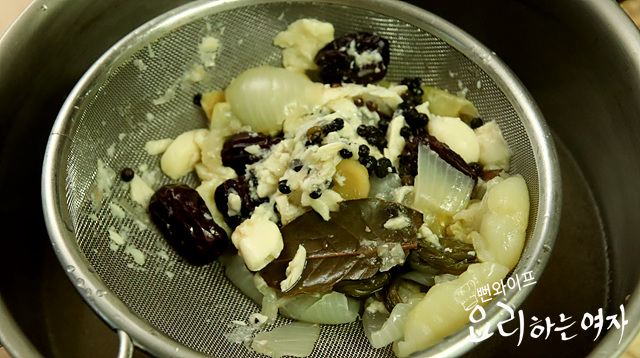
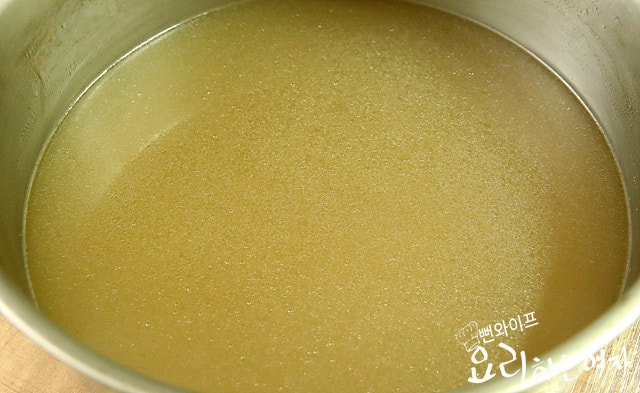
Scoop out all the solids and strain to collect only the clear broth.
I tasted the broth, and it is rich and truly delicious. The salt added at the beginning seasoned it just right.
You can also chill this broth, adjust the seasoning with sugar or vinegar, and use it as cold noodle broth.
I will be using it as hot pot broth, so I will use it without adding any extra seasoning.
Slice the meat
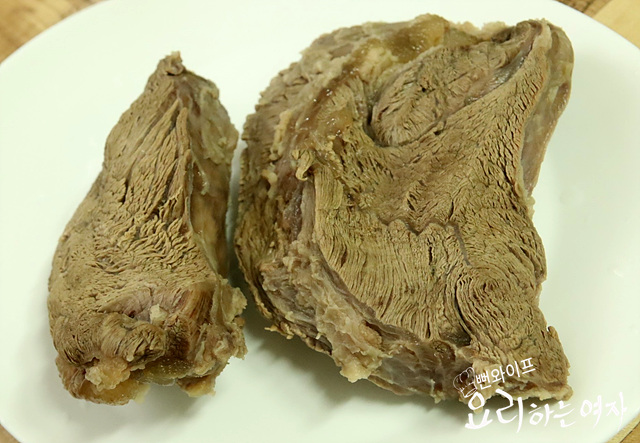
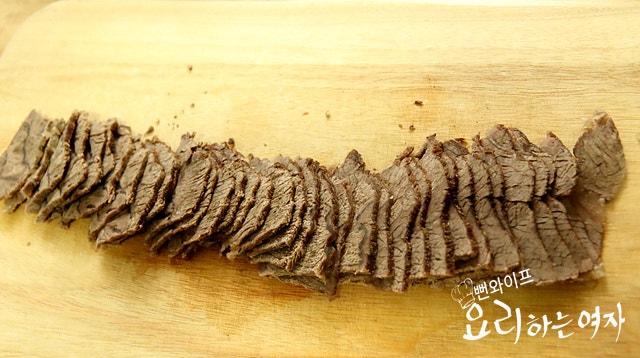
Chill the cooked meat completely so it firms up, then slice it thinly.
Adding salt while boiling gave the meat a subtle seasoning, so it tastes great even on its own.
Because beef shank is lean, it needs to be sliced thinly so it can be enjoyed without tasting dry.
Slice the vegetables and make the sauce
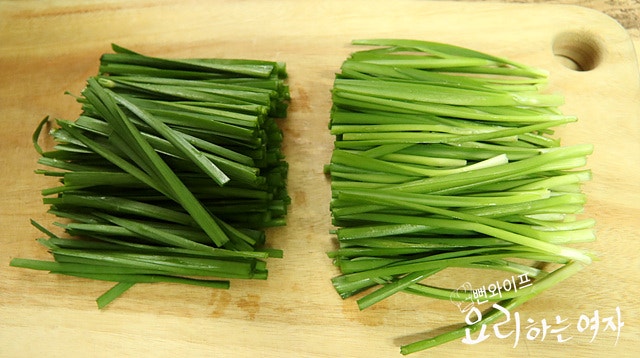
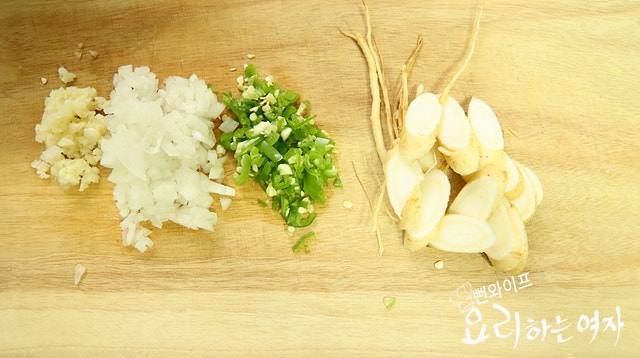
Cut the garlic chives into 4 to 5 cm lengths, and slice 1 root of ginseng thinly on a diagonal since it will be quickly simmered and eaten in the hot pot.
Finely chop the garlic, onion, and Cheongyang chili pepper.
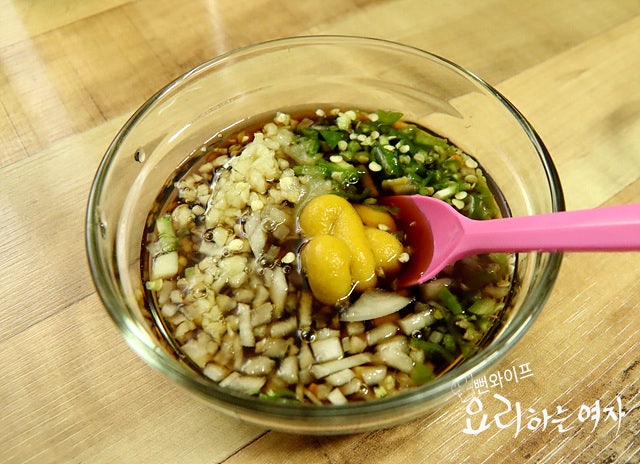
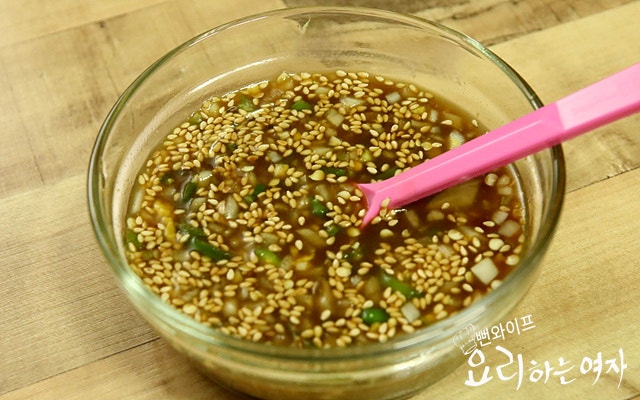
Add all the sauce ingredients together and mix thoroughly.
Taste and adjust the amount of seasonings to your liking.
Assemble the satae jeongol
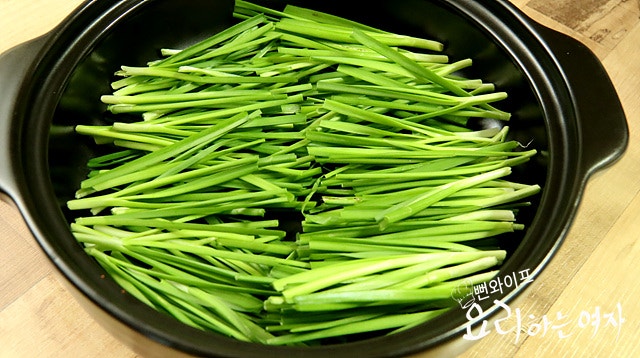
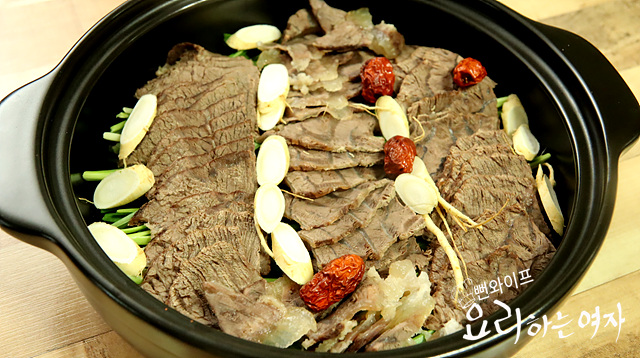
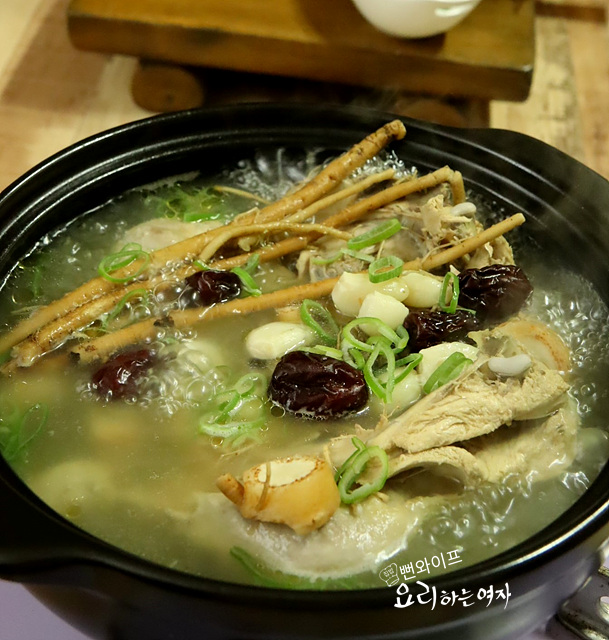
Spread the garlic chives across the bottom of an earthenware hot pot and neatly arrange the sliced shank on top.
Tuck the ginseng here and there, and add a few dried jujubes on top for presentation.
The Cheongyang chili pepper was added to the sauce, but you can also arrange some on top as a garnish, and enoki mushrooms are great to prepare as well.
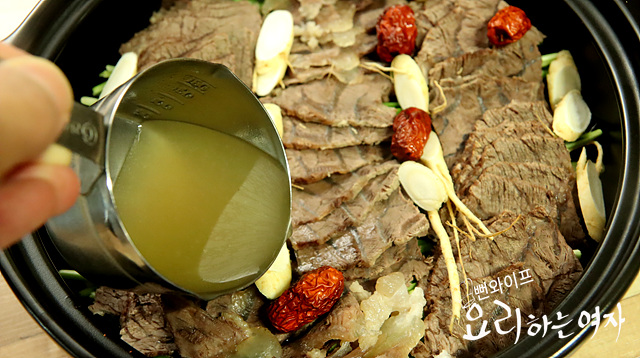
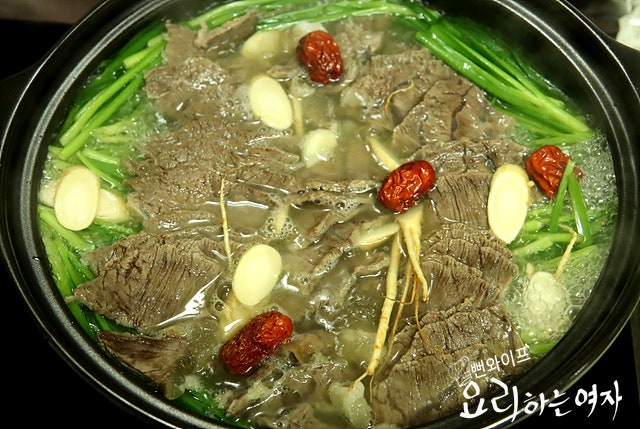
Pour in enough broth to submerge the meat and bring it to a bubbling boil to finish.
Finish
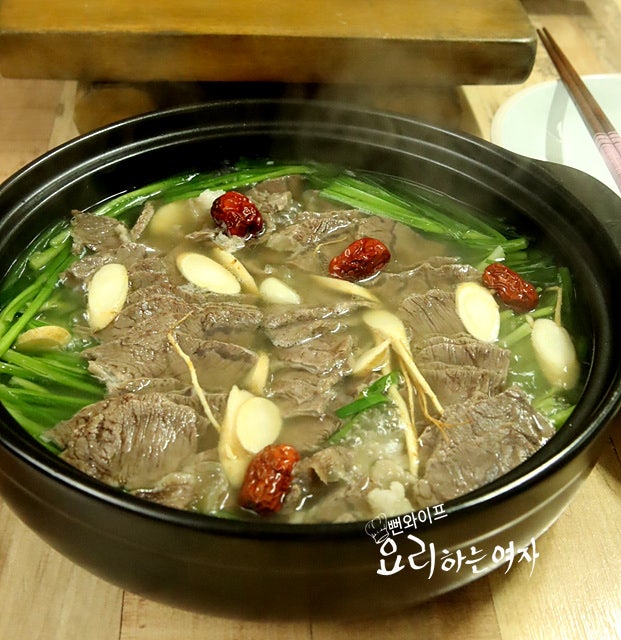
Serving it in an earthenware pot retains the heat for a long time, so you can enjoy it warm throughout the meal.
Simmering the shank with a variety of aromatics makes the broth deep, rich, and fantastic.
Once you taste the broth, enhanced with the fragrant flavors released by the garlic chives and ginseng added at the end, you will not be able to stop.
For those who enjoy a drink, what better upscale appetizer could there be?
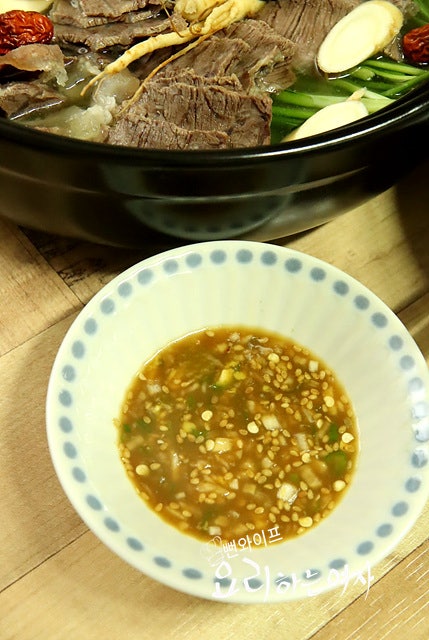
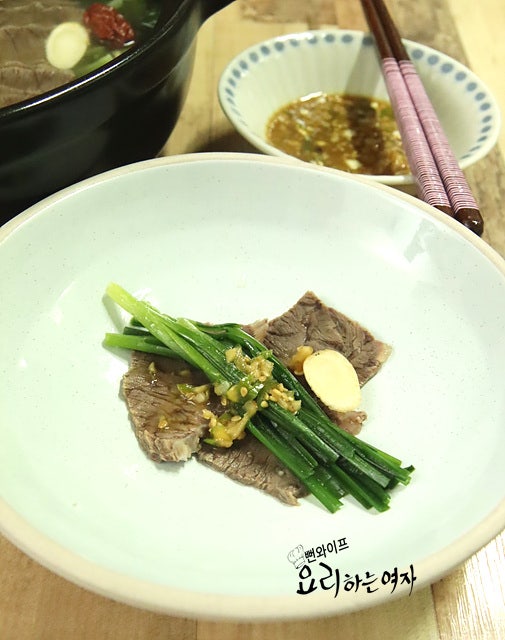
Top the meat with a bit of the sauce and wrap it together with the garlic chives and ginseng; it easily rivals any restaurant-bought satae jeongol.
If making the sauce feels like too much trouble, dipping it in a simple mix of ground black pepper and salt is also delicious.
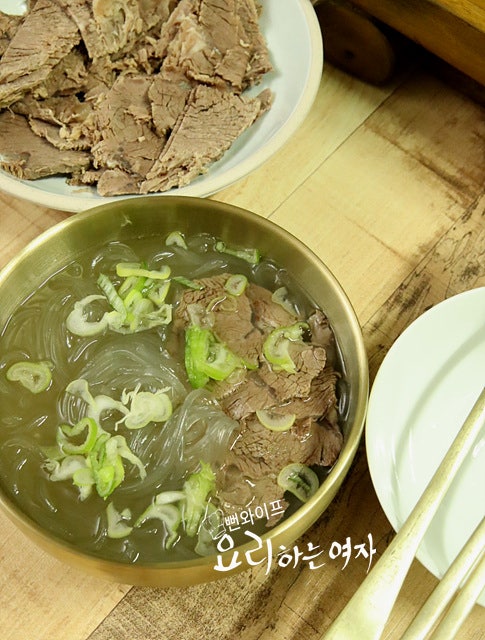
Just like galbitang, finishing it with somyeon noodles, sweet potato glass noodles, extra meat, and fragrant large green onion makes for a hearty, nourishing stamina meal.
It is perfect for the whole family to enjoy heartily and deliciously.
Best of all, it is a dish that both kids and adults love without exception, so if you are wondering what stamina food to make ahead of Malbok, I highly recommend this.
Serving this on a special occasion like a birthday or gathering will make it stand out on the table.
I am sharing this in advance so you can prepare your mind one day and shop for the ingredients the next.
 Ppunwife's tips
- Cutting the meat into chunks instead of simmering one large piece will shorten the cooking time.
- If the water reduces too much during simmering, add more and turn the meat over once.
- Chill the cooked meat completely so it firms up, then slice it thinly.
- Because beef shank is lean, it needs to be sliced thinly so it can be enjoyed without tasting dry.
- Serving it in an earthenware pot retains the heat for a long time, so you can enjoy it warm.
- If making the sauce feels like too much trouble, dipping the meat in a mix of ground black pepper and salt is also delicious.
FAQ
How should I slice beef shank so that it stays tender and does not taste dry?
Because beef shank is a lean cut, cool it completely after boiling until it firms up, then slice it thinly so it does not taste dry.
How can I check if the meat is properly cooked?
Pierce the center of the meat with a chopstick; if no blood seeps out, it is fully cooked.
How can I use leftover broth and meat?
You can boil somyeon or glass noodles directly in the broth with large green onions to enjoy it like galbitang, or chill the broth and use it as a base for cold noodles.
Is there a simpler way to serve it without making the hot pot dipping sauce?
If preparing the seasoned sauce feels troublesome, you can simply mix salt and ground black pepper together as a light dipping dip.