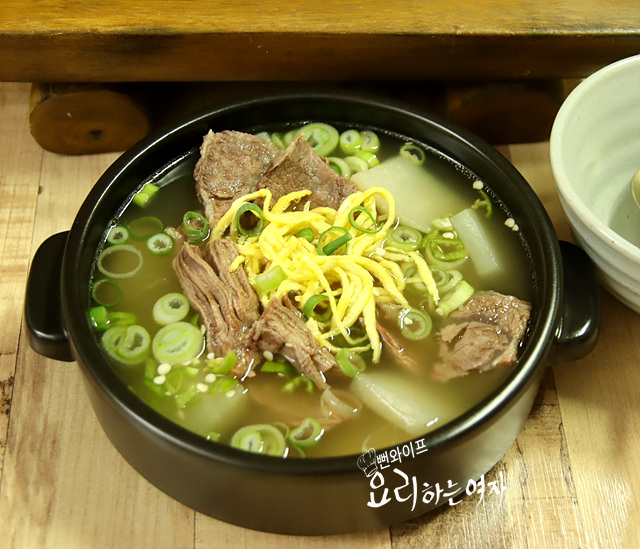
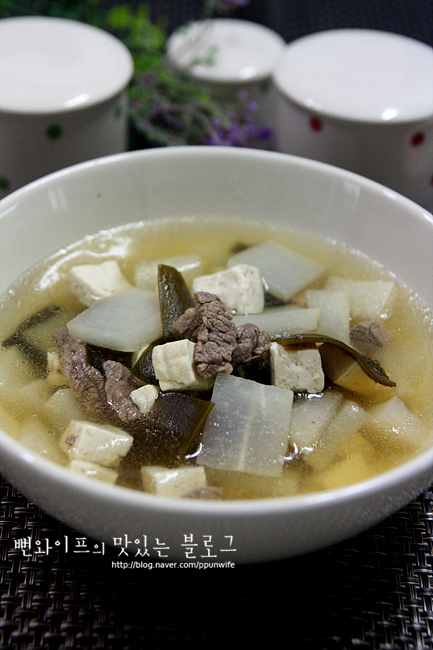
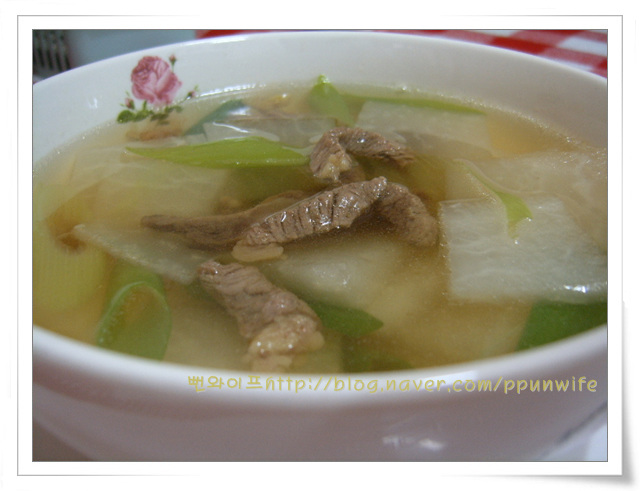
Galbitang (Beef Short Rib Soup) with Beef Shank
A 4 to 5 serving galbitang made by simmering beef shank instead of beef short ribs for a clear, rich broth.
Translated from Korean by AI and not yet checked by a native speaker. Amounts and numbers are taken directly from the original recipe. Read the Korean original →
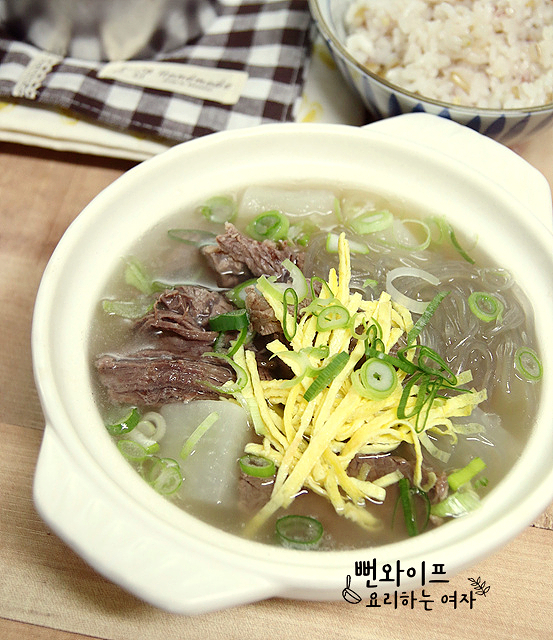
This economical galbitang simmers boneless beef shank gently to bring out a tender, chewy texture and a deep broth. The secret is adding coarse sea salt while boiling the meat to season it all the way through. It makes a satisfying, nourishing hot soup for holidays or cold winter days.
- Servings
- 4–5 servings
- Cook time
- 60 minprep not included
- Difficulty
- Medium
- Spiciness
- Not spicy
Ingredients
Ingredients
- Beef shank1 kg (heel muscle)
- Large green onion (daepa)
- Egg
- Sweet potato glass noodles (dangmyeon)
Broth ingredients
- Korean radish (mu)250 g
- Onion1
- White part of large green onion (daepa)1 stalk
- Peeled garlic20 cloves
- Ginger2 knobs
- Whole black peppercorns1 tbsp
- Water15 cups (or more)
- Coarse sea salt1 tbsp
- Cut the beef shank once so the blood drains easily, then soak it for at least 30 minutes, changing the water occasionally.
- Trim away any tendons or excess fat attached to the beef shank.
- Pour warm water over the sweet potato glass noodles so they soften gently.
Steps
Prepare the ingredients
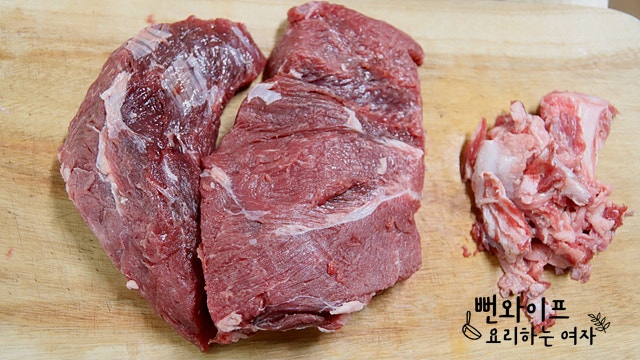
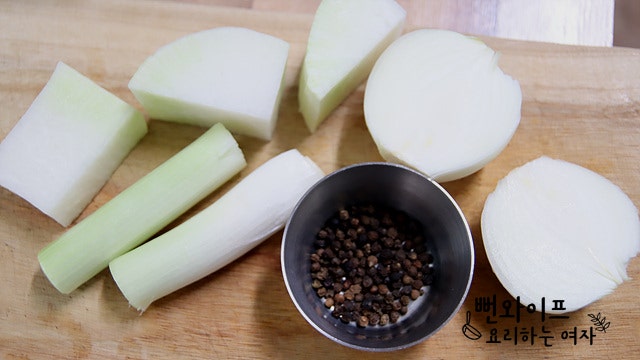
Trim away any tendons or excess fat attached to the beef shank.
Cut the Korean radish, onion, and large green onion into large pieces with once or twice cuts.
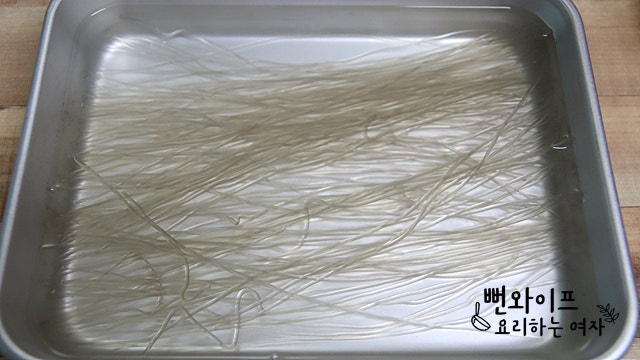
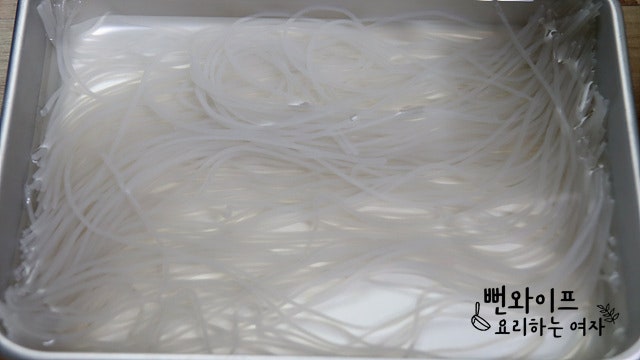
Pour warm water over the sweet potato glass noodles so they soften gently.
When soaked ahead of time, they only need a quick simmer at the very end.
Drain the blood from the beef shank
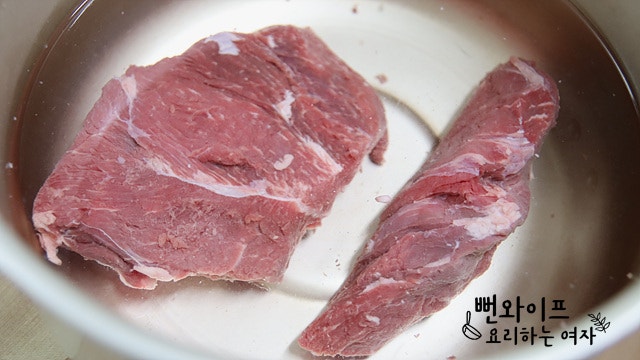
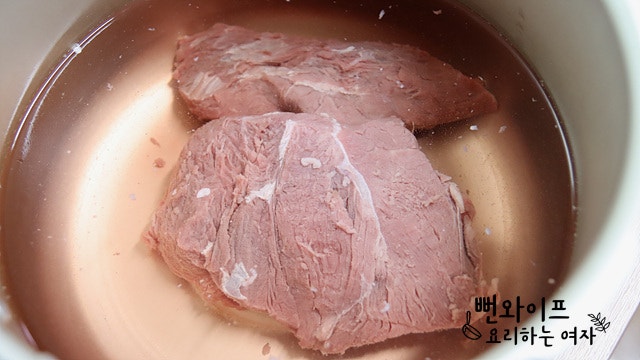
Cut the beef shank once so the blood drains easily, then soak it for at least 30 minutes, changing the water occasionally.
Boil the beef shank
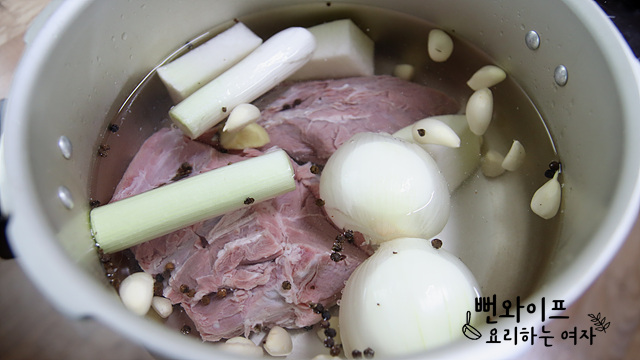
Place the beef shank and all broth ingredients into a large pot, add 1 tbsp of coarse sea salt, and boil.
Adding salt while boiling lightly seasons the broth, but more importantly, it seasons the meat and radish all the way through, making them much more delicious.
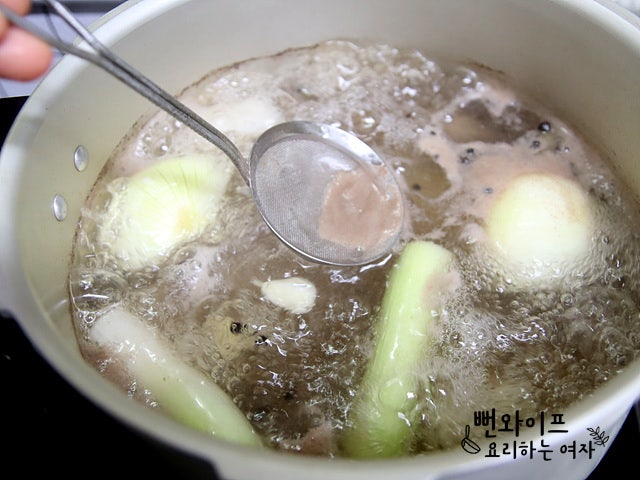
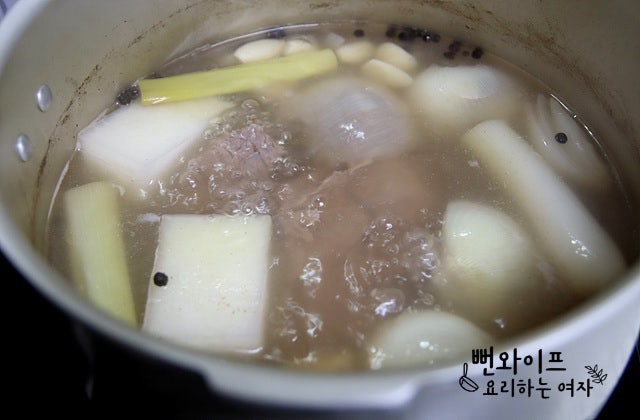
Once it comes to a rolling boil, skim off the foam and simmer gently for about 1 hour.
If the water reduces too much while simmering, replenish it as you cook.
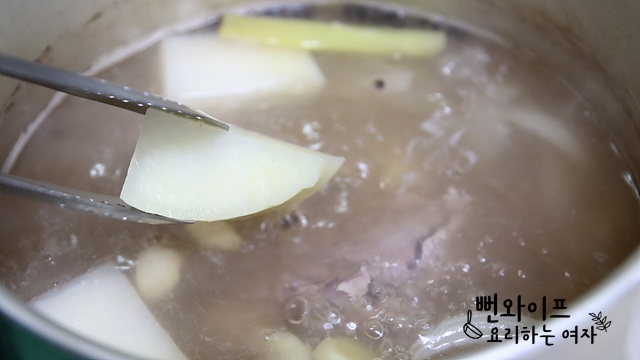
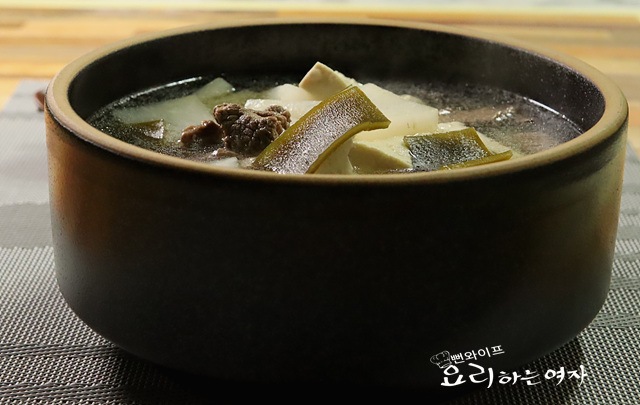
Take the radish out halfway through once it is cooked to an enjoyable tenderness, let it cool, and set it aside to slice with the meat later.
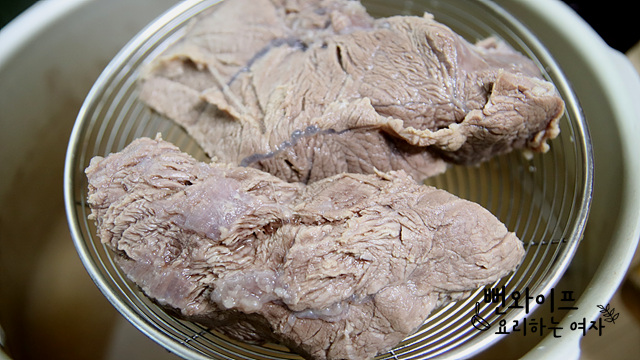
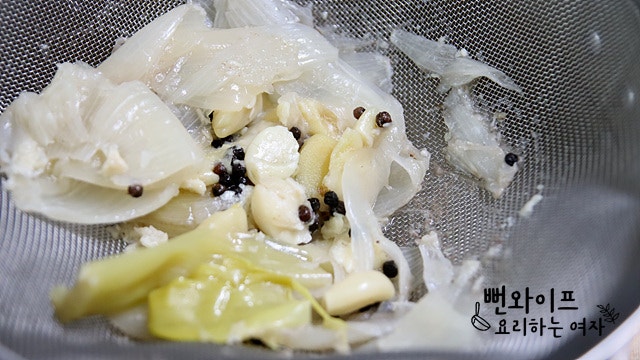
After 1 hour, test a bite of the meat to check if it is tender, take it out, and let it cool so it is easy to slice.
Strain out and discard the remaining aromatic ingredients, keeping only the clear broth.
Prepare the garnishes
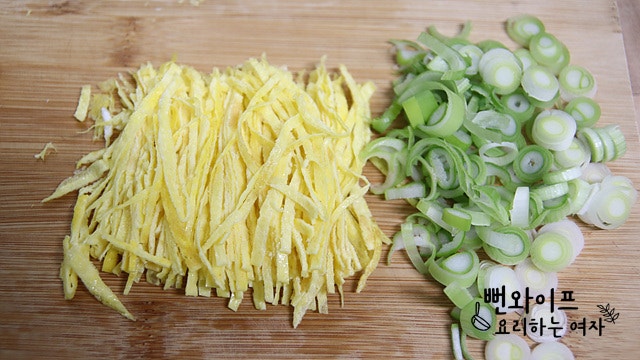
Fry the egg into a thin sheet and slice it into fine strips, and thinly slice the large green onion.
Slice the meat and radish
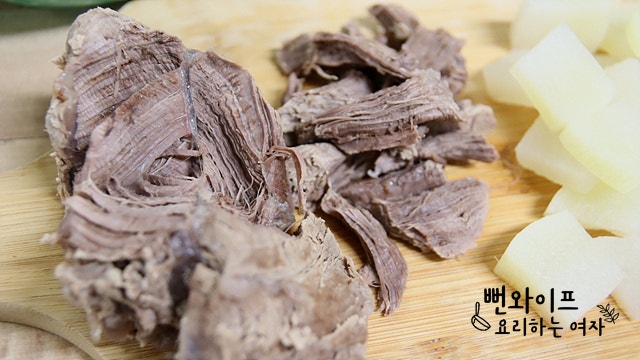
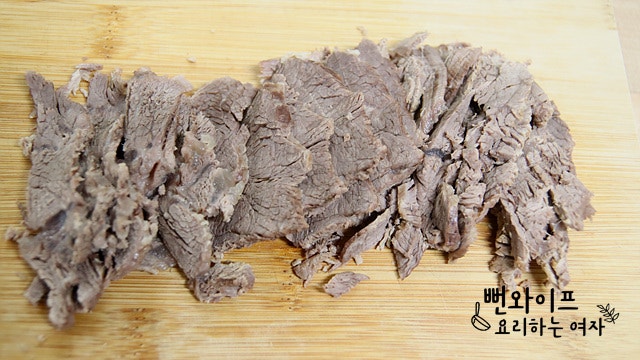
Slice the radish into bite-sized, thick pieces, and either shred the meat along the grain or slice it thinly against the grain.
The thinly sliced meat is also delicious dipped in wasabi soy sauce as an accompaniment for drinks.
Finish the dish
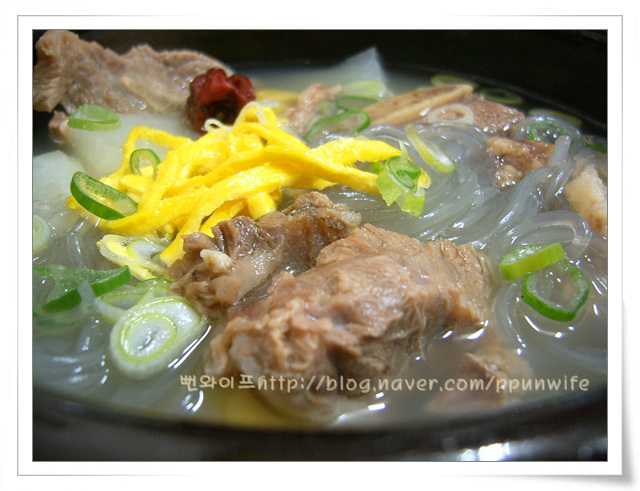
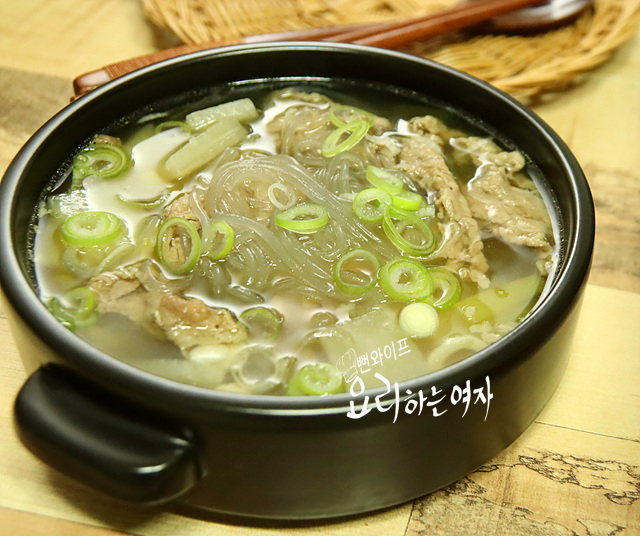
Place a portion of broth, meat, and radish into a pot, add the soaked sweet potato glass noodles, and bring to a brief simmer just to reheat.
Top with egg garnish and large green onion at the end to finish.
You can enjoy it as galbitang just like this, or add sliced rice cakes to this broth to make a really delicious tteokguk.
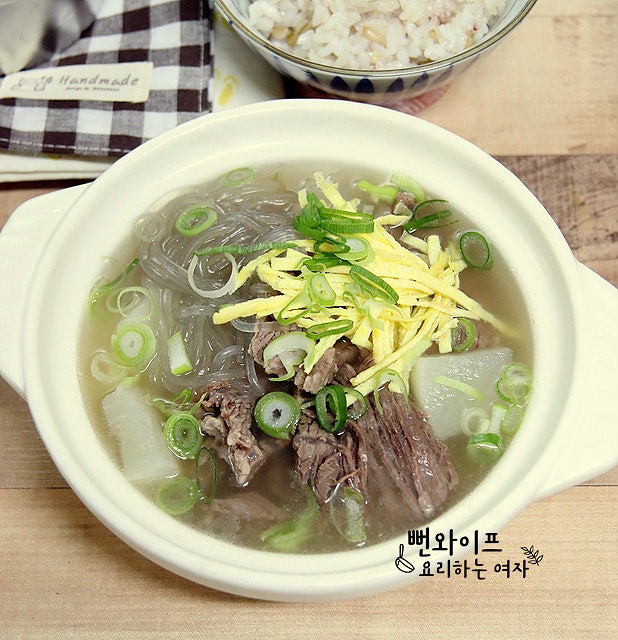
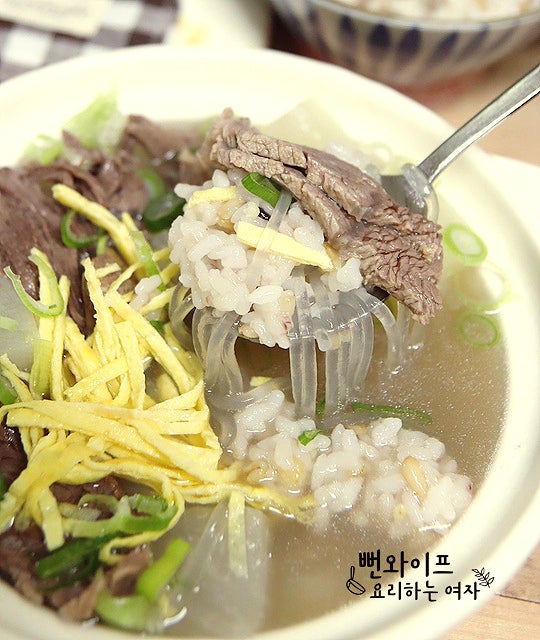
Because the broth and ingredients are already lightly seasoned, adjust to your taste with just a tiny pinch of salt mixed with black pepper before eating.
When adding glass noodles, serve with just a little rice and enjoy it piping hot for a wonderful, satisfying meal.
 Ppunwife's tips
- Adding salt while boiling lightly seasons the broth, but more importantly, it seasons the meat and radish all the way through, making them much more delicious.
- If the water reduces too much while simmering, replenish it as you cook.
- Because the broth and ingredients are already lightly seasoned, adjust to your taste with just a tiny pinch of salt mixed with black pepper before eating.
FAQ
Why add salt early when boiling the meat?
Adding coarse sea salt while simmering the beef shank imparts a subtle seasoning to the broth and penetrates the meat and radish, making them much more flavorful.
When should the boiled radish be removed?
Remove the radish halfway through once it reaches an enjoyable tenderness, let it cool, and then slice it to reheat with the meat in the broth later.
How do you drain the blood from the beef shank?
Cut the meat once so the blood releases easily, then soak it in water for at least 30 minutes, changing the water occasionally.
Can the galbitang broth be used for other dishes?
You can enjoy it right away as galbitang, or use this clear broth to make sliced rice cake soup (tteokguk) by adding sliced rice cakes.