Savory Beef Galbitang (Beef Short Rib Soup)
Beef galbitang simmered with beef bones and vegetables, chilled to skim off the fat for a clean, deep flavor.
Translated from Korean by AI and not yet checked by a native speaker. Amounts and numbers are taken directly from the original recipe. Read the Korean original →
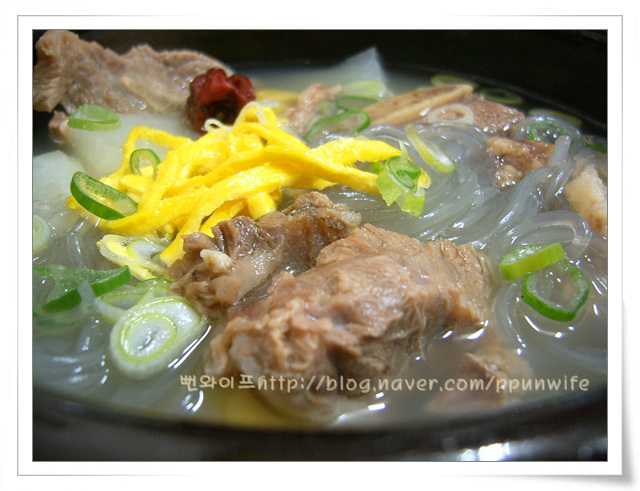
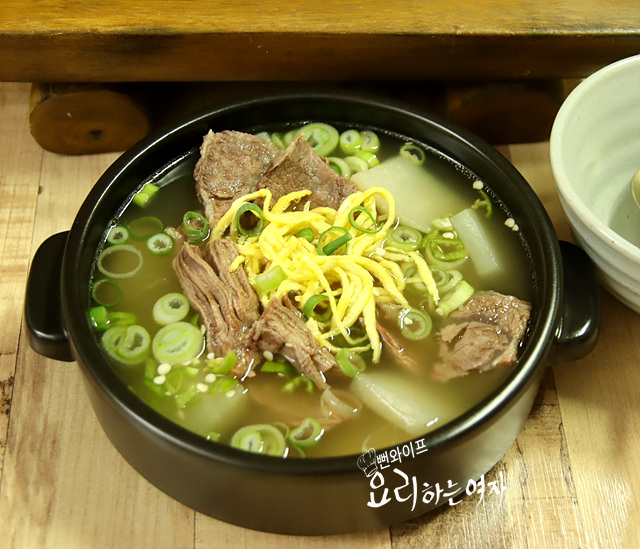
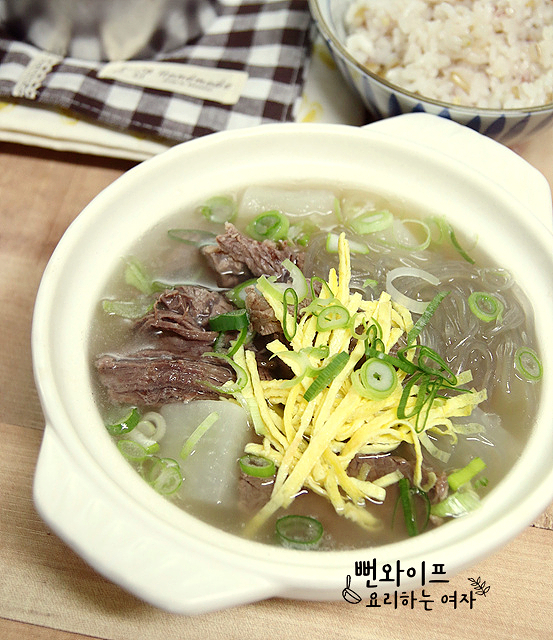
This soup is made by simmering beef short ribs together with beef bones for a rich, deeply savory broth. Chilling the strained broth to skim away the solidified fat is the secret to a clean and light soup. Served with seasoned ribs, jujubes, chestnuts, and sweet potato glass noodles, it makes a hearty and satisfying meal.
- Servings
- 4 servings
- Cook time
- 130 minprep not included
- Difficulty
- Hard
- Spiciness
- Not spicy
Ingredients
Ingredients
- Beef short ribs600 g
- Beef bones1 kg
- Water20 cups
- Korean radish (mu)4 chunks, 200 g
- Onion1 (small)
- Garlic8 cloves
- Large green onion (daepa)1 stalk
- Whole black peppercorns20
Rib Seasoning
- Soup soy sauce (guk-ganjang) (or soup soy sauce (guk-ganjang))1 tbsp
- Salt1 tsp
- Garlic juice (or minced garlic)2 tbsp
- Ground black pepper0.5 tsp
Finishing Ingredients
- Yellow egg yolk garnish (jidan)
- Minced green onion
- Dried jujubes
- Chestnuts
- Sweet potato glass noodles (dangmyeon)
- Korean radish (mu)100 g
Wasabi Sauce
- Regular soy sauce (jin-ganjang)1 tbsp
- Soup broth1 tbsp
- Vinegar1 tbsp
- Sugar1 tsp
- Wasabi (or prepared wasabi)0.5 tsp
Spicy Seasoning Paste (Dadaegi)
- Gochugaru (Korean chili flakes)1.5 tbsp
- Soup broth1 tbsp
- Regular soy sauce (jin-ganjang)1 tbsp
- Soup soy sauce (guk-ganjang) (or soup soy sauce (guk-ganjang))1 tbsp
- Minced green onion1 tbsp
- Minced garlic1 tsp
- Sugar0.5 tsp
- Soak in cold water for about 2 hours to draw out the blood. Drain and change the water several times while soaking.
- The ribs used for galbitang are typically soup-cut short ribs, but braising-cut ribs can be used if you have them. Simmering ribs alone makes the broth taste a bit plain. Adding brisket or beef bones gives the broth a richer flavor.
- If using brisket instead of bones to make the broth, double the seasoning since the meat quantity will be larger.
Steps
The ribs used for galbitang are typically soup-cut short ribs, but braising-cut ribs can be used if you have them.
Simmering ribs alone makes the broth taste a bit plain. Adding brisket or beef bones gives the broth a richer flavor.
I used 1 kg of Hanwoo beef bones and grilling-cut ribs I had at home.
Trim off any excess fat and cut the ribs into bite-sized pieces.
Soak in cold water for about 2 hours to draw out the blood. Drain and change the water several times while soaking.
Pour in enough water to fully submerge the meat and bones, bring to a rolling boil, then add the ribs and bones and blanch for about 4 to 5 minutes.
Blanching like this removes unpleasant odors and keeps the broth clean.
After blanching, discard the water and rinse thoroughly with hot water.
In a pot, combine the ribs, bones, large chunks of radish, large green onion, onion, and whole black peppercorns, then pour in the water and bring to a boil.
Once the water begins to boil, reduce to low heat and simmer for over 2 hours.
When the ribs are tender and the broth is well extracted, you can stop boiling.
Since my rib meat was thin, I took out just the ribs after 1 hour and simmered the remaining ingredients for another 1 hour.
Strain the broth through a cheesecloth, then chill it in a cool place or in the refrigerator to solidify the fat.
Season the ribs with 1 tbsp soup soy sauce (guk-ganjang), 1 tsp salt, 2 tbsp garlic juice (or minced garlic), and 0.5 tsp ground black pepper.
Keep them in a cool place while the fat on the broth solidifies.
If using brisket instead of bones to make the broth, double the seasoning since the meat quantity will be larger.
Soak the sweet potato glass noodles in water.
Here are the yellow egg yolk garnish, minced green onion, dried jujubes, and chestnuts. Slice the radish flat into 3 to 4 cm pieces.
After 5 to 6 hours in the refrigerator, the fat solidifies white on top.
Even though it was strained through cheesecloth once, white fat like this still forms.
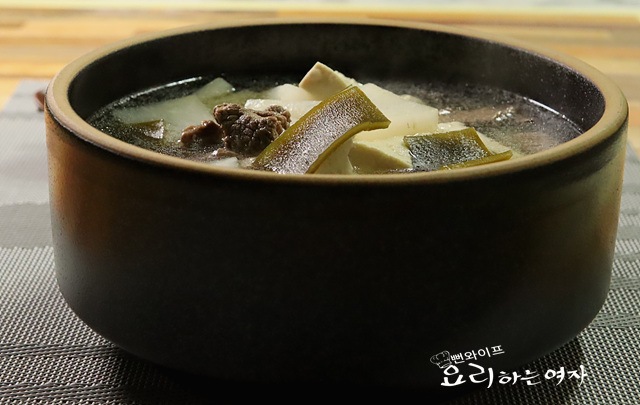
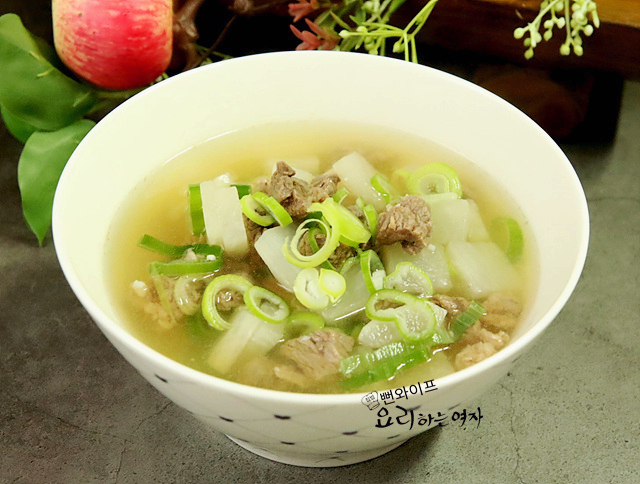
Skim off the white fat with a fine mesh strainer or strain it once more through cheesecloth to get broth like this.
Add the defatted broth and the seasoned ribs...
Add the chestnuts, dried jujubes, and radish as well, then bring to a boil. Season with 1 tbsp salt...
Once the radish and chestnuts are cooked through, add the soaked glass noodles and simmer briefly.
These are the accompanying condiments: wasabi sauce and spicy seasoning paste (dadaegi).
Wasabi sauce: 1 tbsp regular soy sauce (jin-ganjang), 1 tbsp soup broth, 1 tbsp vinegar, 1 tsp sugar, 0.5 tsp wasabi
Spicy seasoning paste: 1.5 tbsp gochugaru (Korean chili flakes), 1 tbsp soup broth, 1 tbsp regular soy sauce (jin-ganjang), 1 tbsp soup soy sauce (guk-ganjang), 1 tbsp minced green onion, 1 tsp minced garlic, 0.5 tsp sugar
Heat up an earthenware bowl (ttukbaegi), ladle in the broth and all the meat and ingredients, and top with minced green onion and a dash of ground black pepper before serving.
 Ppunwife's tips
- Pour in enough water to fully submerge the meat and bones, bring to a rolling boil, then add the ribs and bones and blanch for about 4 to 5 minutes. Blanching like this removes unpleasant odors and keeps the broth clean.
- Heat up an earthenware bowl (ttukbaegi), ladle in the broth and all the meat and ingredients, and top with minced green onion and a dash of ground black pepper before serving.
FAQ
What cut of short ribs should I use?
Soup-cut ribs are typically used, but braising-cut or grilling-cut ribs also work well.
Is there a way to make the broth richer?
Simmering ribs alone can make the broth taste plain, so adding beef bones or beef brisket will yield a richer broth.
How do I cleanly remove the fat from the broth?
Strain the broth through cheesecloth, then leave it in a cool spot or in the refrigerator for 5 to 6 hours to skim off the solidified white fat.
What should I keep in mind if using brisket instead of beef bones?
Because the amount of meat increases, it is best to double the amount of seasoning used to season the meat.