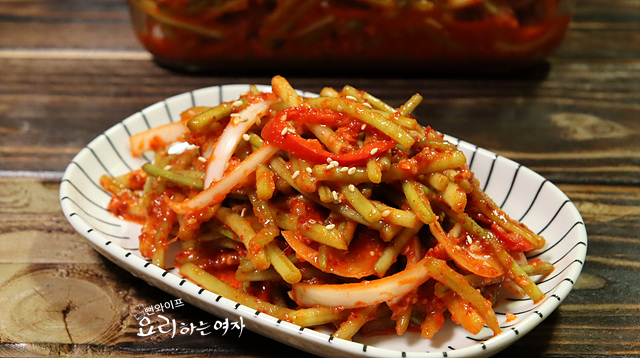
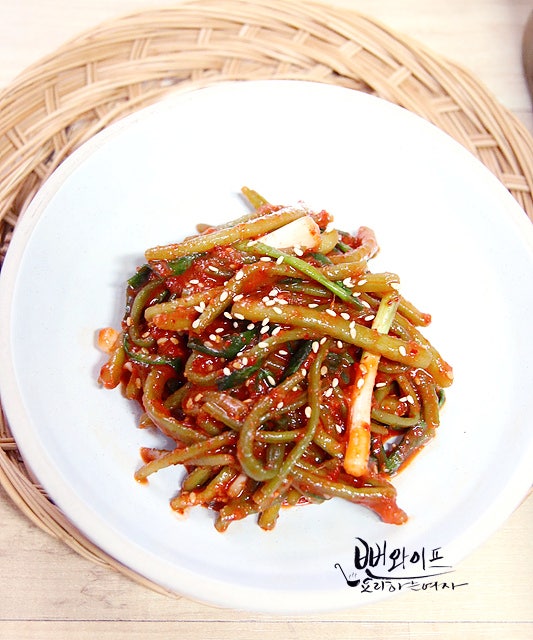
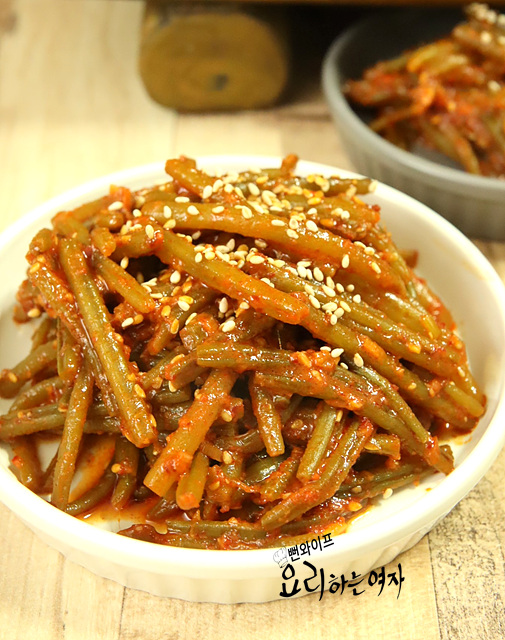
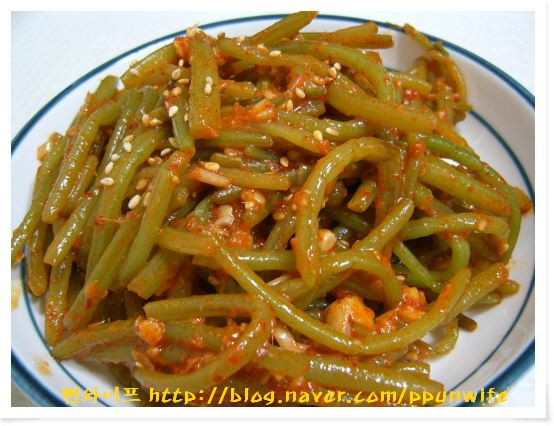
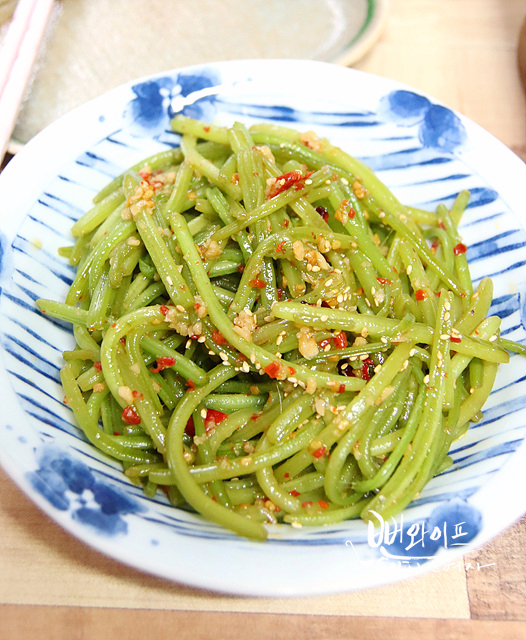
Goguma Julgi Jangajji (Pickled Sweet Potato Stems)
A refreshing sweet potato stem side dish lightly pickled with soy sauce and salt to enjoy for 1 whole year.
Translated from Korean by AI and not yet checked by a native speaker. Amounts and numbers are taken directly from the original recipe. Read the Korean original →
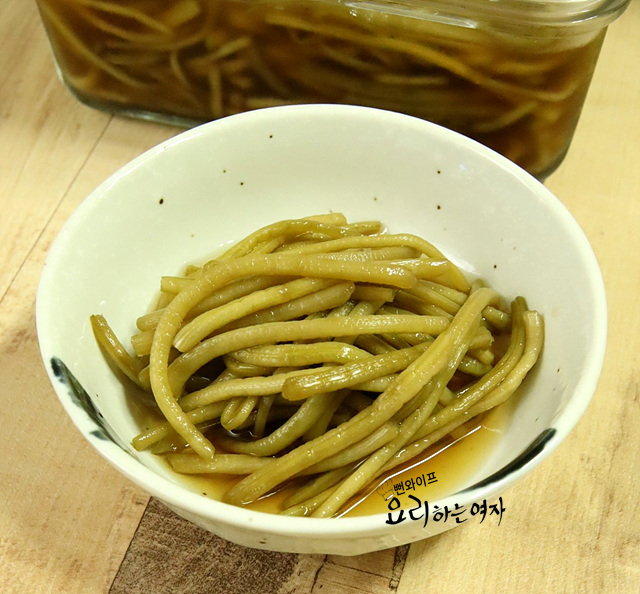
This pickle preserves the crisp texture and natural color of seasonal sweet potato stems by pickling them in a soy sauce and brine solution. Adding soju at the very end keeps them fresh for a long time without needing to reboil the brine. Served with grilled meat, it cuts through richness and makes an ideal side dish.
- Servings
- about 6–8 servings
- Difficulty
- Easy
- Spiciness
- Not spicy
- Keeps
- 365 days
Ingredients
Ingredients
- Sweet potato stems650 g (after cleaning)
Pickling brine
- Gin (or brewed soy sauce (yangjo-ganjang))1/2 cup
- Sugar1/2 cup
- Vinegar1 cup
- Coarse sea salt1 tbsp
- Water1 cup
- Soju1/2 cup
- The peeled sweet potato stems were snapped into pieces while peeling, so you do not need to cut them separately.
Steps
Prepare the ingredients
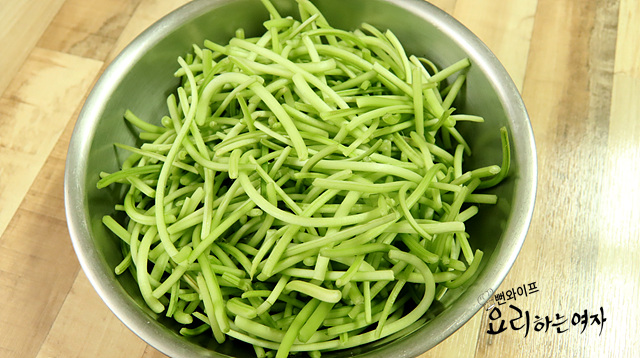
These are peeled sweet potato stems. It is 650g.
They were snapped into pieces while peeling, so I did not cut them separately.
Rinse and drain
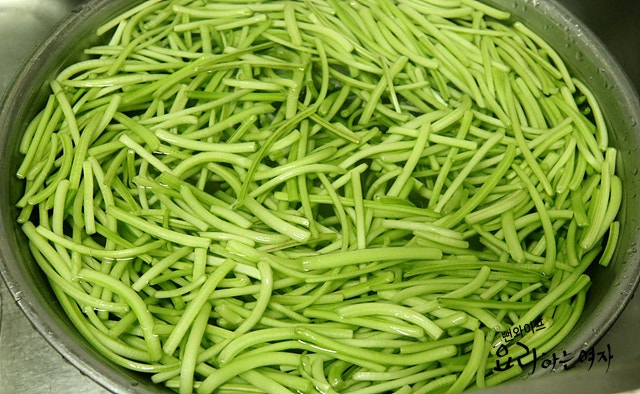
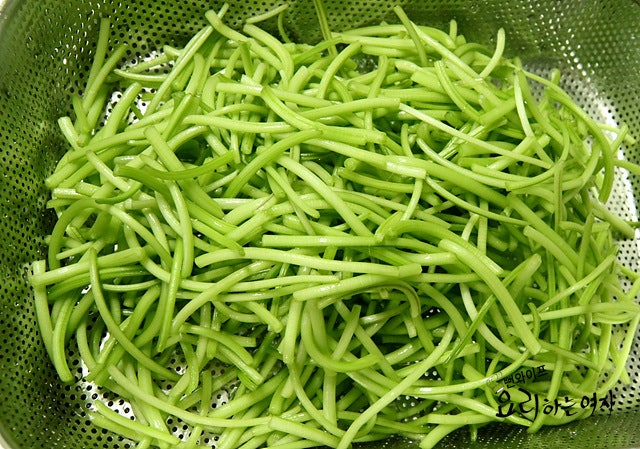
Rinse them several times in water and drain the water very well.
Whatever ingredients you pickle, you must drain the moisture thoroughly so white mold does not form and the food does not spoil.
Boil and pour the brine
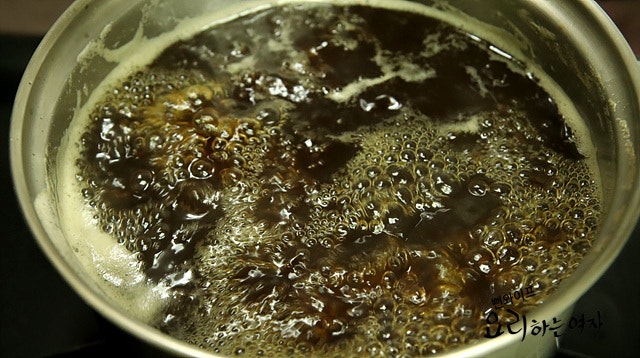
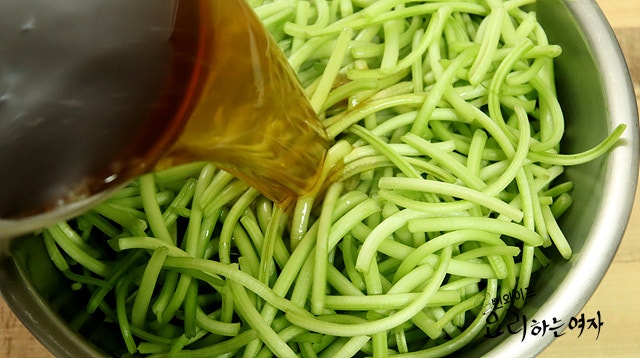
Add all pickling brine ingredients except the soju and bring to a rolling boil.
Right after boiling, pour it directly over the sweet potato stems in the bowl.
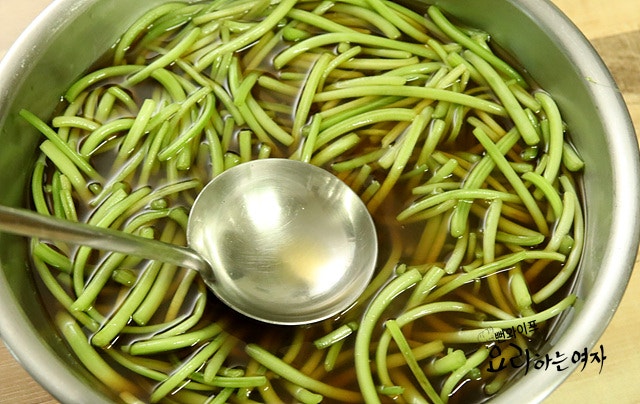
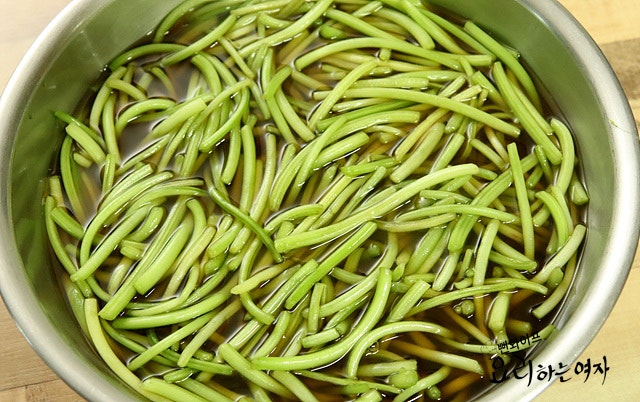
After pouring, the brine might look insufficient...
As time passes, moisture comes out of the sweet potato stems and they wilt down to less than half their volume, so it turns out to be the exact right amount.
Turn them over once and let them cool completely.
Age and store
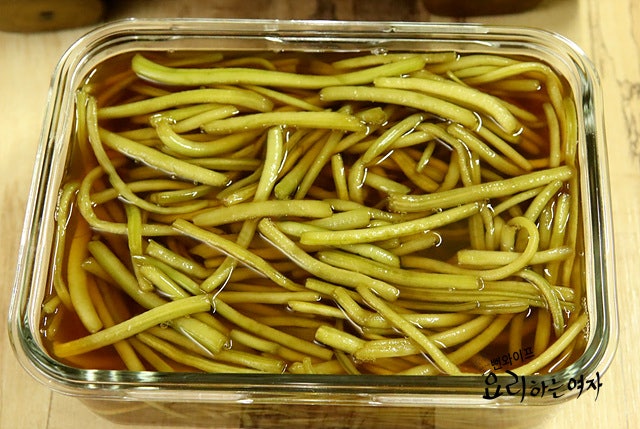
Once completely cooled, transfer them into a container and pour 1/2 cup soju evenly over them.
Adding soju at the end has a sterilizing effect, so you do not need to repeatedly boil the brine.
Age at room temperature for one night, then place in the refrigerator.
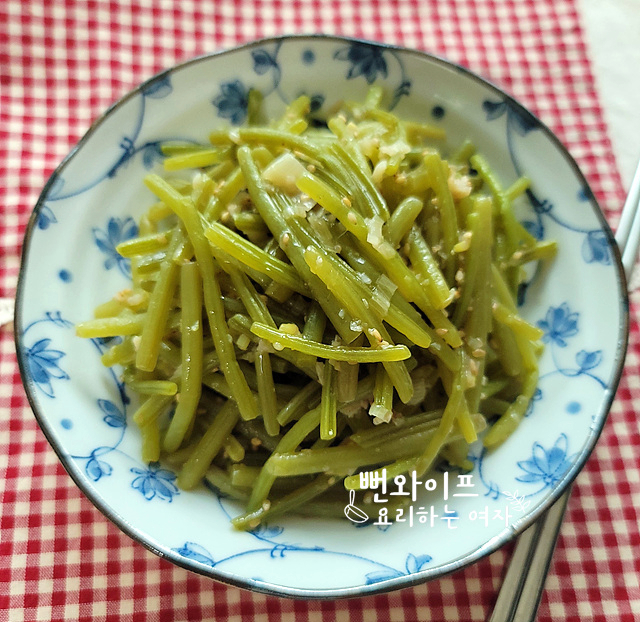
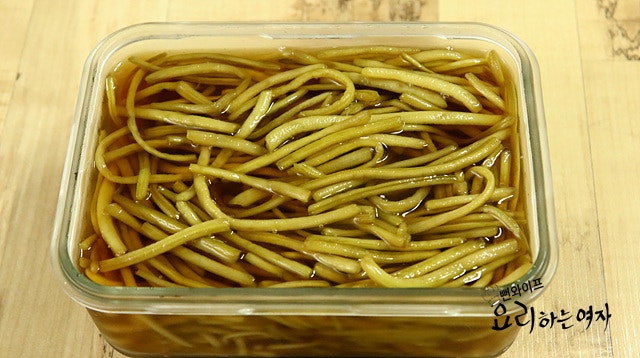
The photo on the right shows how they look after 1 week, properly seasoned in both color and taste.
I did not want a dark pickle color, so I balanced the regular soy sauce and coarse sea salt, and it turned out with just the soy sauce shade I wanted.
Finish
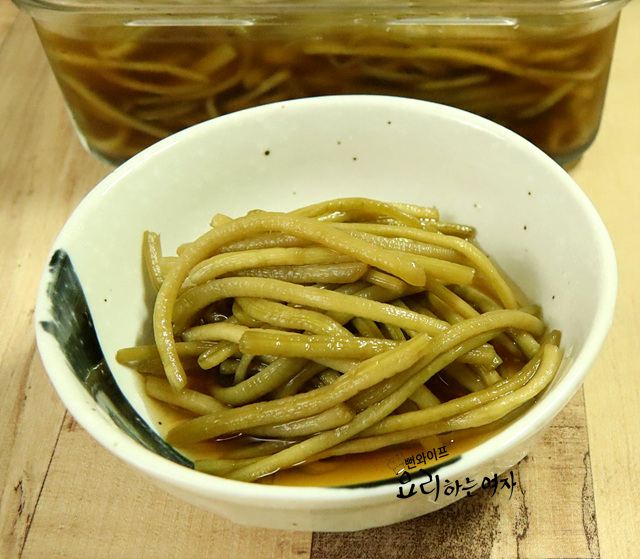
The texture stays crisp yet tender.
The light soy sauce color makes it look much more elegant.
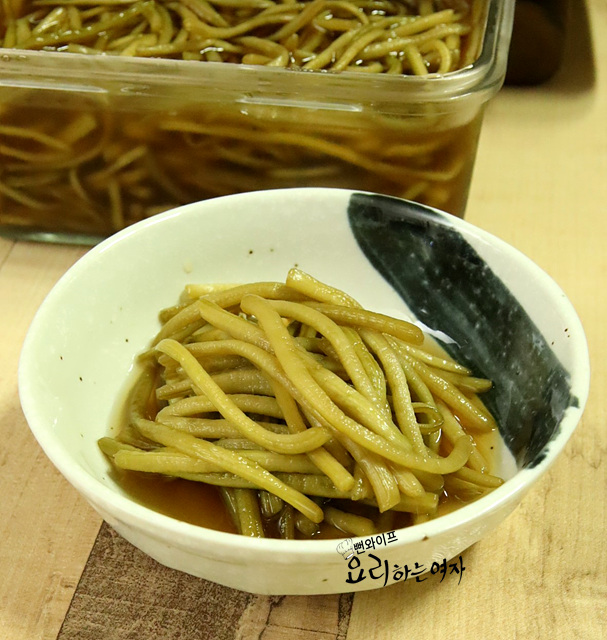
Serving this alongside grilled meat instead of green onion salad cuts the richness and refreshes your palate.
If you make a generous batch and keep it in the refrigerator, it becomes a reliable side dish for more than 1 year.
 Ppunwife's tips
- Whatever ingredients you pickle, you must drain the moisture thoroughly so white mold does not form and the food does not spoil.
- Adding soju at the end has a sterilizing effect, so you do not need to repeatedly boil the brine.
- Serving this alongside grilled meat instead of green onion salad cuts the richness and refreshes your palate.
FAQ
What should I do if there seems to be too little pickling liquid after pouring it in?
As time passes, the sweet potato stems release their own moisture and wilt down, shrinking greatly in volume, so it will become the right amount even if you leave it as is.
Is it really okay not to reboil and pour the brine multiple times?
Pouring half a cup of soju evenly over them after placing them in the container provides a sterilizing effect, allowing you to store them safely without the hassle of repeatedly boiling and cooling the brine.
What are the storage period and aging method?
After letting the brine cool completely, age it at room temperature for one night and store it in the refrigerator, where it can keep for more than 1 year.
What is most important to keep the pickles from spoiling or developing white mold?
Thoroughly removing all surface moisture after washing is the most important step for preventing mold and spoilage.