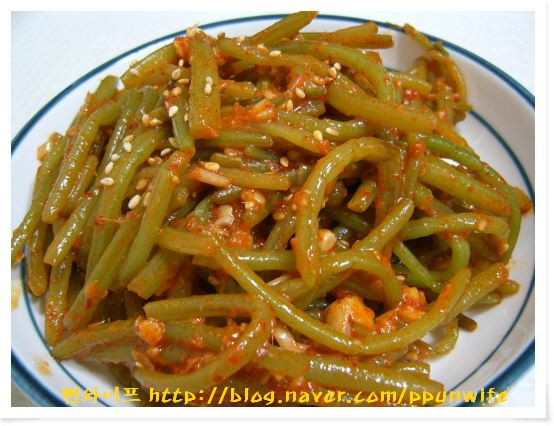
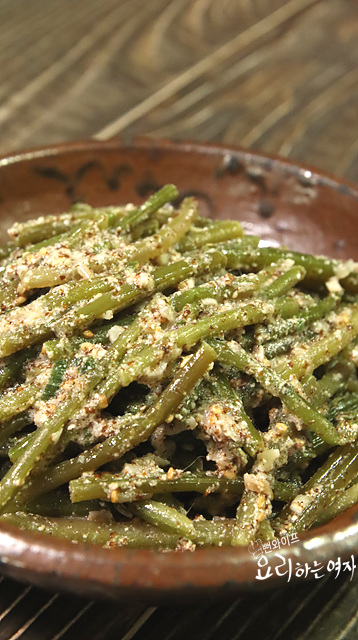
Crispy Goguma Julgi Kimchi (Sweet Potato Vine Kimchi)
A crispy summer kimchi side dish made with sweet potato stems salted without blanching and tossed with a cold cooked rice porridge paste.
Translated from Korean by AI and not yet checked by a native speaker. Amounts and numbers are taken directly from the original recipe. Read the Korean original →
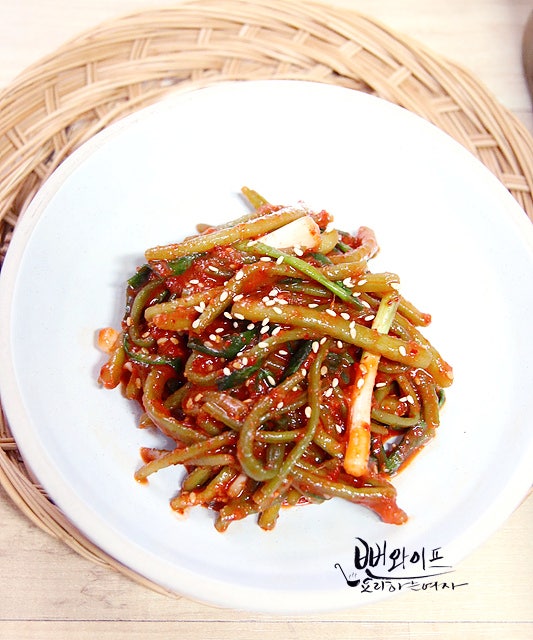
This summer delicacy kimchi preserves the naturally crisp texture of sweet potato stems by salting them in brine instead of blanching. Blending cold cooked rice instead of cooking glutinous rice porridge makes the seasoning quick and easy to prepare. Once fermented, it is also wonderful enjoyed with its juices in bibimbap or bibimguksu.
- Servings
- about 7–8 servings
- Difficulty
- Medium
- Spiciness
- Spicy
Ingredients
Ingredients
- Sweet potato stems700 g (after cleaning)
- Scallions (jjokpa)150 g
- Coarse sea salt2/3 cup
- Water13 cups
Seasoning
- Cooked rice1/2 bowl
- Water1 1/2 cups
- Peeled garlic (or minced garlic 3 tbsp)7–8 cloves
- Ginger (or minced ginger 1/2 tbsp)a little
- Salted fermented shrimp (saeujeot)2 tbsp
- Sand lance (or dried anchovies)2 tbsp
- Gochugaru (Korean chili flakes)1 cup
- Green plum syrup (maesil-cheong) (or sugar)3 tbsp
- Toasted sesame seeds2 tbsp
- Submerge the sweet potato stems in the brine and weigh them down so they do not float, then salt for about 1 hour.
- Before trimming, the sweet potato stems are 1 large bunch (1 kg), and the scallions are about two handfuls.
- You can also prepare 1 onion, slice it, and add it instead of scallions.
Steps
Prepare the ingredients
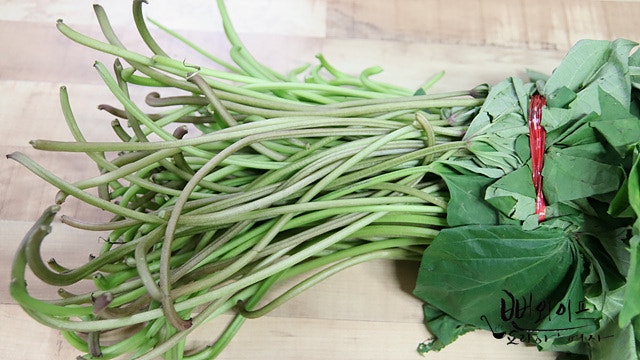
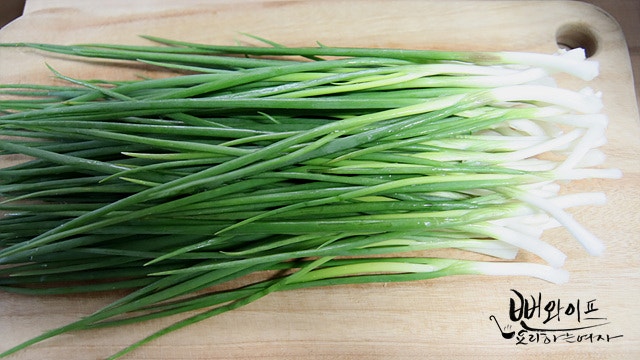
Here is 1 large bunch (1 kg) of sweet potato stems. The scallions are about two handfuls.
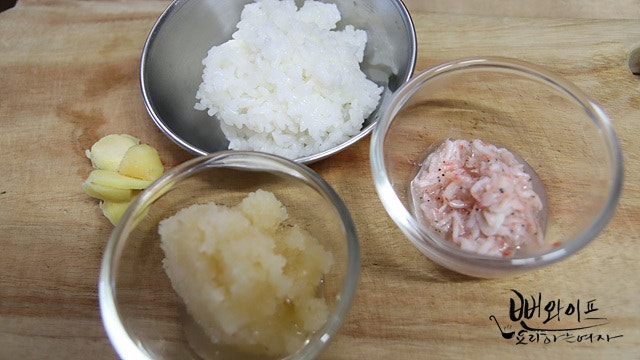
Here are the rice, salted fermented shrimp, garlic, and ginger for the seasoning.
Salt the sweet potato stems in brine
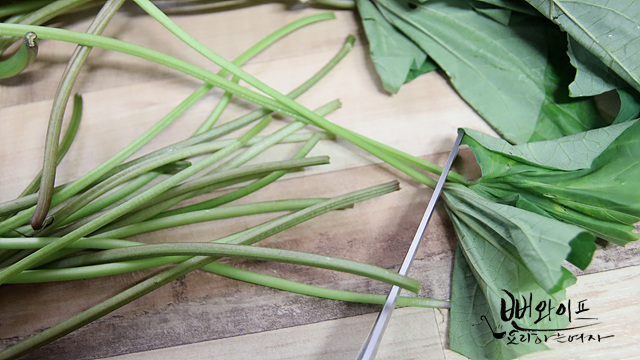
Snip off all the leaves attached to the sweet potato stems using scissors.
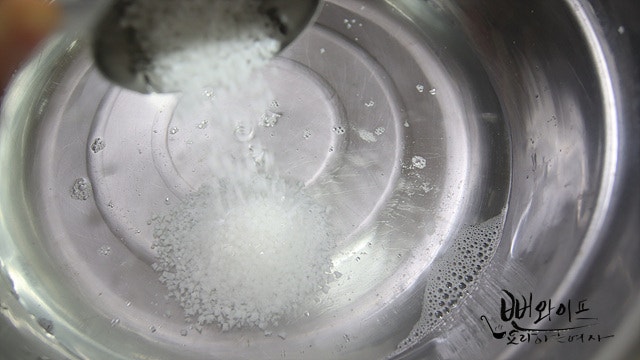
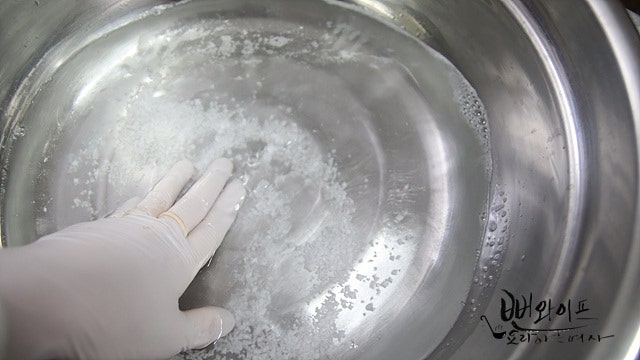
Pour 13 cups of water into a mixing basin, add 2/3 cup of coarse sea salt, and dissolve it.
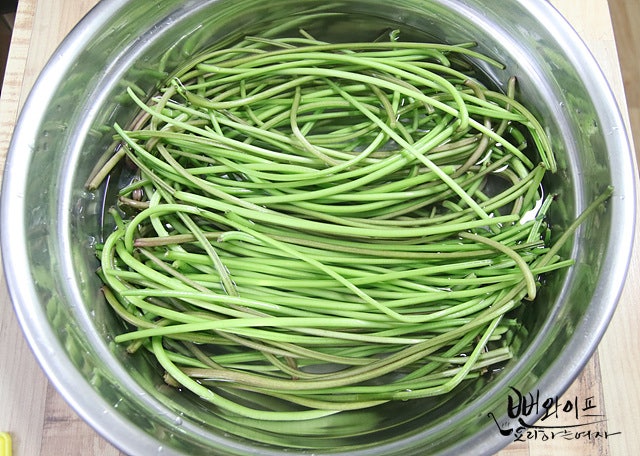
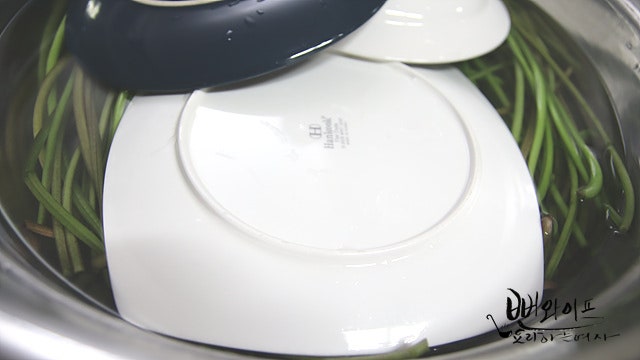
Put in the sweet potato stems, press them down so they do not float, and salt for about 1 hour.
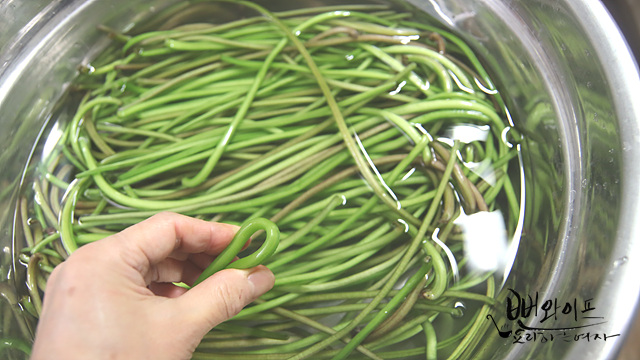
When the thick parts of the stems bend softly, they are properly salted.
Peel the sweet potato stems
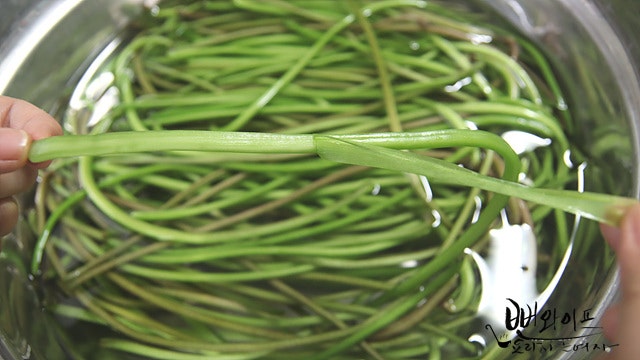
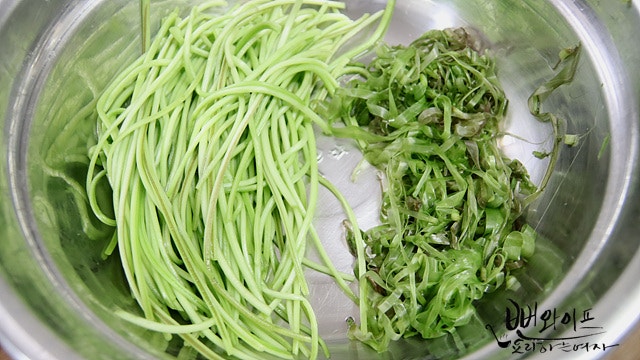
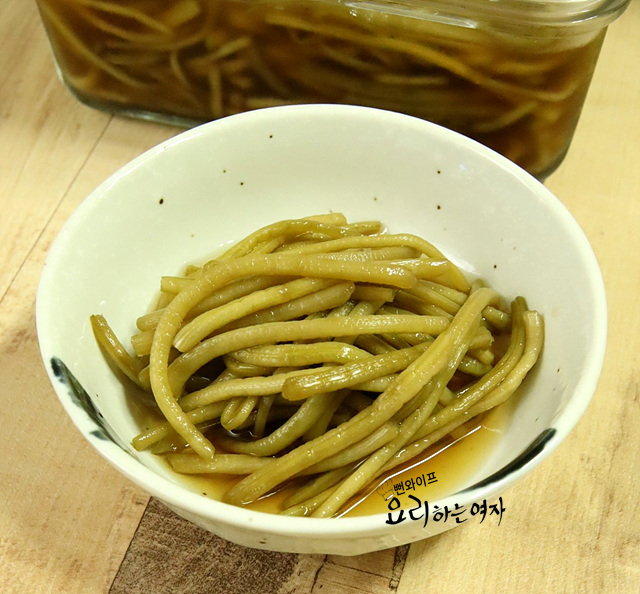
Rather than peeling them raw, briefly blanching or salting the sweet potato stems in brine allows the skins to peel right off without snapping midway.
The weight after peeling off all the skin is 700 g.
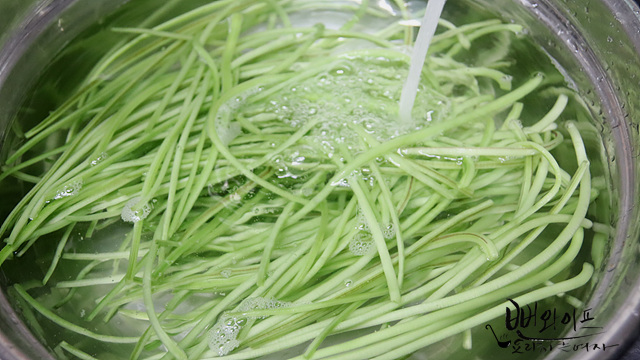
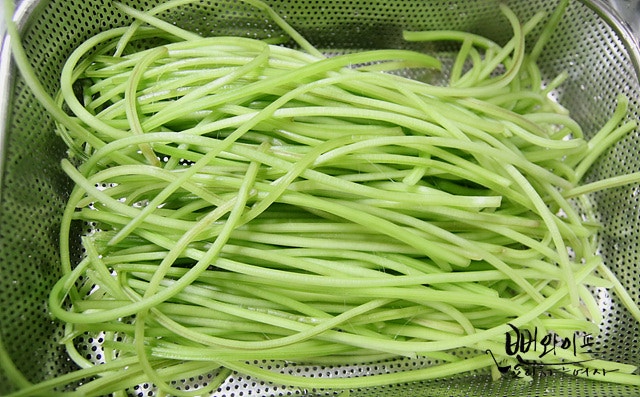
Rinse once in water and drain the moisture.
The sweet potato stems have wilted, but they are not fully seasoned, so we will balance the flavor with a rich seasoning paste.
Cut the ingredients
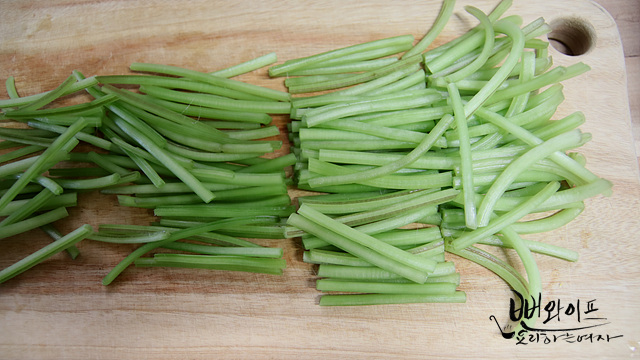
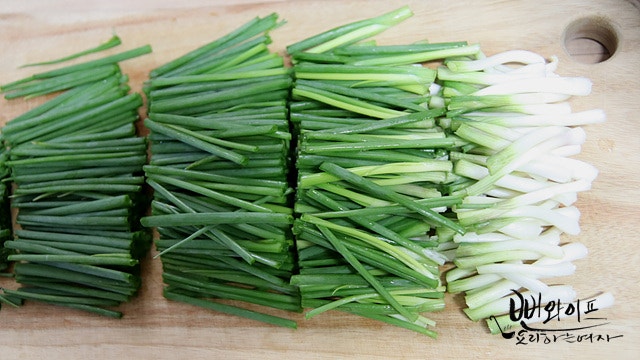
Cut the sweet potato stems and scallions into similar lengths so they are easy to eat.
You can also prepare 1 onion and slice it instead of scallions.
Make the seasoning
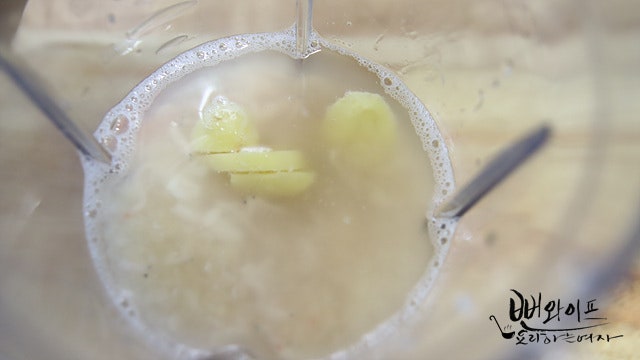
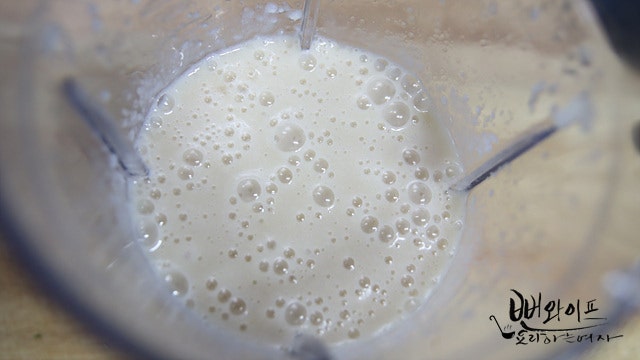
Add 1/2 bowl of cooked rice, 7 to 8 cloves of peeled garlic (3 tbsp minced garlic), a little ginger (1/2 tbsp minced ginger), 2 tbsp of salted fermented shrimp, and 1 1/2 cups of water into a blender and blend finely.
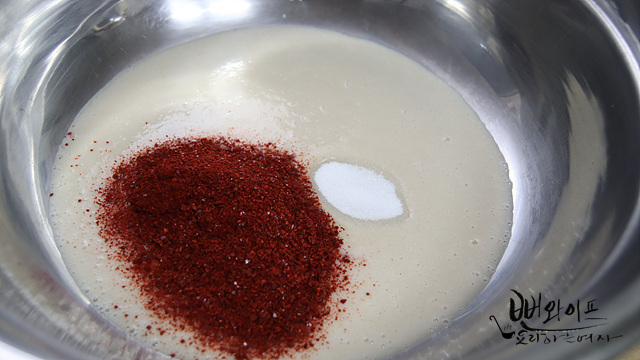
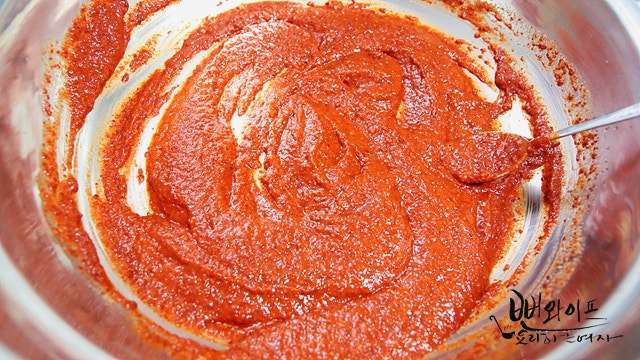
Add 1 cup of gochugaru, 2 tbsp of fish sauce, and 1 to 2 tbsp of sugar or 3 tbsp of green plum syrup to the blended seasoning, then mix so the seasoning swells and blends together.
If you have red chili peppers, blending them together in the blender and reducing the amount of gochugaru also makes it spicy and delicious.
Toss in the seasoning
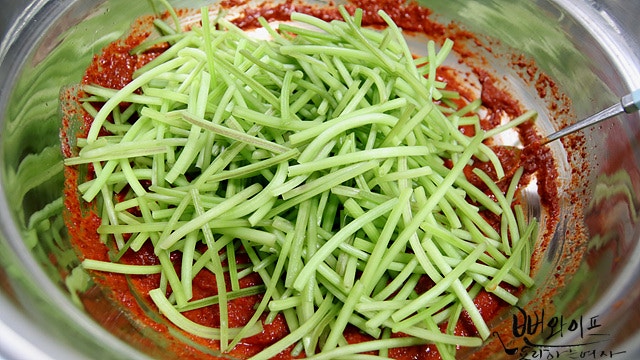
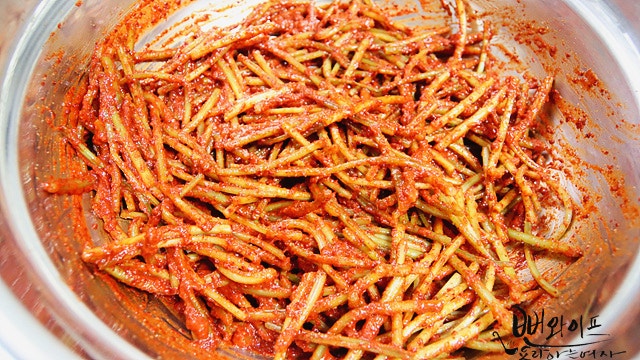
Add the sweet potato stems, mix well, and taste for the first time.
If it is very bland, adjust by adding salt and mixing...
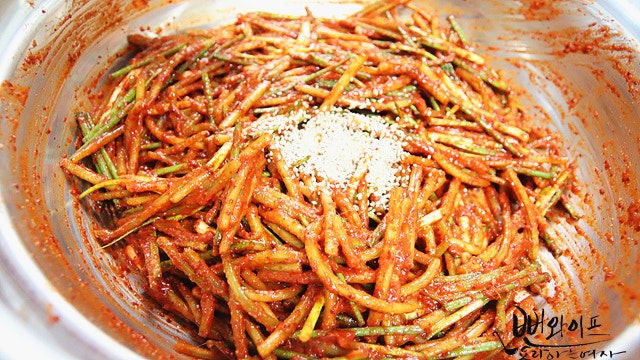
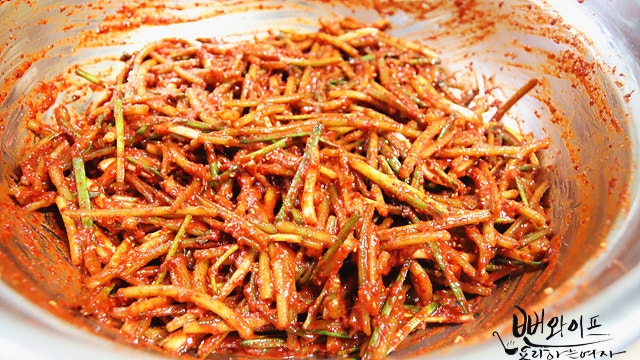
Add the sliced scallions and toasted sesame seeds, and mix.
Taste at the end, adjust any lacking saltiness, and add sweetness to your taste to finish.
Finish
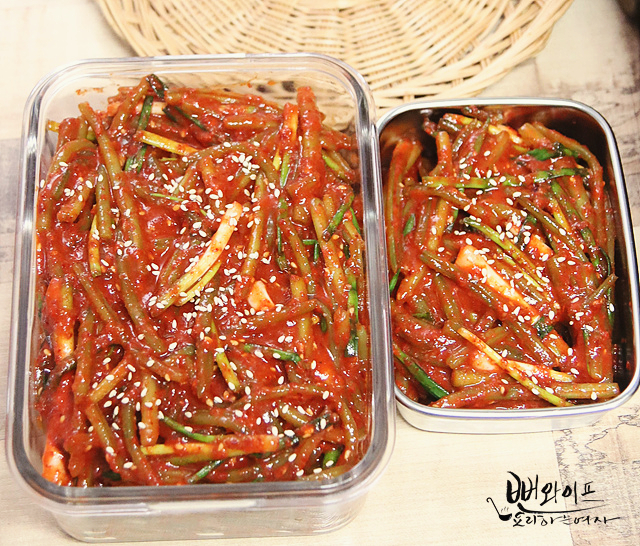
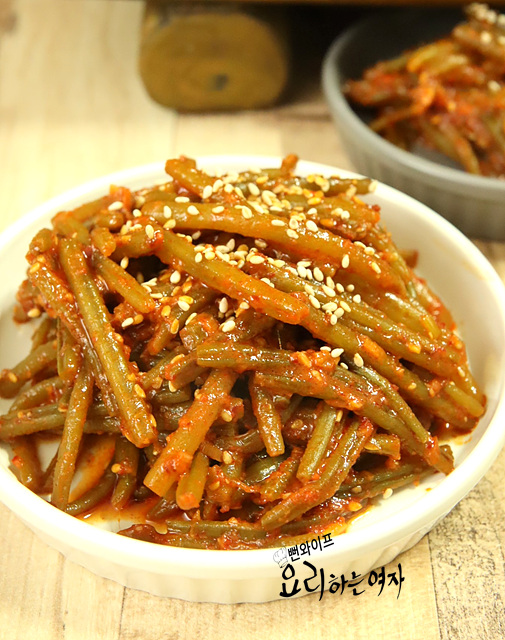
Scrape up all the remaining seasoning from the basin and spread it over the top to keep everything moist, let it ferment overnight at room temperature, then place it in the refrigerator before eating.
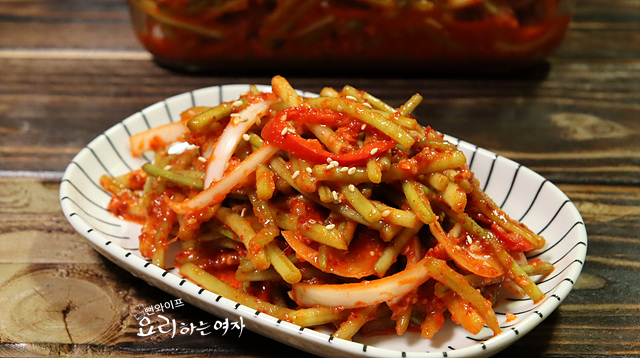
This is how it looks after one day.
The sweet potato stems that felt slightly bland have absorbed all the seasoning, and because they were salted without blanching, the crispness is outstanding.
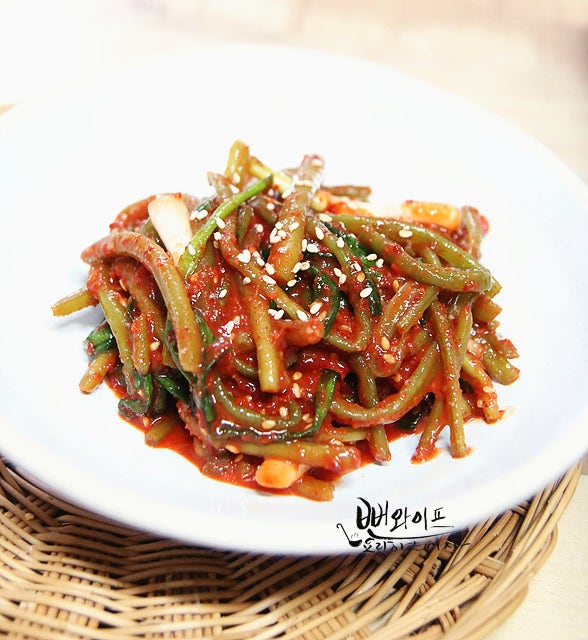
It is delicious eaten straight as a side dish for rice, and mixing rice with the refreshing, slightly tangy kimchi juice is heavenly.
Peeling the skins takes patience and effort, but once you taste the result, you will find yourself buying sweet potato stems again.
 Ppunwife's tips
- Rather than peeling them raw, briefly blanching or salting the sweet potato stems in brine allows the skins to peel right off without snapping midway.
- If you have red chili peppers, blending them together in the blender and reducing the amount of gochugaru also makes it spicy and delicious.
- To minimize using the stove, using cold cooked rice instead of making porridge is great for making kimchi quickly.
FAQ
Is there a trick to peeling sweet potato stems easily?
Rather than peeling them raw, salting them first in brine for about 1 hour or briefly blanching them lets the skins peel off smoothly without snapping.
Can I replace the scallions with another ingredient if I do not have them?
You can slice 1 onion and add it instead of scallions.
How can I give it a spicier kick?
Blending red chili peppers together in the blender and adjusting the amount of gochugaru adds a spicy, savory depth.
Should I refrigerate it immediately after making it?
Cover it with the seasoning, let it ferment overnight at room temperature, and then store it in the refrigerator to enjoy chilled.