Moist and Chewy Dongpo Pork with Bok Choy
A classic Chinese dish of pork belly simmered until tender, moist, and chewy using ssanghwa-tang and a special sauce.
Translated from Korean by AI and not yet checked by a native speaker. Amounts and numbers are taken directly from the original recipe. Read the Korean original →
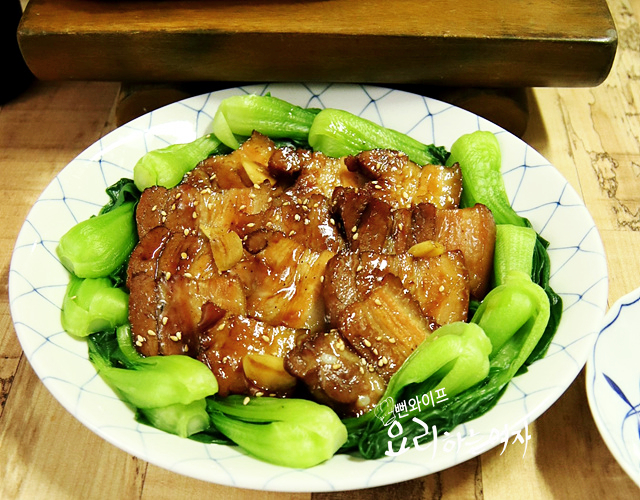
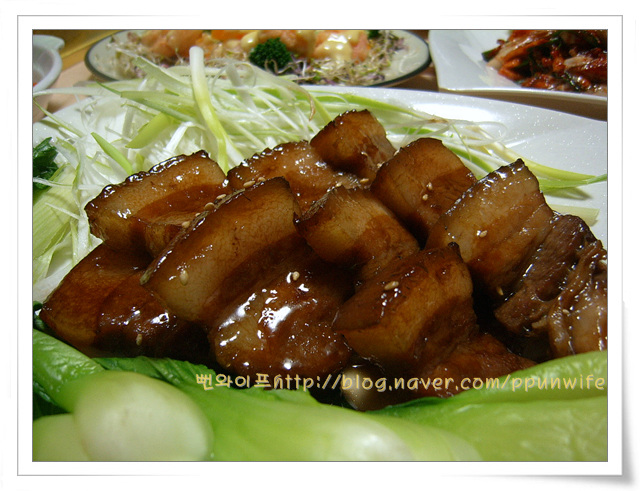
This Dongpo pork uses ssanghwa-tang to eliminate any gamey odor while imparting a subtle herbal aroma, featuring pre-seared pork belly sliced thick and braised in a special sauce. Chewy yet tender, it pairs wonderfully with blanched bok choy for home parties or as a drinking snack.
- Servings
- 3–4 servings
- Difficulty
- Medium
- Spiciness
- Not spicy
Ingredients
Ingredients
- Pork belly or skin-on pork belly (or skin-on pork belly)700 g
- Bok choy
- Large green onion (daepa)1/2 stalk
- Onion1
- Regular soy sauce (jin-ganjang) or brewed soy sauce (yangjo-ganjang) (or brewed soy sauce (yangjo-ganjang))2 tbsp
- Ssanghwa-tang (traditional herbal drink)1
- Cheongju (Korean rice wine) or soju (or soju)1/4 cup
Dongpo pork sauce
- Garlic10 cloves
- Water from boiling meat1 cup
- Oyster sauce1 tbsp
- Ginger syrup (saenggang-cheong)1 tbsp
- Rice syrup (jocheong) or corn syrup (mulyeot) (or corn syrup (mulyeot))1 tbsp
- Ground black peppera little
- Because Dongpo pork is cooked and braised for a long time, using pork with the skin attached gives it an extra chewy texture.
- Instead of bok choy, you can also serve it with thinly shredded green onions or thinly sliced onion without any seasoning.
- To substitute 1 tbsp of ginger syrup, you can use 1/2 tsp of minced ginger and 1 tbsp of sugar.
Steps
Prepare the ingredients
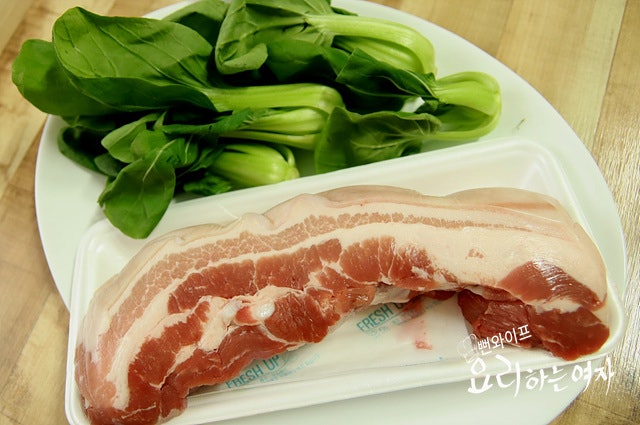
Here is 700 g of fresh pork belly with the skin attached.
Because Dongpo pork is cooked and braised for a long time, using pork with the skin attached gives it an extra chewy texture.
Prepare a generous amount of bok choy to serve alongside the Dongpo pork. Instead of bok choy, you can also serve it with thinly shredded green onions or thinly sliced onion without any seasoning.
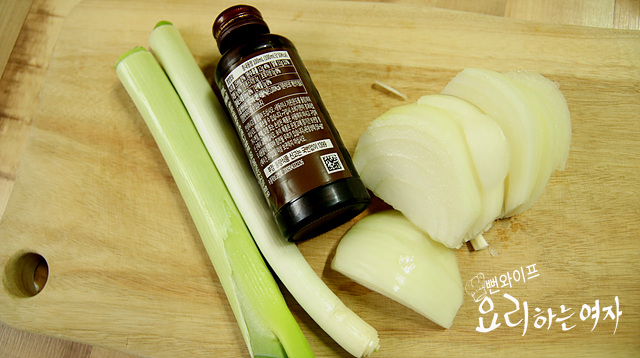
For braising the pork belly, prepare simple ingredients: large green onion, onion, and ssanghwa-tang.
Pre-sear the pork belly
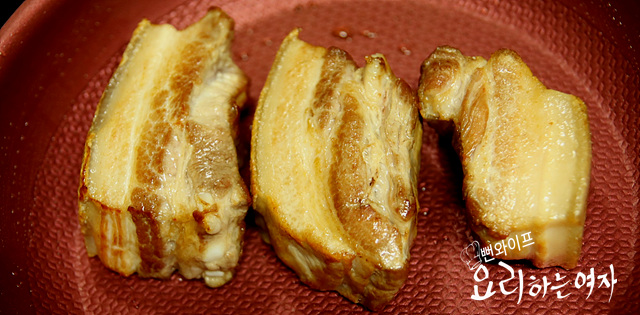
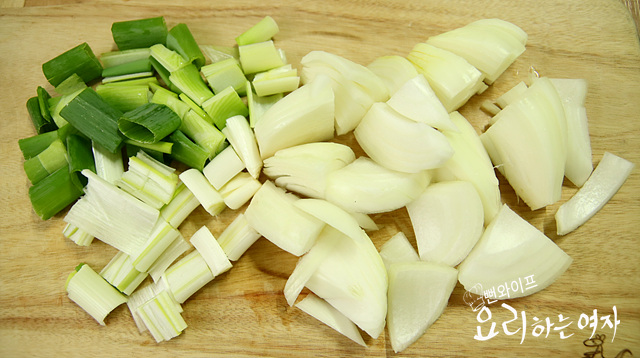
Cut the pork belly into 2 to 3 pieces for easy searing, then brown evenly on the front, back, and sides in a frying pan.
Wipe away the rendered fat as you sear to keep it neat.
Pre-searing like this prevents the meat from falling apart during the simmering and braising stages, yielding Dongpo pork that is plump and tender once finished.
Roughly chop the onion and large green onion into large pieces.
Cook the pork belly
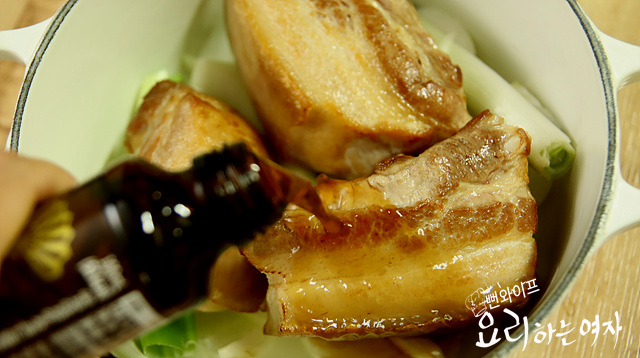
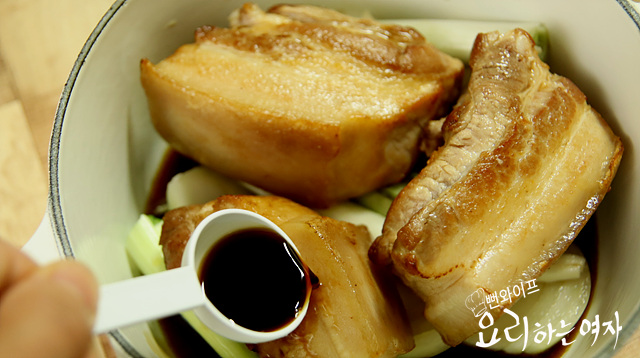
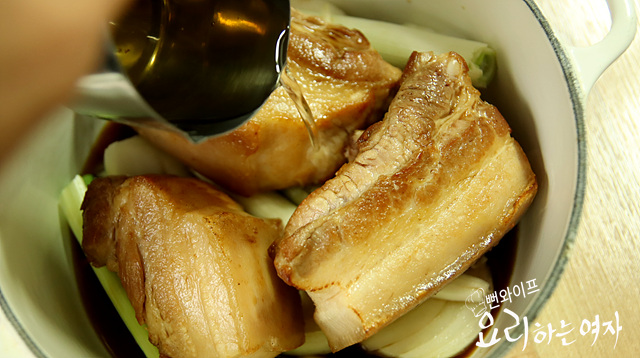
Line the bottom of a heavy pot with the onion first, add the large green onion, and place the meat on top.
Pour 1 bottle of ssanghwa-tang evenly over it, and drizzle 2 tbsp of regular soy sauce evenly on top so the seasoning soaks into the meat. Pour in 1/4 cup of cheongju or refined rice wine (=soju) as well.
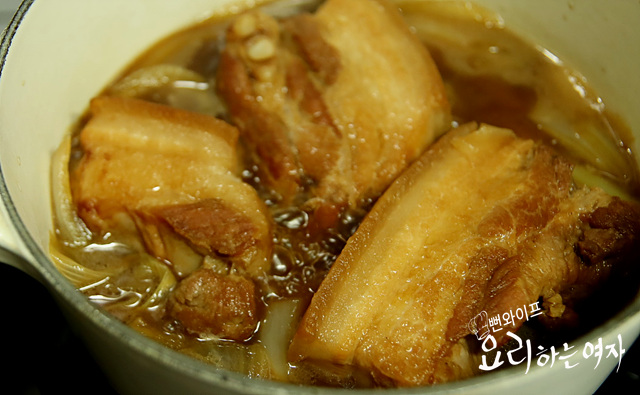
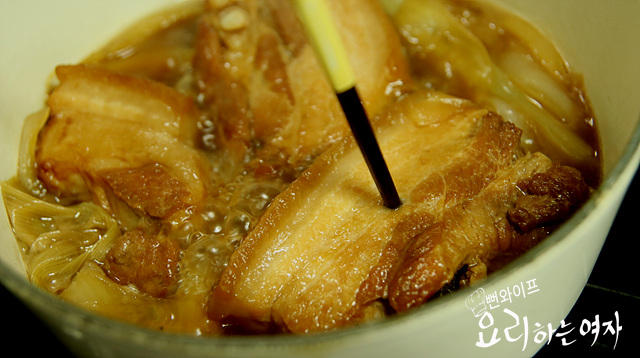
Turn the heat to high and cover with a lid; once steam begins to rise, cook over low heat for 15 minutes, flip the meat over, and cook for at least 10 minutes more until no blood runs out.
After the meat is fully cooked, discard the onion and green onion, and strain only the cooking liquid.
Slice the meat
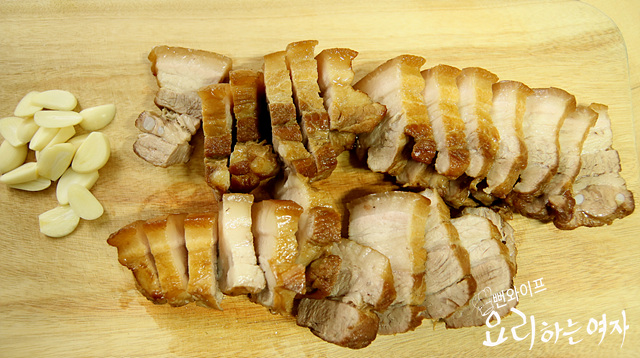
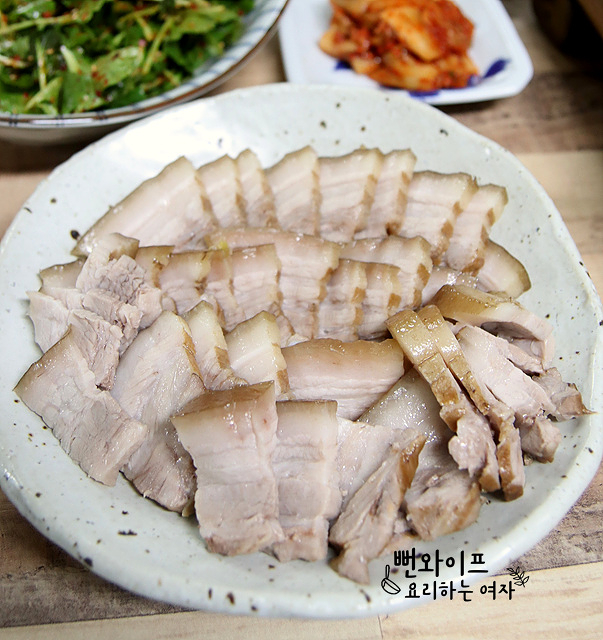
Slice the garlic into pieces, and slice the meat thicker than regular boiled pork slices since it will be braised in the sauce, making sure not to cut it too thin.
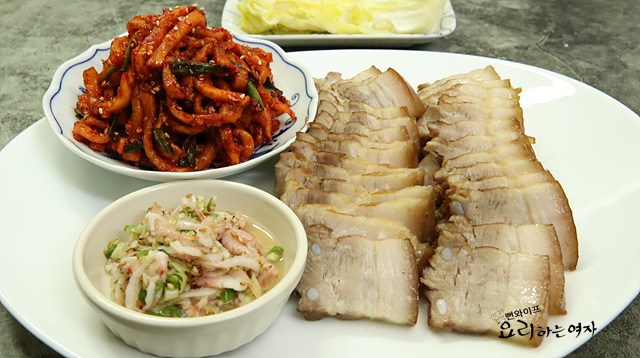
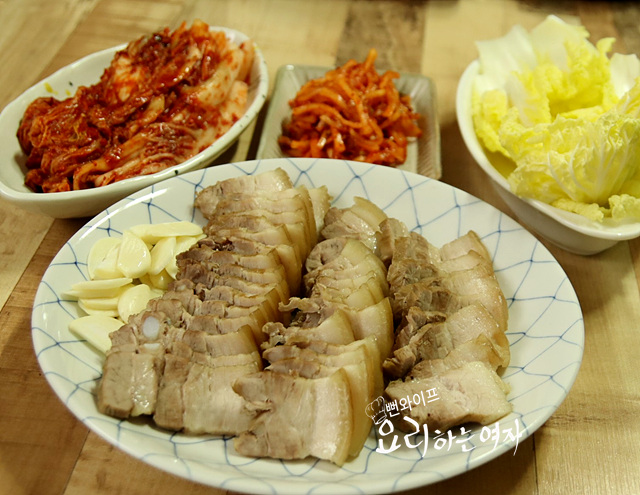
Because it is already lightly seasoned, it is also delicious eaten as is, sliced thin for boiled pork or bossam.
Braise
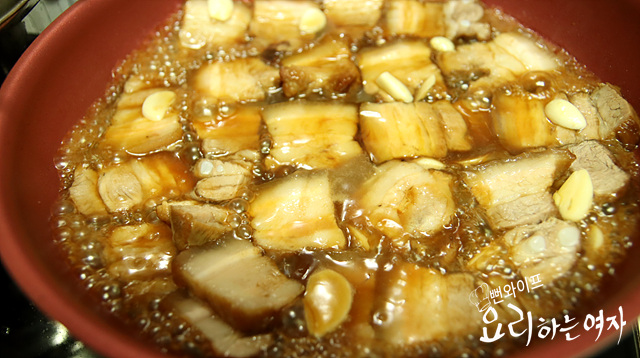
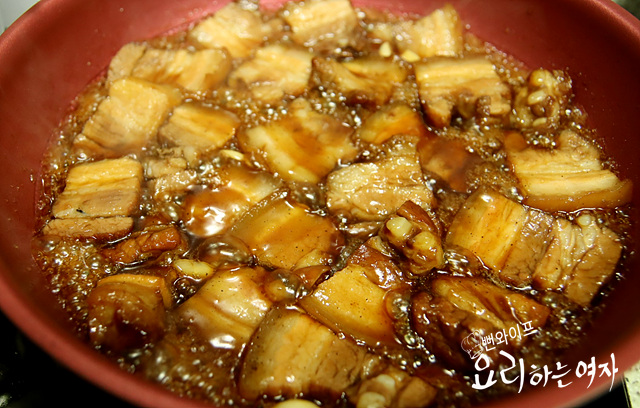
Add 1 cup of the reserved water from boiling the meat, the sliced garlic, 1 tbsp of oyster sauce, 1 tbsp of ginger syrup, and 1 tbsp of rice syrup (=corn syrup); once the sauce comes to a boil, spread out the sliced meat in the pan.
As the sauce thickens and takes on a deep color, braise while flipping the meat back and forth so the sauce absorbs evenly.
Taste the meat, add any missing seasonings as needed, and do not boil it down completely dry; leave a little sauce so you can enjoy it moist.
Once braised, finish by sprinkling a little ground black pepper and mixing it in.
Blanch the bok choy
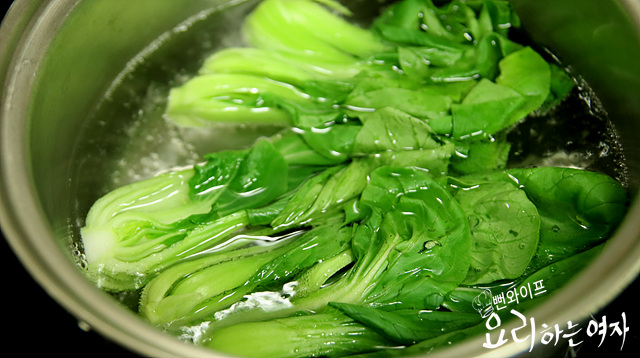
Fill a pot with water and bring it to a boil, add 1/2 tbsp of salt, dip the firm stem ends of the bok choy first to cook slightly, then submerge the whole leaves; once wilted, remove and drain in a colander.
Drain well so the plate does not become soggy, and do not rinse in cold water since it should be wrapped around the meat while still warm.
Finish
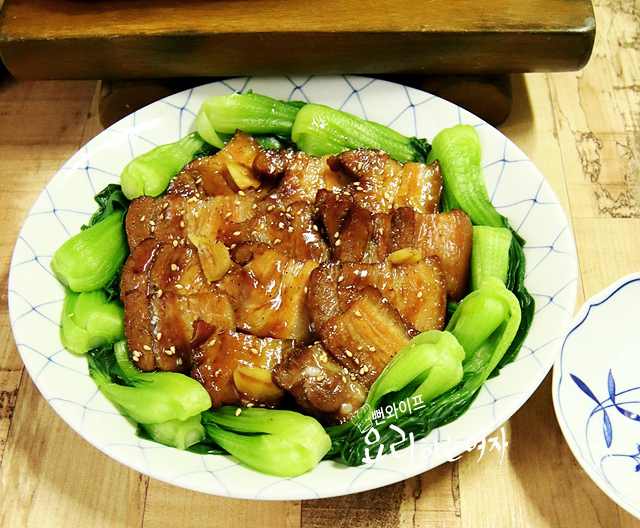
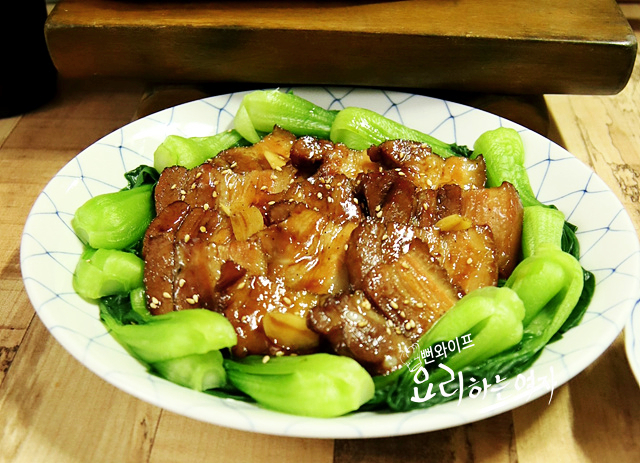
Arrange the bok choy neatly around the edge of a plate, place the meat in the center, and drizzle the remaining sauce over the top to give it a glossy finish.
Bok choy pairs wonderfully, but thinly shredded green onions or thinly sliced onion are also delicious served alongside.
 Ppunwife's tips
- Pre-searing like this prevents the meat from falling apart during the simmering and braising stages, yielding Dongpo pork that is plump and tender once finished.
- Do not boil it down completely dry; leave a little sauce so you can enjoy it moist.
- Drain well so the plate does not become soggy, and do not rinse in cold water since it should be wrapped around the meat while still warm.
FAQ
Why do you sear the pork belly before cooking it in the pot?
Browning the exterior in a pan beforehand prevents the meat from falling apart during simmering and braising, giving it a plump texture on the outside and tenderness on the inside.
How can I substitute ginger syrup if I do not have it?
You can mix 1/2 tsp of minced ginger and 1 tbsp of sugar together to replace the ginger syrup.
Can I use something other than bok choy as a side vegetable?
If you do not have bok choy, thinly shredded green onions or finely sliced onion served as is without seasoning pair very well with the meat.
Is there a reason not to rinse the blanched bok choy in cold water?
It is meant to be wrapped around the meat while warm, so simply drain it in a colander without rinsing in cold water before serving.