Sweet and Salty Ttangkkong Jorim (Braised Peanuts in Soy Sauce)
A side dish made by briefly blanching raw peanuts and simmering them gently in a sweet and salty soy sauce glaze.
Translated from Korean by AI and not yet checked by a native speaker. Amounts and numbers are taken directly from the original recipe. Read the Korean original →
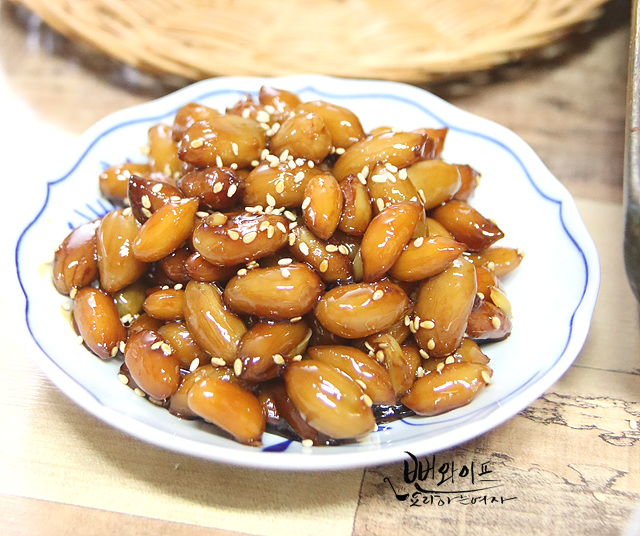
Raw peanuts are briefly blanched in boiling water to remove any astringency, then simmered until soft in a savory soy sauce glaze. Finishing with corn syrup gives them a glossy sheen and keeps them tender, making this a great side dish for lunch boxes or kids' meals.
- Servings
- about 5–6 servings
- Cook time
- 10 minprep not included
- Difficulty
- Medium
- Spiciness
- Not spicy
Ingredients
Ingredients
- Raw peanuts230 g (2 cups)
- Water3 cups (for blanching)
Soy sauce seasoning
- Water1 1/2 cups
- Regular soy sauce (jin-ganjang) (or brewed soy sauce (yangjo-ganjang))4 tbsp
- Mirin (cooking rice wine)2 tbsp
- Corn syrup (mulyeot)3 tbsp
- Sugar1 tbsp
- Toasted sesame seeds1 tbsp
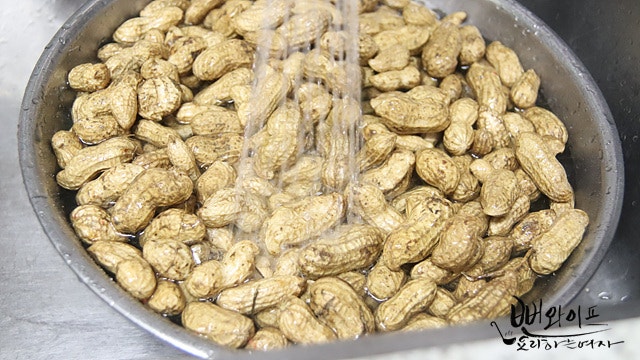
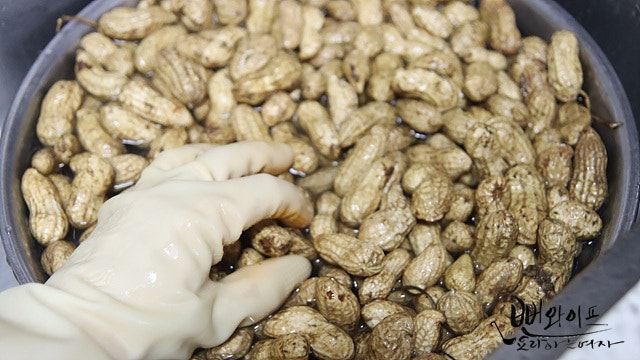
- Because peanuts can have quite a bit of dirt on them, soak them in water and rub them with your hands several times to clean them before shelling. There is no need to peel off the thin inner papery skin, as it softens or dissolves during cooking.
- Towards the very end of braising the peanuts, you can also add the smallest dried anchovies (jiri myeolchi) to braise together.
Steps
Prepare the ingredients
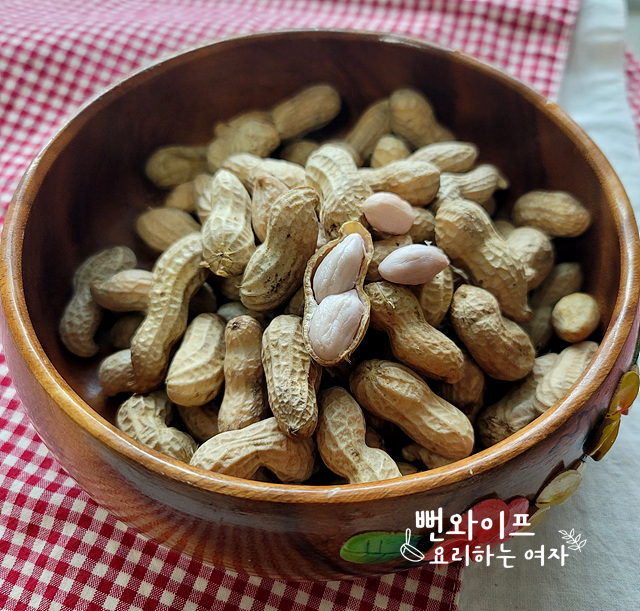
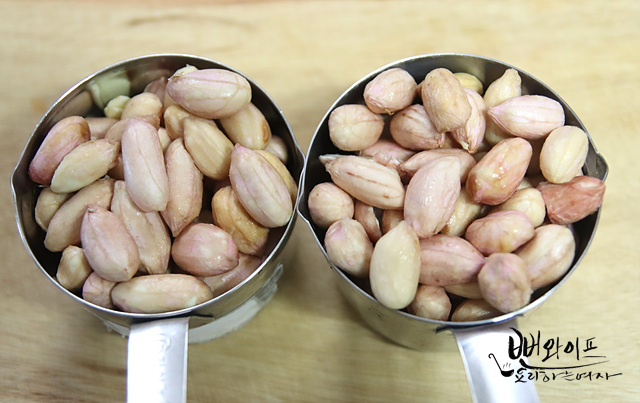
Prepare 230 g (heaping 2 cups) of raw peanuts.
Clean and shell the peanuts
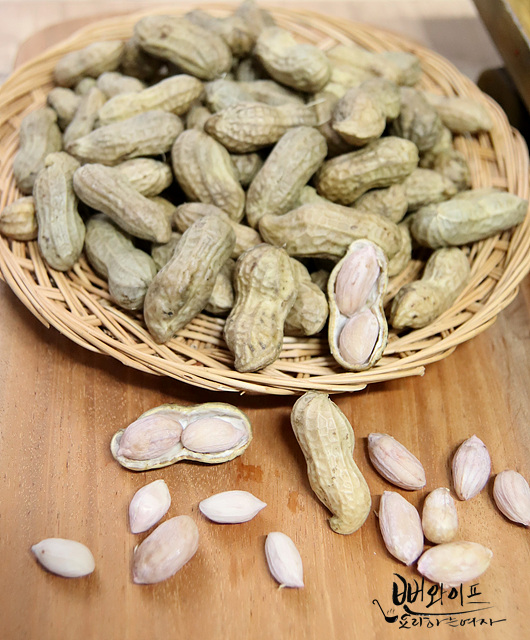
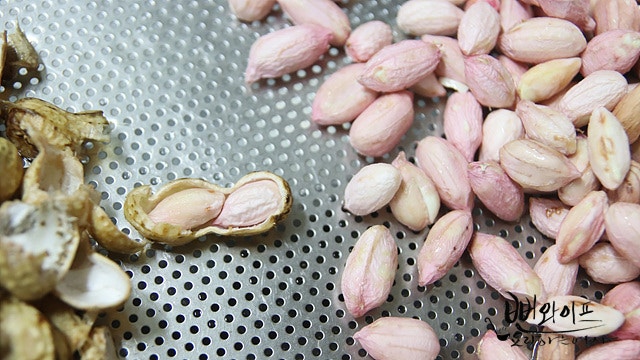
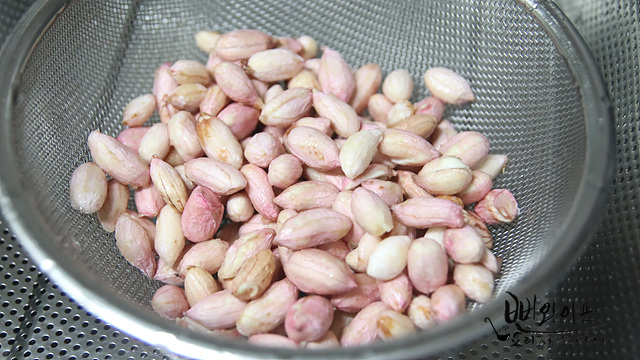
Peanuts have a lot of dirt on them, so soak them in water and rub them by hand through several rinses to clean them thoroughly. Drain off some of the water and shell them. Raw peanuts have this kind of pinkish inner skin. You don't need to peel off the thin inner skin because it softens or dissolves while cooking. This is a heaping 2 cups of raw peanuts to be used for today's braise.
Blanch the peanuts
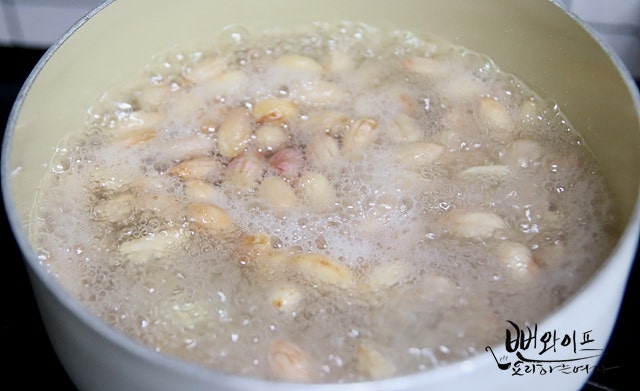
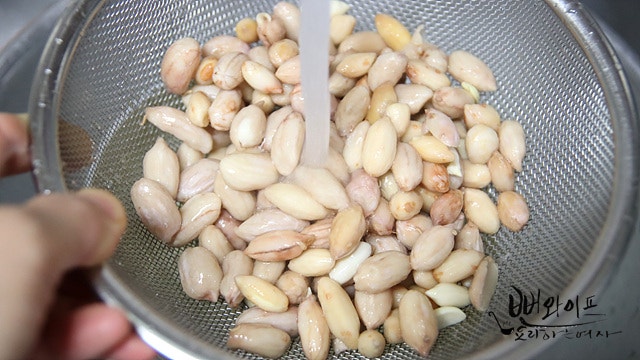
Pour about 3 cups of water into a pot, and once it comes to a rolling boil, add the peanuts and blanch for 1 to 2 minutes, then rinse them. Since we will be simmering them in soy sauce seasoning for a long time, blanching them briefly first removes impurities and any astringency.
Add the soy sauce liquid
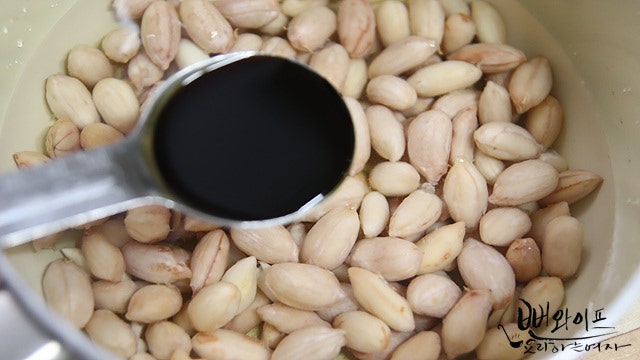
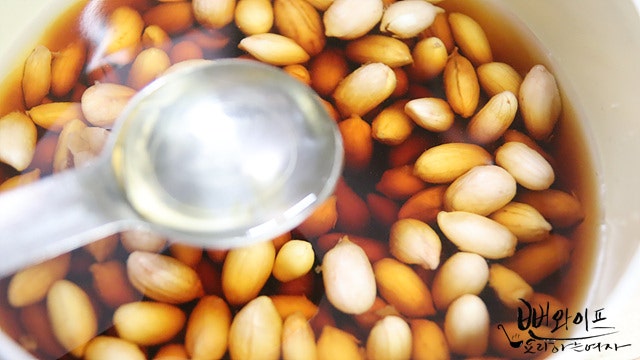
Add the peanuts and 1+1/2 cups of water to the pot (enough water to just barely submerge them). Add 1 tbsp sugar, 2 tbsp mirin (cooking rice wine), 4 tbsp regular soy sauce (jin-ganjang), and just 1 tbsp of the 3 tbsp corn syrup (mulyeot) for now. The remaining 2 tbsp will be used at the end to add a nice glaze.
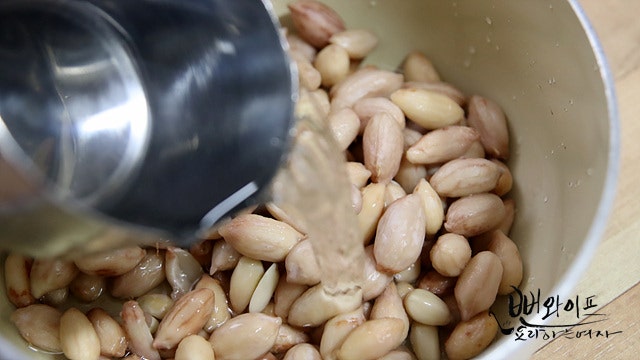
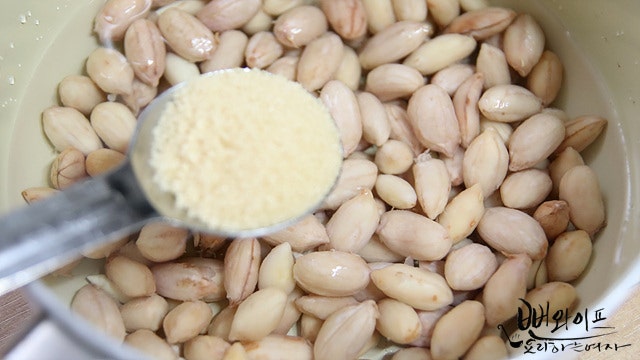
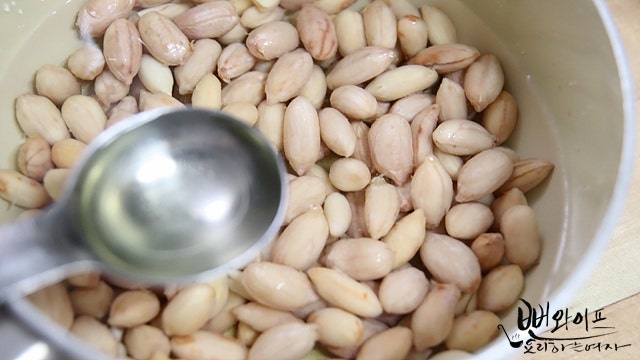
Cook in the soy sauce liquid
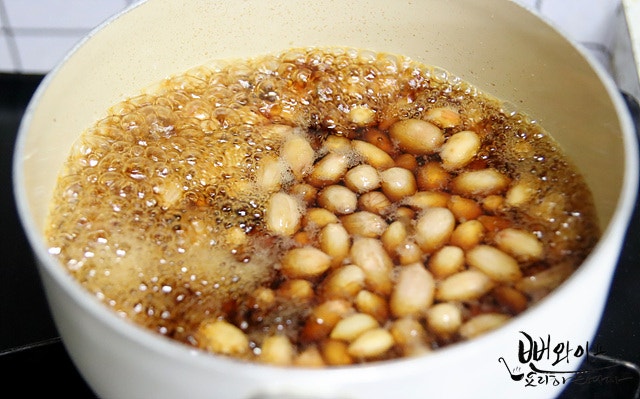
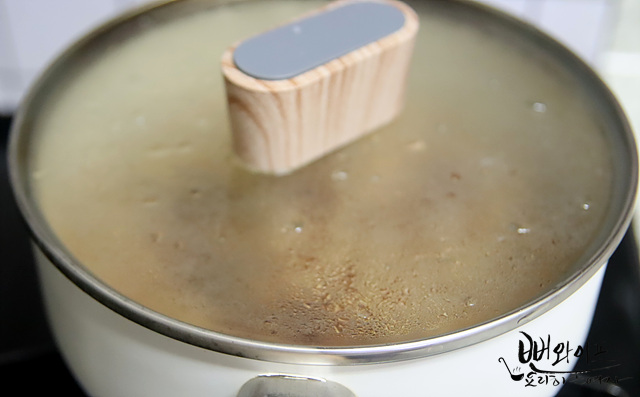
Turn the heat to high, and once the soy sauce liquid begins to bubble vigorously, reduce the heat to medium-low so it simmers steadily. Cover with a lid and let the peanuts cook well in the soy sauce liquid for at least 10 minutes.
Braise down
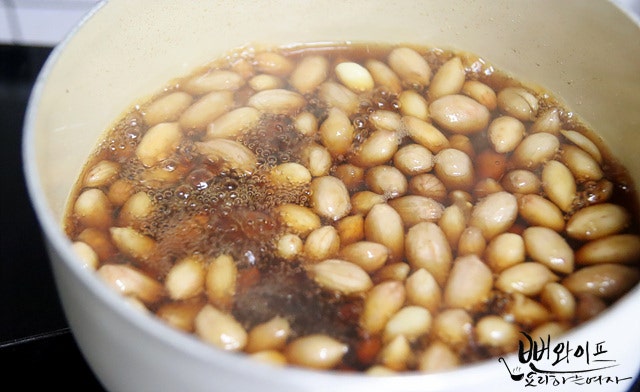
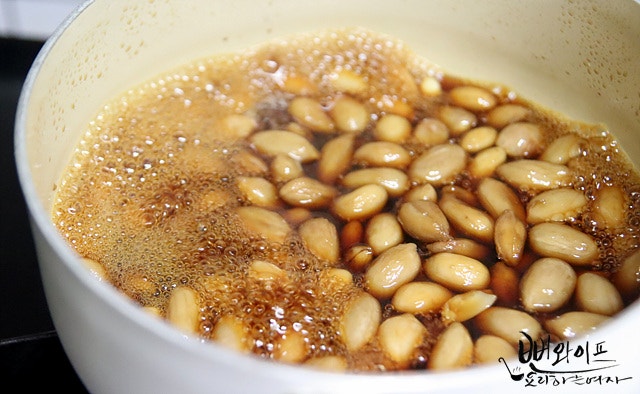
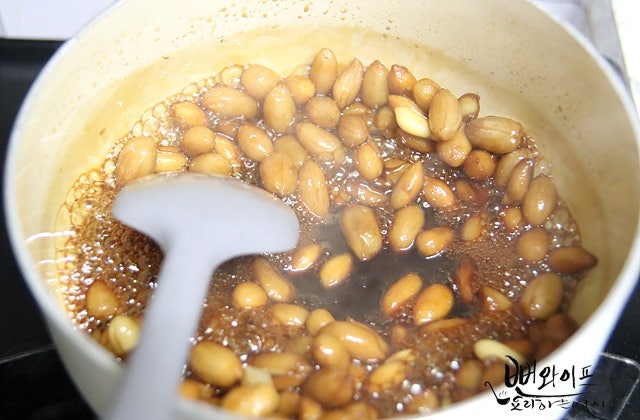
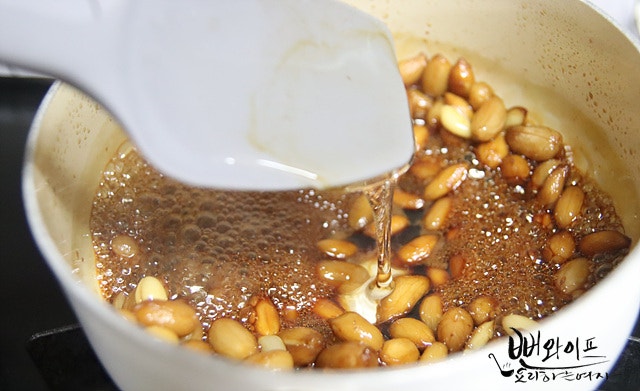
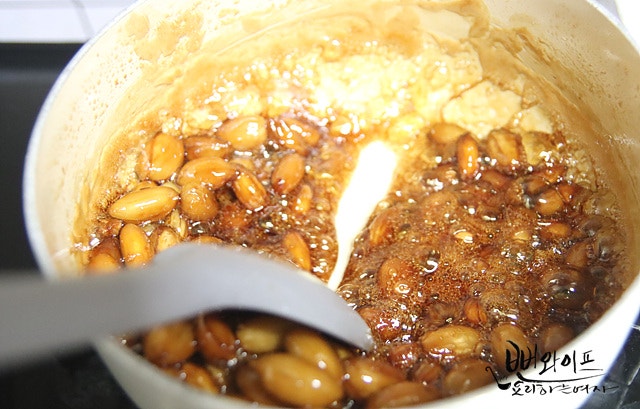
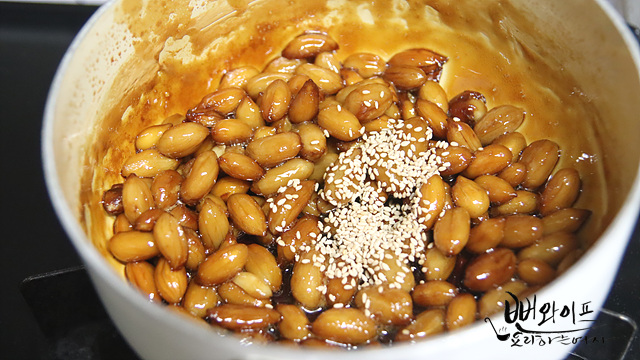
Once the raw peanut smell is gone and they are cooked tender, remove the lid and raise the heat slightly to braise down. Stir occasionally as it simmers, and once the liquid has reduced enough to gently cover the bottom of the pot, add the 2 tbsp corn syrup and glaze. When everything looks glossy and a little moist soy sauce remains, turn off the heat. I finished by just sprinkling toasted sesame seeds at the end, but you can also add a little toasted sesame oil as long as it doesn't overpower the nutty flavor of the peanuts.
Finish
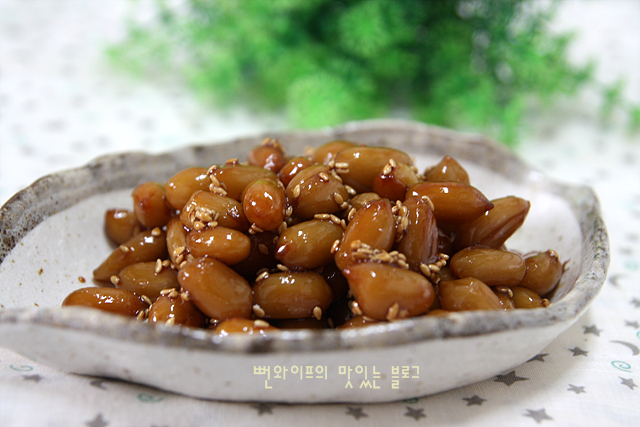
Glossy, sweet, and salty ttangkkong jorim is complete. If you boil it down until completely dry, it can turn hard, so keep it moist with some liquid left.
 Ppunwife's tips
- Since we will be simmering them in soy sauce seasoning for a long time, blanching them briefly first removes impurities and any astringency.
- You can also add a little toasted sesame oil as long as it doesn't overpower the nutty flavor of the peanuts.
- If you boil it down until completely dry, it can turn hard, so keep it moist with some liquid left.
FAQ
Do I need to peel off the thin inner skin of the peanuts?
You can leave it on, as the thin inner skin naturally softens and dissolves during cooking.
Why blanch the peanuts in boiling water before braising?
Blanching them briefly for about 1 to 2 minutes before simmering in the seasonings washes away impurities and removes the characteristic astringent taste of raw peanuts.
How do I prevent the braised peanuts from becoming hard after they cool?
Turn off the heat while there is still a shallow layer of soy sauce glaze left in the pan, rather than boiling it down until completely dry, so they stay moist.