Hearty Homemade Seafood Jaengban Jjajangmyeon
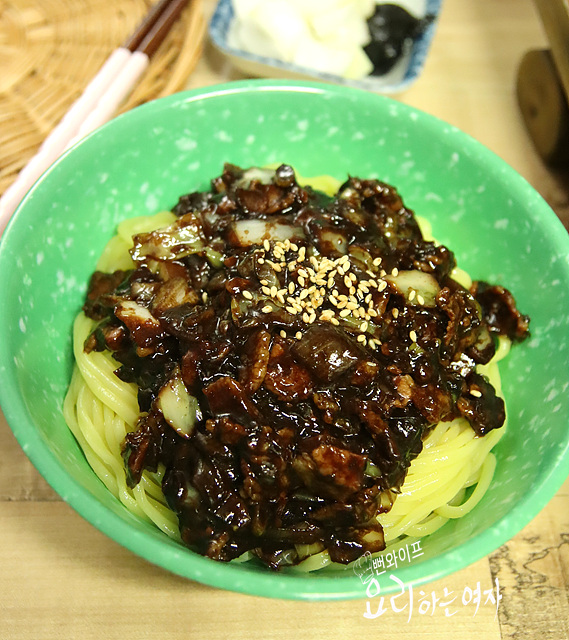
A generous 6-serving seafood jaengban jjajangmyeon (black bean noodles with seafood platter) stir-fried with squid and shrimp.
Translated from Korean by AI and not yet checked by a native speaker. Amounts and numbers are taken directly from the original recipe. Read the Korean original →
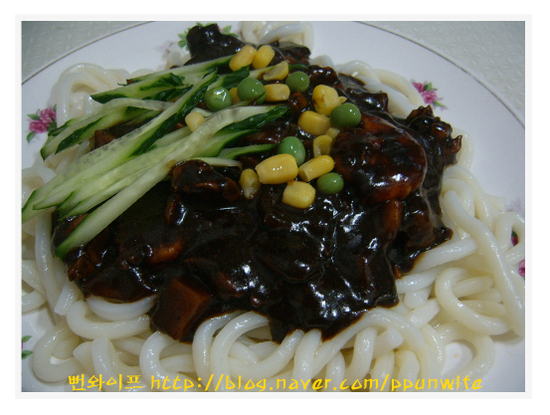
This seafood jaengban jjajangmyeon is richly made by frying chunjang thoroughly in oil to remove its astringent taste, then adding seafood and pork. The finished sauce is great served not only over noodles, but also over rice or ramen.
- Servings
- 6 servings
- Cook time
- 5 minprep not included
- Difficulty
- Medium
- Spiciness
- Not spicy
Ingredients
Ingredients
- Squid1/2 whole
- Shrimp6
- Pork150 g
- Potato1
- Onion1/2
- Carrot1/3
- Button mushrooms2
- Squash1/3
Jjajang Sauce
- Chunjang (black bean paste)300 g
- Water6 cups
- Oyster sauce1 tbsp
- Sugar1 tbsp
- Potato starch slurry4-5 tbsp (potato starch 5:water 5)
Garnish
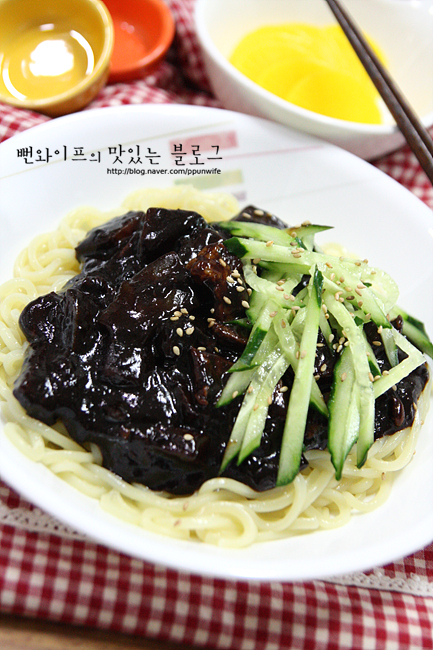
- Julienned cucumber
- Green peas
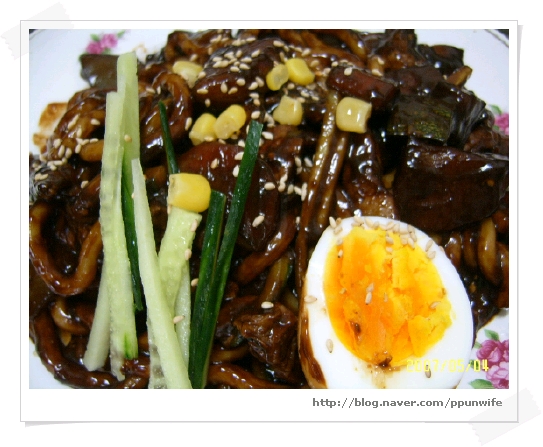
- Sweet corn
- Clam meat or beef also works well. Cabbage is great too.
- Garnish with julienned cucumber, sweet corn, or green peas. You can skip them if you like.
Steps
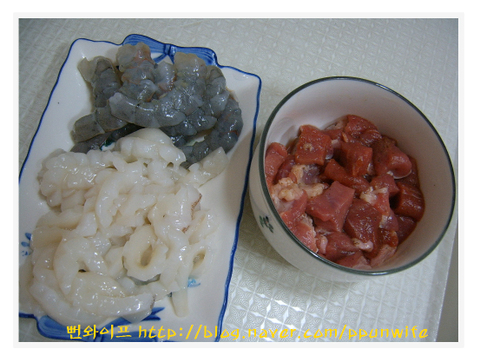
The main ingredients are squid, shrimp, and pork. Clam meat or beef also works well.
I pre-seasoned the meat. I tossed it with a little mirin, ground black pepper, and soy sauce.
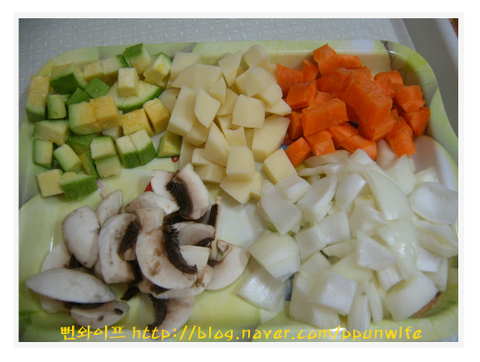
Cut the squash, carrot, potato, onion, and mushrooms all into similar thickness and size.
I cut them into large pieces. Cabbage is great too.
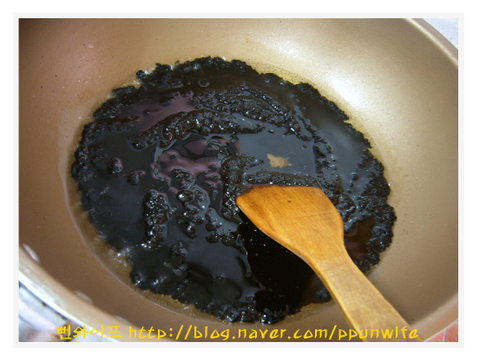
First, add an entire bag of chunjang, pour in 4 tbsp of oil, and stir-fry over medium heat.
Stir-frying like this for over 5 minutes removes the unique astringency of chunjang.
They say Chinese restaurants use shortening as the cooking fat here, and that seems to be where the difference in flavor comes from.
It is said to be made from pork lard, making it the number one contributor to that rich, savory taste.
However, the calories must be quite high.
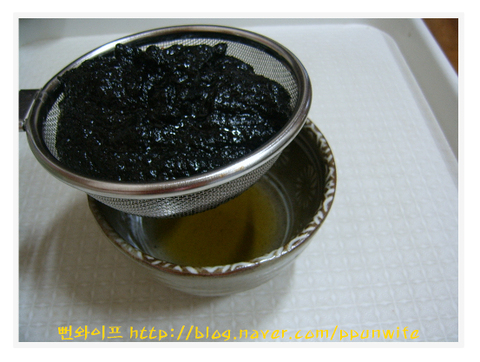
Once the chunjang cools, drain it in a strainer like this to separate the oil.
The chunjang clumps together so it will not fall through, and only the oil drips out.
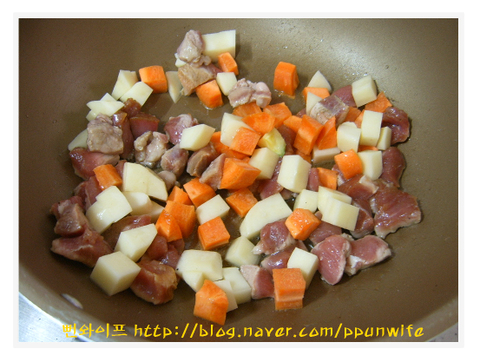
Generously coat a heated frying pan with oil, then add the pork, potato, and carrot, and stir-fry.
Once the pork is fully cooked...
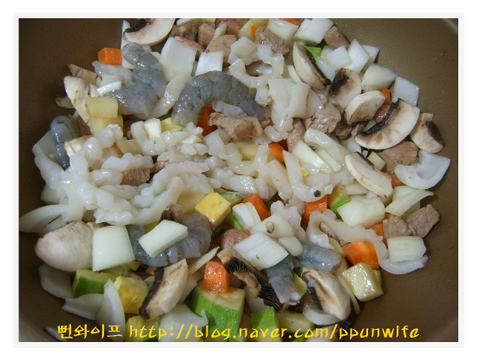
Add all the remaining vegetables and stir-fry.
Once the onions turn translucent and look cooked through...
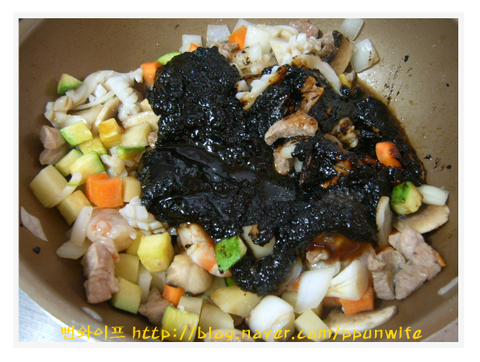
Add the fried chunjang...
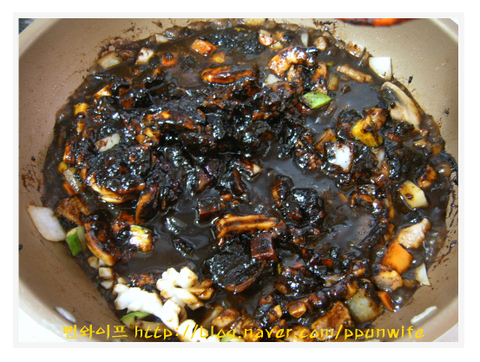
Add the oyster sauce and sugar, and mix together.
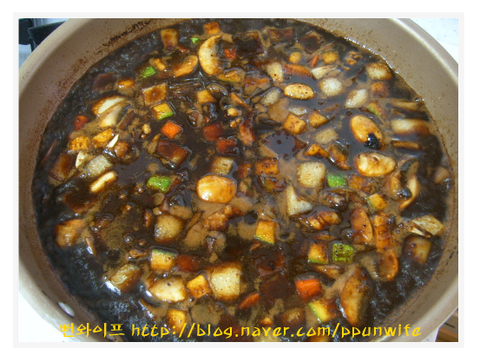
Pour in water and bring to a boil. Pour in enough so that all the ingredients are submerged.
Taste it, and if you like it sweeter, add more sugar; if it tastes bland, adjust the seasoning with salt or soy sauce.
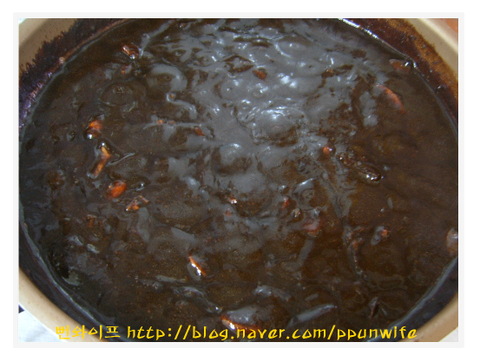
Finally, pour in the potato starch slurry in a circular motion and simmer over low heat.
Once the sauce thickens nicely, it is done.
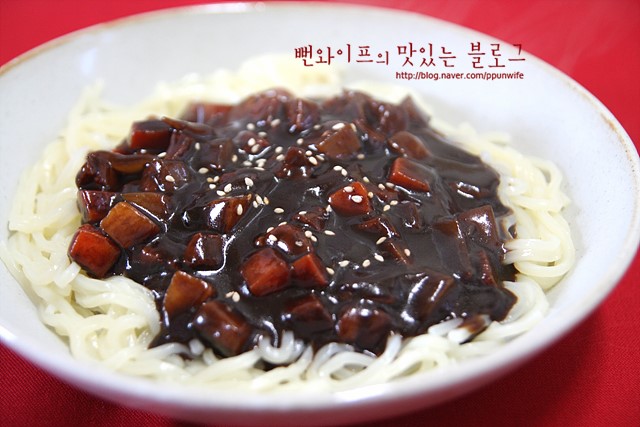
The seafood jaengban jjajang is finished.
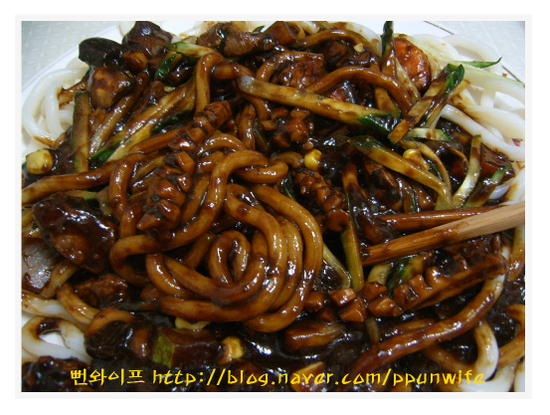
I used udon noodles, so the noodles are thick.
If you use fresh noodles, you can enjoy a chewier texture.
 Ppunwife's tips
- Stir-frying like this for over 5 minutes removes the unique astringency of chunjang.
- For leftover jjajang sauce, portion it into single-serving containers and store in the freezer, then simply reheat in the microwave when you want to eat.
- If you use fresh noodles, you can enjoy a chewier texture.
- It is great served with raw onion and chunjang on the side.
FAQ
Is there a way to reduce the astringent taste when frying chunjang?
Add plenty of oil and stir-fry over medium heat for over 5 minutes to reduce the unique astringency.
How do I store and reheat leftover jjajang sauce?
Divide it into single-serving containers, store them in the freezer, and reheat in the microwave to serve.
What ingredients do you use to pre-season the pork?
Toss it with a little mirin, ground black pepper, and soy sauce to pre-season.
What kind of noodles are best to use?
You can use udon noodles, and if you want a chewy texture, fresh noodles are great to pair with it.