Homemade Jjajangmyeon (Black Bean Sauce Noodles)
A 5- to 6-serving noodle dish made by frying chunjang to remove its bitterness and loading it generously with vegetables and pork.
Translated from Korean by AI and not yet checked by a native speaker. Amounts and numbers are taken directly from the original recipe. Read the Korean original →
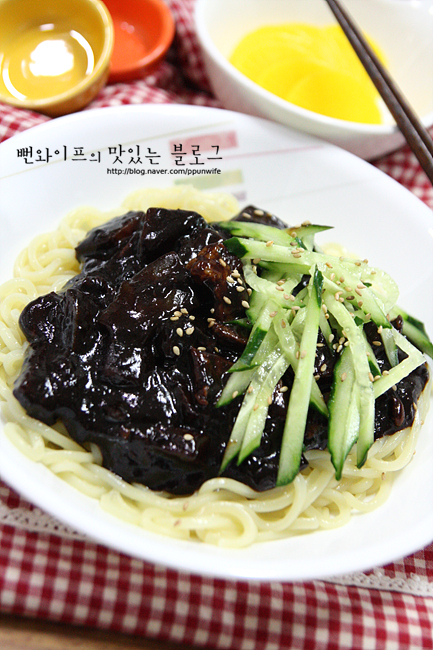
This jjajangmyeon brings out a rich, savory flavor by frying chunjang thoroughly over low heat to banish its raw bitterness. Pork and chunky vegetables are stir-fried, then simmered with water and thickened with starch slurry into a hearty meal in a bowl. Rinsing the cooked noodles in cold water and warming them briefly before spooning on the sauce keeps them wonderfully chewy.
- Servings
- 5–6 servings
- Difficulty
- Hard
- Spiciness
- Not spicy
Ingredients
Ingredients
- Chunjang (black bean paste)1 pack (250 g)
- Pork200 g
- Potato1, 200 g
- Onion1, 250 g
- Korean zucchini (aehobak)1/3, 100 g
- Carrot1/4, 100 g
- Water5 cups
Meat marinade
- Soy sauce1/2 tbsp
- Ginger juice1 tsp
- Ground black peppera little
Seasoning
- Oyster sauce (or soy sauce)1 tbsp
- Sugar2 tbsp
Starch slurry
- Potato starch4 tbsp
- Water4 tbsp
- Feel free to prepare as many of your favorite vegetables as you like, such as cabbage, broccoli, or mushrooms.
Steps
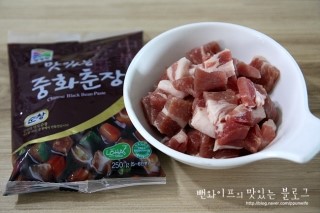
1. This is 1 bag of chunjang sold in regular supermarkets. It is 250 g.
Prepare pork shoulder, butt, or picnic shoulder, cut it into bite-sized pieces, and season with 1/2 tbsp soy sauce, 1 tsp ginger juice, and a little ground black pepper.
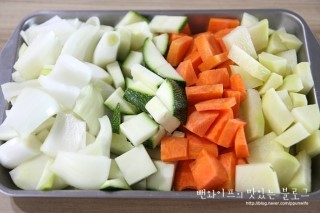
2. Feel free to prepare as many of your favorite vegetables as you like.
I prepared potato, onion, Korean zucchini, and carrot, and sliced them slightly thick, flat, and into bite-sized pieces.
If you chop them too finely, they are hard to pick up with chopsticks and inconvenient to eat, so cutting them large is great.
Try using cabbage, broccoli, mushrooms, and the like too.
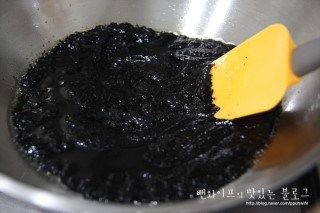
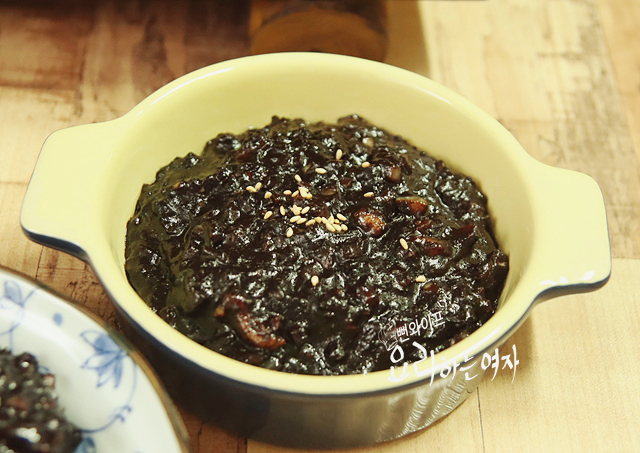
3. Heat 2 tbsp oil in a heated pan, add the chunjang, and stir-fry.
Stir continuously over low heat for about 5 minutes so it does not burn or stick to the bottom.
If you fry the chunjang thoroughly first, you can enjoy a deeply savory jjajangmyeon without any of its characteristic bitter edge.
If you used more than 2 tbsp of oil to keep it from burning, you will see oil separating around the edges of the fried chunjang.
Set the chunjang in a fine-mesh strainer and the excess oil will drain right out.
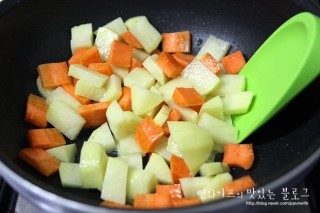
4. To stir-fry the chopped ingredients, heat a pan, add cooking oil, and stir-fry the carrot and potato, which are the firmest.
Once coated in oil and half cooked...
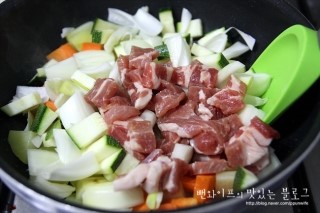
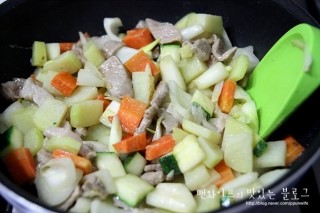
5. Add the pork, Korean zucchini, and onion together...
6. Stir-fry until the pork turns pale and cooked through.
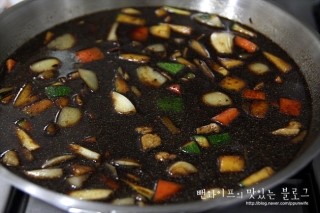
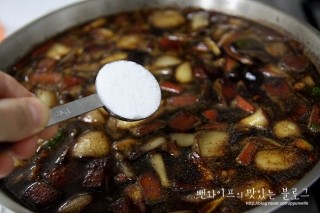
7. In the pan with the fried chunjang, add the stir-fried pork and vegetables, pour in 5 cups of water, and bring to a boil.
8. Taste the broth, add oyster sauce or soy sauce if it tastes bland, and add sugar for a touch of sweetness.
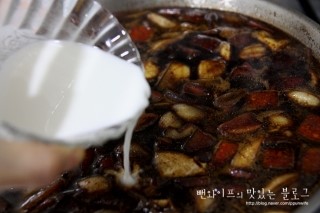
10
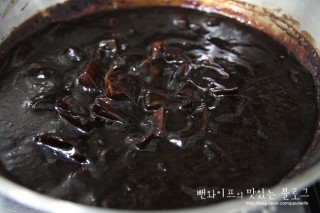
9. Mix 4 tbsp potato starch and 4 tbsp water together, and rather than pouring the starch slurry all into one spot, pour it evenly in a circular motion.
10. Stir well with a spatula until the broth thickens to just the right consistency.
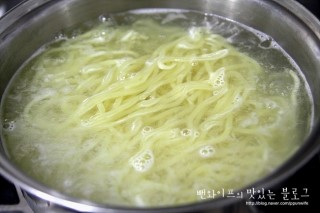
Drop the noodles for jjajangmyeon into rolling boiling water, boil them, rinse in cold water, and drain in a strainer.
Rinsing the noodles in cold water right after boiling makes them much chewier. If you want to serve your jjajangmyeon hot, give them a quick shower with hot water right before eating, shake off the water in the strainer, and transfer to a bowl.
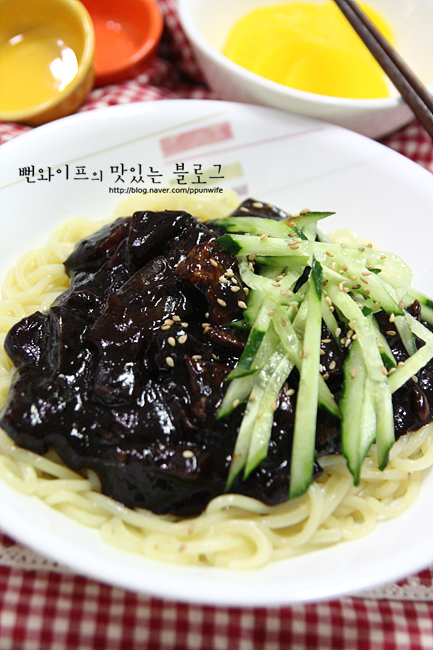
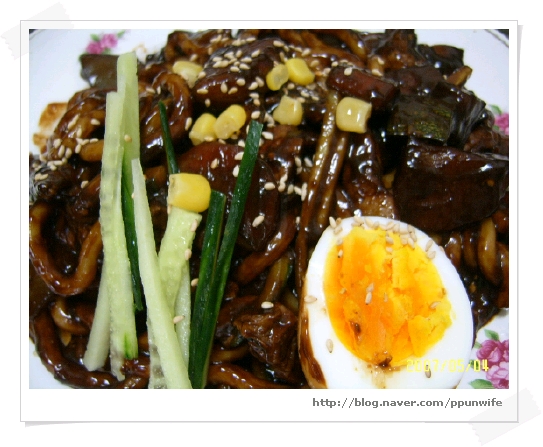
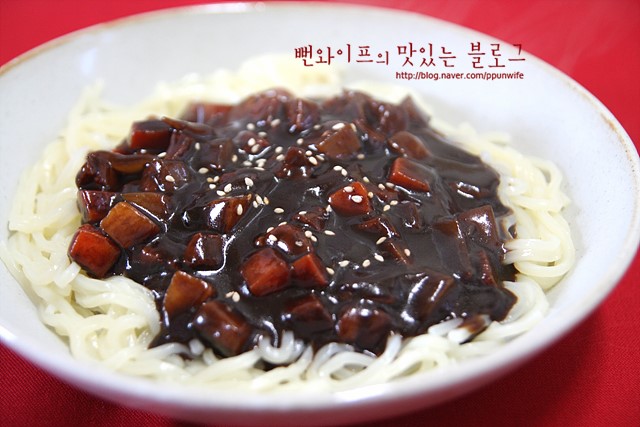
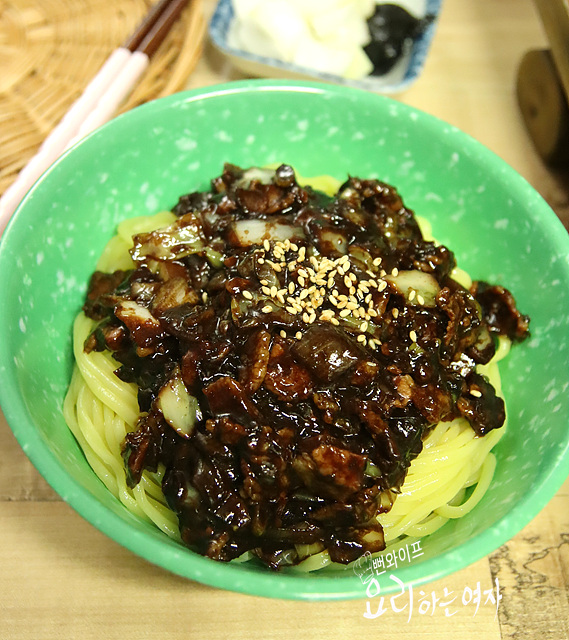
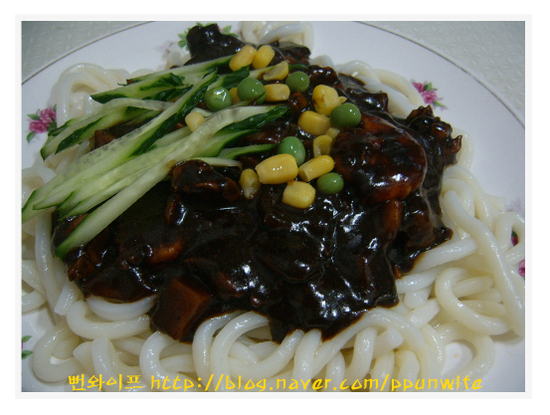
Heaping the noodles and plenty of jjajang sauce into a bowl and topping with julienned cucumber completes the dish.
 Ppunwife's tips
- If you chop the vegetables too finely, they are hard to pick up with chopsticks and inconvenient to eat, so cutting them large is great.
- If you fry the chunjang thoroughly first, you can enjoy a deeply savory jjajangmyeon without any of its characteristic bitter edge.
- If you used more than 2 tbsp of oil to keep it from burning, you will see oil separating around the edges of the fried chunjang. Set the chunjang in a fine-mesh strainer and the excess oil will drain right out.
- Rather than pouring the starch slurry all into one spot, pour it evenly in a circular motion.
- Rinsing the noodles in cold water right after boiling makes them much chewier. If you want to serve your jjajangmyeon hot, give them a quick shower with hot water right before eating, shake off the water in the strainer, and transfer to a bowl.
FAQ
How do you remove the bitterness when frying chunjang?
Heat oil in a pan and stir continuously over low heat for about 5 minutes so it does not burn or stick to the bottom; frying it thoroughly removes the characteristic bitterness and leaves it rich and savory.
What should you do if a lot of oil remains after frying chunjang?
If excess oil separates and pools around the paste, resting the fried chunjang in a fine-mesh strainer will let the excess oil drain away cleanly.
Is it okay to add ingredients other than the listed vegetables?
Yes, beyond the basic vegetables, you can add ingredients like cabbage, broccoli, or mushrooms to suit your taste.
Is there a trick to serving the noodles both chewy and hot?
Rinse the boiled noodles in cold water to bring out their chewiness, then give them a quick rinse with hot water and shake off the excess water just before transferring to bowls so you can enjoy them piping hot.