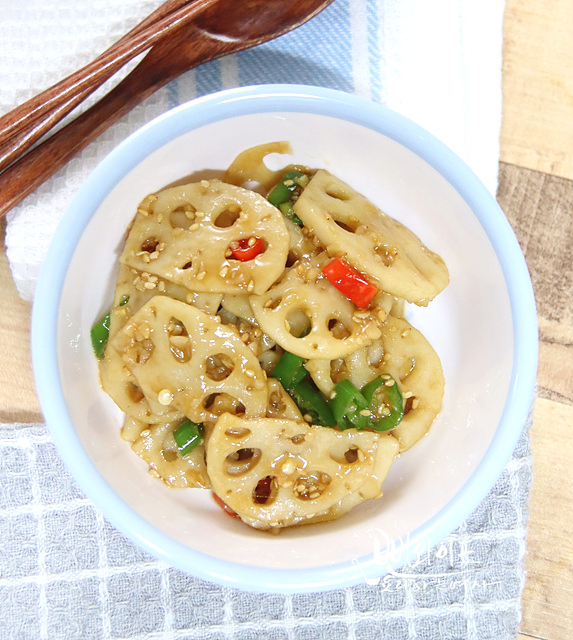
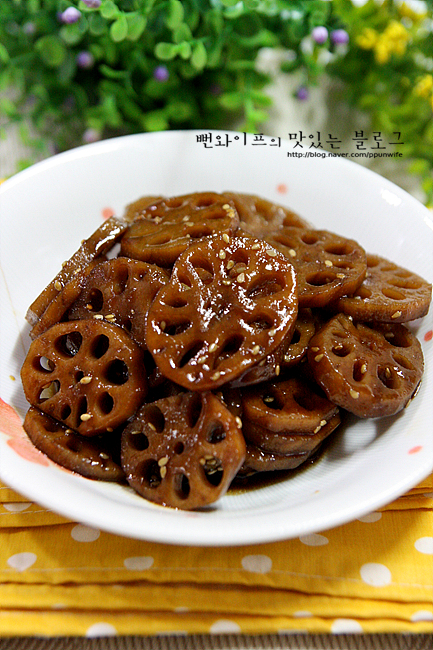
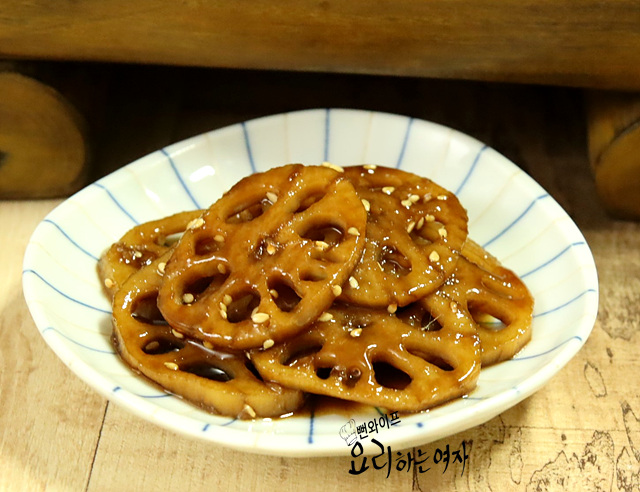
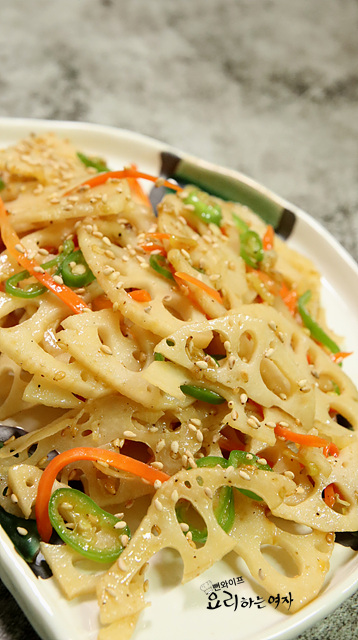
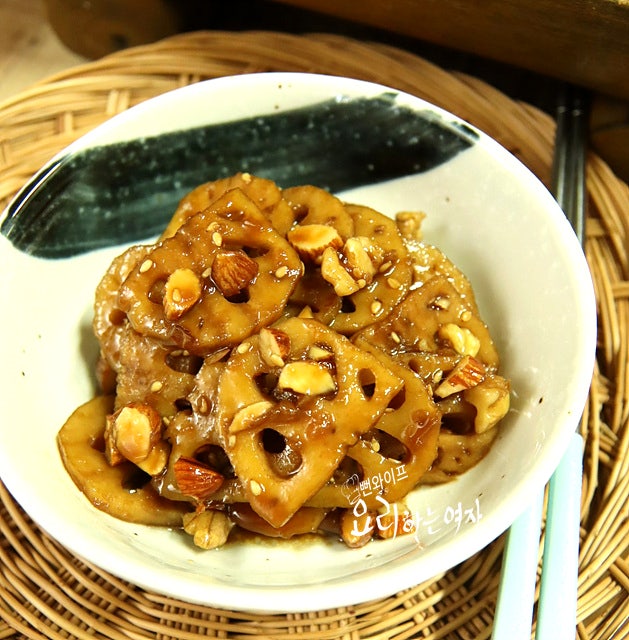
Yeongeun Jorim (Braised Lotus Root) in Soy Sauce
A crisp side dish of lotus root blanched briefly in vinegar water to remove astringency and braised in a savory soy sauce seasoning.
Translated from Korean by AI and not yet checked by a native speaker. Amounts and numbers are taken directly from the original recipe. Read the Korean original →
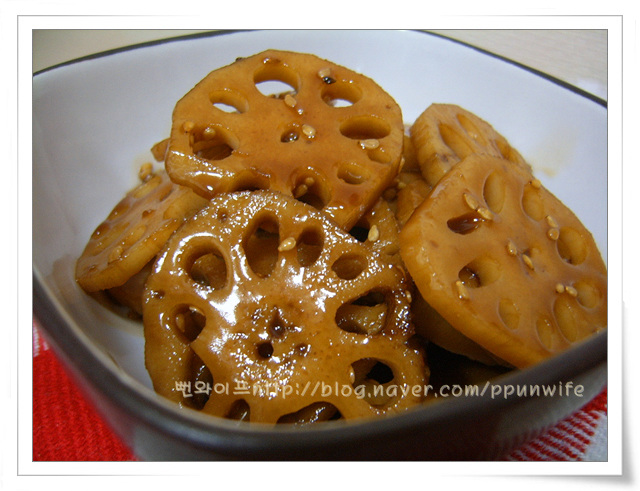
A satisfying side dish that brings out the crisp texture and sweet, savory flavors of lotus root. It is briefly blanched in vinegar water to tone down any astringency, then gently braised in anchovy broth and soy sauce seasoning. Made with simple everyday ingredients, it is perfect to prepare ahead of time.
- Servings
- about 4–5 servings
- Difficulty
- Medium
- Spiciness
- Not spicy
Ingredients
Yeongeun jorim
- Lotus root300 g
- Anchovy broth3 cups
Braising sauce
- Regular soy sauce (jin-ganjang)4 tbsp
- Dark brown sugar2 tbsp
- Mirin (cooking rice wine)2 tbsp
- Corn syrup (mulyeot)1 tbsp
- Toasted sesame oila little
- Toasted sesame seedsa little
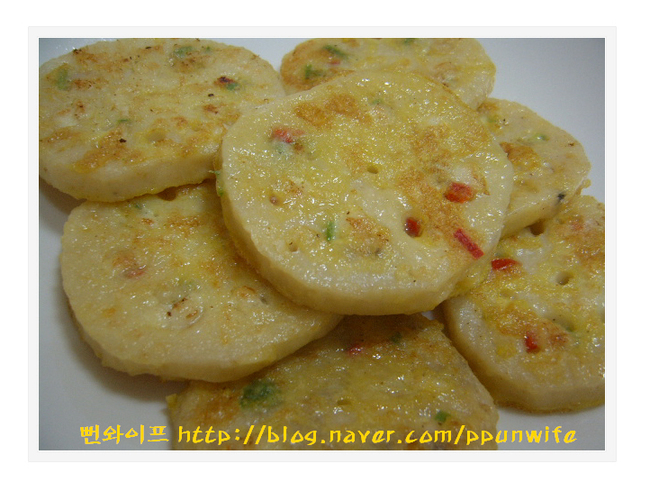
Lotus root pancakes
- Lotus root200 g
- Squid or clam meat
- Cheongyang chili pepper (hot green chili)1
- Red chili pepper1
- Egg1
- Korean pancake mix (buchim-garu)1/2 cup
- Water1/2 cup
- Salt0.5 tsp
- The weight of the cleaned and sliced lotus root is 300g.
- You can also use kelp water (soak a 10cm square of dried kelp in 3 cups of water for about 1 hour), or simply pour in plain water if that is not available.
Steps
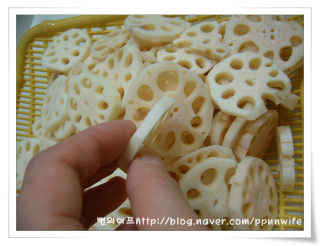
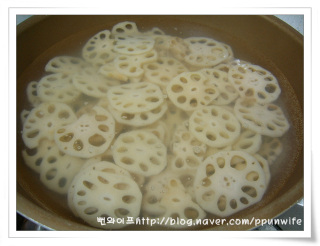
1. Peel the lotus root, rinse it in water, and slice it to a thickness of 3-4mm.
If sliced thicker, the seasoning will not absorb well.
The weight of the cleaned and sliced lotus root is 300g.
2. Bring enough water to submerge the slices (4-5 cups) to a boil with 1 tbsp vinegar, then blanch the lotus root for under 2 minutes.
This removes the astringent taste.
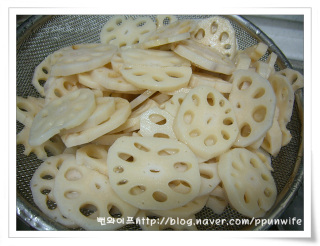
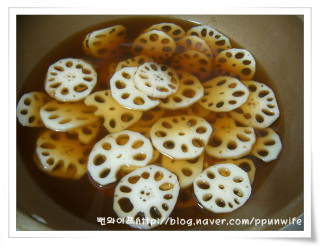
3. Rinse in cold water and drain in a strainer.
4. In a pot, combine the braising sauce ingredients except the toasted sesame oil and toasted sesame seeds, along with the anchovy broth and lotus root, and bring to a boil over high heat.
It is mild enough to eat on its own without being too salty. If you prefer it saltier, add more soy sauce.
You can also use kelp water (soak a 10cm square of dried kelp in 3 cups of water for about 1 hour),
or simply pour in plain water if that is not available.
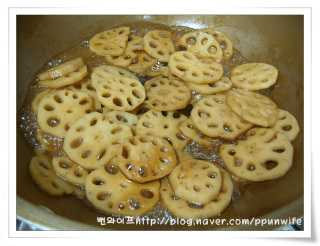
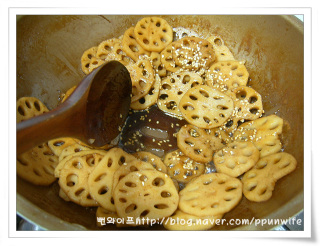
5. Once it begins to boil, reduce the heat to low and braise, stirring occasionally.
6. When the liquid has cooked down to a shallow simmer with just the right amount of sauce left, stir in the toasted sesame oil and toasted sesame seeds, then serve.
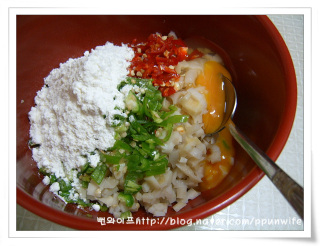

1. Finely chop the lotus root and chili peppers.
It tastes even better if you finely chop and add seafood like squid or clam meat.
2. Add all ingredients together and mix well.
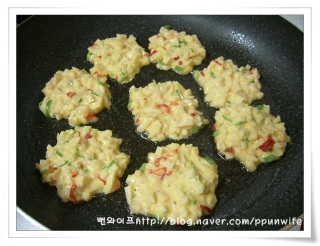
Heat oil in a hot pan, spoon in the batter, and pan-fry until golden brown on both sides.
 Ppunwife's tips
- If sliced thicker, the seasoning will not absorb well.
- It is mild enough to eat on its own without being too salty. If you prefer it saltier, add more soy sauce.
- It tastes even better if you finely chop and add seafood like squid or clam meat.
FAQ
Why do you blanch the lotus root in vinegar water before braising?
This step removes the unique astringency of lotus root; blanch it lightly in boiling vinegar water for under 2 minutes.
What can I use if I do not have anchovy broth?
You can use water soaked with dried kelp for about 1 hour, or simply pour in plain water if that is not available.
How can I adjust it if I want a saltier flavor?
The base seasoning is kept mild, so if you prefer a saltier dish, simply add more regular soy sauce (jin-ganjang) to taste.
Is there a reason to slice the lotus root 3-4mm thick?
If sliced any thicker, the braising sauce will not soak into the center properly.